Film library · level
Graduate school and beyond
383 films in 3 courses, about 17 h 55 min in all. Courses that go all the way to current research.
Have 10, 20, 30 minutes? Start at your next unwatched film.
-
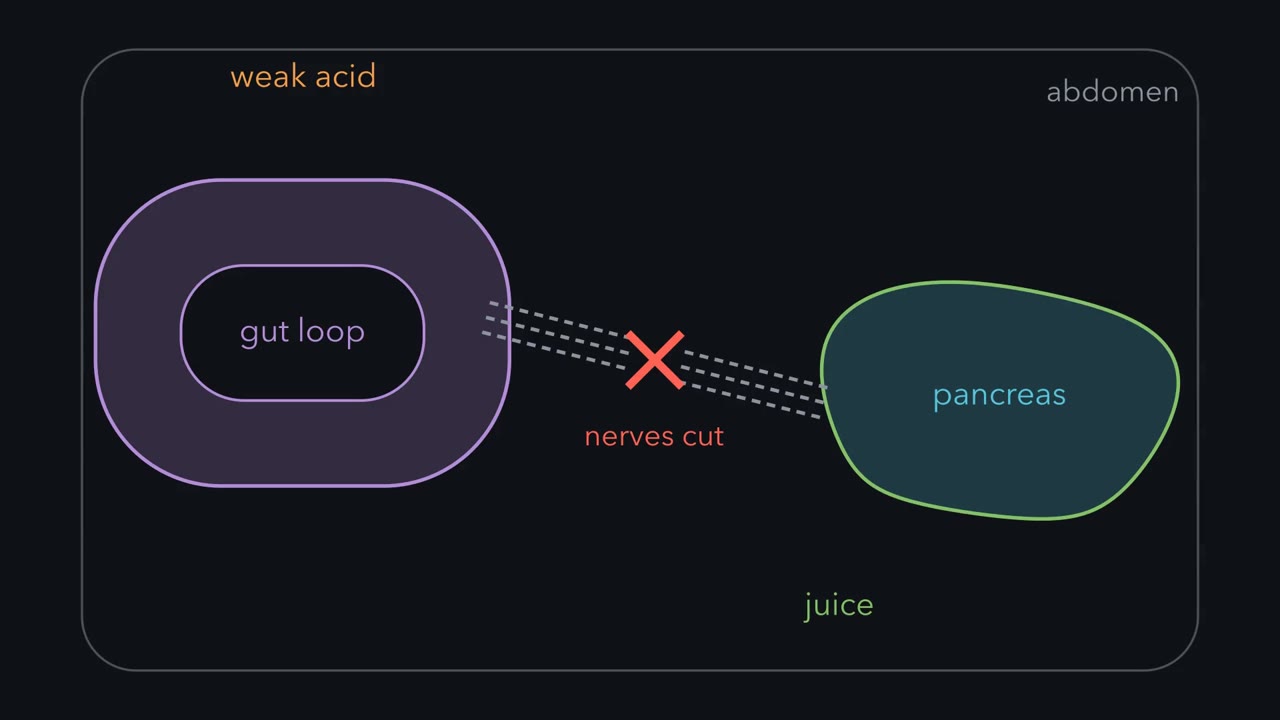 First film Length 2:38 Why Far Signals Ride the Blood Cell Signaling · Graduate school and beyond Signals and How Far They Travel
-
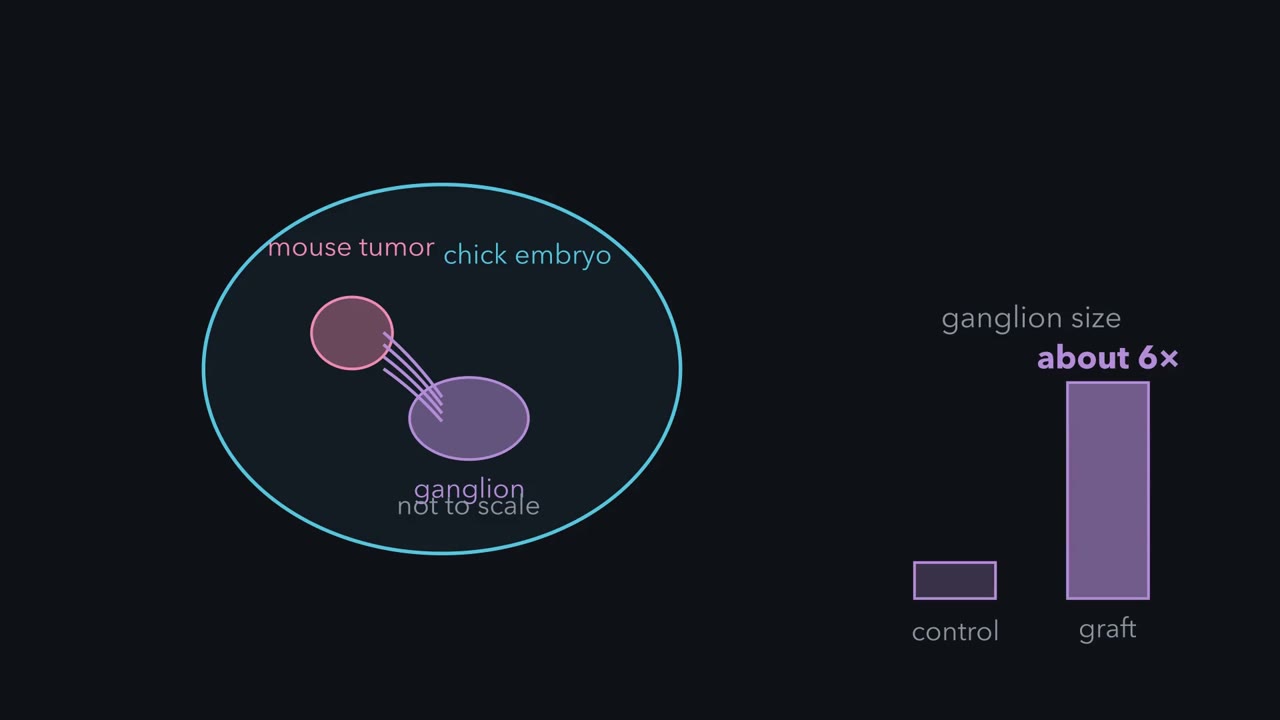 Part 1 of 4 Length 1:34 A Tumor That Reaches Nerves Without Touching Cell Signaling · Graduate school and beyond Finding a Signal: NGF, EGF and the Bioassay
-
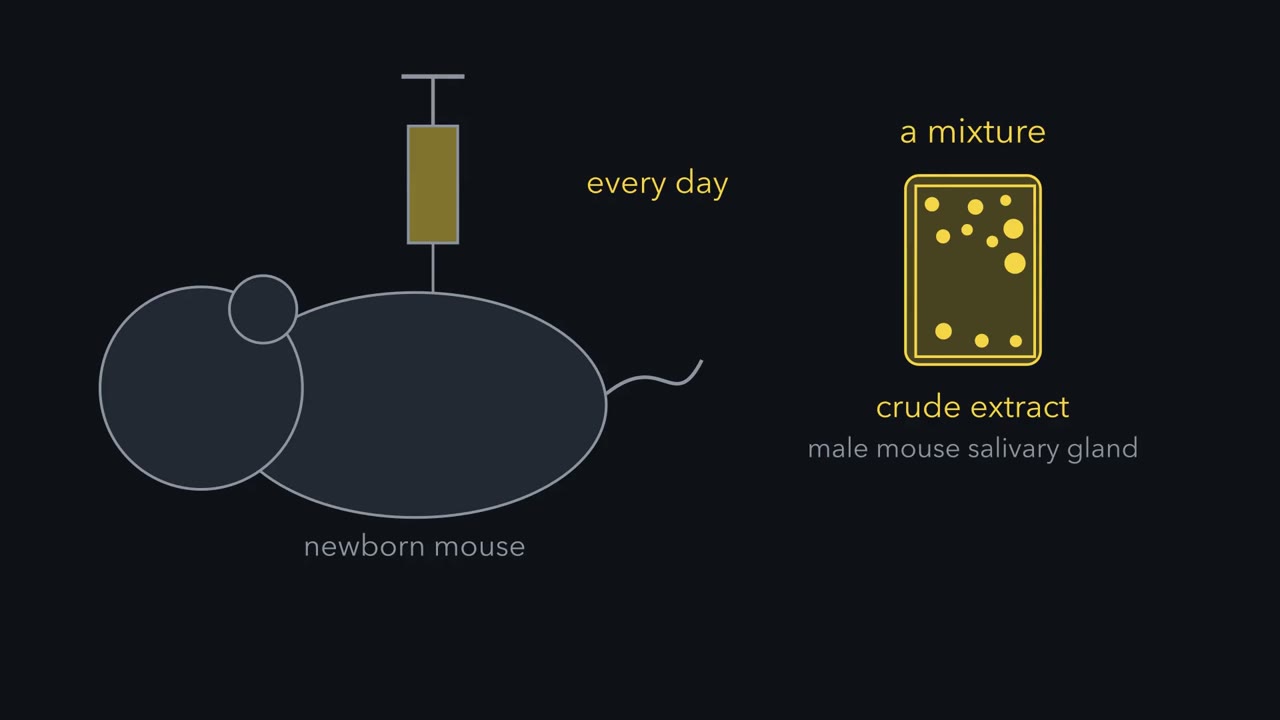 Part 2 of 4 Length 1:30 One Extract, Two Hidden Factors Cell Signaling · Graduate school and beyond Finding a Signal: NGF, EGF and the Bioassay
-
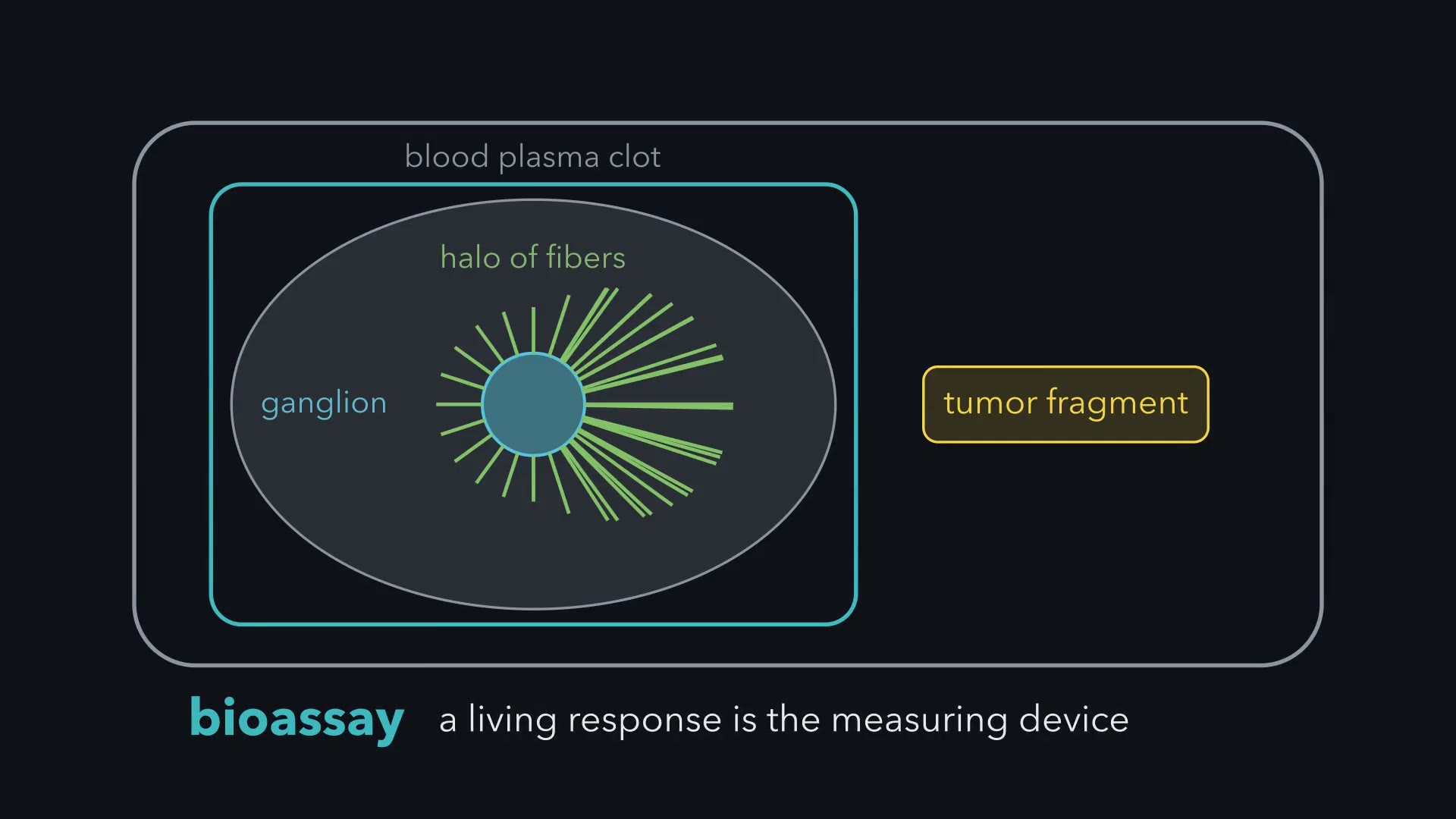 Part 3 of 4 Length 1:35 Follow the Activity Before the Molecule Cell Signaling · Graduate school and beyond Finding a Signal: NGF, EGF and the Bioassay
-
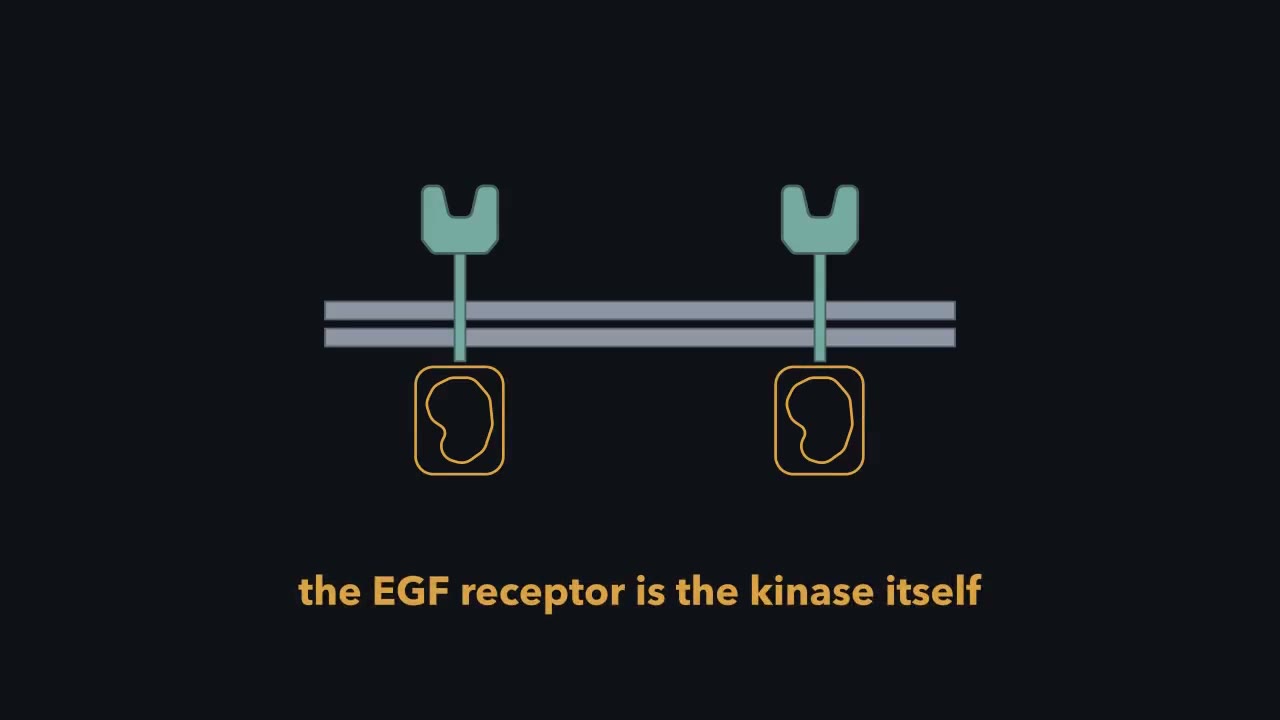 Part 4 of 4 Length 1:13 Cohen finds that the EGF receptor adds phosphate to tyrosine Cell Signaling · Graduate school and beyond Finding a Signal: NGF, EGF and the Bioassay
-
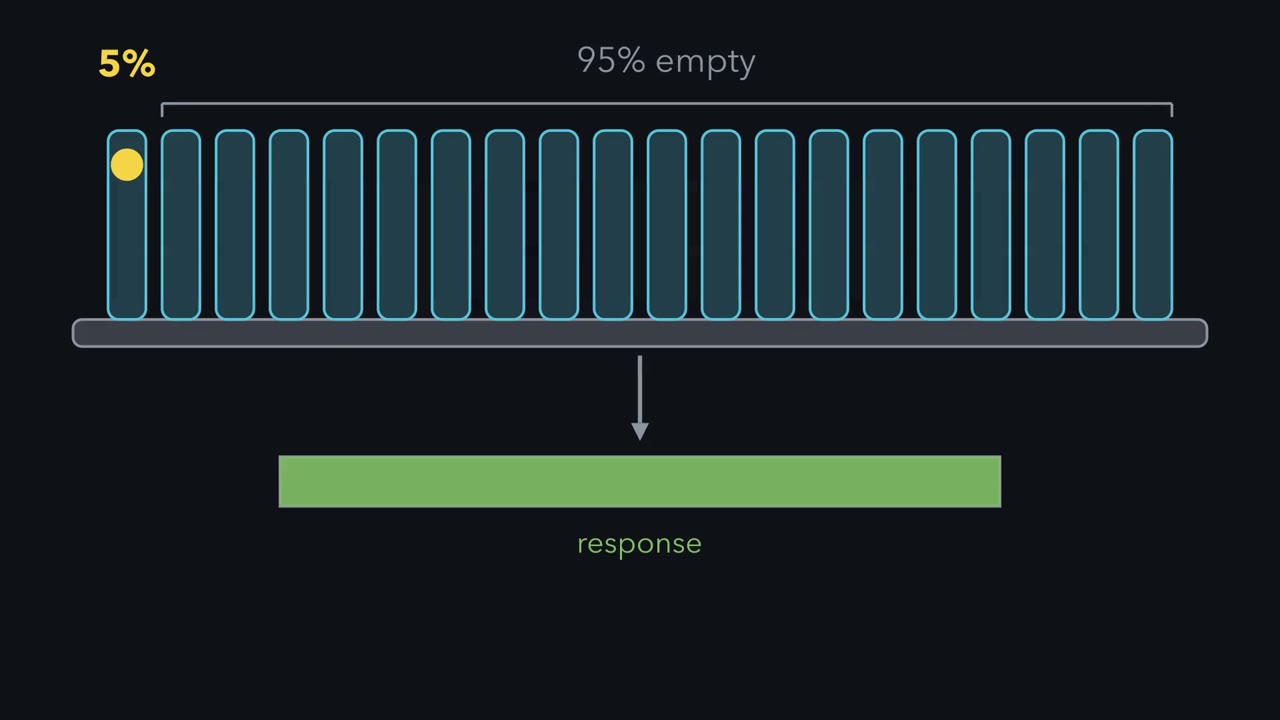 First film Length 2:49 A Full Response, Mostly Empty Receptors Cell Signaling · Graduate school and beyond Binding: Affinity, Occupancy and Dose–Response
-
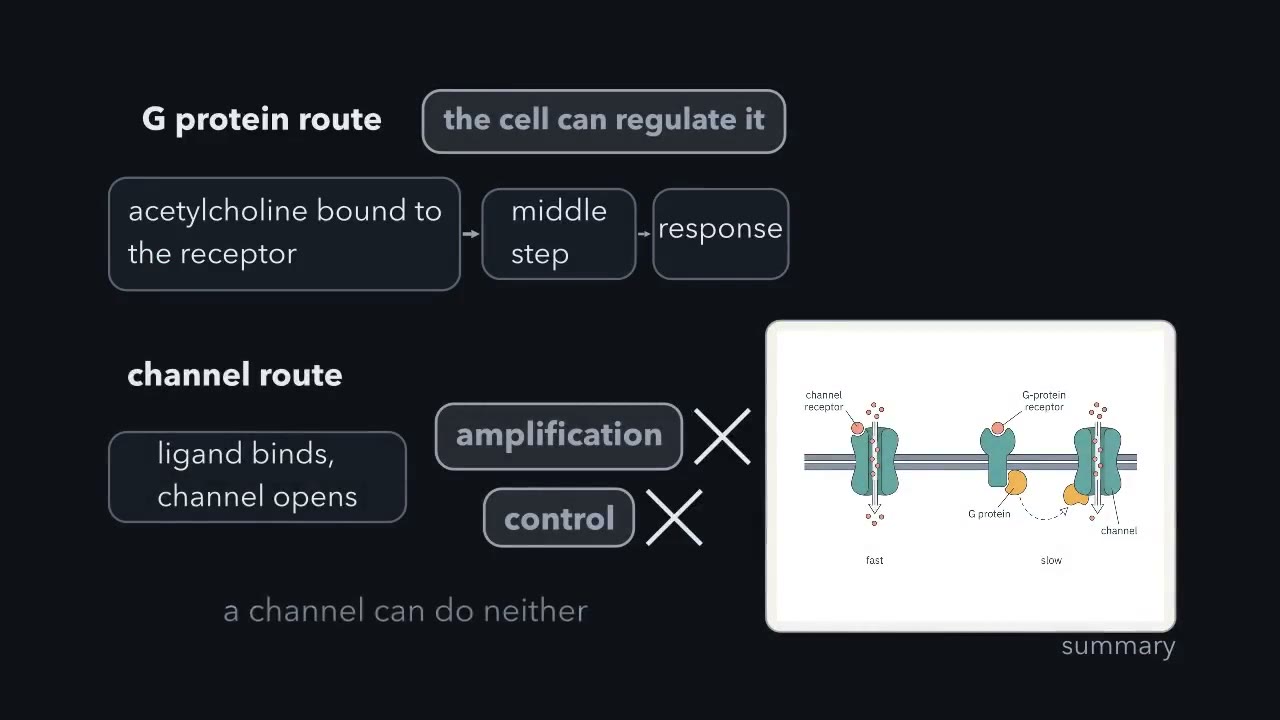 First film Length 2:27 The type of receptor sets the speed of the response Cell Signaling · Graduate school and beyond A Field Guide to Receptors
-
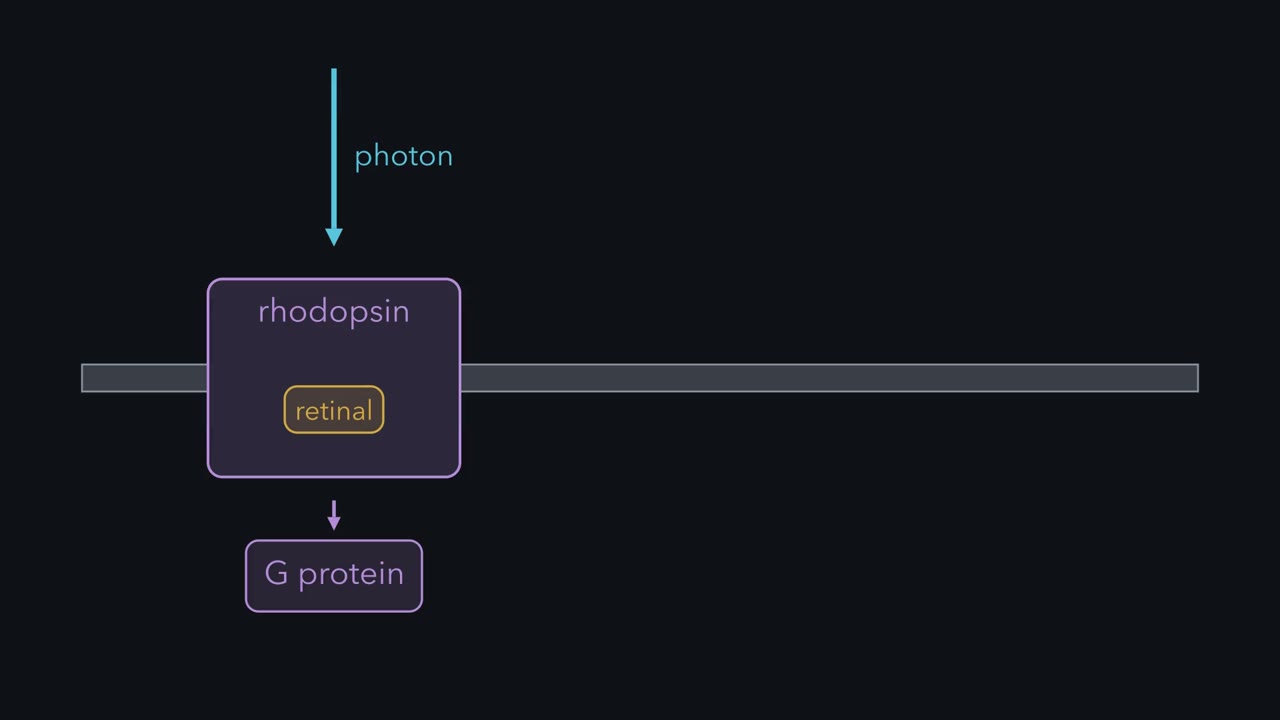
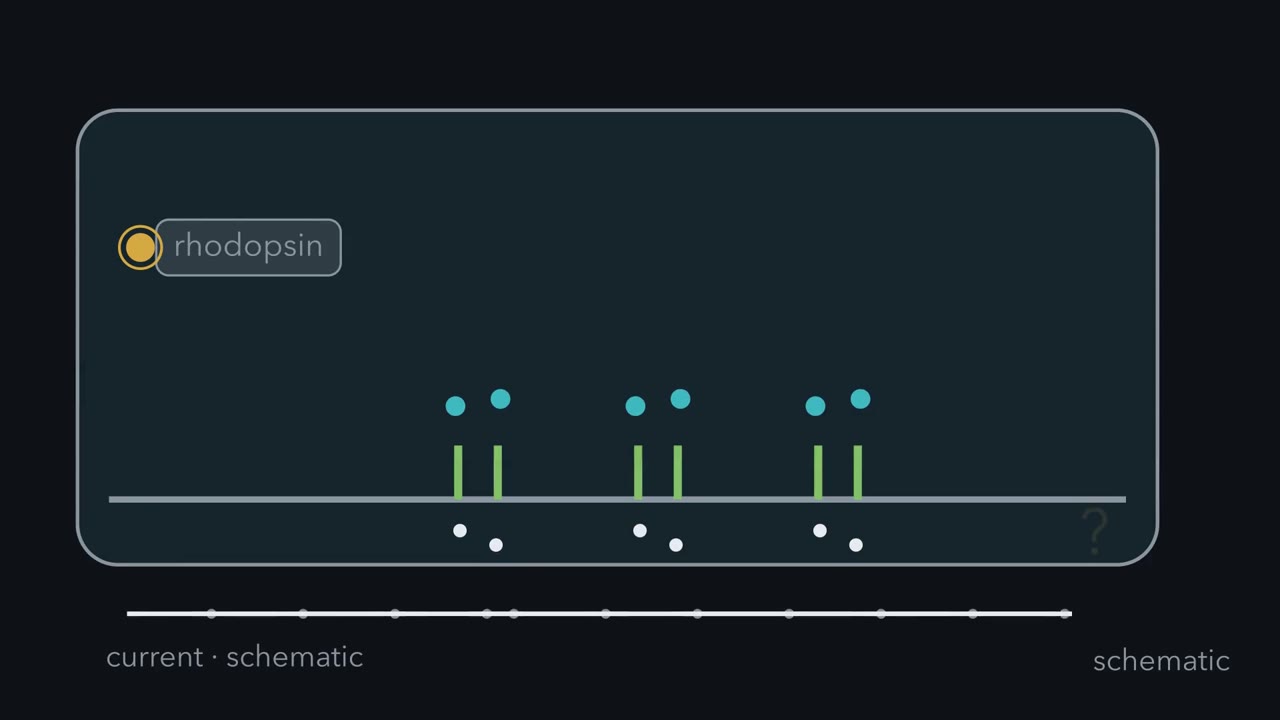 First film Length 3:50 How One Photon Becomes a Cellular Signal Cell Signaling · Graduate school and beyond Circuits: Amplification, Feedback, Adaptation and Switches
Take-home
Simple cascades multiply gain; high gain needs shutoff and sometimes insulation.
-
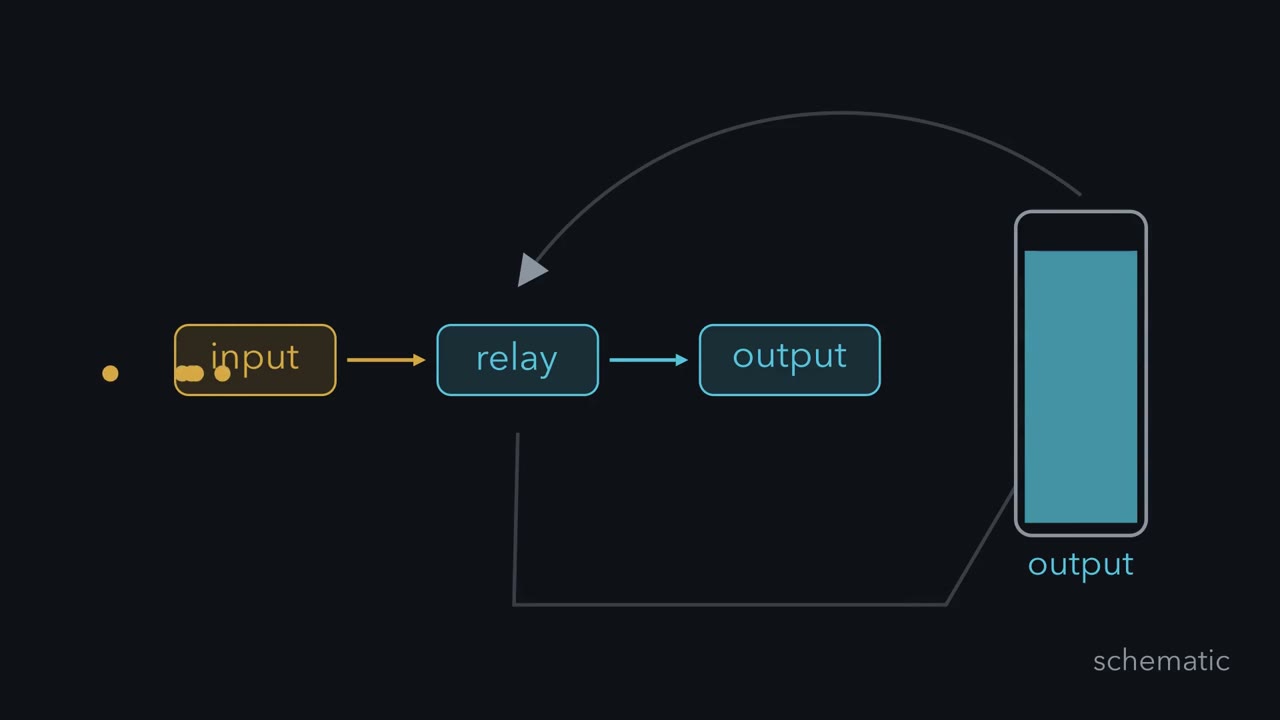 Second film Length 3:45 Three Ways a Signal Changes with Time Cell Signaling · Graduate school and beyond Circuits: Amplification, Feedback, Adaptation and Switches
Take-home
Feedback can limit duration, sharpen decisions, or restore resting output.
-
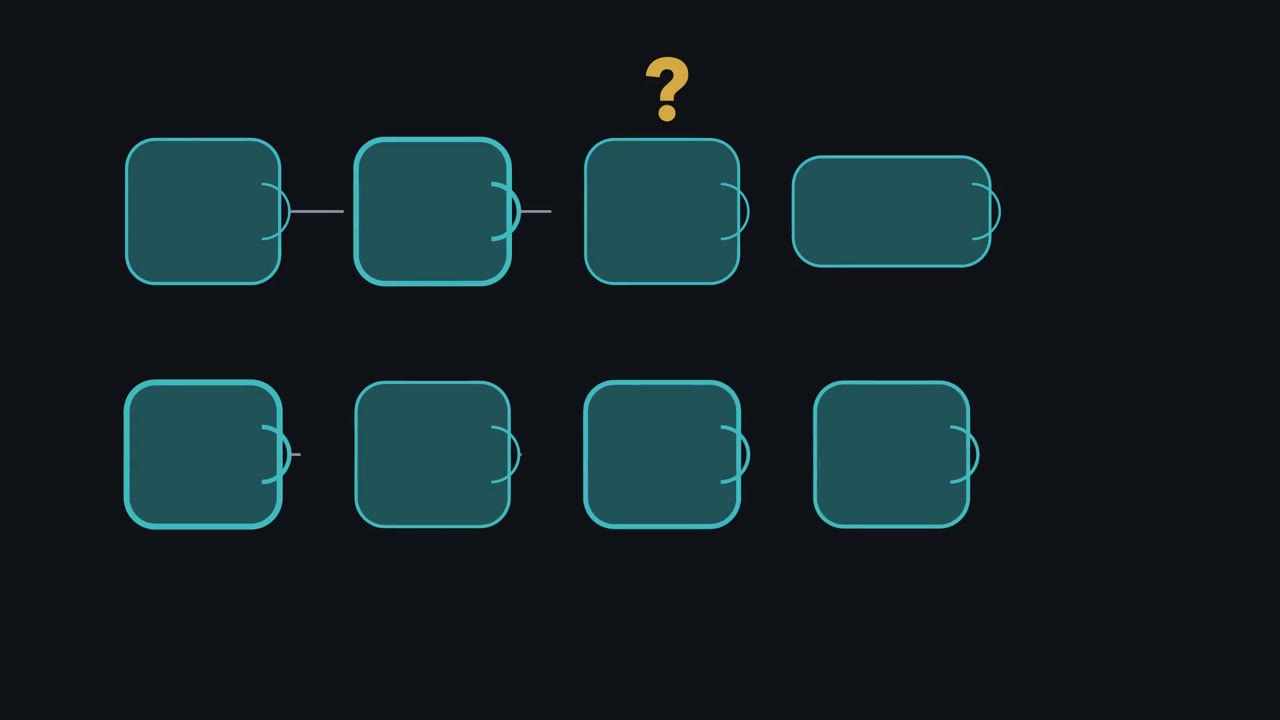 First film Length 3:35 The Charge That Changes the Odds Cell Signaling · Graduate school and beyond Phosphorylation: Kinases and Phosphatases
Take-home
A stable, removable phosphate changes protein behavior through its charge and shape.
-
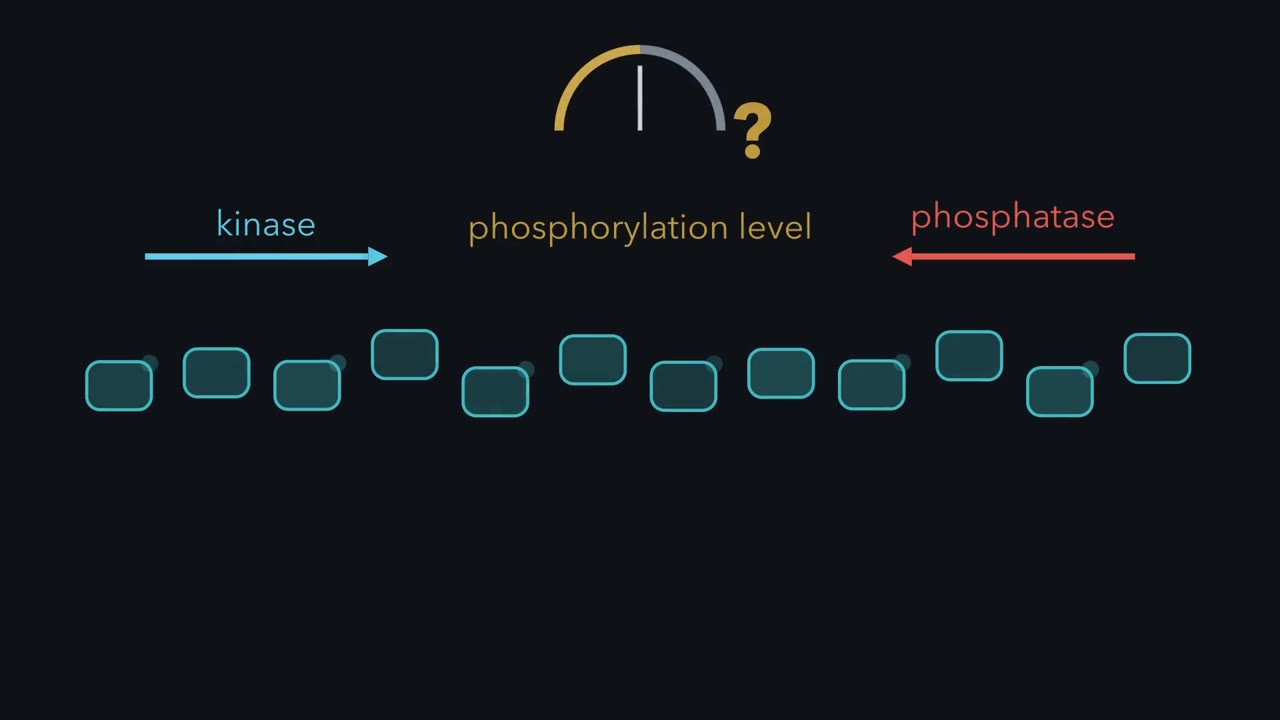 Second film Length 3:35 Two Enzymes Set the Level Cell Signaling · Graduate school and beyond Phosphorylation: Kinases and Phosphatases
Take-home
Phosphorylation level depends on both the kinase and the phosphatase.
-
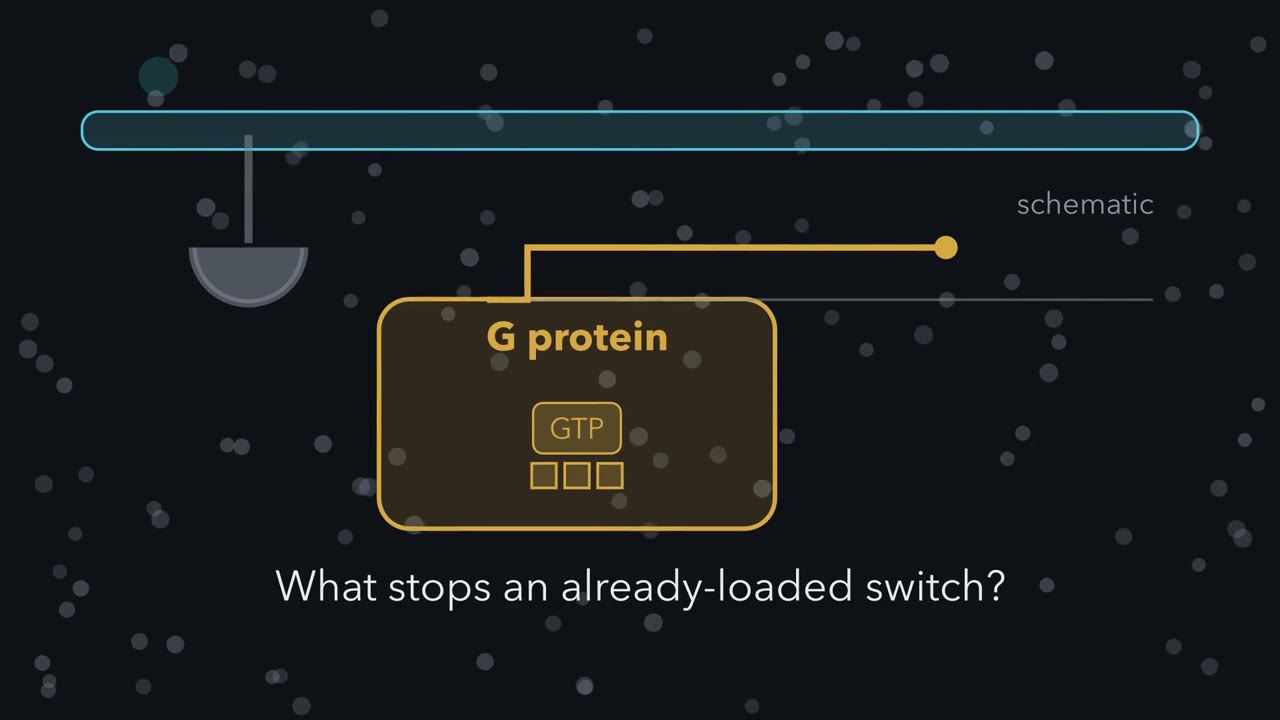 First film Length 3:40 The Timer Inside the Switch Cell Signaling · Graduate school and beyond GTPase Switches: The Timer
Take-home
Faster GTP cutting shortens an already-loaded GTPase's time on.
-
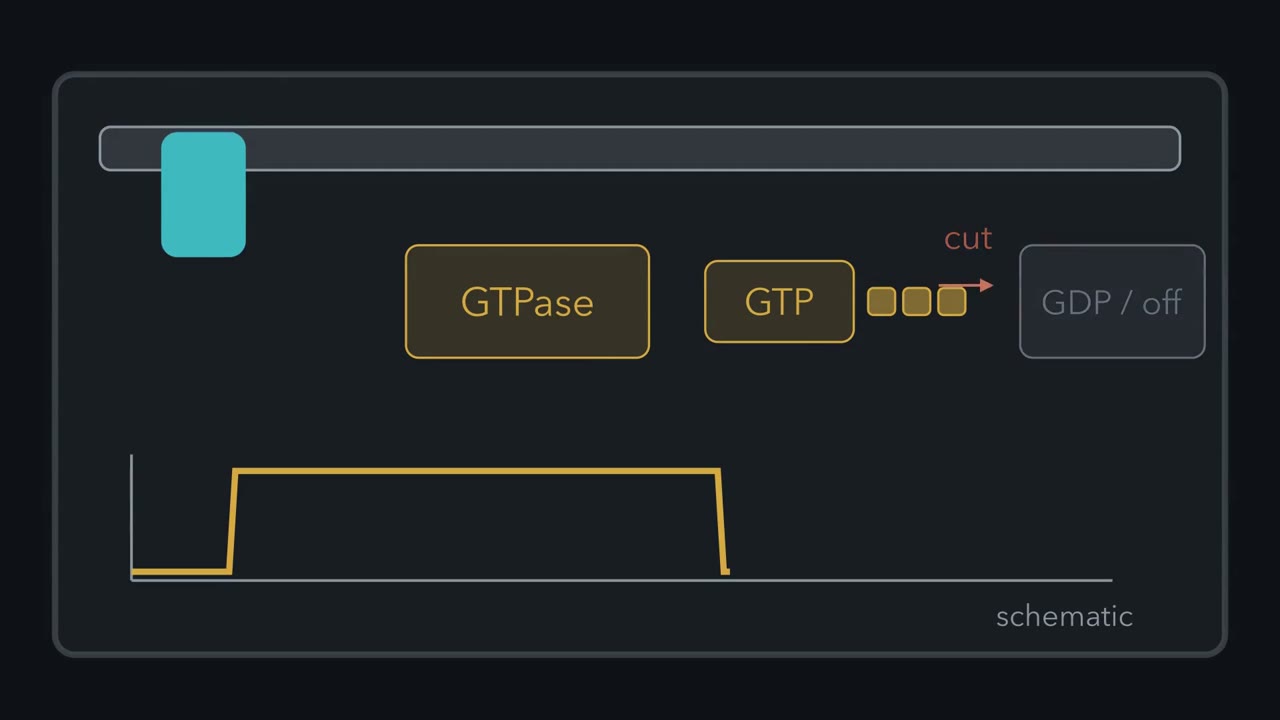 Second film Length 3:45 How the Timer Breaks Cell Signaling · Graduate school and beyond GTPase Switches: The Timer
Take-home
Block GTP cutting to prolong signaling; speed it to shorten signaling.
-
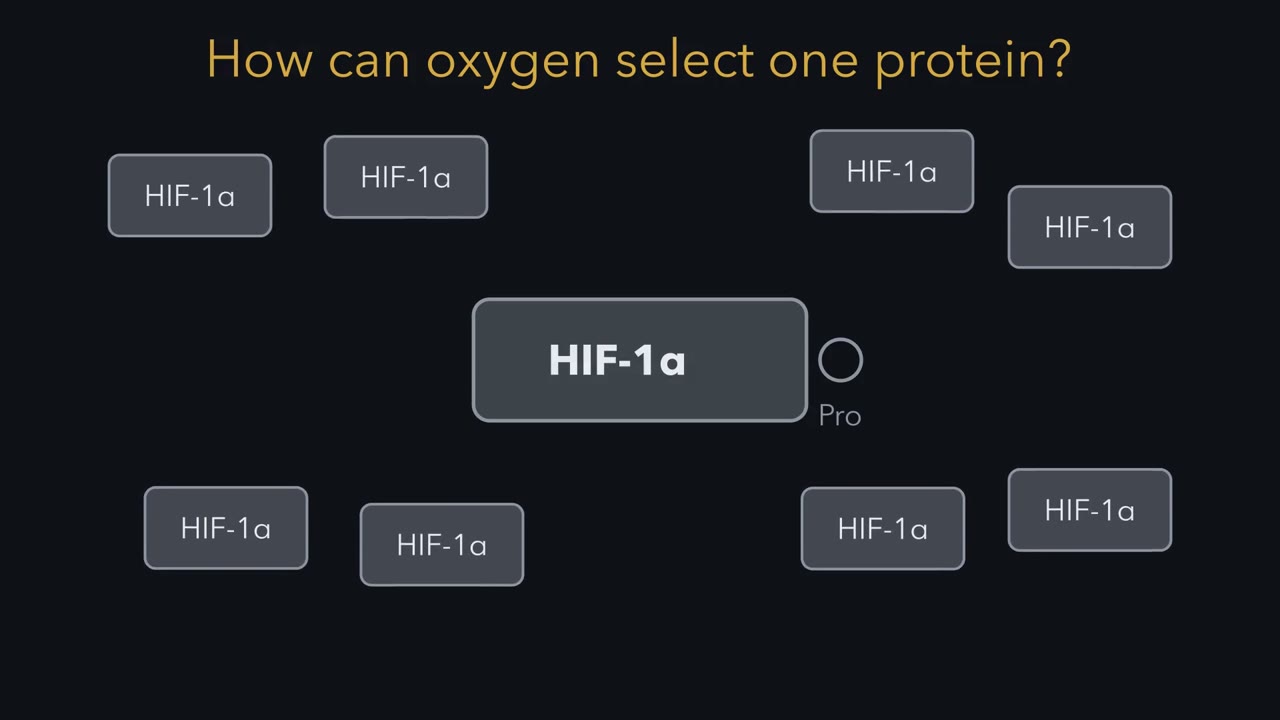 First film Length 3:29 How a Signal Marks One Protein Cell Signaling · Graduate school and beyond Ubiquitin and Regulated Proteolysis as Signals
Take-home
Signals change protein fate by changing what an E3 can recognize.
-
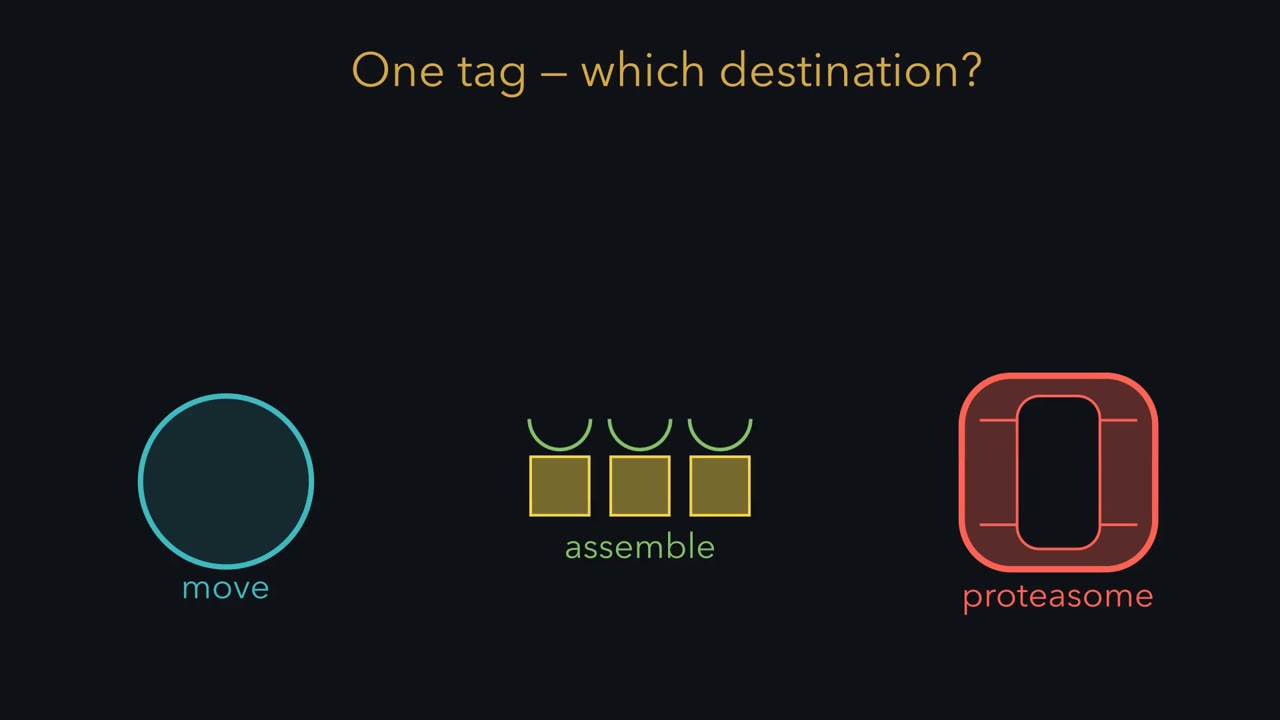 Second film Length 3:38 One Tag, Different Destinations Cell Signaling · Graduate school and beyond Ubiquitin and Regulated Proteolysis as Signals
Take-home
Ubiquitin marks route proteins; molecular glues change what an E3 grips.
-
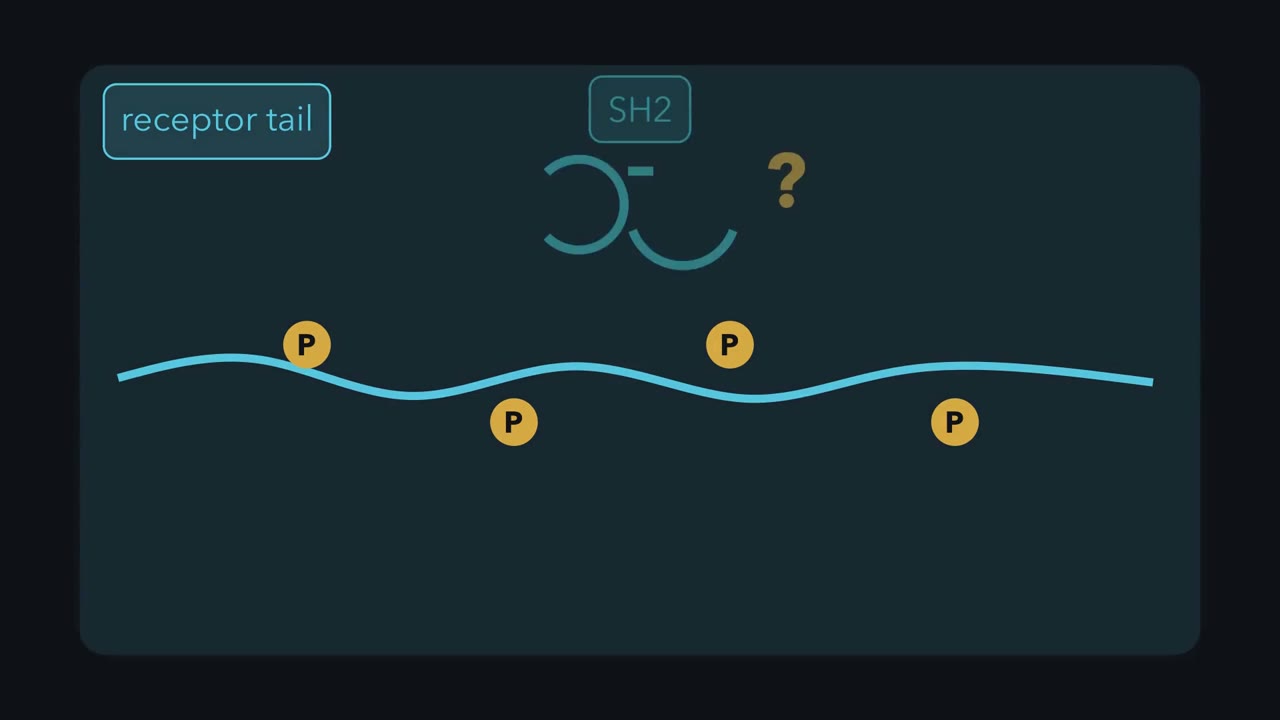 First film Length 3:41 How One Mark Finds Its Reader Cell Signaling · Graduate school and beyond Protein Modules: SH2, SH3, PTB, PDZ and PH
Take-home
Reusable binding domains turn recognized motifs or lipids into protein connections.
-
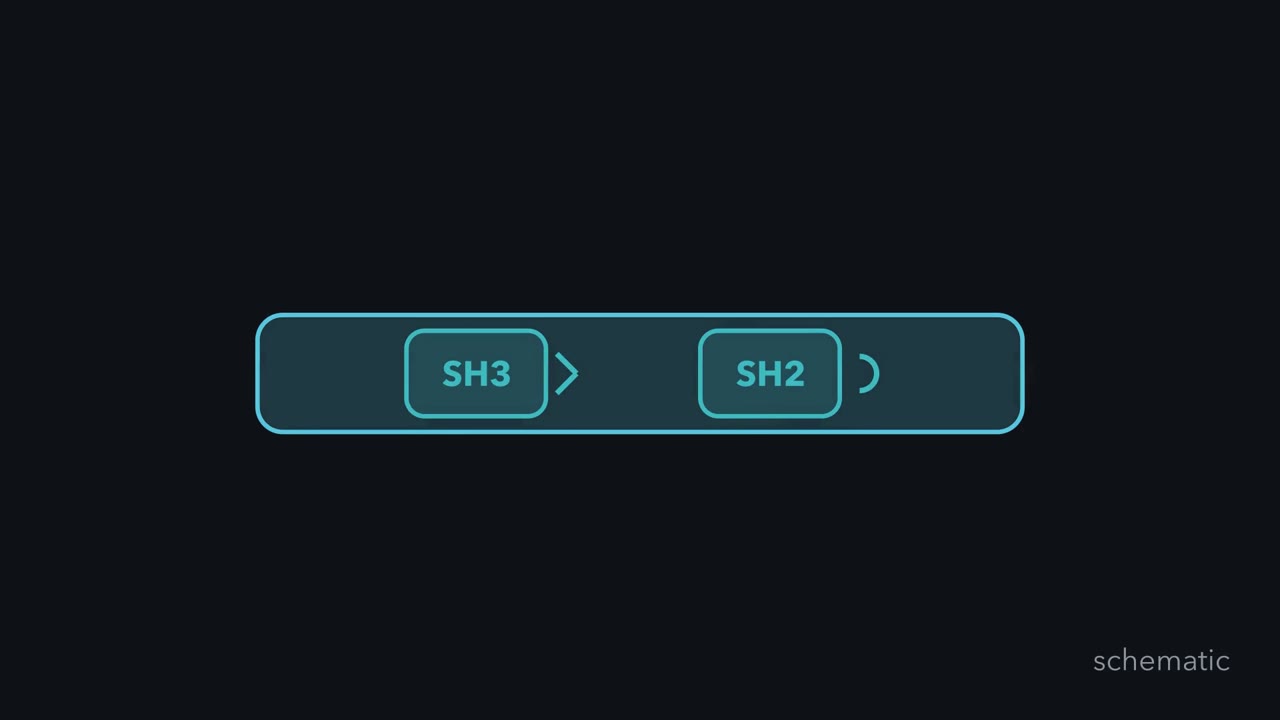 Second film Length 3:30 Two Grips, One Decision Cell Signaling · Graduate school and beyond Protein Modules: SH2, SH3, PTB, PDZ and PH
Take-home
Combining modules can make binding conditional on more than one signal.
-
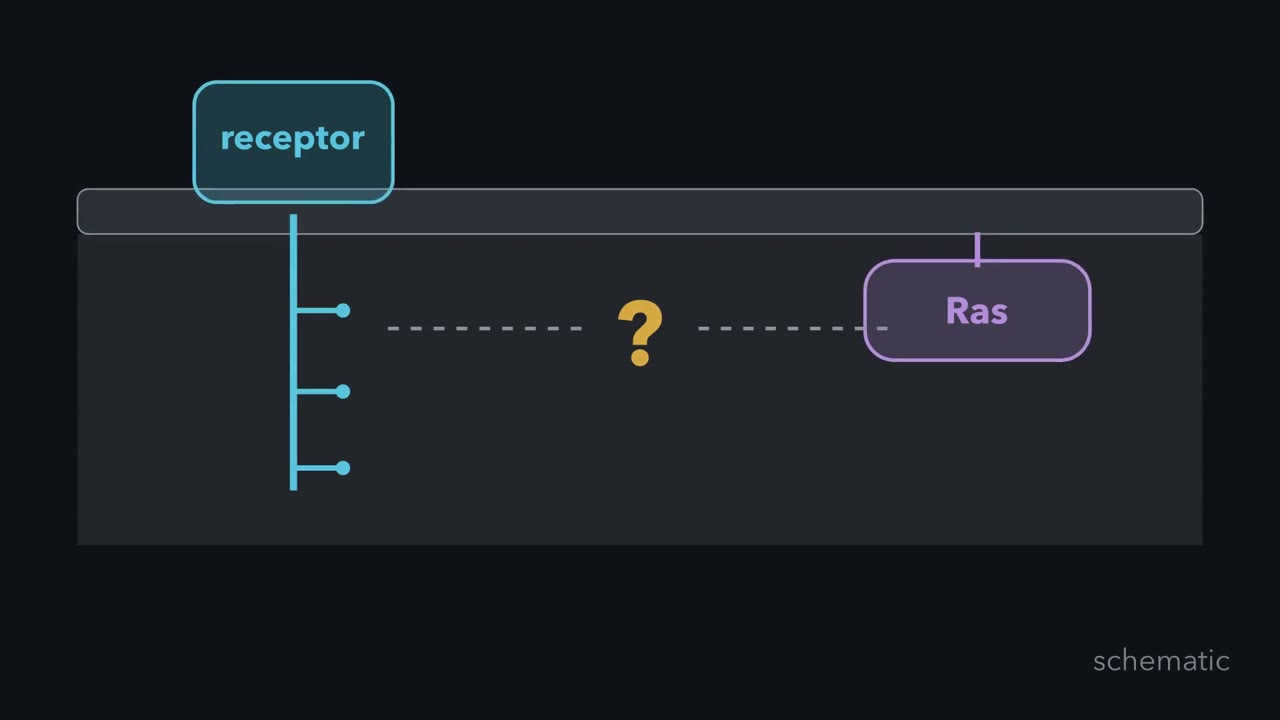 First film Length 3:15 How a Receptor Reaches Ras Cell Signaling · Graduate school and beyond Adaptors, Docking Proteins and Scaffolds
Take-home
Adaptors route signals by linking partners, not by catalyzing reactions.
-
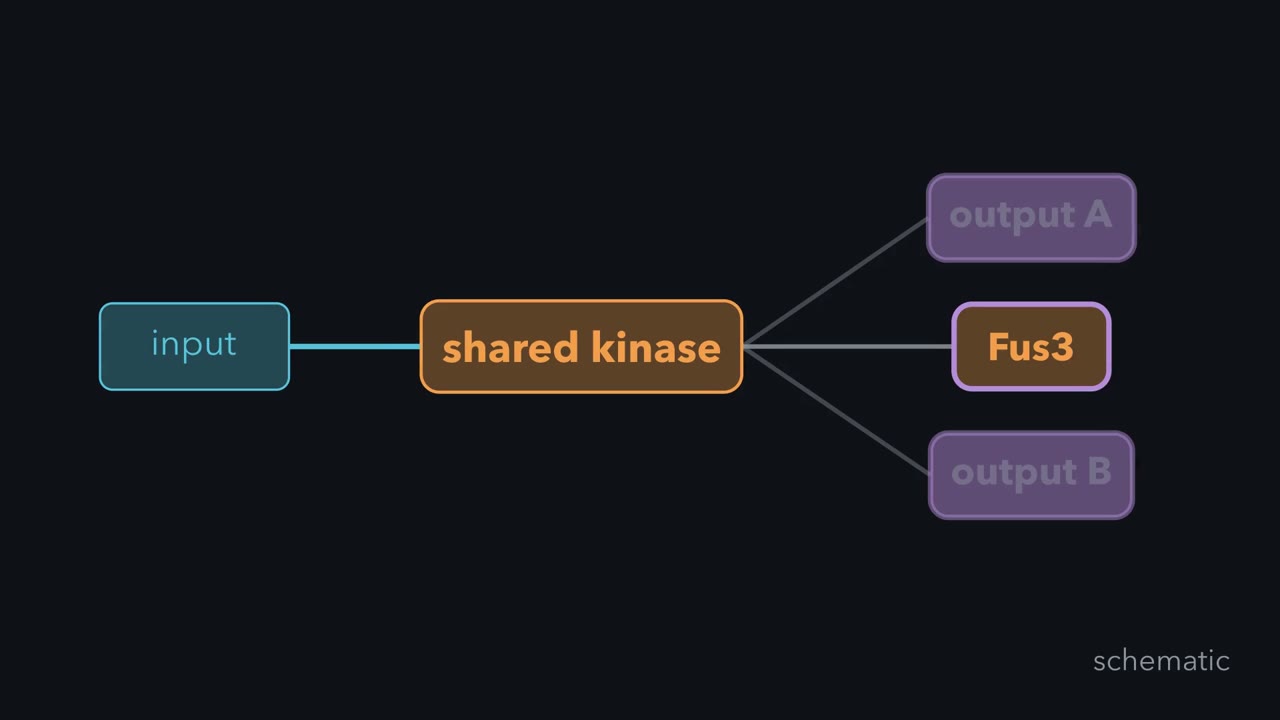 Second film Length 3:37 How a Scaffold Keeps Signals on Route Cell Signaling · Graduate school and beyond Adaptors, Docking Proteins and Scaffolds
Take-home
Scaffolds route shared parts by controlling partners, place and activation.
-
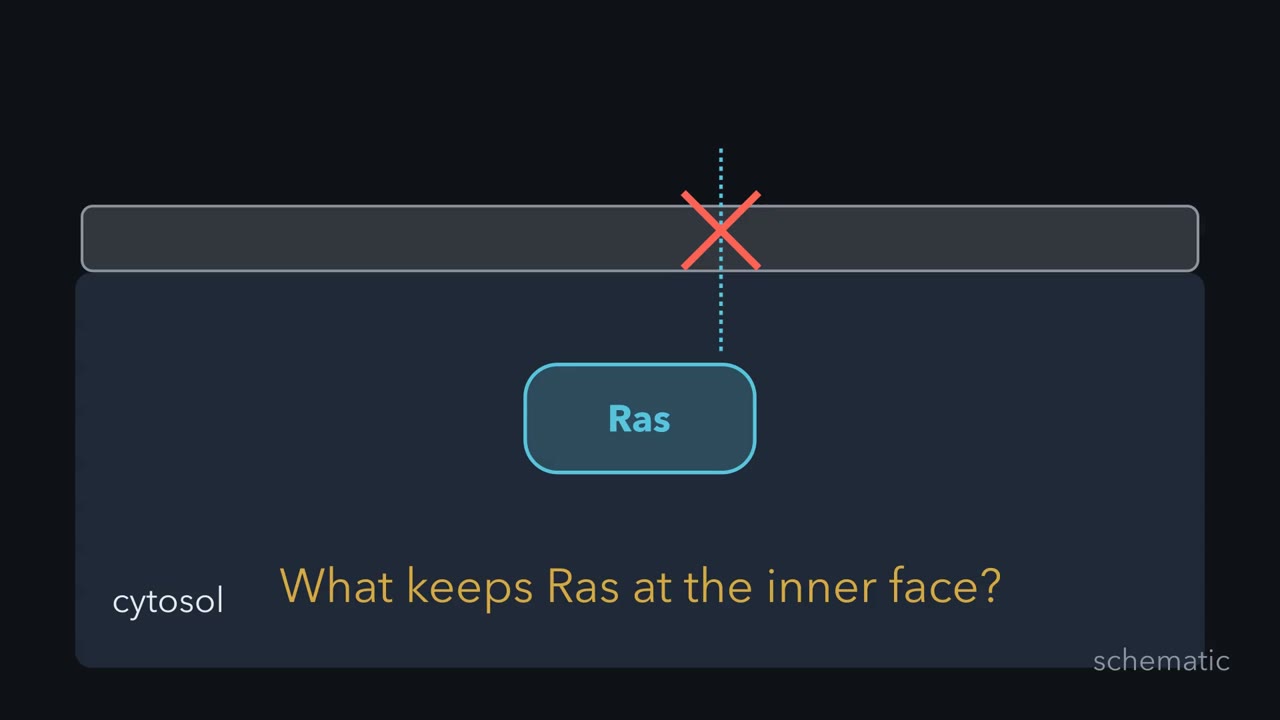 First film Length 3:39 Why One Farnesyl Tail Is Usually Not Enough Cell Signaling · Graduate school and beyond Lipids as Anchors and Addresses
Take-home
A second signal turns weak membrane contact into a regulated hold.
-
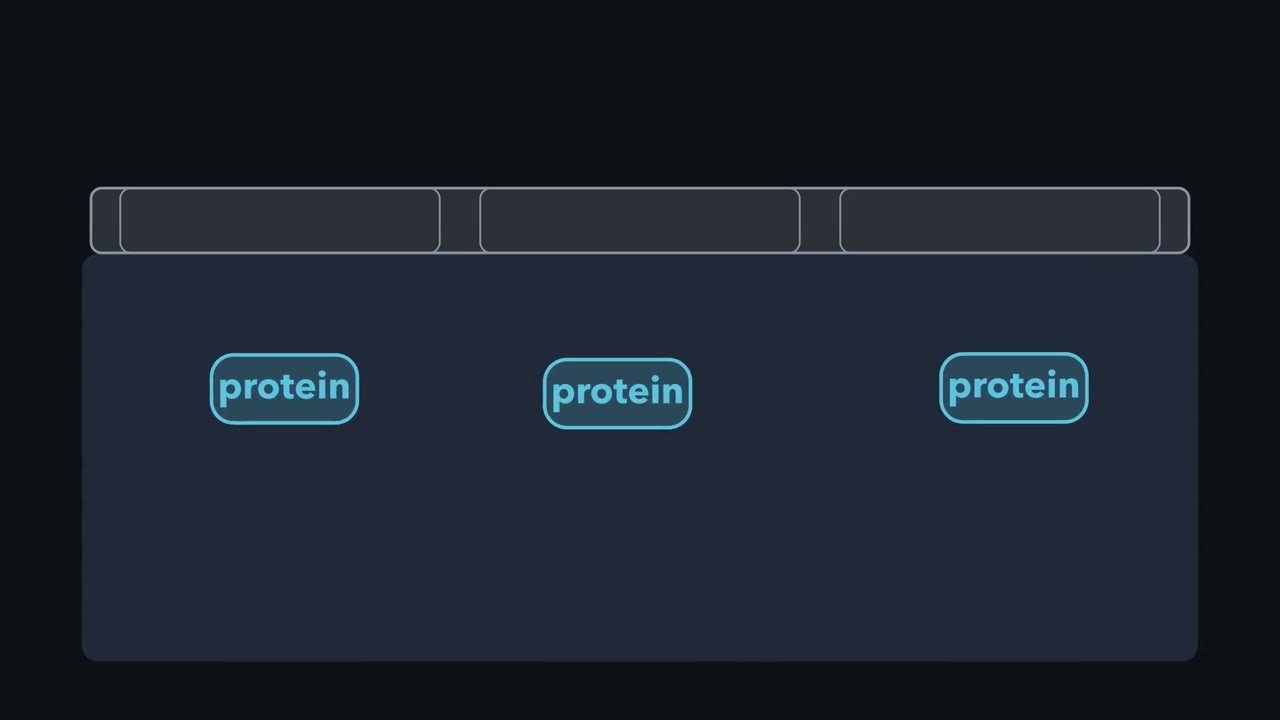 Second film Length 3:19 How a Membrane Writes an Address Cell Signaling · Graduate school and beyond Lipids as Anchors and Addresses
Take-home
Writers, readers, and erasers turn membrane lipids into changing addresses.
-
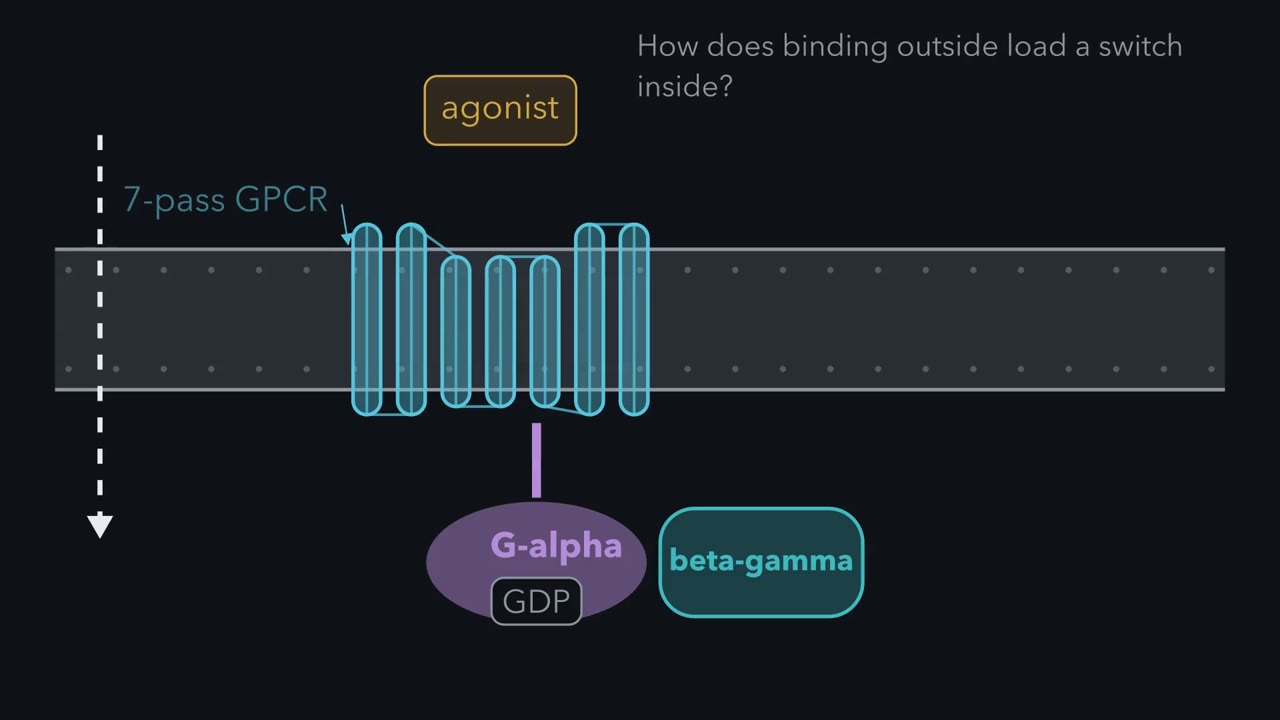 First film Length 3:36 How a Receptor Loads a Switch Cell Signaling · Graduate school and beyond GPCRs and Trimeric G Proteins
Take-home
GPCR subtype, G protein, and downstream proteins decide the first response.
-
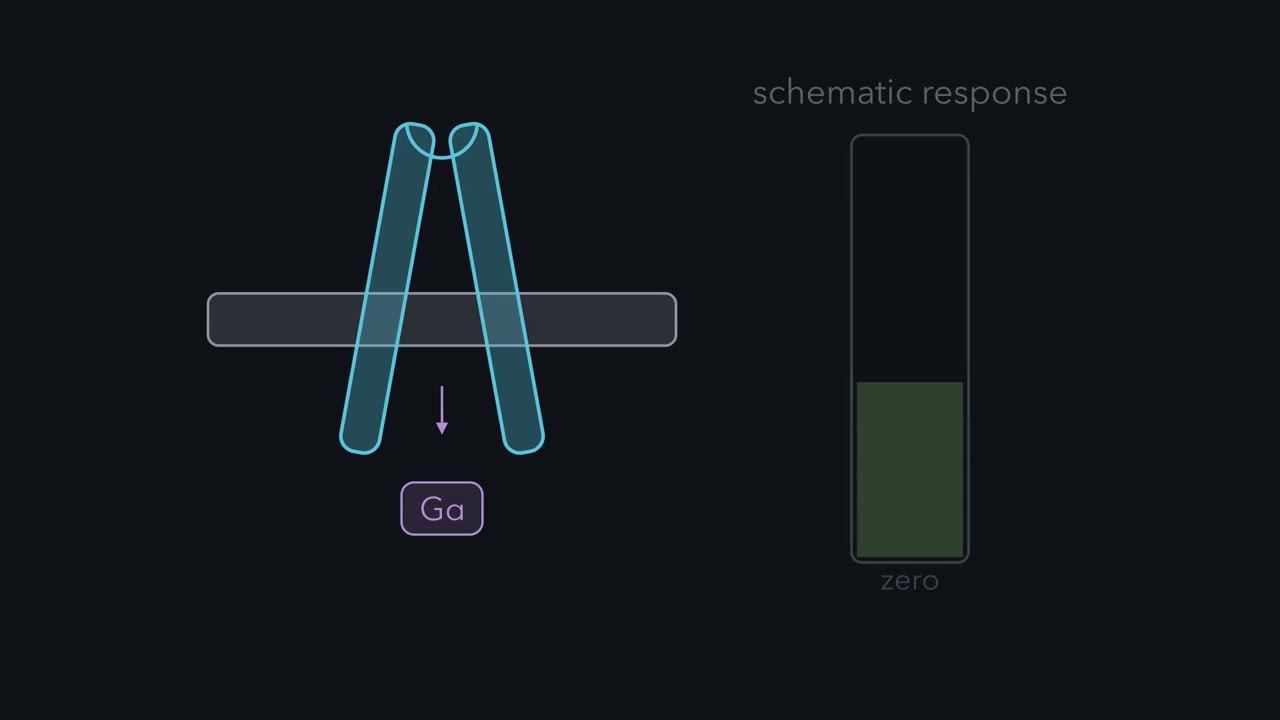 Second film Length 3:54 Above, At, or Below Basal Cell Signaling · Graduate school and beyond GPCRs and Trimeric G Proteins
Take-home
Basal activity separates agonists, neutral antagonists, and inverse agonists.
-
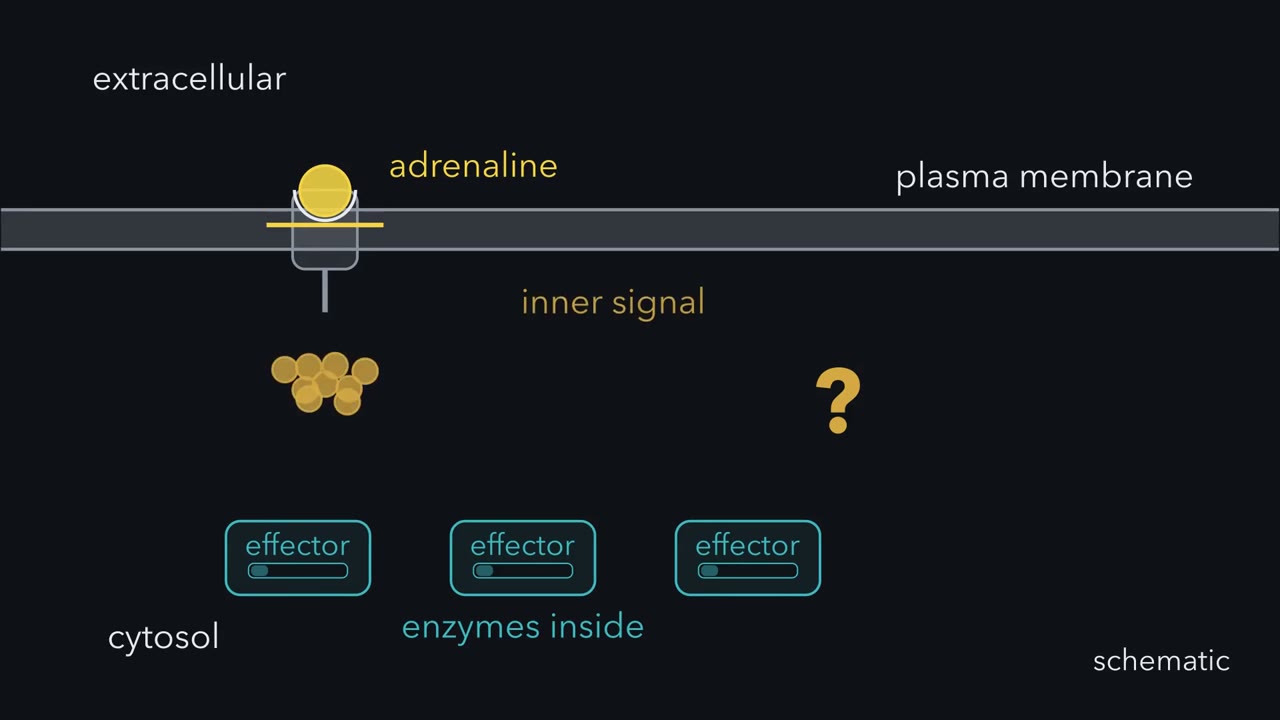 First film Length 3:37 The Messenger Level: Made and Erased Cell Signaling · Graduate school and beyond cAMP and Protein Kinase A
Take-home
cAMP levels reflect the balance of synthesis and breakdown.
-
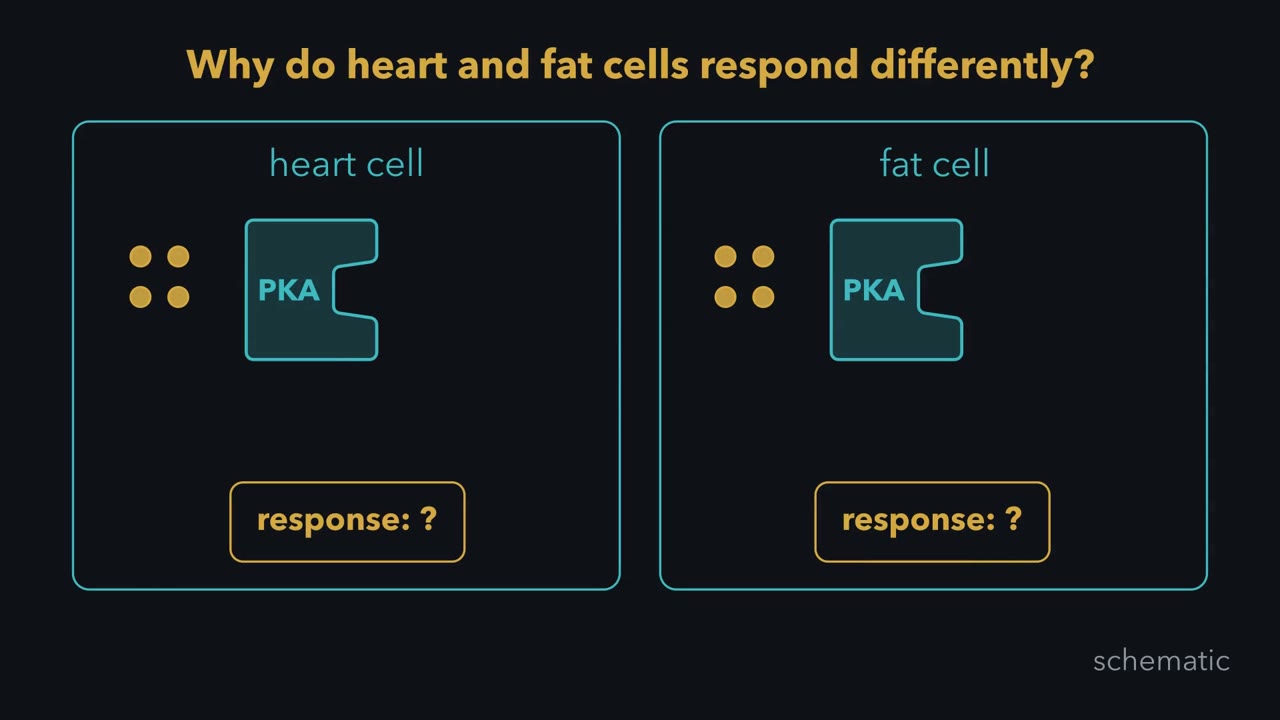 Second film Length 3:46 PKA: The Target Sets the Response Cell Signaling · Graduate school and beyond cAMP and Protein Kinase A
Take-home
PKA responses depend on which targets are nearby.
-
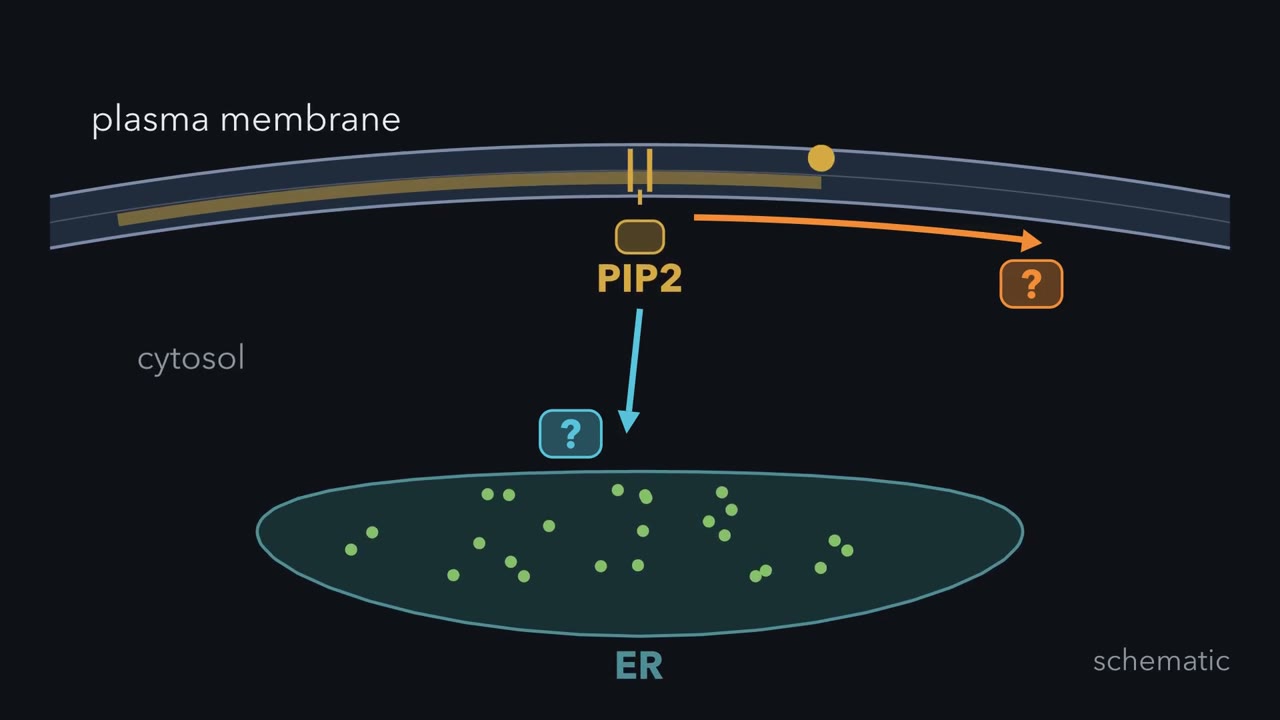 First film Length 3:16 One Cut, Two Destinations Cell Signaling · Graduate school and beyond PLC, IP3, DAG and Protein Kinase C
Take-home
One PIP2 cut sends IP3 away and leaves DAG at the membrane.
-
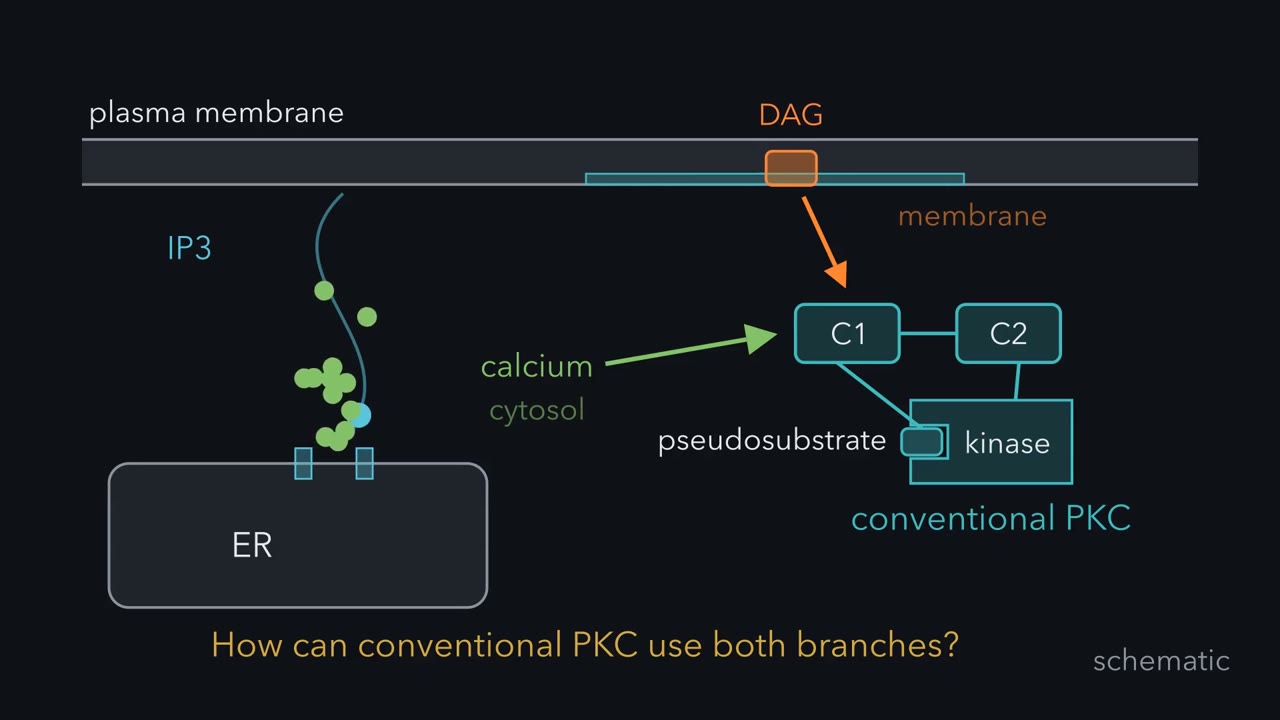 Second film Length 3:25 How Conventional PKC Reads Both Branches Cell Signaling · Graduate school and beyond PLC, IP3, DAG and Protein Kinase C
Take-home
Conventional PKC integrates calcium targeting with DAG activation at membranes.
-
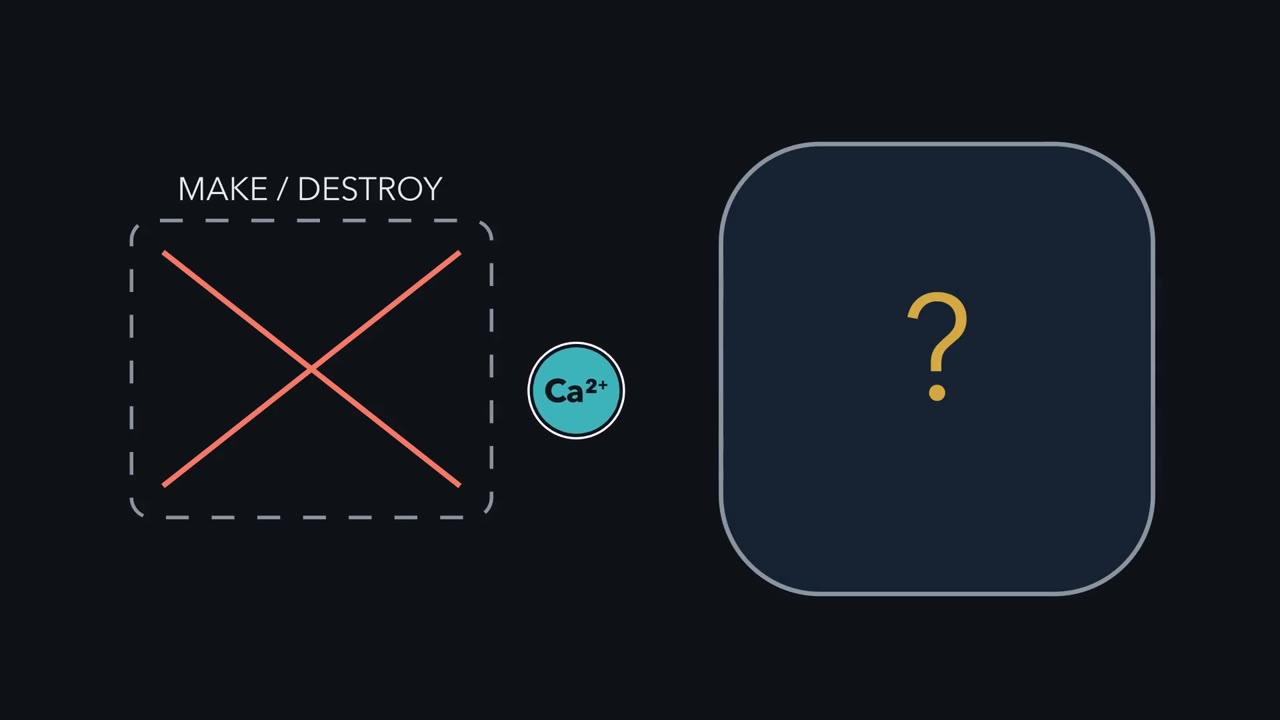 First film Length 3:28 How a Cell Makes a Calcium Signal Cell Signaling · Graduate school and beyond Calcium: The Messenger Kept at Arm's Length
Take-home
Calcium signals begin and end by moving calcium, not changing it.
-
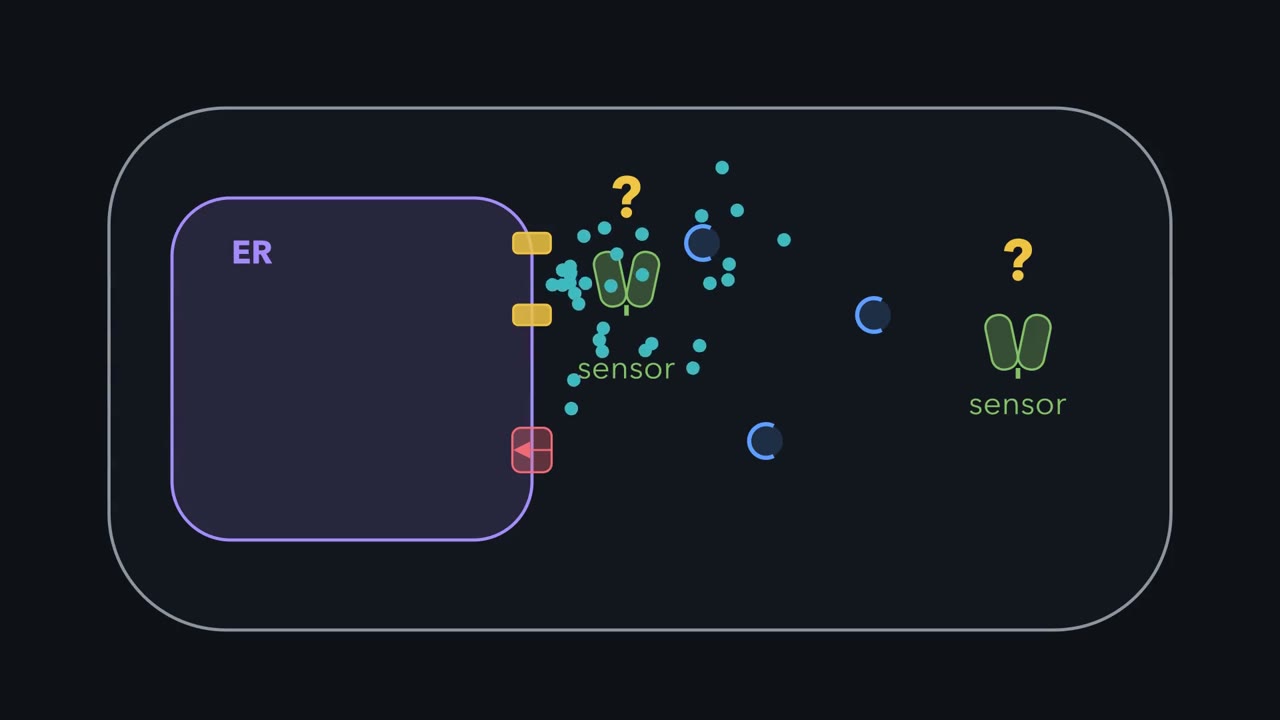 Second film Length 3:37 How One Ion Carries Different Messages Cell Signaling · Graduate school and beyond Calcium: The Messenger Kept at Arm's Length
Take-home
Cells give calcium meaning by controlling where and when free calcium rises.
-
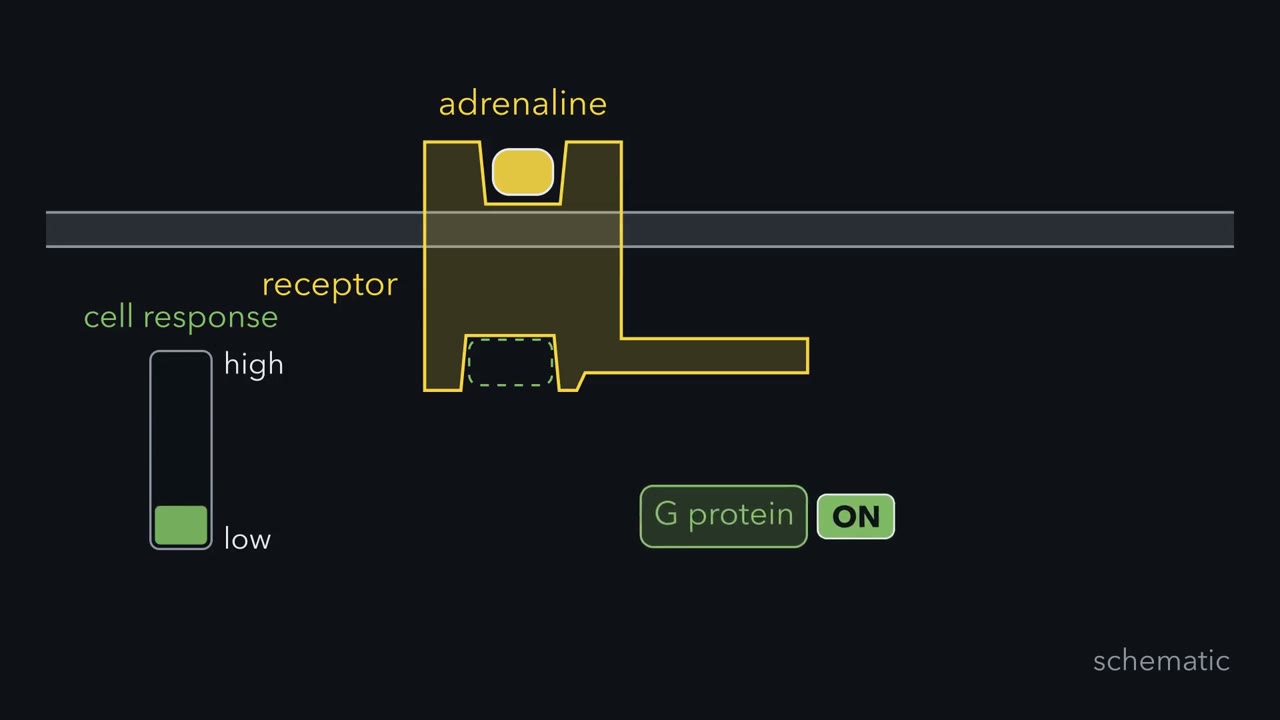 First film Length 3:36 The Mark and the Reader Cell Signaling · Graduate school and beyond Turning the Signal Off: Arrestins, RGS Proteins and Phosphodiesterases
Take-home
A GRK mark does little until arrestin reads it.
-
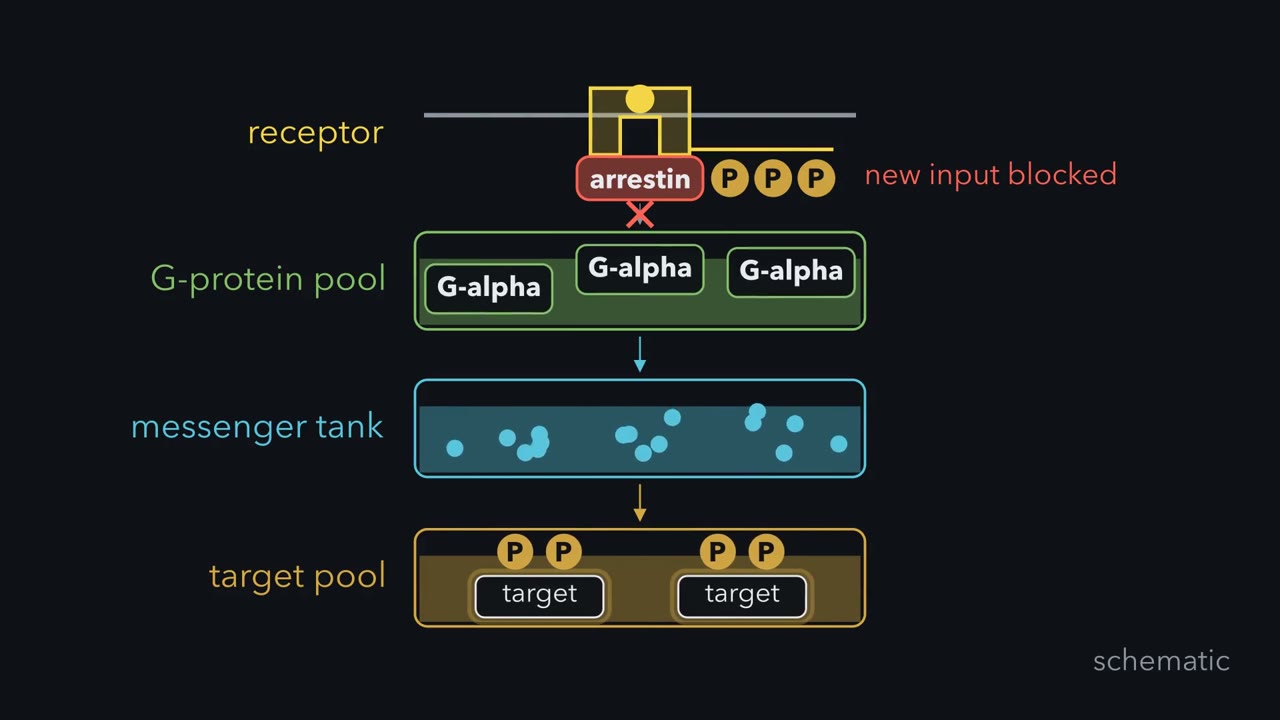 Second film Length 3:53 Where the Signal Runs Out Cell Signaling · Graduate school and beyond Turning the Signal Off: Arrestins, RGS Proteins and Phosphodiesterases
Take-home
Each downstream layer fades when removal outruns production.
-
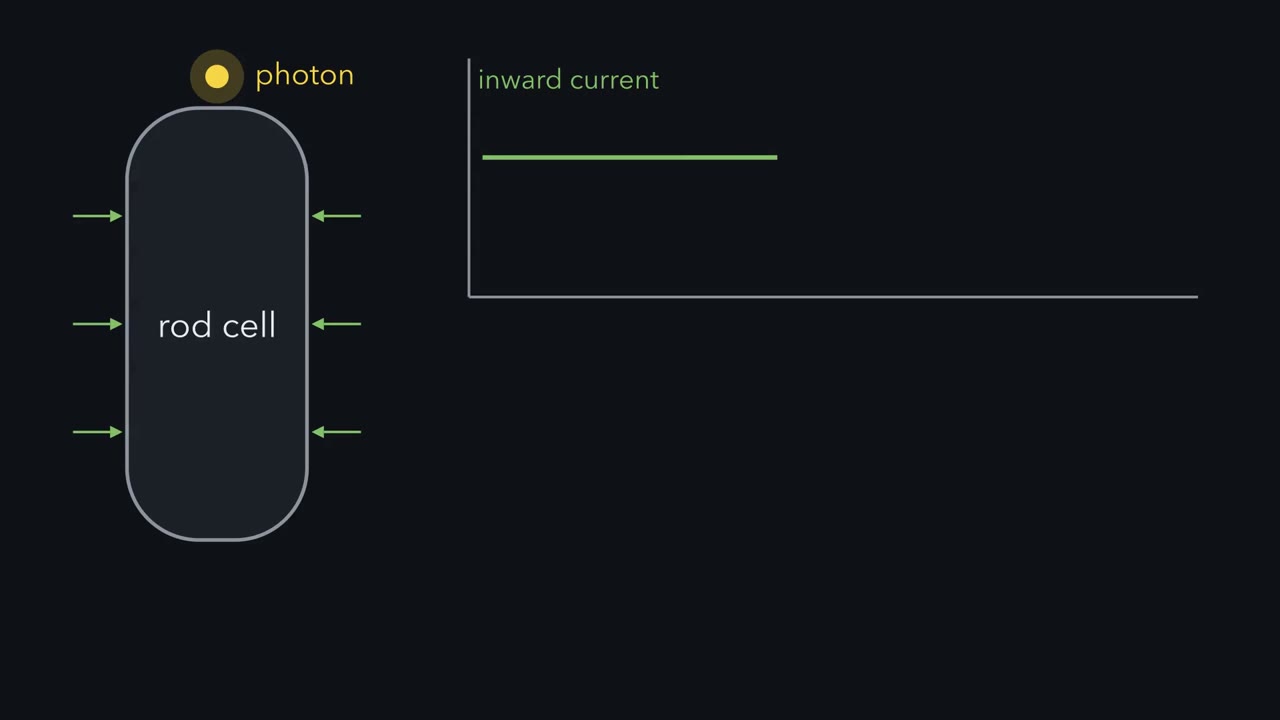 First film Length 2:52 A Fall Can Carry a Signal Cell Signaling · Graduate school and beyond Sensing the World: Vision, Smell, Nitric Oxide and cGMP
-
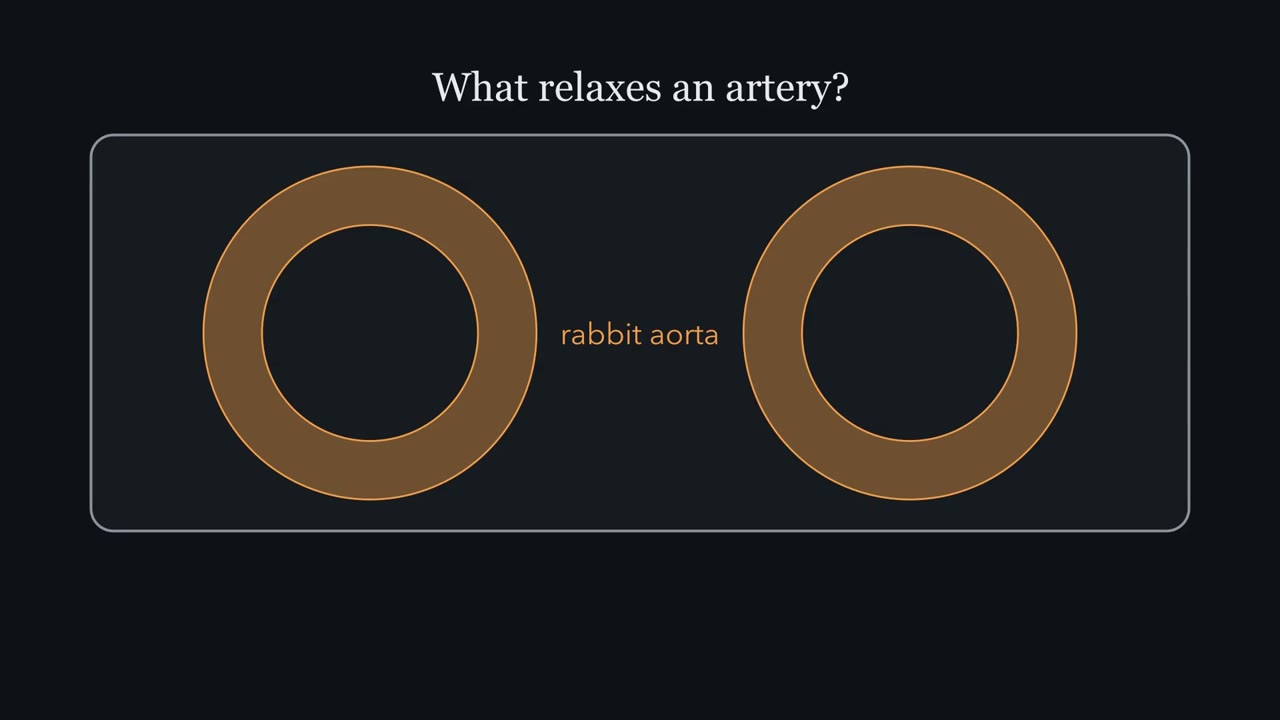 Second film Length 1:47 How an Artery Learned to Relax Cell Signaling · Graduate school and beyond Sensing the World: Vision, Smell, Nitric Oxide and cGMP
-
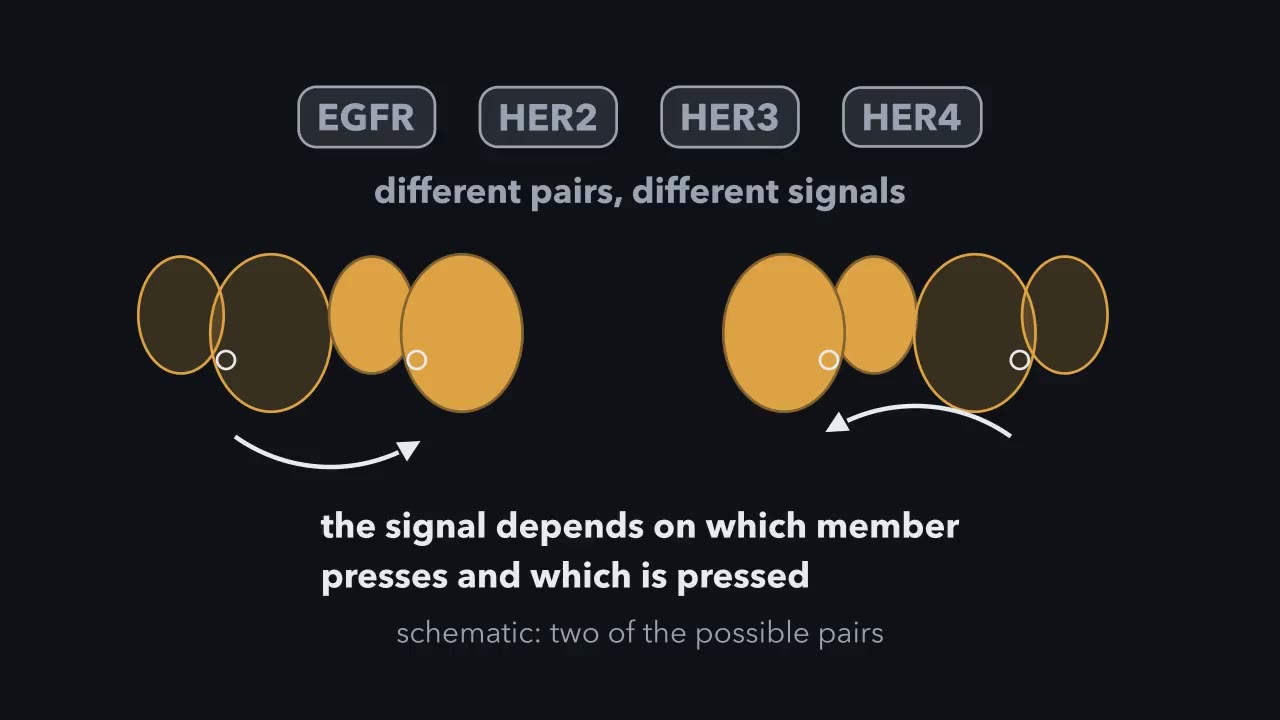 First film Length 2:33 The EGF receptor kinase switches on when two copies touch Cell Signaling · Graduate school and beyond Receptor Tyrosine Kinases
-
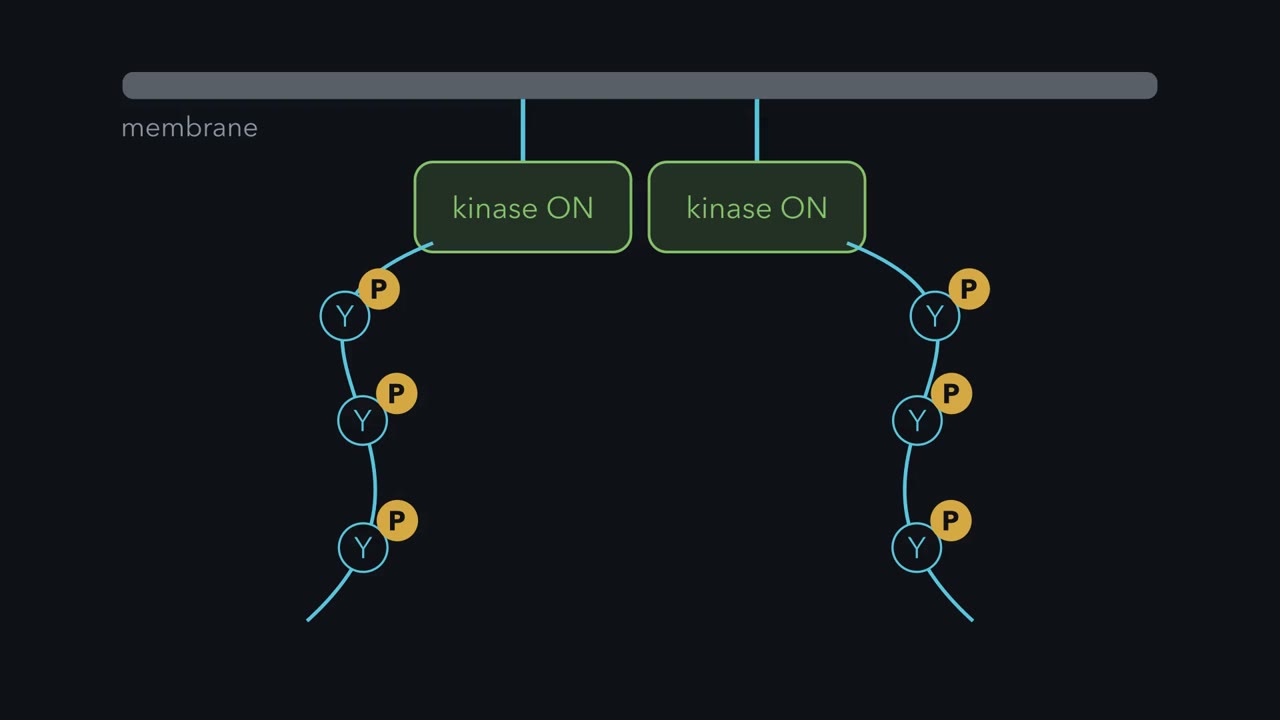 Second film Length 1:49 The tail's sequence picks the partner Cell Signaling · Graduate school and beyond Receptor Tyrosine Kinases
-
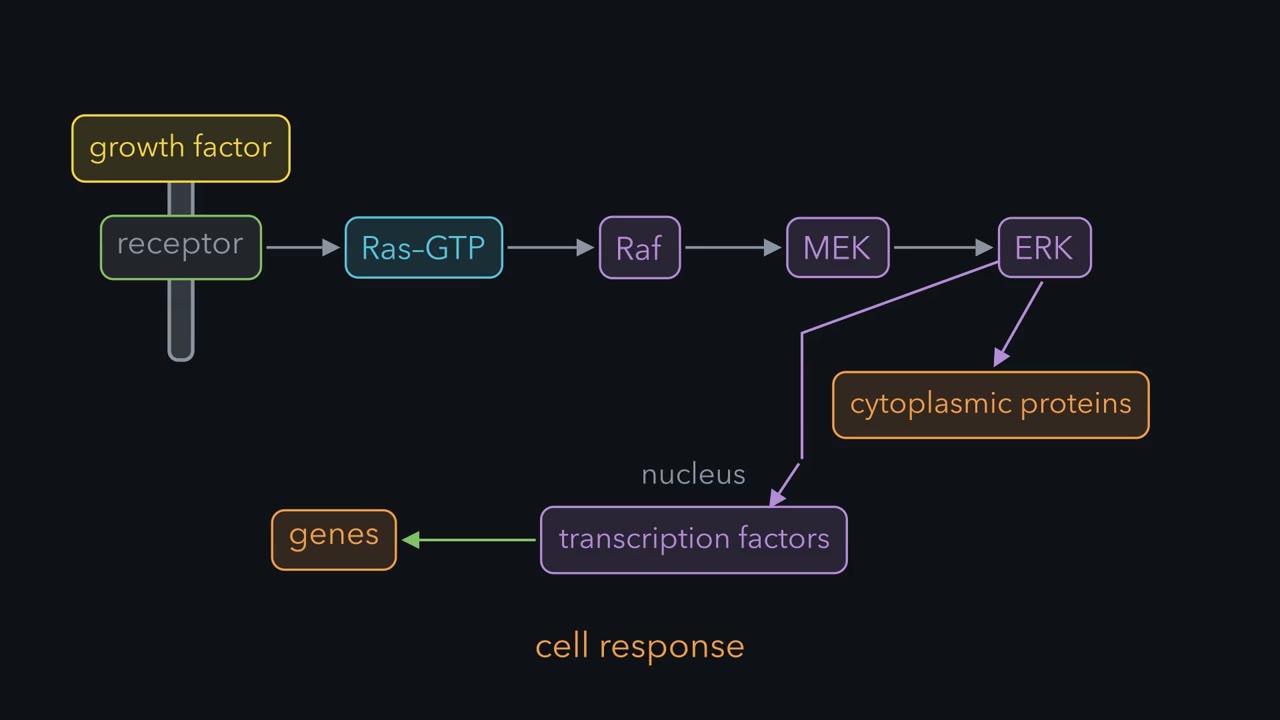 First film Length 2:48 Ras to MAPK: From Membrane to Genes Cell Signaling · Graduate school and beyond Ras to MAPK: The Kinase Cascade
-
 Second film Length 1:39 Who Switches ERK On? Cell Signaling · Graduate school and beyond Ras to MAPK: The Kinase Cascade
-
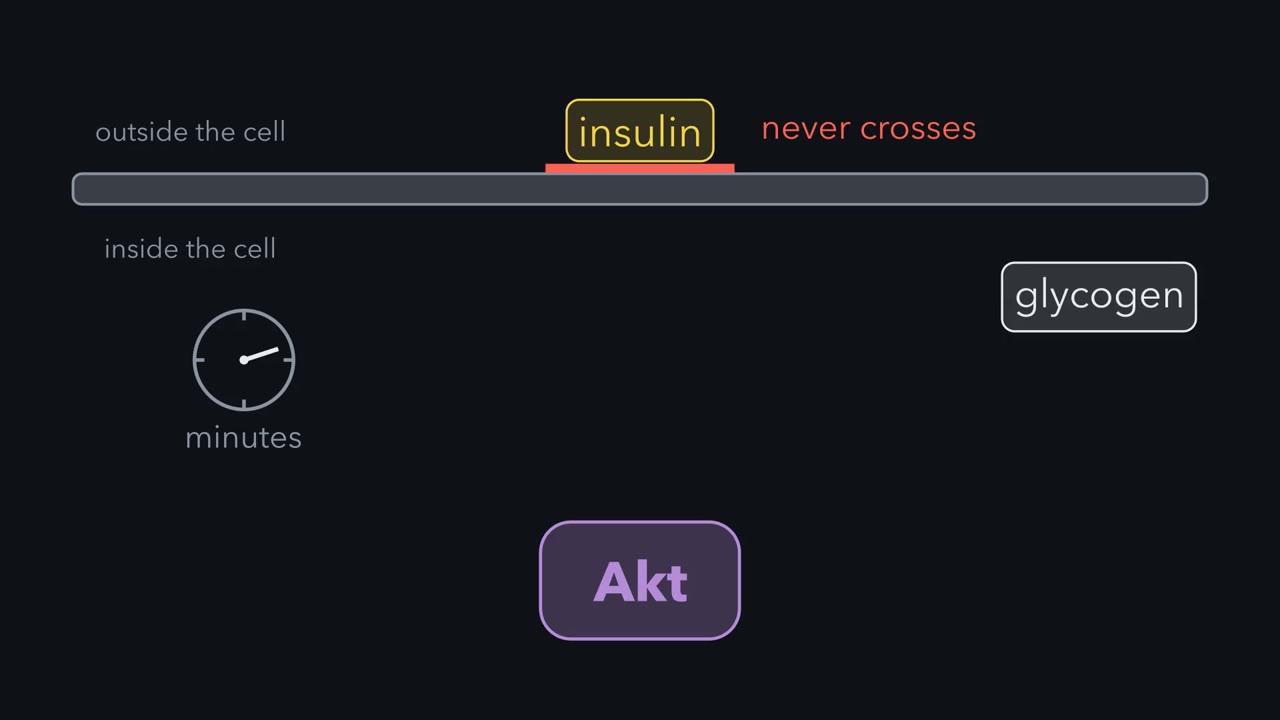 First film Length 2:53 A Membrane Address for Akt Cell Signaling · Graduate school and beyond PI 3-Kinase, Akt and Insulin
-
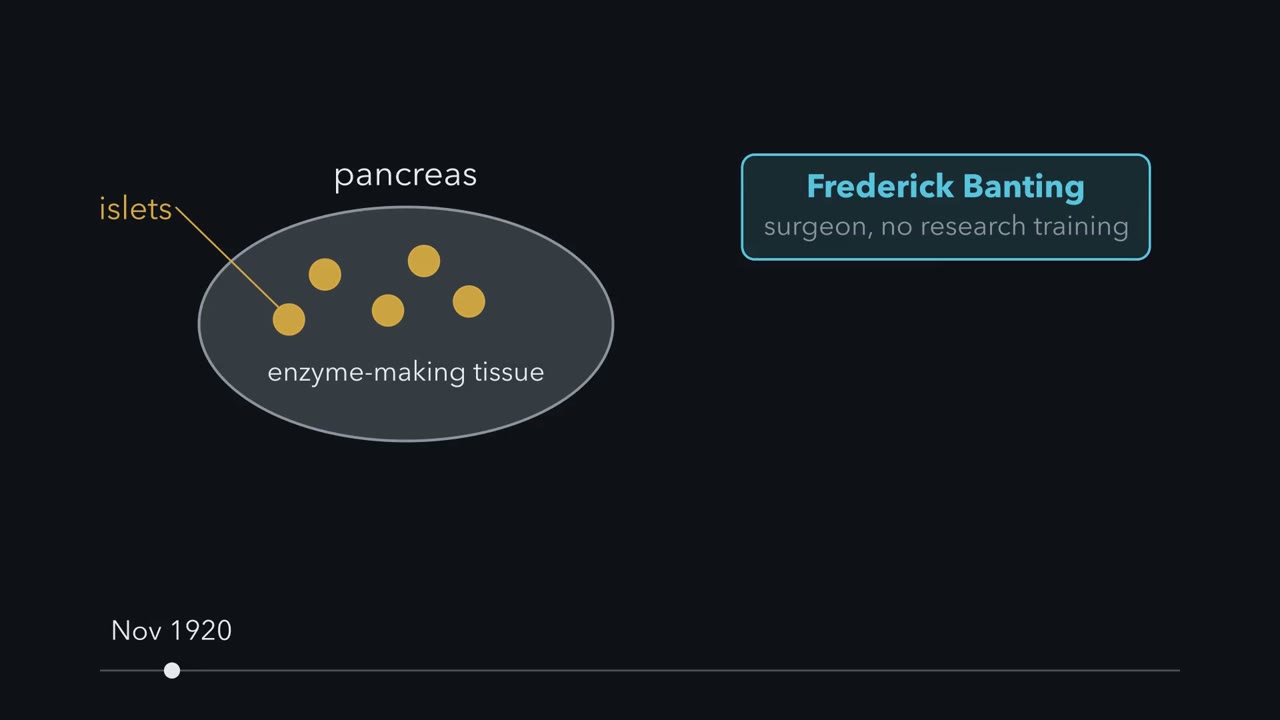 Second film Length 1:50 Four Names Behind the First Insulin Cell Signaling · Graduate school and beyond PI 3-Kinase, Akt and Insulin
-
 Part 1 of 3 Length 3:15 Two Yeses to Grow, One Veto Cell Signaling · Graduate school and beyond mTOR and AMPK: Reading Nutrients and Energy
-
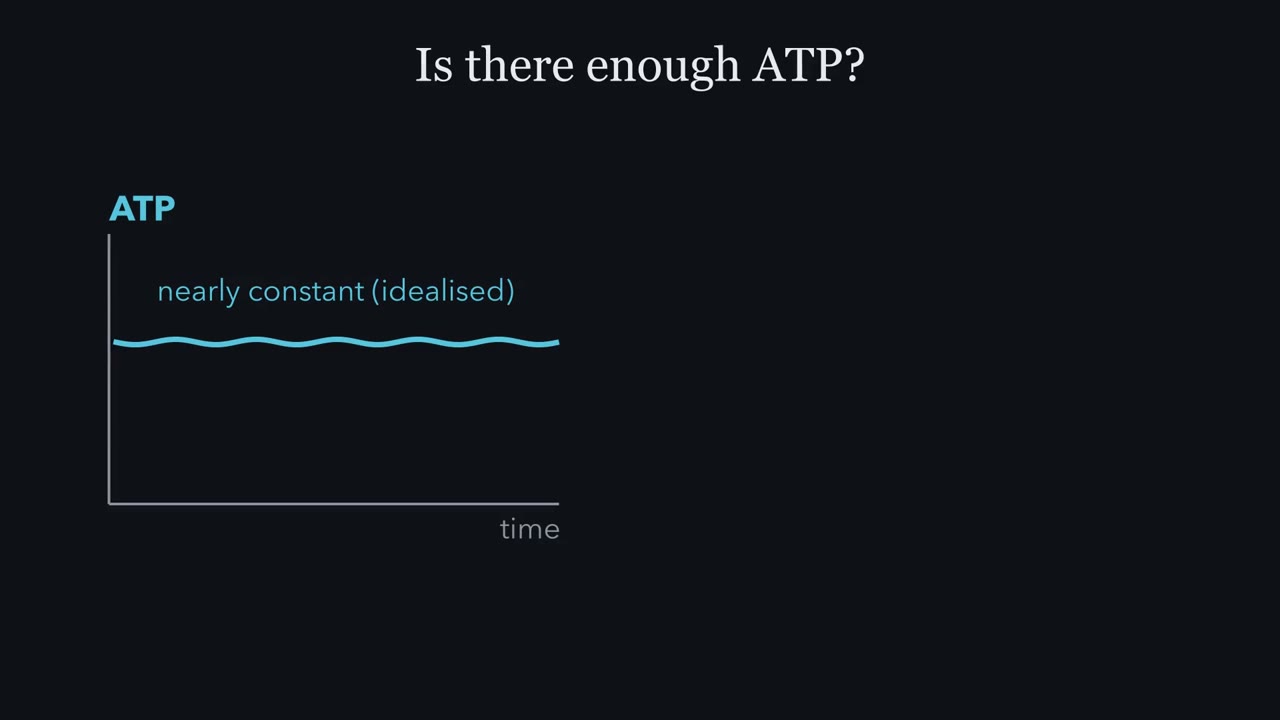 Part 2 of 3 Length 1:49 Why AMPK Reads AMP Cell Signaling · Graduate school and beyond mTOR and AMPK: Reading Nutrients and Energy
-
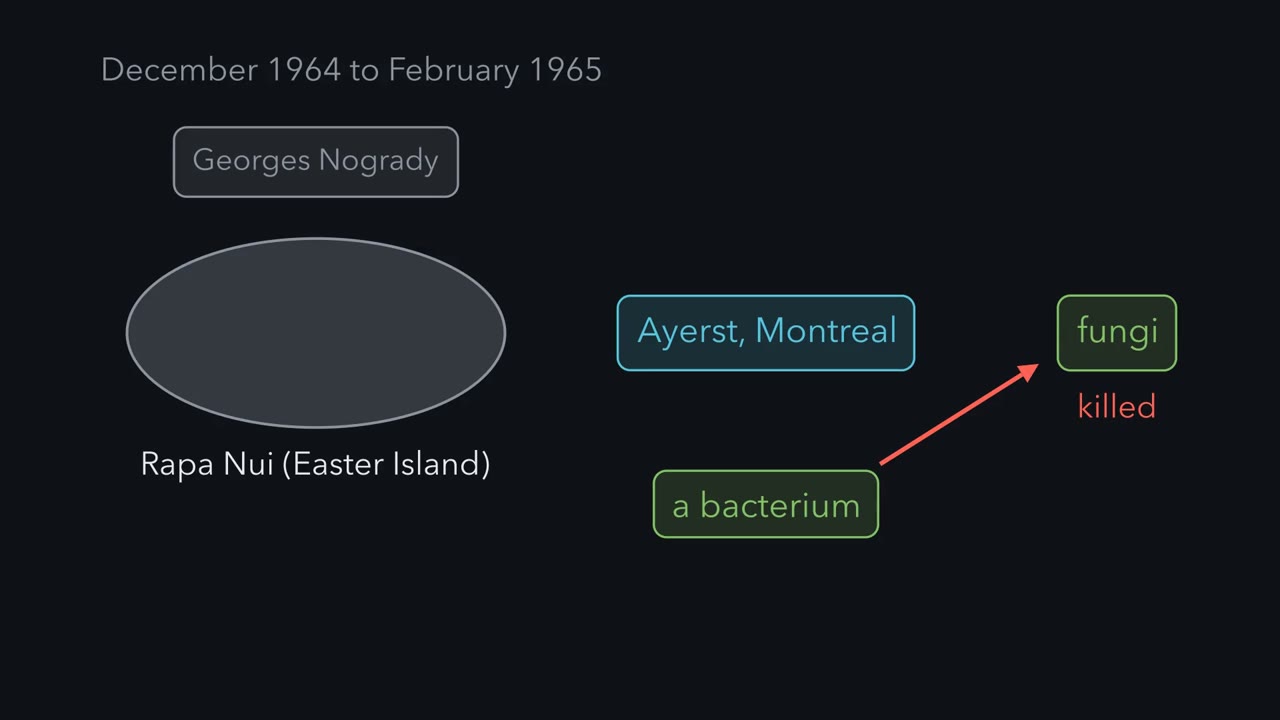 Part 3 of 3 Length 1:49 Rapamycin Needs a Partner Cell Signaling · Graduate school and beyond mTOR and AMPK: Reading Nutrients and Energy
-
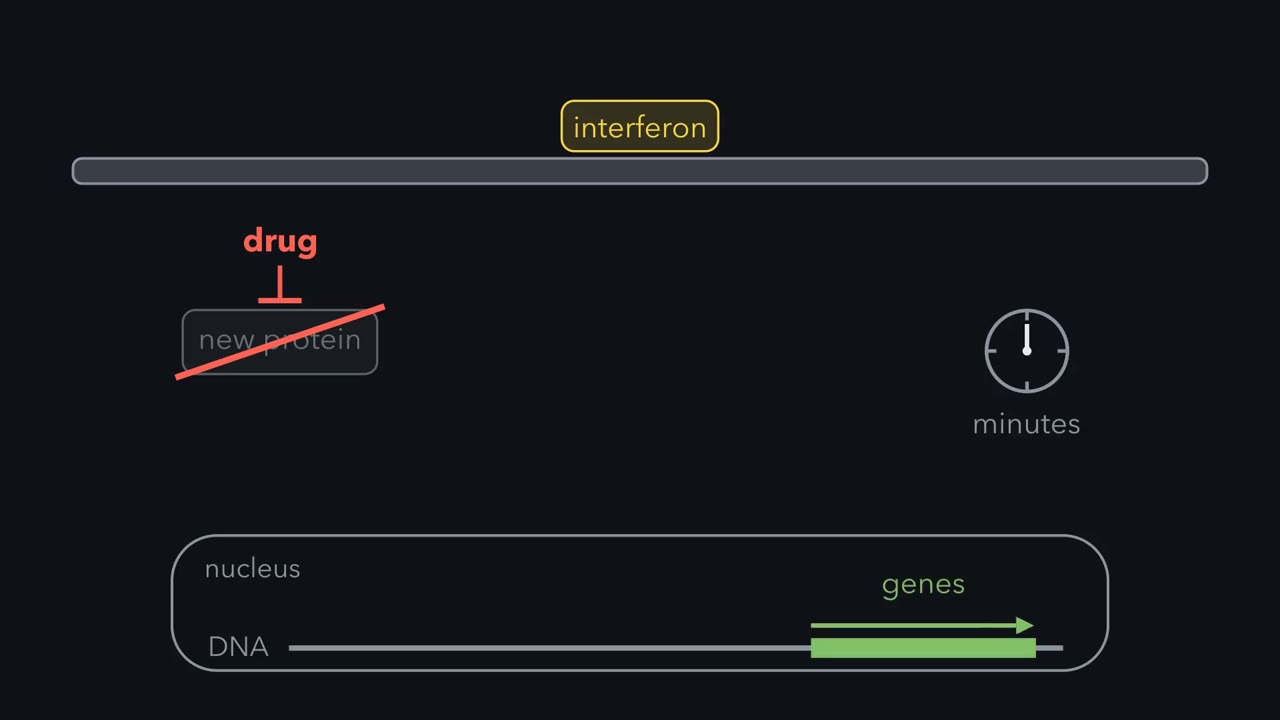 First film Length 2:31 One Protein From Receptor to Gene Cell Signaling · Graduate school and beyond Cytokine Receptors and JAK–STAT
-
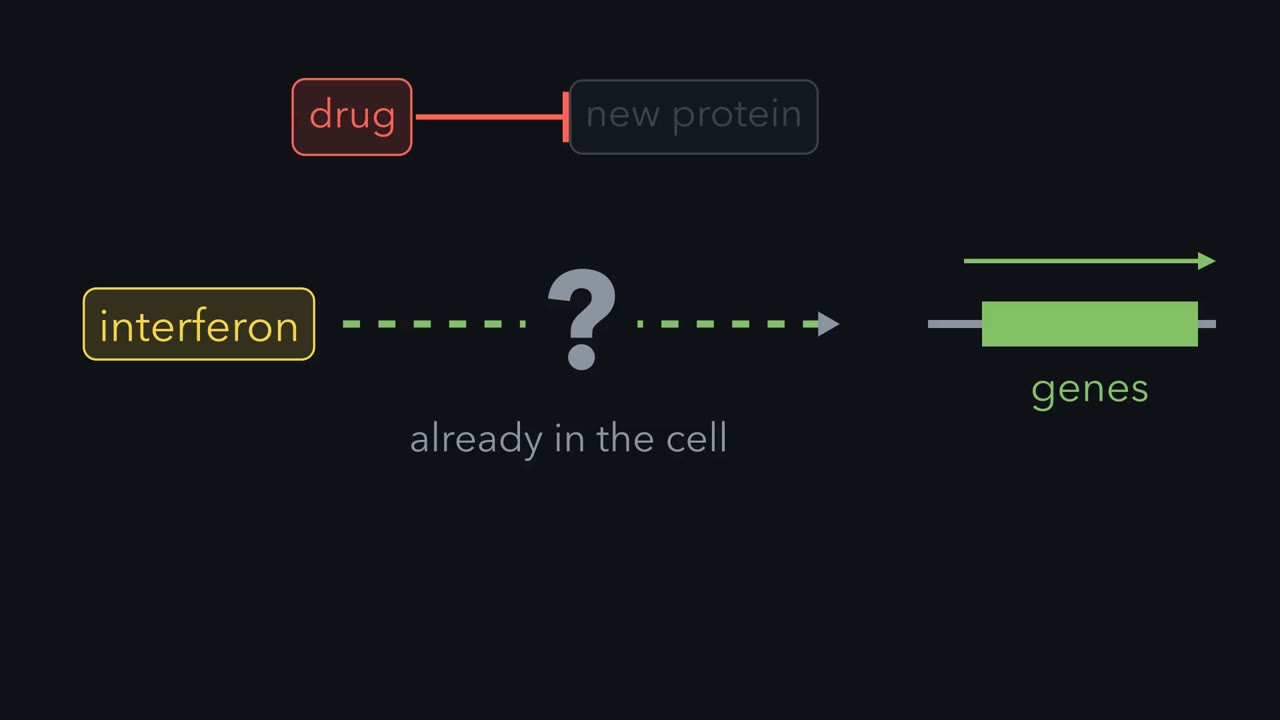 Second film Length 1:50 Two Labs, One Missing Kinase Cell Signaling · Graduate school and beyond Cytokine Receptors and JAK–STAT
-
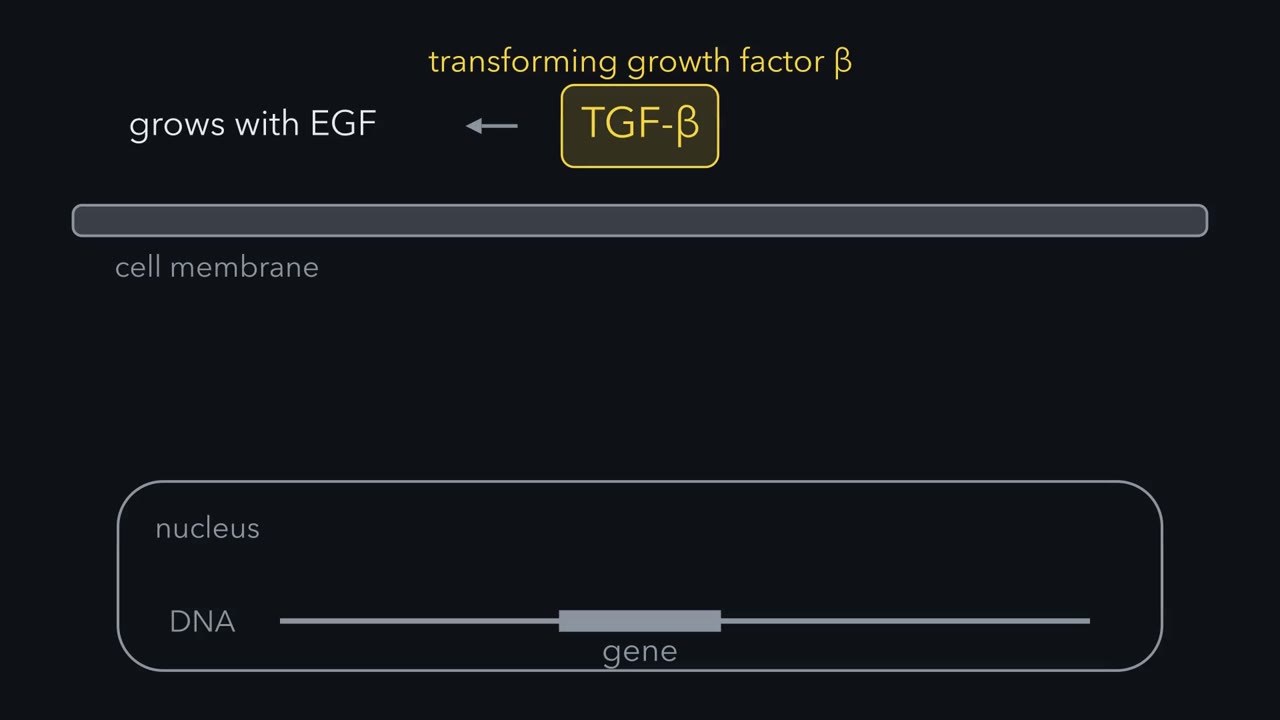 First film Length 3:00 The Ligand Only Introduces Two Kinases Cell Signaling · Graduate school and beyond TGF-β and Smads
-
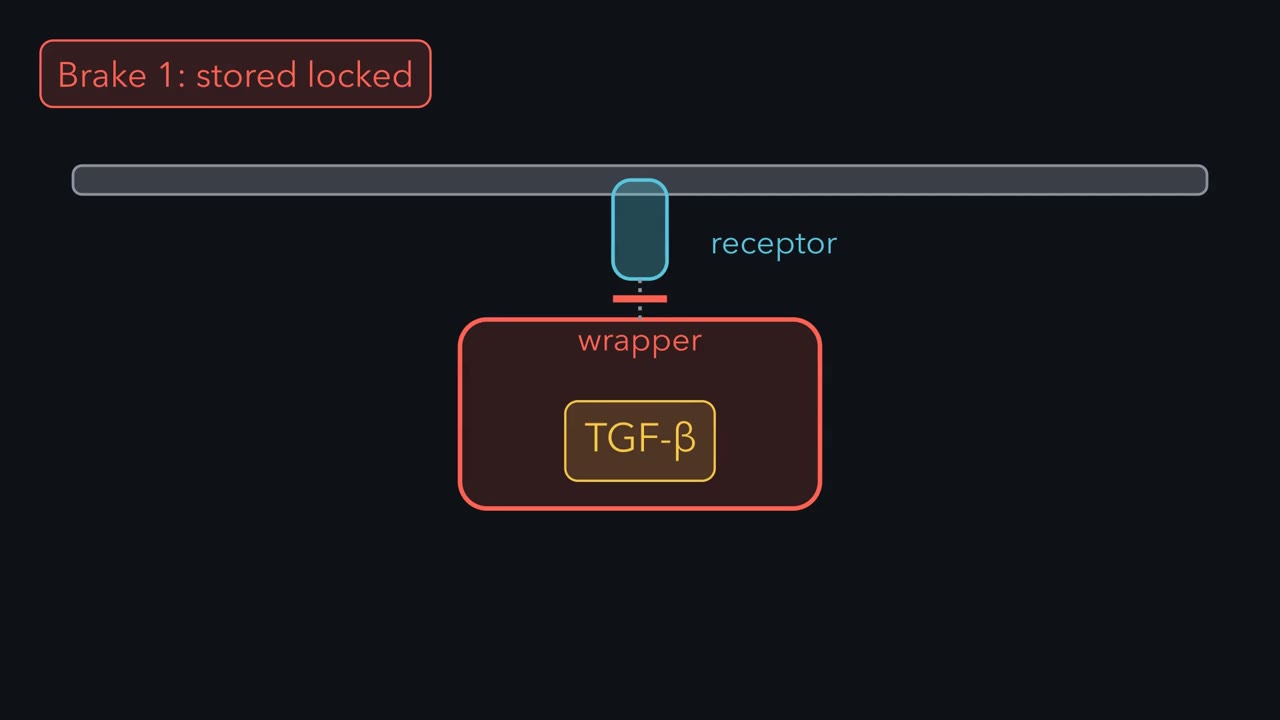 Second film Length 1:48 Three Brakes on a Strong Signal Cell Signaling · Graduate school and beyond TGF-β and Smads
-
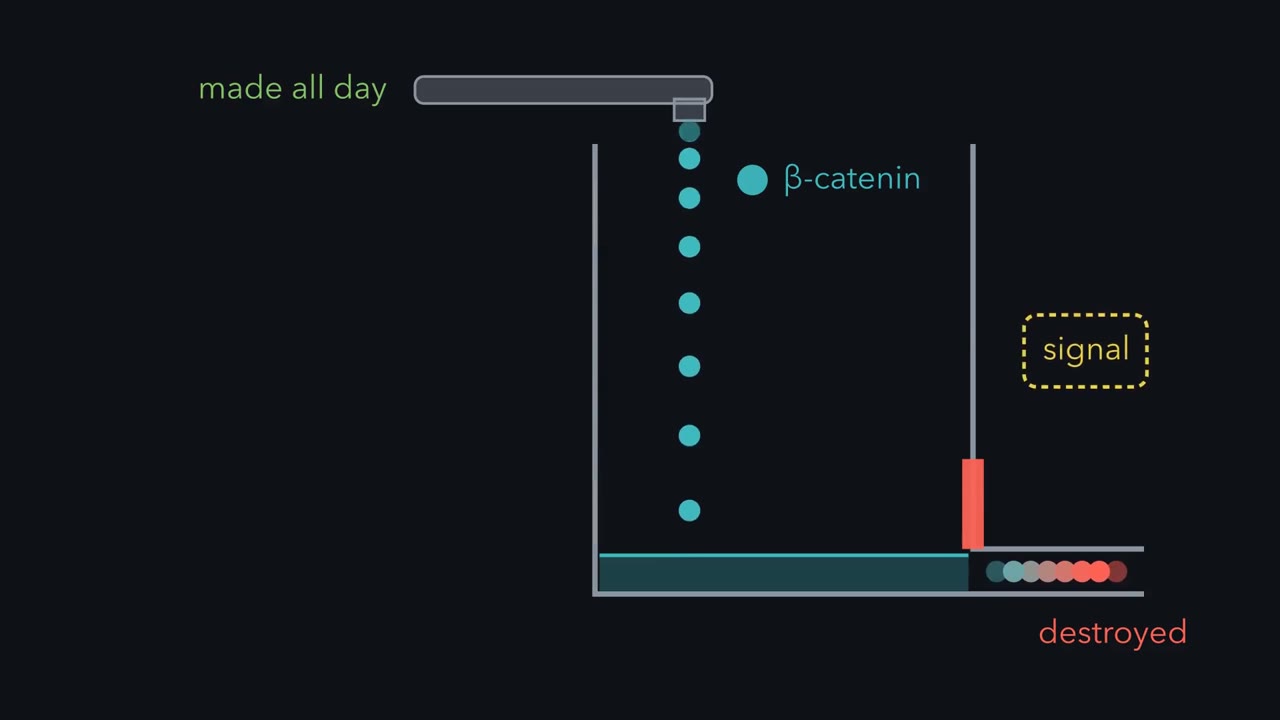 First film Length 2:58 Wnt Plugs the Drain Cell Signaling · Graduate school and beyond Wnt: β-Catenin and Planar Polarity
-
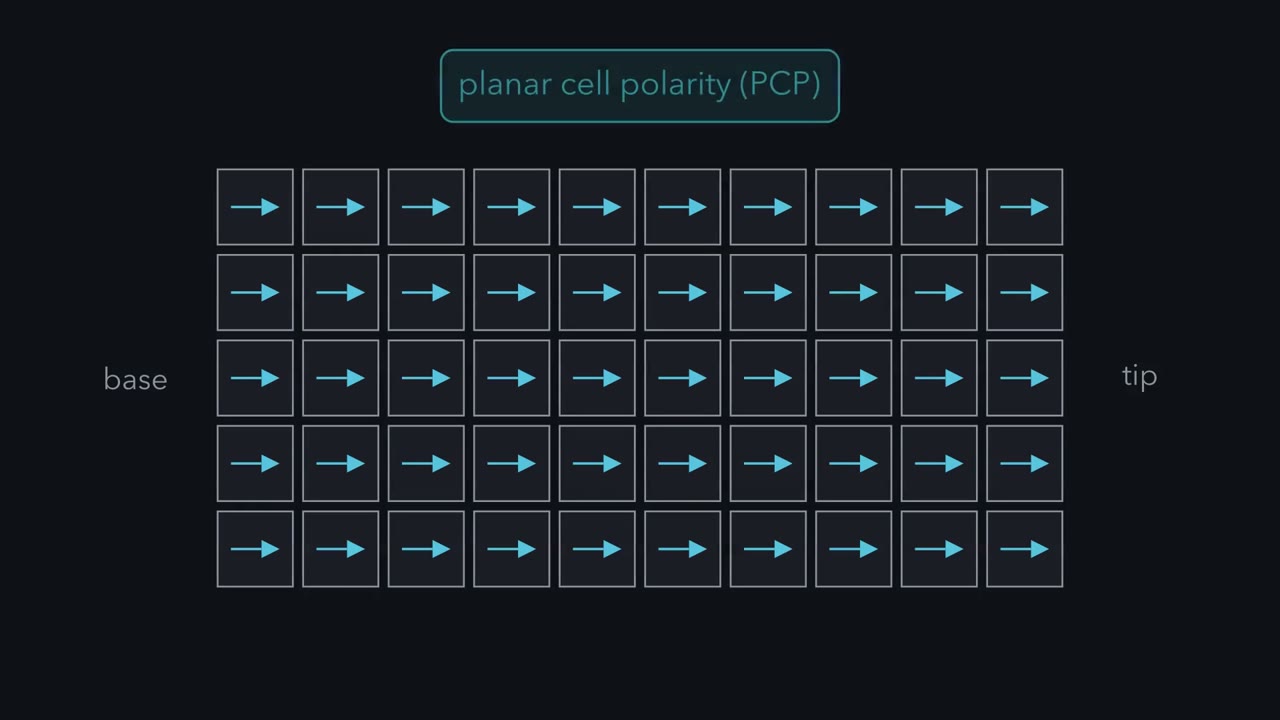 Second film Length 1:27 Frizzled and the Fly Wing's Hairs Cell Signaling · Graduate school and beyond Wnt: β-Catenin and Planar Polarity
-
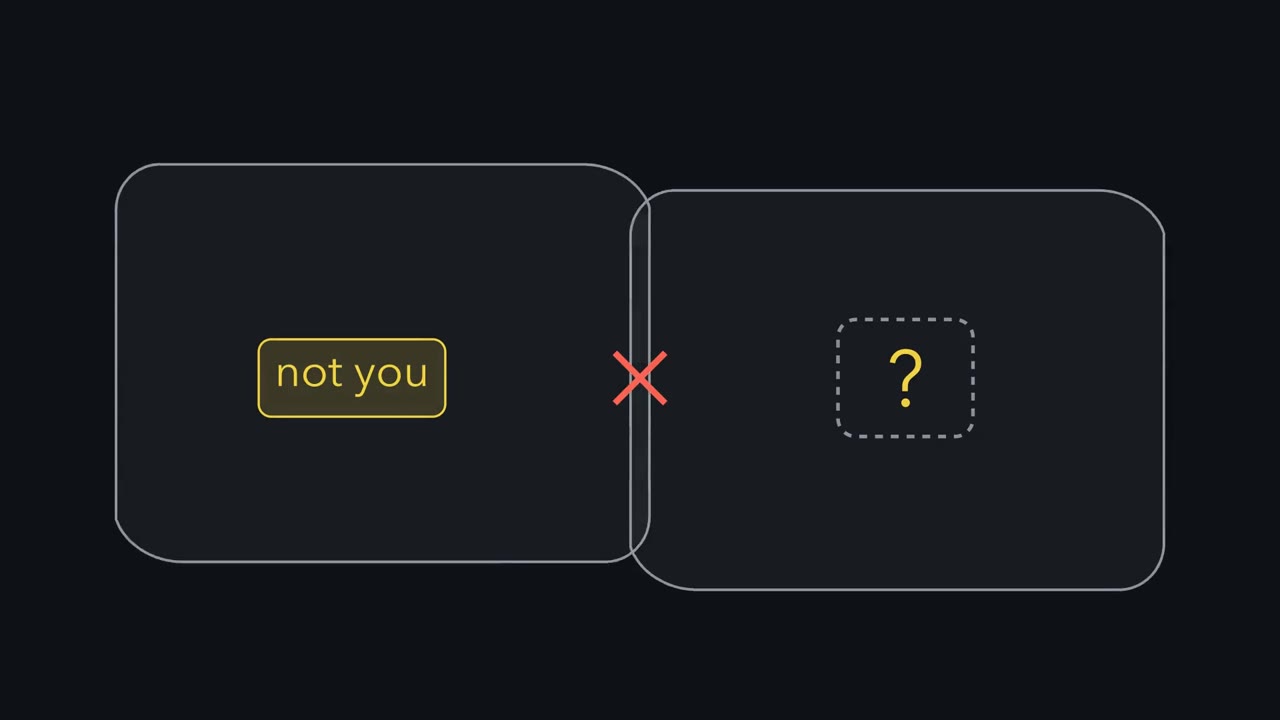 First film Length 2:45 The Receptor Is the Message Cell Signaling · Graduate school and beyond Notch: Signaling by Contact and by Cutting
-
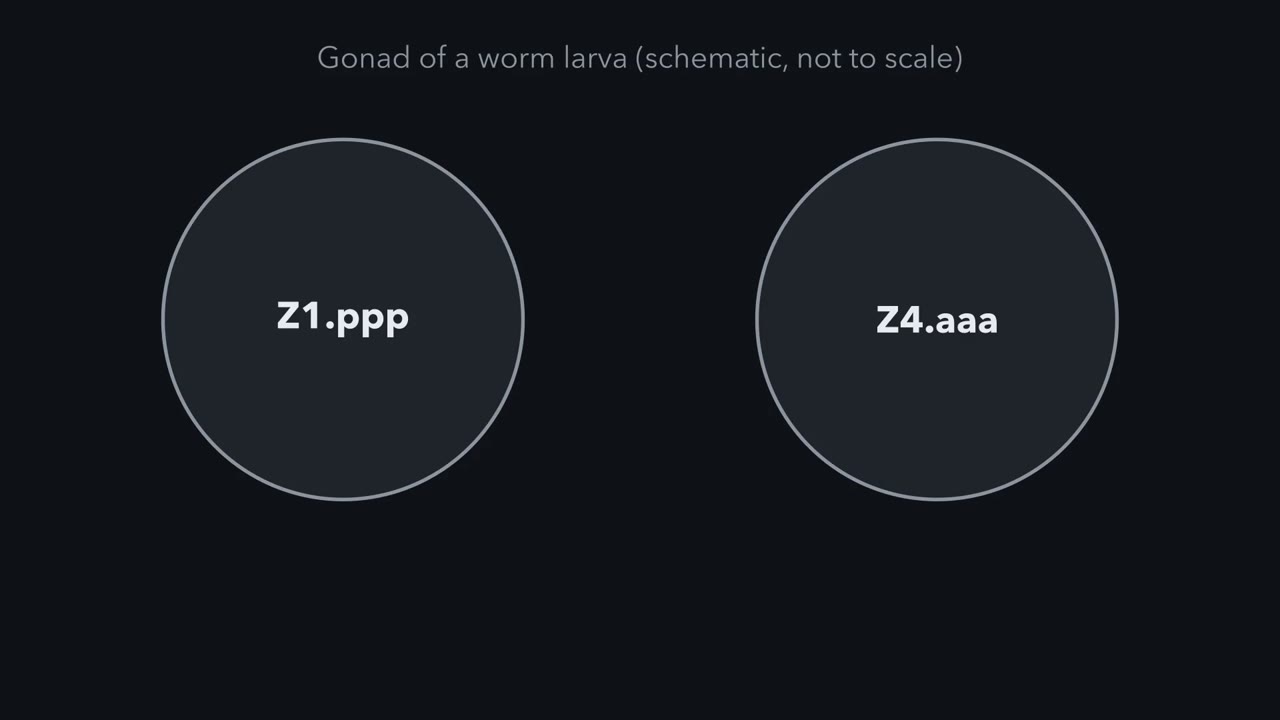 Second film Length 1:26 Two Equal Cells, Two Fates Cell Signaling · Graduate school and beyond Notch: Signaling by Contact and by Cutting
-
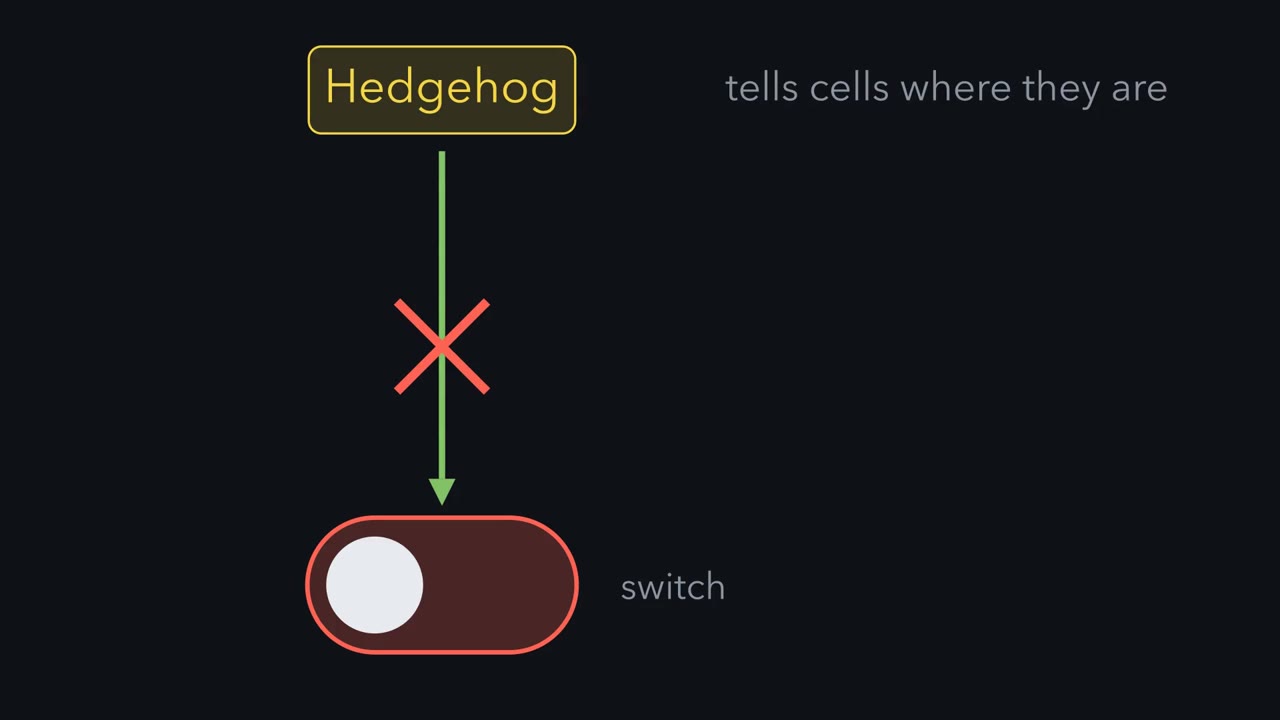 First film Length 2:12 Hedgehog Switches Off an Off-Switch Cell Signaling · Graduate school and beyond Hedgehog and the Primary Cilium
-
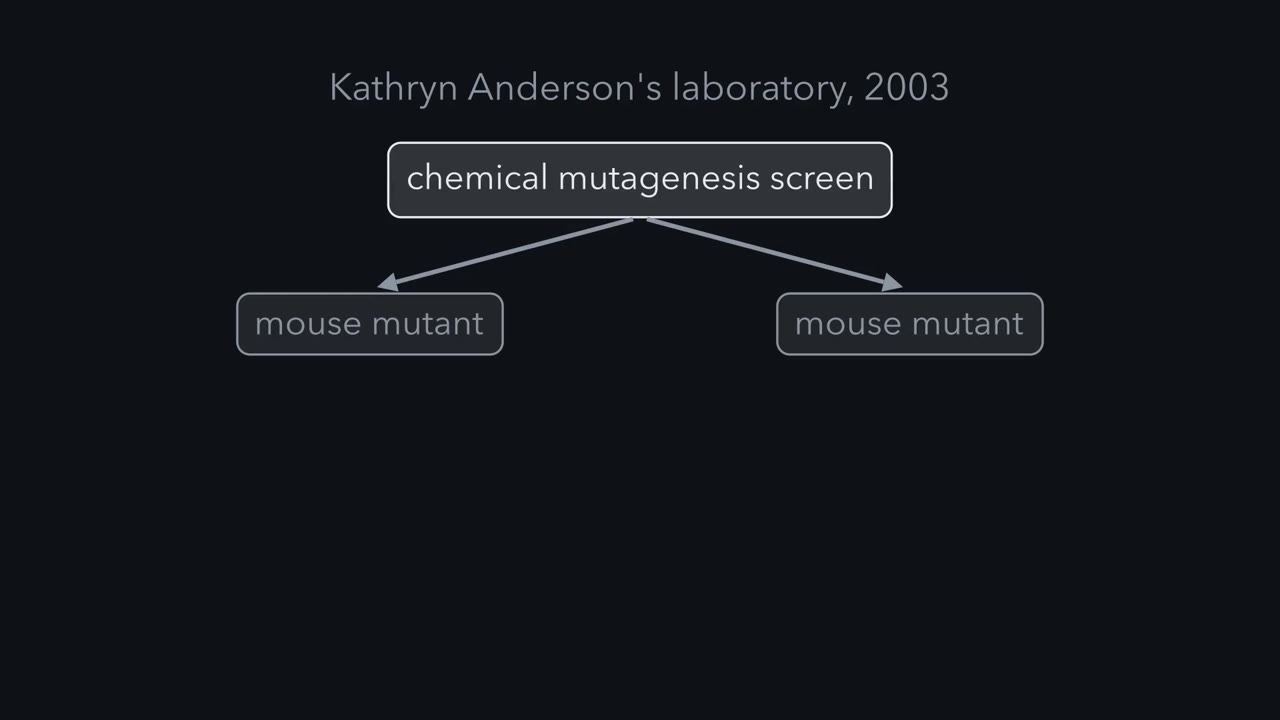 Second film Length 1:31 A Position Becomes a Place Cell Signaling · Graduate school and beyond Hedgehog and the Primary Cilium
-
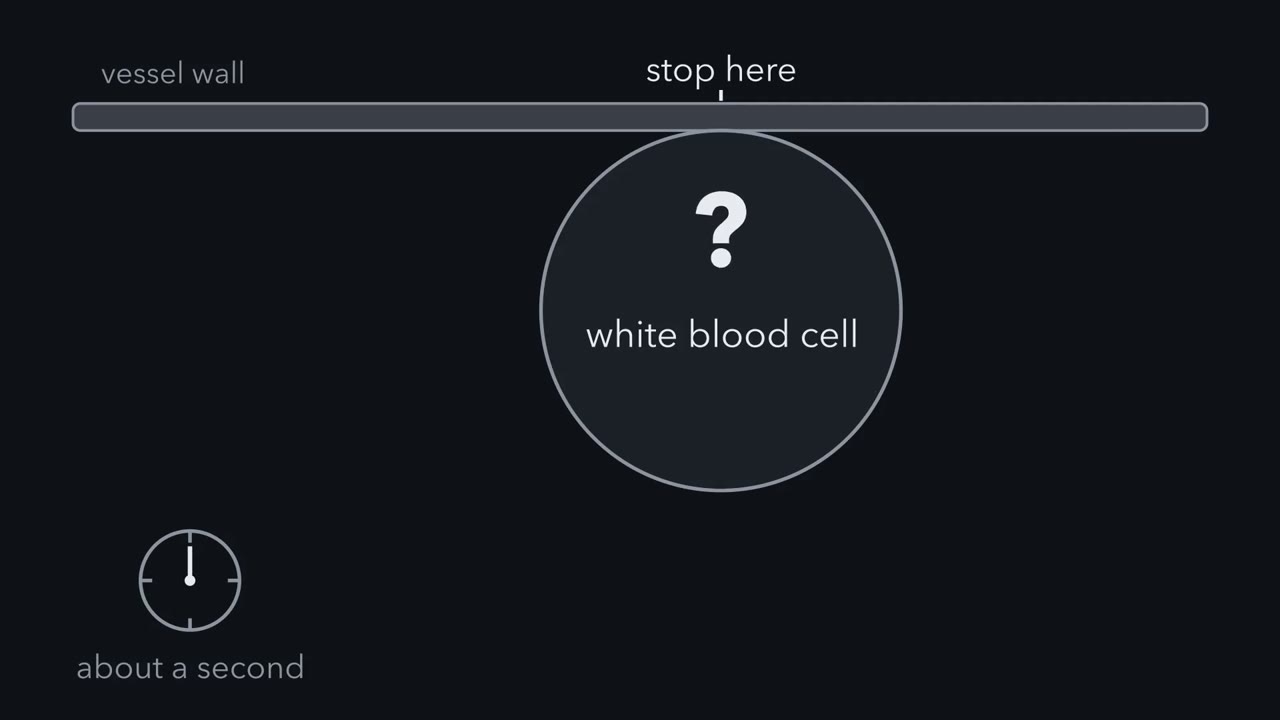 First film Length 2:05 A Grip Switched On From Inside Cell Signaling · Graduate school and beyond Integrins and Rho GTPases
-
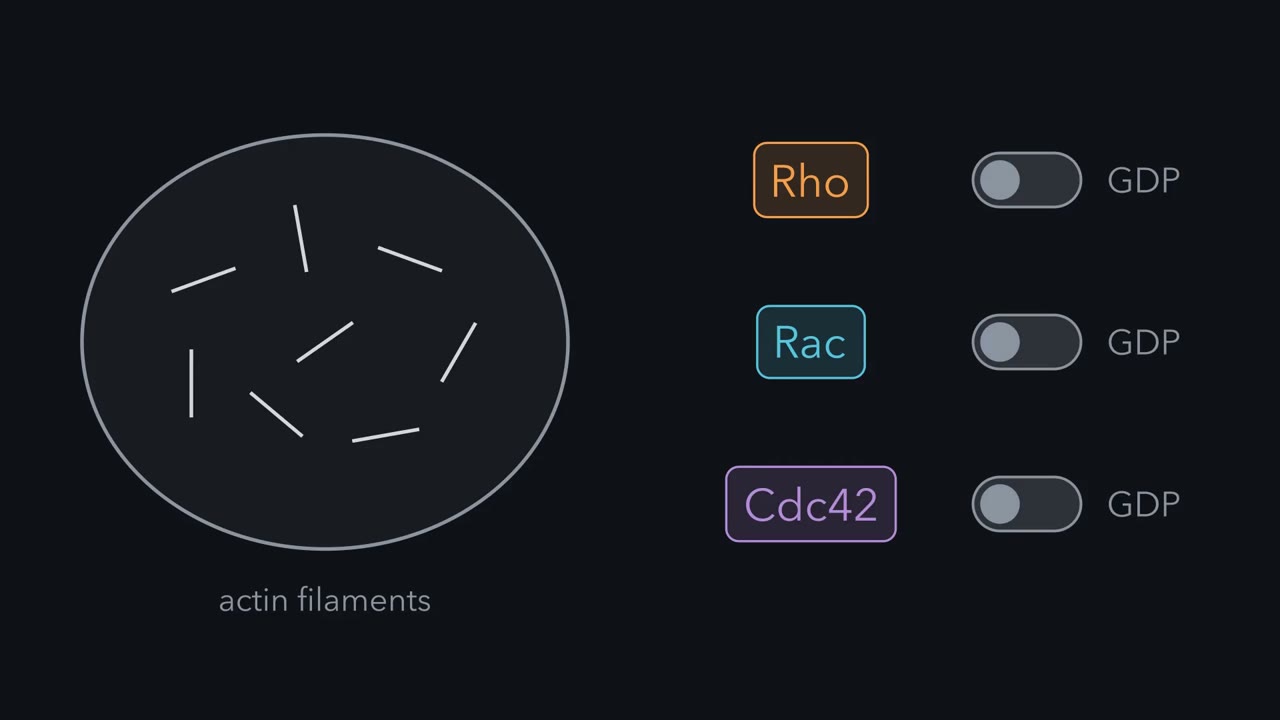 Second film Length 1:44 Three Switches, Three Shapes Cell Signaling · Graduate school and beyond Integrins and Rho GTPases
-
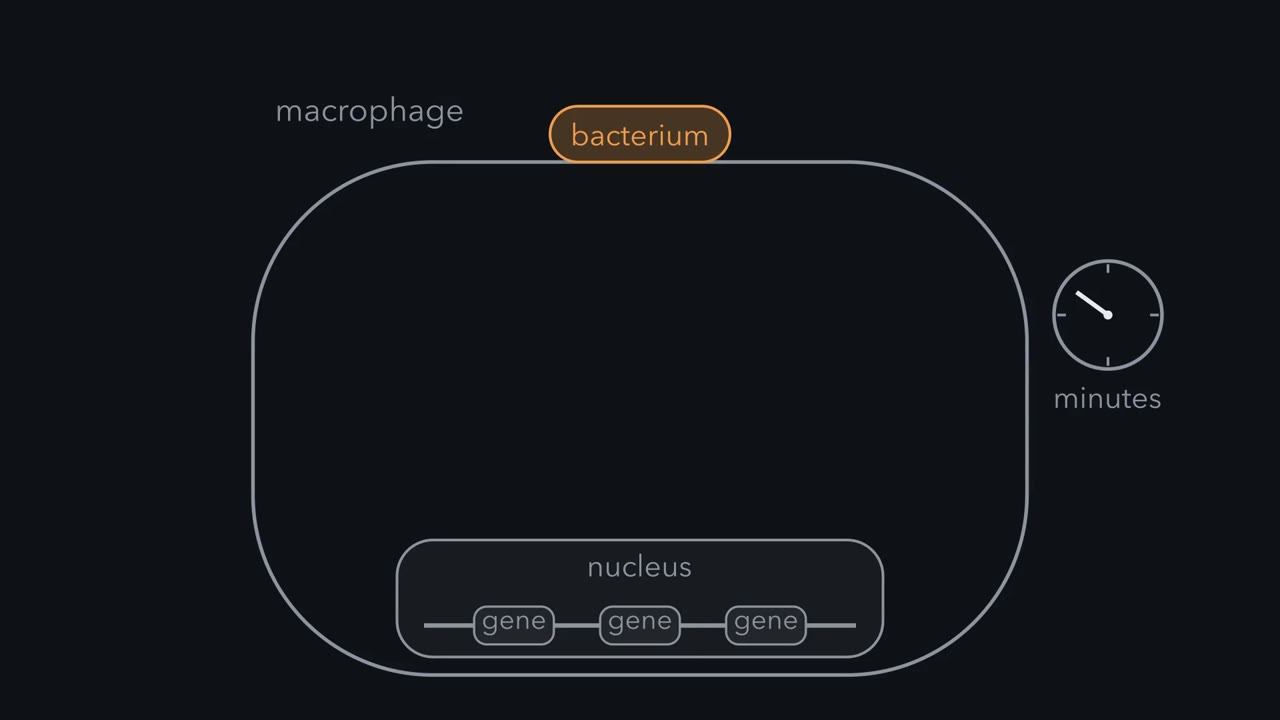 First film Length 2:24 A Cell Keeps Its Answer Ready Cell Signaling · Graduate school and beyond Innate Immunity: Toll-like Receptors and NF-κB
-
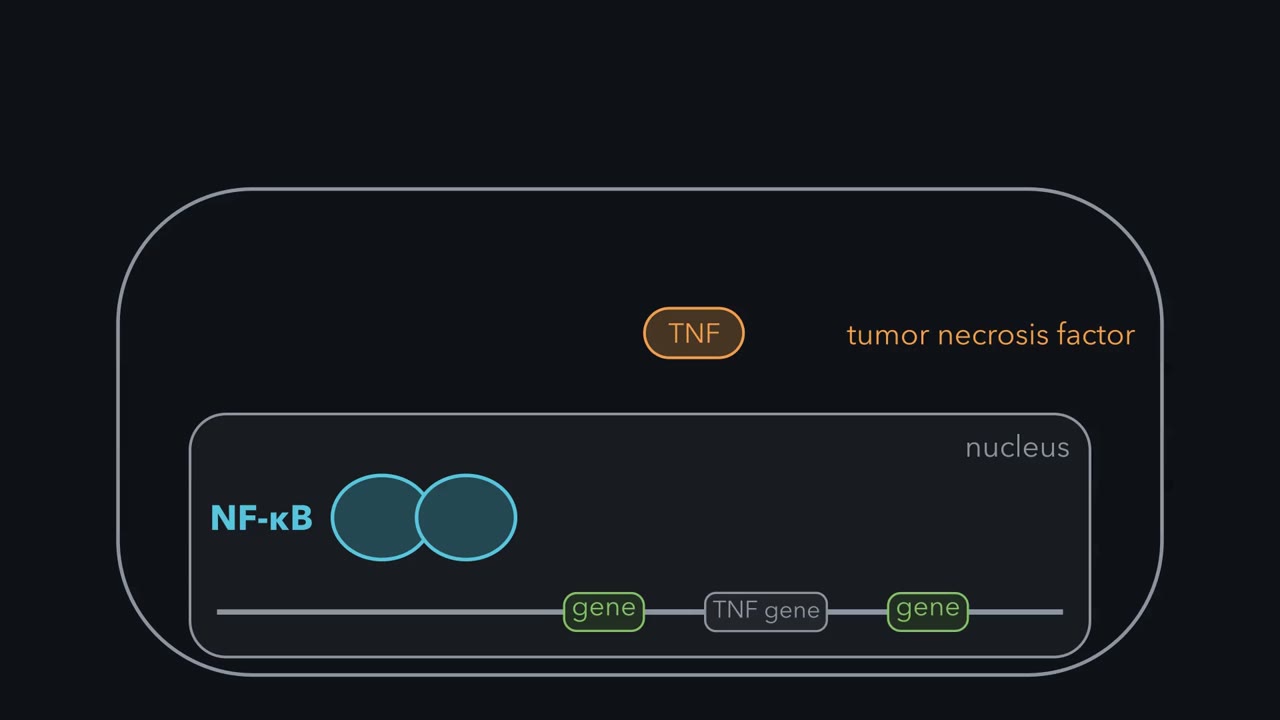 Second film Length 1:26 One Receptor, Two Messages Cell Signaling · Graduate school and beyond Innate Immunity: Toll-like Receptors and NF-κB
-
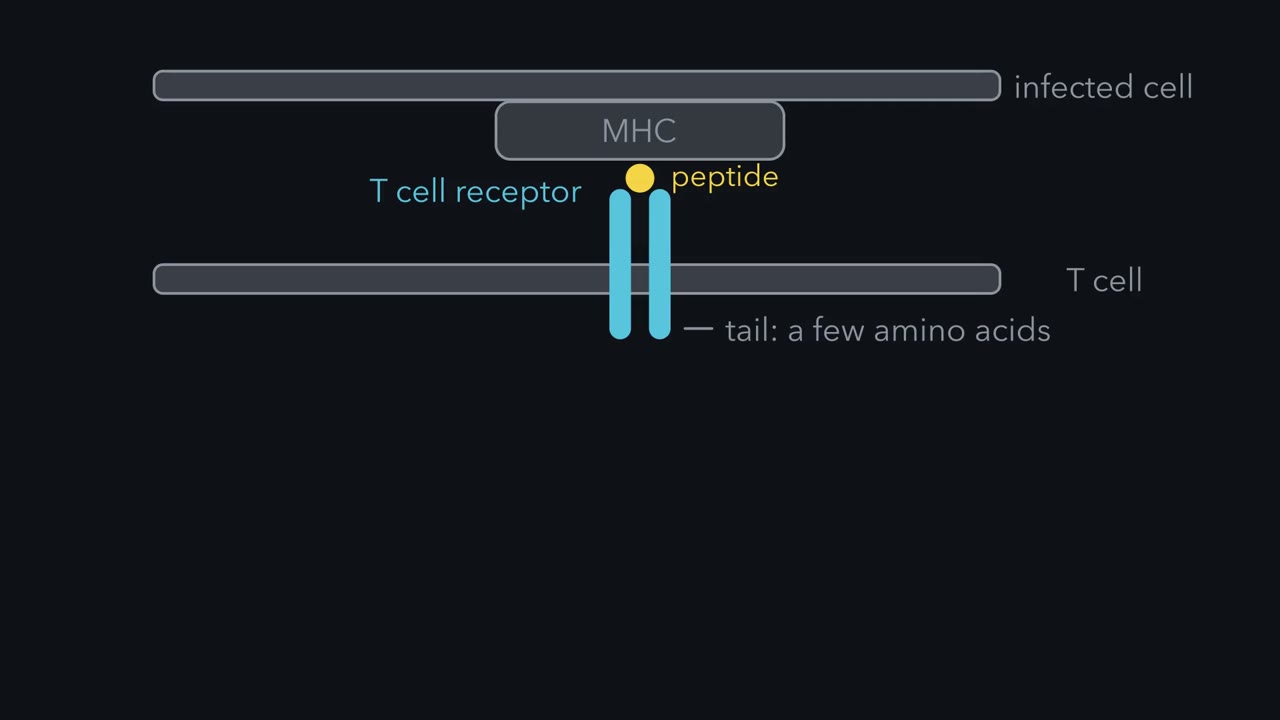 First film Length 2:19 Two Phosphates, Two Signals Cell Signaling · Graduate school and beyond Antigen Receptors and Checkpoints
-
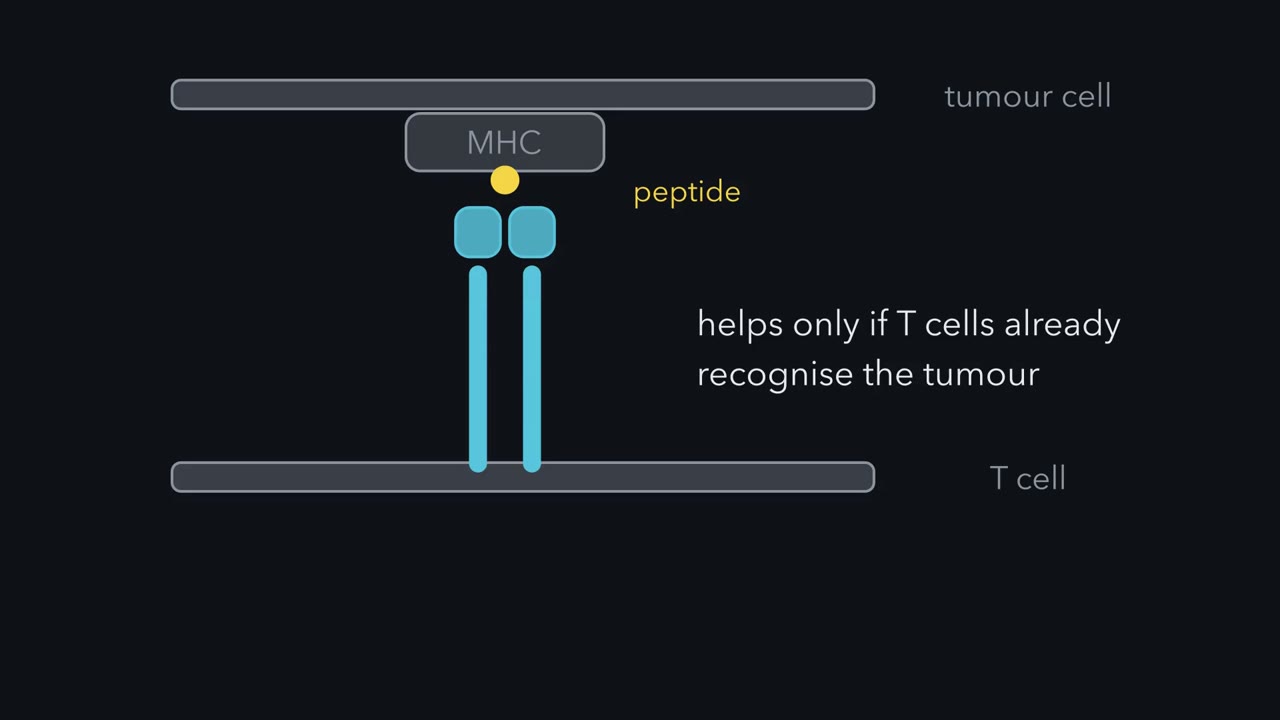 Second film Length 1:30 Antibody Outside, Zeta Tail Inside Cell Signaling · Graduate school and beyond Antigen Receptors and Checkpoints
-
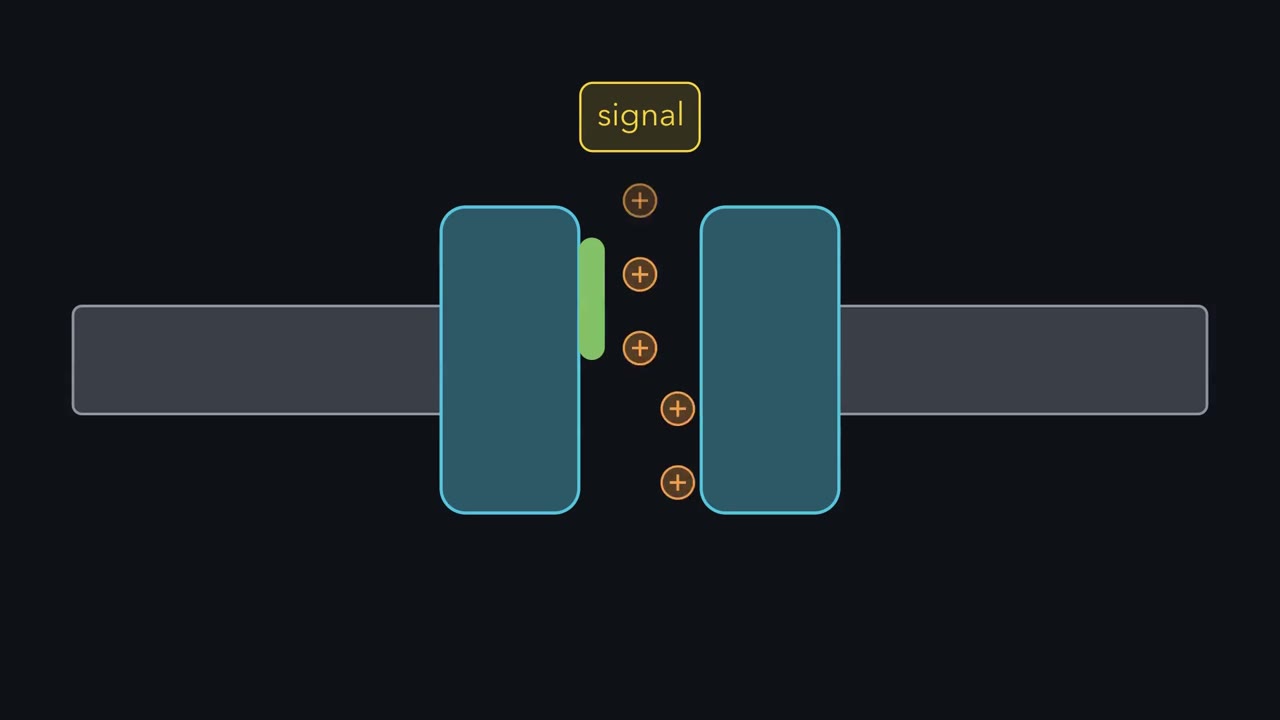 First film Length 2:18 The Signal Opens a Hole Cell Signaling · Graduate school and beyond Ion Channels as Receptors
-
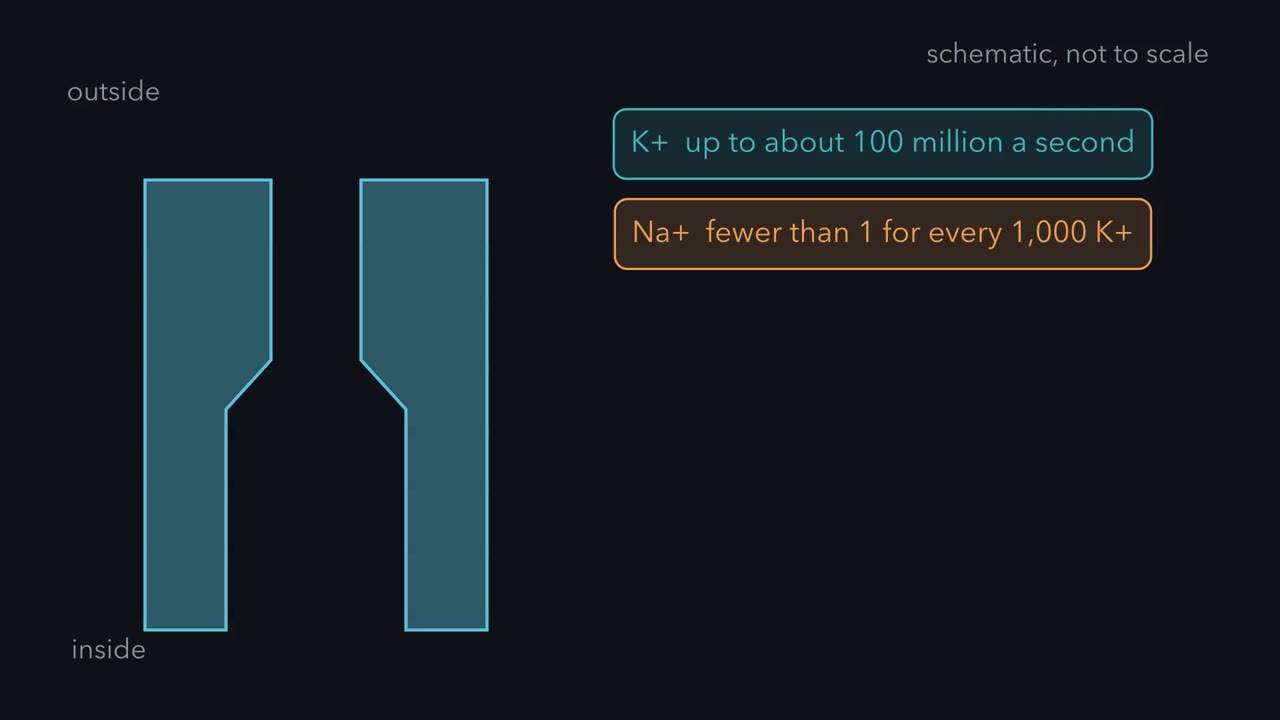 Second film Length 2:04 A Pore That Pays for Potassium Cell Signaling · Graduate school and beyond Ion Channels as Receptors
-
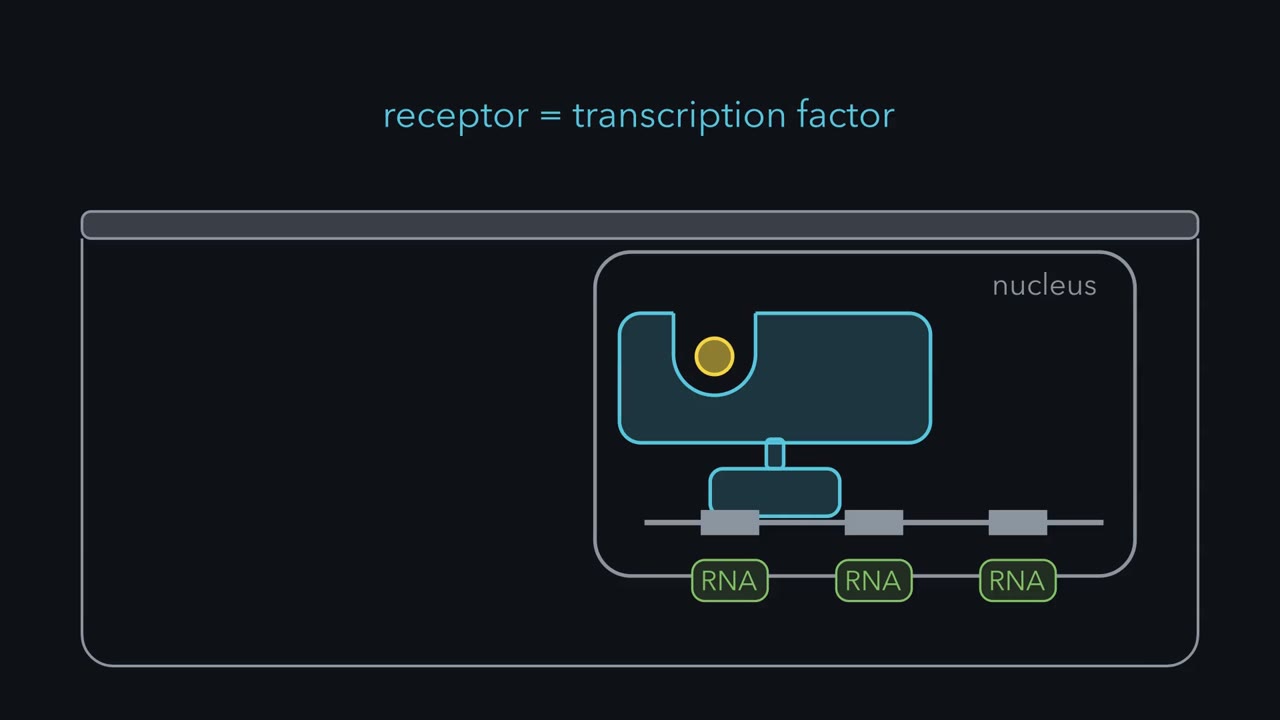 First film Length 2:47 The Receptor Is the Gene Switch Cell Signaling · Graduate school and beyond Nuclear Receptors: Receptors That Are Transcription Factors
-
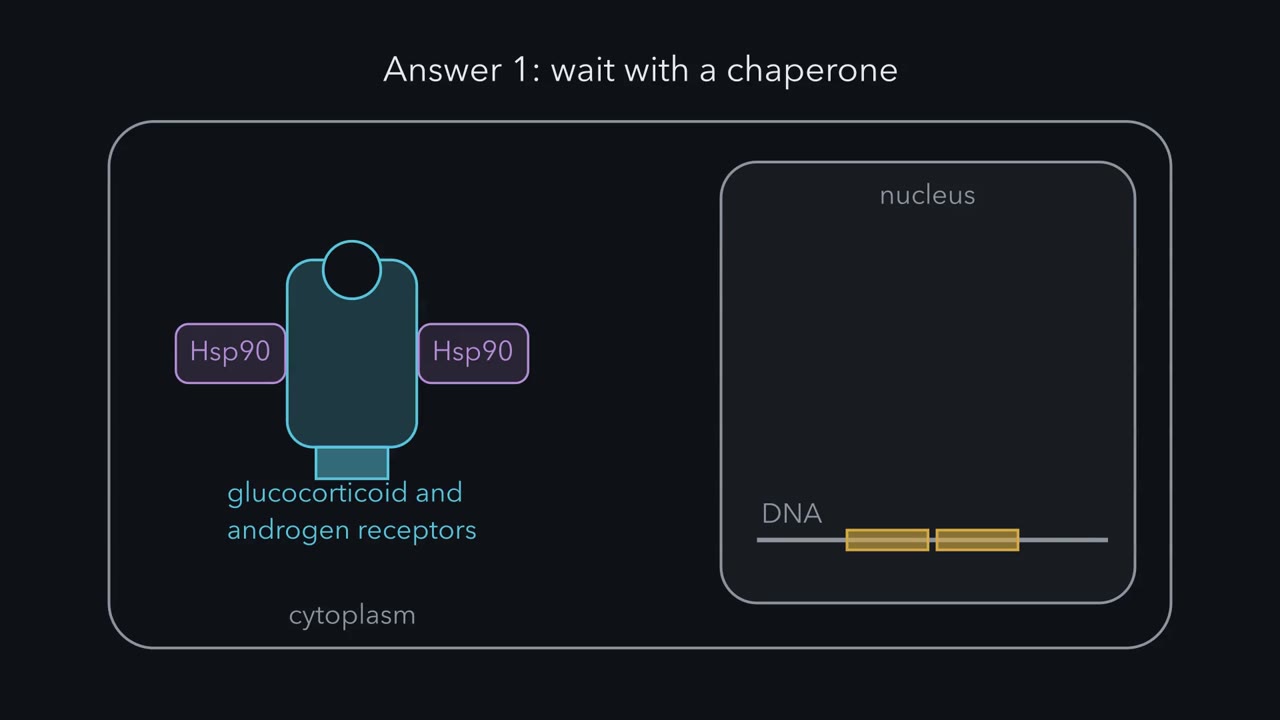 Second film Length 1:55 A Receptor Waits Off DNA or On It Cell Signaling · Graduate school and beyond Nuclear Receptors: Receptors That Are Transcription Factors
-
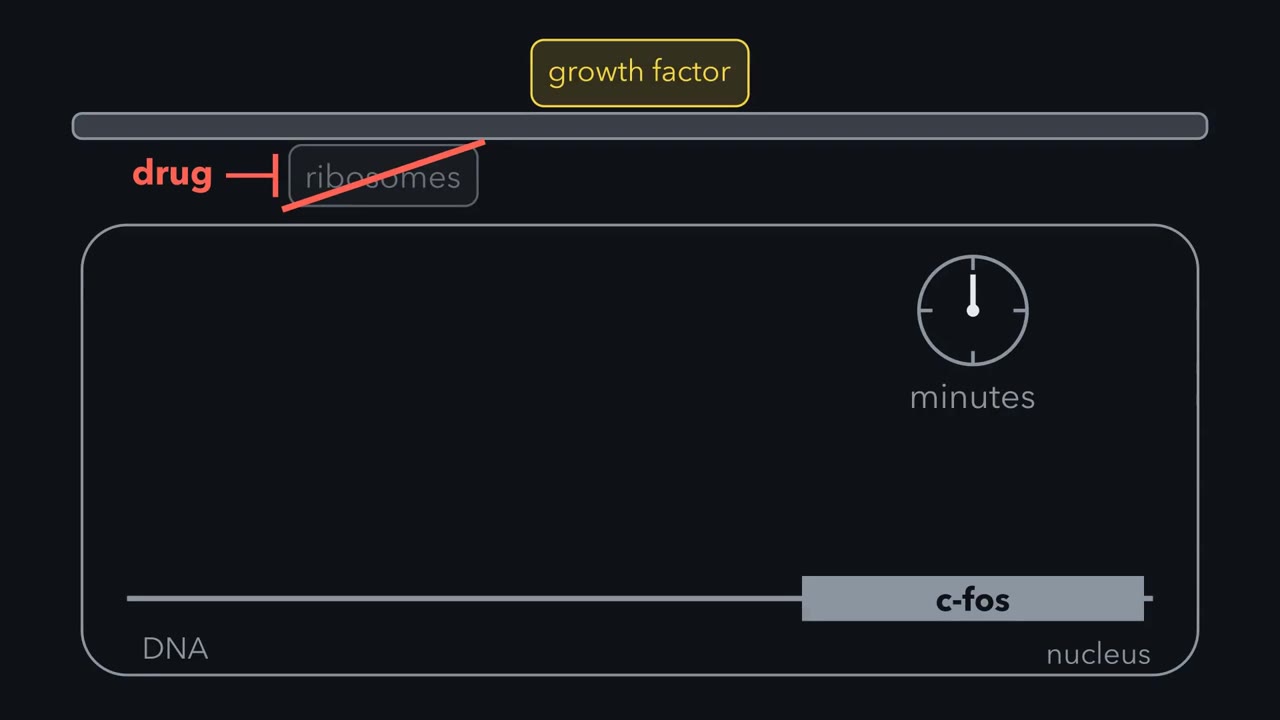 First film Length 2:15 One Phosphate Flips a Waiting Factor Cell Signaling · Graduate school and beyond Signaling to the Nucleus: CREB, AP-1 and Immediate Early Genes
-
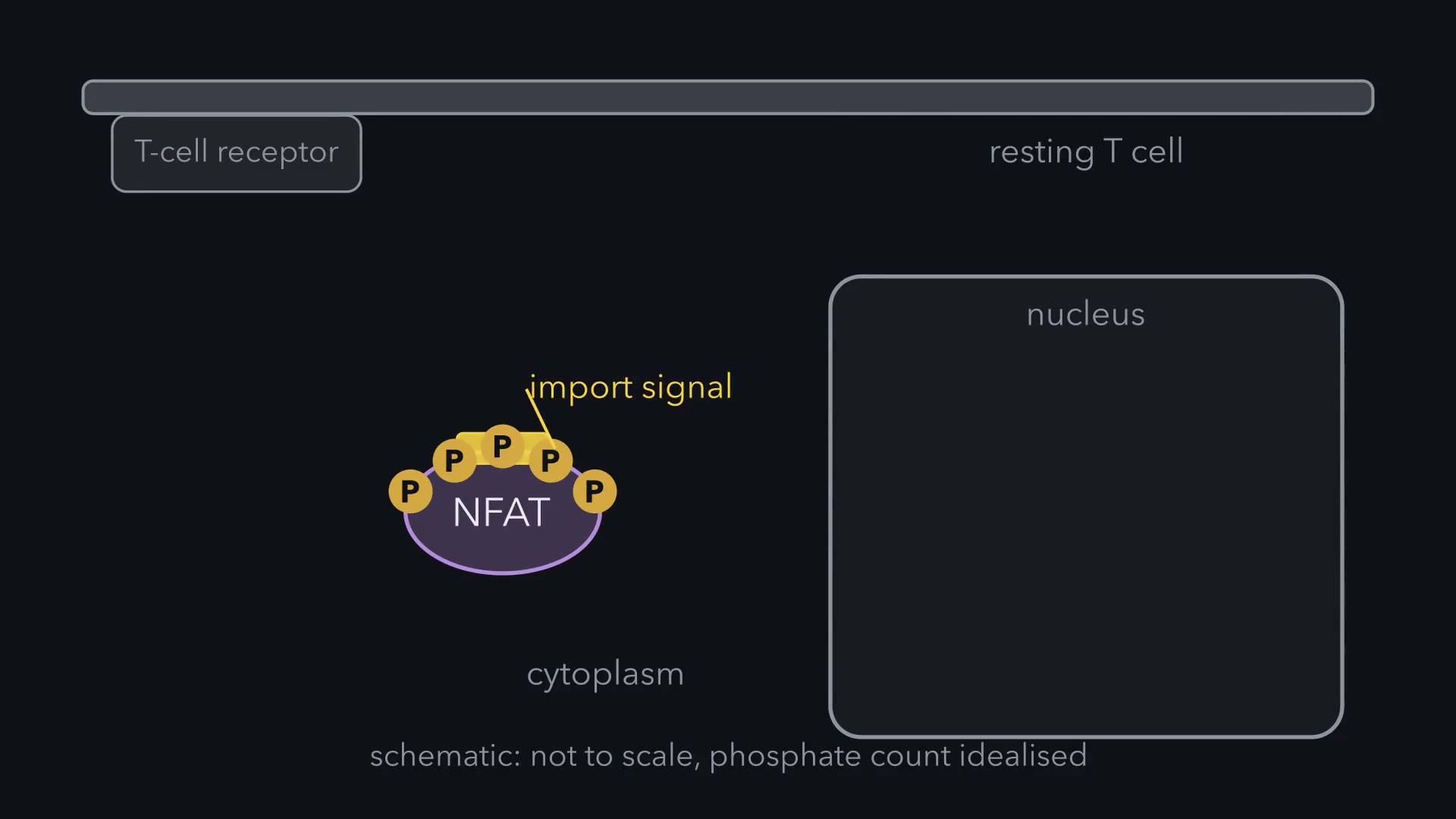 Second film Length 1:59 Taking Phosphates Off Opens the Door Cell Signaling · Graduate school and beyond Signaling to the Nucleus: CREB, AP-1 and Immediate Early Genes
-
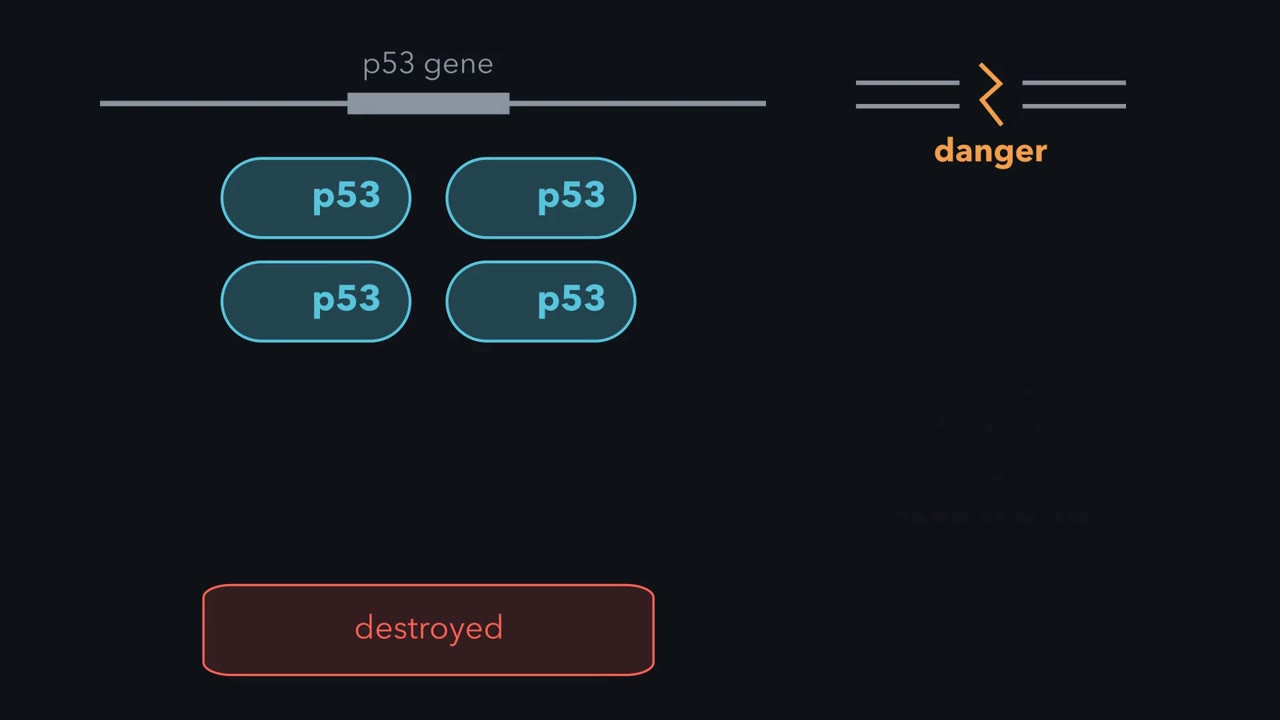 First film Length 2:39 Made All Day, Held Back Until Needed Cell Signaling · Graduate school and beyond Stress Signals: p38 and JNK, p53, Unfolded Proteins and Oxidants
-
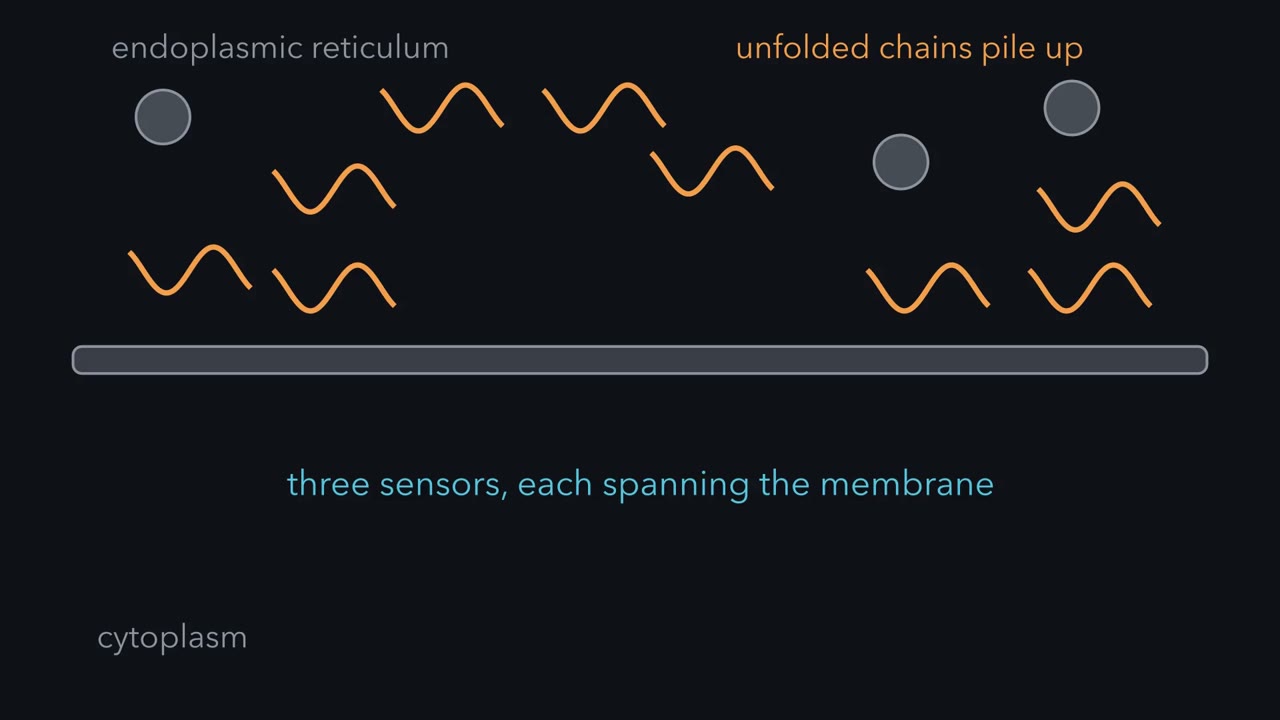 Second film Length 1:36 A Cut That Shifts the Frame Cell Signaling · Graduate school and beyond Stress Signals: p38 and JNK, p53, Unfolded Proteins and Oxidants
-
 First film Length 2:51 The Safeguard Comes Before the Cut Cell Signaling · Graduate school and beyond Death Receptors, BCL-2 and Caspases
-
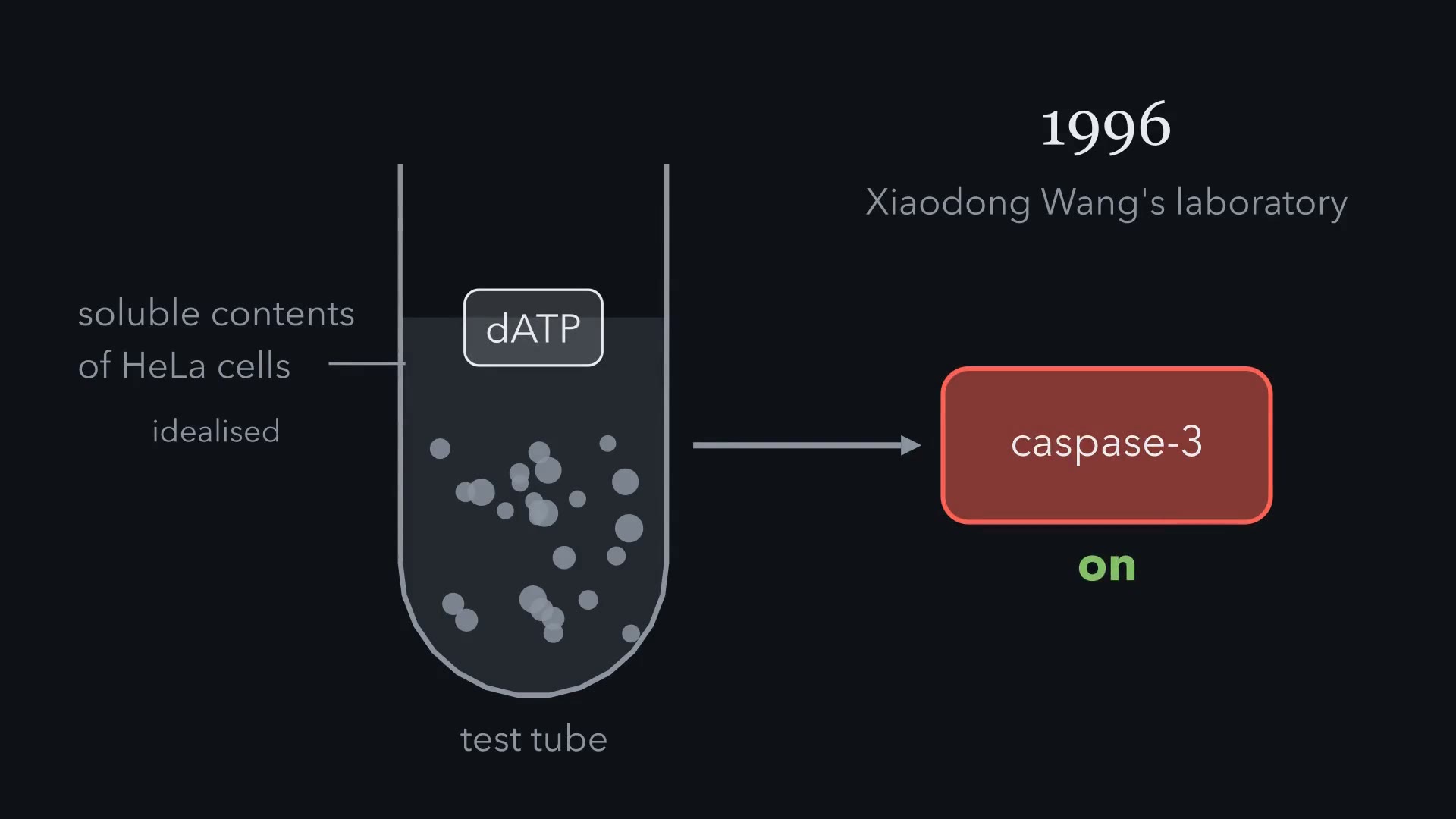 Second film Length 1:34 Cytochrome c, Found in a Test Tube Cell Signaling · Graduate school and beyond Death Receptors, BCL-2 and Caspases
-
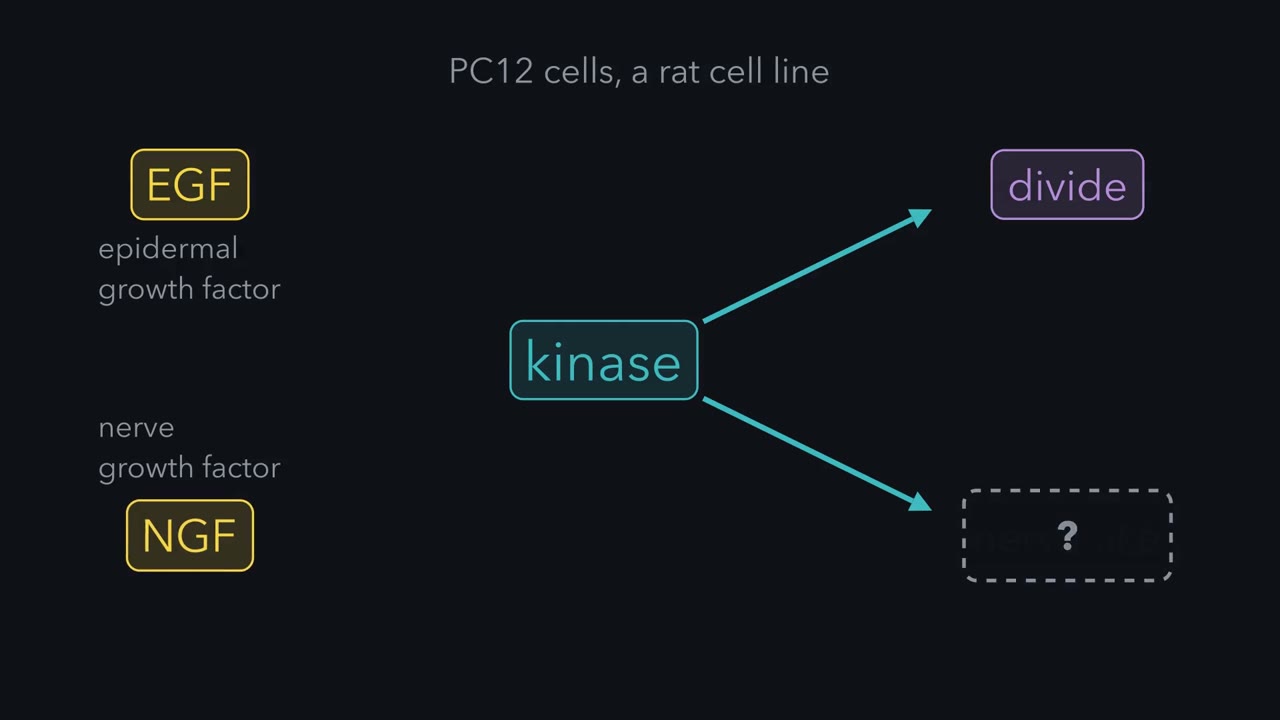 First film Length 2:20 A Late Part Reads Signal Length Cell Signaling · Graduate school and beyond The Shape of a Signal: Size, Duration, Frequency and Place
-
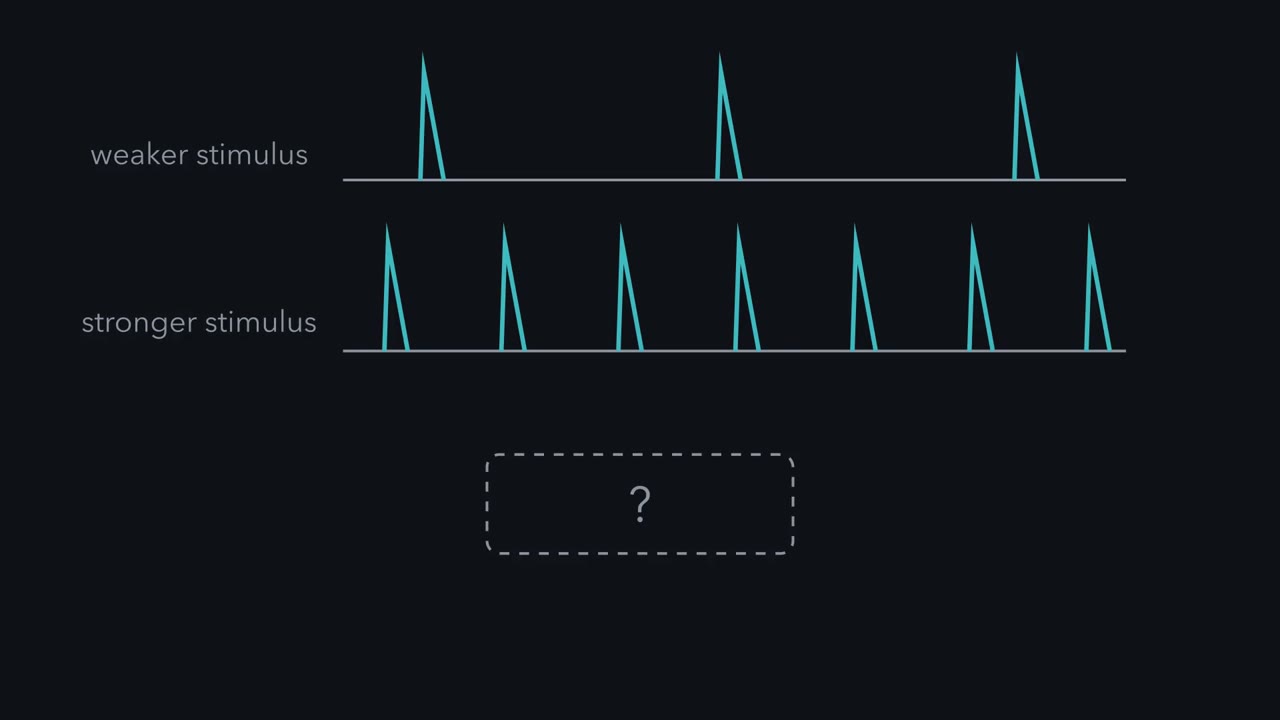 Second film Length 1:52 Why a Slow Off Switch Can Count Cell Signaling · Graduate school and beyond The Shape of a Signal: Size, Duration, Frequency and Place
-
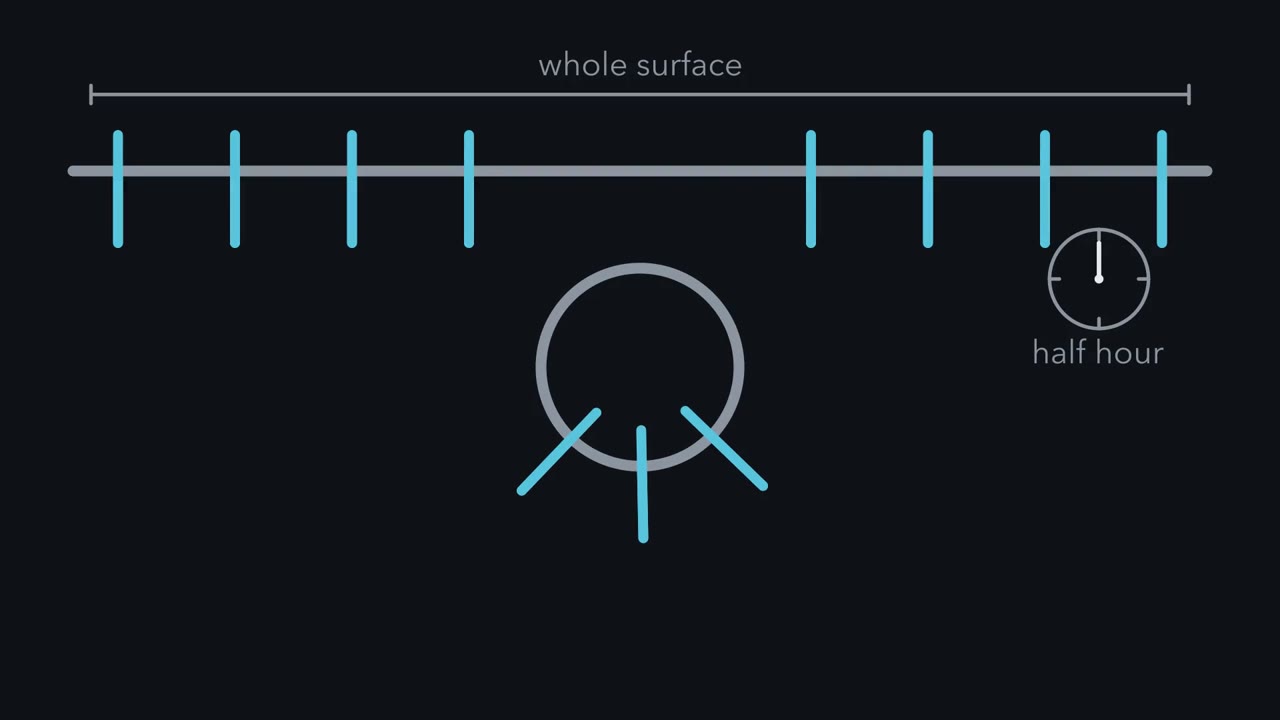 First film Length 2:45 Sealed Inside, a Receptor Goes Silent Cell Signaling · Graduate school and beyond Endocytosis and Signaling Endosomes
-
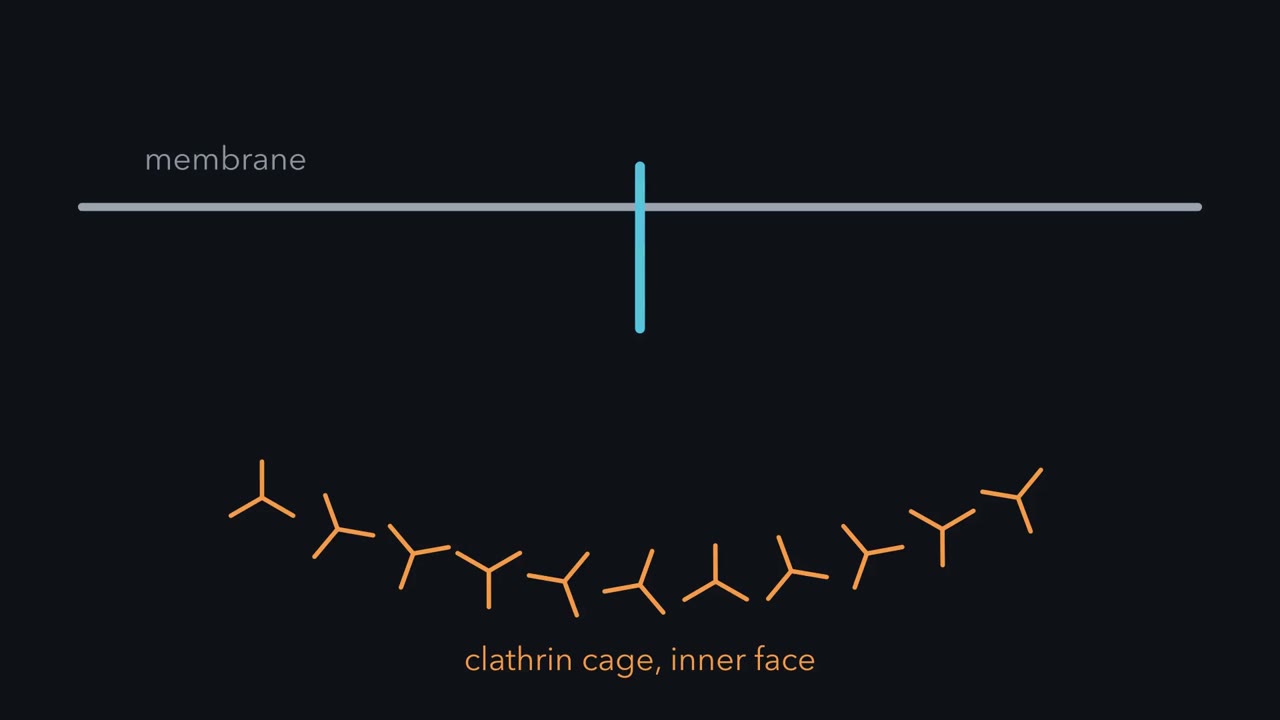 Second film Length 1:29 A Coat, a Reader, and a Cut Cell Signaling · Graduate school and beyond Endocytosis and Signaling Endosomes
-
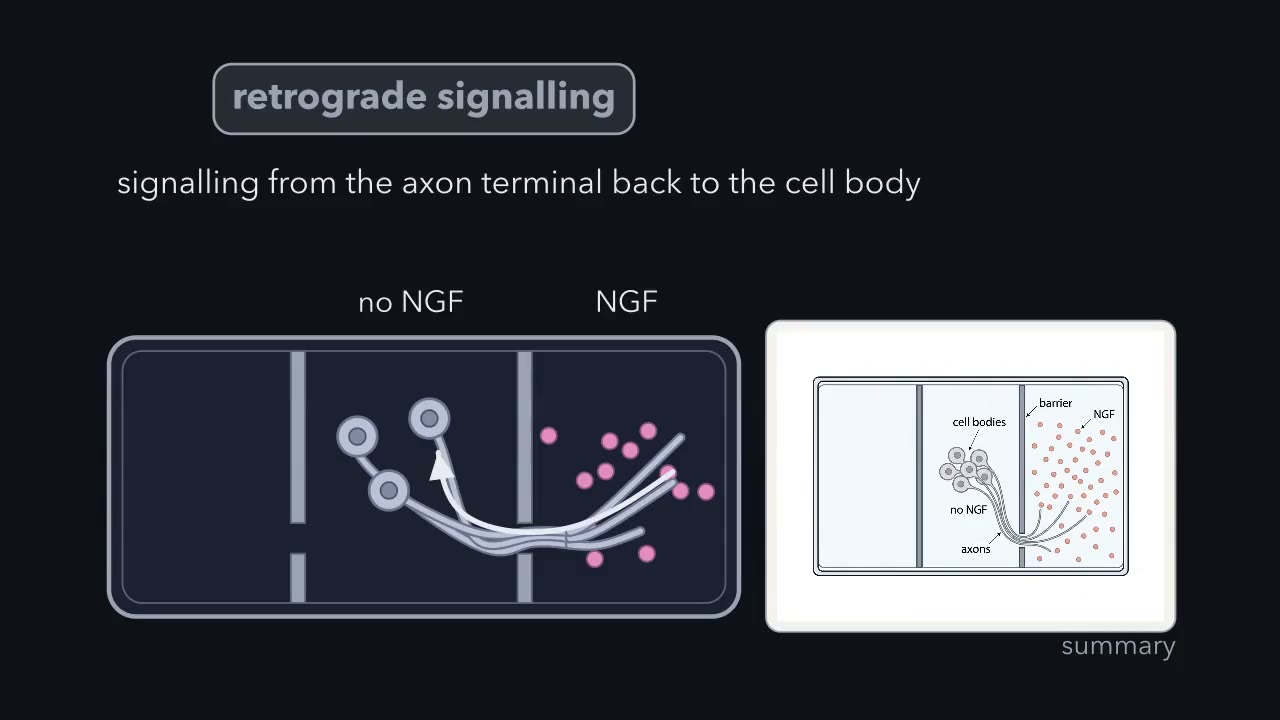 First film Length 2:21 A neuron can take its survival signal in at the far end of its axon Cell Signaling · Graduate school and beyond Long-Distance Signaling in Neurons
-
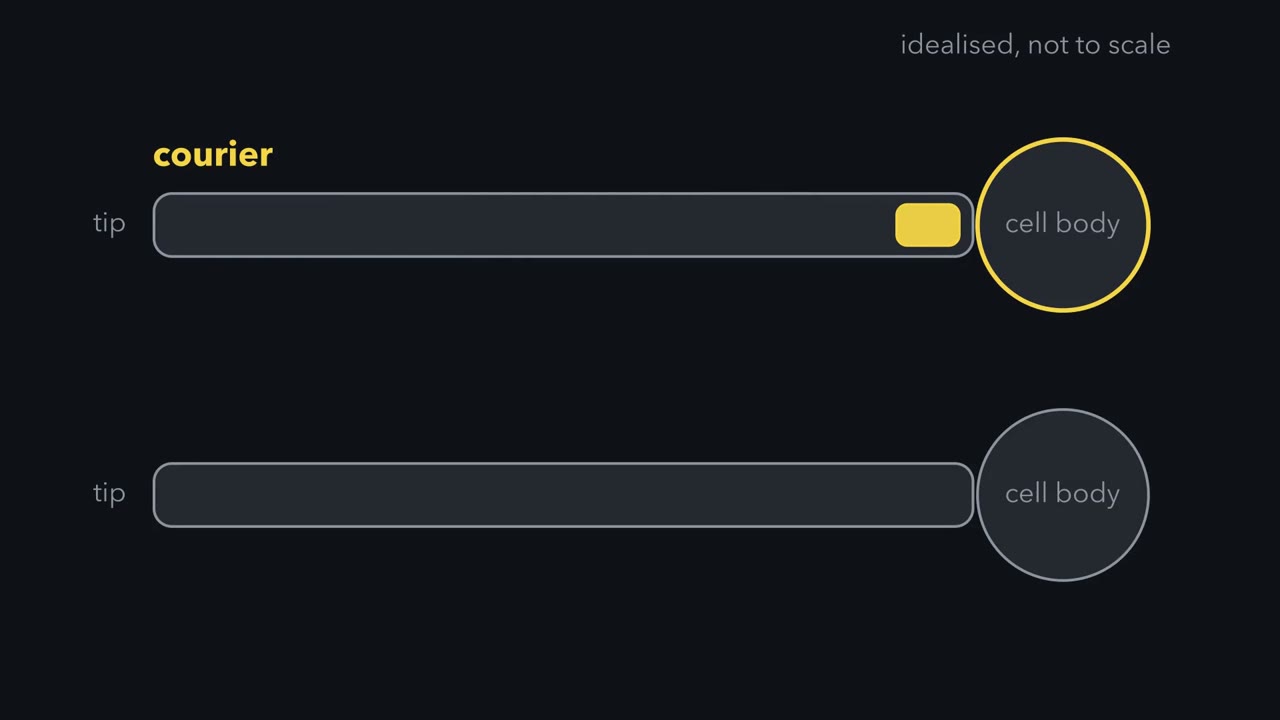 Second film Length 1:58 Carried, or relayed? Cell Signaling · Graduate school and beyond Long-Distance Signaling in Neurons
-
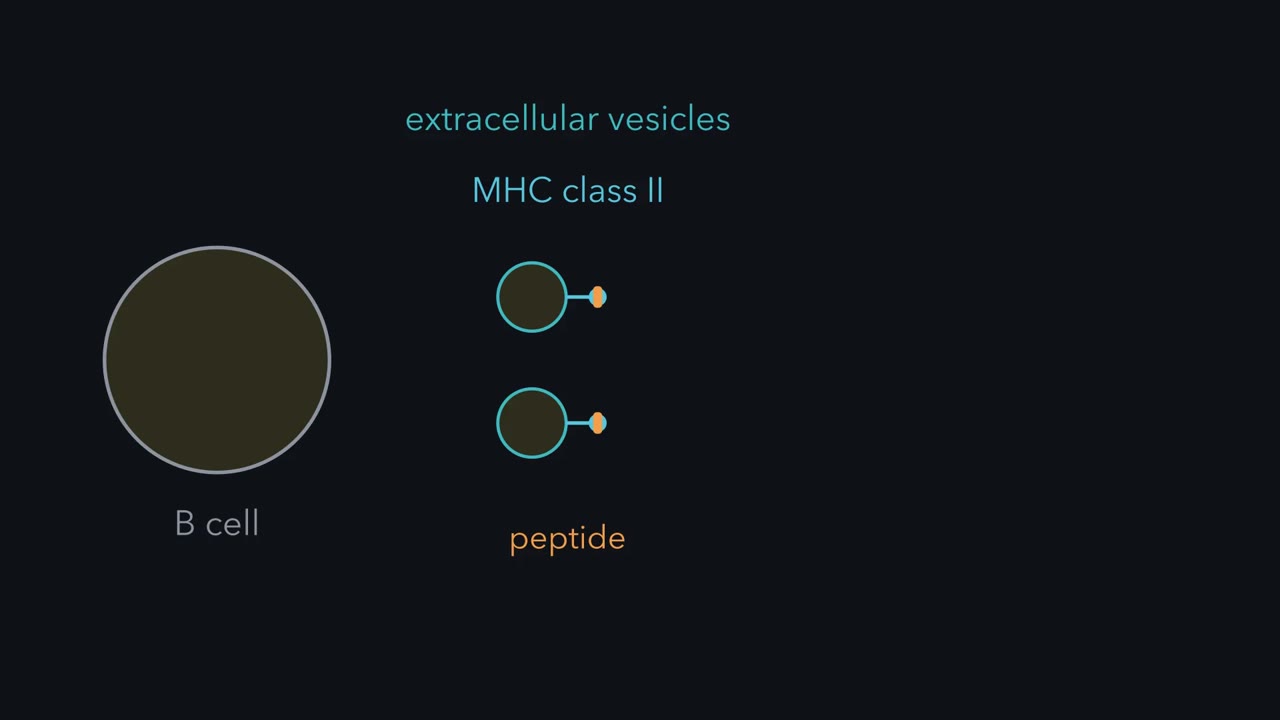 First film Length 2:51 A Vesicle Can Carry A Signal Cell Signaling · Graduate school and beyond Exosomes and Extracellular Vesicles: Signals Between Cells
-
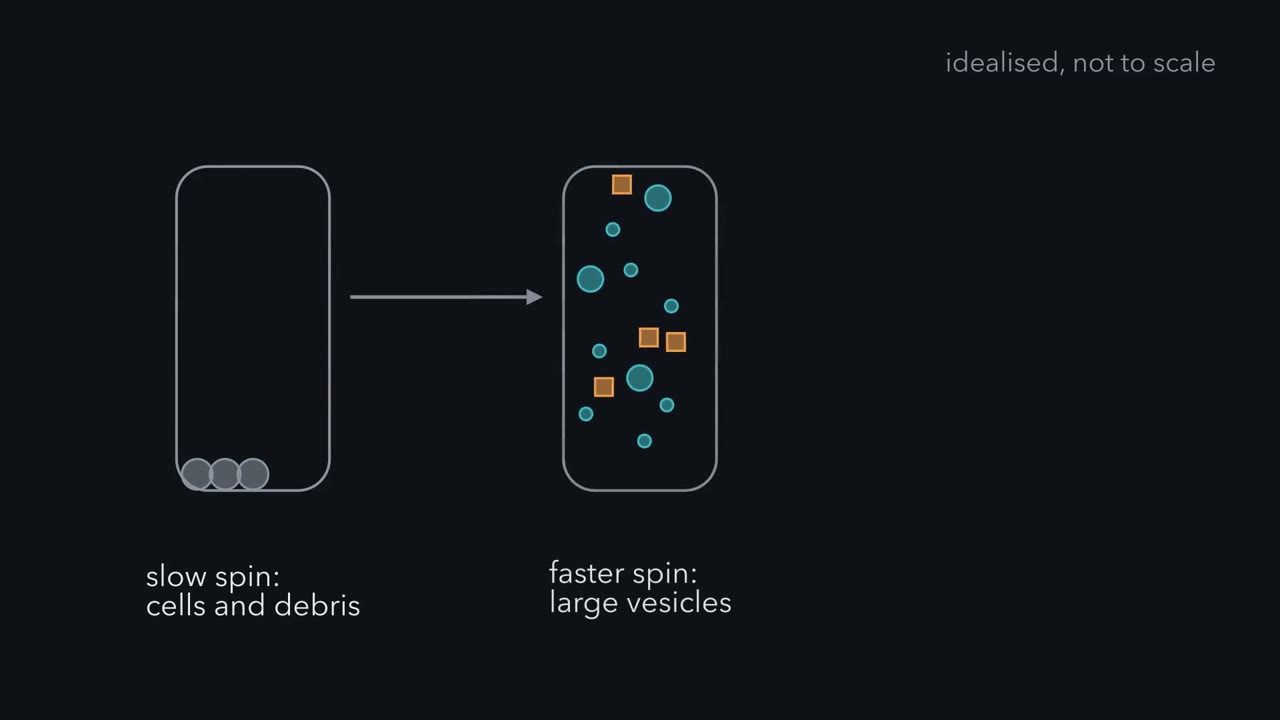 Second film Length 1:59 The Pellet Is Defined By The Centrifuge Cell Signaling · Graduate school and beyond Exosomes and Extracellular Vesicles: Signals Between Cells
-
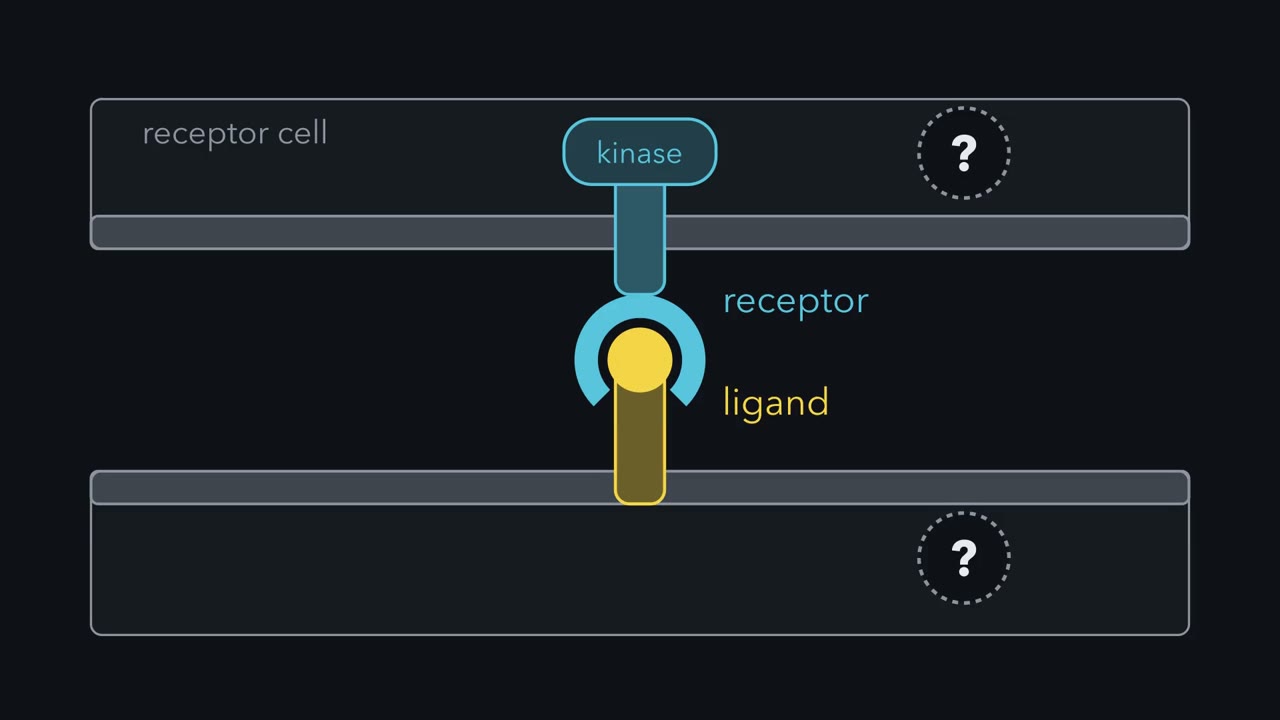 First film Length 2:44 A Grip That Signals Both Ways Cell Signaling · Graduate school and beyond Reverse Signaling: When the Ligand Is Also a Receptor
-
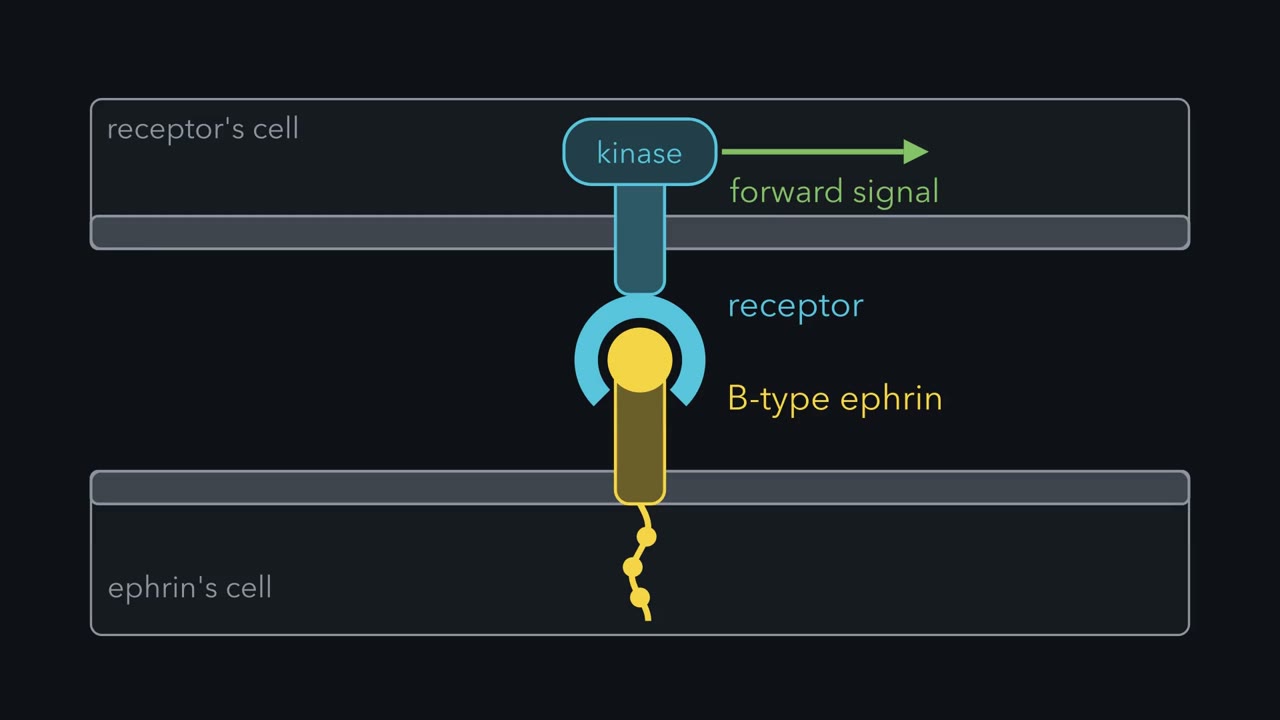 Second film Length 1:26 Which Direction Did You Remove? Cell Signaling · Graduate school and beyond Reverse Signaling: When the Ligand Is Also a Receptor
-
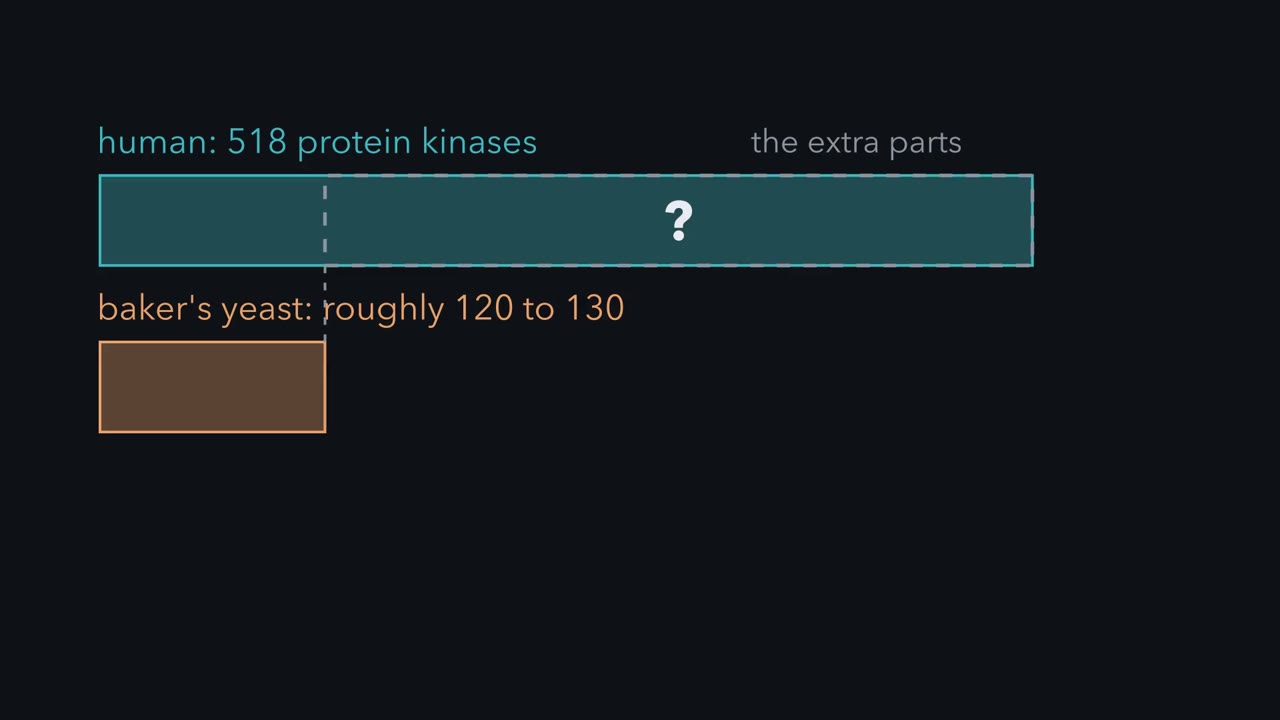 First film Length 2:29 Copy a Gene, Then Rewire It Cell Signaling · Graduate school and beyond How Signaling Evolved
-
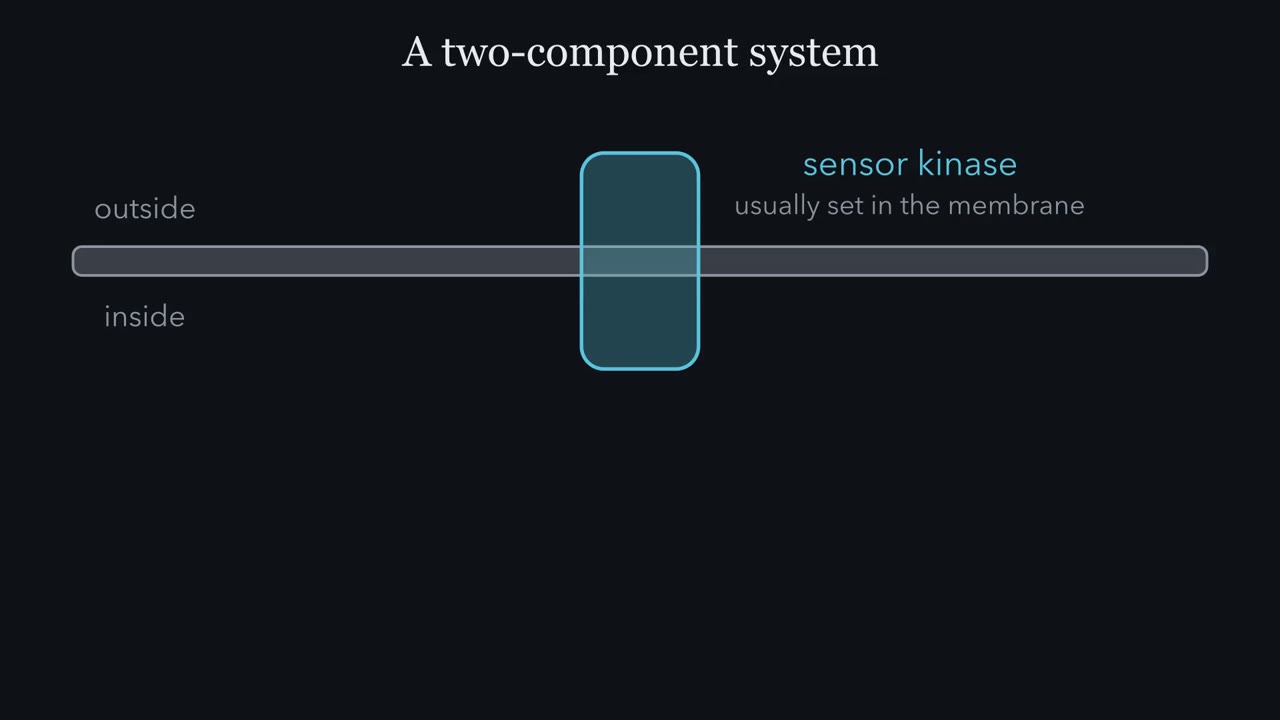 Second film Length 1:47 Two Proteins, One Phosphate Cell Signaling · Graduate school and beyond How Signaling Evolved
-
 First film Length 2:42 Gain Acts Alone, Loss Needs Both Cell Signaling · Graduate school and beyond Oncogenes: When the Switch Sticks
-
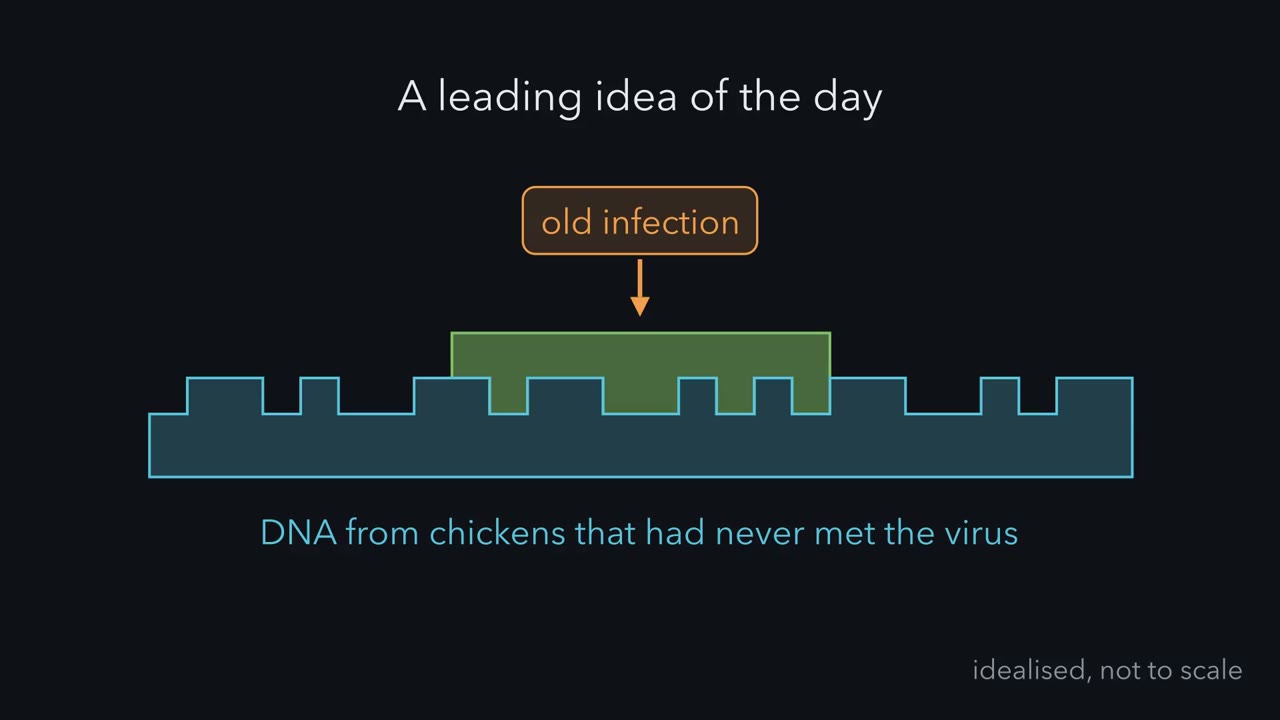 Second film Length 1:49 A Gene of the Birds Themselves Cell Signaling · Graduate school and beyond Oncogenes: When the Switch Sticks
-
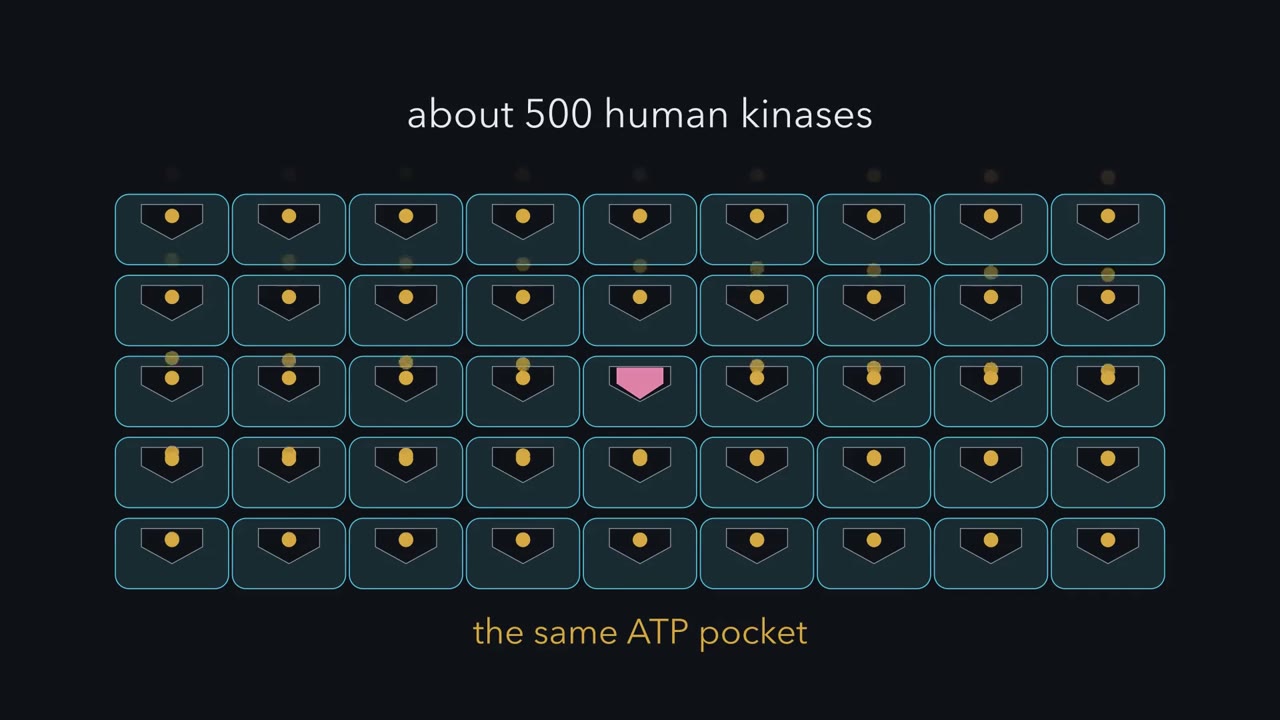 First film Length 2:14 Read the Escape, Design the Next Drug Cell Signaling · Graduate school and beyond Drugs Against a Part
-
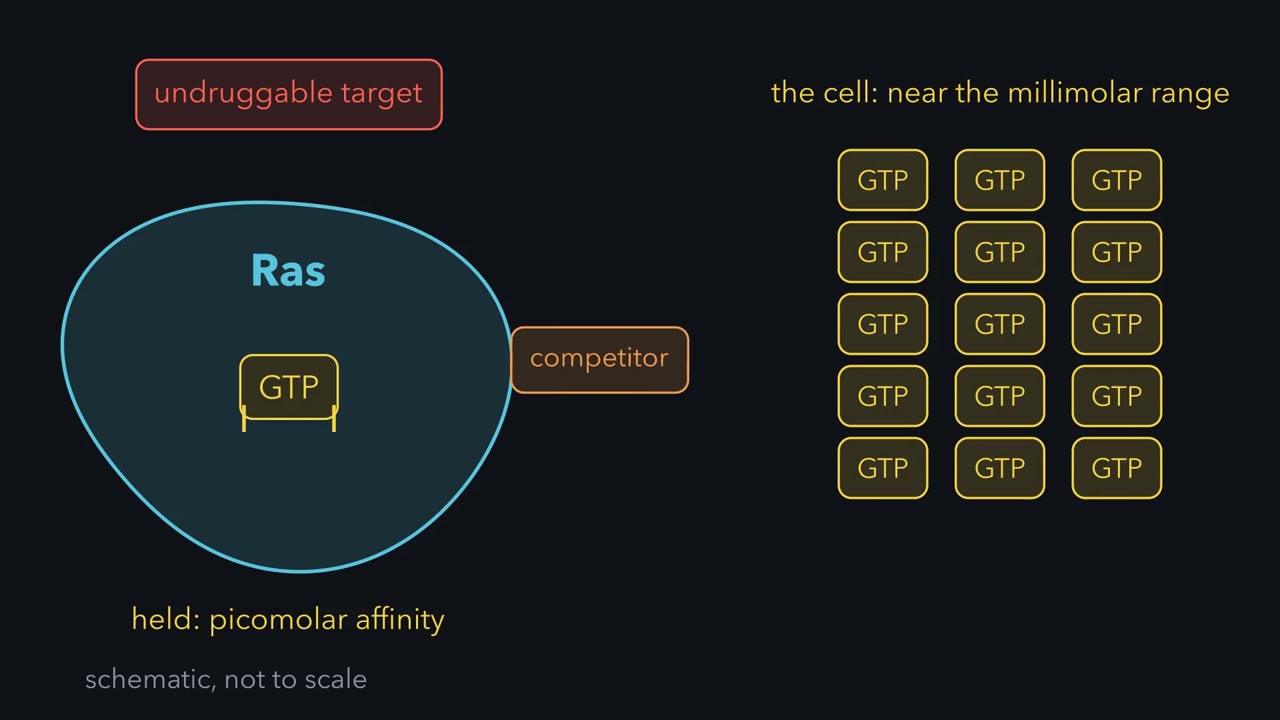 Second film Length 1:54 A Bond to the Mutation Itself Cell Signaling · Graduate school and beyond Drugs Against a Part
-
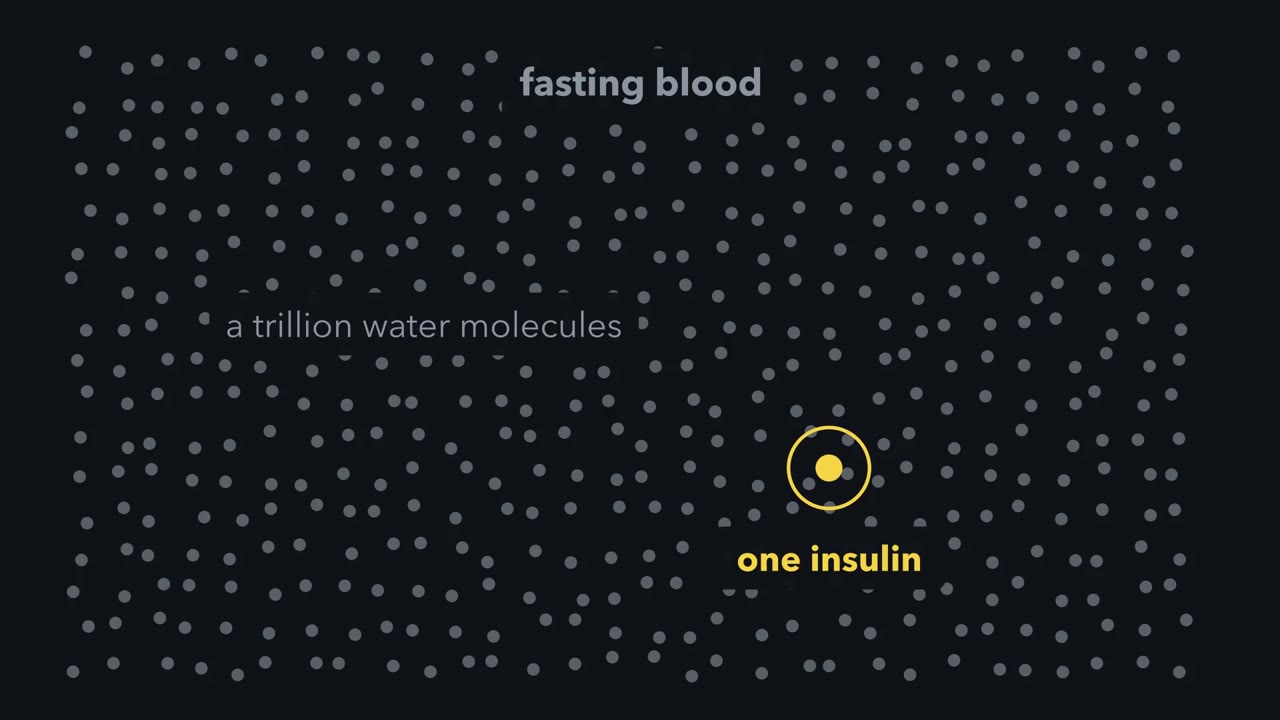 Part 1 of 3 Length 2:19 More Hormone, Less Label Cell Signaling · Graduate school and beyond How We Know: Detecting a Signal
-
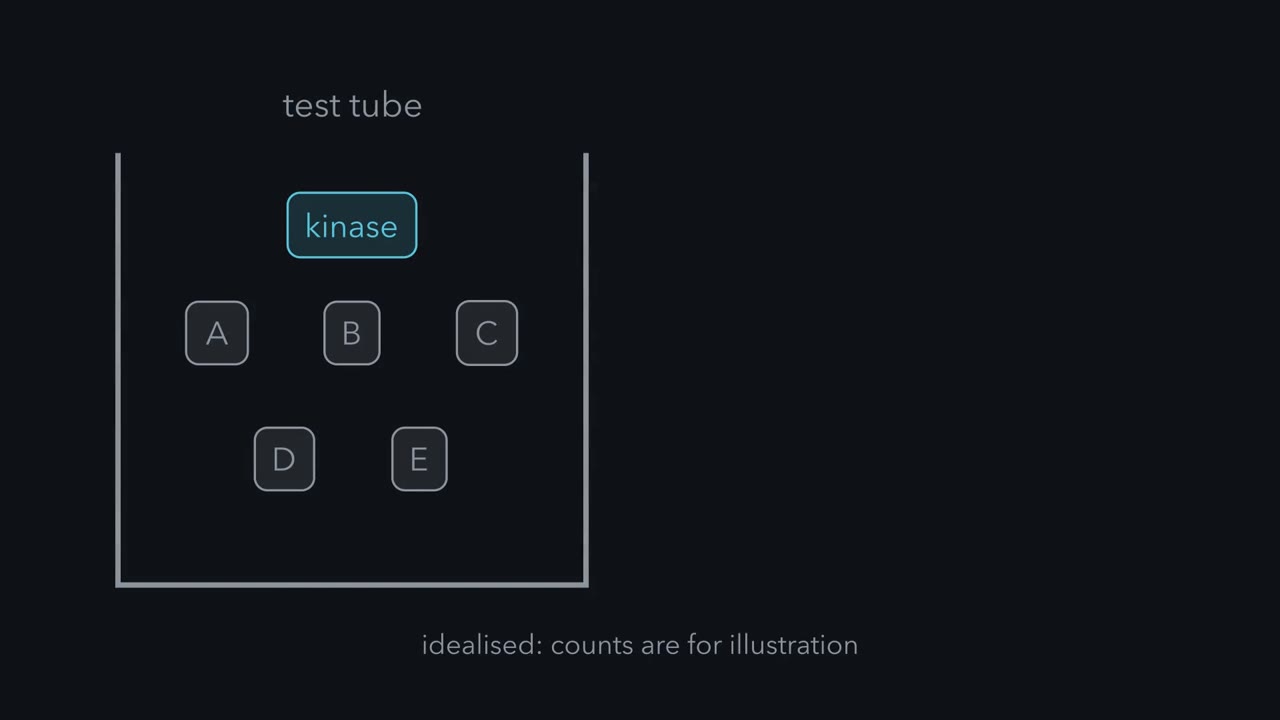 Part 2 of 3 Length 1:28 Give One Kinase an ATP of Its Own Cell Signaling · Graduate school and beyond How We Know: Detecting a Signal
-
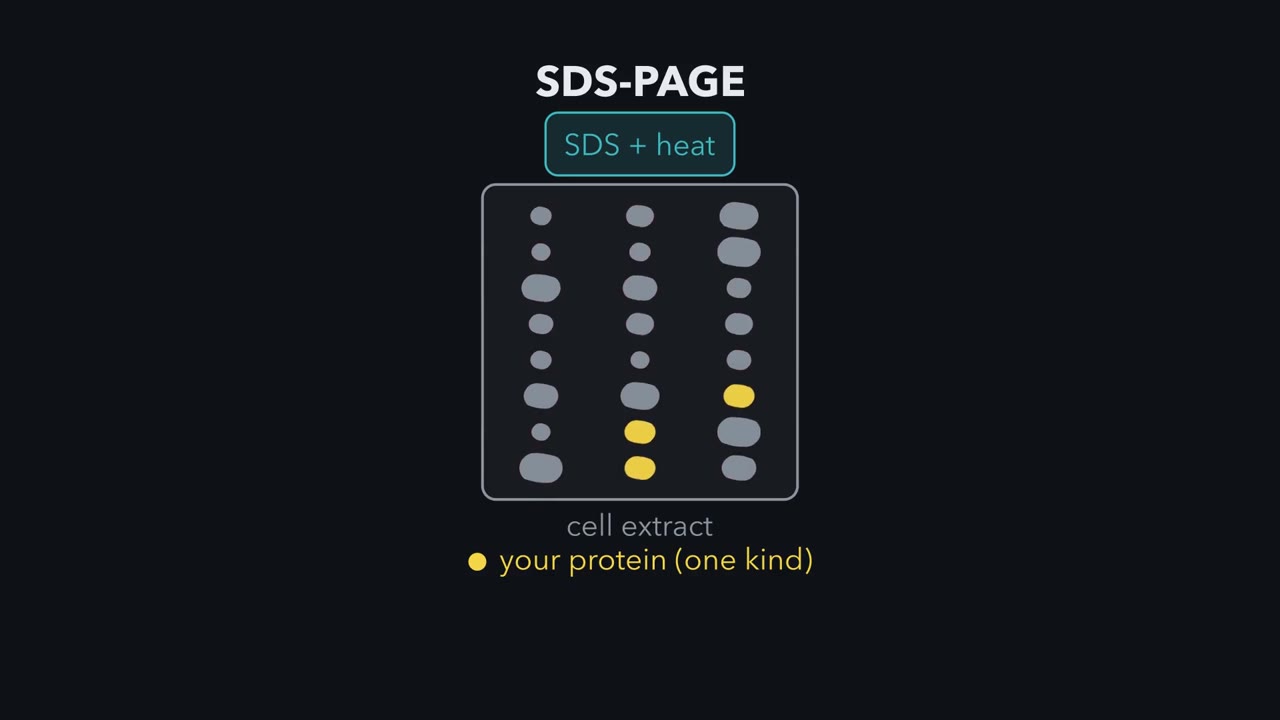 Part 3 of 3 Length 1:58 Sort by Size, Then Ask an Antibody Cell Signaling · Graduate school and beyond How We Know: Detecting a Signal
-
 First film Length 2:29 Tools Behind a Stop, Chosen by Cre Cell Signaling · Graduate school and beyond Hacking the Cell: Reporters, Actuators and Genetic Tools
-
 Second film Length 1:41 Light In, Current Out Cell Signaling · Graduate school and beyond Hacking the Cell: Reporters, Actuators and Genetic Tools
Have 10, 20, 30 minutes? Start at your next unwatched film.
-
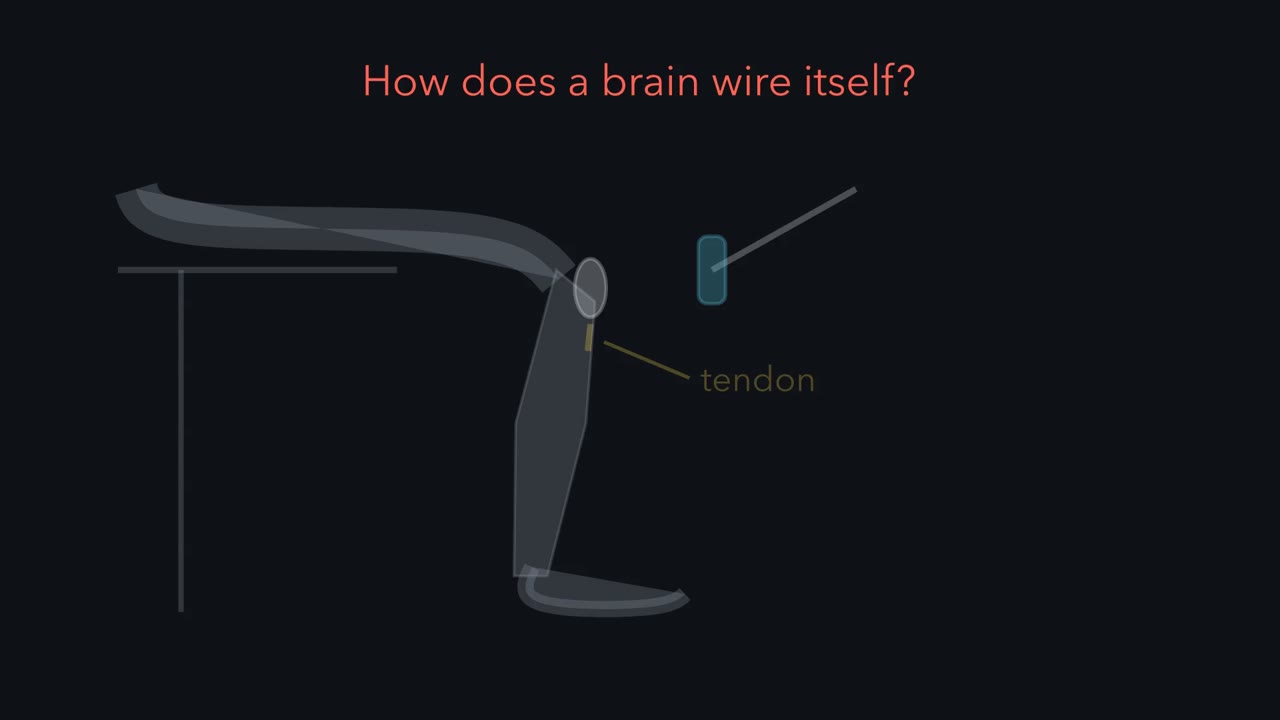 First film Length 4:26 A Label Is Not a Wire Developmental Neuroscience · Graduate school and beyond The Wiring Problem: How a Brain Gets Built
Take-home
The genome cannot list every connection of a brain, so it stores rules and the tissue measures the rest.
-
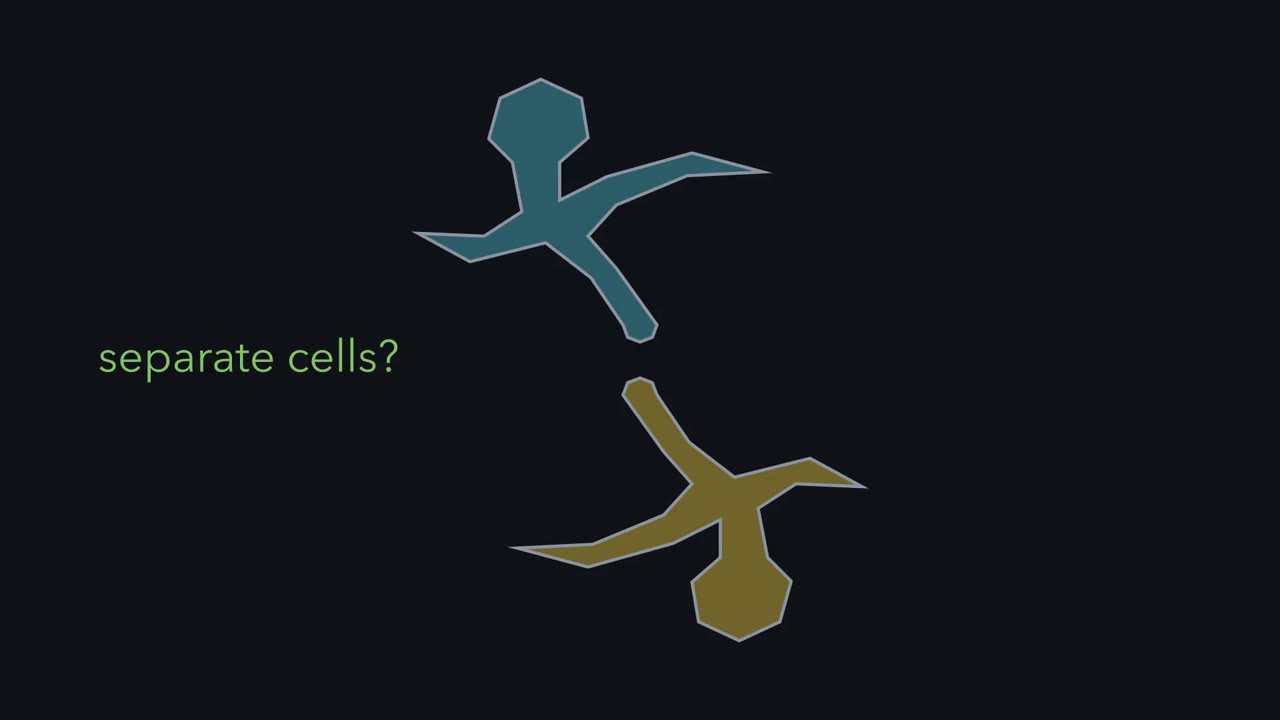 Part 1 of 3 Length 2:09 A Touch Is Not a Fusion Developmental Neuroscience · Graduate school and beyond Seeing Neurons: Golgi, Cajal and the Neuron Doctrine
Take-home
A touch is not a fusion: whether two touching branches are one cell or two is decided at the membrane where they meet.
-
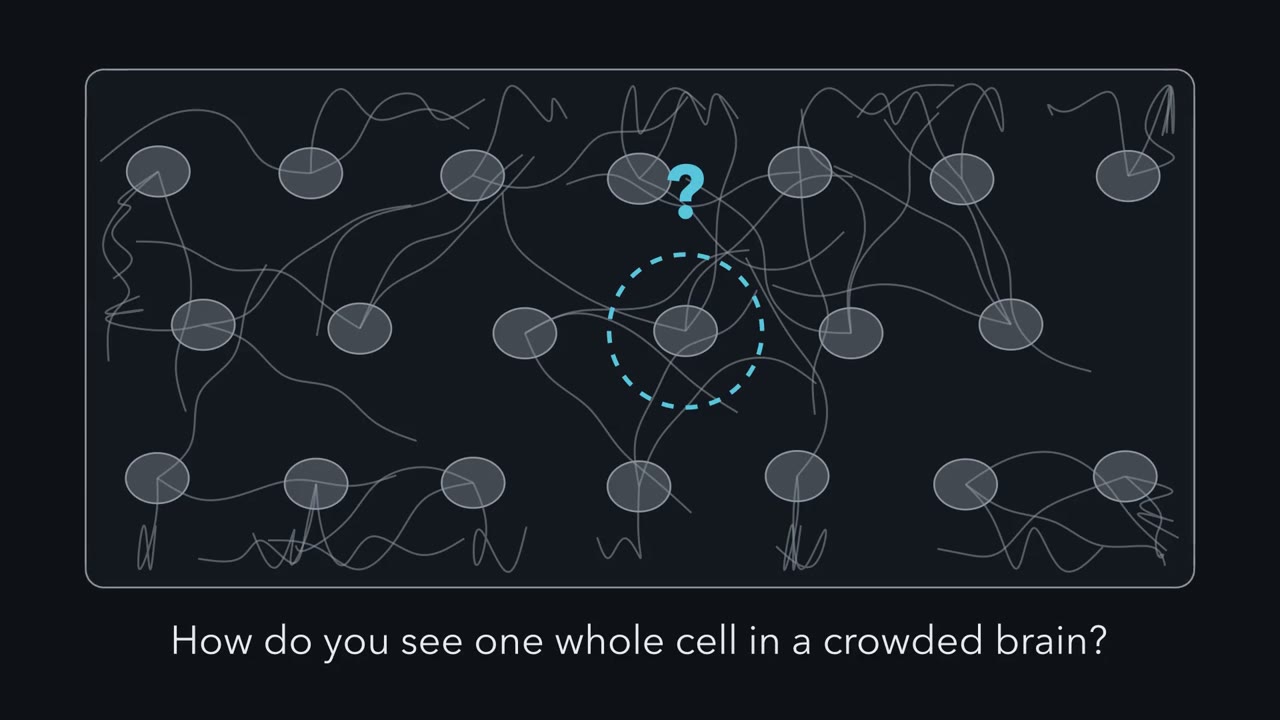 Part 2 of 3 Length 2:36 One Stain, Two Readings Developmental Neuroscience · Graduate school and beyond Seeing Neurons: Golgi, Cajal and the Neuron Doctrine
Take-home
Golgi's black reaction fills a few cells completely, so one neuron and its branches can be traced.
-
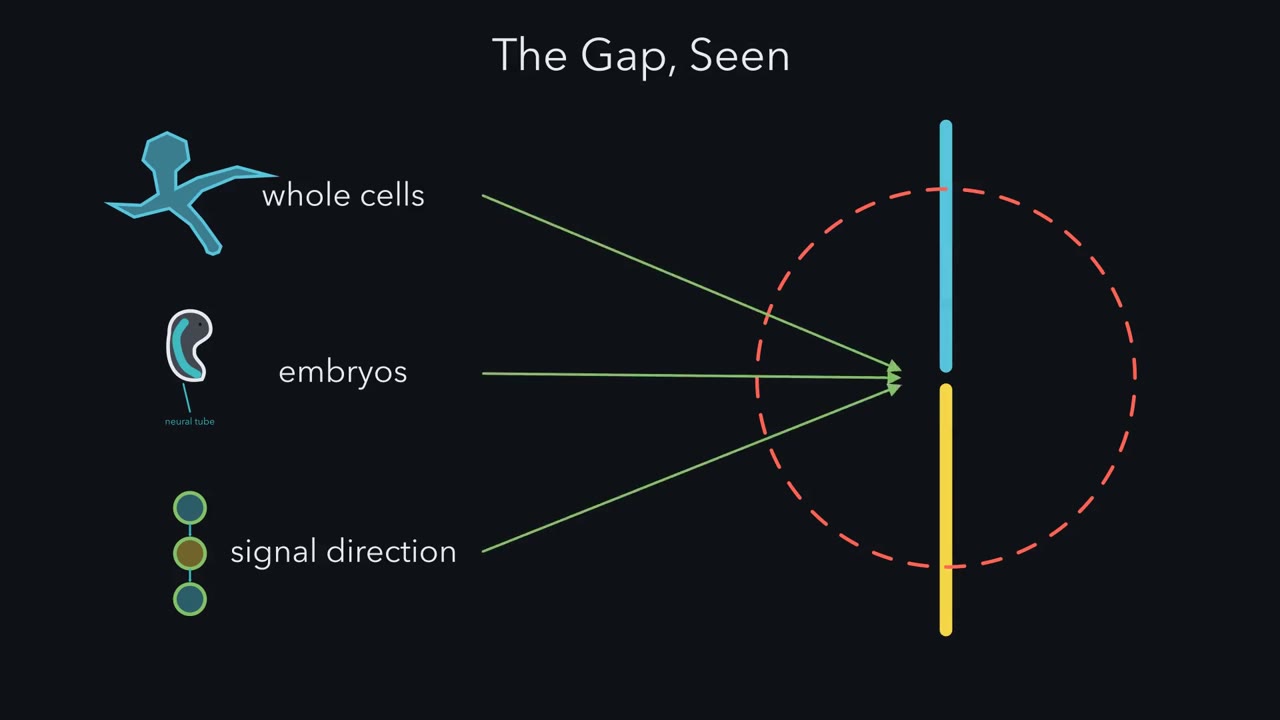 Part 3 of 3 Length 2:46 The Gap, Seen Developmental Neuroscience · Graduate school and beyond Seeing Neurons: Golgi, Cajal and the Neuron Doctrine
Take-home
Electron micrographs of the chemical synapses examined in the 1950s showed two membranes staying separate across a cleft, which settled the question.
-
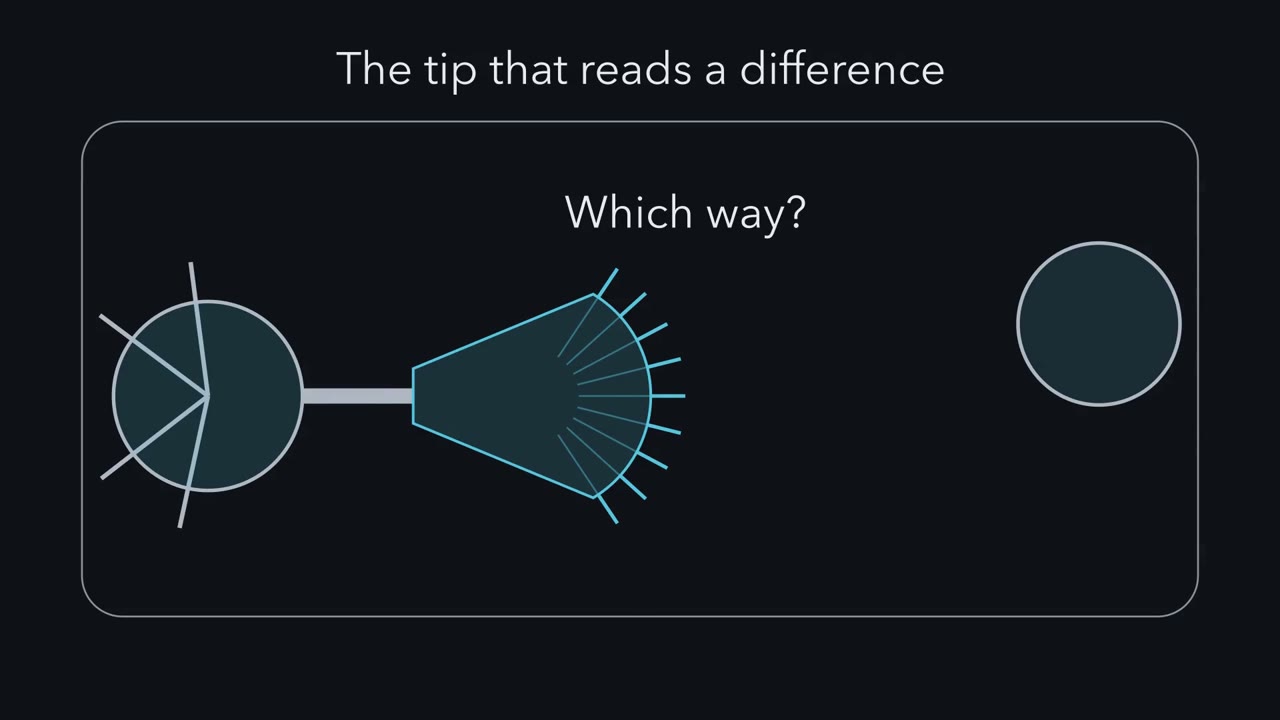 Part 1 of 3 Length 2:12 The Tip That Reads a Difference Developmental Neuroscience · Graduate school and beyond The Growth Cone: The Tip That Steers the Axon
Take-home
A growth cone steers by sensing guidance cues that attract or repel it.
-
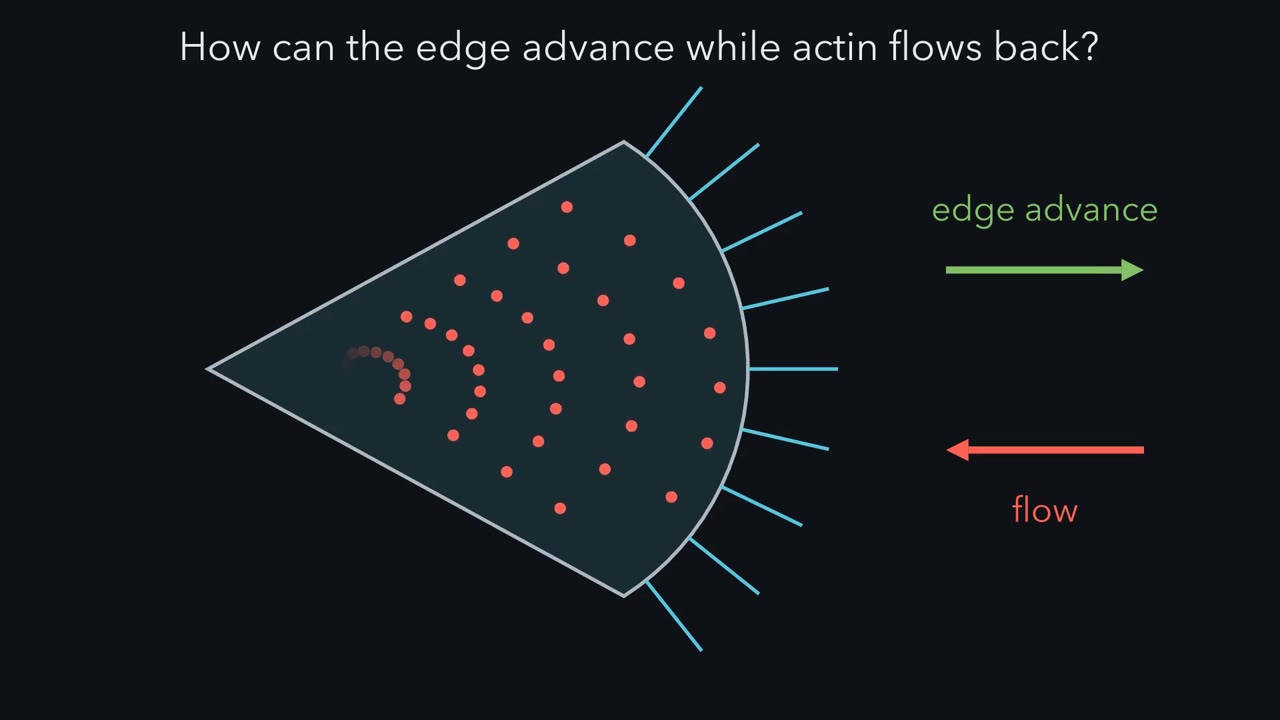 Part 2 of 3 Length 2:38 Engine and Clutch Developmental Neuroscience · Graduate school and beyond The Growth Cone: The Tip That Steers the Axon
Take-home
On a flat surface, the edge advances by the actin added at the front minus the actin carried back.
-
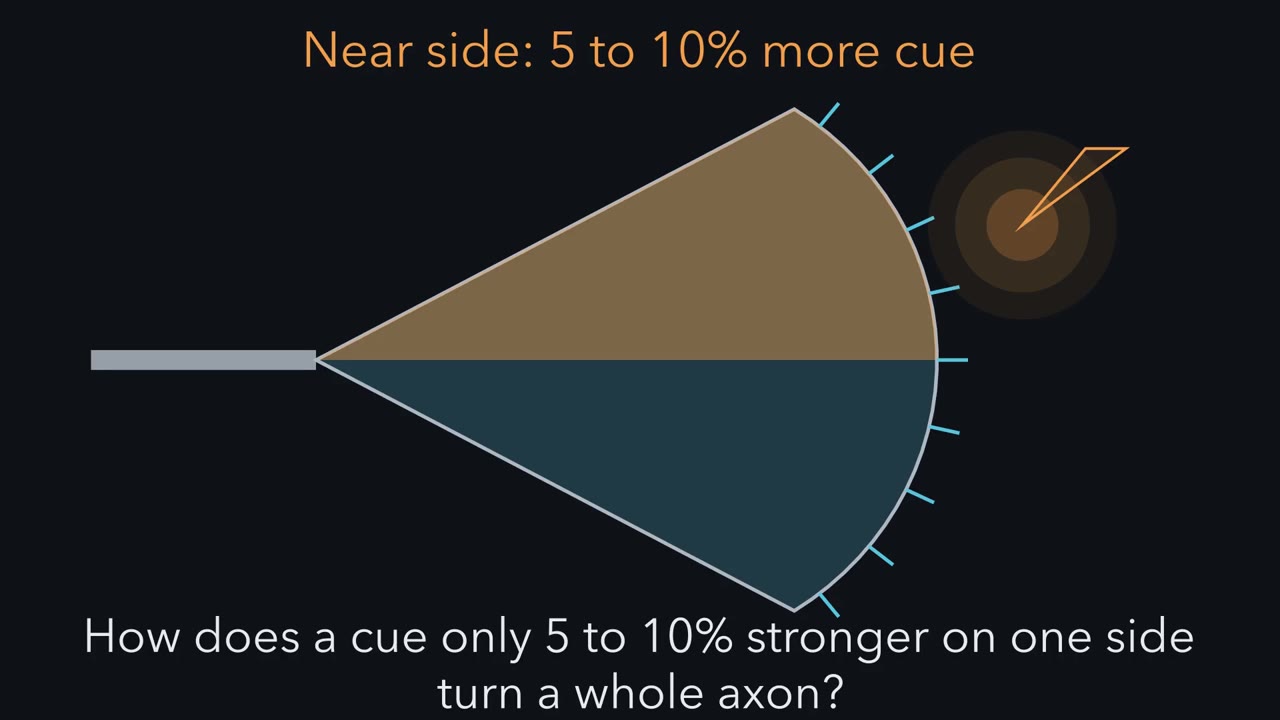 Part 3 of 3 Length 2:58 A Small Difference, a Turn Developmental Neuroscience · Graduate school and beyond The Growth Cone: The Tip That Steers the Axon
Take-home
A turn sticks on the side where microtubules move in and build new axon.
-
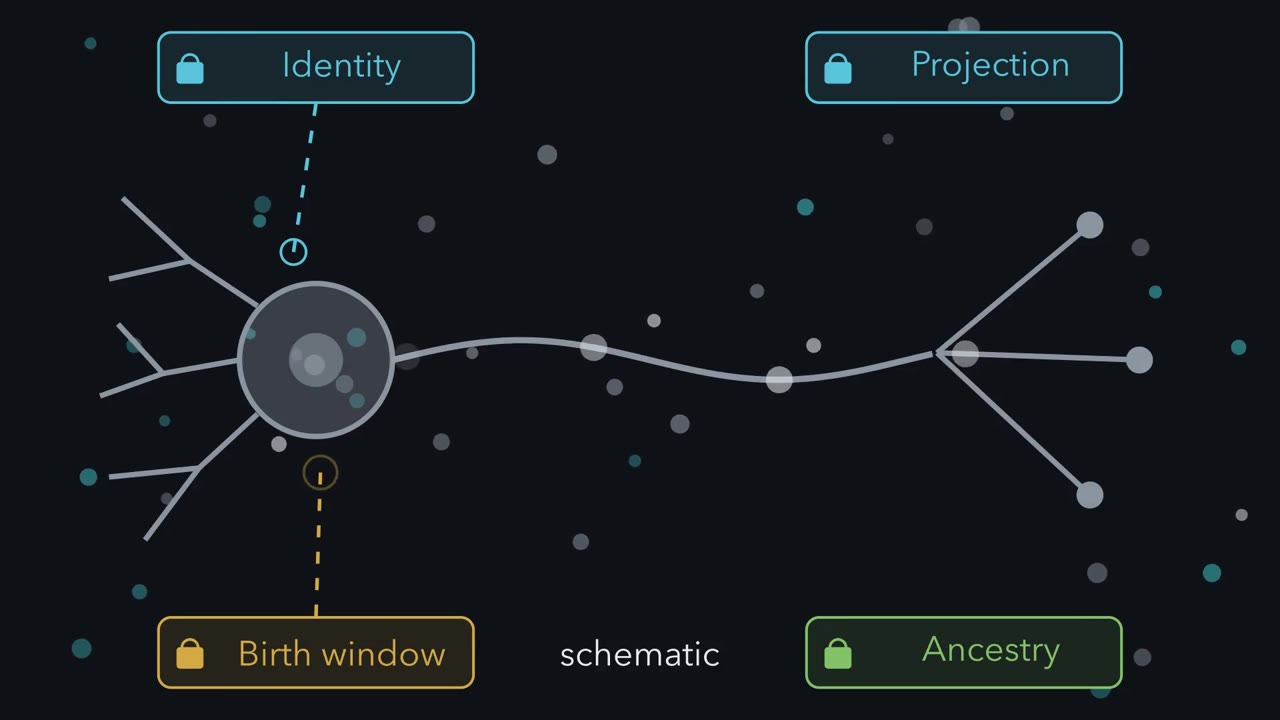 First film Length 3:21 What Can a Label Prove? Developmental Neuroscience · Graduate school and beyond Tools for Following Cells and Genes
Take-home
A method can reveal only what its mark records.
-
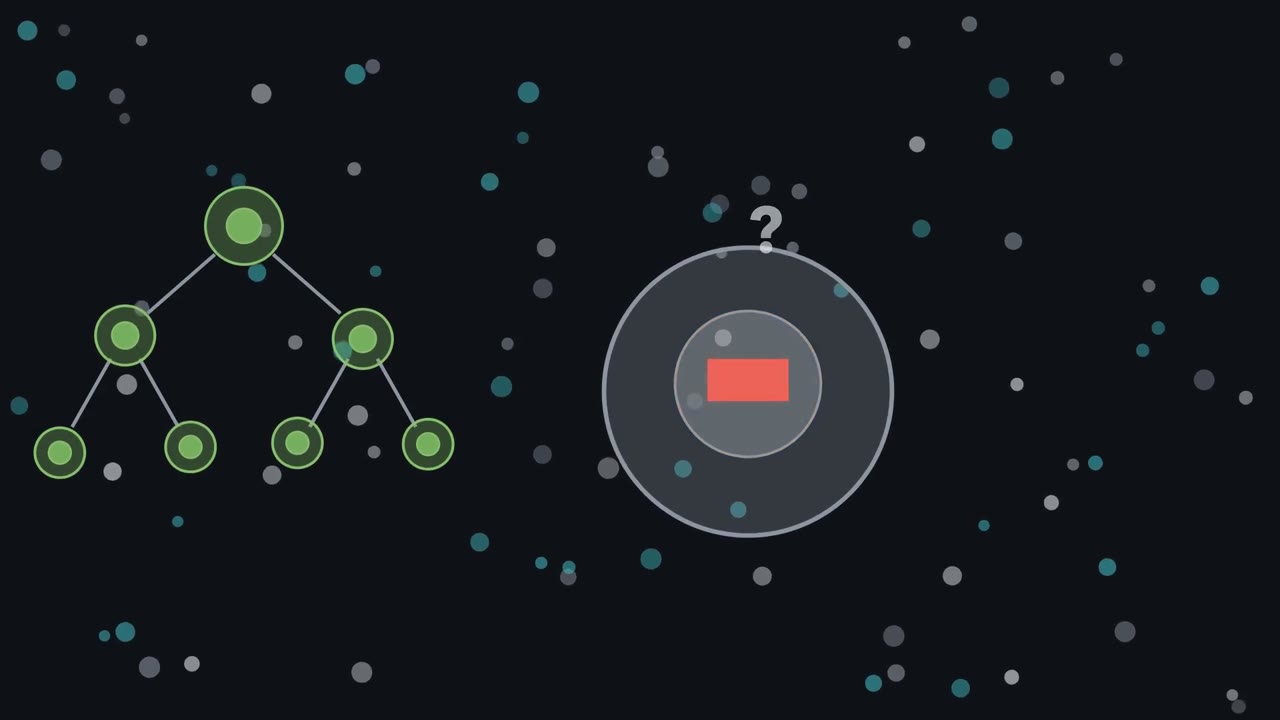 Second film Length 3:11 Build a Conditional Test Developmental Neuroscience · Graduate school and beyond Tools for Following Cells and Genes
Take-home
Cre changes a floxed allele only where recombination occurs.
-
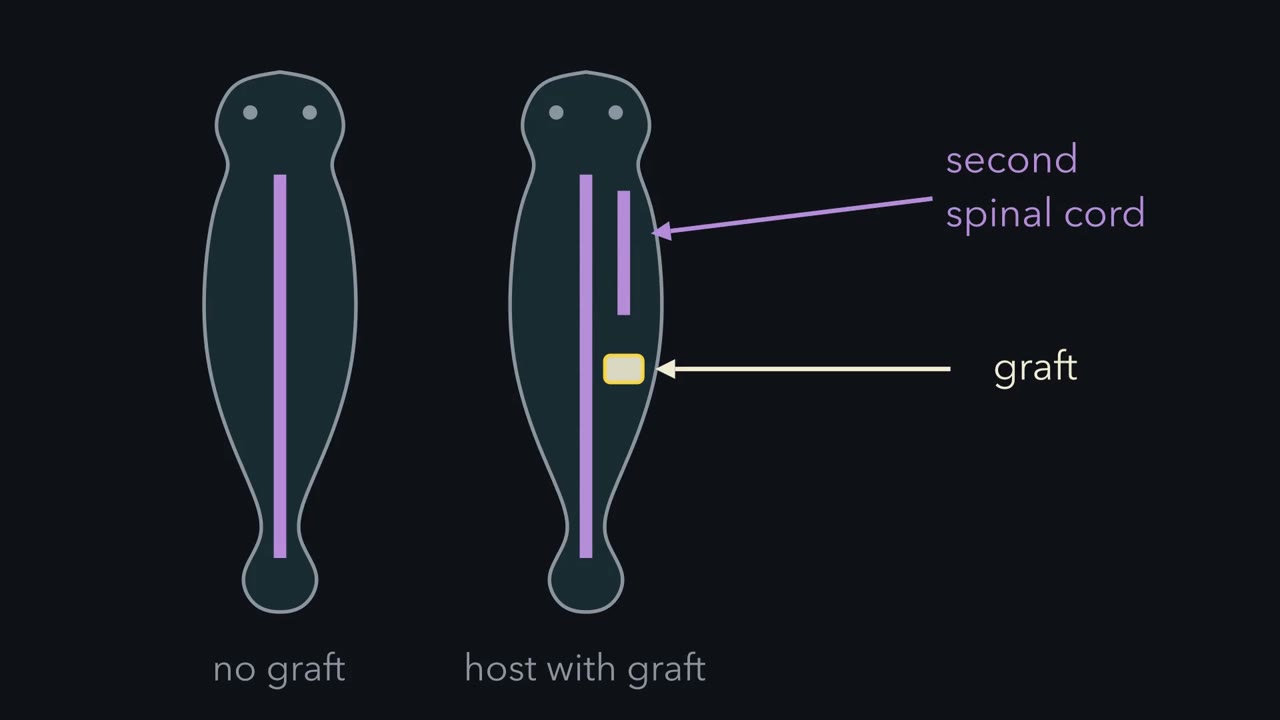 Part 1 of 3 Length 2:28 One Sheet, Two Fates Developmental Neuroscience · Graduate school and beyond The Organizer: Spemann and Mangold
Take-home
A cell's fate can be set by its neighbours.
-
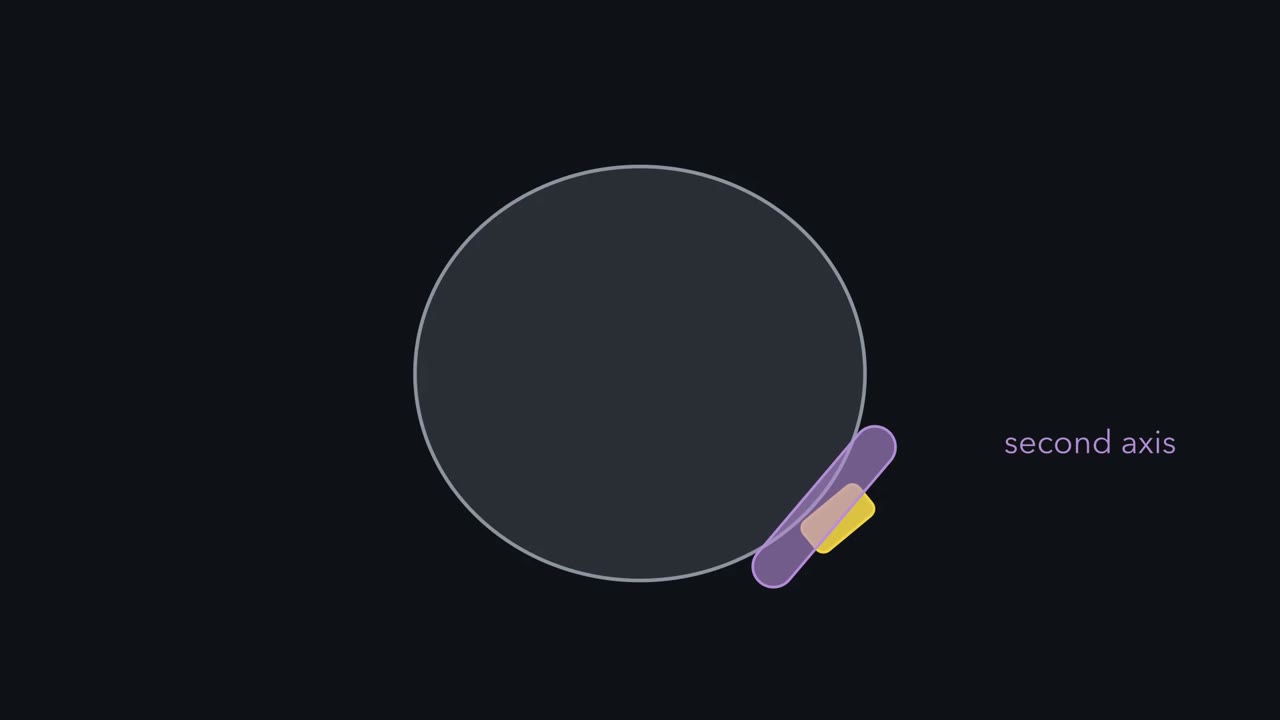 Part 2 of 3 Length 3:21 Whose Cells Built It? Developmental Neuroscience · Graduate school and beyond The Organizer: Spemann and Mangold
Take-home
A pale graft in a pigmented host showed that most of the second neural tube was built by host cells, so the graft induced it.
-
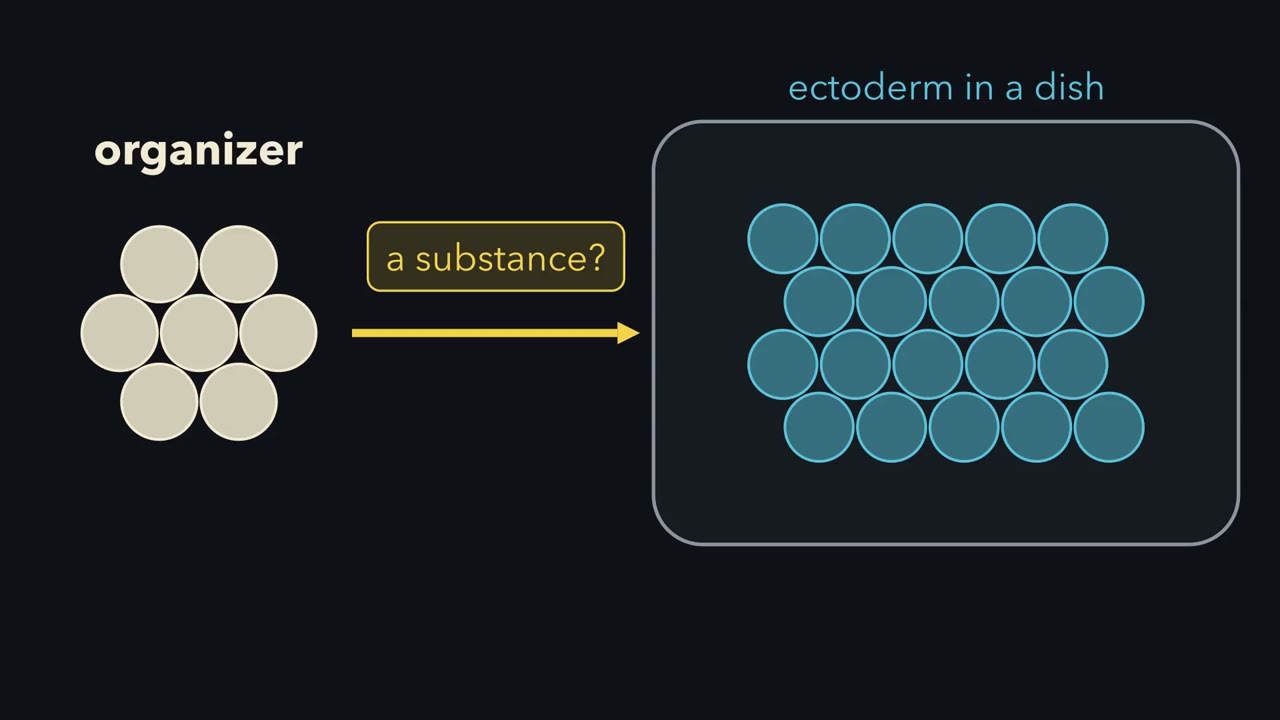 Part 3 of 3 Length 2:40 Dead Tissue That Still Induces Developmental Neuroscience · Graduate school and beyond The Organizer: Spemann and Mangold
Take-home
Killed and even boiled organizer tissue could still make ectoderm neural, though it did not build an organized second axis.
-
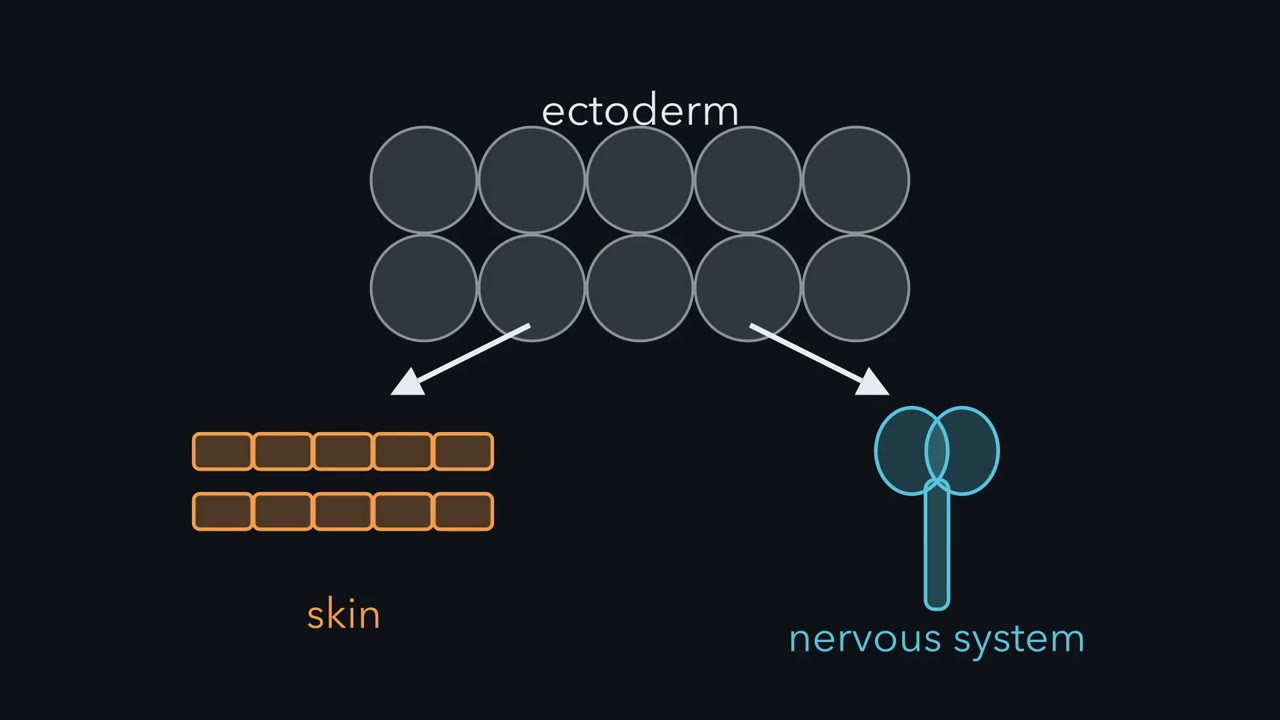 Part 1 of 6 Length 2:54 The Map and the Question Developmental Neuroscience · Graduate school and beyond Neural Induction: The Default Model
Take-home
Ectoderm can become skin or nervous system, and an animal cap left intact becomes epidermis.
-
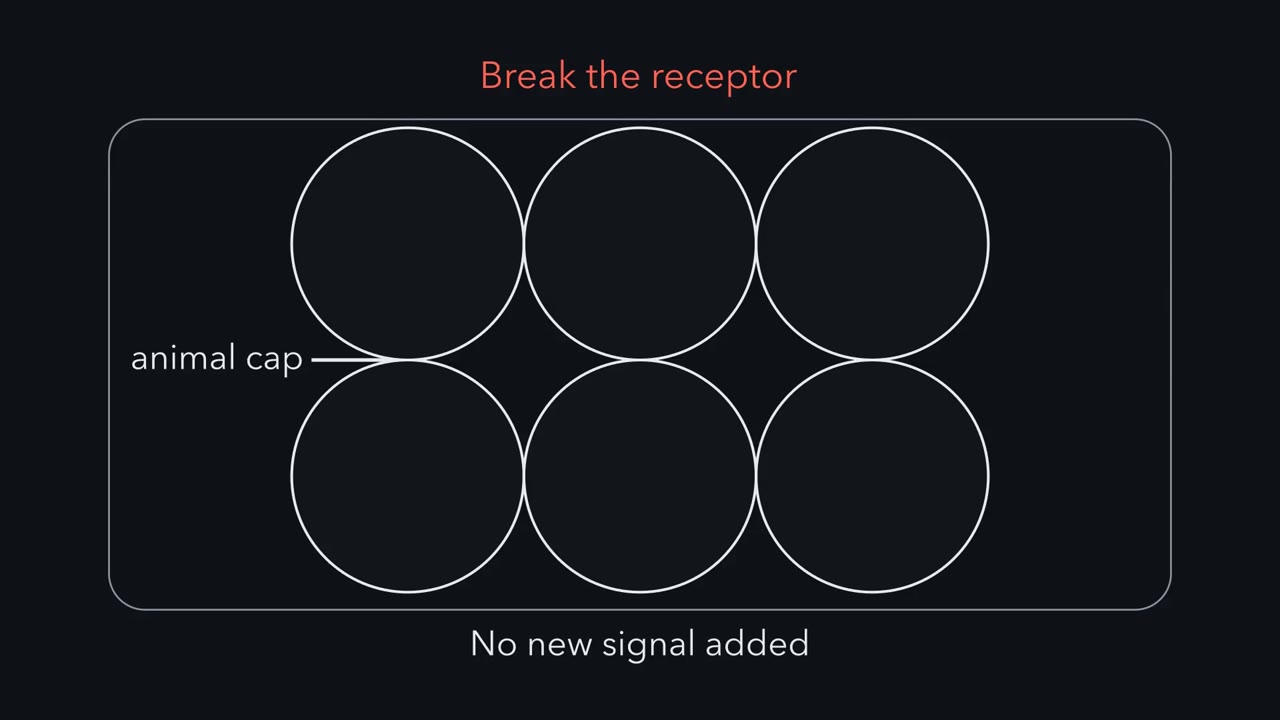 Part 2 of 6 Length 3:00 Break the Receptor, Add the Ligand Developmental Neuroscience · Graduate school and beyond Neural Induction: The Default Model
Take-home
In frog animal caps, jamming a receptor with a dominant-negative copy makes neural tissue, with no mesoderm detected that could have induced it.
-
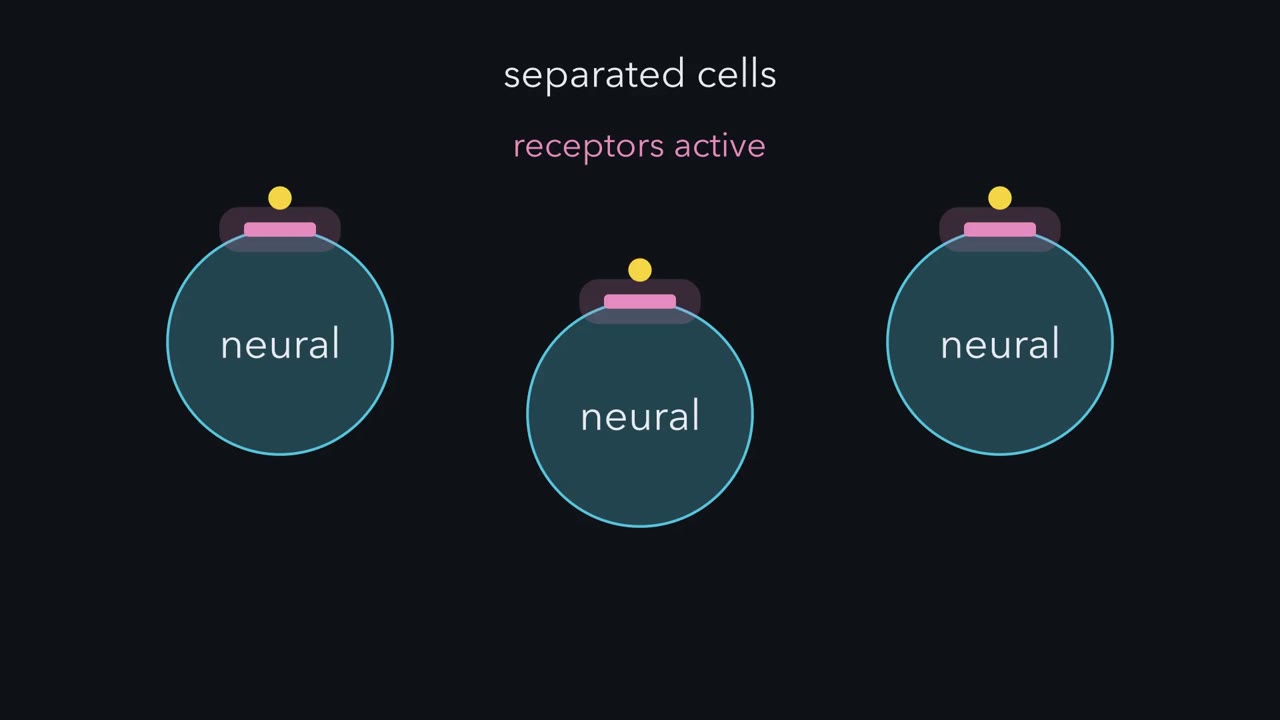 Part 3 of 6 Length 2:55 One Dial Developmental Neuroscience · Graduate school and beyond Neural Induction: The Default Model
Take-home
In these four cap conditions, where Smad1 output was high the cells made skin, and where it was low they made neural tissue.
-
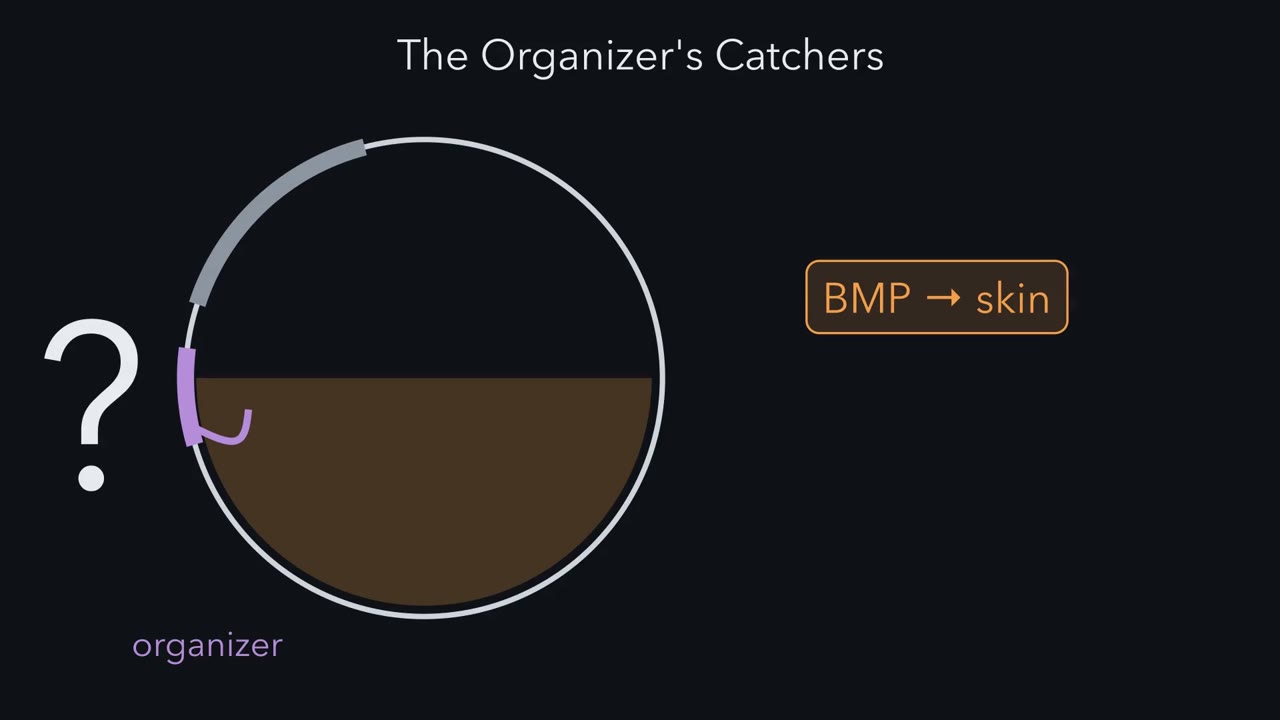 Part 4 of 6 Length 3:29 The Organizer's Catchers Developmental Neuroscience · Graduate school and beyond Neural Induction: The Default Model
Take-home
The organizer makes at least three proteins that catch BMP outside the cell: Noggin, Chordin and Follistatin.
-
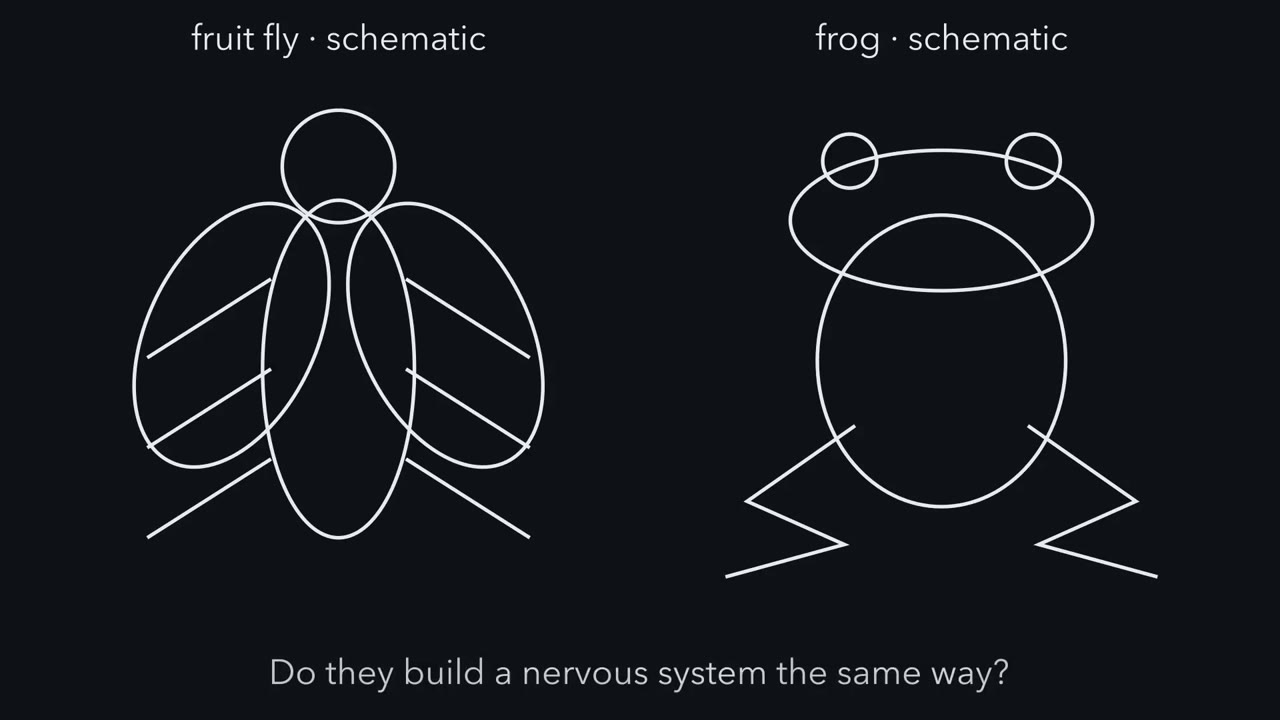 Part 5 of 6 Length 2:32 A Fly Turned Over Developmental Neuroscience · Graduate school and beyond Neural Induction: The Default Model
Take-home
The fly's Dpp and Sog are the counterparts of the frog's BMP4 and Chordin, and frog Chordin works in the fly and fly Sog in the frog.
-
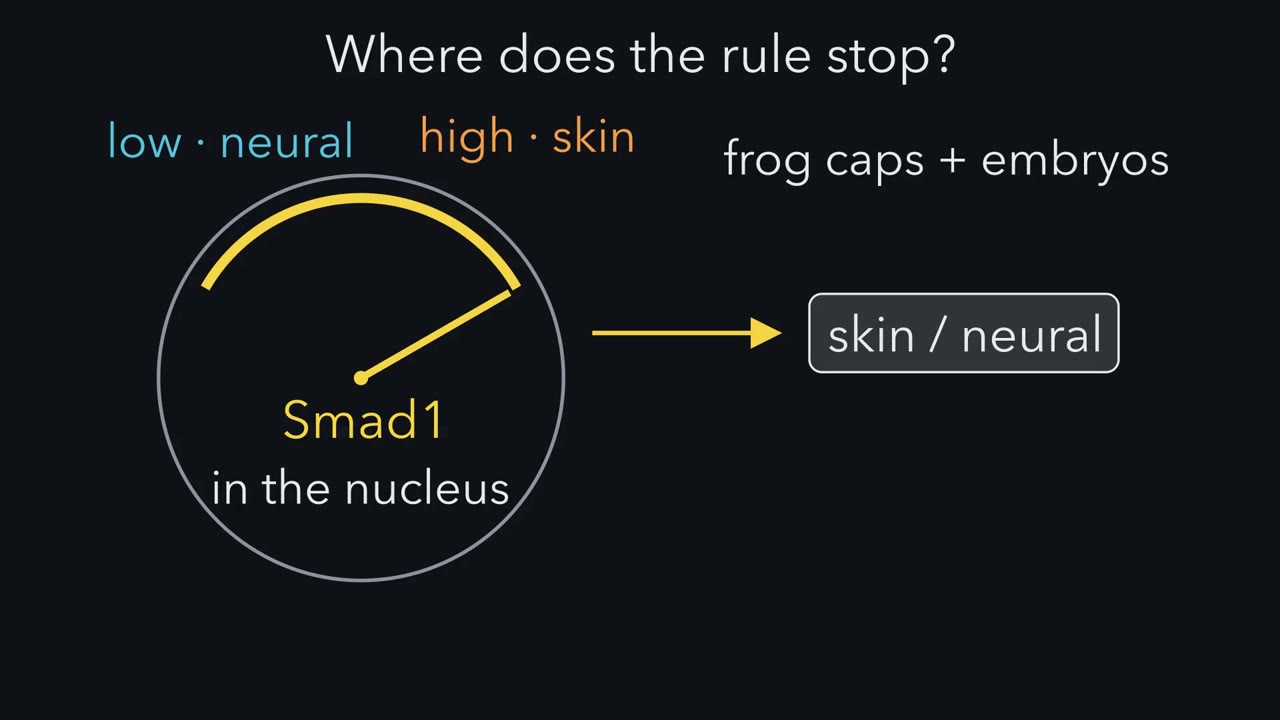 Part 6 of 6 Length 3:18 Where the Rule Stops Developmental Neuroscience · Graduate school and beyond Neural Induction: The Default Model
Take-home
The rule says neural, not where: Noggin-treated caps made only anterior markers.
-
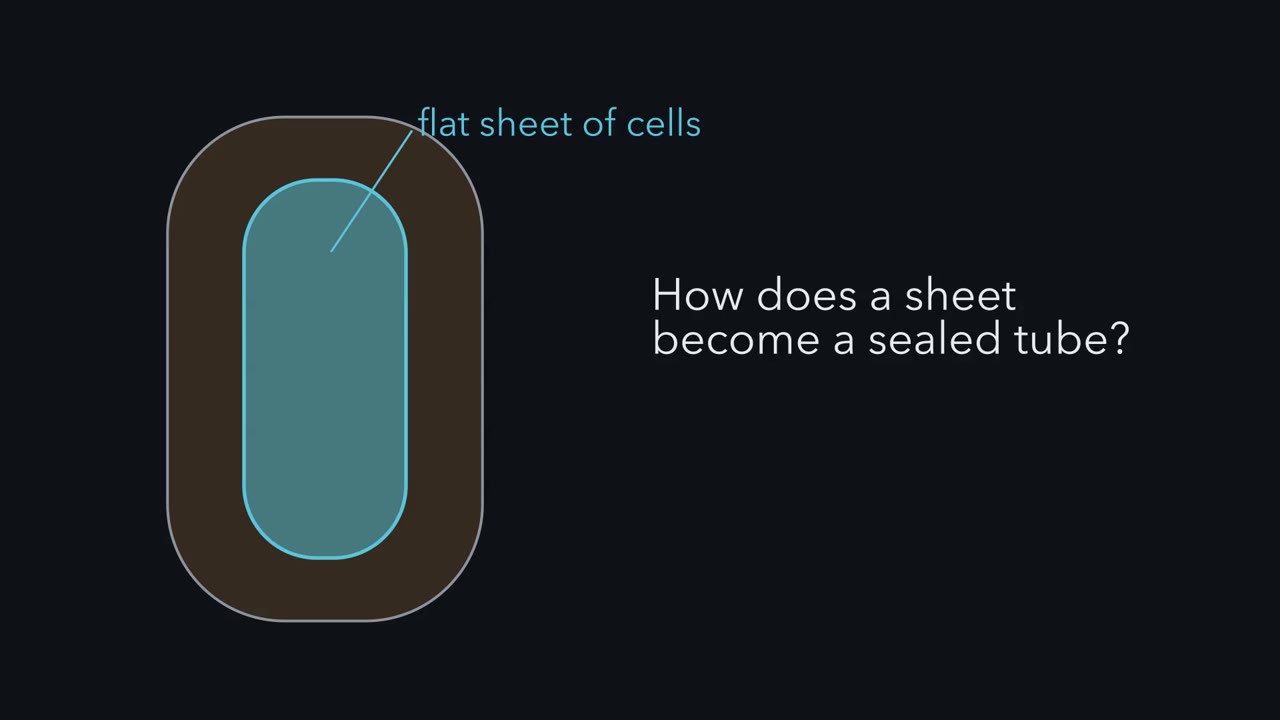 Part 1 of 3 Length 2:15 Narrow First, Then Fold Developmental Neuroscience · Graduate school and beyond Neurulation and Neural Tube Defects
Take-home
The plate narrows and lengthens first, and narrowing keeps going as the folds rise.
-
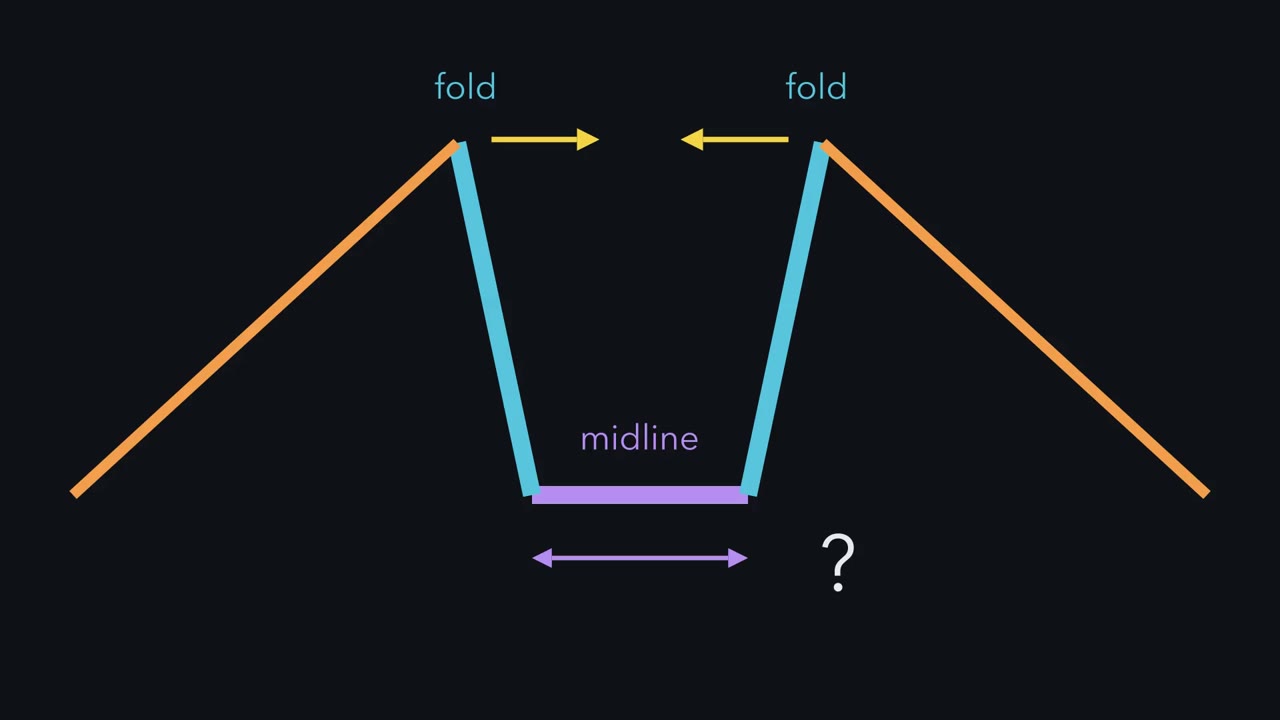 Part 2 of 3 Length 3:07 Where in the Plate? Developmental Neuroscience · Graduate school and beyond Neurulation and Neural Tube Defects
Take-home
The midline must become narrow enough, in time, for the folds to meet.
-
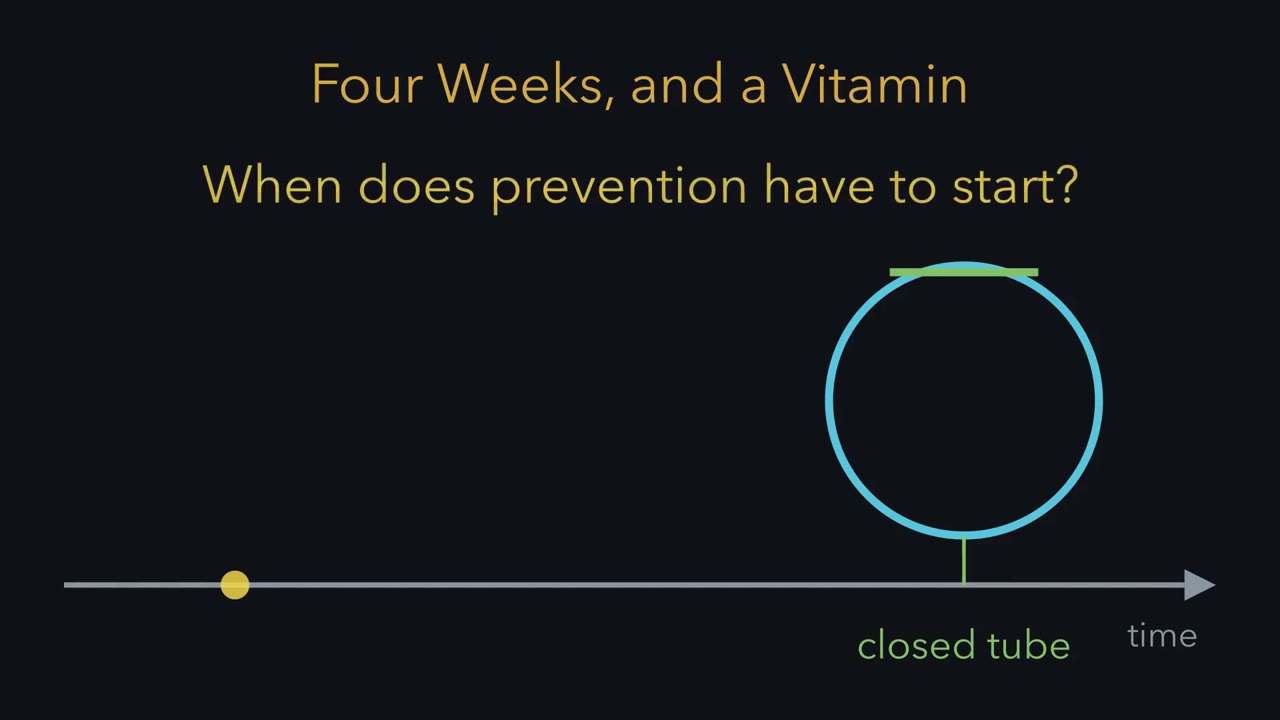 Part 3 of 3 Length 2:29 Four Weeks, and a Vitamin Developmental Neuroscience · Graduate school and beyond Neurulation and Neural Tube Defects
Take-home
Primary closure is complete by about the end of the fourth week after fertilization, about six weeks of pregnancy by the doctor's count.
-
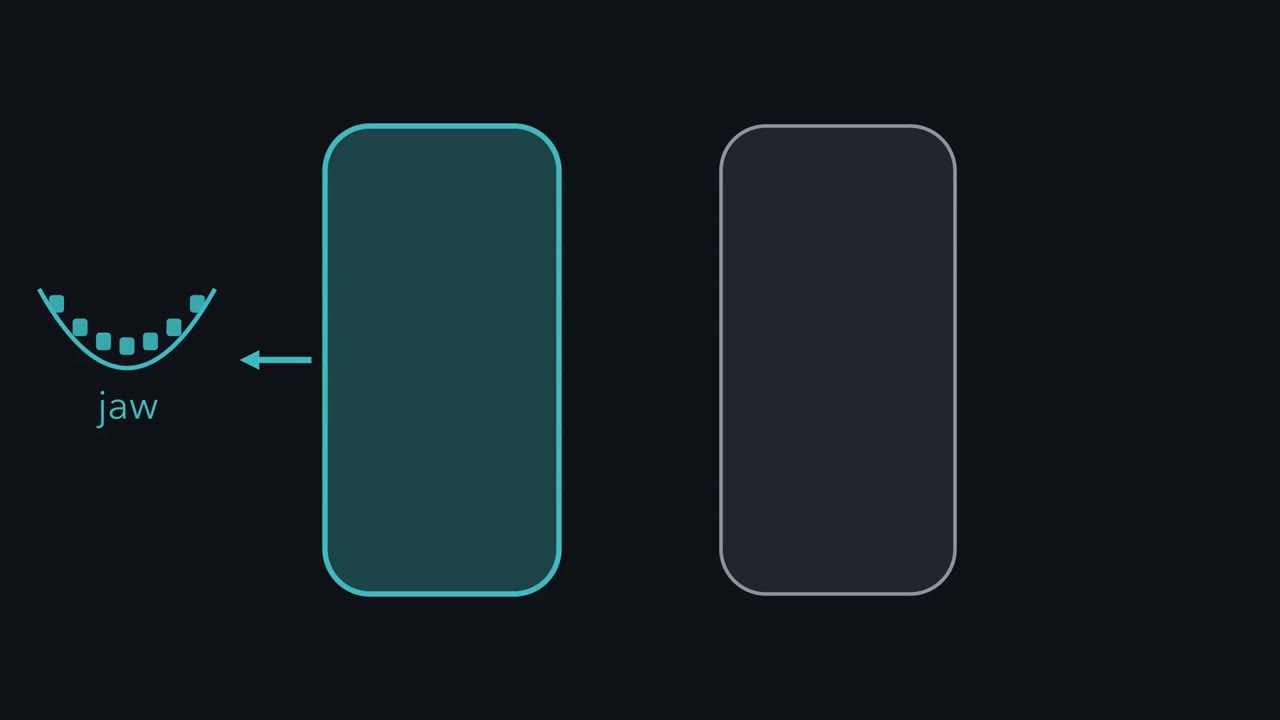 Part 1 of 3 Length 2:28 Two Segments, Two Jobs Developmental Neuroscience · Graduate school and beyond Head to Tail: Hox Genes, Retinoic Acid and Rhombomeres
Take-home
Rhombomeres look alike but each carries its own code of transcription factors, mostly from Hox genes.
-
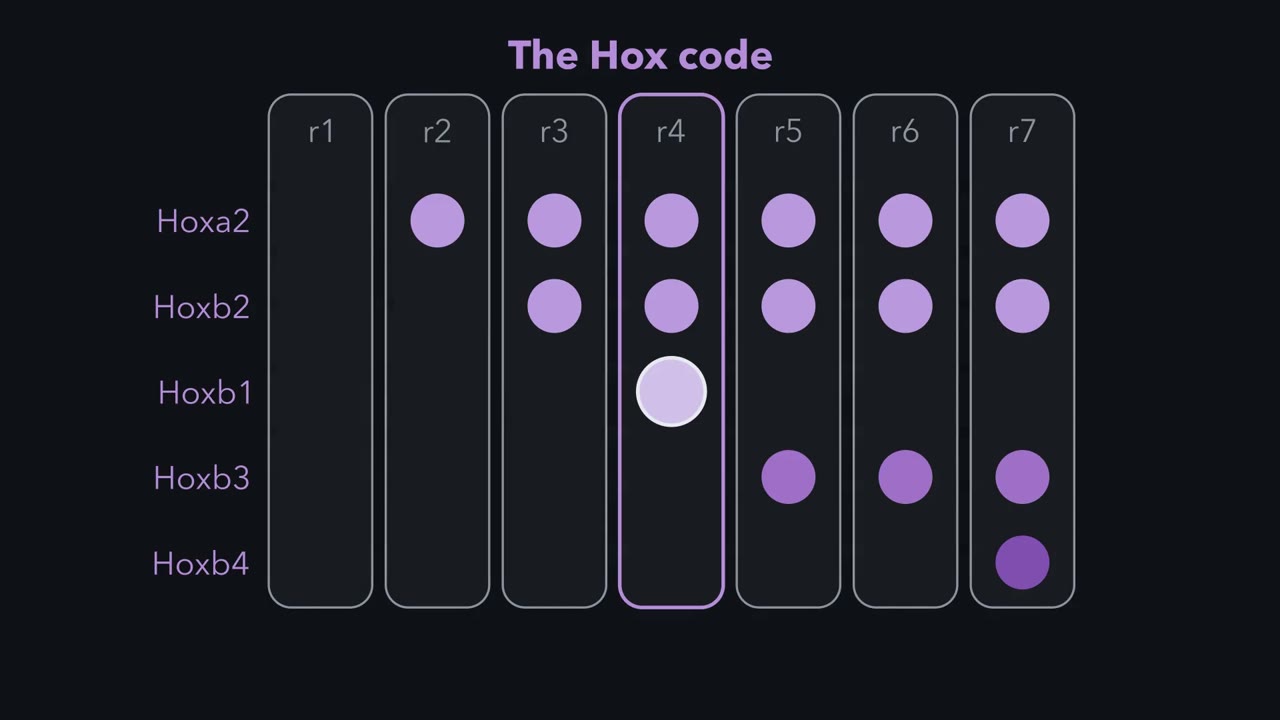 Part 2 of 3 Length 2:11 Remove One Letter Developmental Neuroscience · Graduate school and beyond Head to Tail: Hox Genes, Retinoic Acid and Rhombomeres
Take-home
Without Hoxb1, rhombomere 4 stays in the mouse but loses parts of its identity.
-
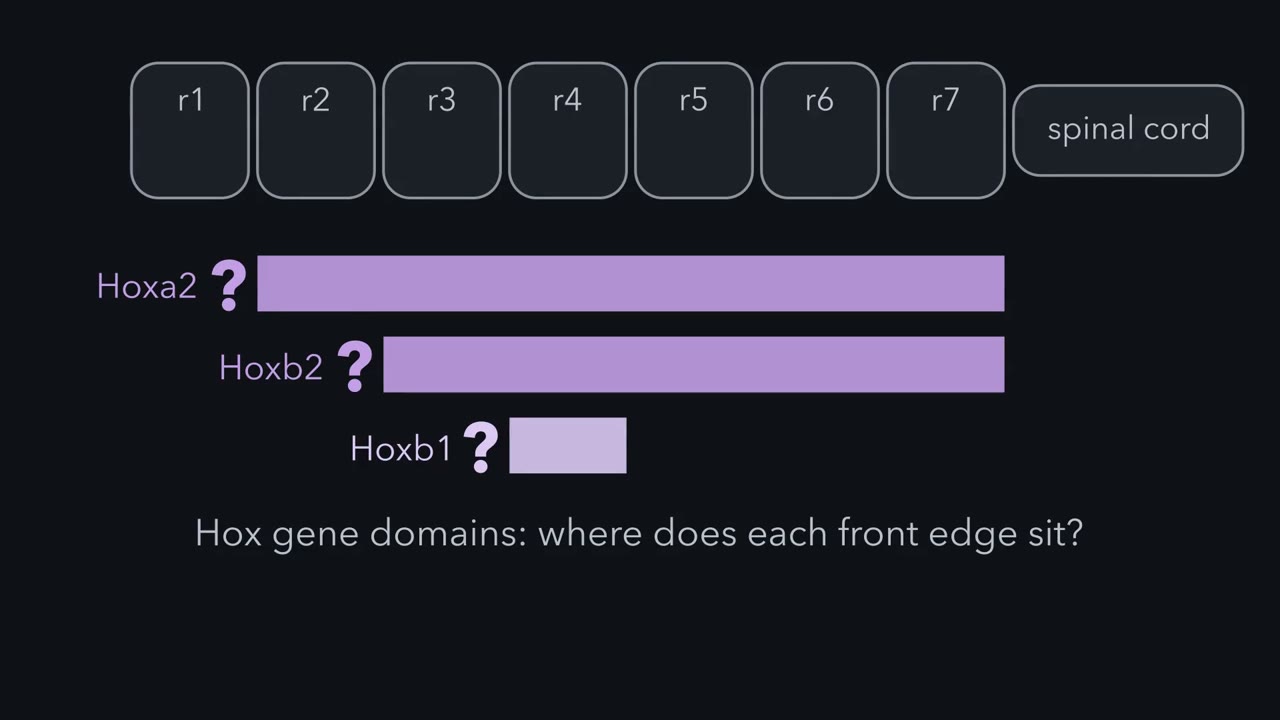 Part 3 of 3 Length 3:02 A Tap at the Back, a Drain at the Front Developmental Neuroscience · Graduate school and beyond Head to Tail: Hox Genes, Retinoic Acid and Rhombomeres
Take-home
Retinoic acid, made from vitamin A, is made toward the back of the hindbrain and destroyed toward the front by Cyp26 enzymes.
-
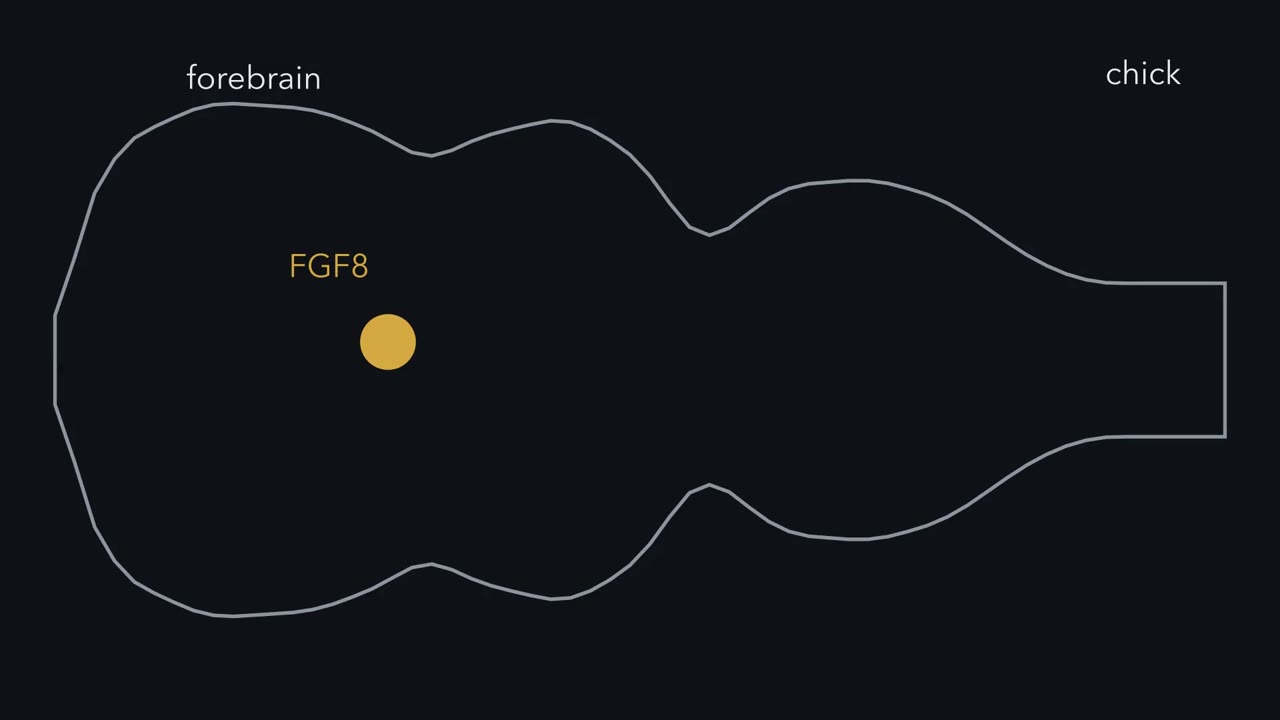 Part 1 of 3 Length 2:48 Where the Line Falls Developmental Neuroscience · Graduate school and beyond Local Organizers: The Midbrain-Hindbrain Boundary
Take-home
A local organizer is a small signaling center that tells nearby cells what to build.
-
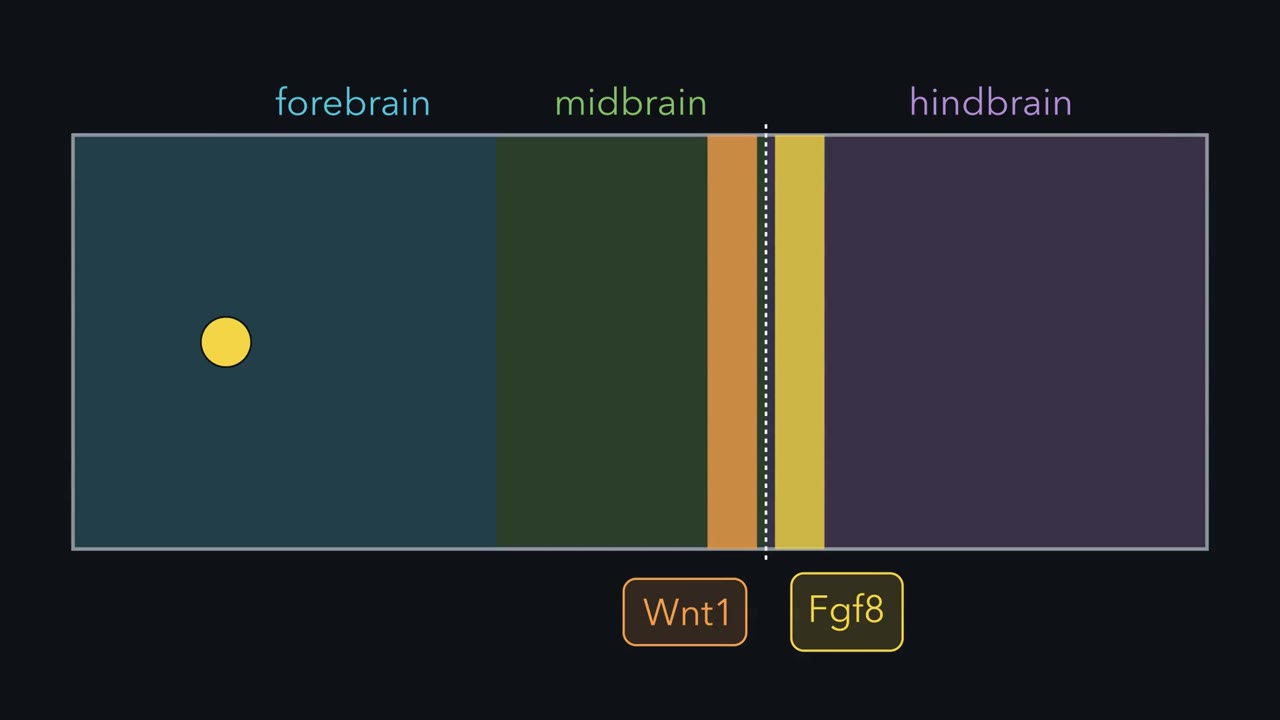 Part 2 of 3 Length 3:20 One Bead Builds a Midbrain Developmental Neuroscience · Graduate school and beyond Local Organizers: The Midbrain-Hindbrain Boundary
Take-home
An FGF8 bead in the chick caudal forebrain induced an extra midbrain built as a mirror image.
-
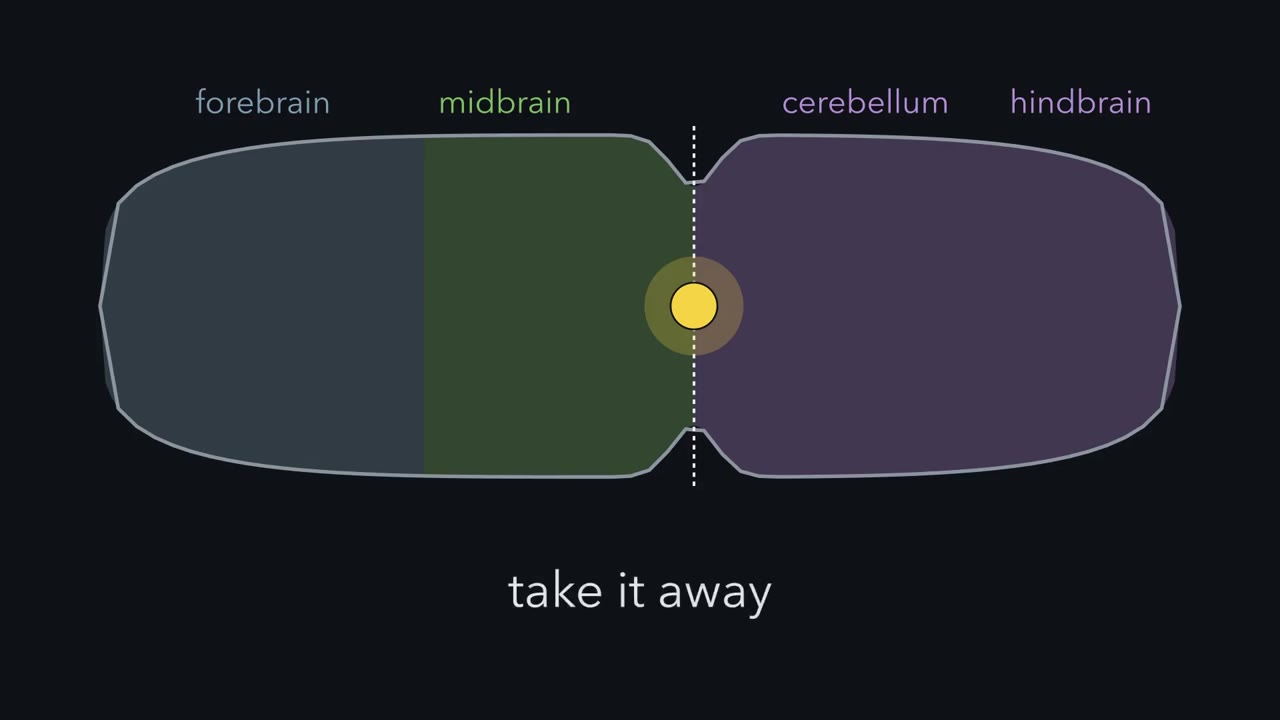 Part 3 of 3 Length 2:12 Started, Then Lost Developmental Neuroscience · Graduate school and beyond Local Organizers: The Midbrain-Hindbrain Boundary
Take-home
In Wnt1-null mice Engrailed comes on and then fades, so Wnt1 is needed to keep the program on, not to start it.
-
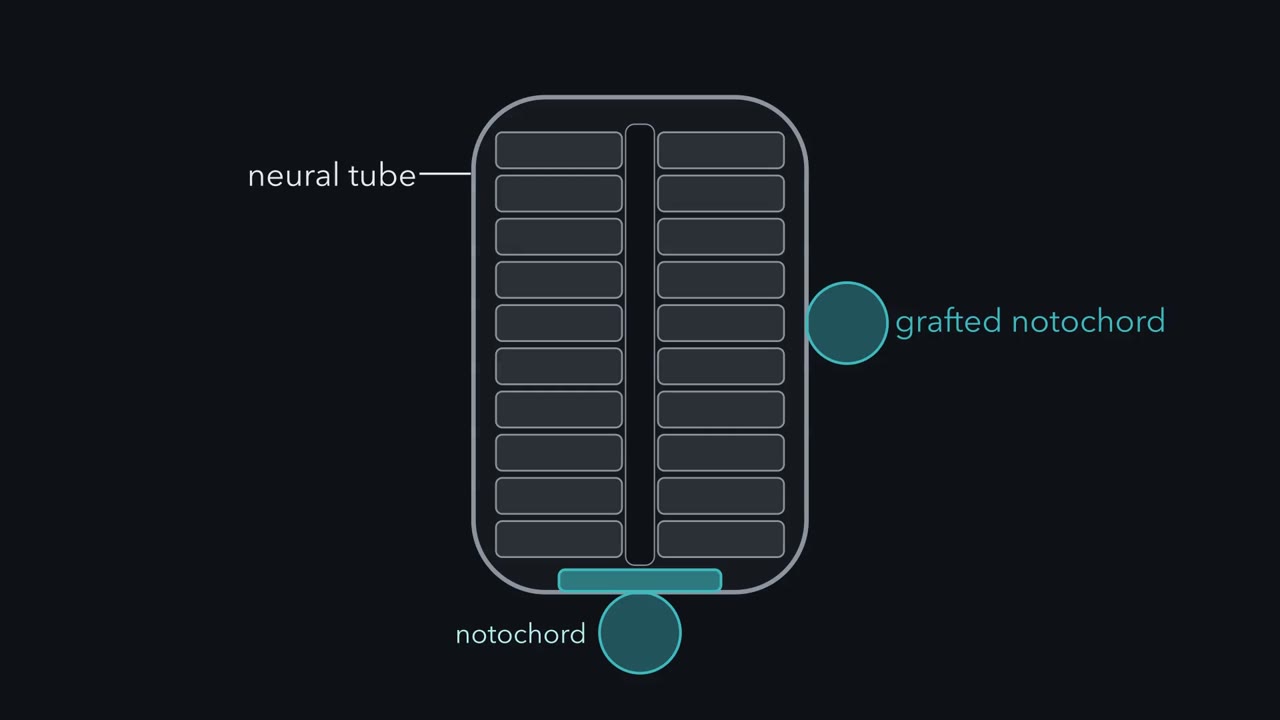 Part 1 of 6 Length 2:55 The Tube Gains a Second Floor Developmental Neuroscience · Graduate school and beyond Ventral to Dorsal: Sonic Hedgehog and BMP in the Neural Tube
Take-home
In chick, a notochord grafted beside the neural tube gave the nearby neural cells floor-plate properties.
-
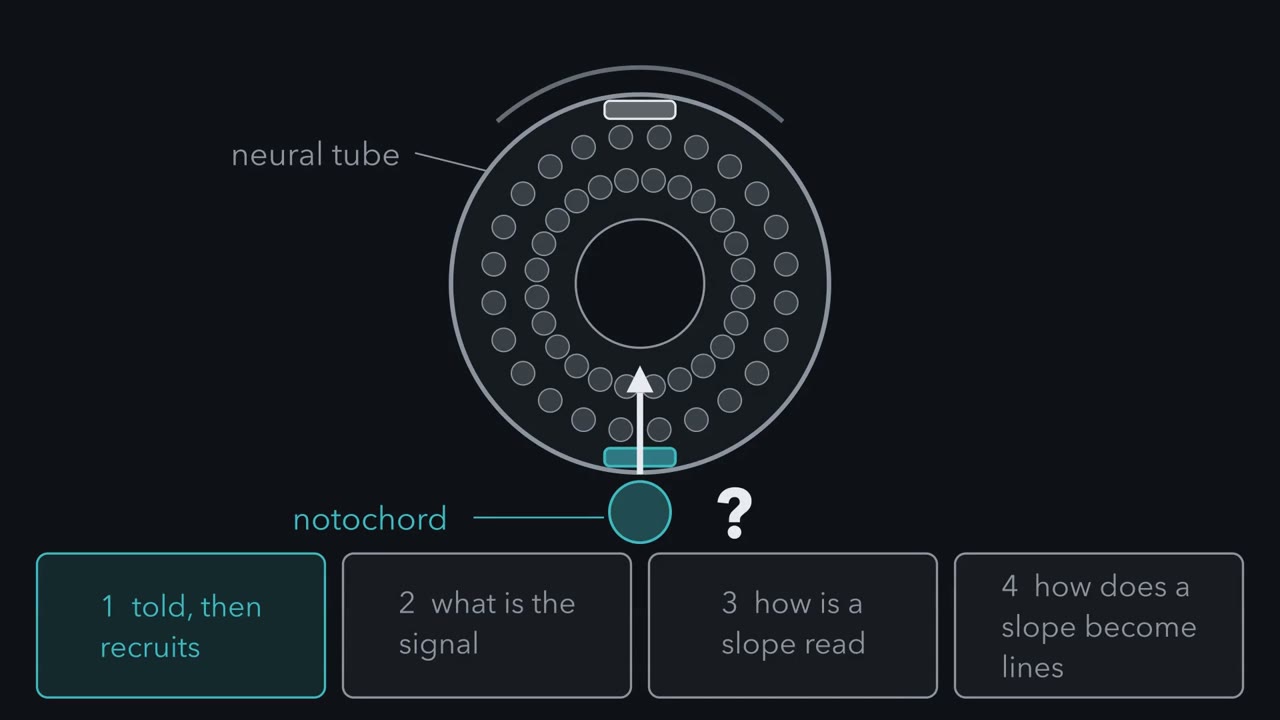 Part 2 of 6 Length 3:13 Naming the Signal Developmental Neuroscience · Graduate school and beyond Ventral to Dorsal: Sonic Hedgehog and BMP in the Neural Tube
Take-home
The signal is Sonic hedgehog, made in the notochord and floor plate, and one protein at different doses gave different ventral fates in explants.
-
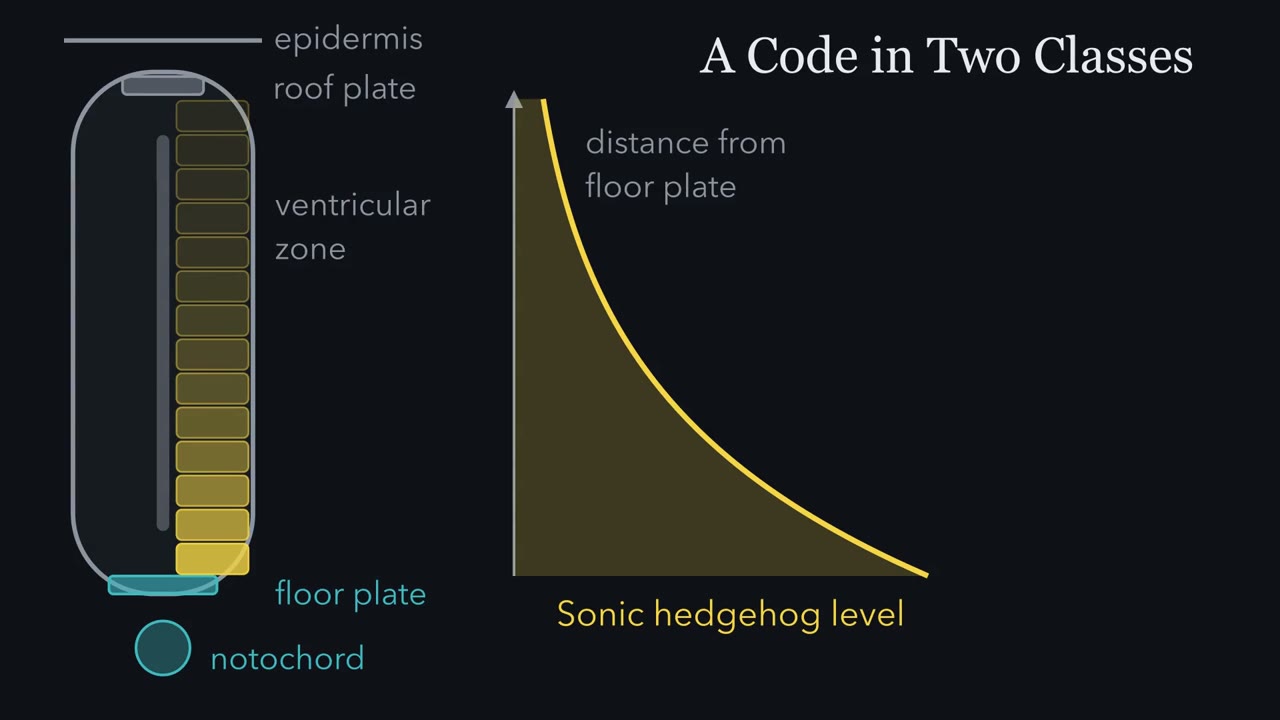 Part 3 of 6 Length 3:07 A Code in Two Classes Developmental Neuroscience · Graduate school and beyond Ventral to Dorsal: Sonic Hedgehog and BMP in the Neural Tube
Take-home
A level of Shh signal becomes an address, written as a combination of transcription factors.
-
 Part 4 of 6 Length 2:43 Level and Time Developmental Neuroscience · Graduate school and beyond Ventral to Dorsal: Sonic Hedgehog and BMP in the Neural Tube
Take-home
A progenitor reads both how much Shh signal it gets and for how long.
-
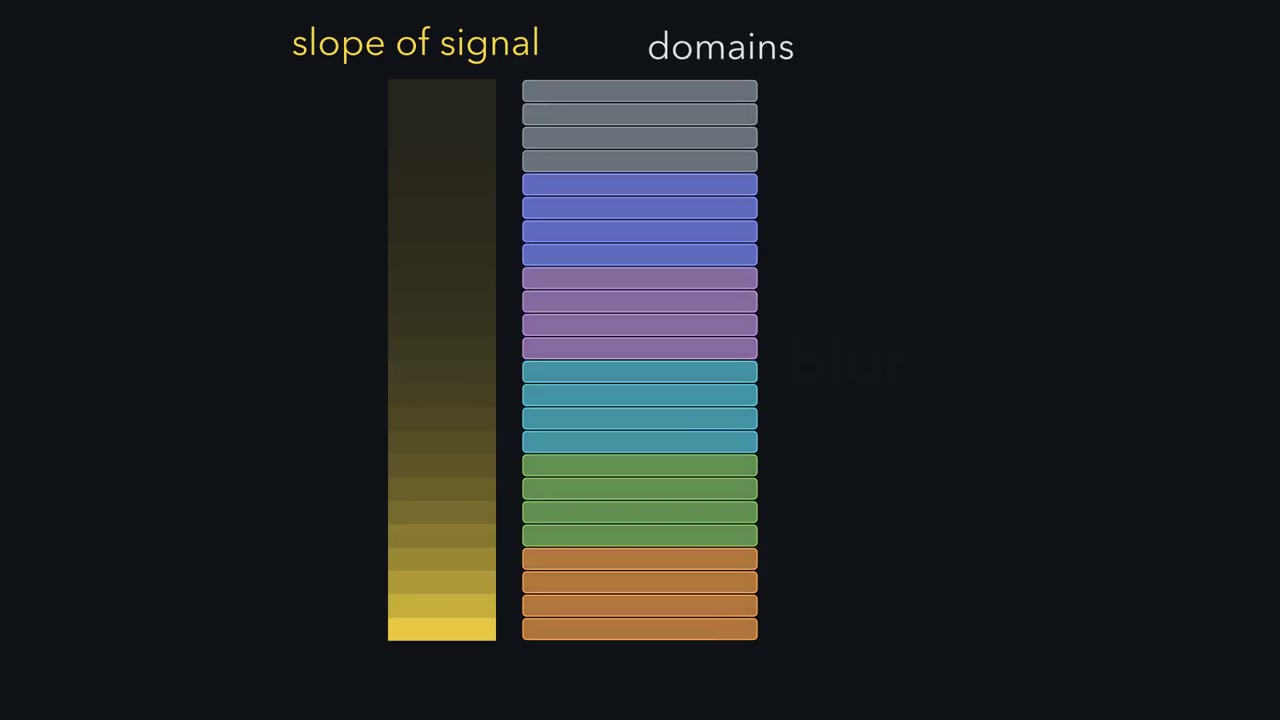 Part 5 of 6 Length 3:02 Drawing the Lines Developmental Neuroscience · Graduate school and beyond Ventral to Dorsal: Sonic Hedgehog and BMP in the Neural Tube
Take-home
The slope sets roughly where each line falls, and pairs of repressing factors such as Pax6 and Nkx2.2 make each line sharp.
-
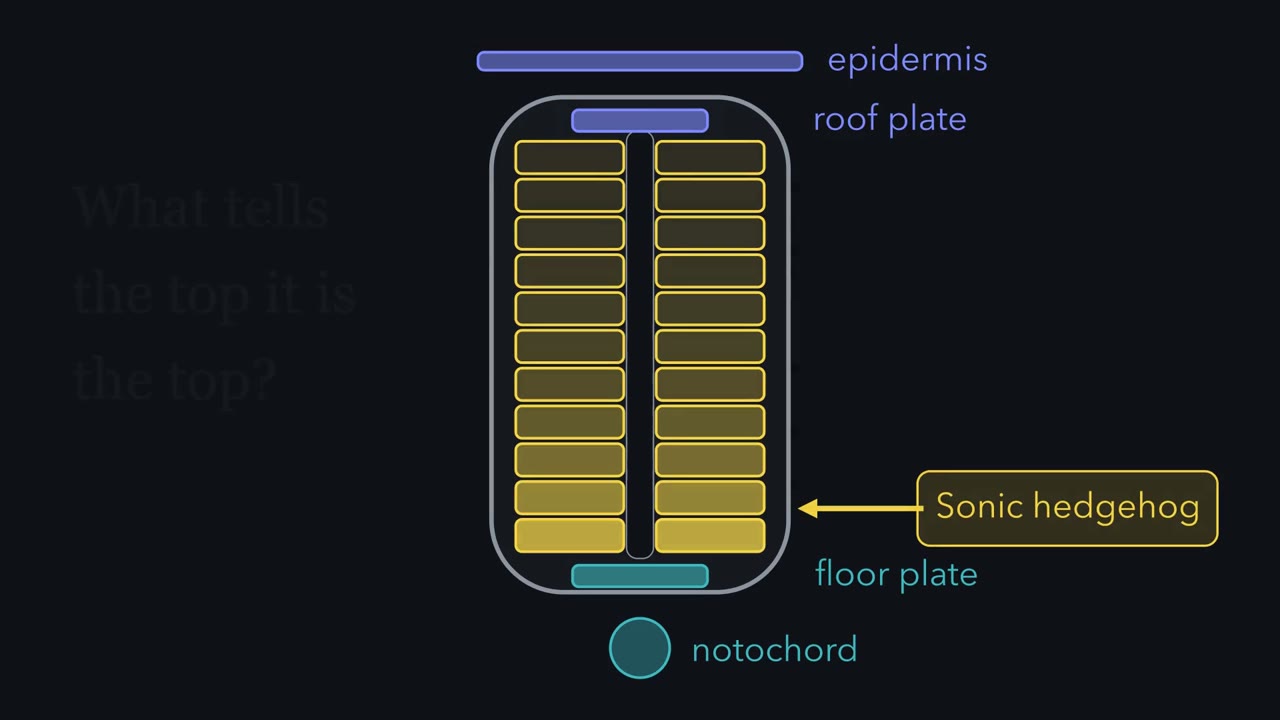 Part 6 of 6 Length 2:52 The Top of the Tube Developmental Neuroscience · Graduate school and beyond Ventral to Dorsal: Sonic Hedgehog and BMP in the Neural Tube
Take-home
BMPs from the epidermis and roof plate pattern the top of the tube, and the roof plate also makes Wnts.
-
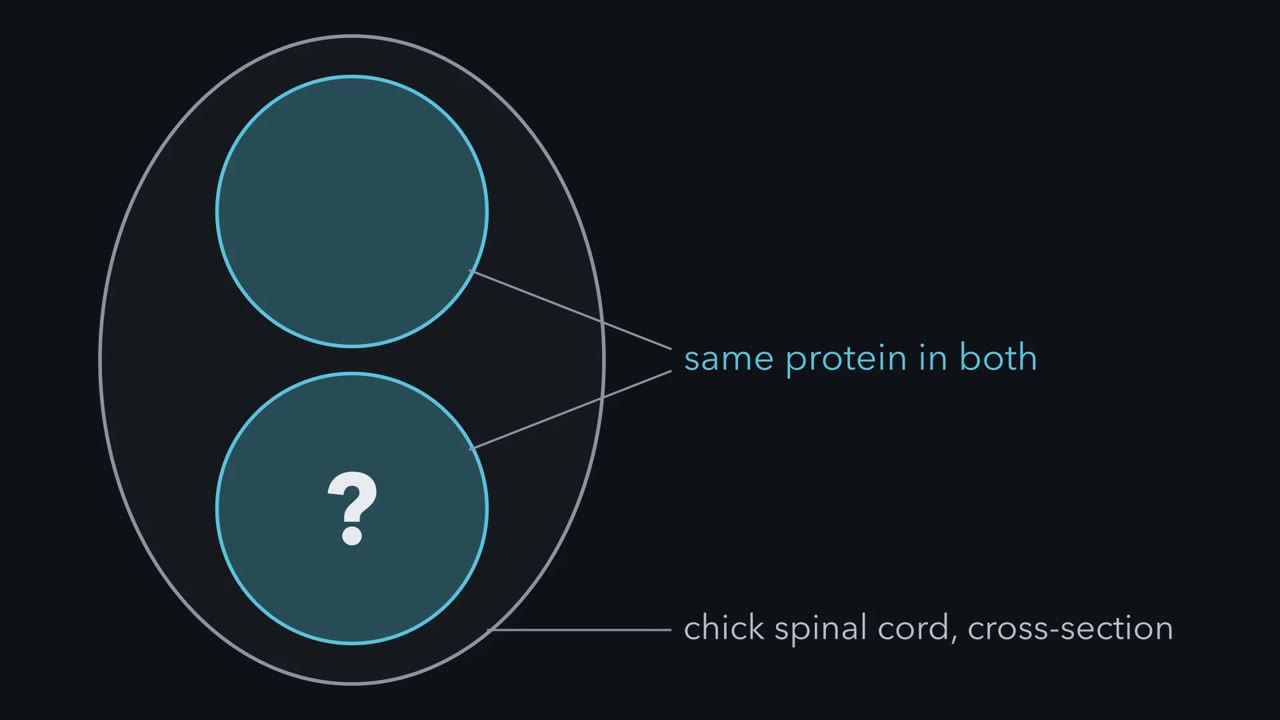 Part 1 of 3 Length 2:36 One Protein, Two Cell Types Developmental Neuroscience · Graduate school and beyond Transcription Factor Codes: Building a Motor Neuron
Take-home
No single factor says motor neuron: here, identity depends on which complexes form, and that depends on which partners are present and in what ratio.
-
 Part 2 of 3 Length 2:34 Enough, Needed, and Kept Developmental Neuroscience · Graduate school and beyond Transcription Factor Codes: Building a Motor Neuron
Take-home
A factor is sufficient if adding it produces the effect in the cells tested, and necessary if the effect does not happen without it.
-
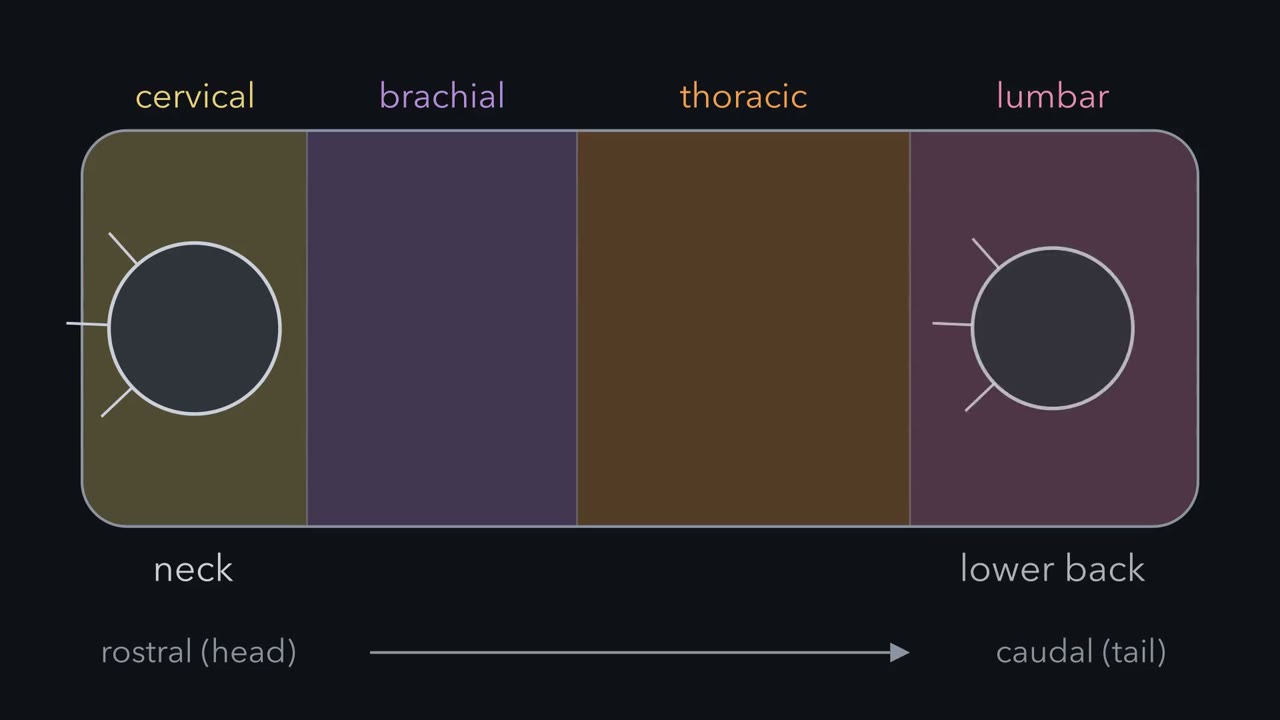 Part 3 of 3 Length 2:52 Which Motor Neuron, and a Recipe Developmental Neuroscience · Graduate school and beyond Transcription Factor Codes: Building a Motor Neuron
Take-home
Position along the cord is written in Hox proteins, and in chick, Hoxc9 given early in the brachial cord suppresses limb column identity and gives a preganglionic identity.
-
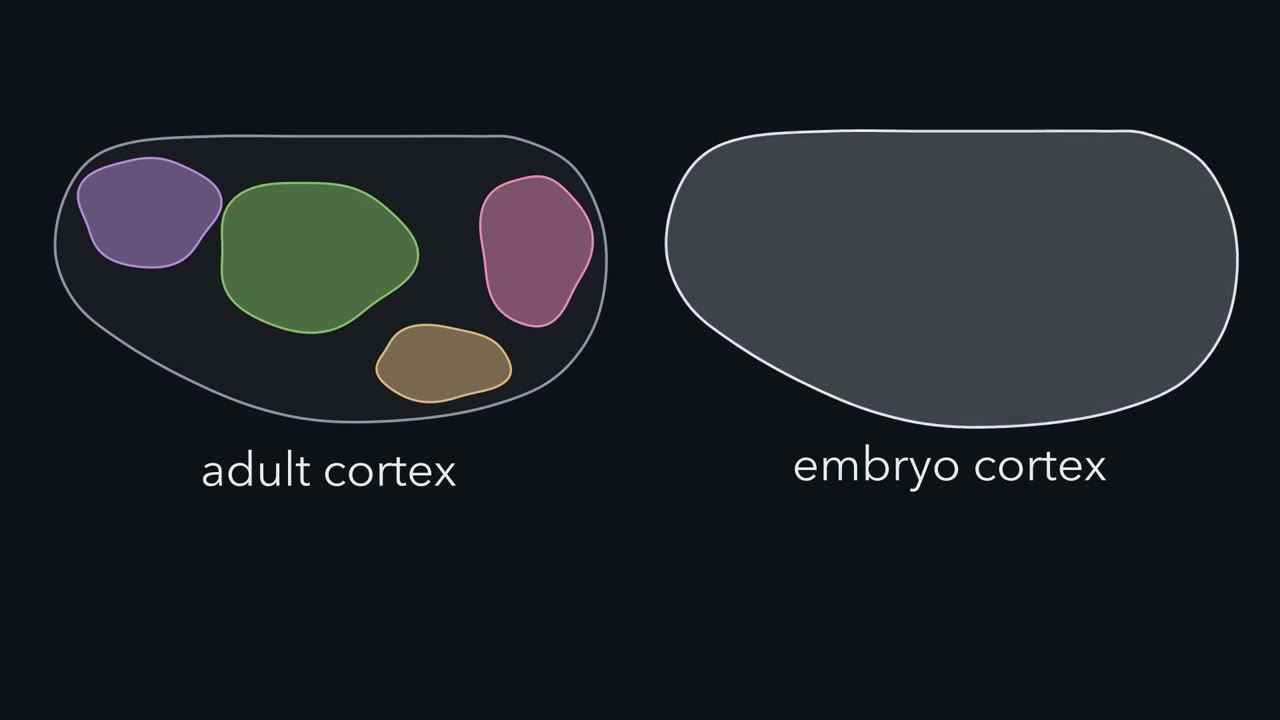 Part 1 of 6 Length 3:02 A Sheet with No Borders Developmental Neuroscience · Graduate school and beyond Mapping the Cortex: Areas and Arealization
Take-home
The adult cortex has areas, but the embryonic sheet shows no borders for them.
-
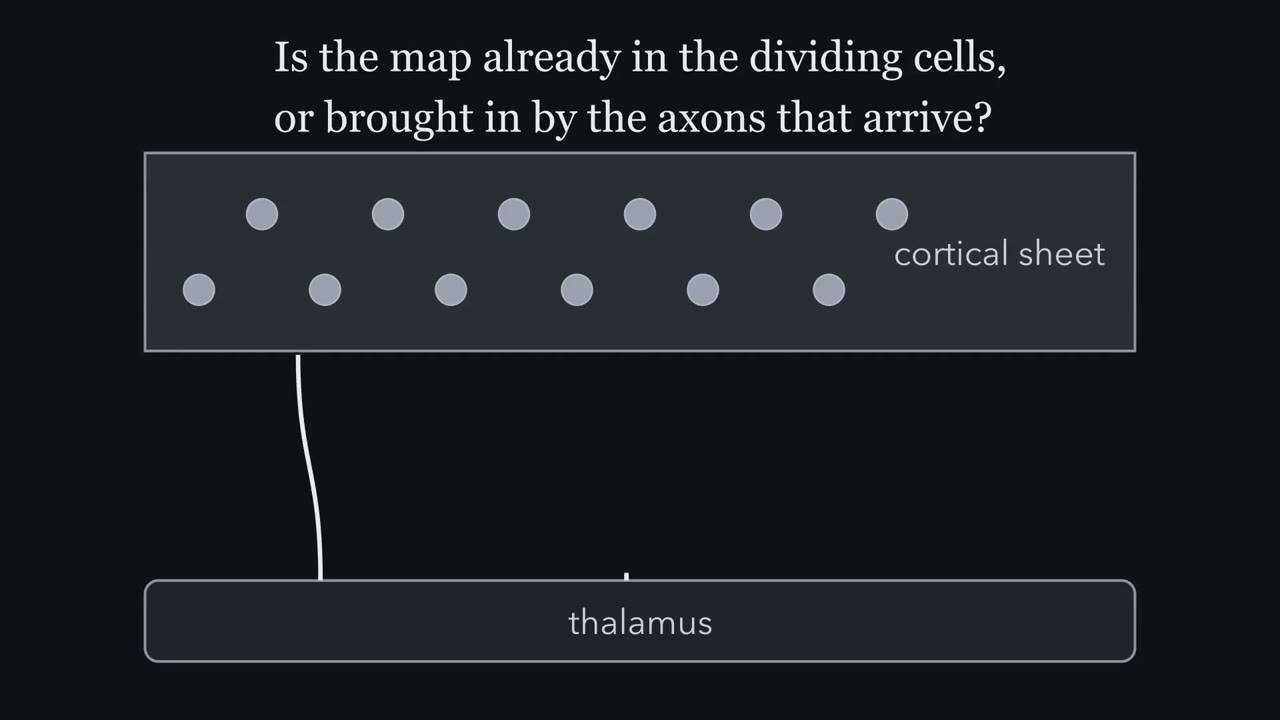 Part 2 of 6 Length 3:02 Two Answers, a Year Apart Developmental Neuroscience · Graduate school and beyond Mapping the Cortex: Areas and Arealization
Take-home
The protomap proposes that the outline of the areas is laid down in the progenitors; the protocortex proposes that it comes mainly from arriving thalamic axons.
-
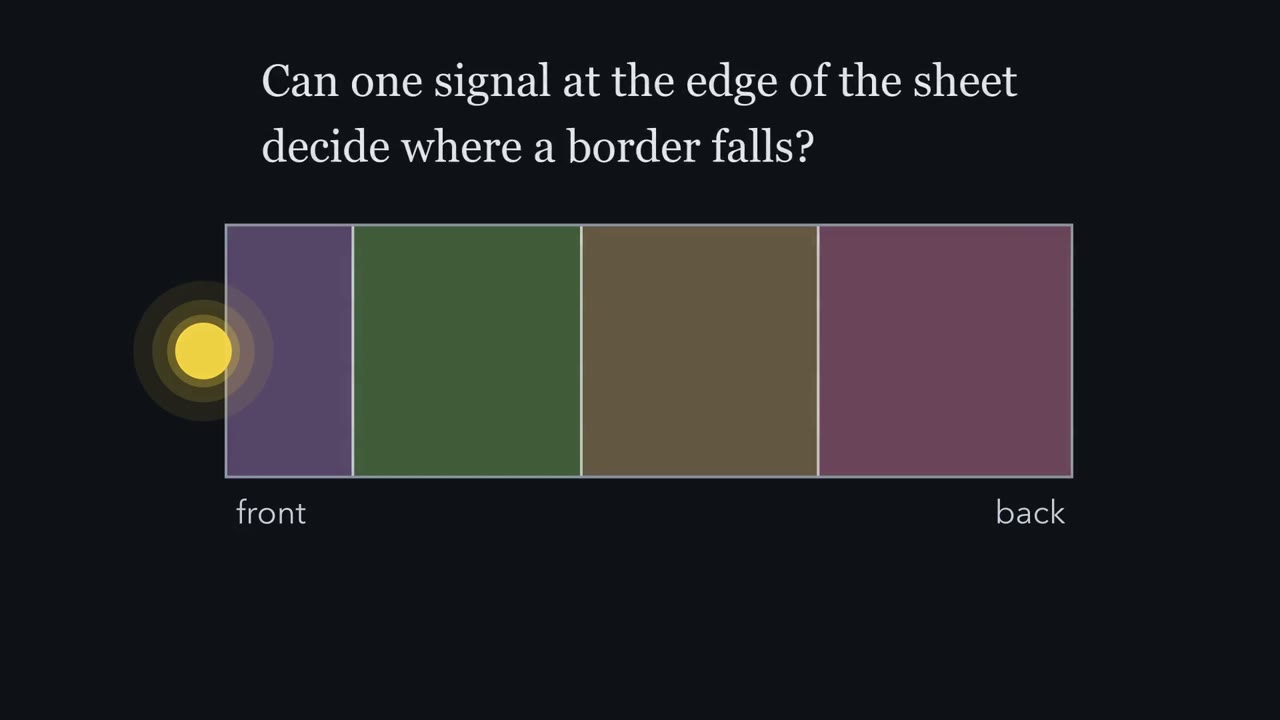 Part 3 of 6 Length 3:32 A Lamp at the Front Developmental Neuroscience · Graduate school and beyond Mapping the Cortex: Areas and Arealization
Take-home
In the mouse, extra FGF8 at the front moved the barrel field back, and blocking FGF signalling moved it forward.
-
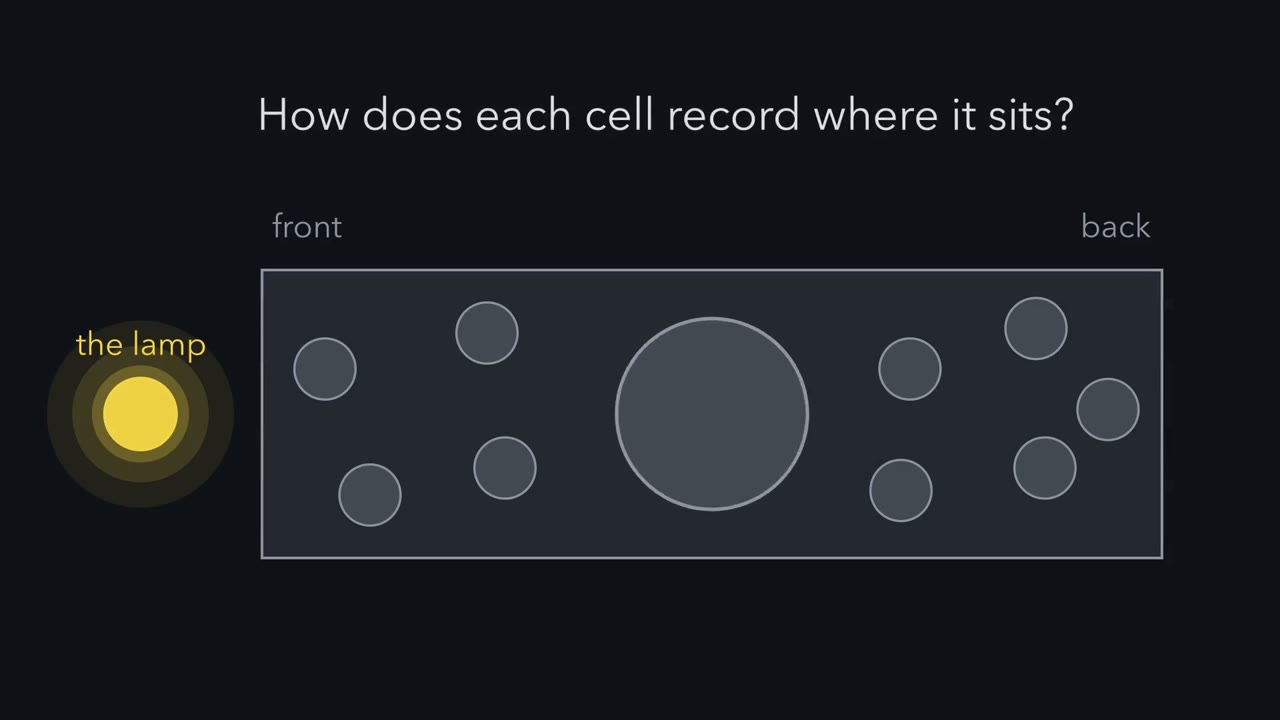 Part 4 of 6 Length 3:17 The Cells' Own Record Developmental Neuroscience · Graduate school and beyond Mapping the Cortex: Areas and Arealization
Take-home
Position is recorded in progenitors as levels of transcription factors such as Emx2 and Pax6, which run in opposite directions front to back.
-
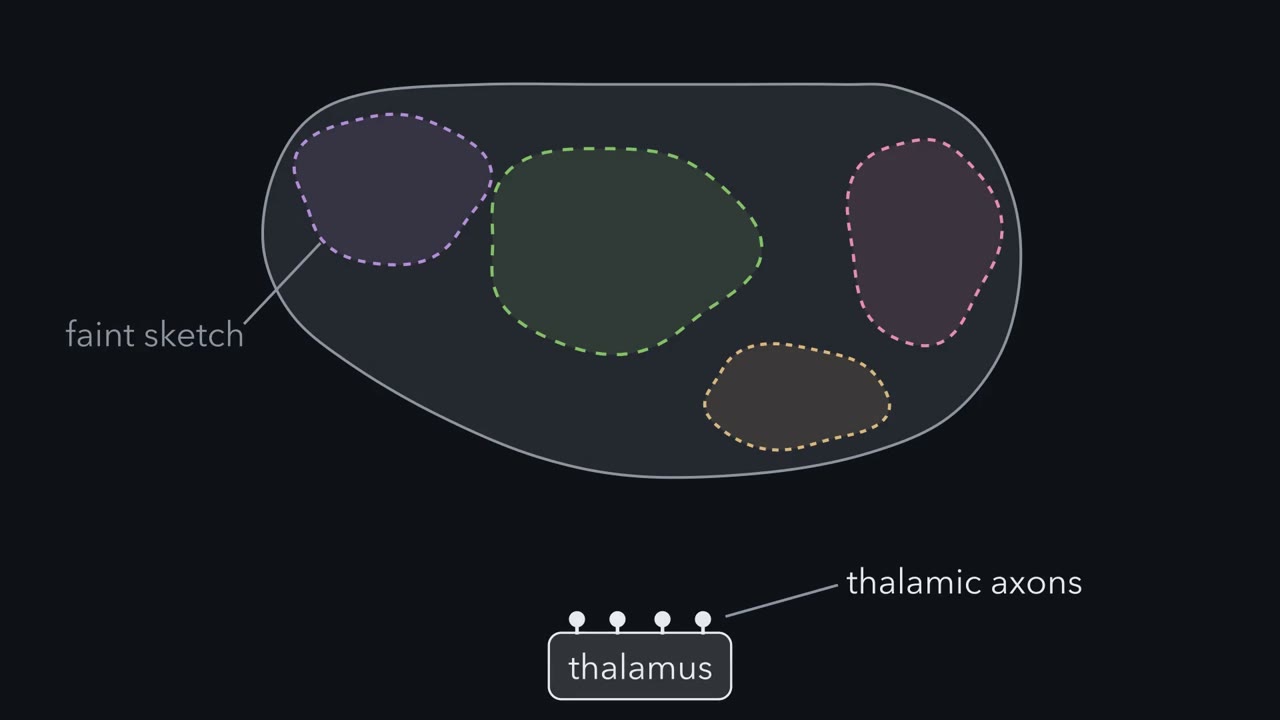 Part 5 of 6 Length 2:59 Input Finishes the Drawing Developmental Neuroscience · Graduate school and beyond Mapping the Cortex: Areas and Arealization
Take-home
In mice whose thalamic axons never reach the cortex, marker borders were still normal at birth.
-
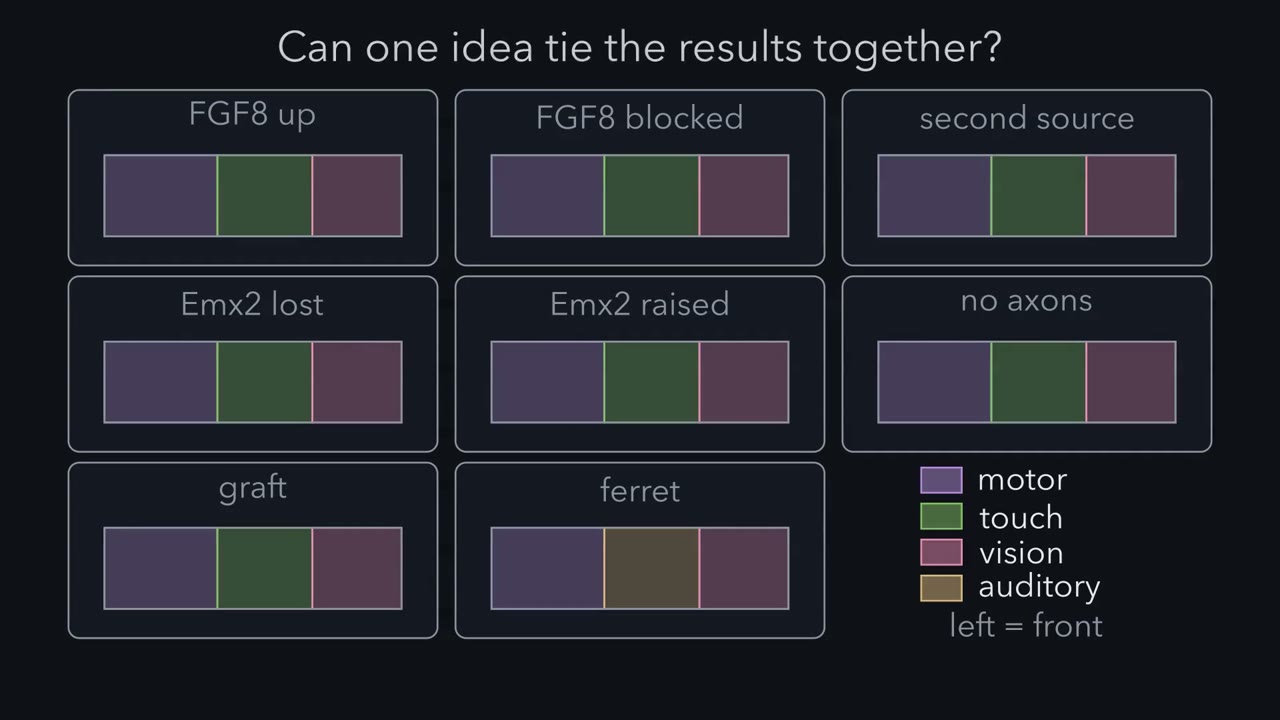 Part 6 of 6 Length 2:42 One Rule, and Where It Stops Developmental Neuroscience · Graduate school and beyond Mapping the Cortex: Areas and Arealization
Take-home
Position draws the sketch; input finishes it.
-
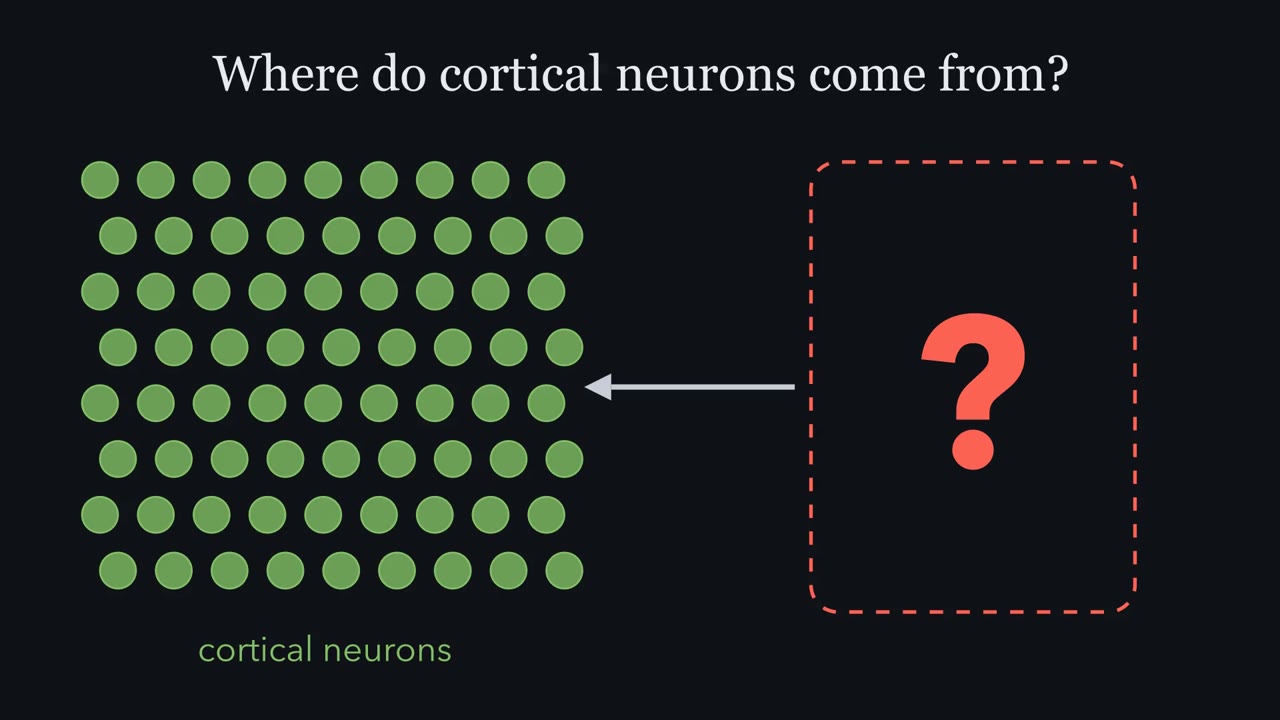 Part 1 of 5 Length 3:12 One Cell Across the Wall Developmental Neuroscience · Graduate school and beyond The Ventricular Zone: Radial Glia as Stem Cells
Take-home
In rodents, a radial glial cell is a stem cell anchored at the ventricle, and each division settles how many of its two daughters stay radial glia.
-
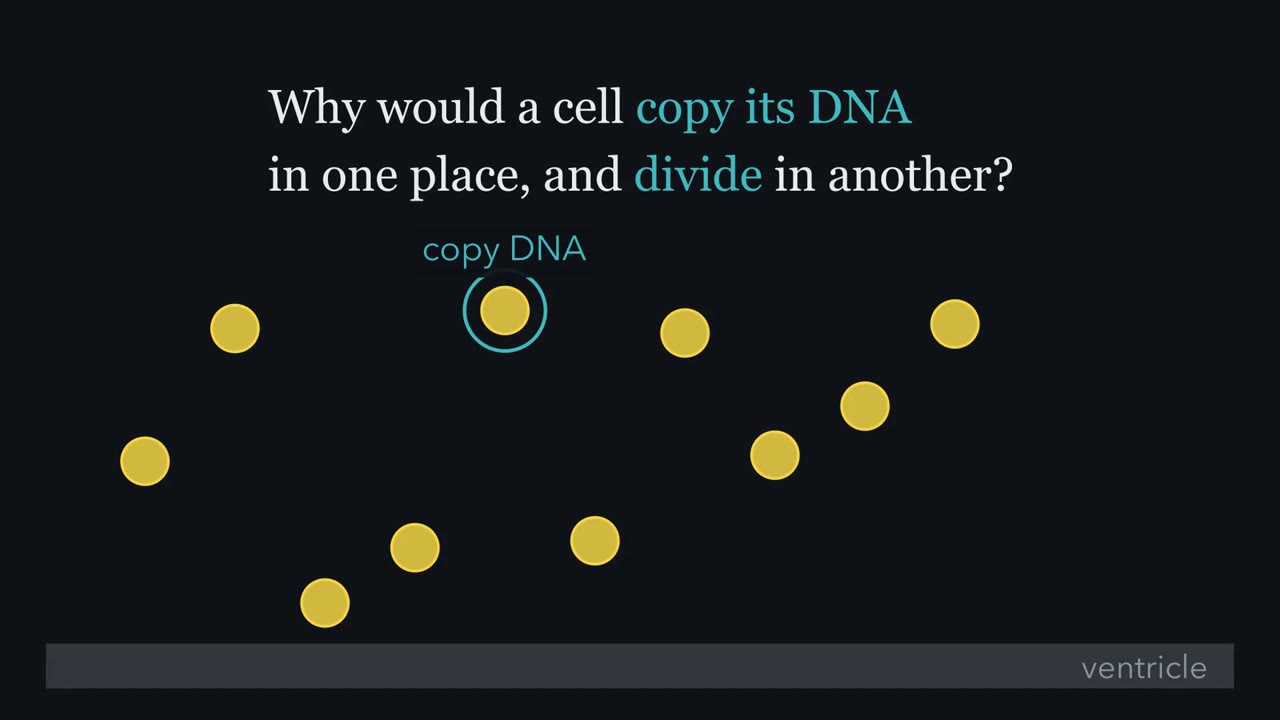 Part 2 of 5 Length 3:49 The Lift: A Nucleus on a Timetable Developmental Neuroscience · Graduate school and beyond The Ventricular Zone: Radial Glia as Stem Cells
Take-home
The nucleus of a radial glial cell rides up in G1, copies its DNA near the top of the ventricular zone in S, comes back down in G2 and divides at the ventricle.
-
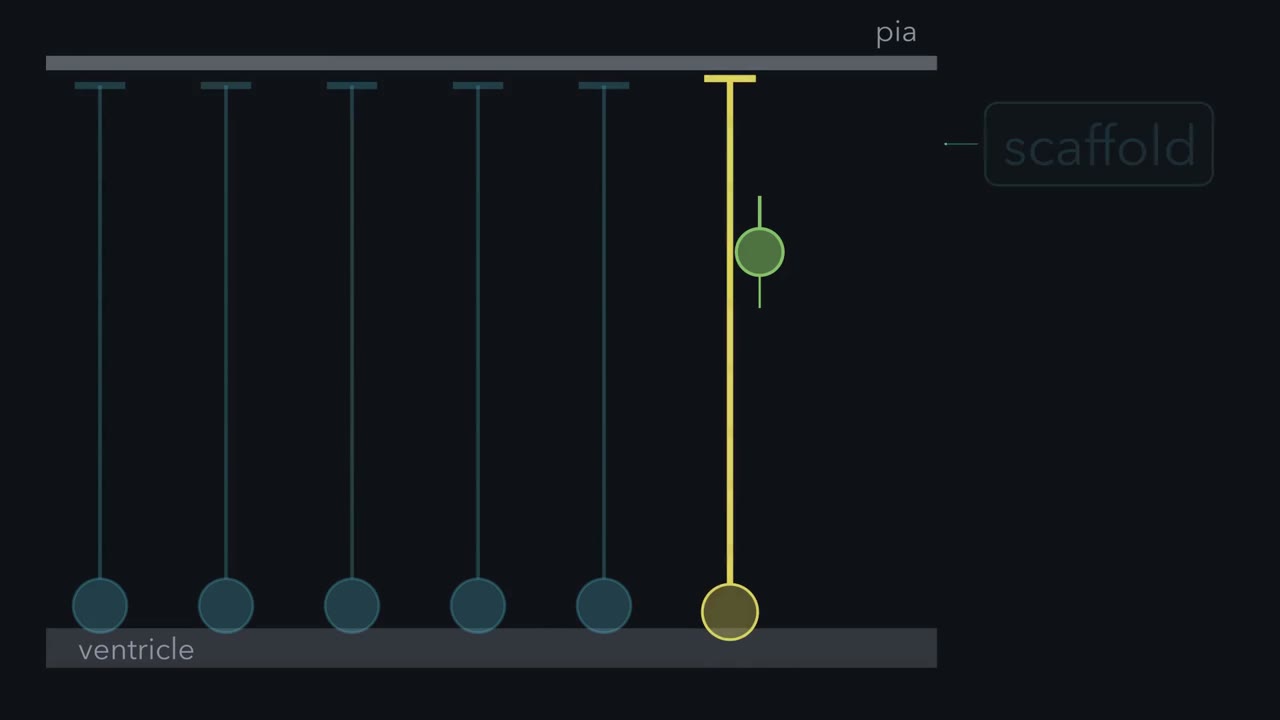 Part 3 of 5 Length 3:26 Scaffold or Source? Developmental Neuroscience · Graduate school and beyond The Ventricular Zone: Radial Glia as Stem Cells
Take-home
In rodents, sorting, fate mapping, filming and recording all went against the view that radial glia are only a scaffold.
-
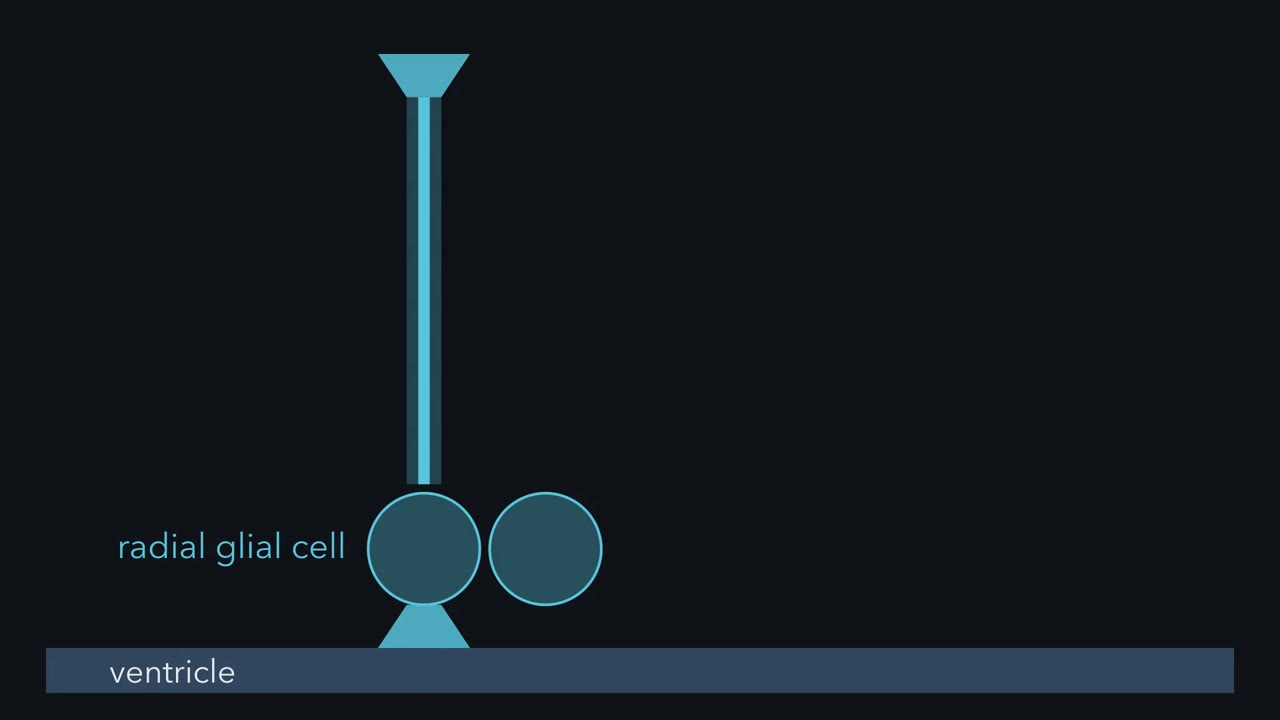 Part 4 of 5 Length 3:10 Two Routes to a Neuron Developmental Neuroscience · Graduate school and beyond The Ventricular Zone: Radial Glia as Stem Cells
Take-home
In direct neurogenesis a radial glial cell divides into a radial glial cell and a neuron; in indirect neurogenesis the second daughter is an intermediate progenitor that, in rodent cortex, usually divides into two neurons.
-
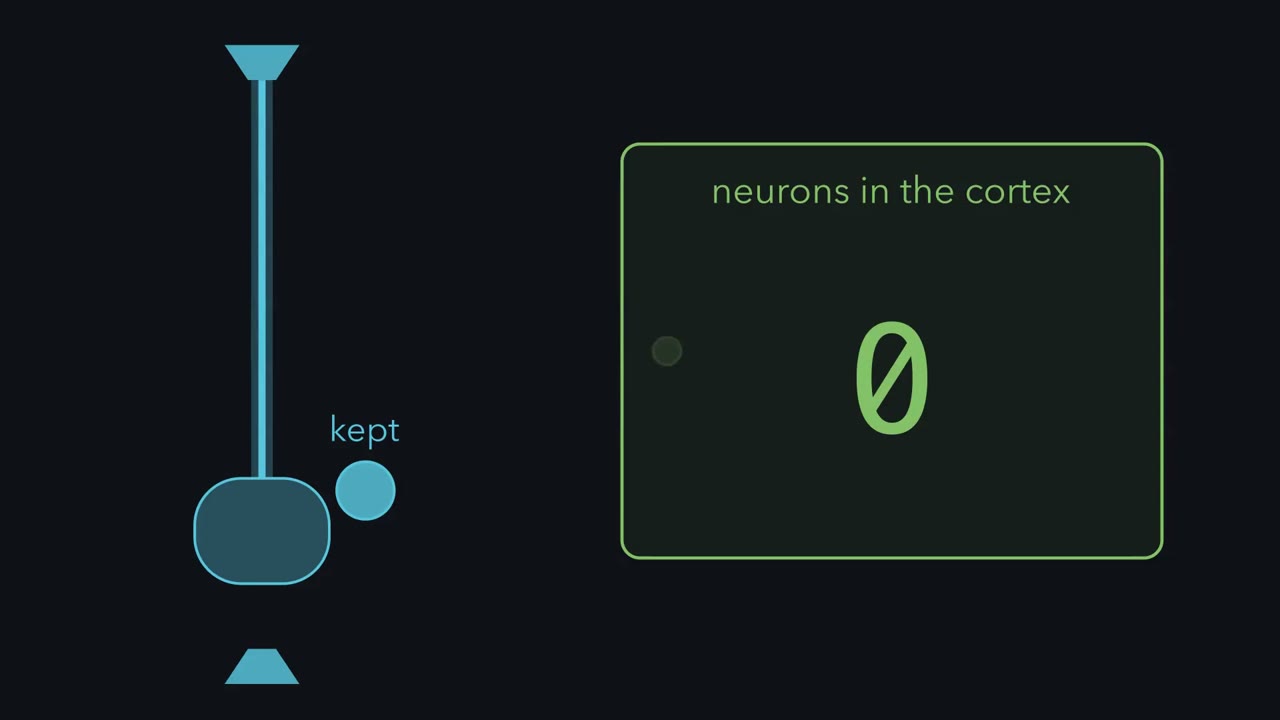 Part 5 of 5 Length 3:51 Counting What Stays Developmental Neuroscience · Graduate school and beyond The Ventricular Zone: Radial Glia as Stem Cells
Take-home
In the counting model, a steady pool at Q of one half still makes neurons; below one half the pool grows and above it the pool shrinks.
-
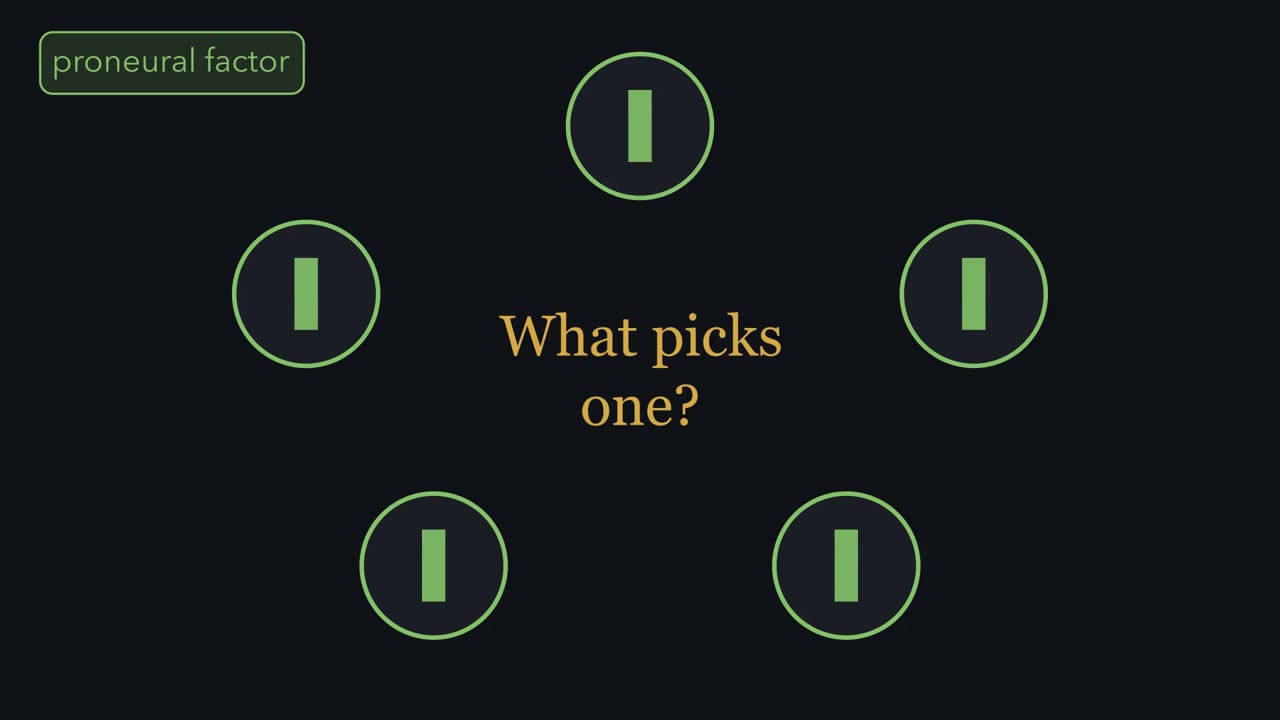
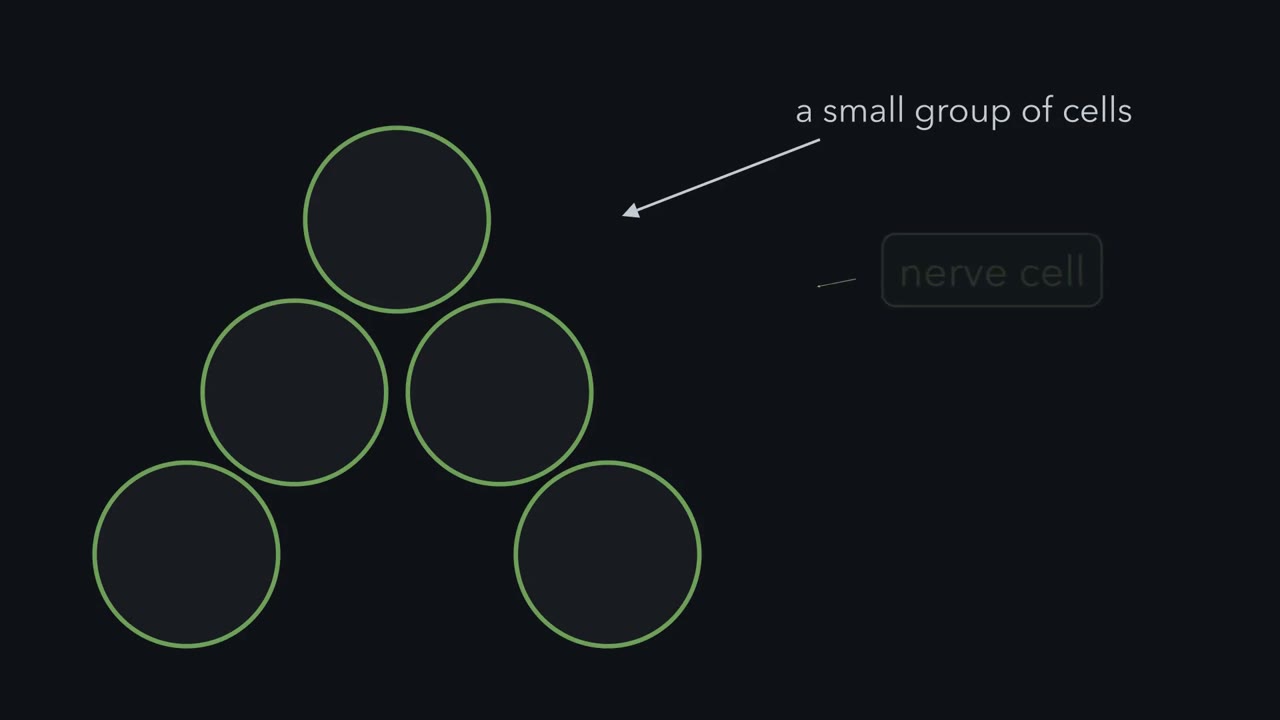 Part 1 of 6 Length 2:37 Equal Cells, One Winner Developmental Neuroscience · Graduate school and beyond Proneural Genes and Lateral Inhibition
Take-home
In the fly, proneural genes make a group of cells able to become neural, and Notch signaling then picks which one does.
-
 Part 2 of 6 Length 2:35 The Casting Call Developmental Neuroscience · Graduate school and beyond Proneural Genes and Lateral Inhibition
Take-home
Proneural genes such as achaete and scute make cells in a cluster able to become neural: remove them and bristles are missing, and switch them on in extra places and extra bristles form.
-
 Part 3 of 6 Length 2:43 The Loop, One Arrow at a Time Developmental Neuroscience · Graduate school and beyond Proneural Genes and Lateral Inhibition
Take-home
Delta on one cell activates Notch on its neighbour, which turns on Enhancer of split repressors that switch off proneural genes.
-
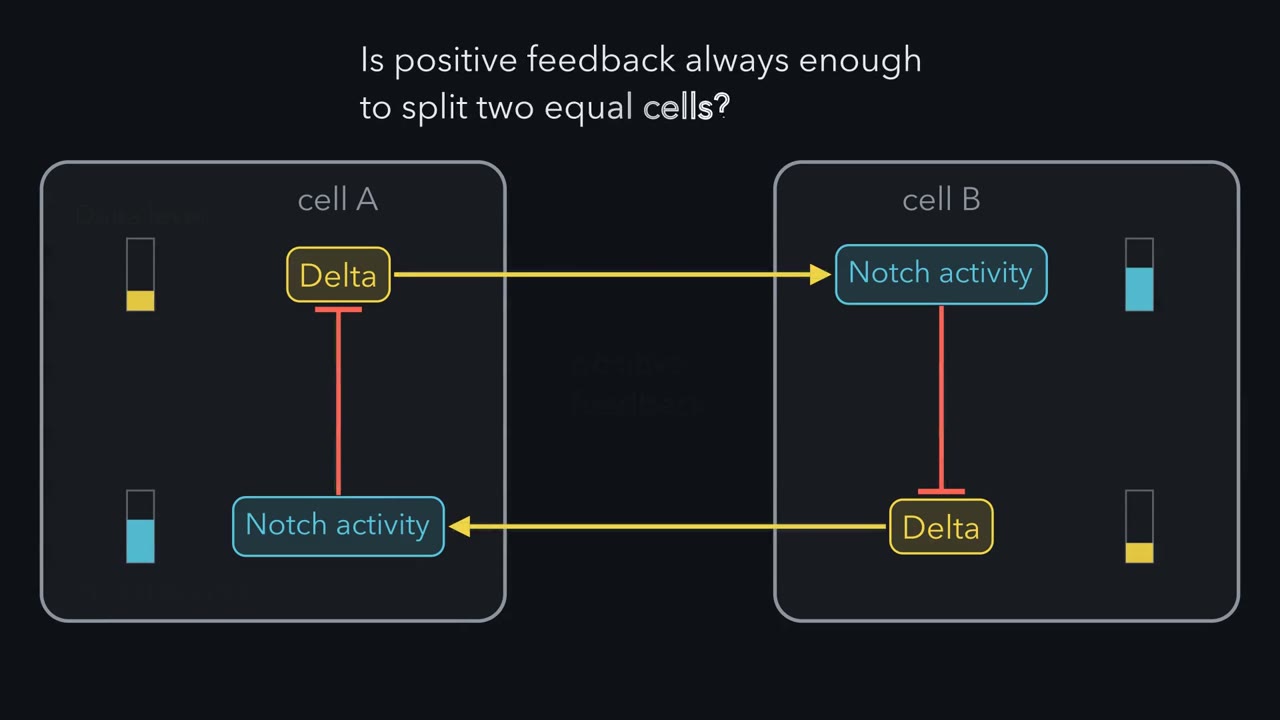 Part 4 of 6 Length 3:06 When Does the Tie Break? Developmental Neuroscience · Graduate school and beyond Proneural Genes and Lateral Inhibition
Take-home
Between two equal cells the tie breaks only if the loop is steep, so that a small difference comes back round the loop larger than it left.
-
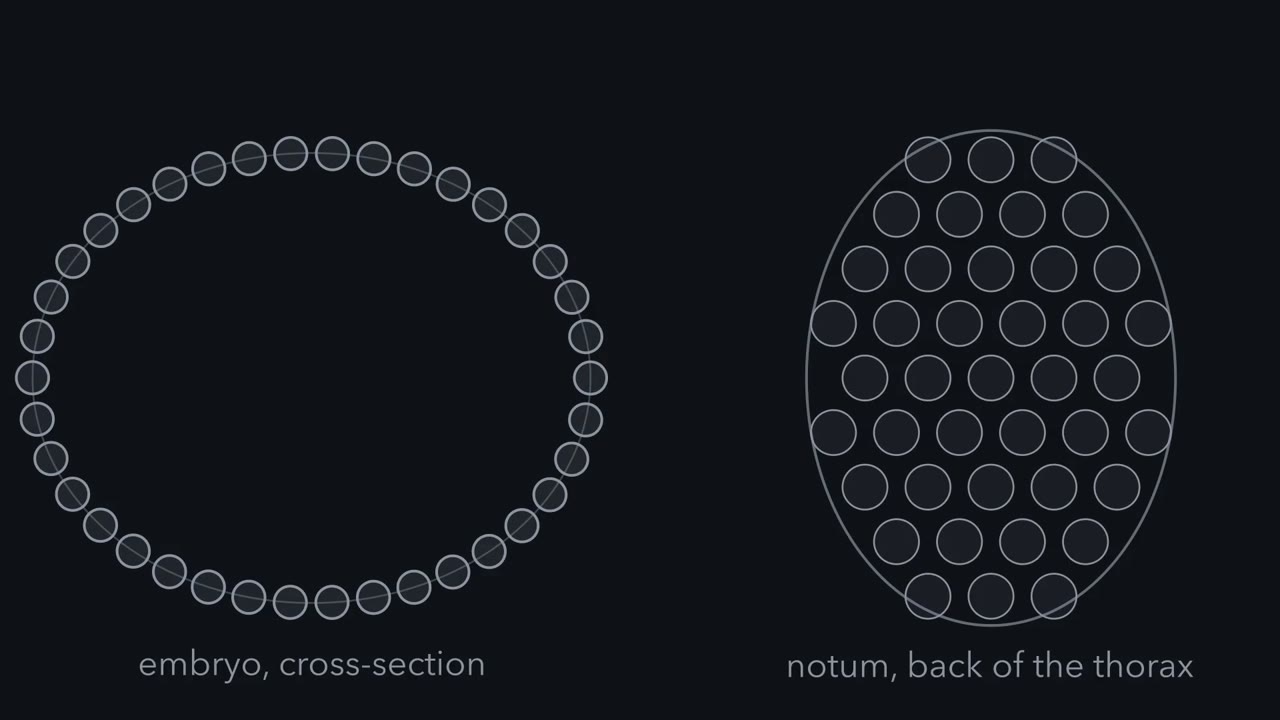 Part 5 of 6 Length 2:39 Neighbours Compare Developmental Neuroscience · Graduate school and beyond Proneural Genes and Lateral Inhibition
Take-home
Fly embryos lacking Notch or Delta make far too many neuroblasts and too little epidermis, so these genes are called neurogenic.
-
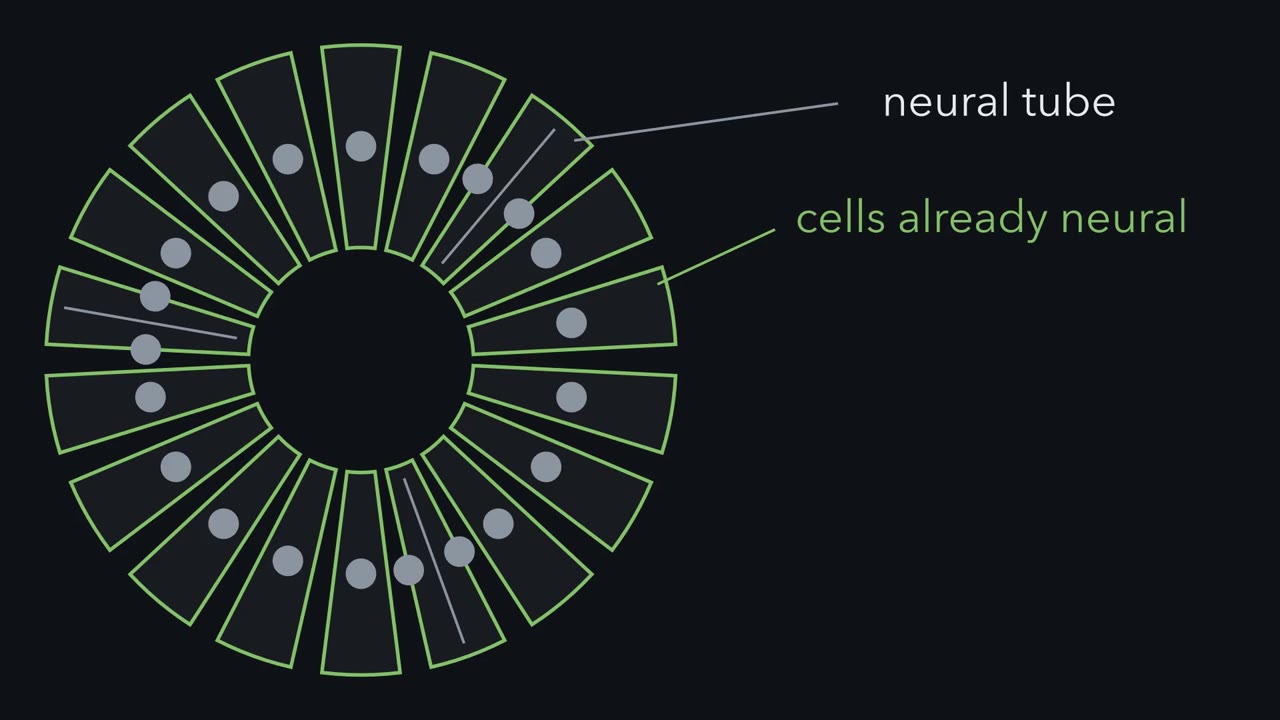 Part 6 of 6 Length 3:17 Vertebrates: a Brake, a Clock and Identity Developmental Neuroscience · Graduate school and beyond Proneural Genes and Lateral Inhibition
Take-home
In the vertebrate neural tube, Notch-Hes lateral inhibition works as a brake on how fast progenitors are used up, because a cell held back stays a dividing progenitor.
-
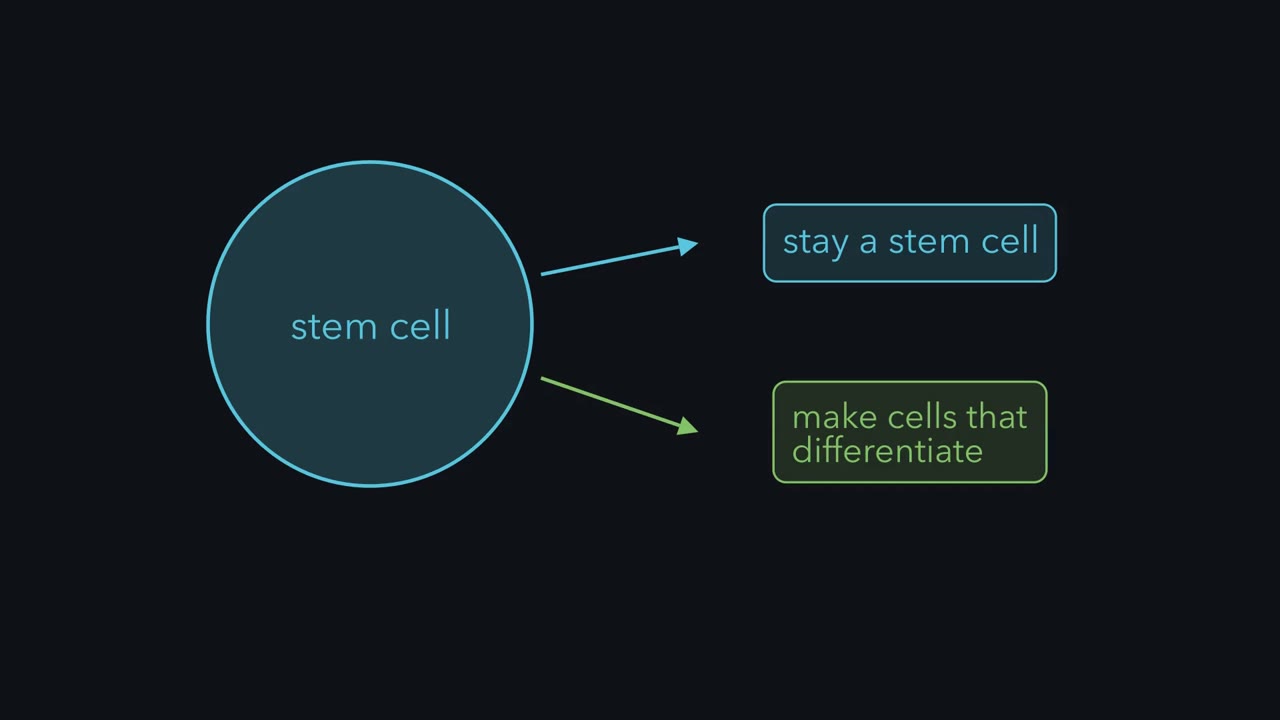 Part 1 of 6 Length 2:41 Two Jobs, One Division Developmental Neuroscience · Graduate school and beyond Asymmetric Division: Numb and the Neuroblast
Take-home
A stem cell can keep itself and make differentiating cells in one division if the mother marks a side and only one daughter inherits it.
-
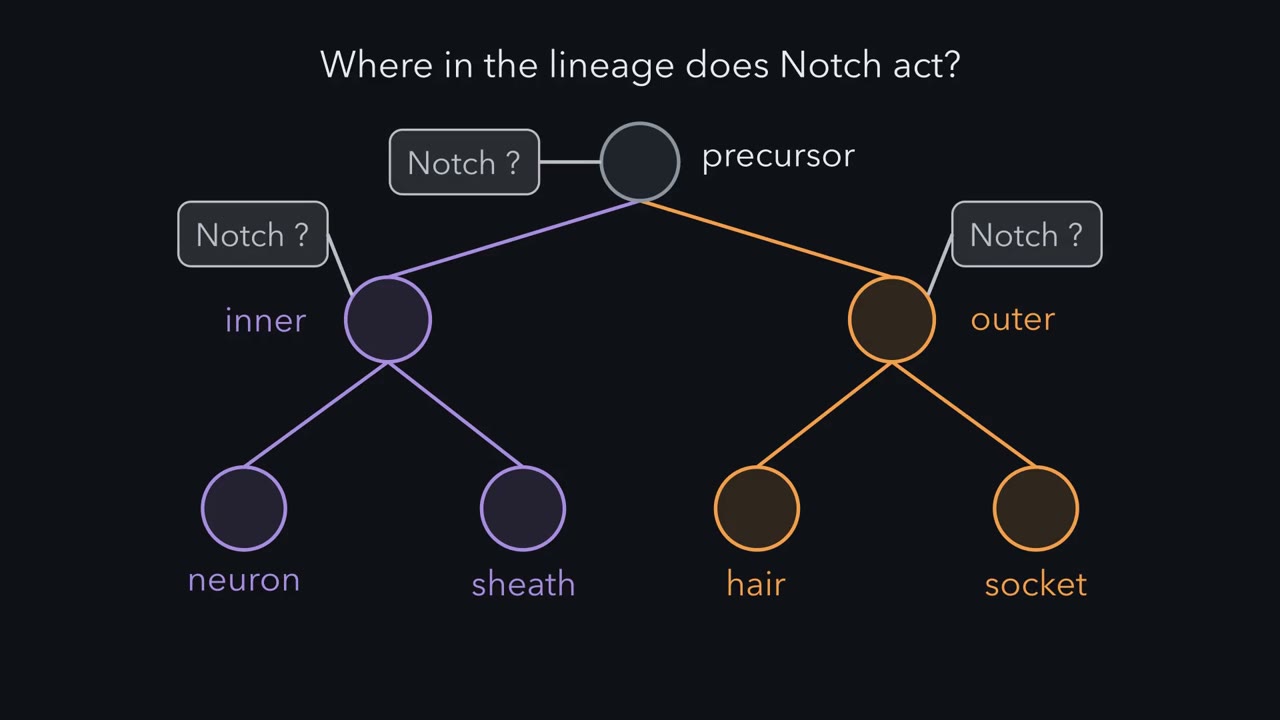 Part 2 of 6 Length 2:52 Four Cells and One Switch Developmental Neuroscience · Graduate school and beyond Asymmetric Division: Numb and the Neuroblast
Take-home
In the fly bristle lineage, Notch acts twice: once to pick the precursor and again to split its progeny.
-
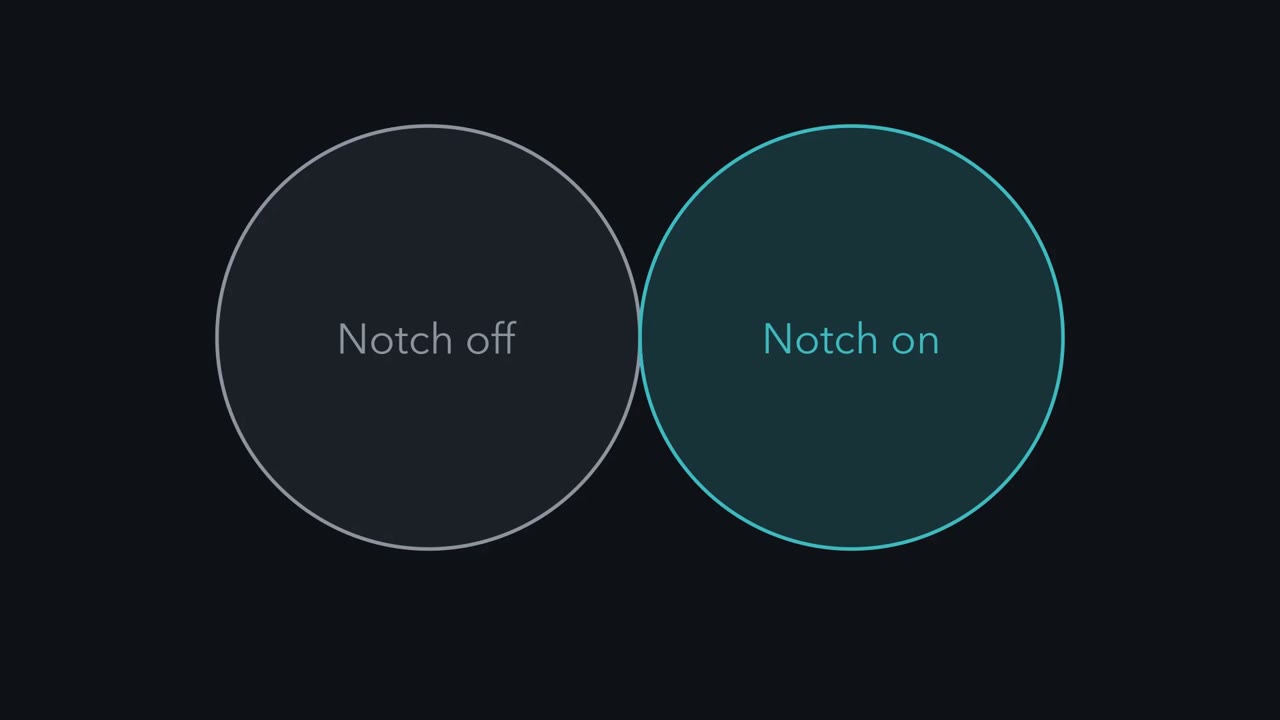 Part 3 of 6 Length 2:33 A Crescent in One Daughter Developmental Neuroscience · Graduate school and beyond Asymmetric Division: Numb and the Neuroblast
Take-home
Numb forms a crescent on one side of the dividing precursor and goes into one daughter only, the Notch-off daughter.
-
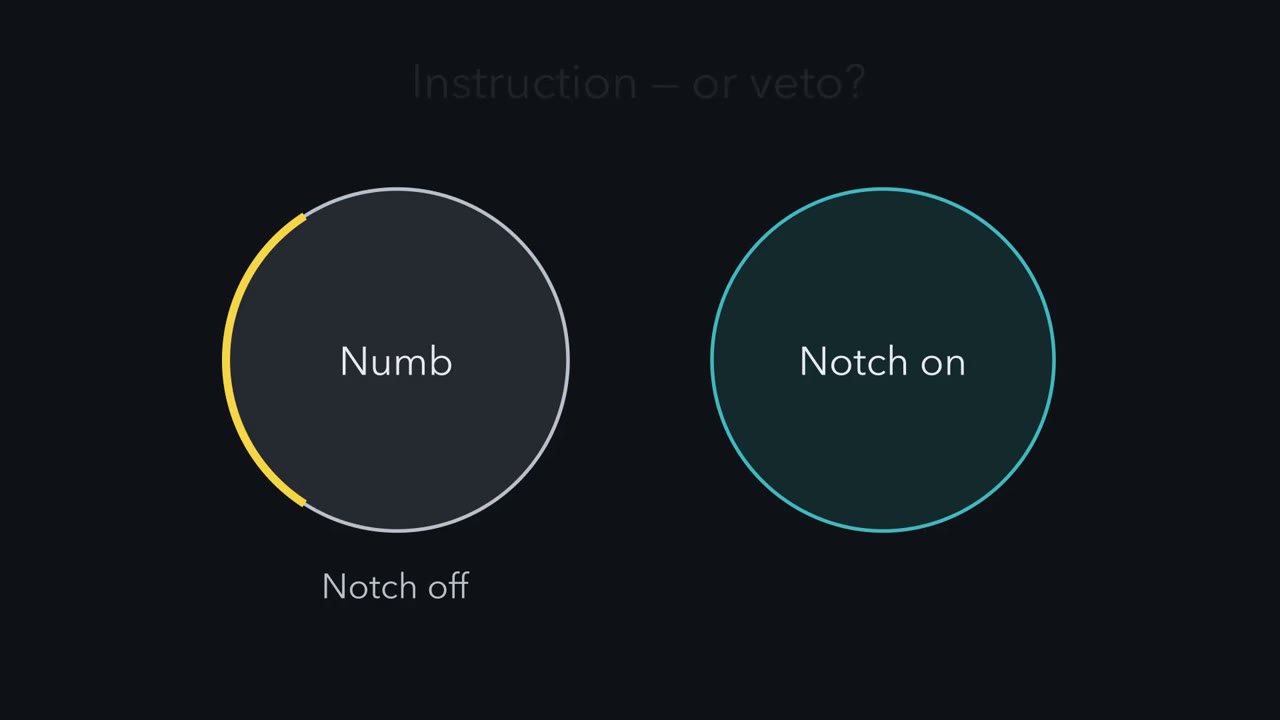 Part 4 of 6 Length 2:59 A Veto, Not an Instruction Developmental Neuroscience · Graduate school and beyond Asymmetric Division: Numb and the Neuroblast
Take-home
Numb is a veto, not an instruction: it carries no message of its own and only blocks Notch.
-
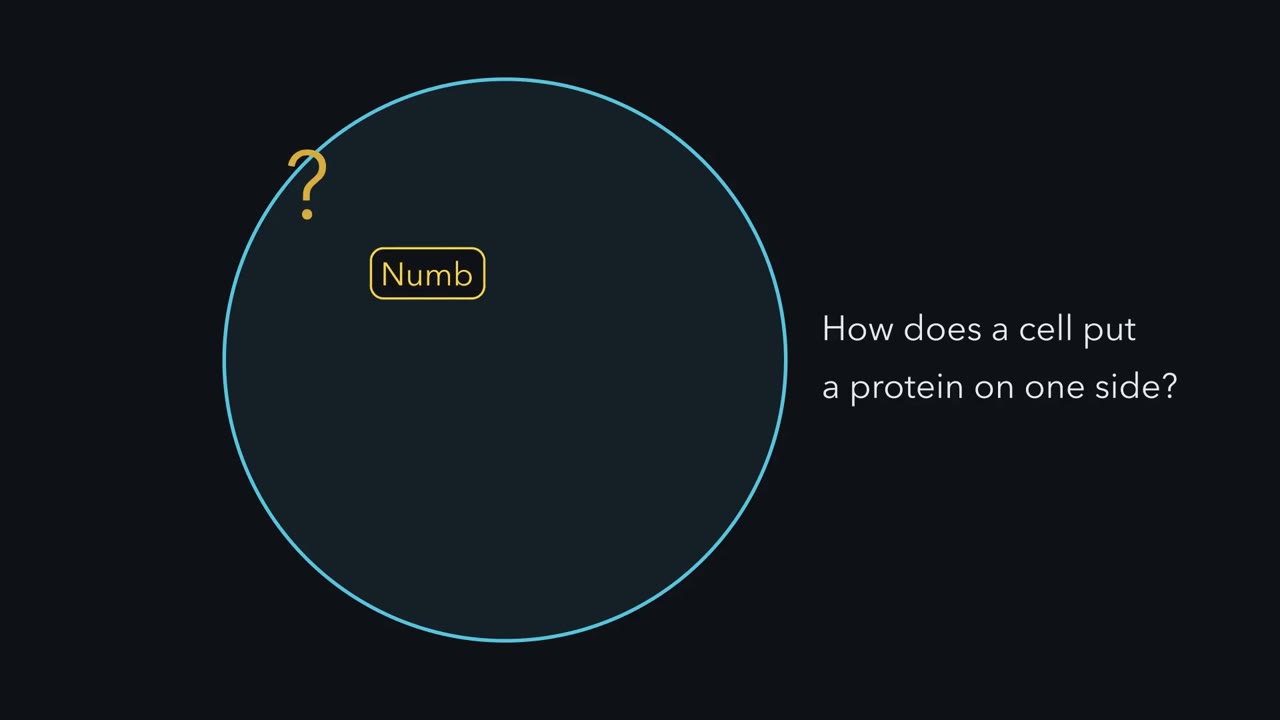 Part 5 of 6 Length 3:21 How the Neuroblast Picks a Side Developmental Neuroscience · Graduate school and beyond Asymmetric Division: Numb and the Neuroblast
Take-home
In the fly neuroblast, the top cortex is marked, the spindle is aimed at it, and determinants are kept off the top.
-
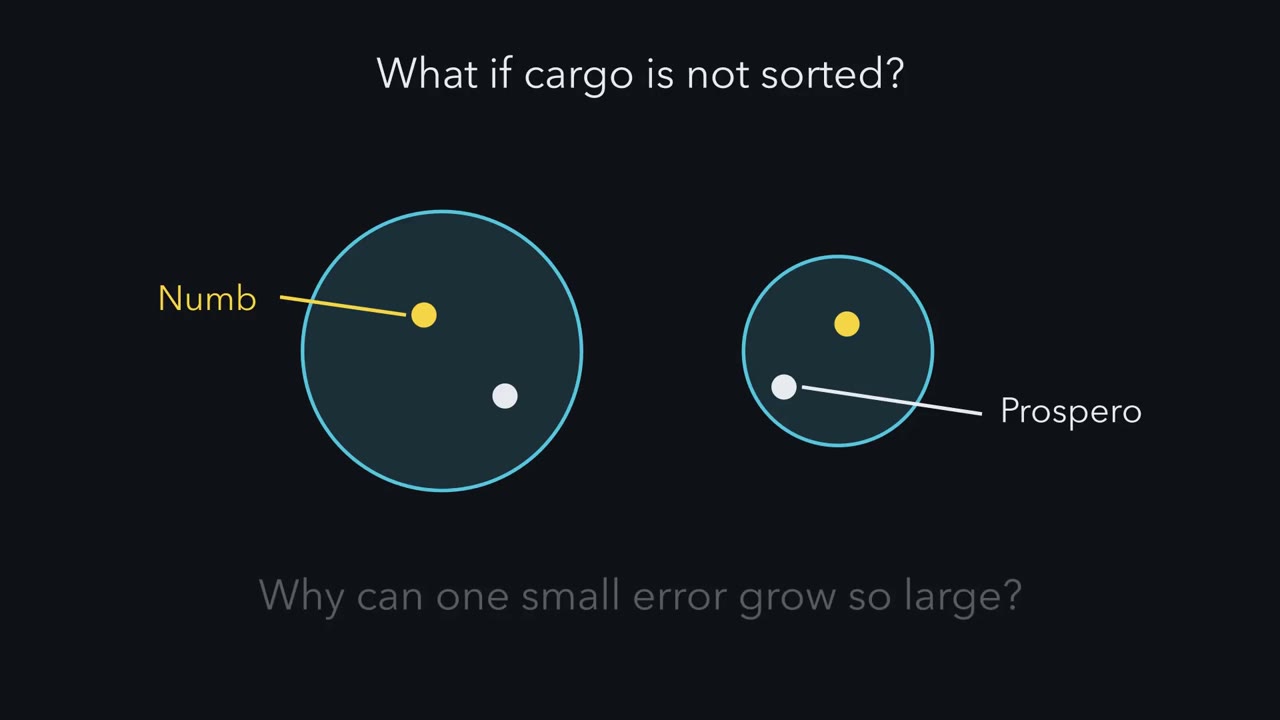 Part 6 of 6 Length 3:21 When the Division Is Rigged Developmental Neuroscience · Graduate school and beyond Asymmetric Division: Numb and the Neuroblast
Take-home
In fly mutants where sorting fails, neuroblast-like daughters can form tumours.
-
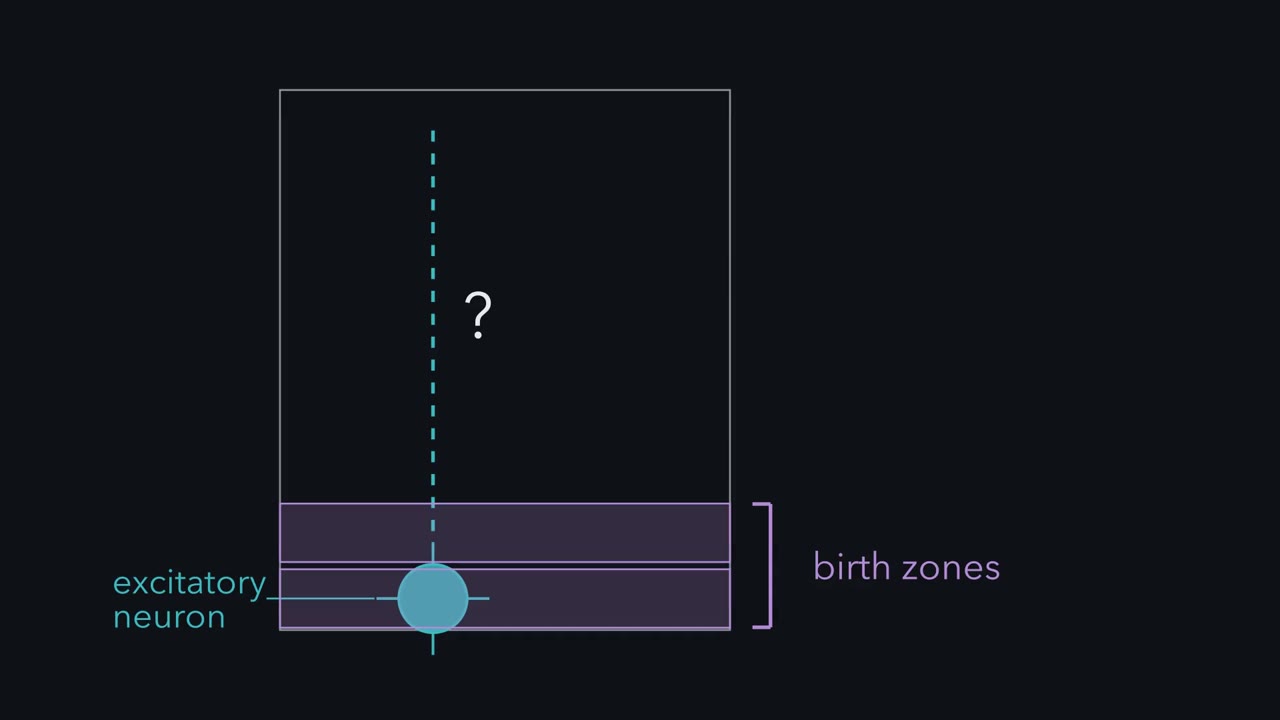 Part 1 of 6 Length 3:01 The Wall of the Brain Developmental Neuroscience · Graduate school and beyond Birth Order and Fate: Temporal Identity and the Inside-Out Cortex
Take-home
In the cortical plate, the earlier a neuron is born, the deeper its layer.
-
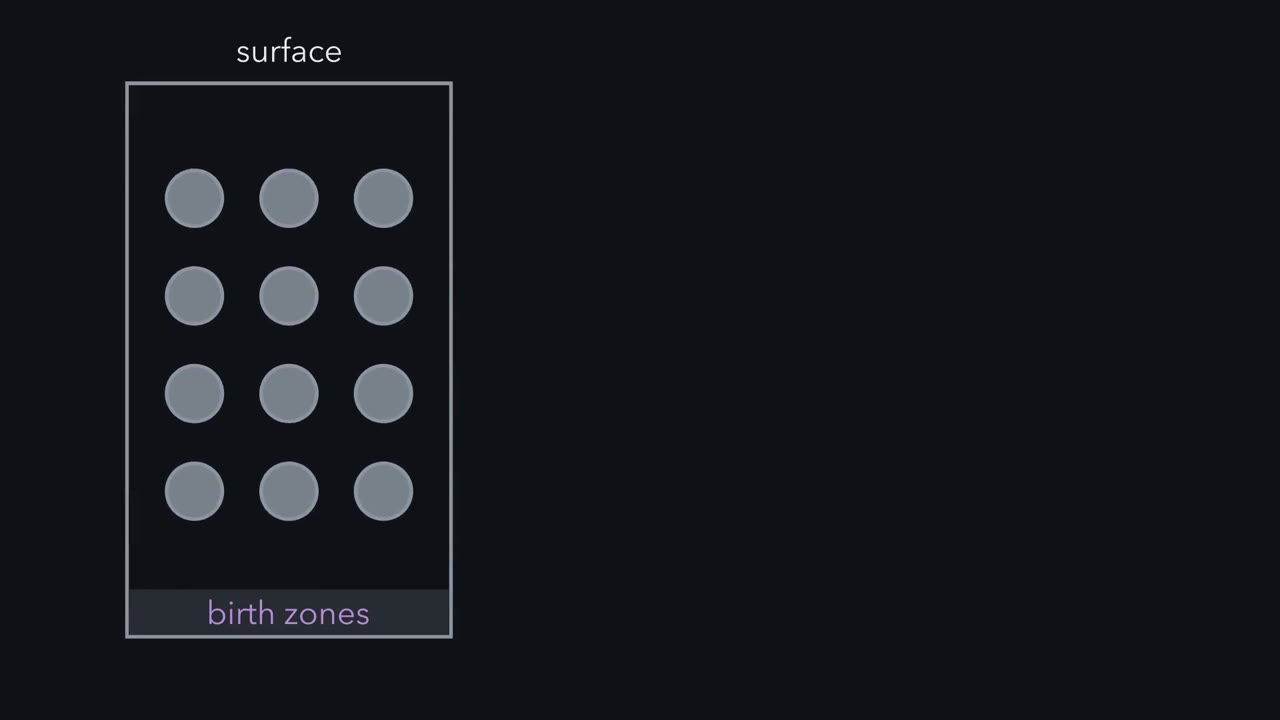 Part 2 of 6 Length 3:20 Dating a Birthday Developmental Neuroscience · Graduate school and beyond Birth Order and Fate: Temporal Identity and the Inside-Out Cortex
Take-home
A thymidine pulse dates a neuron's birth, because the label marks its last S phase.
-
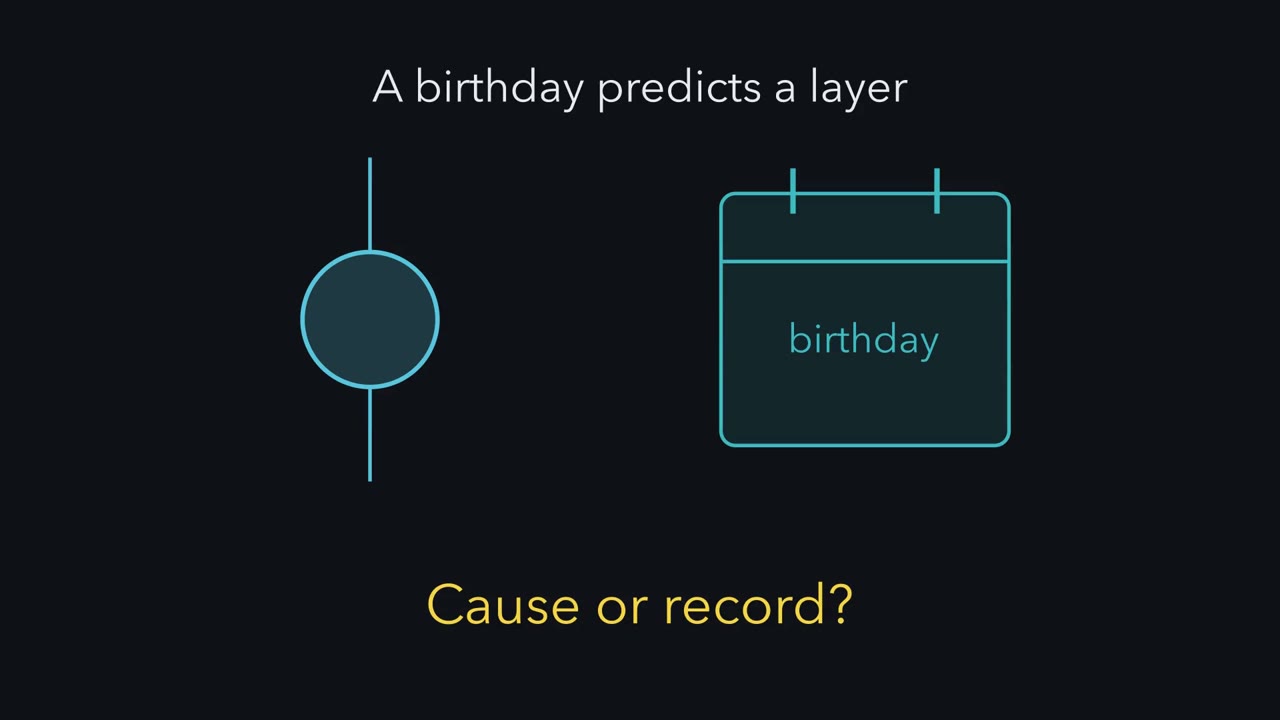 Part 3 of 6 Length 3:06 Moving a Birthday Developmental Neuroscience · Graduate school and beyond Birth Order and Fate: Temporal Identity and the Inside-Out Cortex
Take-home
A birthday is a record, not a cause.
-
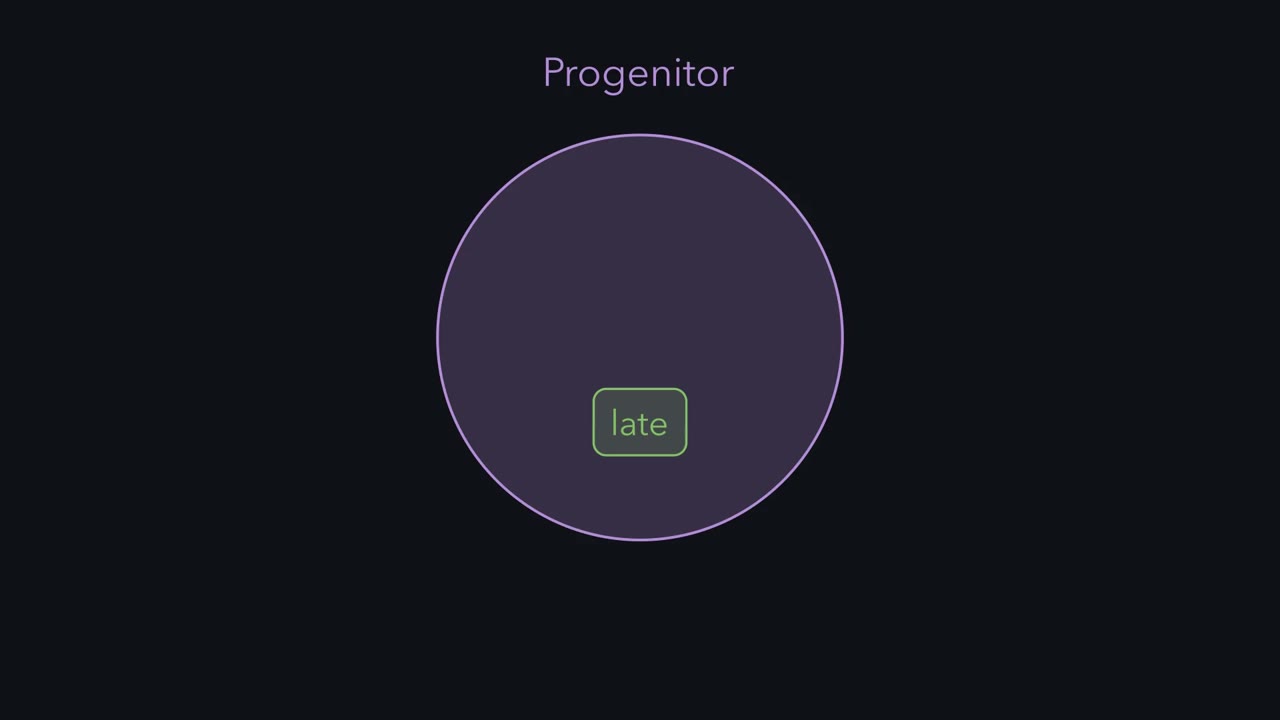 Part 4 of 6 Length 2:56 A Clock in the Fly Developmental Neuroscience · Graduate school and beyond Birth Order and Fate: Temporal Identity and the Inside-Out Cortex
Take-home
Most embryonic fly neuroblasts express Hunchback, then Krüppel, then Pdm, then Castor, in overlapping windows.
-
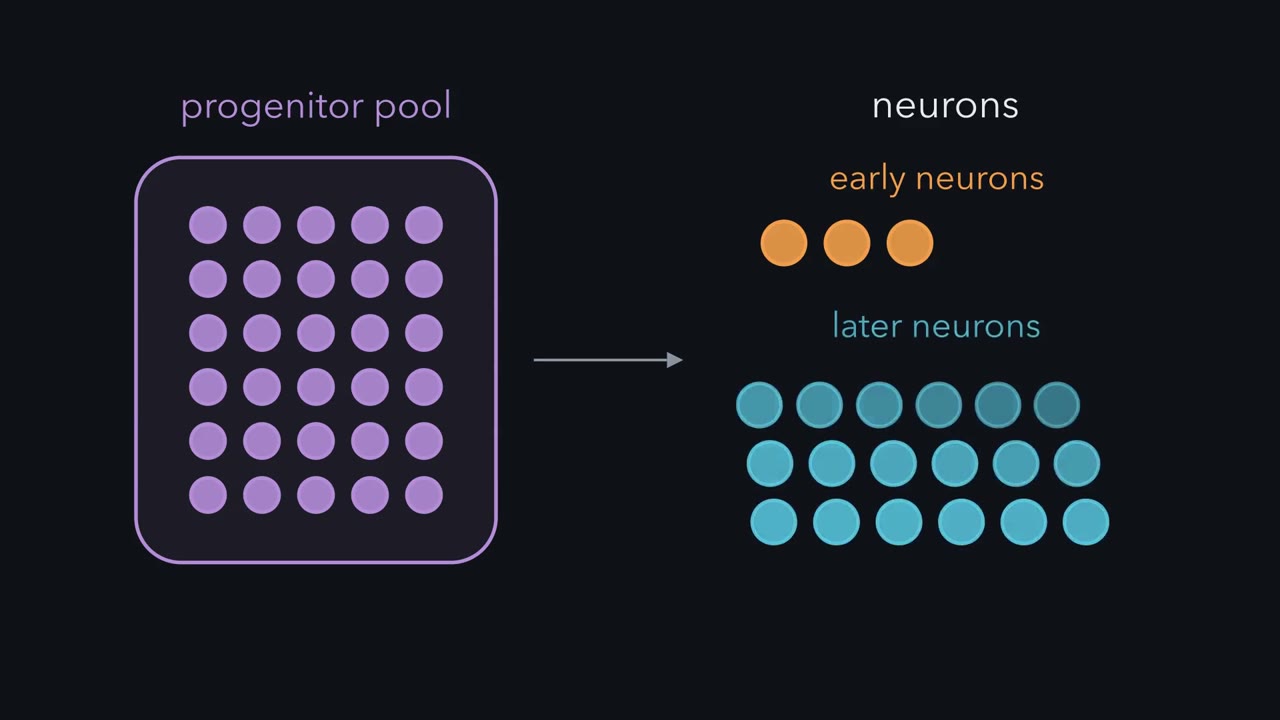 Part 5 of 6 Length 3:15 Grow the Pool, Then Spend It Developmental Neuroscience · Graduate school and beyond Birth Order and Fate: Temporal Identity and the Inside-Out Cortex
Take-home
In this simple model, the progenitor pool grows when Q is below 0.5, holds at 0.5 and shrinks above 0.5.
-
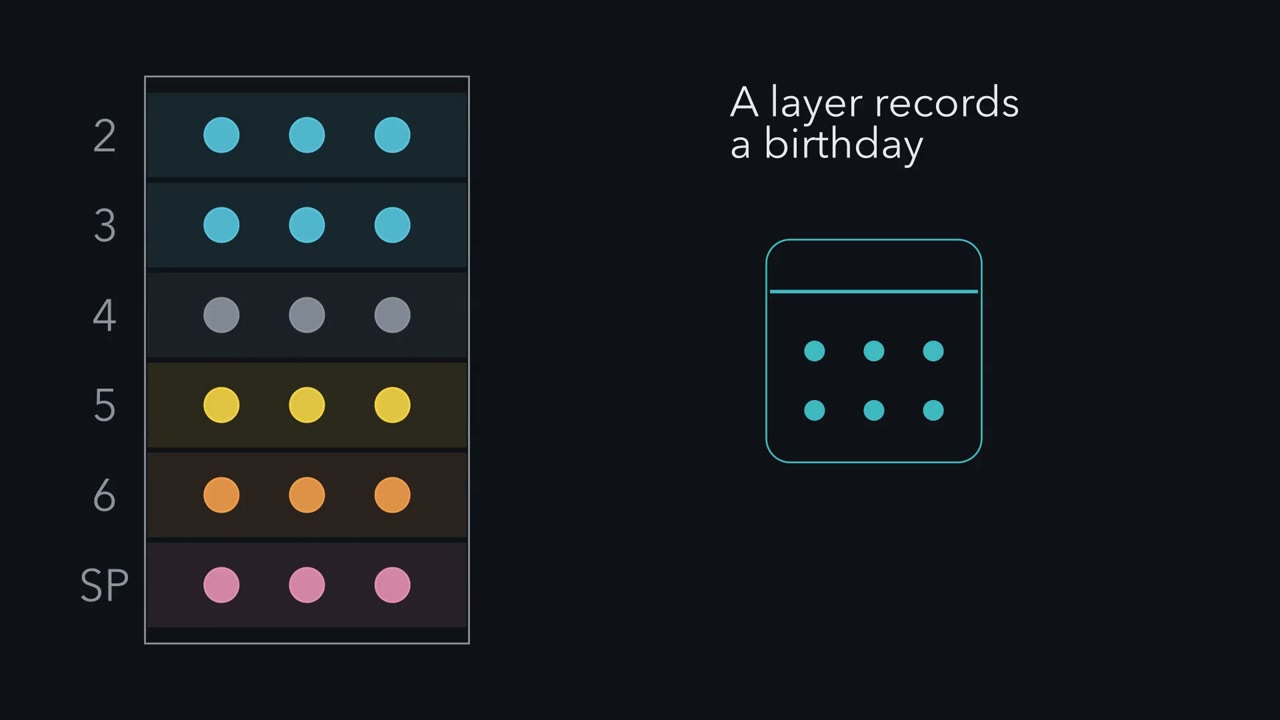 Part 6 of 6 Length 2:51 What a Birthday Leaves Behind Developmental Neuroscience · Graduate school and beyond Birth Order and Fate: Temporal Identity and the Inside-Out Cortex
Take-home
A neuron's layer is one record of its birthday, and identity-gene markers such as Tbr1, Ctip2 and Satb2 are another, though expression overlaps.
-
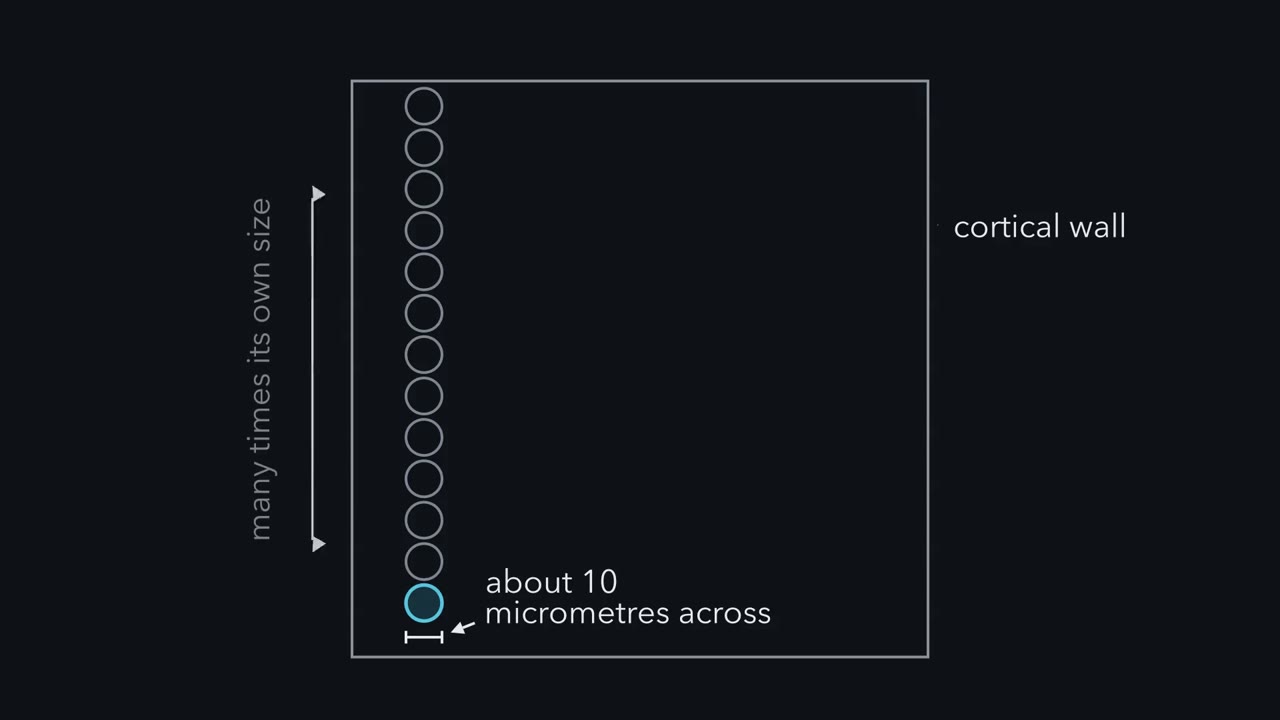 Part 1 of 3 Length 2:40 The Front Goes First Developmental Neuroscience · Graduate school and beyond Radial Migration: Climbing the Glial Ladder
Take-home
In the typical bipolar climb the front goes first, and the cell has moved only when its nucleus catches up.
-
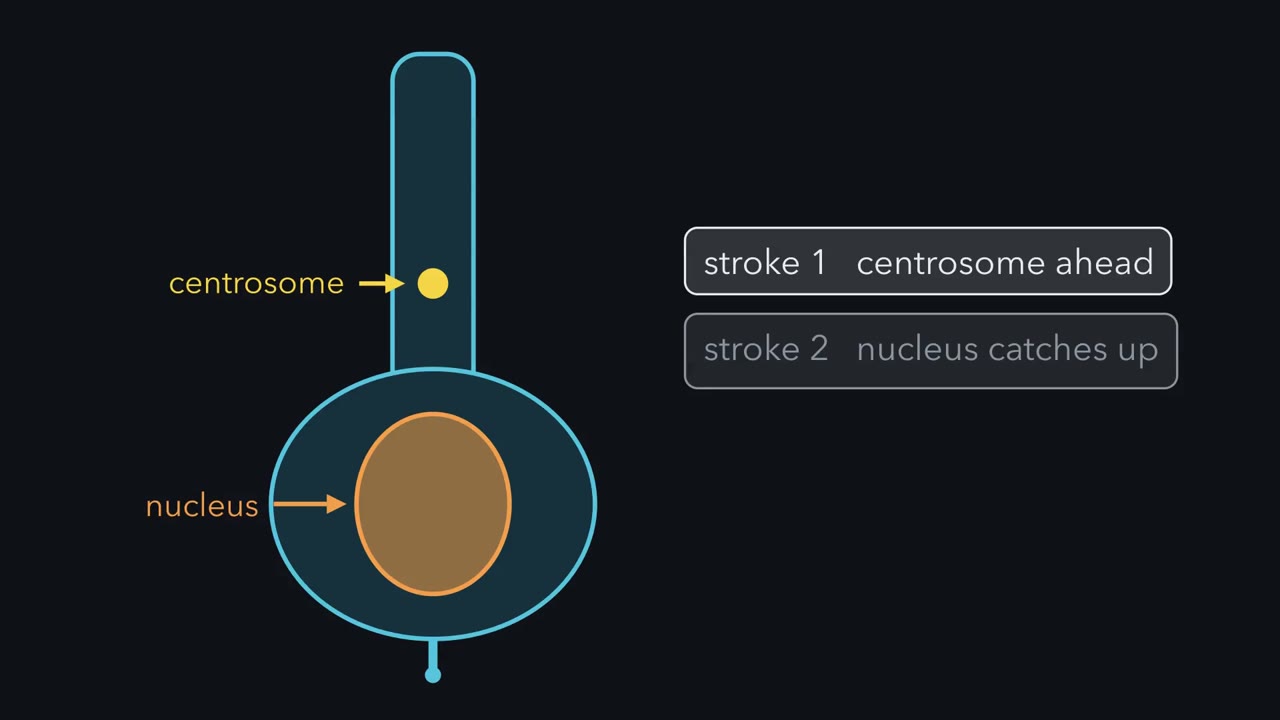 Part 2 of 3 Length 2:37 What Brings the Nucleus Up Developmental Neuroscience · Graduate school and beyond Radial Migration: Climbing the Glial Ladder
Take-home
In the usual model, dynein moves the centrosome in stroke one and the nucleus in stroke two, toward the microtubule minus ends at the centrosome.
-
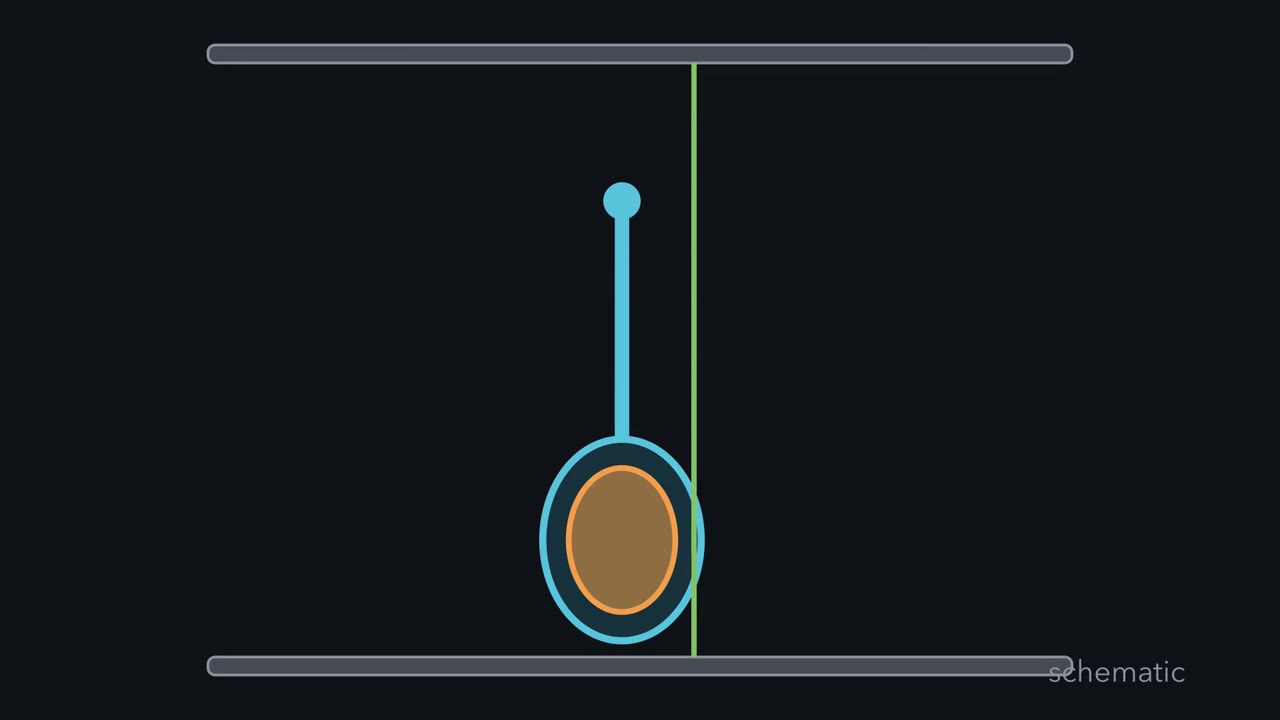 Part 3 of 3 Length 2:36 When the Engine Breaks Developmental Neuroscience · Graduate school and beyond Radial Migration: Climbing the Glial Ladder
Take-home
Disrupting the machinery that brings the nucleus up can stall neurons short of their layers, and one result can be lissencephaly.
-
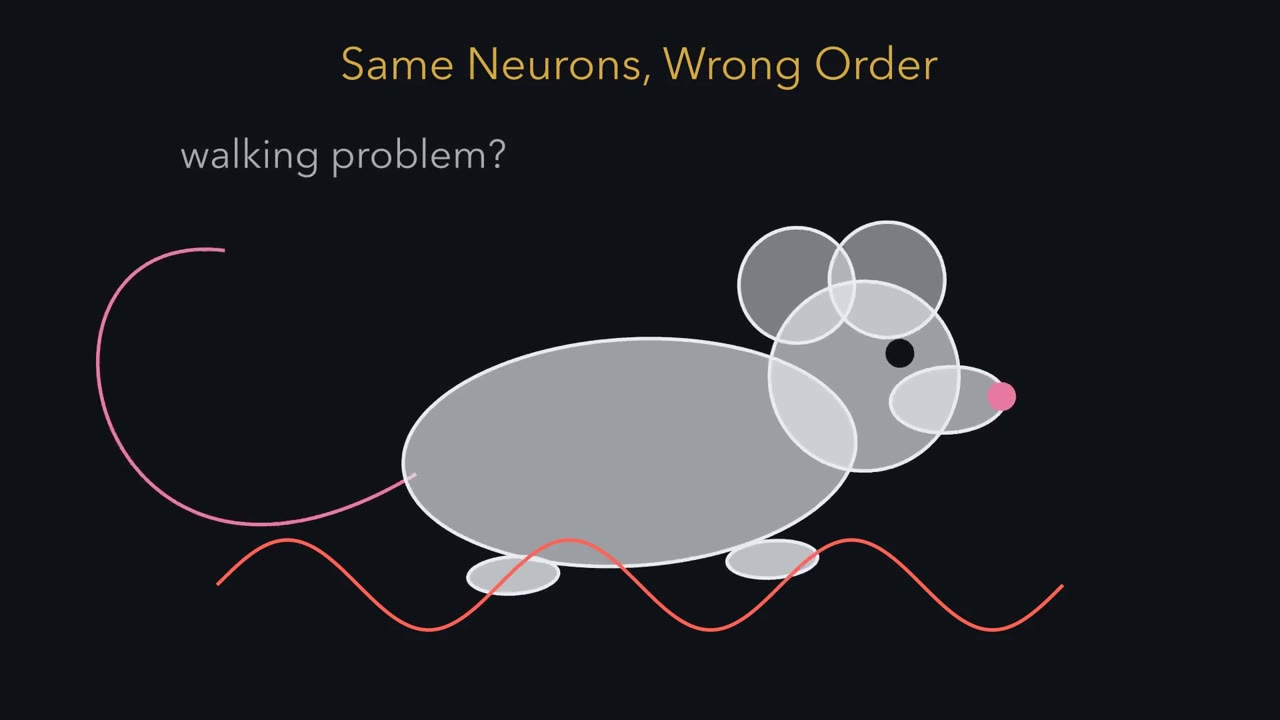 Part 1 of 3 Length 2:17 Same Neurons, Wrong Order Developmental Neuroscience · Graduate school and beyond Reelin and the Reeler Mouse
Take-home
Reeler makes the same classes of neurons on the same schedule as normal mice, so it is a defect of placement, not production.
-
 Part 2 of 3 Length 2:51 Matching Mutants, One Relay Developmental Neuroscience · Graduate school and beyond Reelin and the Reeler Mouse
Take-home
Reelin is a very large secreted protein made by Cajal-Retzius cells at the top of the cortex, where each new wave should stop.
-
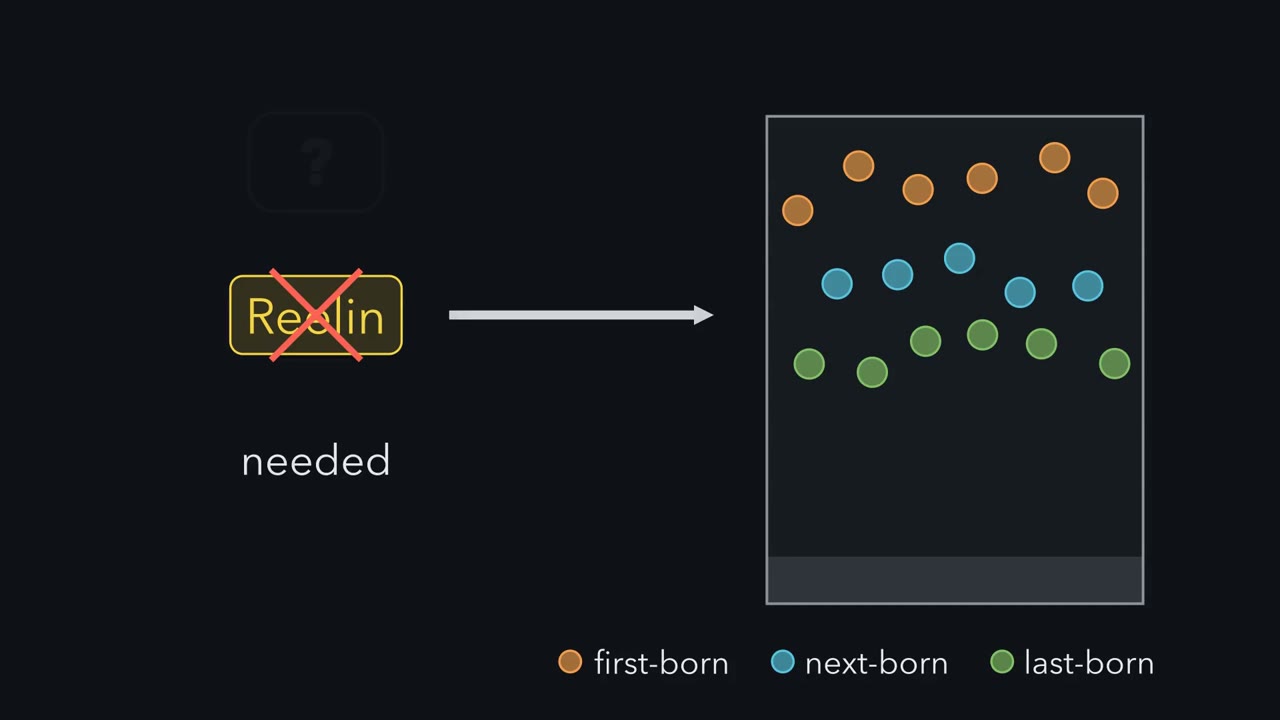 Part 3 of 3 Length 2:56 Needed, But What Does It Say? Developmental Neuroscience · Graduate school and beyond Reelin and the Reeler Mouse
Take-home
Removal shows that a signal is needed, not what it says; changing where the signal is can help tell permissive from instructive.
-
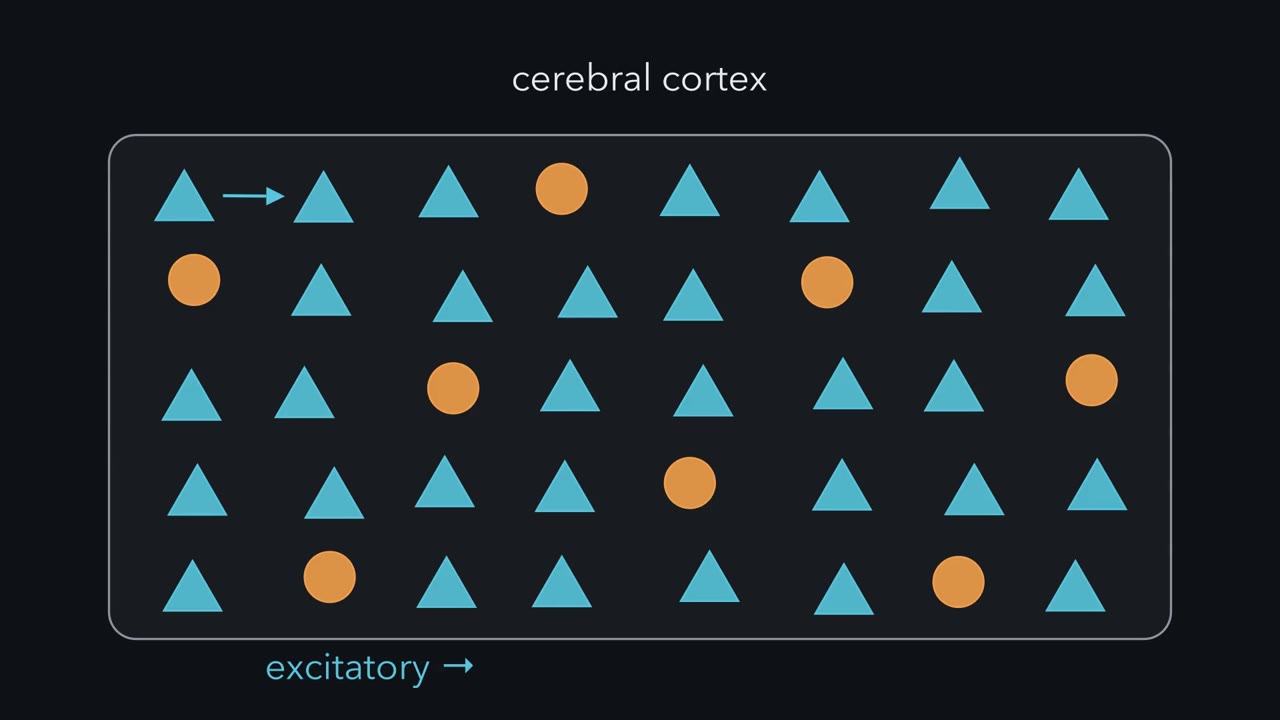 Part 1 of 3 Length 2:34 Born Outside Developmental Neuroscience · Graduate school and beyond Tangential Migration: Interneurons and the Long Way Round
Take-home
In rodents, most cortical inhibitory interneurons are born outside the cortex, in the ventral forebrain, and travel sideways into it.
-
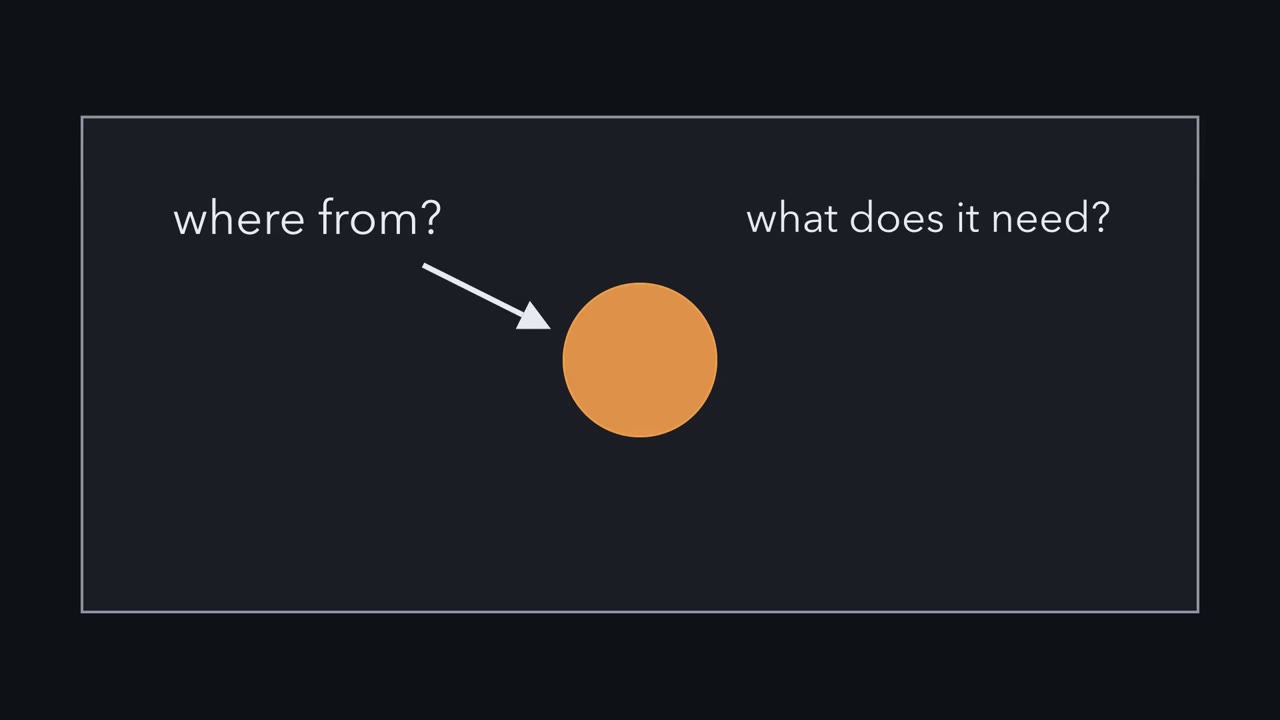 Part 2 of 3 Length 2:56 Does the Defect Travel with the Cell? Developmental Neuroscience · Graduate school and beyond Tangential Migration: Interneurons and the Long Way Round
Take-home
Following cells out, removing the source and swapping tissue are three ways to ask where a neuron came from.
-
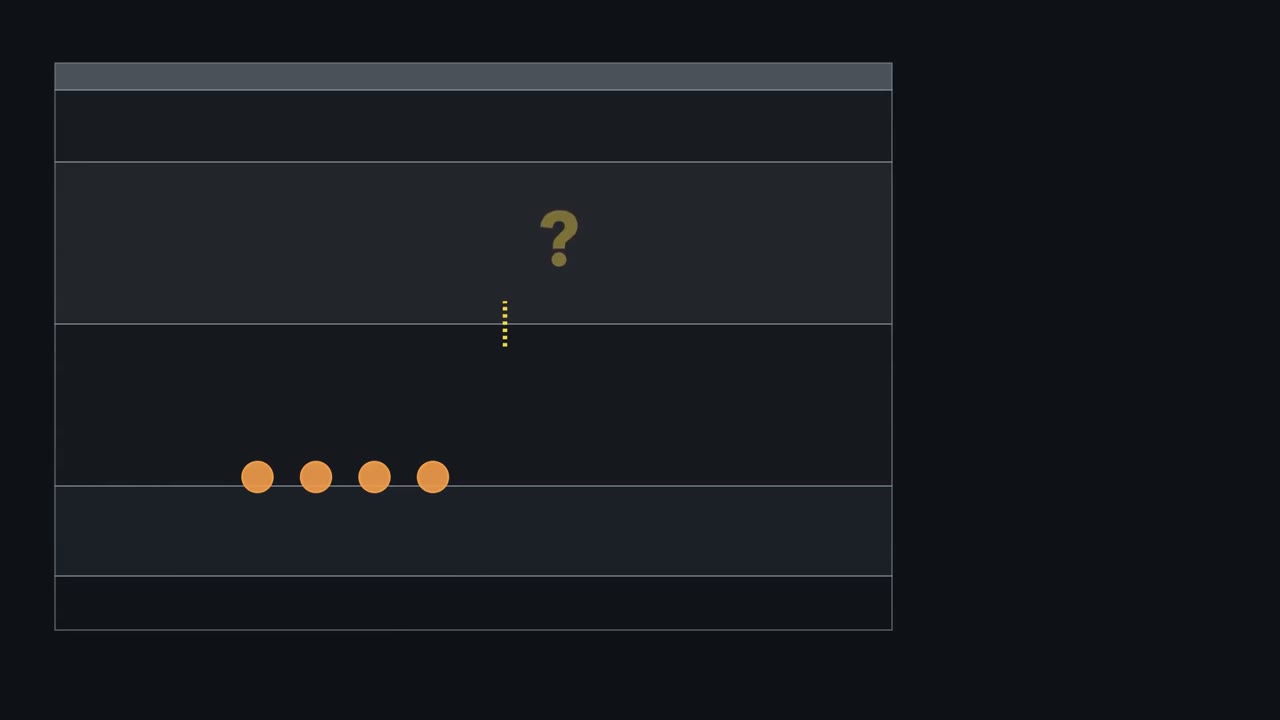 Part 3 of 3 Length 2:54 Staying in the Lane Developmental Neuroscience · Graduate school and beyond Tangential Migration: Interneurons and the Long Way Round
Take-home
In mice, interneurons travel in two streams lined with the chemokine CXCL12, and they carry its receptor CXCR4.
-
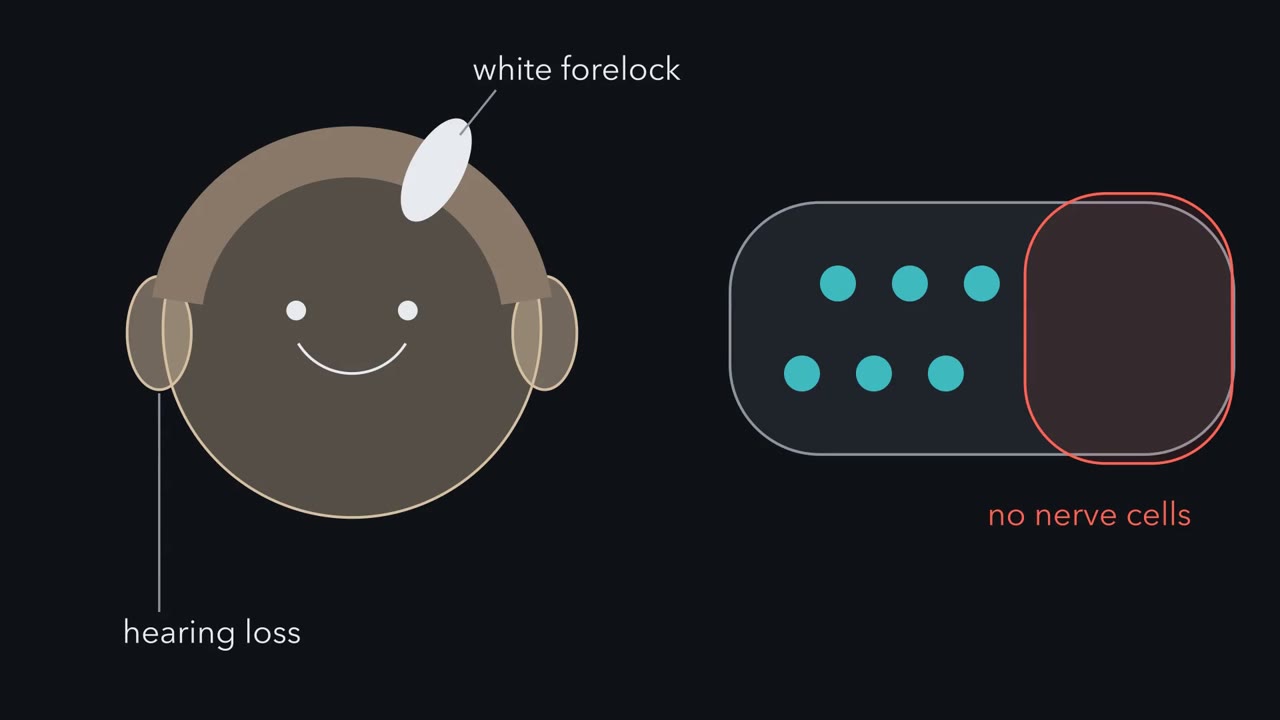 Part 1 of 3 Length 2:11 One Border, Many Destinations Developmental Neuroscience · Graduate school and beyond The Neural Crest: Cells That Leave Home
Take-home
Where along the body a crest population starts biases what it can become; the signals on its route, and where it stops, help decide which fates appear.
-
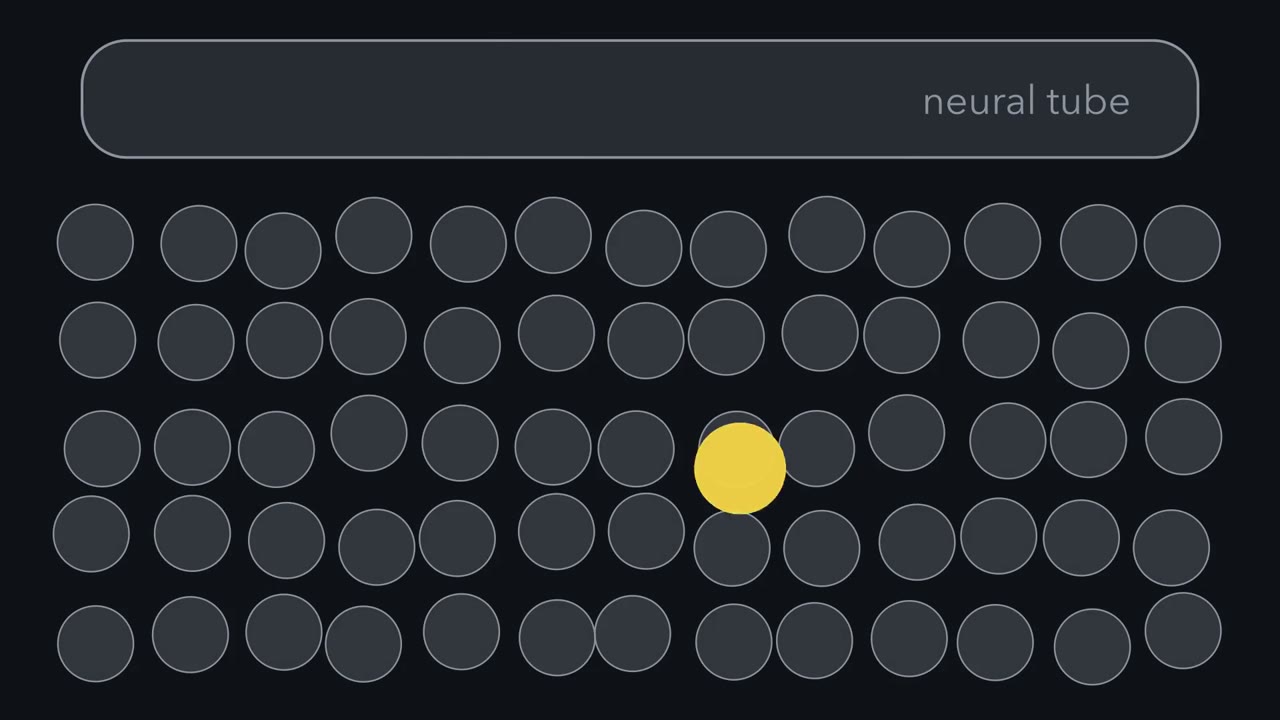 Part 2 of 3 Length 2:41 Mark It, Move It Developmental Neuroscience · Graduate school and beyond The Neural Crest: Cells That Leave Home
Take-home
Quail nuclei carry a built-in mark that neither fades nor dilutes as cells divide, so quail-into-chick grafts show where each level's crest goes.
-
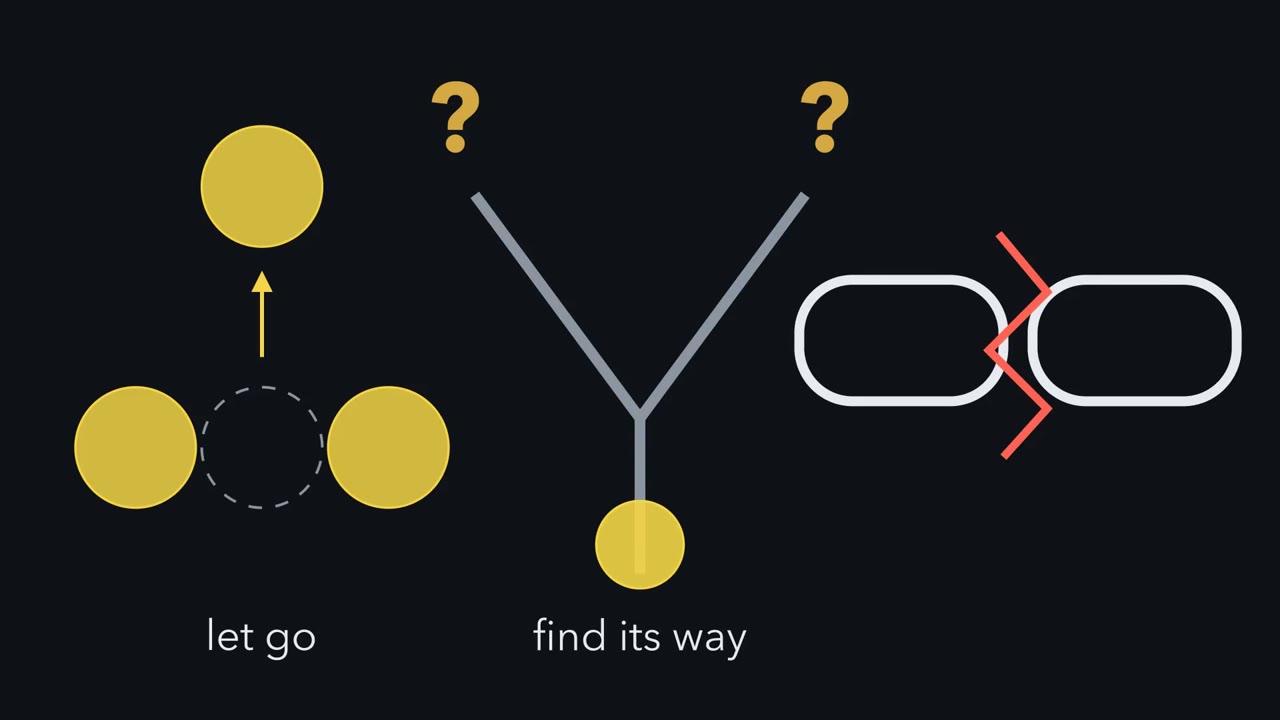 Part 3 of 3 Length 3:02 Leave, Steer, Arrive: The Puzzle Solved Developmental Neuroscience · Graduate school and beyond The Neural Crest: Cells That Leave Home
Take-home
In chick, Snail2 is needed for crest cells to leave and probably lifts the Cadherin-6B brake, at least partly.
-
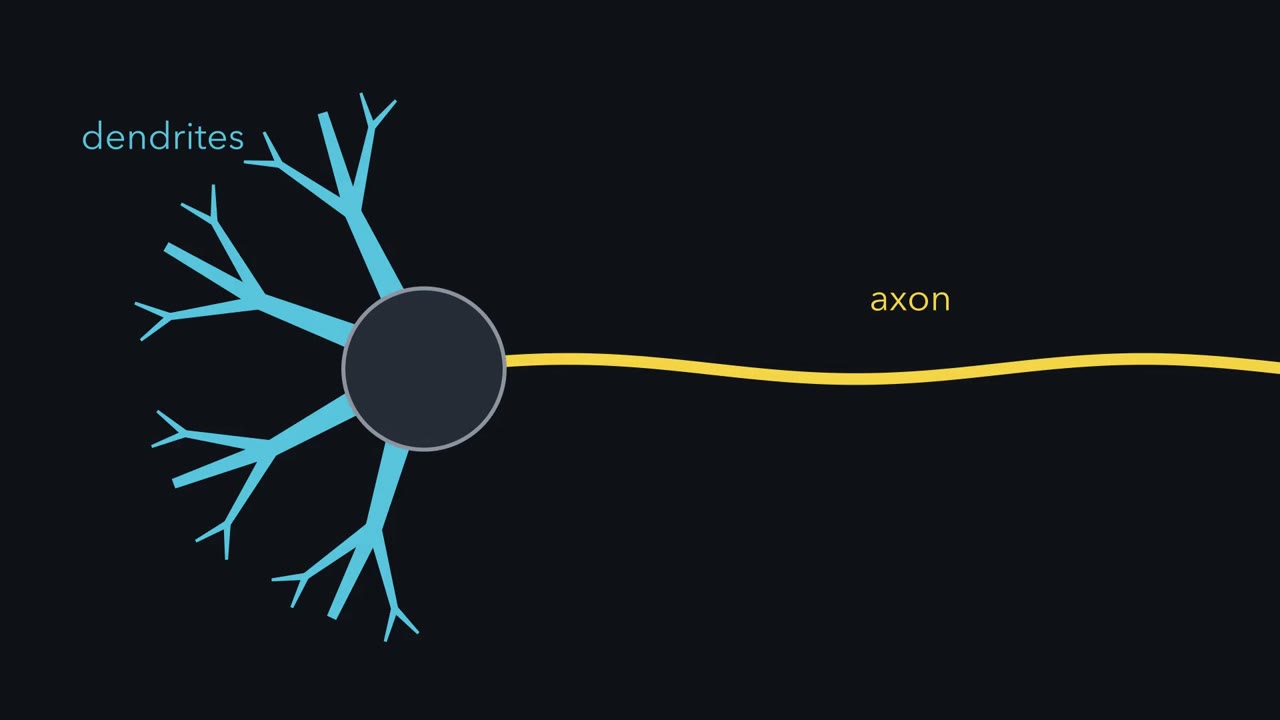 Part 1 of 6 Length 2:47 Cut the Axon Developmental Neuroscience · Graduate school and beyond One Axon, Many Dendrites: Neuronal Polarity
Take-home
An axon is not a permanent label: in a dish, cutting it close to the cell body can let a dendrite grow out as a new axon.
-
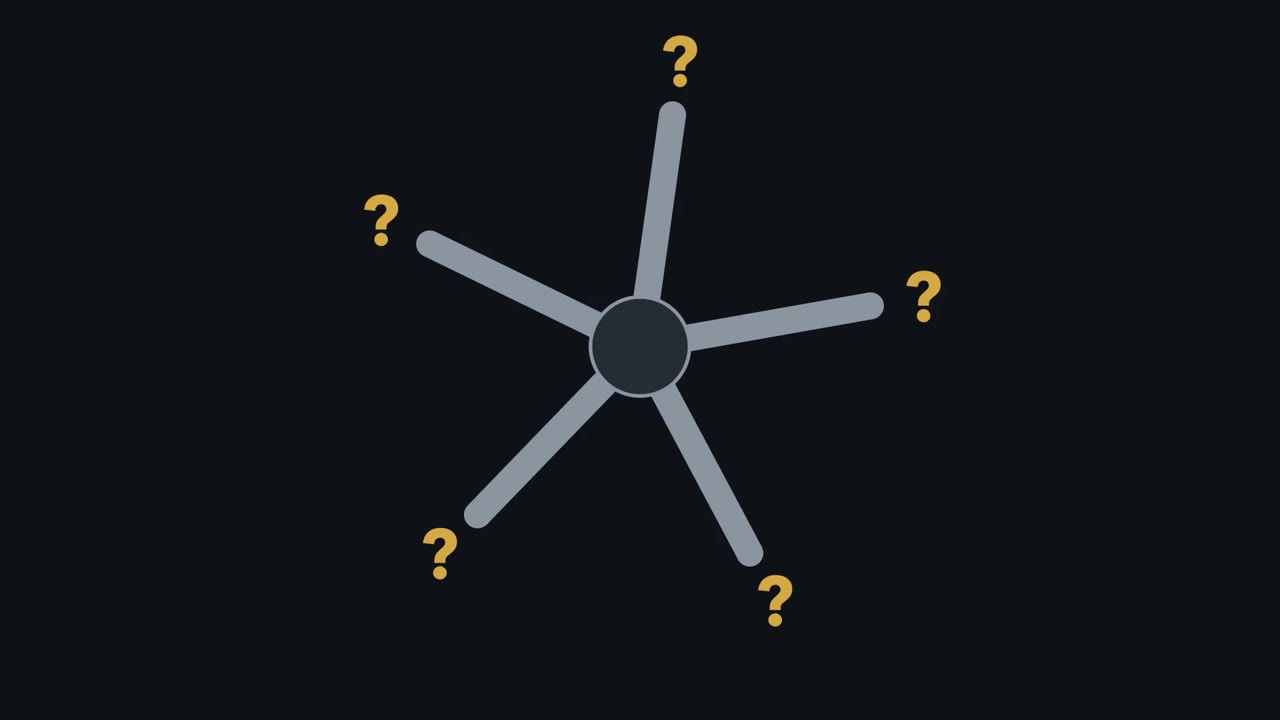 Part 2 of 6 Length 2:55 Five Stages and a Race Developmental Neuroscience · Graduate school and beyond One Axon, Many Dendrites: Neuronal Polarity
Take-home
Cultured rat hippocampal neurons polarize in five stages, and the axon appears at stage three when one neurite grows much faster than the rest.
-
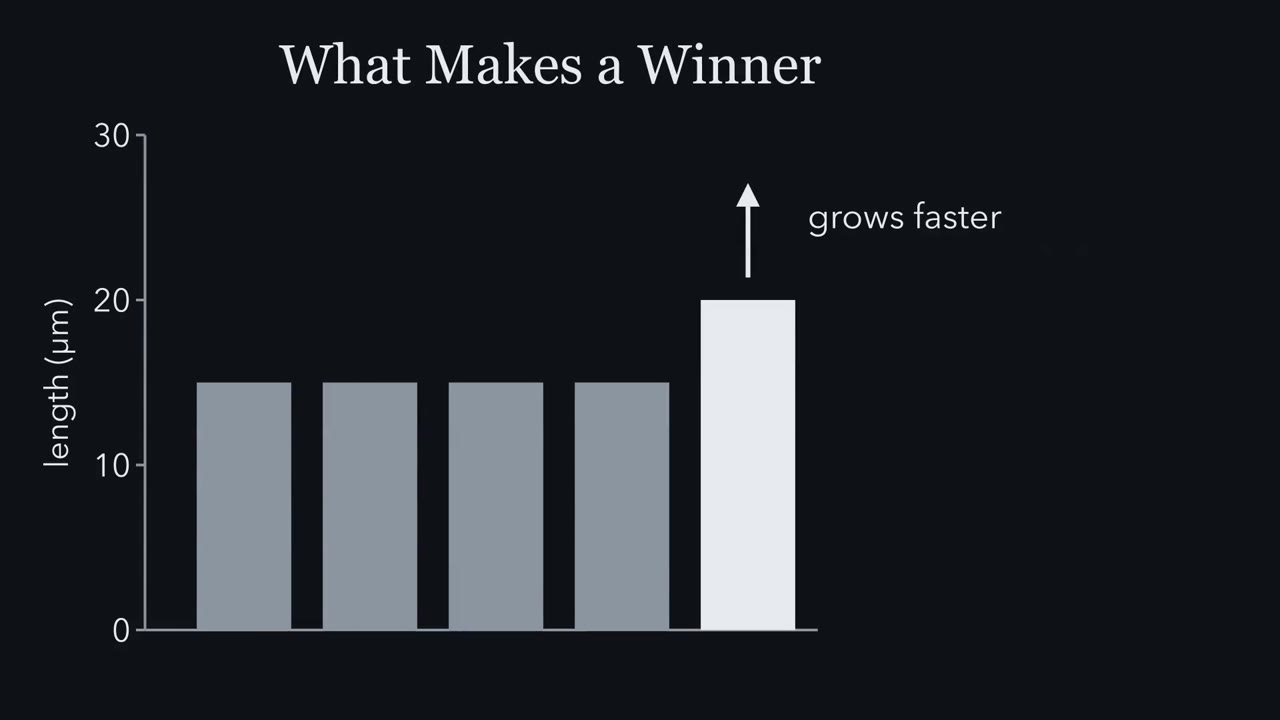 Part 3 of 6 Length 3:02 What Makes a Winner Developmental Neuroscience · Graduate school and beyond One Axon, Many Dendrites: Neuronal Polarity
Take-home
Growth in simple proportion to length picks no winner, because the leader stays the same fraction ahead.
-
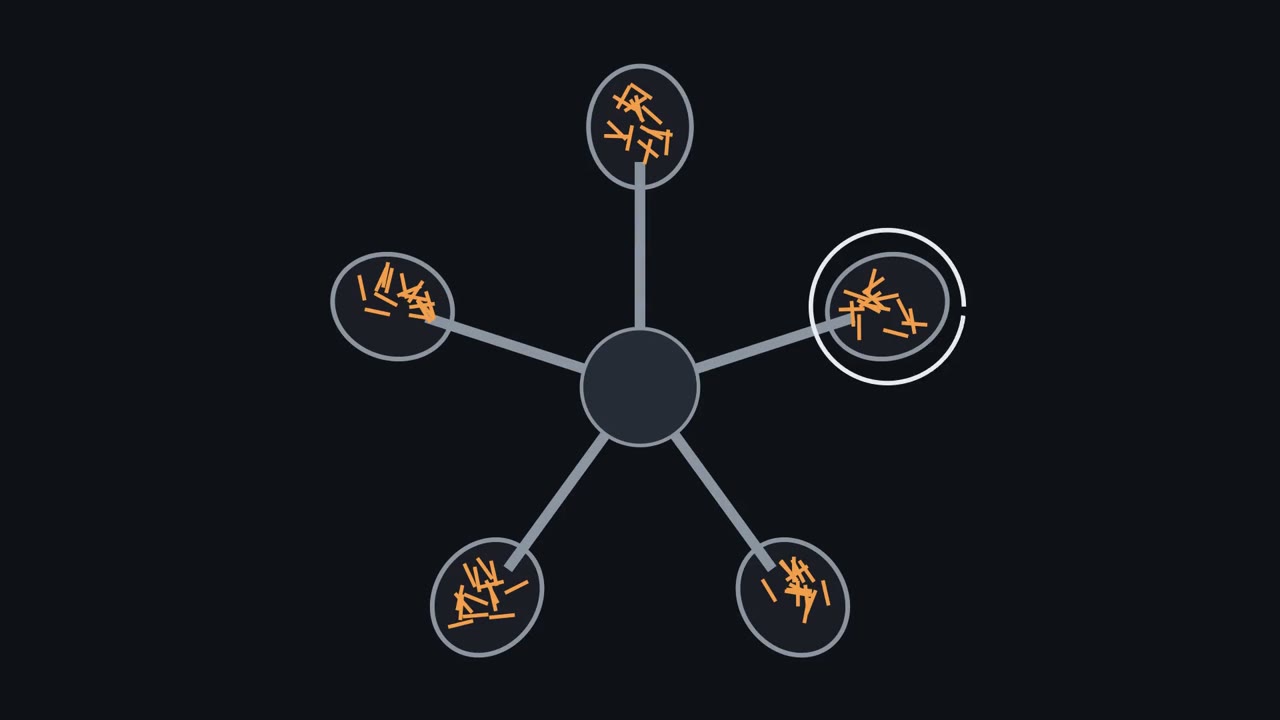 Part 4 of 6 Length 2:41 Rig the Race Developmental Neuroscience · Graduate school and beyond One Axon, Many Dendrites: Neuronal Polarity
Take-home
The growth cone of the future axon has a looser, more dynamic actin network than its siblings.
-
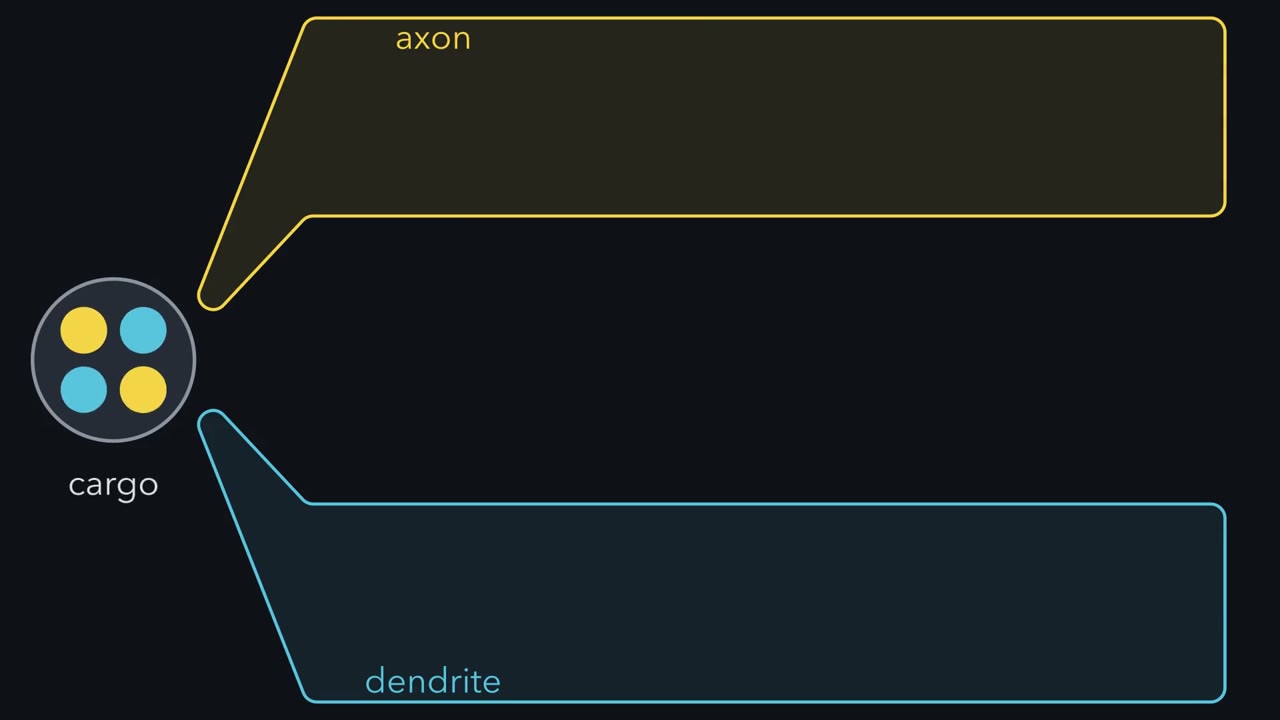 Part 5 of 6 Length 2:34 Tracks That Point Two Ways Developmental Neuroscience · Graduate school and beyond One Axon, Many Dendrites: Neuronal Polarity
Take-home
In cultured rat hippocampal neurons, axon microtubules nearly all point plus end out, while dendrite microtubules point both ways.
-
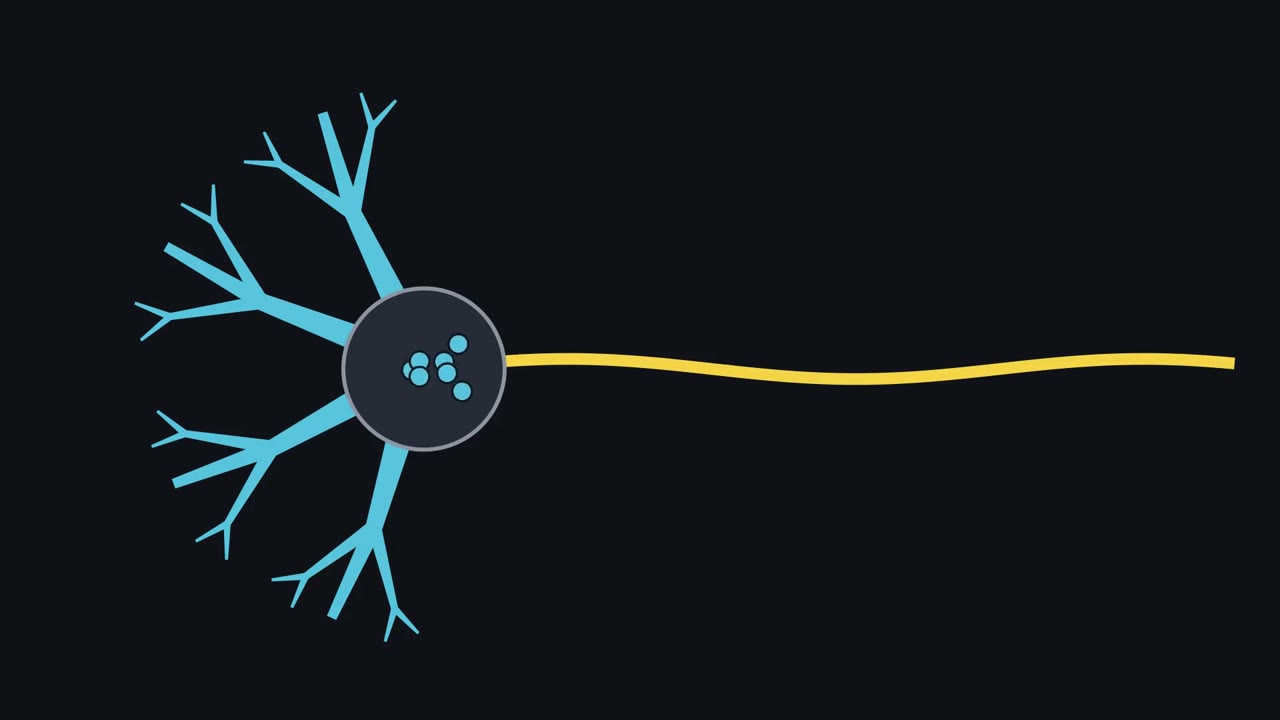 Part 6 of 6 Length 3:25 The Gate, and the Race Reopened Developmental Neuroscience · Graduate school and beyond One Axon, Many Dendrites: Neuronal Polarity
Take-home
The axon initial segment is a coat built on ankyrin G, and in many neurons it is where the action potential starts.
-
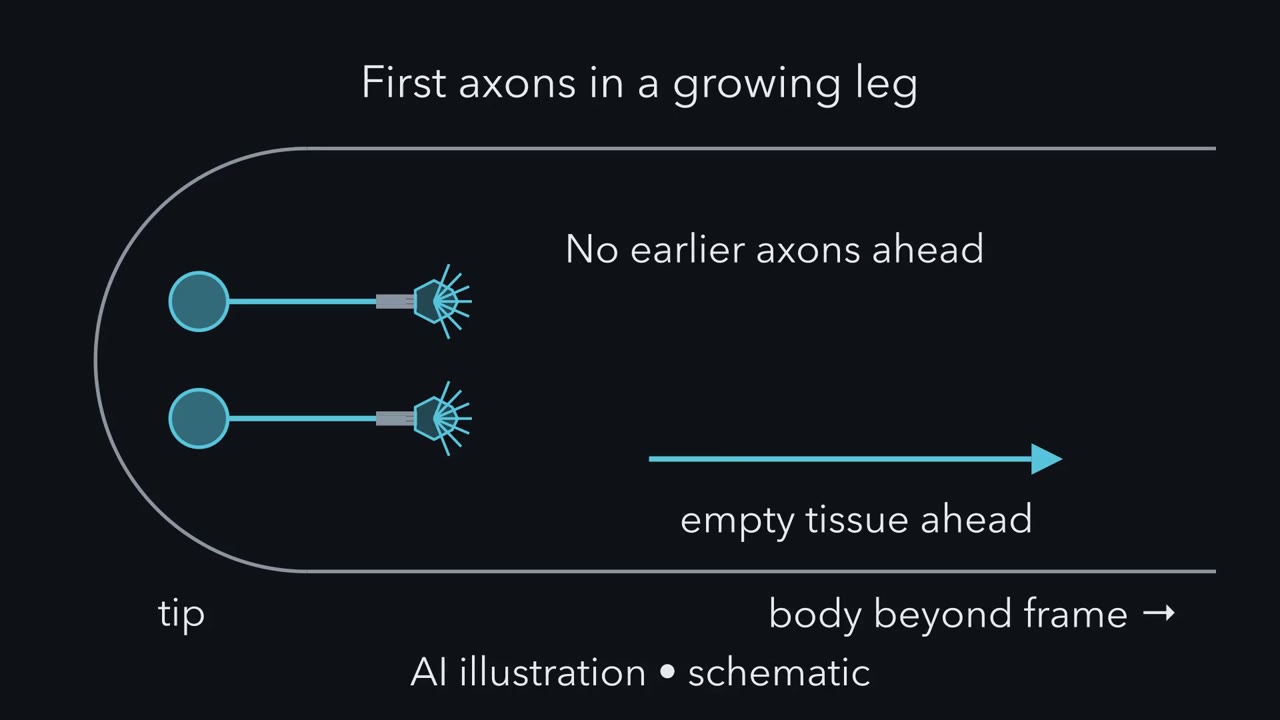 Part 1 of 3 Length 2:24 A Route in Legs Developmental Neuroscience · Graduate school and beyond Pioneers, Guideposts and the Logic of Guidance Cues
Take-home
A growth cone reads only what is within its reach.
-
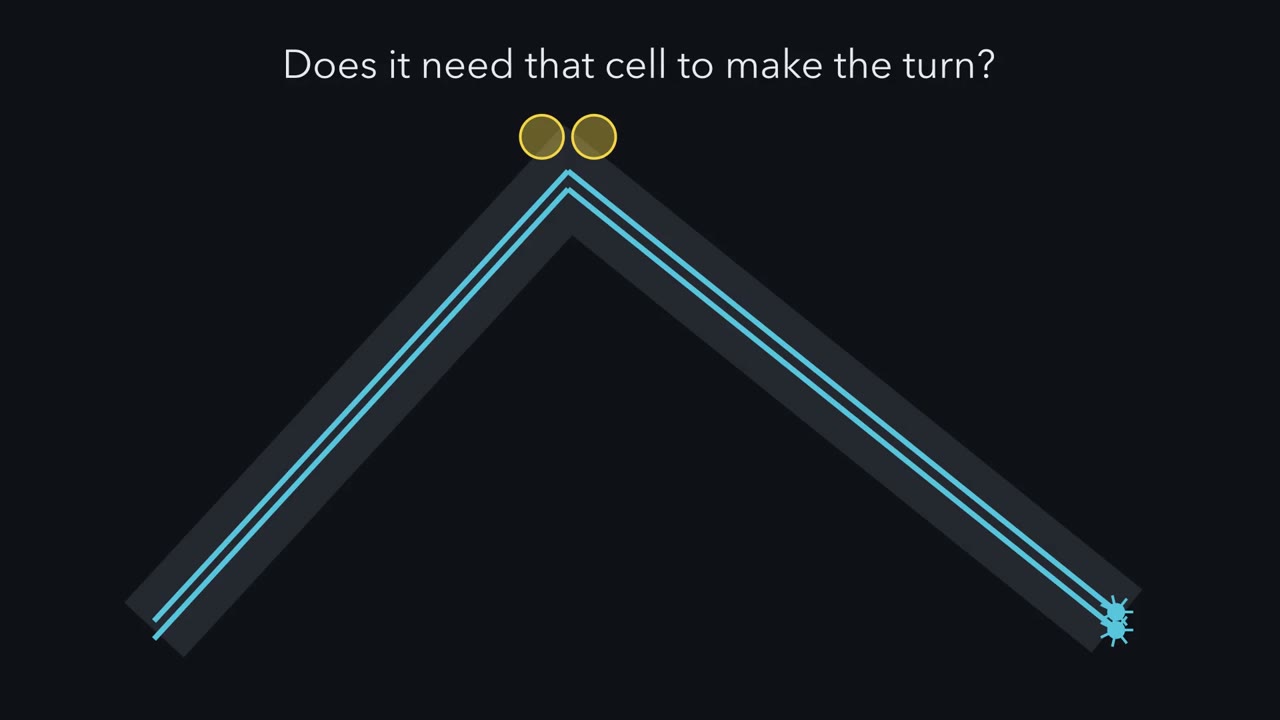 Part 2 of 3 Length 2:19 Kill a Guidepost Developmental Neuroscience · Graduate school and beyond Pioneers, Guideposts and the Logic of Guidance Cues
Take-home
Removing a guidepost cell can make pioneer axons lose their normal route at that turn.
-
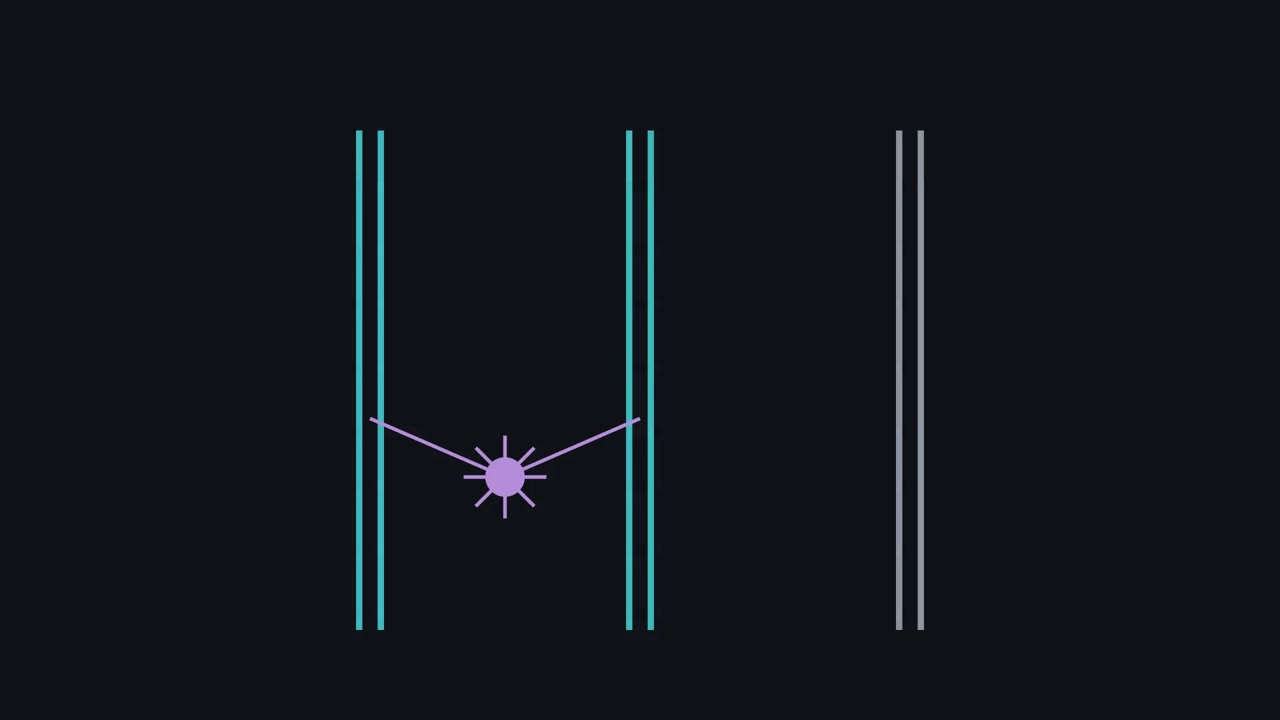 Part 3 of 3 Length 3:17 Followers, Glue and the Reader Developmental Neuroscience · Graduate school and beyond Pioneers, Guideposts and the Logic of Guidance Cues
Take-home
Growth cones can choose particular bundles of axons to follow, as the labeled pathway hypothesis proposes.
-
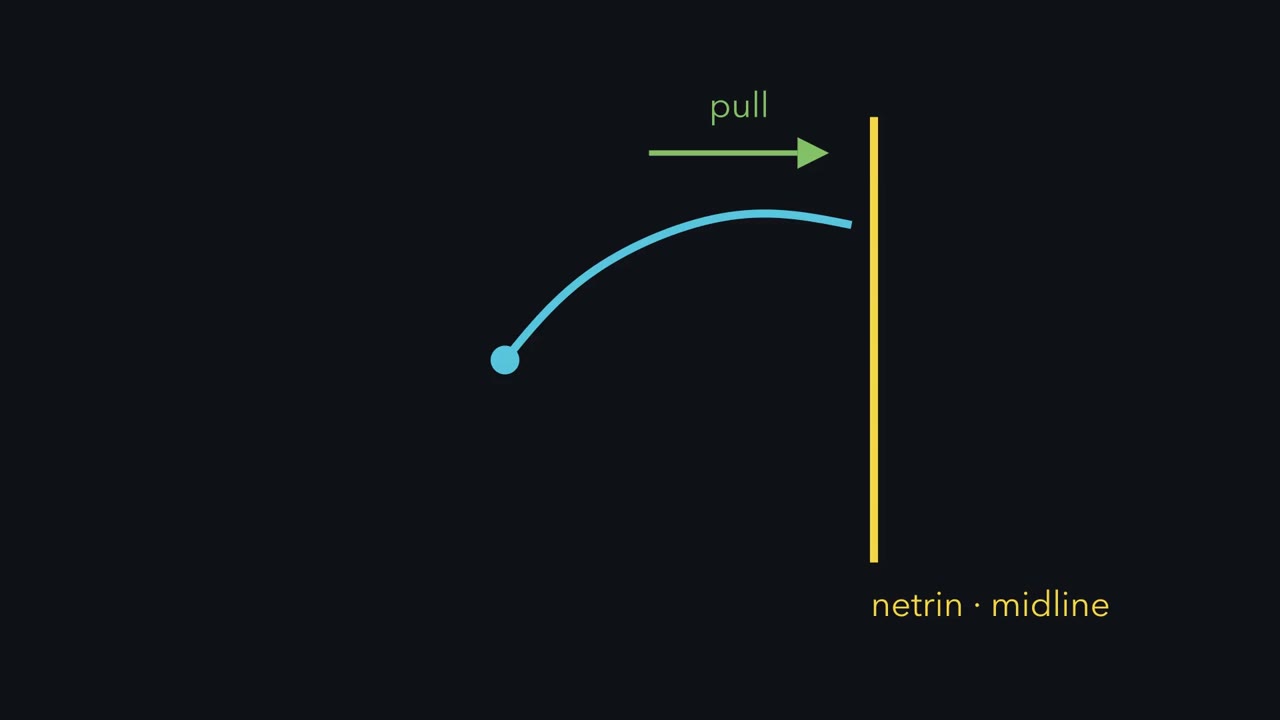 Part 1 of 6 Length 2:58 The Map and the Puzzle Developmental Neuroscience · Graduate school and beyond Netrin and DCC: One Cue, Two Answers
Take-home
Netrin marks a place, and the growth cone decides what to do there.
-
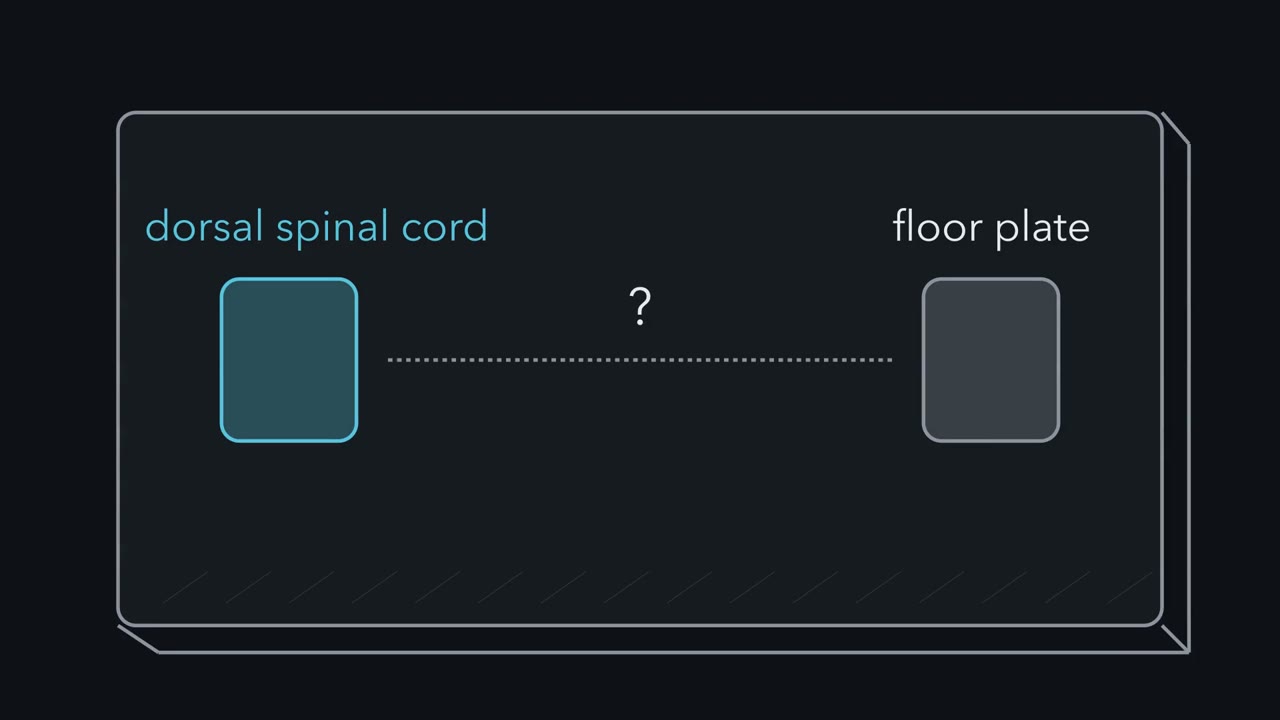 Part 2 of 6 Length 3:02 Something Crosses the Gel Developmental Neuroscience · Graduate school and beyond Netrin and DCC: One Cue, Two Answers
Take-home
In a gel, a floor plate explant drew commissural axons from dorsal spinal cord at a distance without touching it.
-
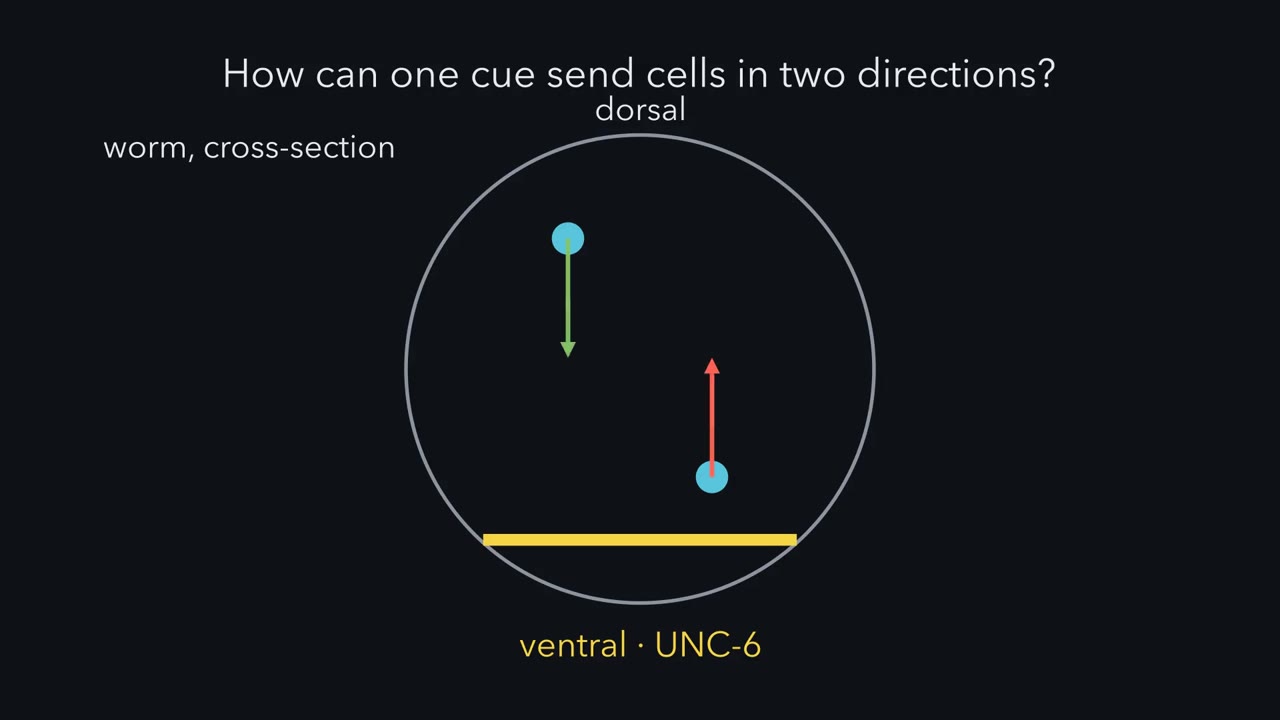 Part 3 of 6 Length 2:46 The Worm Already Knew Developmental Neuroscience · Graduate school and beyond Netrin and DCC: One Cue, Two Answers
Take-home
In the worm, one cue, UNC-6, sends cells and axons in two directions, depending on the reader.
-
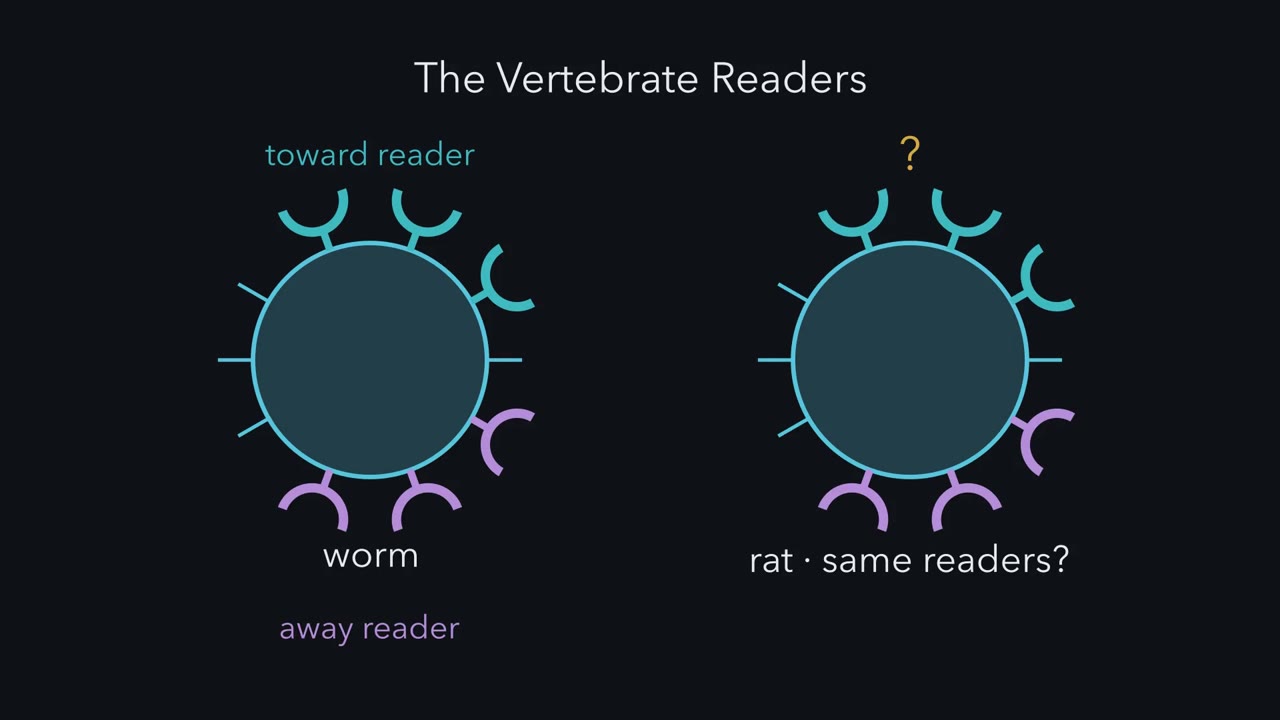 Part 4 of 6 Length 2:54 The Vertebrate Readers: DCC and UNC5 Developmental Neuroscience · Graduate school and beyond Netrin and DCC: One Cue, Two Answers
Take-home
DCC, the vertebrate relative of UNC-40, is on commissural axons, and blocking it blocked netrin-evoked outgrowth.
-
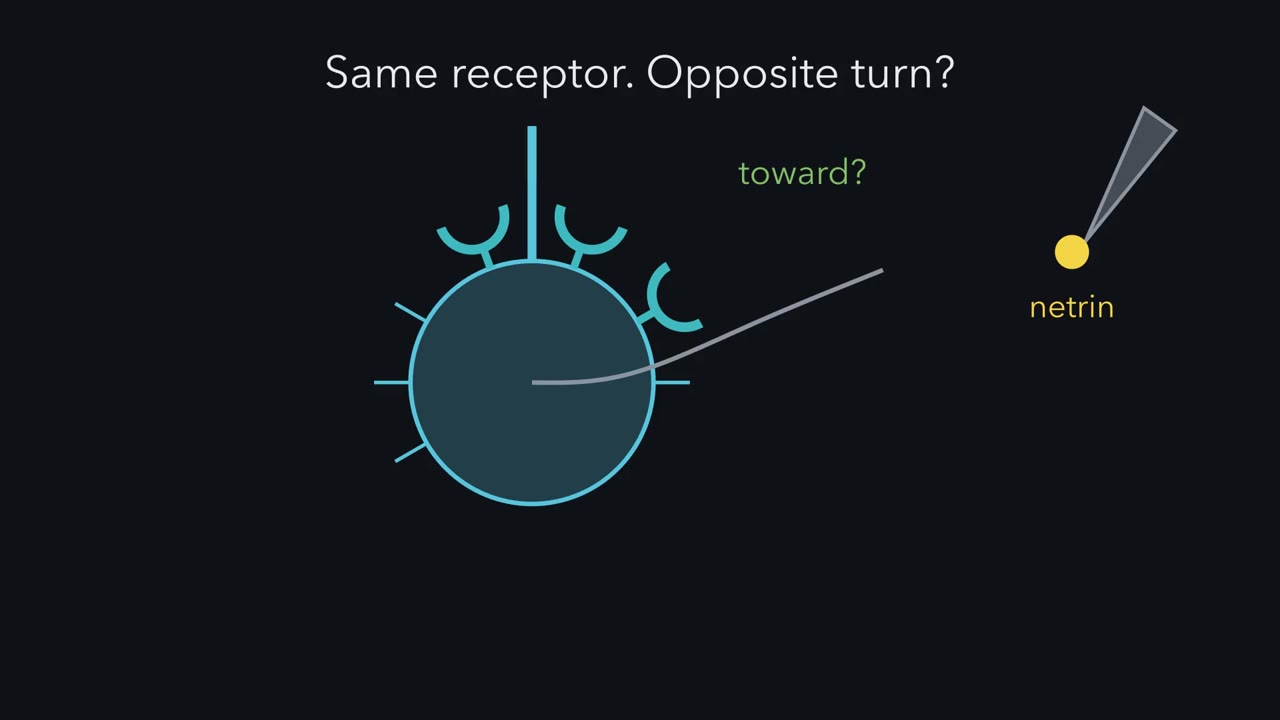 Part 5 of 6 Length 2:47 Same Receptor, Opposite Turn Developmental Neuroscience · Graduate school and beyond Netrin and DCC: One Cue, Two Answers
Take-home
A growth cone with the same receptor can turn toward netrin under one condition and away under another.
-
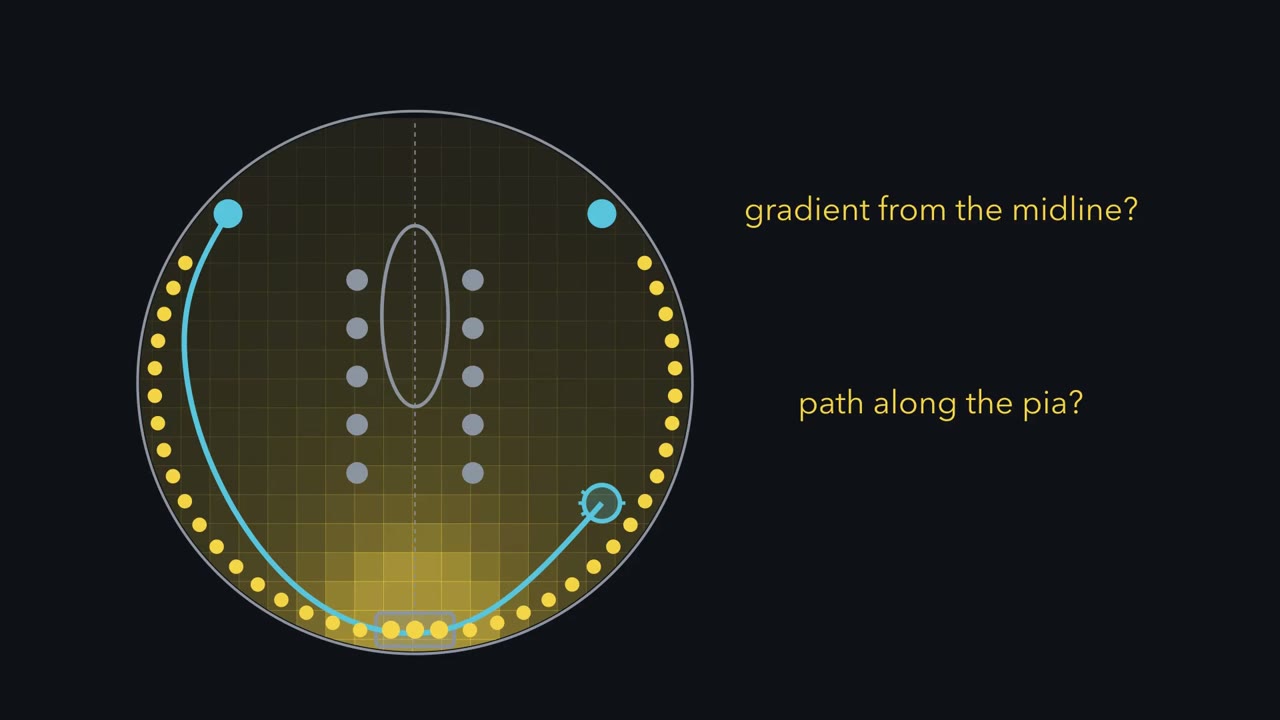 Part 6 of 6 Length 3:32 Where Is the Netrin? Developmental Neuroscience · Graduate school and beyond Netrin and DCC: One Cue, Two Answers
Take-home
A growth cone measures bound receptors, so a small difference across it is easiest to detect near the receptor's KD.
-
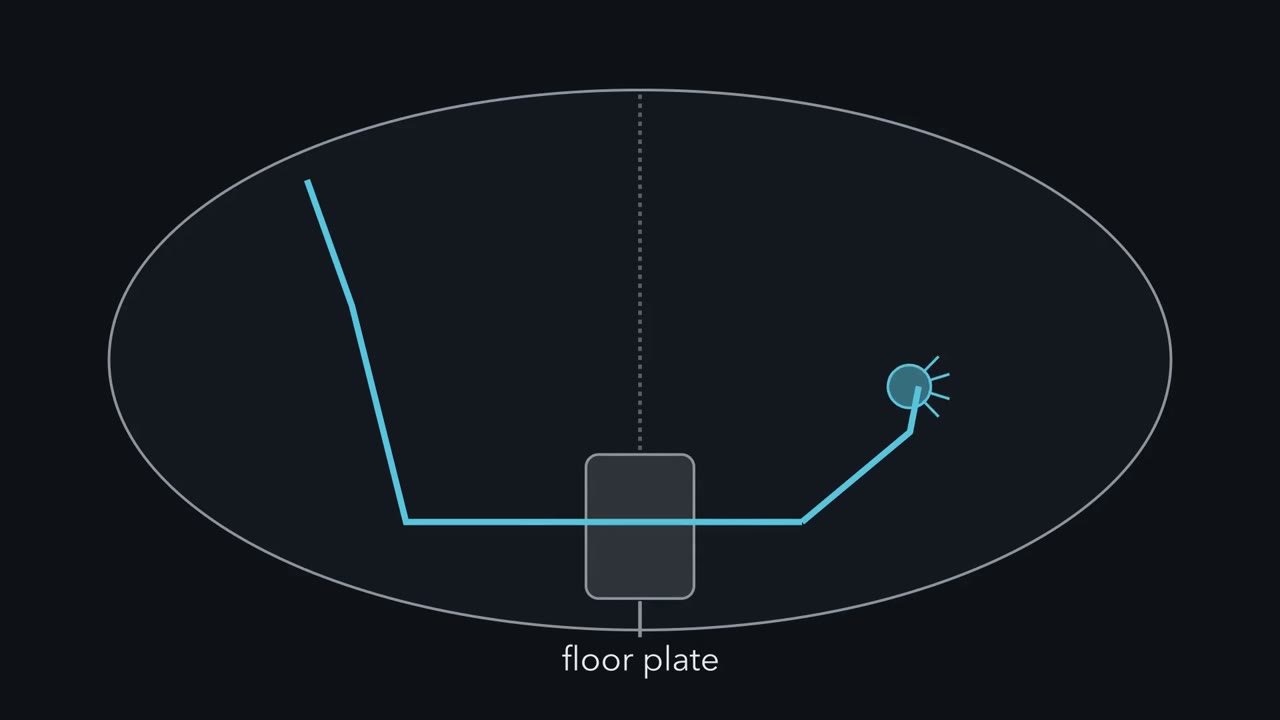 Part 1 of 6 Length 2:41 One Crossing, and Only One Developmental Neuroscience · Graduate school and beyond Crossing the Midline Once: Slit, Robo and Comm
Take-home
The midline stays the same while an axon crosses; the axon changes what it can hear.
-
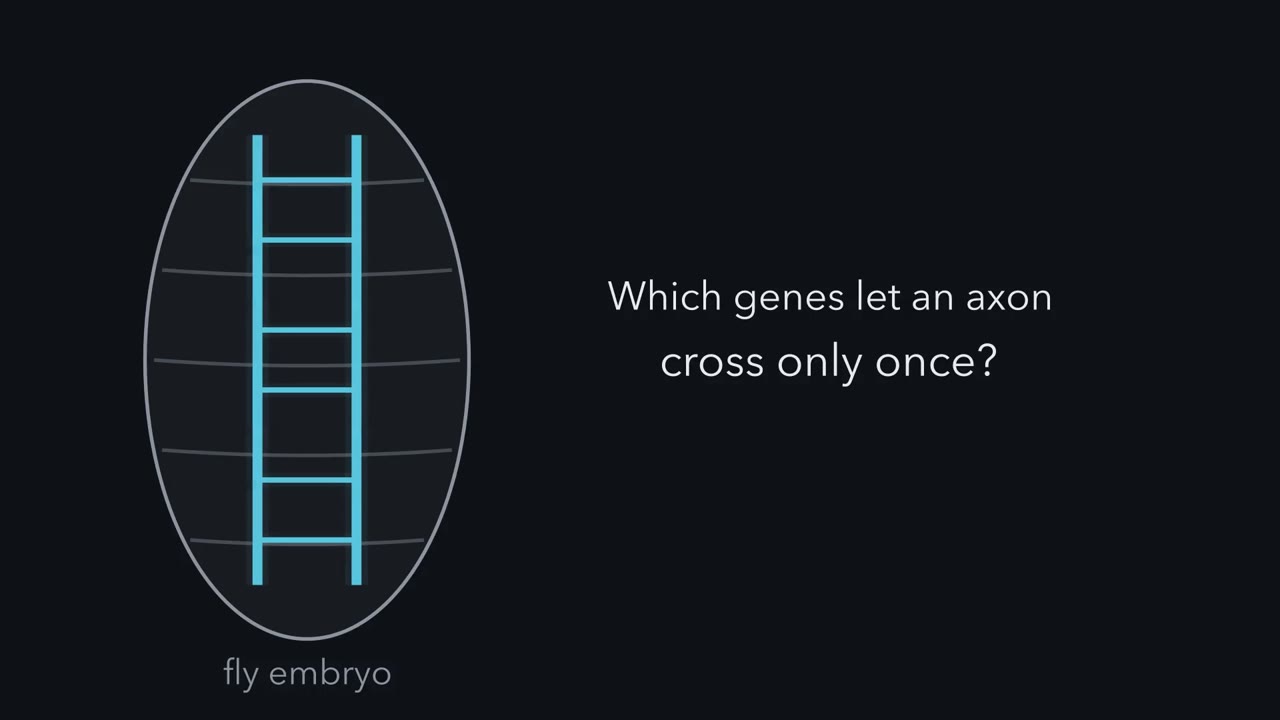 Part 2 of 6 Length 3:08 Reading the Ladder Developmental Neuroscience · Graduate school and beyond Crossing the Midline Once: Slit, Robo and Comm
Take-home
In the fly nerve cord, robo mutants have too many crossings, slit mutants collapse into a single central bundle, and comm mutants have almost no rungs.
-
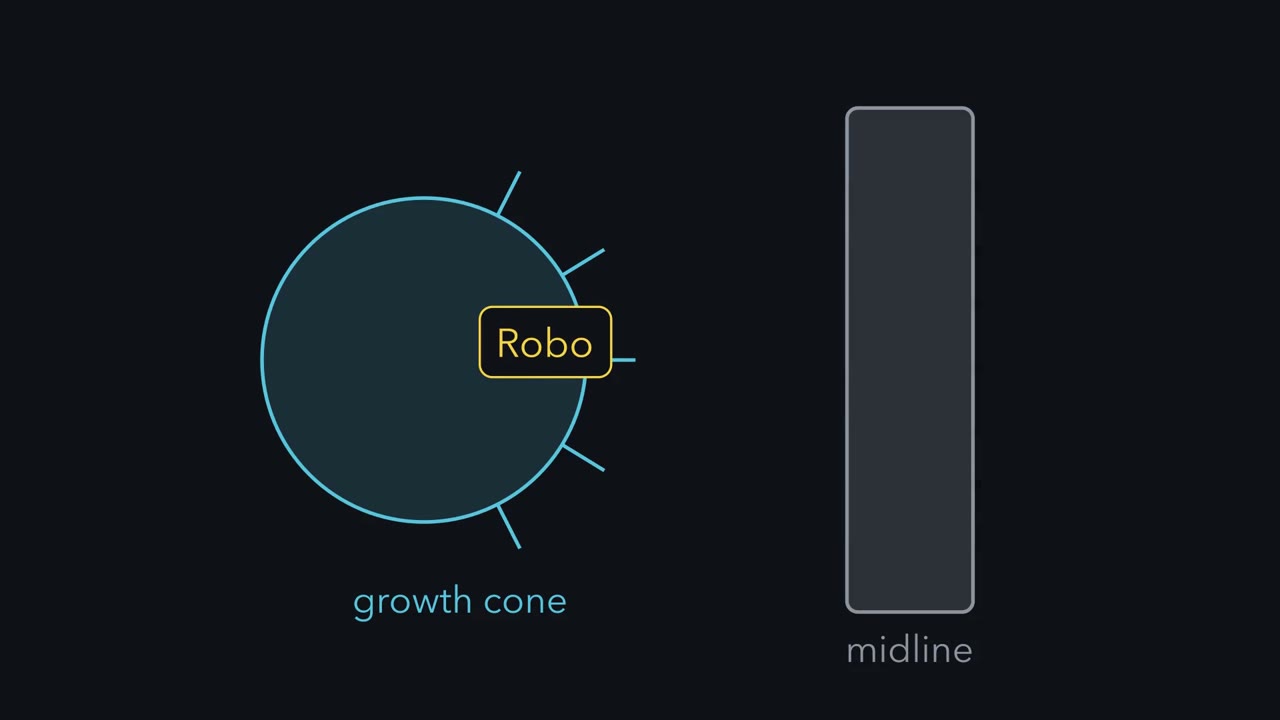 Part 3 of 6 Length 3:07 A Quarter of the Push, Many Times the Errors Developmental Neuroscience · Graduate school and beyond Crossing the Midline Once: Slit, Robo and Comm
Take-home
Slit is a protein secreted by midline glia that binds Robo receptors and repels axons.
-
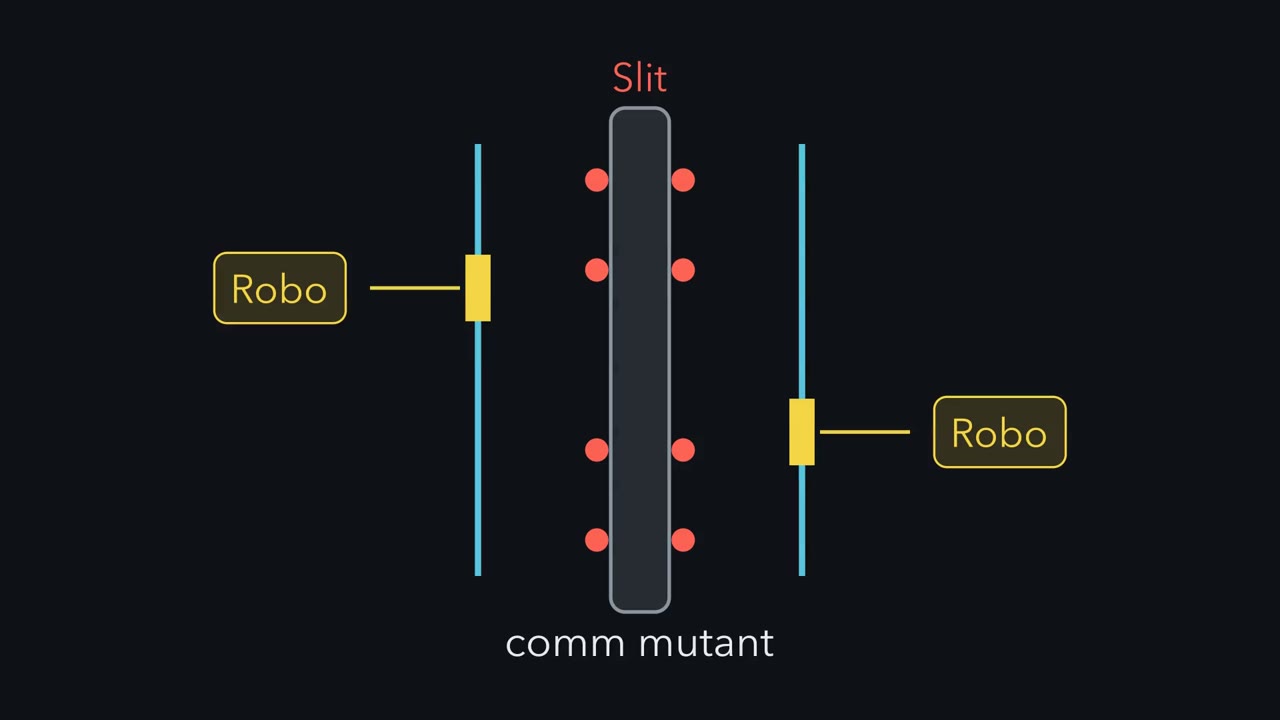 Part 4 of 6 Length 3:20 Comm: The Gate Is in the Axon Developmental Neuroscience · Graduate school and beyond Crossing the Midline Once: Slit, Robo and Comm
Take-home
In comm mutants Slit and Robo are present, so axons must hear Slit too early.
-
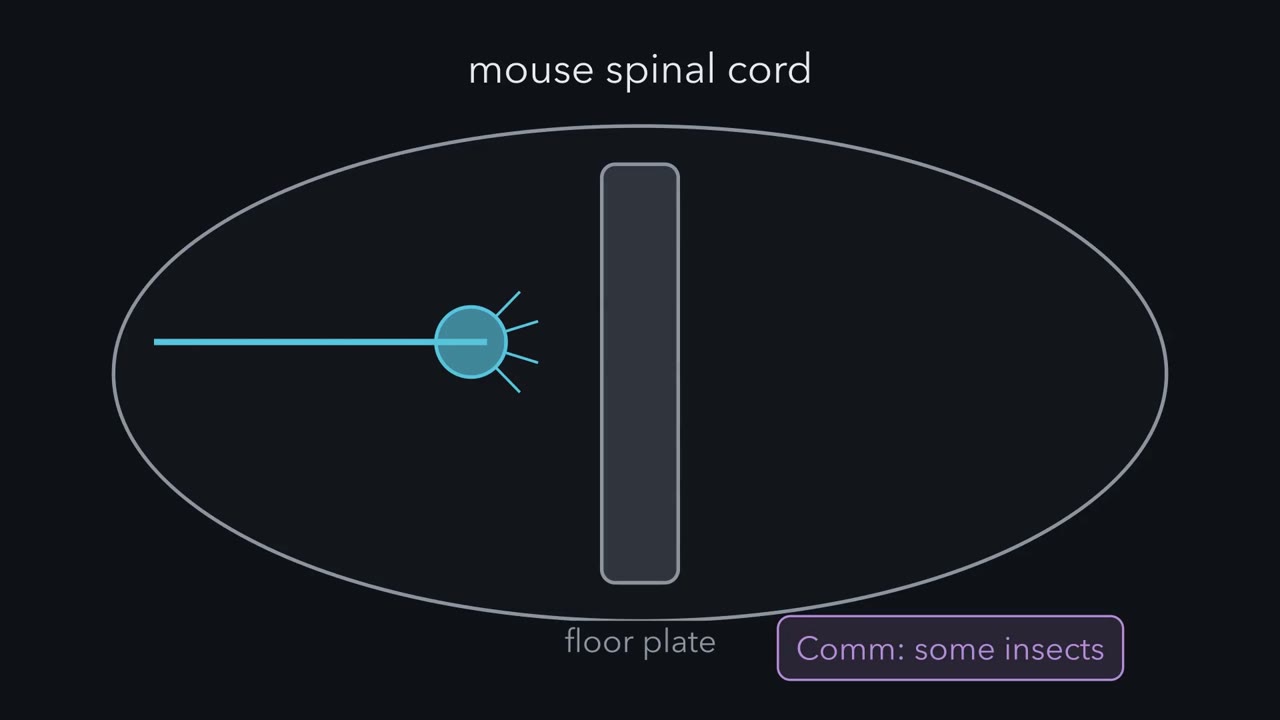 Part 5 of 6 Length 3:29 Mammals Mute Robo, and Also Clear It Developmental Neuroscience · Graduate school and beyond Crossing the Midline Once: Slit, Robo and Comm
Take-home
Mice lacking all three Slit genes show stalled and recrossing commissural axons.
-
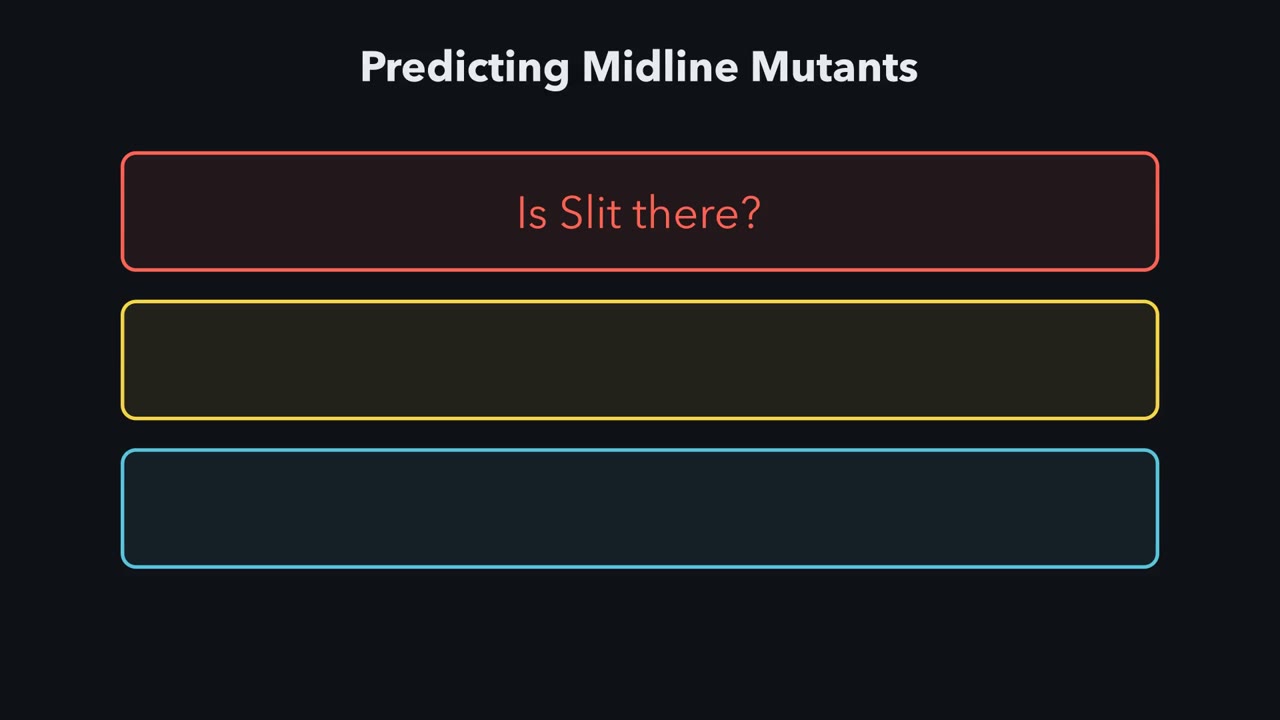 Part 6 of 6 Length 2:54 Predicting Midline Mutants Developmental Neuroscience · Graduate school and beyond Crossing the Midline Once: Slit, Robo and Comm
Take-home
Three questions predict a Slit or Robo mutant: is Slit there, can the axon hear it, and when does it start hearing it.
-
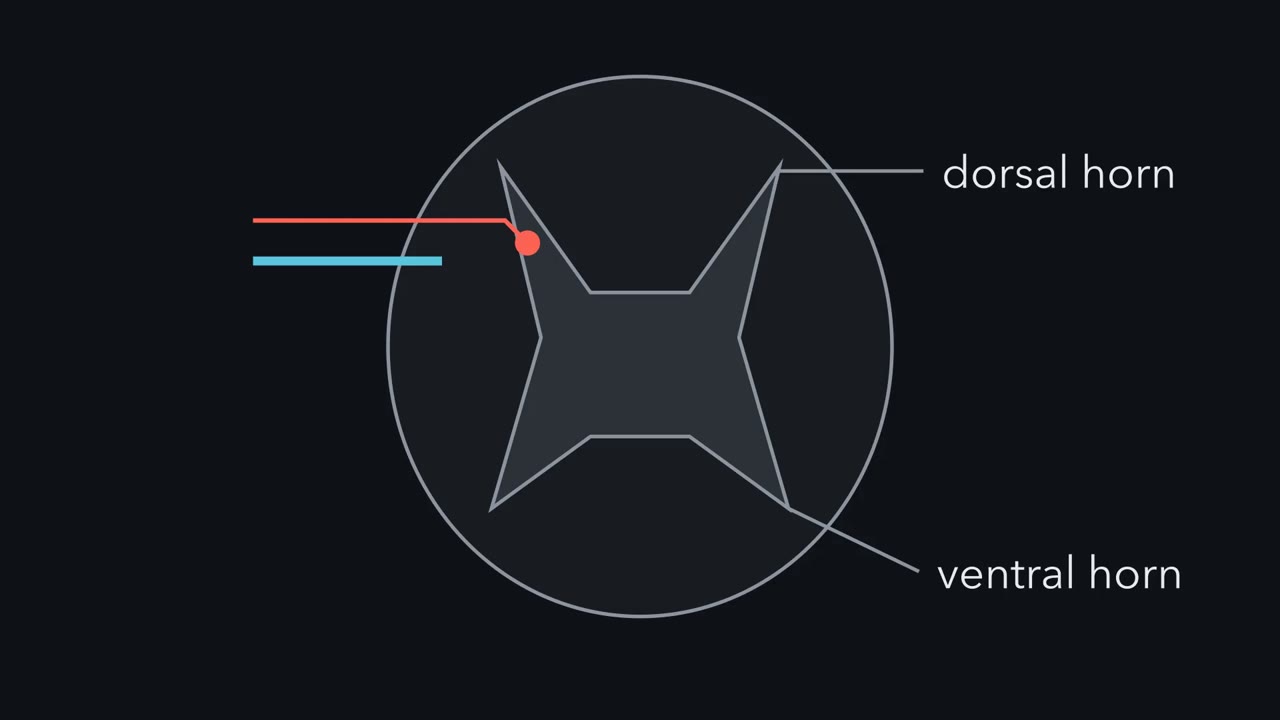 Part 1 of 3 Length 2:47 The Cue Marks the Place Developmental Neuroscience · Graduate school and beyond Semaphorins and Repulsion
Take-home
Sema3A, made in the ventral cord, repels NGF-dependent pain fibres but at the stage tested barely affects NT-3-dependent muscle afferents.
-
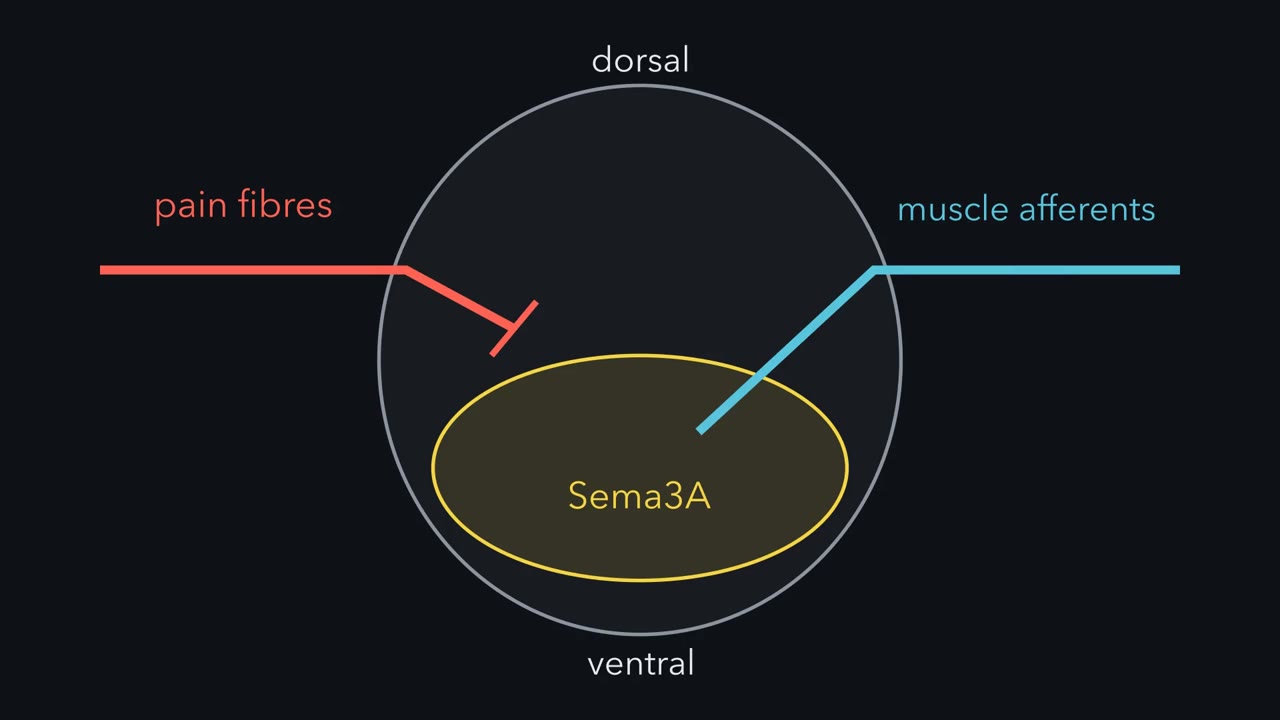 Part 2 of 3 Length 3:21 One Tissue, Two Axons, One Receptor Developmental Neuroscience · Graduate school and beyond Semaphorins and Repulsion
Take-home
In explants, the ventral cord repels axons grown in NGF but has little effect on axons grown in NT-3.
-
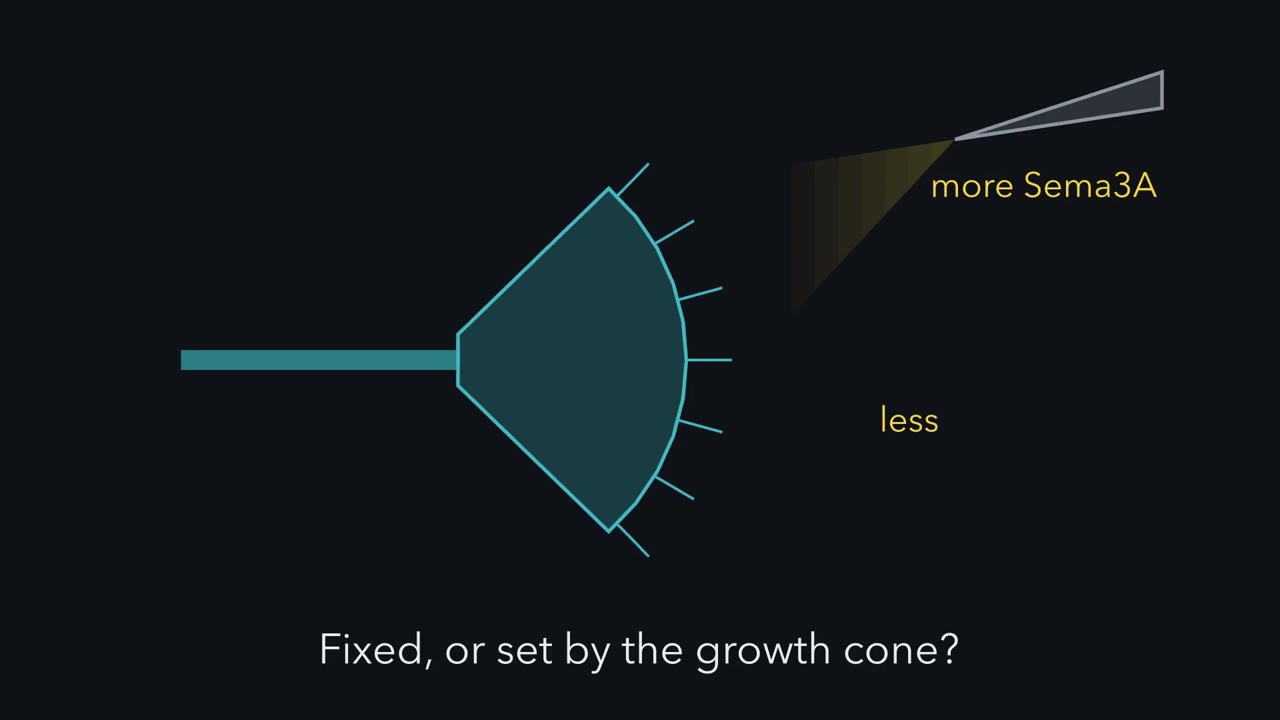 Part 3 of 3 Length 2:14 Same Cue, Opposite Answers Developmental Neuroscience · Graduate school and beyond Semaphorins and Repulsion
Take-home
Raising cyclic GMP turned Xenopus growth cones from repelled by a Sema3A gradient to attracted to it.
-
 Part 1 of 3 Length 2:16 A Rank Against a Slope Developmental Neuroscience · Graduate school and beyond Topographic Maps: Sperry's Eye and Eph Gradients
Take-home
An axon's place in the map is a rank set against a slope, not an address in its own receptor level alone.
-
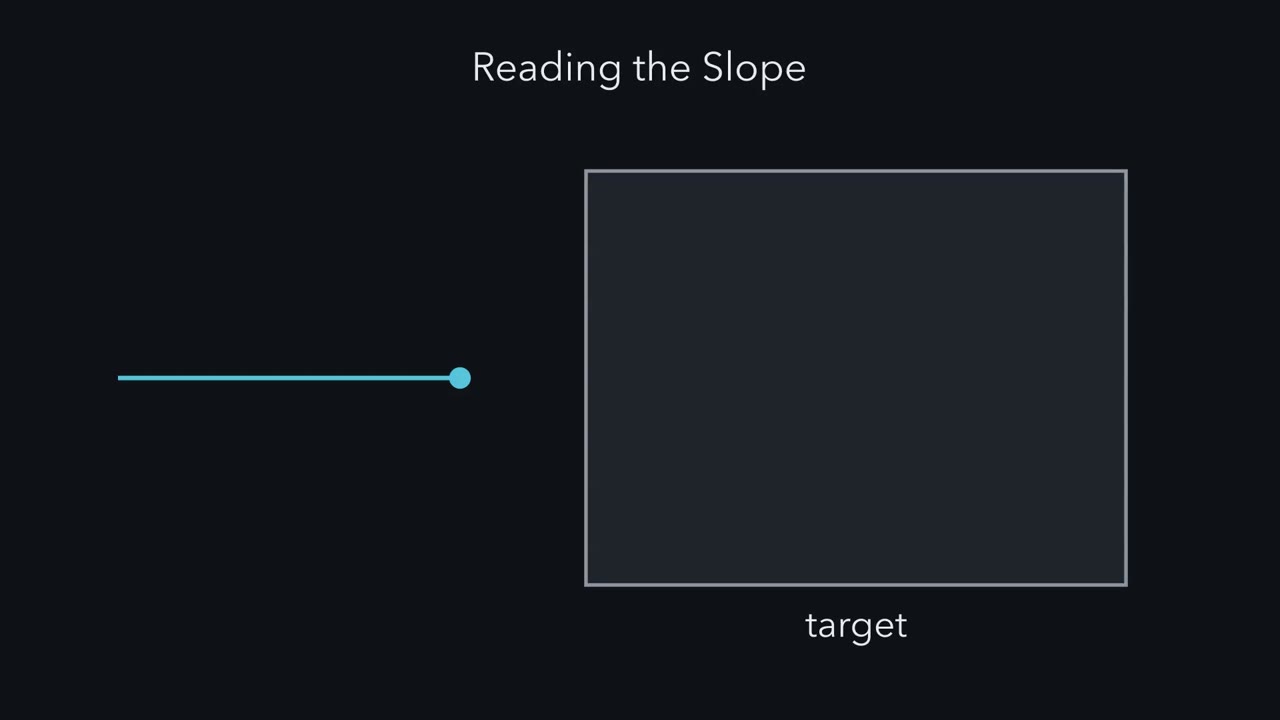 Part 2 of 3 Length 2:50 Reading the Slope Developmental Neuroscience · Graduate school and beyond Topographic Maps: Sperry's Eye and Eph Gradients
Take-home
In the chick stripe assay, temporal retinal axons avoided posterior tectal membrane, while nasal axons grew on both kinds.
-
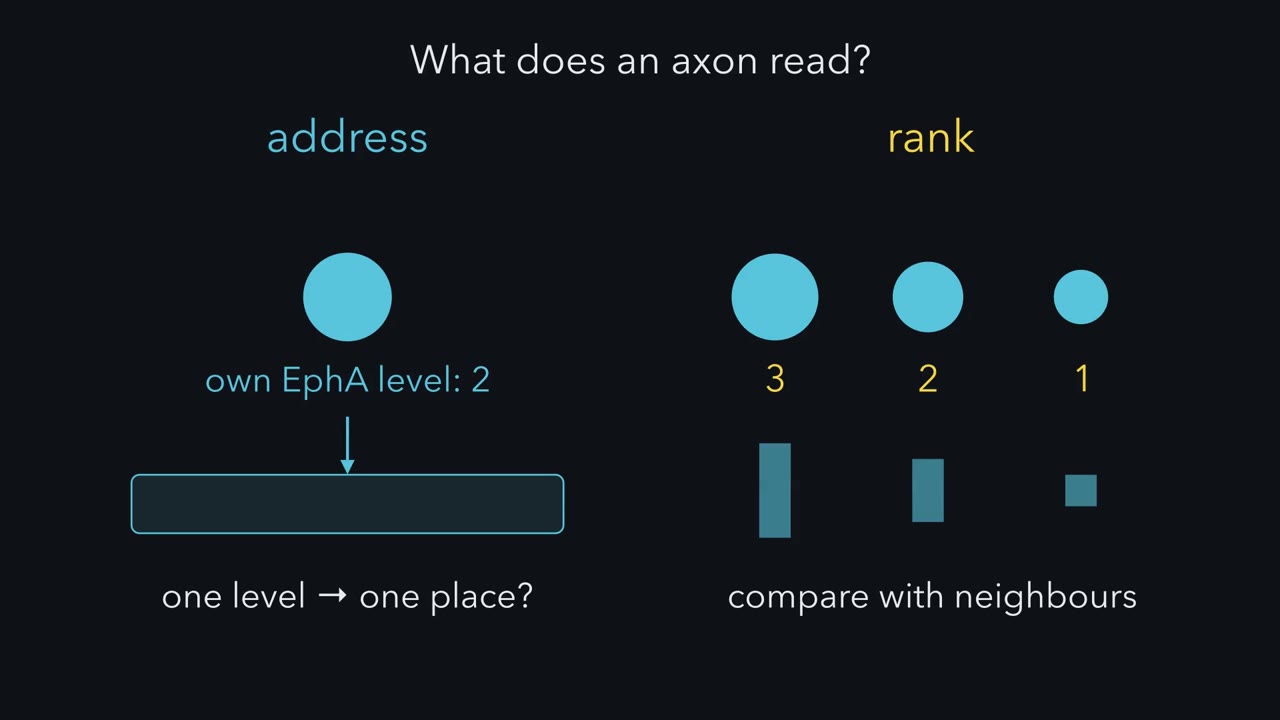 Part 3 of 3 Length 3:13 Two Maps from One Retina Developmental Neuroscience · Graduate school and beyond Topographic Maps: Sperry's Eye and Eph Gradients
Take-home
In mice with extra EphA3 in a scattered half of ganglion cells, two orderly maps formed, so an axon's place depends on the other axons and not on its own receptor level alone.
-
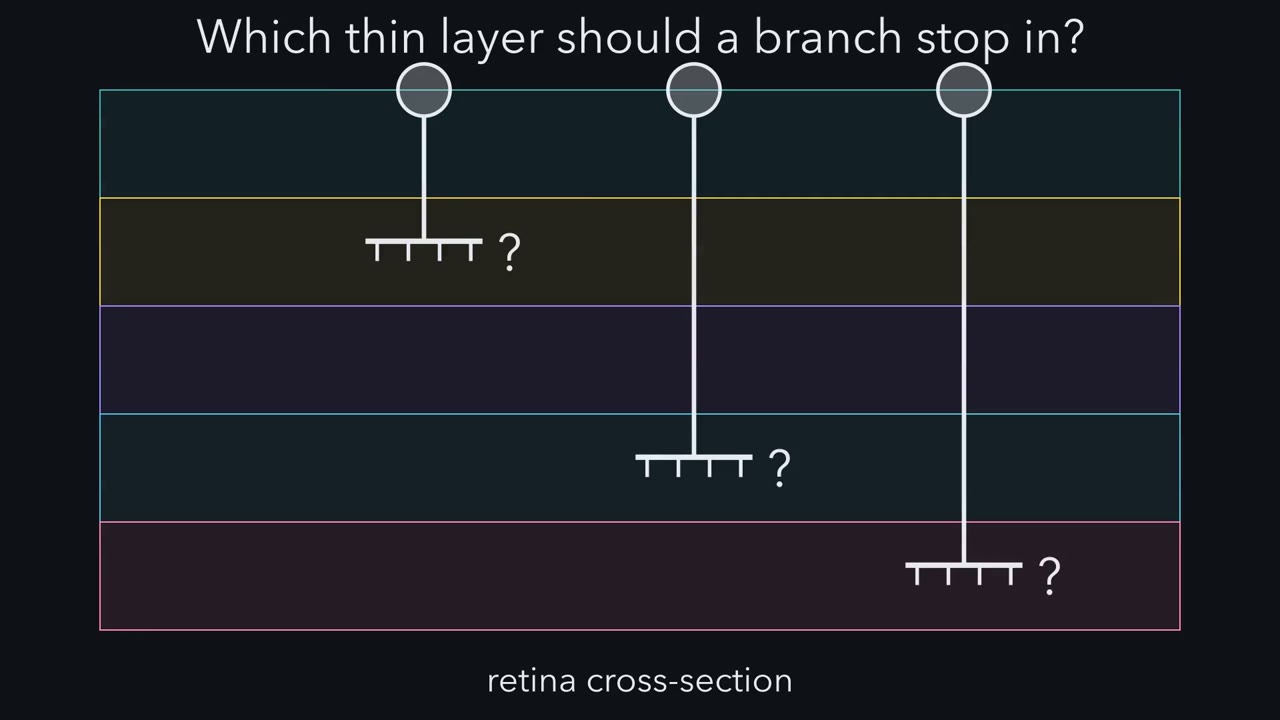 Part 1 of 3 Length 2:09 Same Means Stick Developmental Neuroscience · Graduate school and beyond Choosing a Partner: Layers, Self-Avoidance and Smell
Take-home
A gradient suits continuous order but is poor at discrete choices such as which layer, so discrete labels are often needed.
-
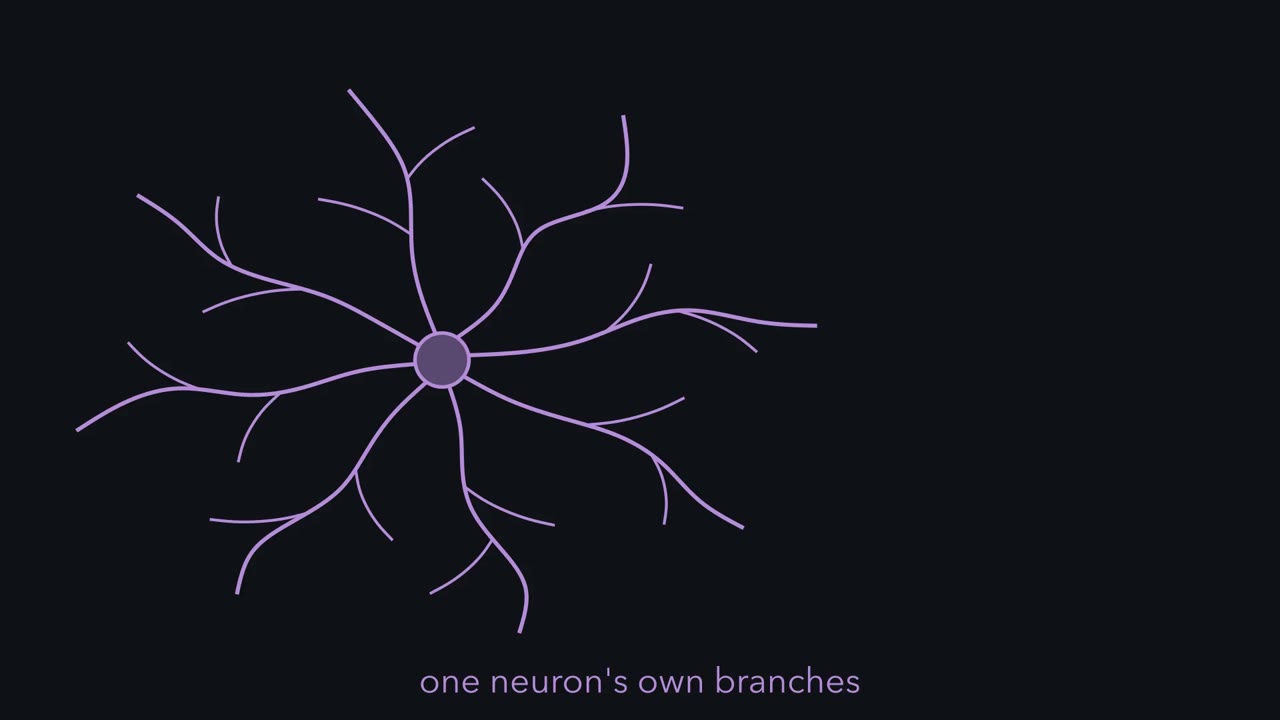 Part 2 of 3 Length 3:46 A Badge Only You Wear Developmental Neuroscience · Graduate school and beyond Choosing a Partner: Layers, Self-Avoidance and Smell
Take-home
Self-avoidance means a neuron's own sister branches move apart while its branches still overlap those of other neurons.
-
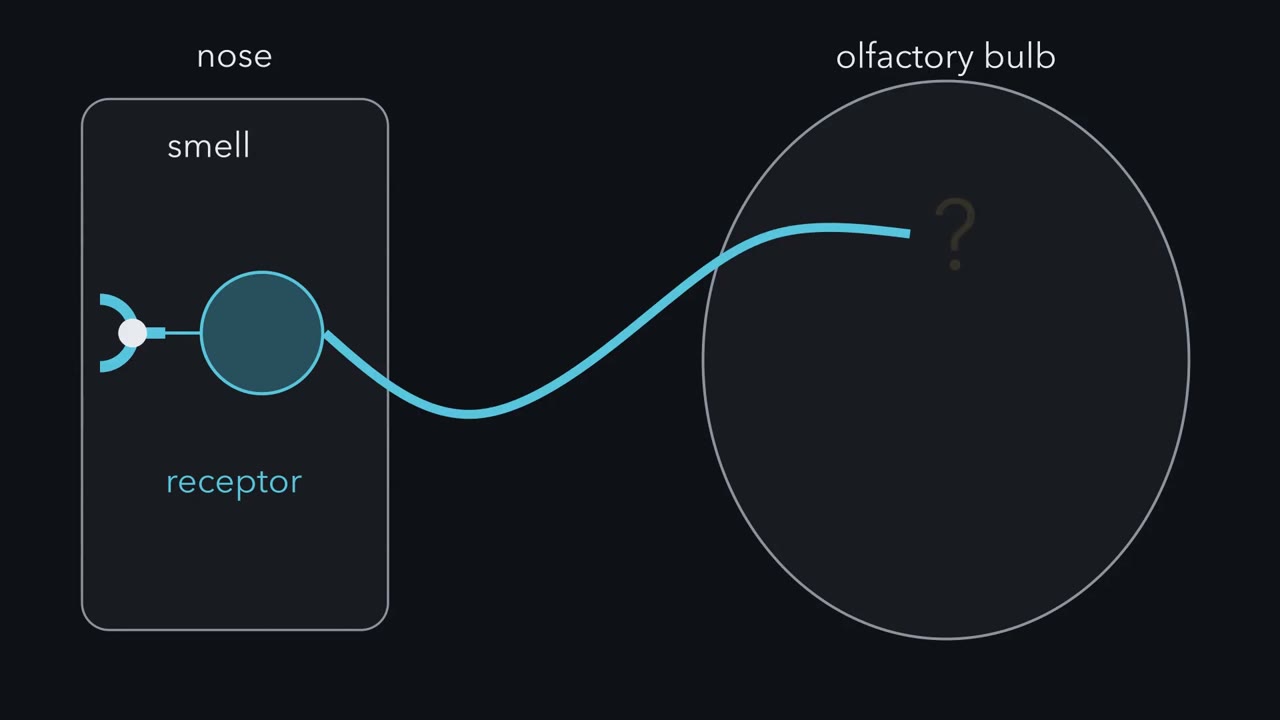 Part 3 of 3 Length 2:48 A Receptor That Is Also an Address Developmental Neuroscience · Graduate school and beyond Choosing a Partner: Layers, Self-Avoidance and Smell
Take-home
In mouse, olfactory sensory neurons that express the same odorant receptor are scattered in the nose, yet their axons gather in about two glomeruli per bulb.
-
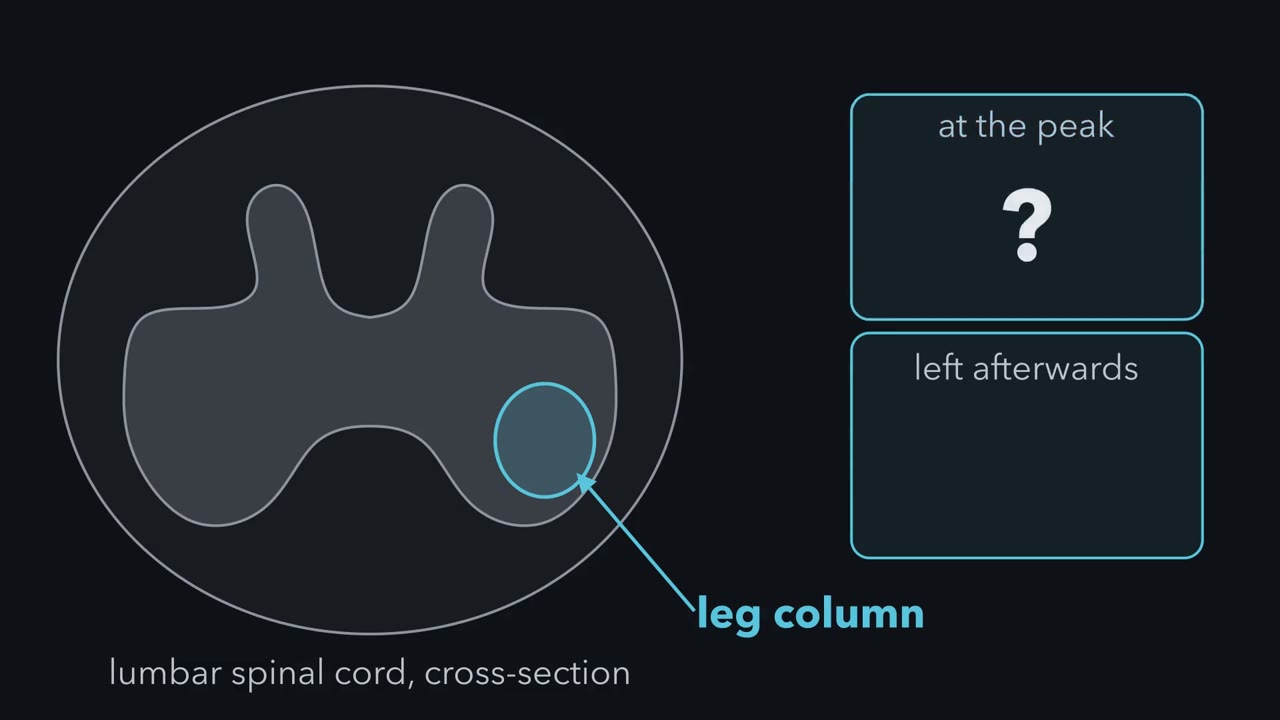 Part 1 of 3 Length 1:39 Too Many, Then Fewer Developmental Neuroscience · Graduate school and beyond Too Many Neurons: Naturally Occurring Cell Death
Take-home
Many developing neurons are made in excess, and the target helps set how many survive.
-
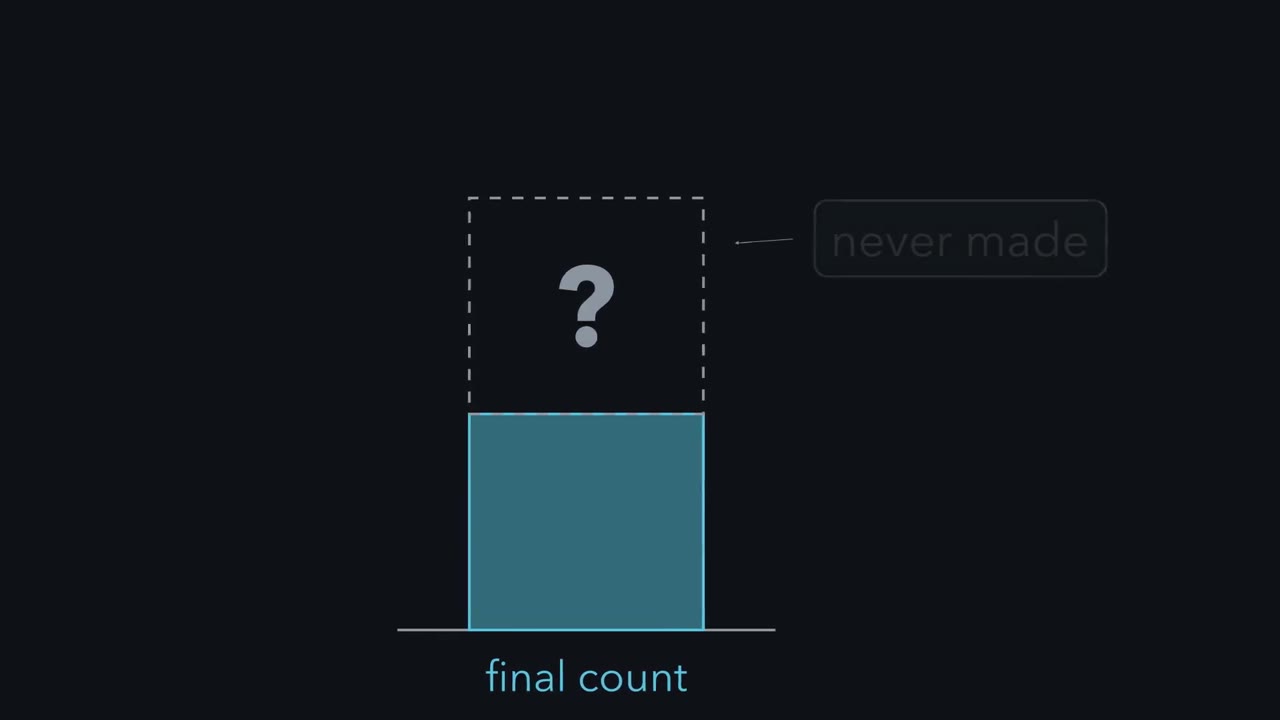 Part 2 of 3 Length 3:24 Count Across Time Developmental Neuroscience · Graduate school and beyond Too Many Neurons: Naturally Occurring Cell Death
Take-home
A low count at the end cannot tell neurons that were never made from neurons that were made and then lost, so you must count across time.
-
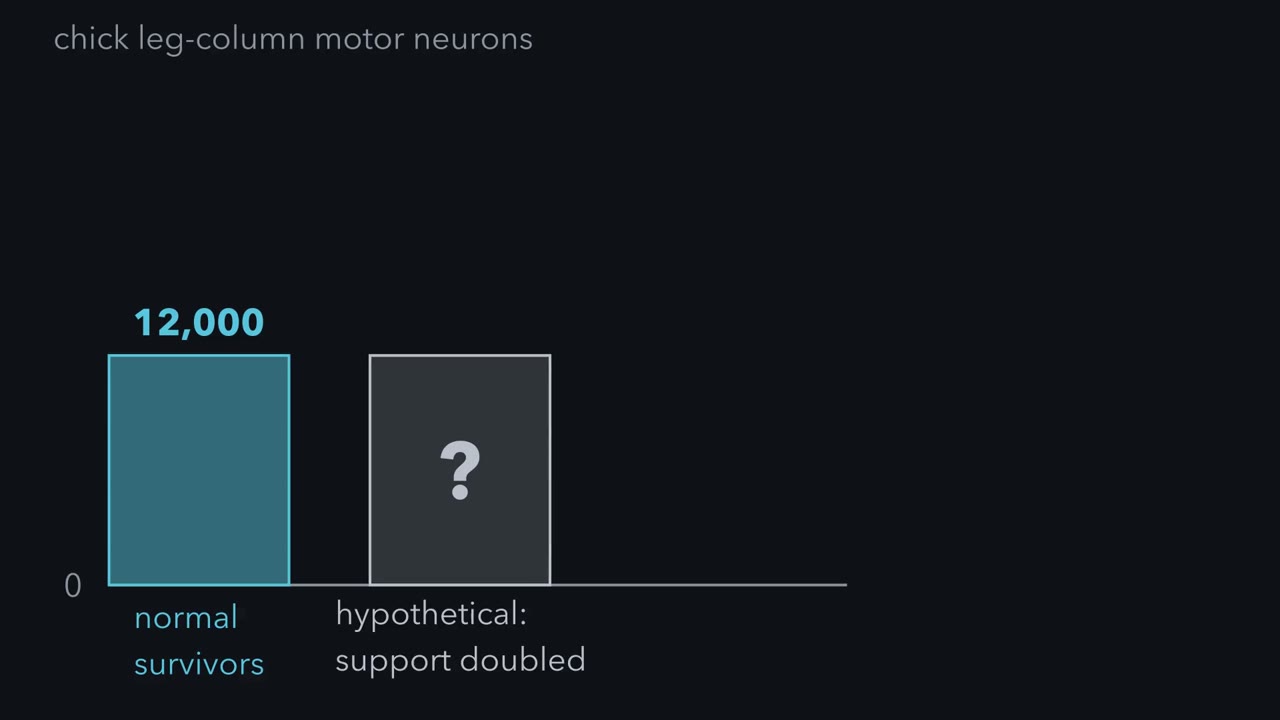 Part 3 of 3 Length 3:05 A Dial With a Ceiling Developmental Neuroscience · Graduate school and beyond Too Many Neurons: Naturally Occurring Cell Death
Take-home
The target turns a dial: more target, fewer deaths, up to a ceiling set by the neurons present.
-
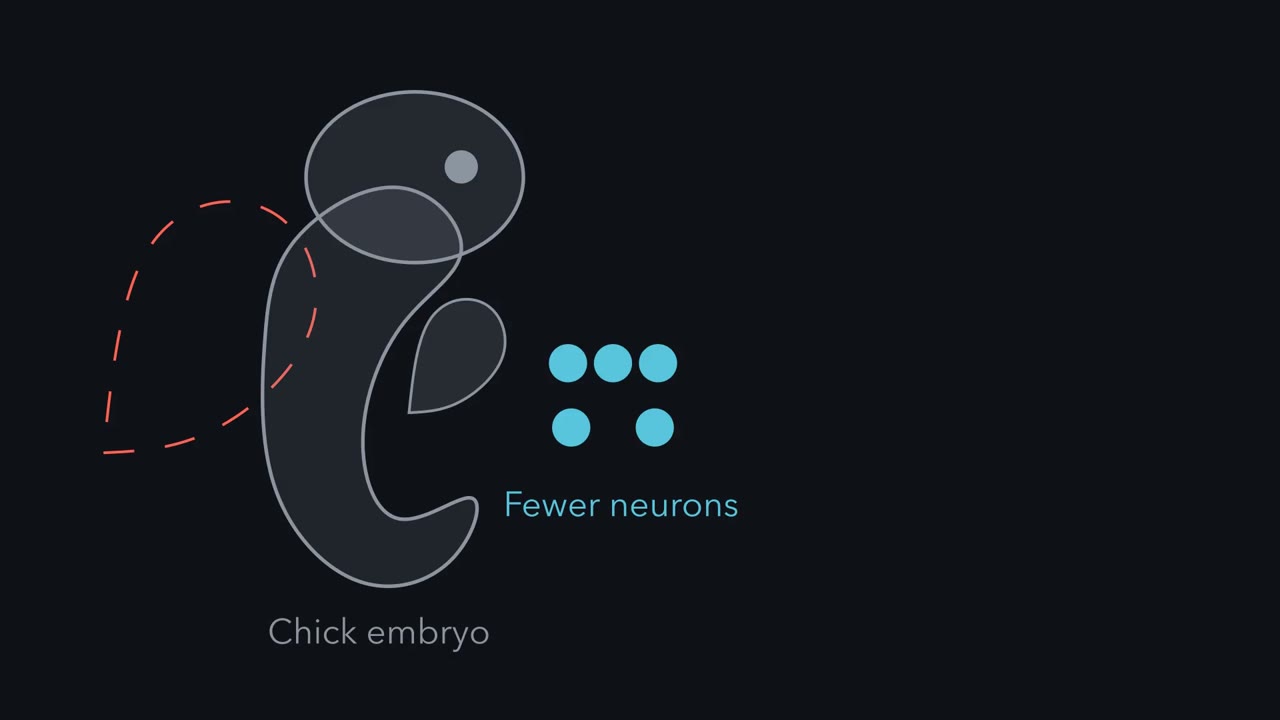 Part 1 of 6 Length 2:56 Too Small, or Lost? Developmental Neuroscience · Graduate school and beyond The Neurotrophic Hypothesis Tested
Take-home
Many neurons are made and then lost, so a small ganglion is a question about history: count across time before you decide.
-
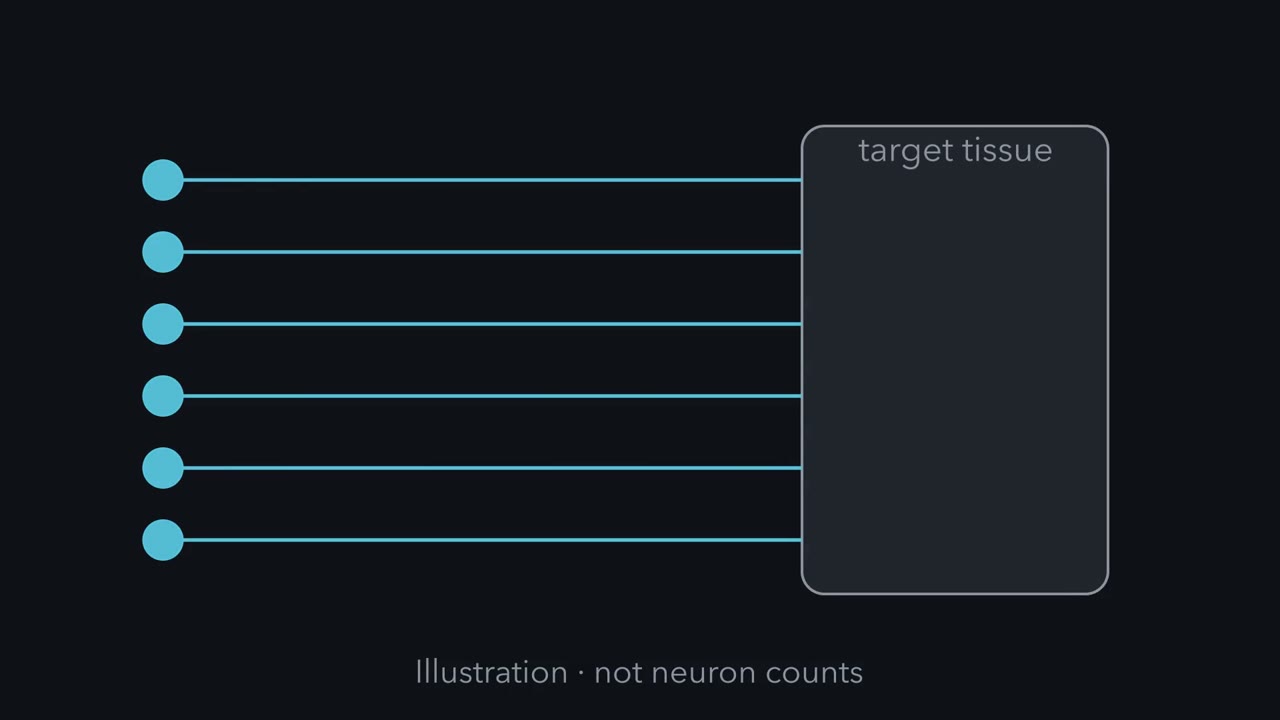 Part 2 of 6 Length 2:34 A Limiting Supply Developmental Neuroscience · Graduate school and beyond The Neurotrophic Hypothesis Tested
Take-home
Neurons compete for a limiting amount of neurotrophic factor from their targets, and neurons that get too little die by apoptosis.
-
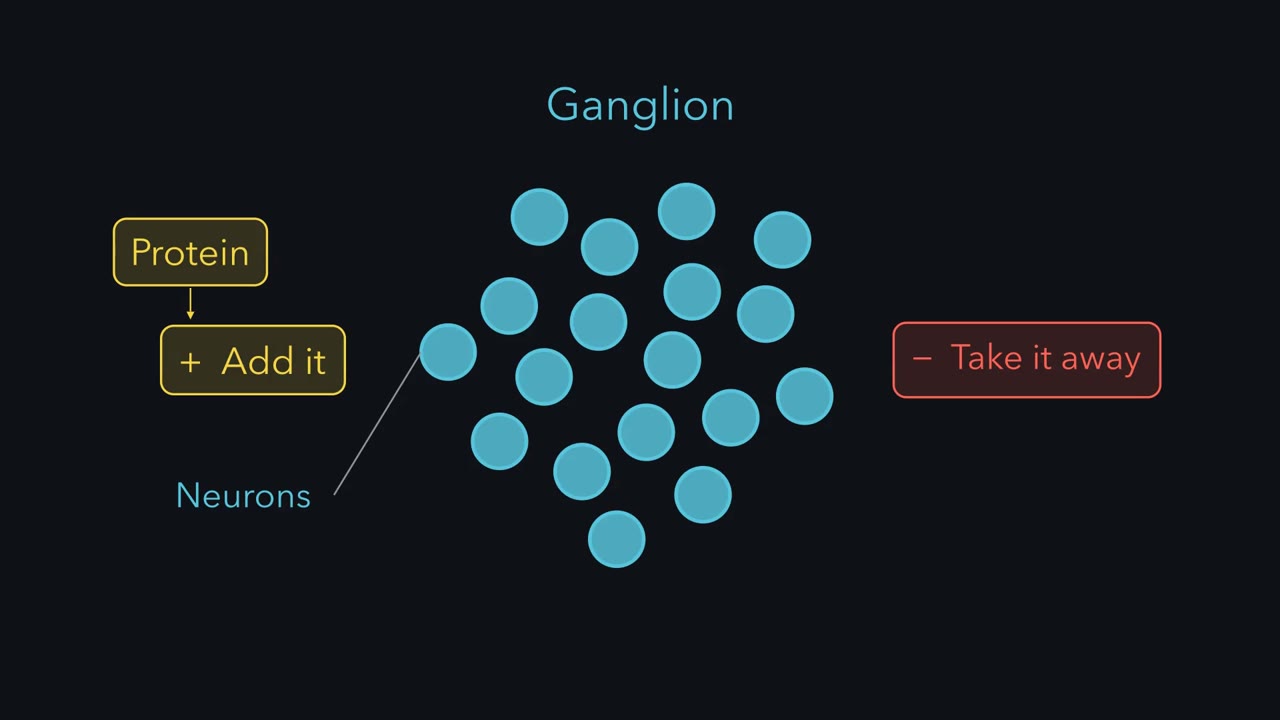 Part 3 of 6 Length 2:38 Add It, Take It Away Developmental Neuroscience · Graduate school and beyond The Neurotrophic Hypothesis Tested
Take-home
Adding NGF is enough to enlarge ganglia, but a larger ganglion does not say whether neurons were saved or born.
-
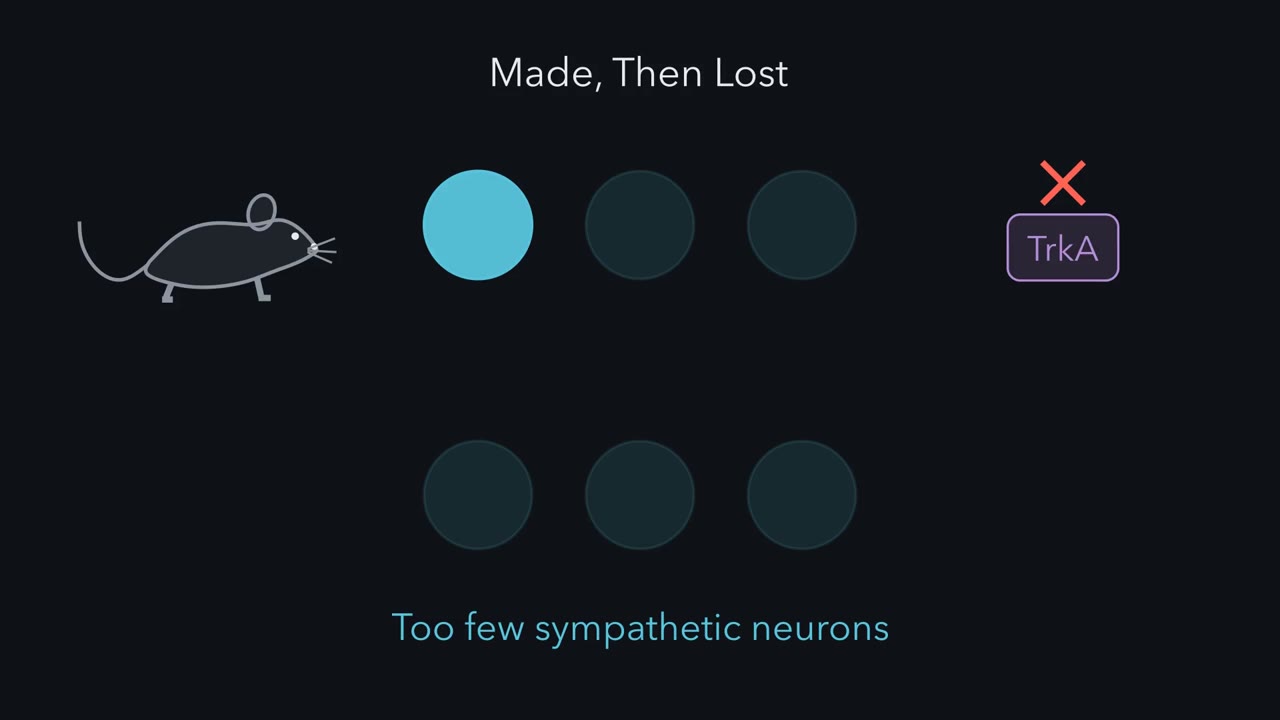 Part 4 of 6 Length 2:50 Made, Then Lost Developmental Neuroscience · Graduate school and beyond The Neurotrophic Hypothesis Tested
Take-home
Mice lacking NGF or TrkA lose sympathetic neurons and many sensory neurons, which settles the antibody doubt.
-
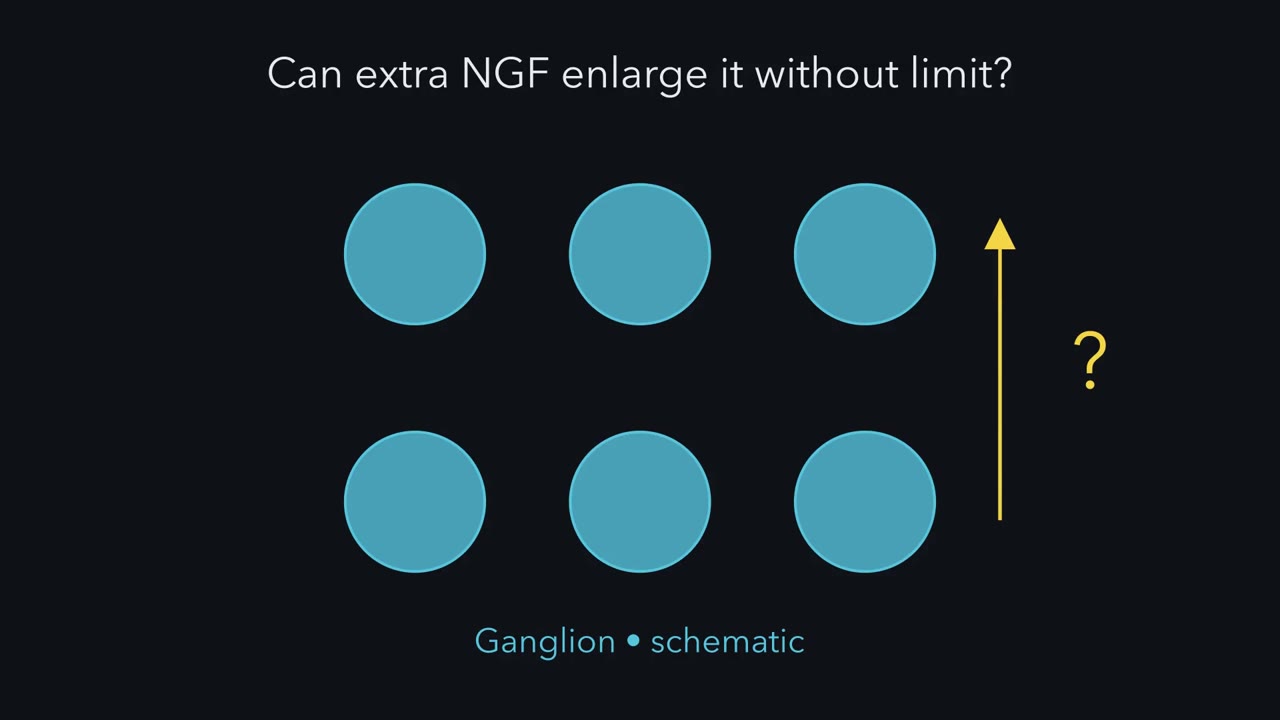 Part 5 of 6 Length 4:01 The Ceiling, and the Sharing Puzzle Developmental Neuroscience · Graduate school and beyond The Neurotrophic Hypothesis Tested
Take-home
Extra NGF given during the death period saves neurons that would have died, but never more than were made.
-
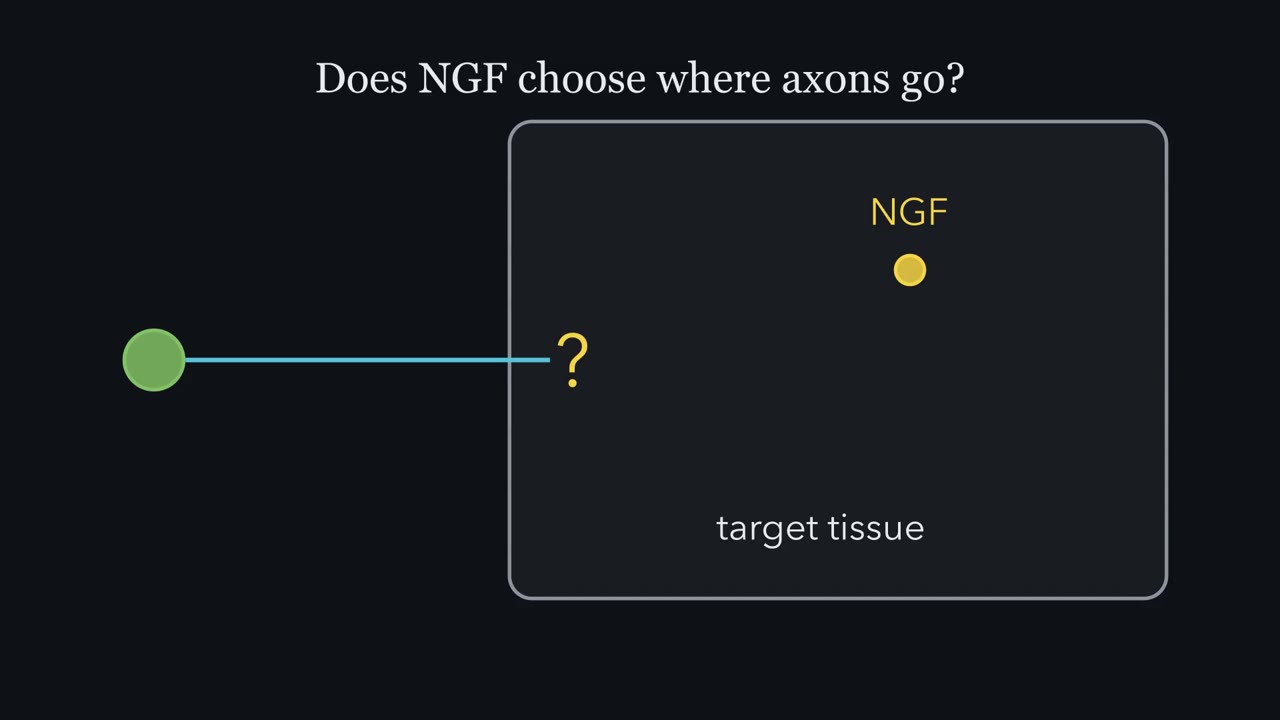 Part 6 of 6 Length 3:07 Permissive or Instructive Developmental Neuroscience · Graduate school and beyond The Neurotrophic Hypothesis Tested
Take-home
For survival, NGF is permissive: it keeps alive neurons that were already specified as sympathetic or sensory.
-
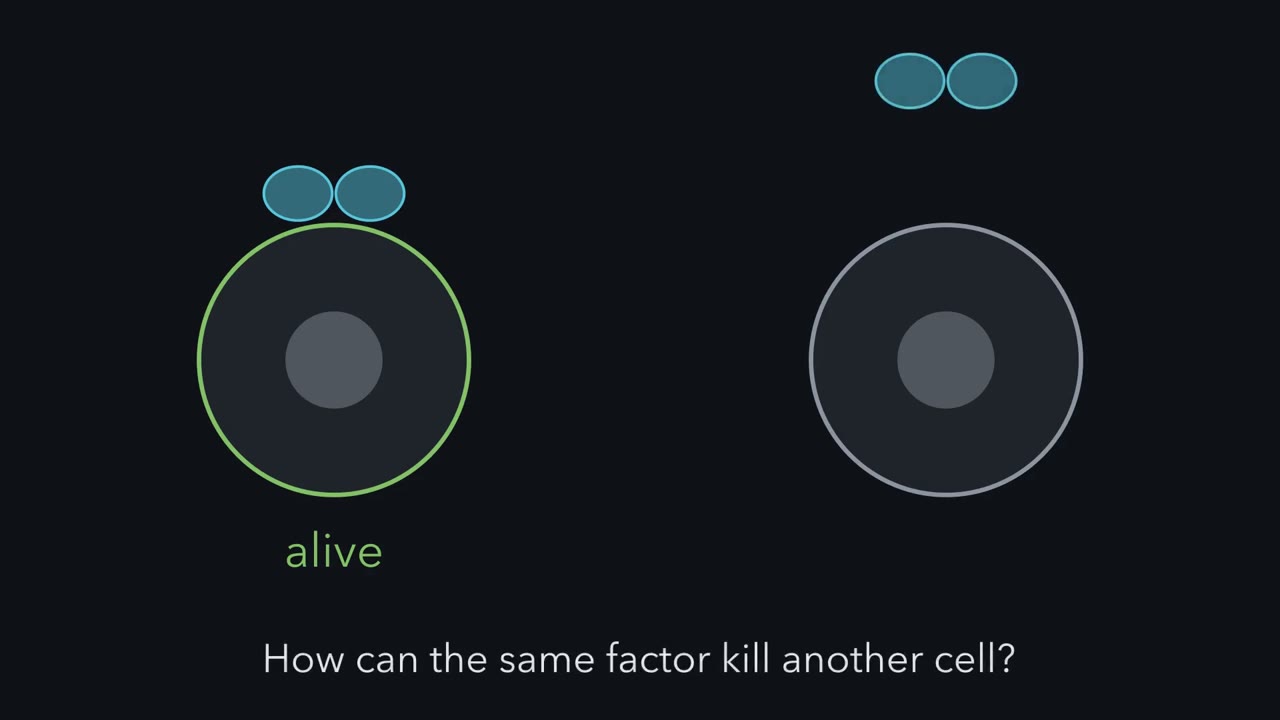 Part 1 of 6 Length 3:23 One Neuron, One Target Developmental Neuroscience · Graduate school and beyond Neurotrophins, Trk Receptors and p75
Take-home
The target supplies the factor, and the neuron's receptors decide what it means.
-
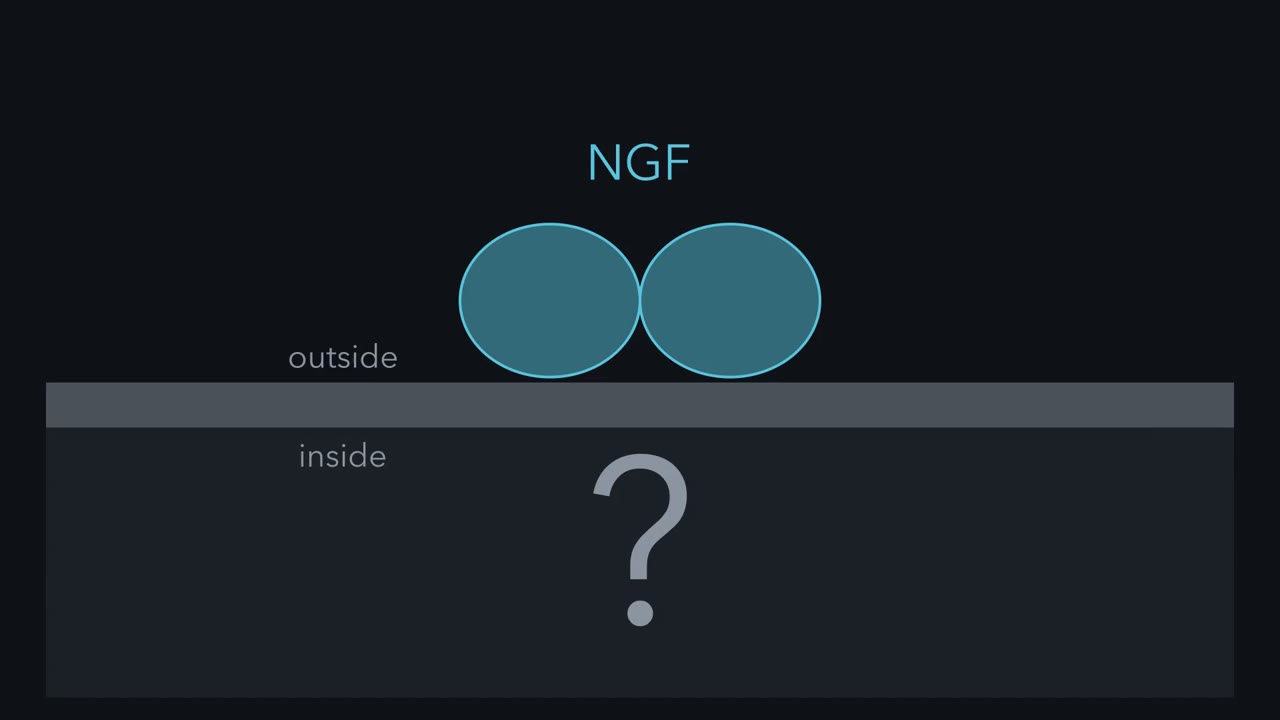 Part 2 of 6 Length 2:28 Four Factors, Three Kinases Developmental Neuroscience · Graduate school and beyond Neurotrophins, Trk Receptors and p75
Take-home
A neurotrophin dimer can hold two Trk receptors together so that their kinase domains phosphorylate each other.
-
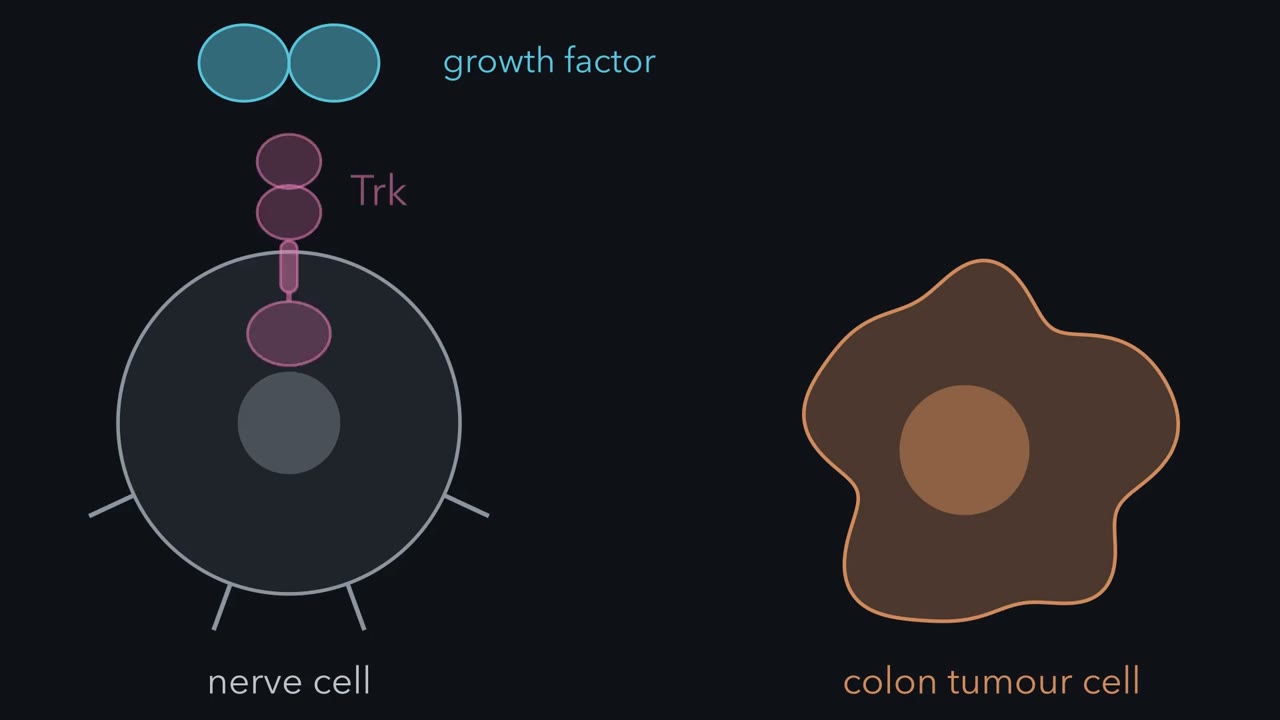 Part 3 of 6 Length 2:59 The Kinase from a Tumour Developmental Neuroscience · Graduate school and beyond Neurotrophins, Trk Receptors and p75
Take-home
The first neurotrophin receptor cloned, p75, bound NGF with low affinity and had no kinase.
-
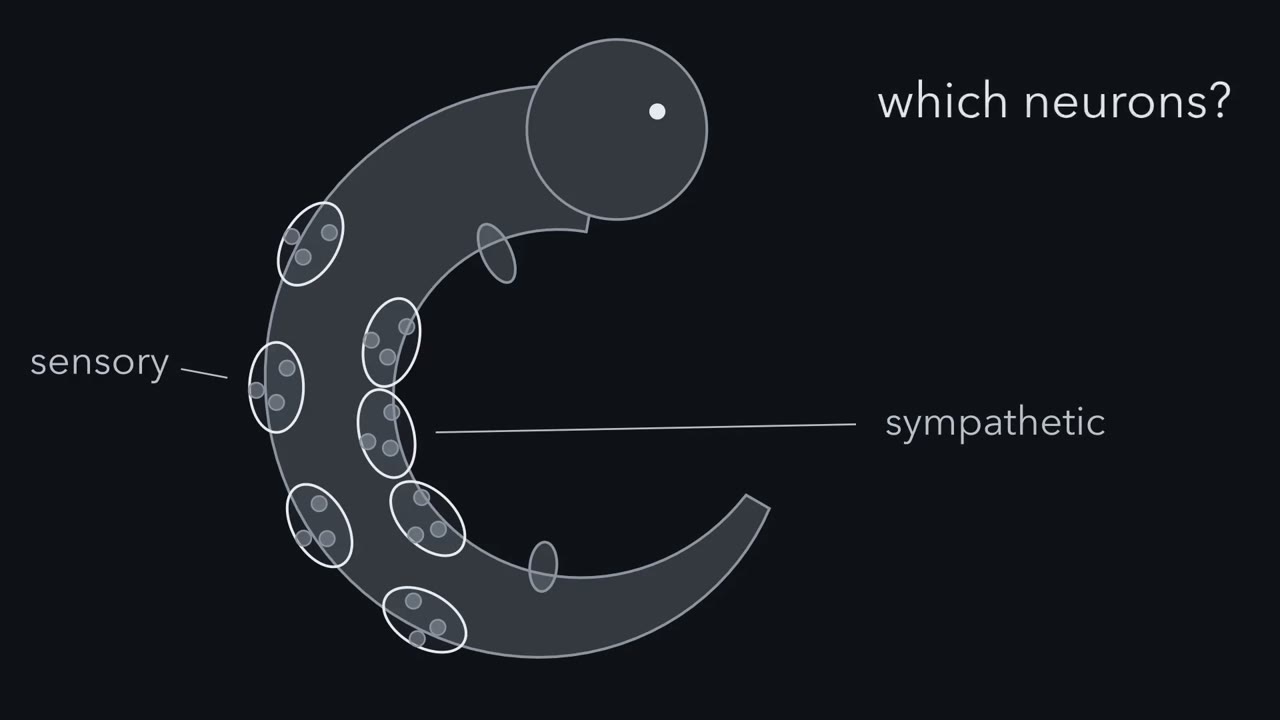 Part 4 of 6 Length 3:03 Delete One, Count the Survivors Developmental Neuroscience · Graduate school and beyond Neurotrophins, Trk Receptors and p75
Take-home
In mice lacking TrkA, sympathetic ganglion neurons were made and then died, leaving about half as many neurons as controls at birth.
-
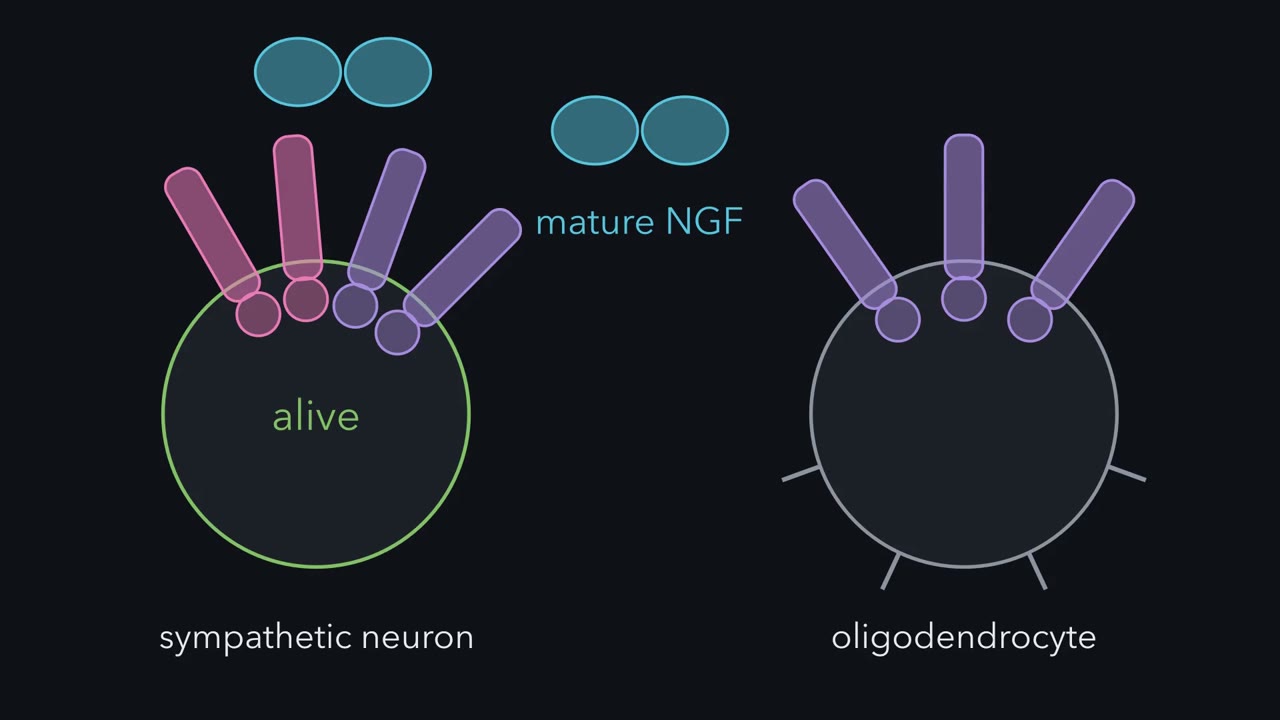
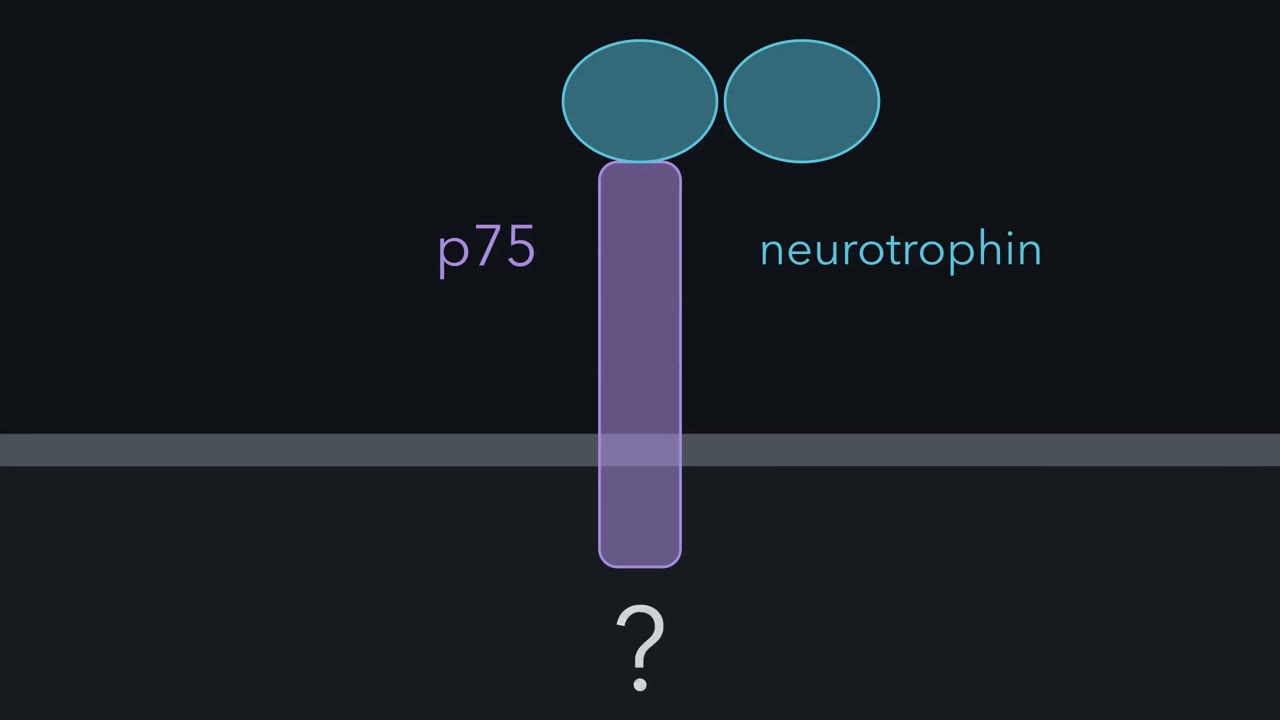 Part 5 of 6 Length 3:32 The Receptor That Can Kill Developmental Neuroscience · Graduate school and beyond Neurotrophins, Trk Receptors and p75
Take-home
p75 can read a neurotrophin as die, as when NGF killed cultured oligodendrocytes, which lack TrkA.
-
 Part 6 of 6 Length 3:13 Reading One Factor Two Ways Developmental Neuroscience · Graduate school and beyond Neurotrophins, Trk Receptors and p75
Take-home
At low NGF, a much larger fraction of the high-affinity Trk-linked sites fills than of the p75 sites, but at about 2 nM many p75 sites fill too.
-
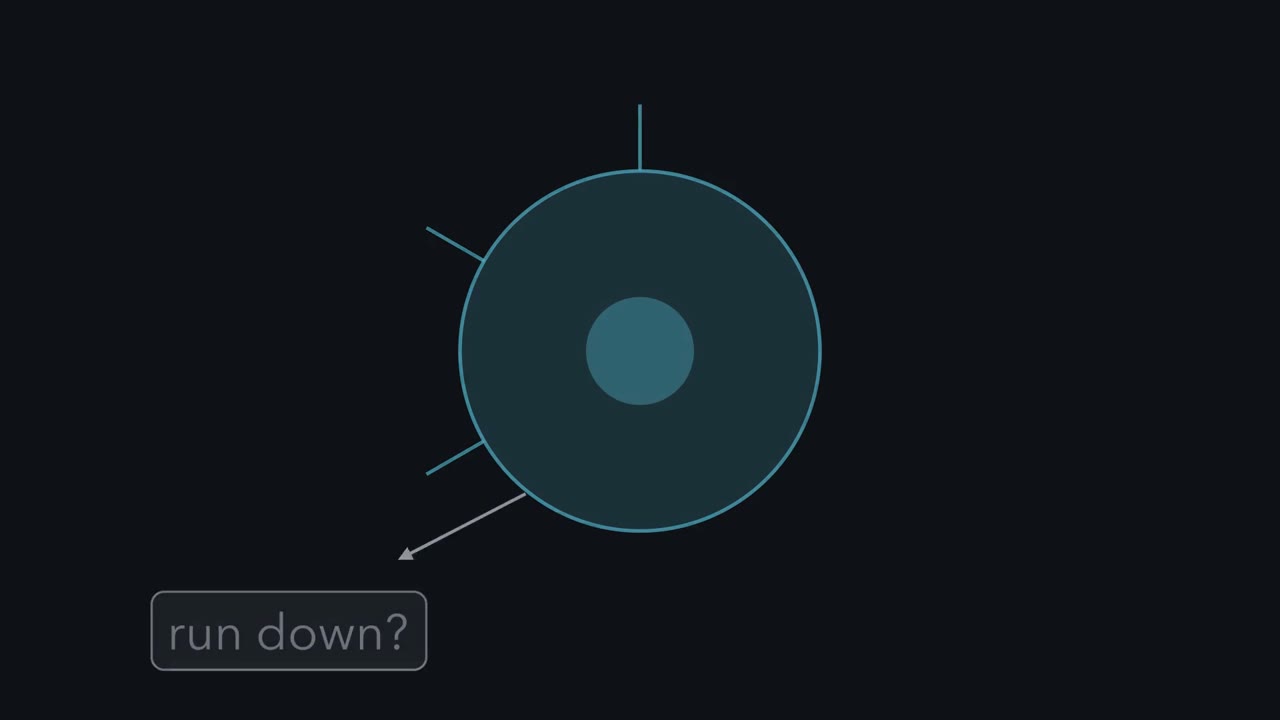 Part 1 of 6 Length 2:34 A Neuron Must Work to Die Developmental Neuroscience · Graduate school and beyond The Death Machinery in Neurons
Take-home
A young sympathetic neuron deprived of NGF does not just run down, because it runs a program that needs new RNA and protein.
-
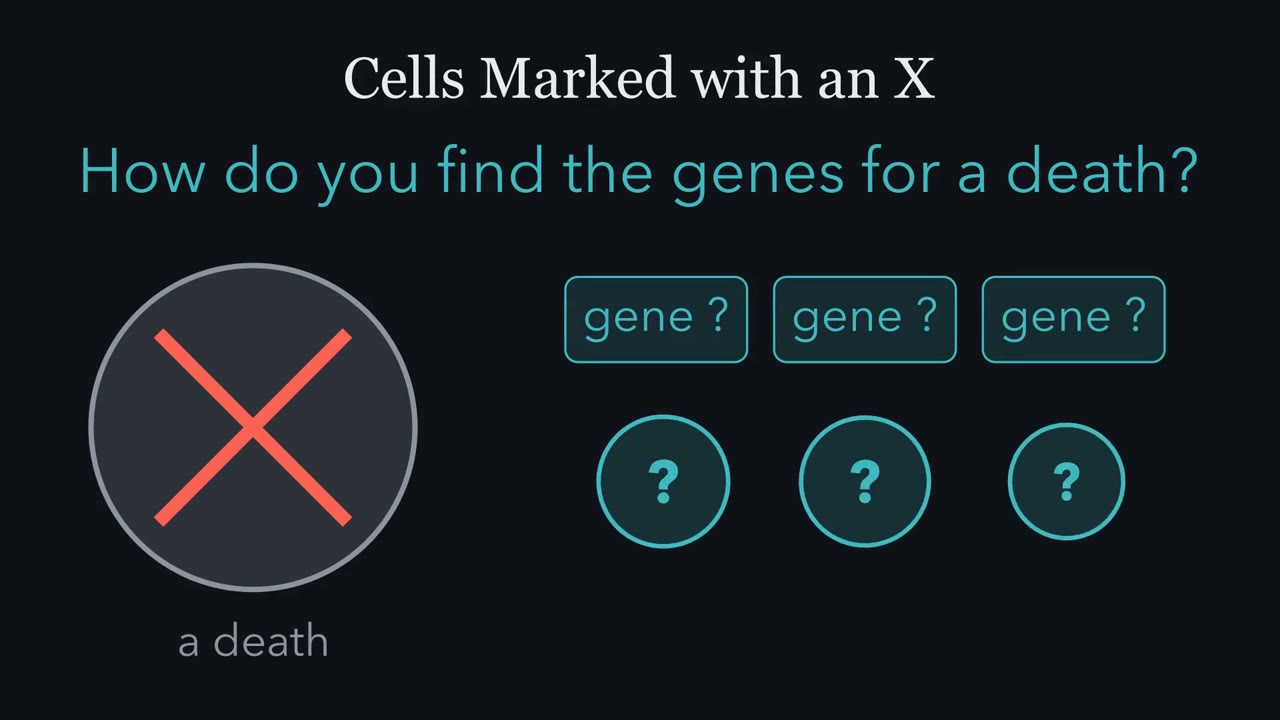 Part 2 of 6 Length 2:54 Cells Marked with an X Developmental Neuroscience · Graduate school and beyond The Death Machinery in Neurons
Take-home
In the worm, the same named cells die in every animal, so a death can be screened for as a phenotype.
-
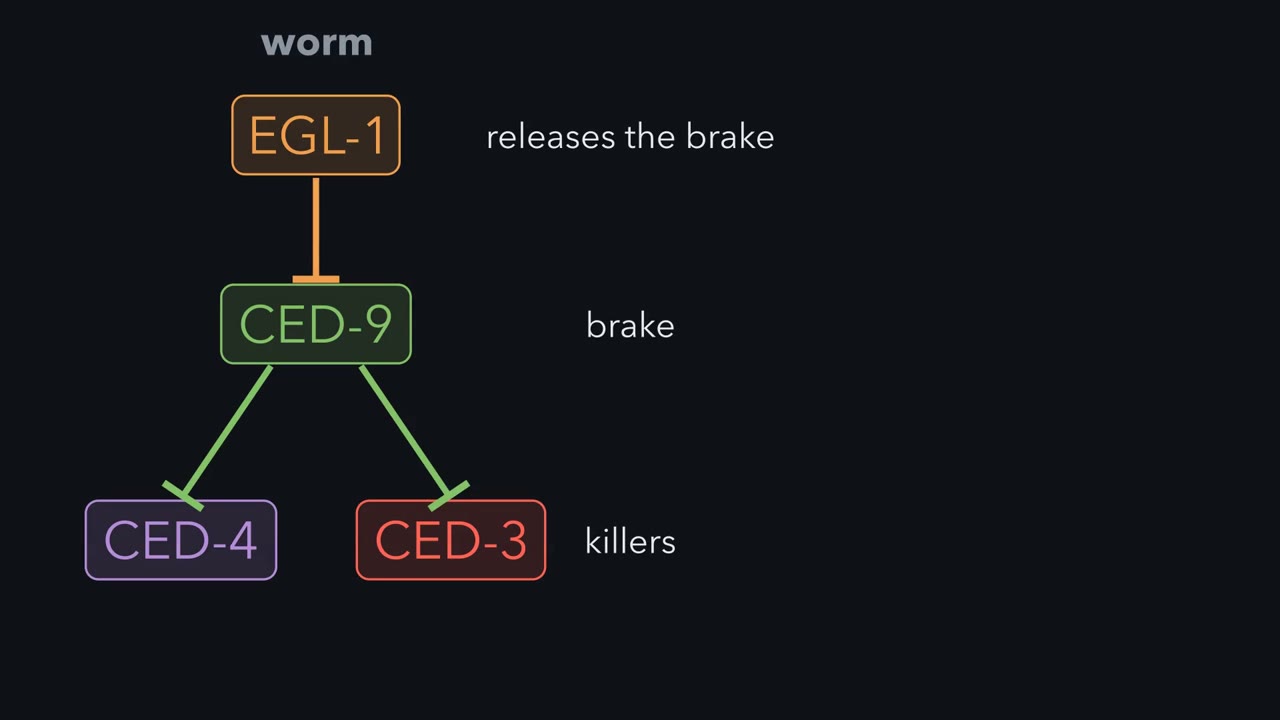 Part 3 of 6 Length 2:49 The Same Parts in Us Developmental Neuroscience · Graduate school and beyond The Death Machinery in Neurons
Take-home
Each worm death protein has a mammalian counterpart: caspases, Bcl-2 family proteins and Apaf-1.
-
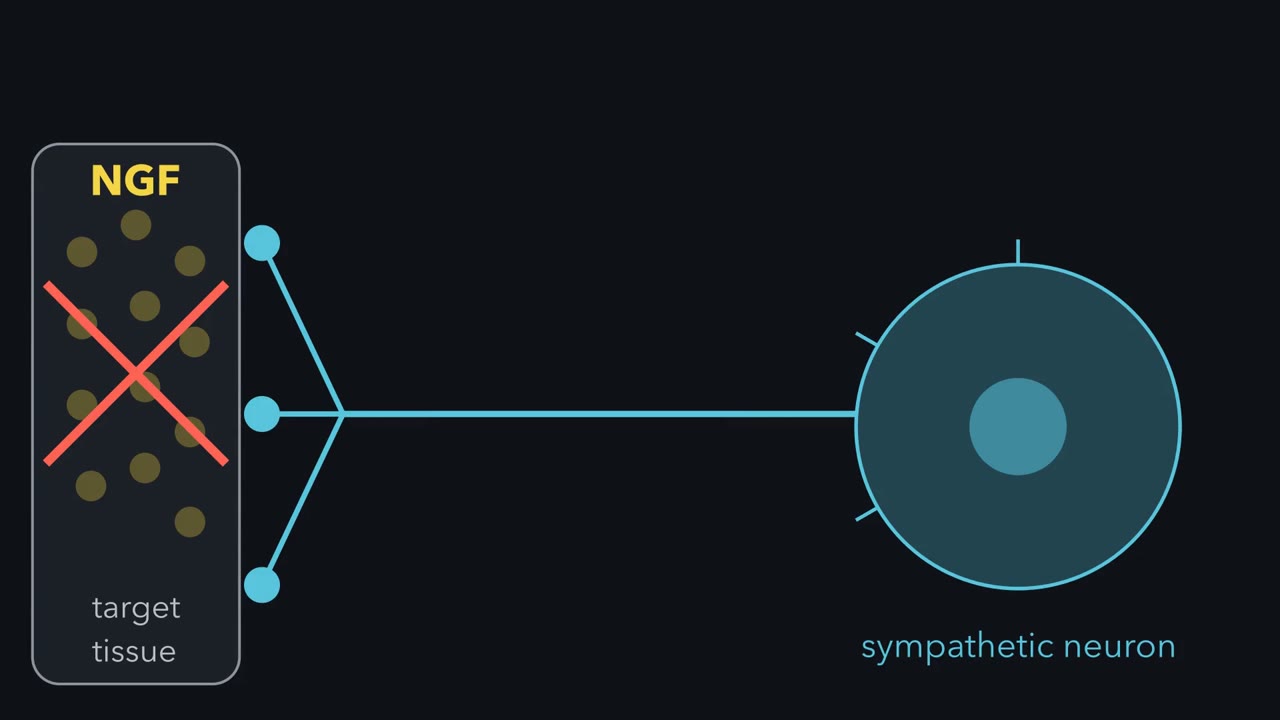 Part 4 of 6 Length 3:02 The First Brake: The Mitochondrial Gate Developmental Neuroscience · Graduate school and beyond The Death Machinery in Neurons
Take-home
Brake 1 is a gate at the mitochondrion, and NGF loss opens it through new gene expression.
-
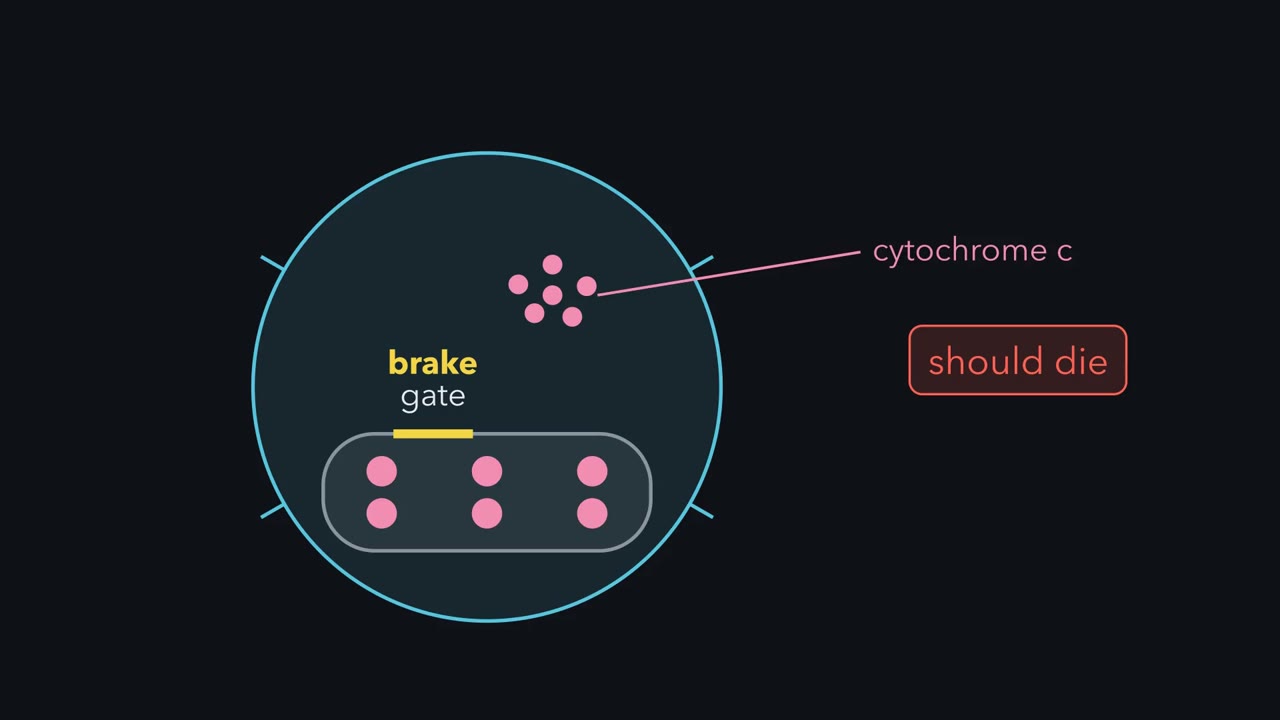 Part 5 of 6 Length 3:16 The Second Brake: Competence to Die Developmental Neuroscience · Graduate school and beyond The Death Machinery in Neurons
Take-home
Cytochrome c injected into neurons kept in NGF does not kill them, so the gate is not the only brake.
-
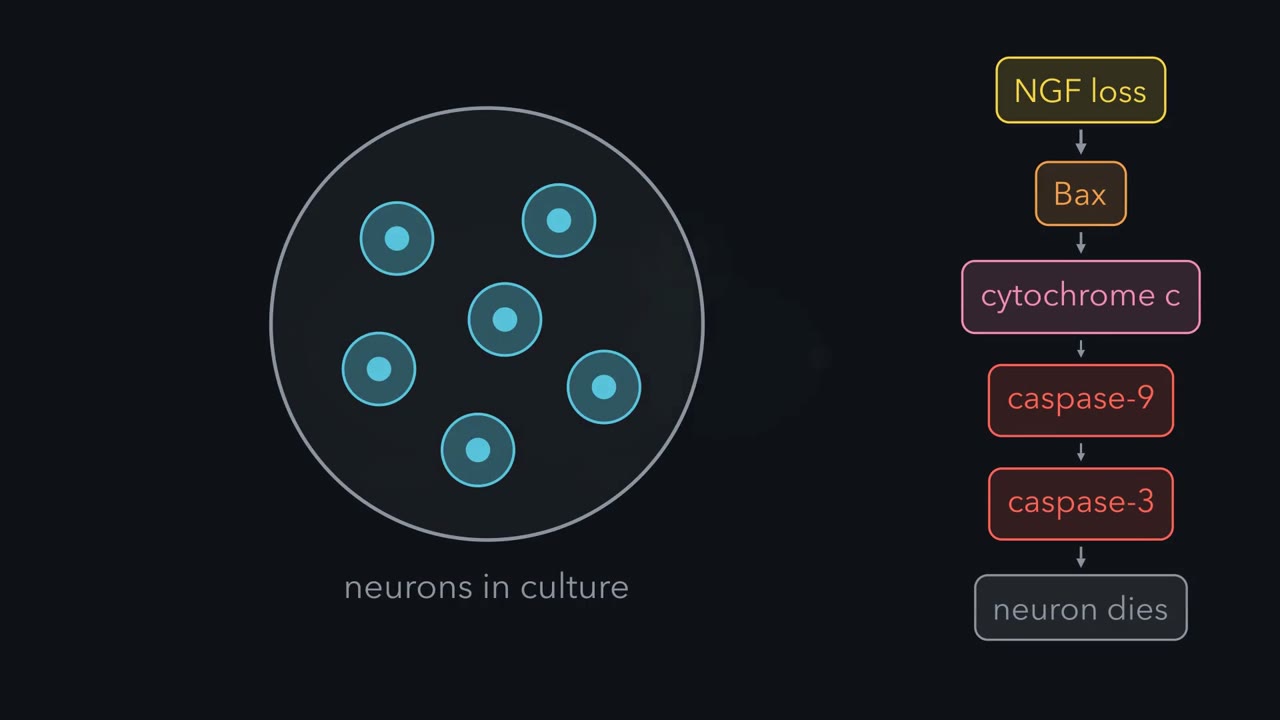 Part 6 of 6 Length 3:14 Take the Machinery Away Developmental Neuroscience · Graduate school and beyond The Death Machinery in Neurons
Take-home
Deleting caspase-3 or caspase-9 changes how these neurons die, not whether they die.
-
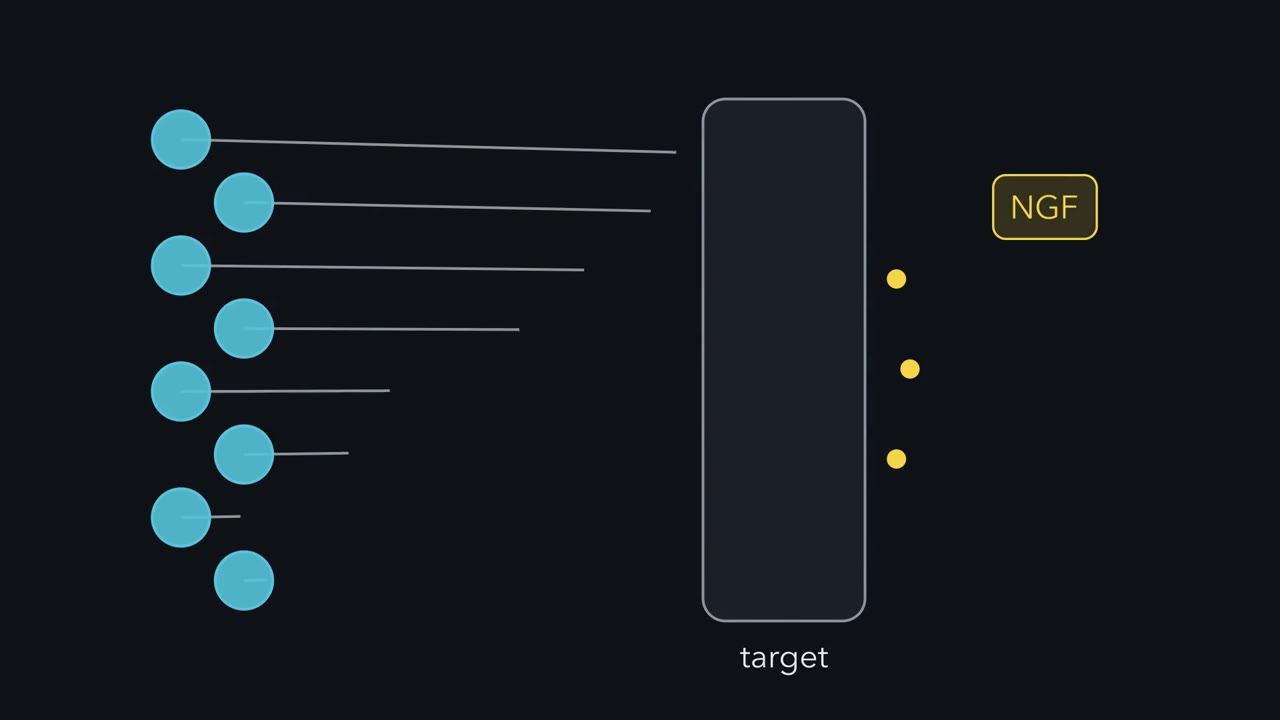 Part 1 of 6 Length 3:00 Too Little to Go Around Developmental Neuroscience · Graduate school and beyond Competition: How Neurons Win a Target
Take-home
A limited NGF supply sets roughly how many sympathetic neurons survive.
-
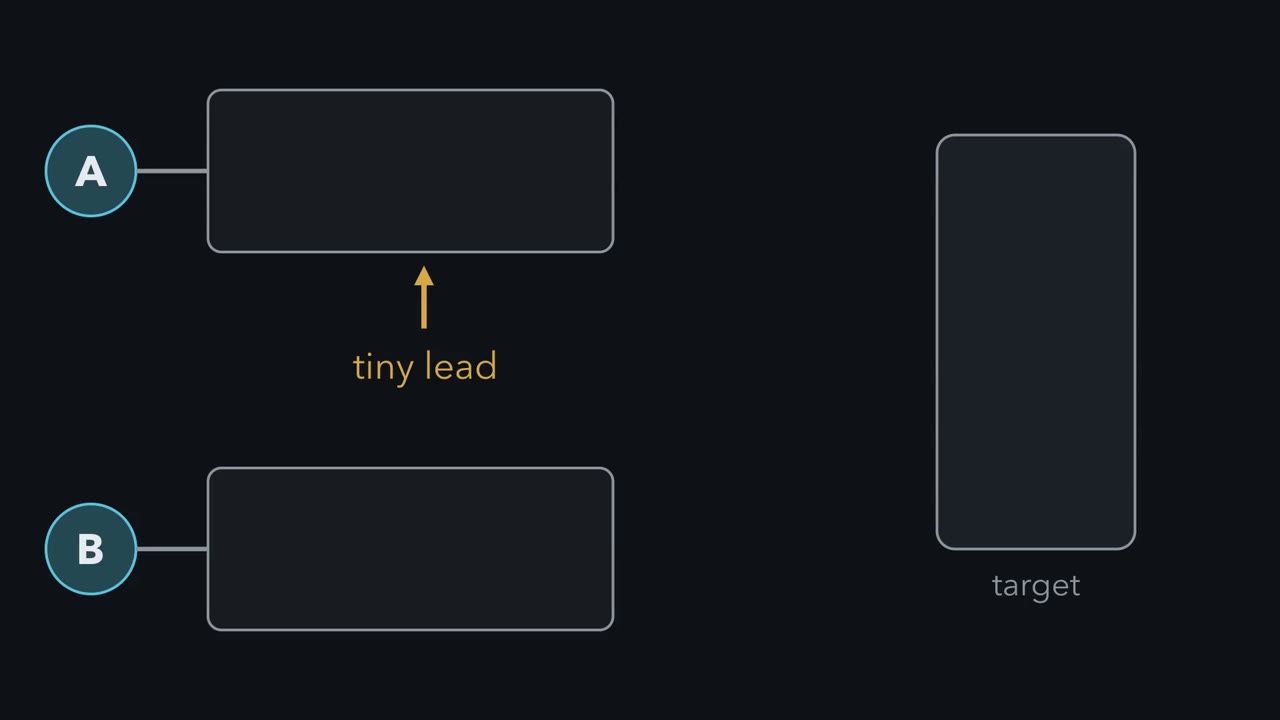 Part 2 of 6 Length 2:58 Why Sharing Fails Developmental Neuroscience · Graduate school and beyond Competition: How Neurons Win a Target
Take-home
With proportional sharing, a small lead stays frozen, so feedback on receptor level alone does not make a winner.
-
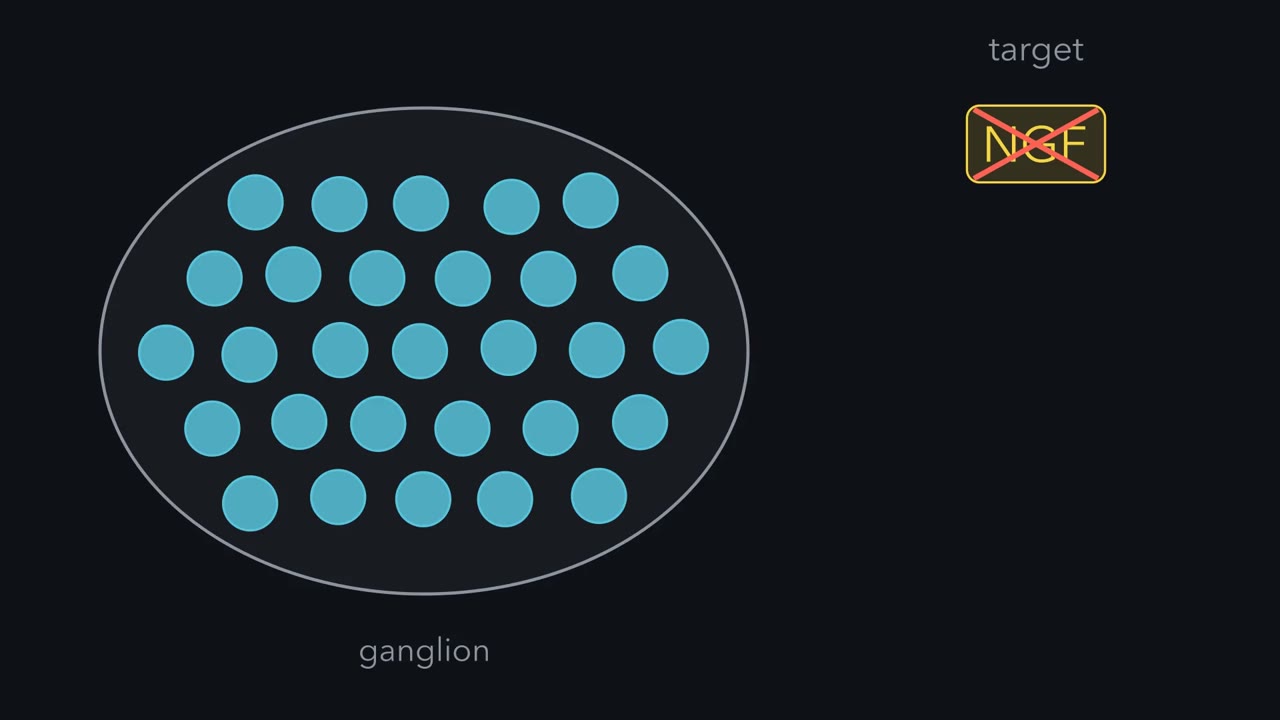 Part 3 of 6 Length 2:42 The Bax Trick Developmental Neuroscience · Graduate school and beyond Competition: How Neurons Win a Target
Take-home
Mice lacking Bax keep their sympathetic neurons with or without NGF, so ganglia can be compared.
-
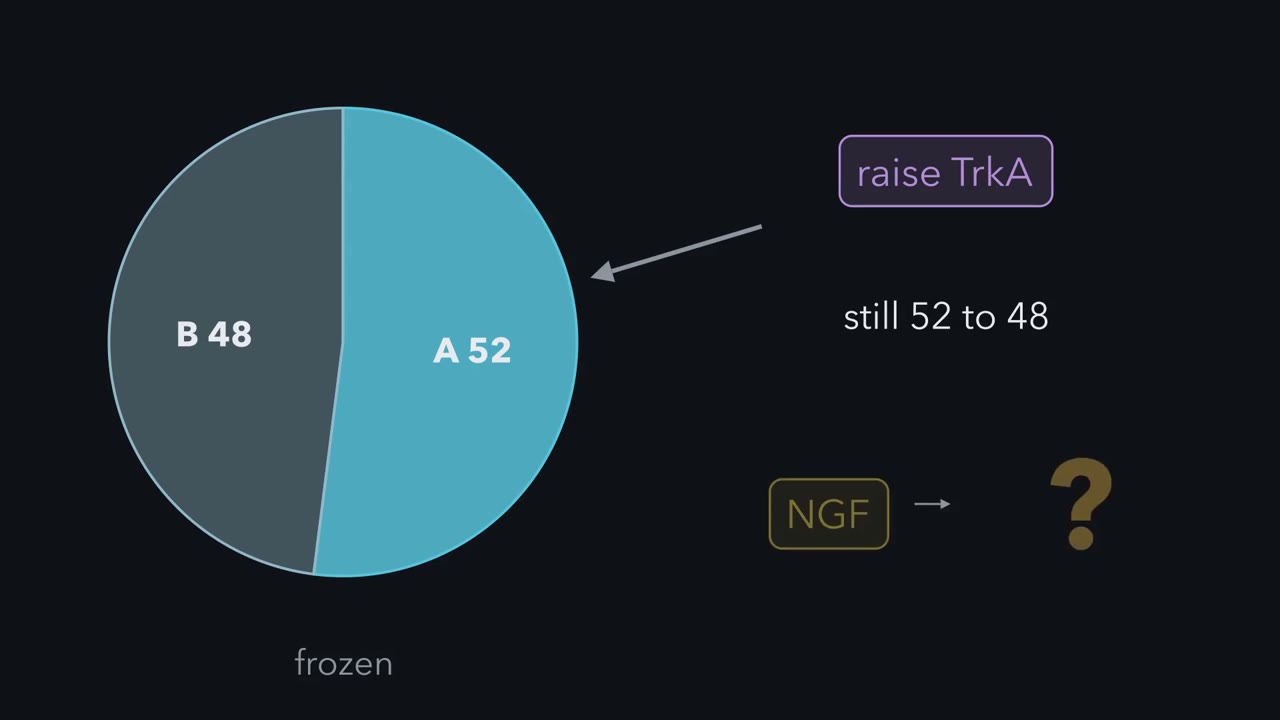 Part 4 of 6 Length 2:57 Only Both Loops Split Them Developmental Neuroscience · Graduate school and beyond Competition: How Neurons Win a Target
Take-home
NGF also controls how long its own signal lasts; Coronin-1 is one mechanism, and there may be others.
-
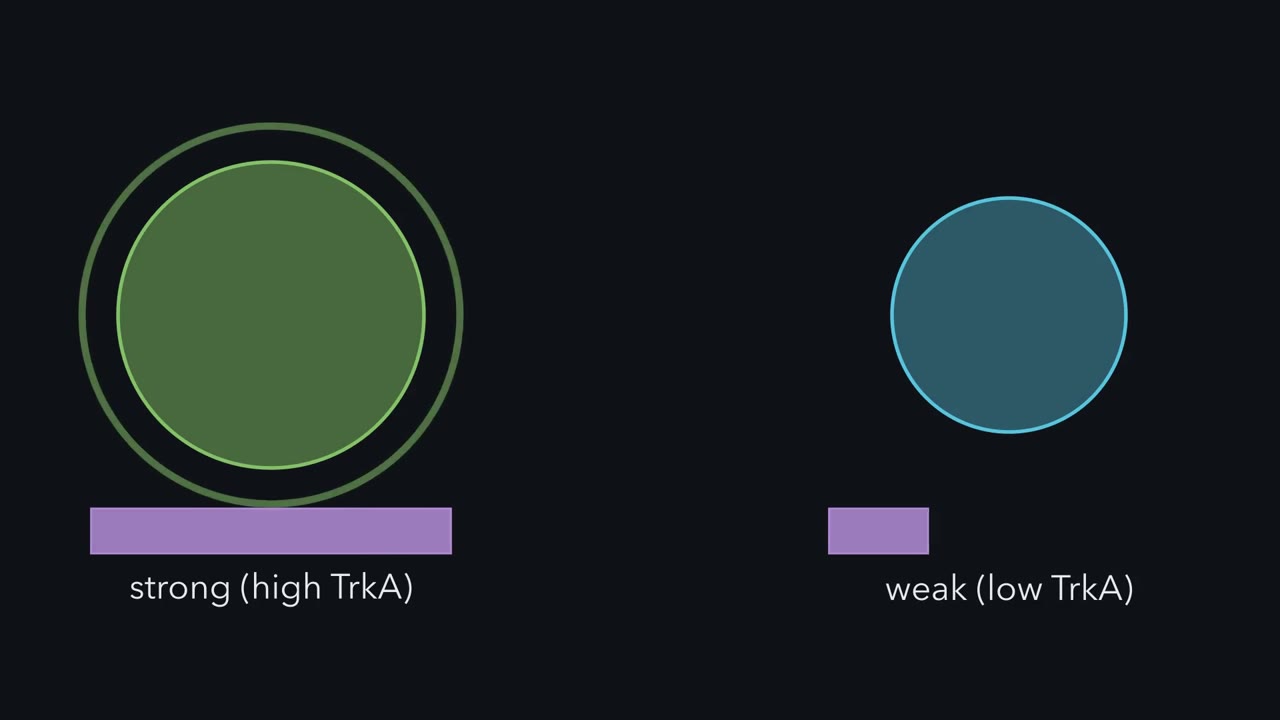 Part 5 of 6 Length 3:15 Winners Push Losers Developmental Neuroscience · Graduate school and beyond Competition: How Neurons Win a Target
Take-home
In the proposed model, well-supported neurons make BDNF and NT-4, which push weakly supported neighbours toward death through p75.
-
 Part 6 of 6 Length 3:04 Same Factor, Second Job Developmental Neuroscience · Graduate school and beyond Competition: How Neurons Win a Target
Take-home
In mice lacking both Bax and NGF, sympathetic neurons survive but innervation is missing from some targets, reduced in others and near normal in a few.
-
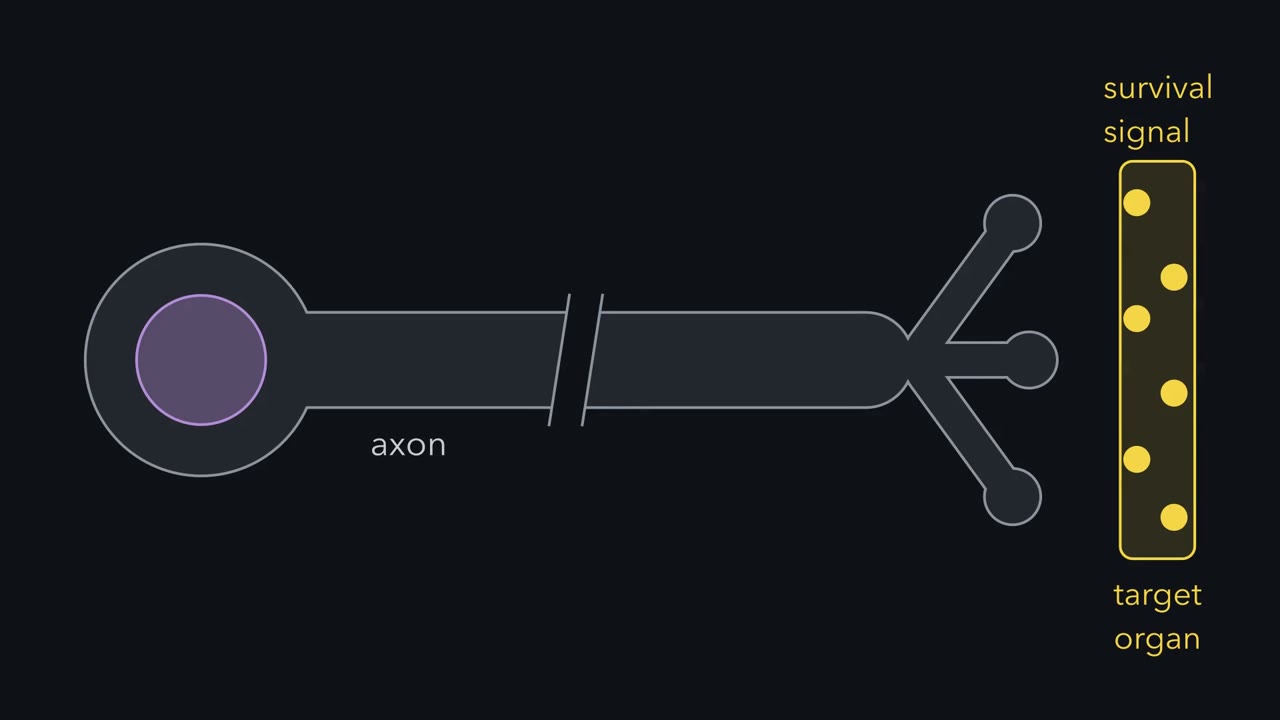 Part 1 of 3 Length 2:45 Still On When It Gets There Developmental Neuroscience · Graduate school and beyond The Signal from the Target Travels Home
Take-home
A survival signal received at the axon terminal has to be able to act on a cell body that can sit centimetres away.
-
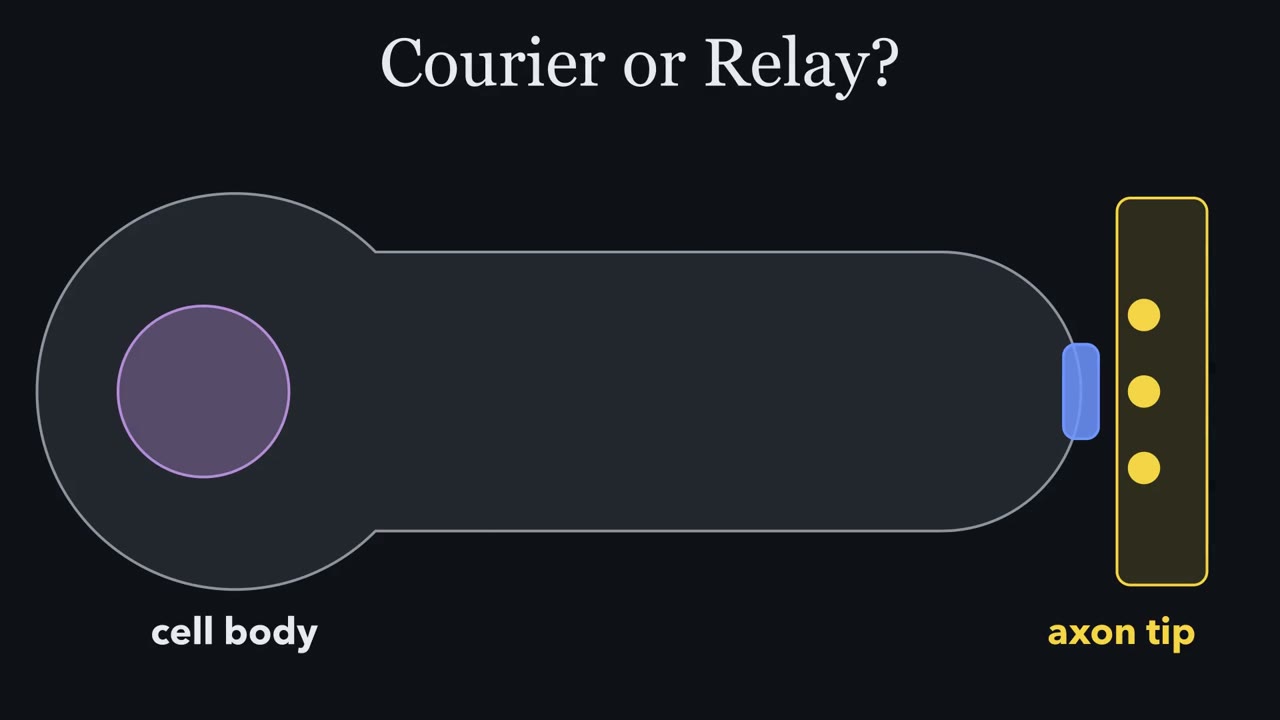 Part 2 of 3 Length 3:00 Courier or Relay? Developmental Neuroscience · Graduate school and beyond The Signal from the Target Travels Home
Take-home
In Campenot's compartmented cultures, NGF given only to distal axons can keep many cell bodies alive.
-
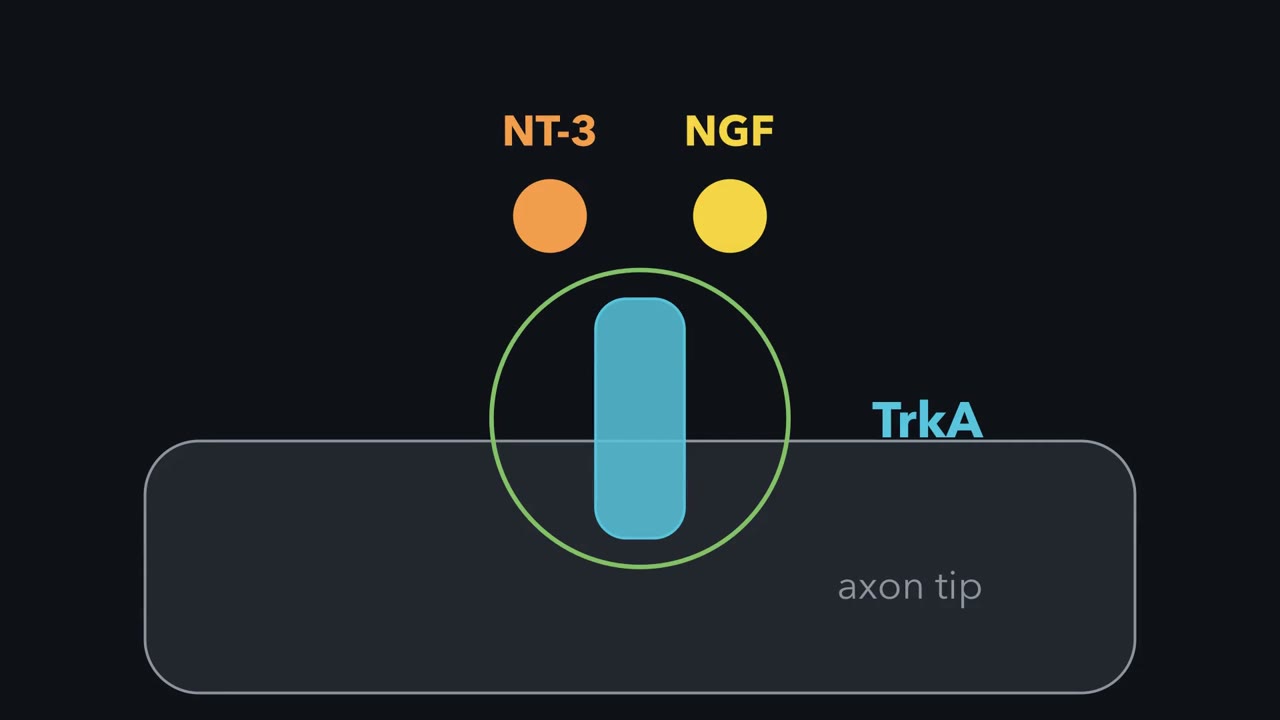 Part 3 of 3 Length 2:15 Two Factors, One Receptor Developmental Neuroscience · Graduate school and beyond The Signal from the Target Travels Home
Take-home
NGF and NT-3 both activate TrkA at the axon tip and support local axon growth, but only NGF supports survival of cell bodies in cultured sympathetic neurons.
-
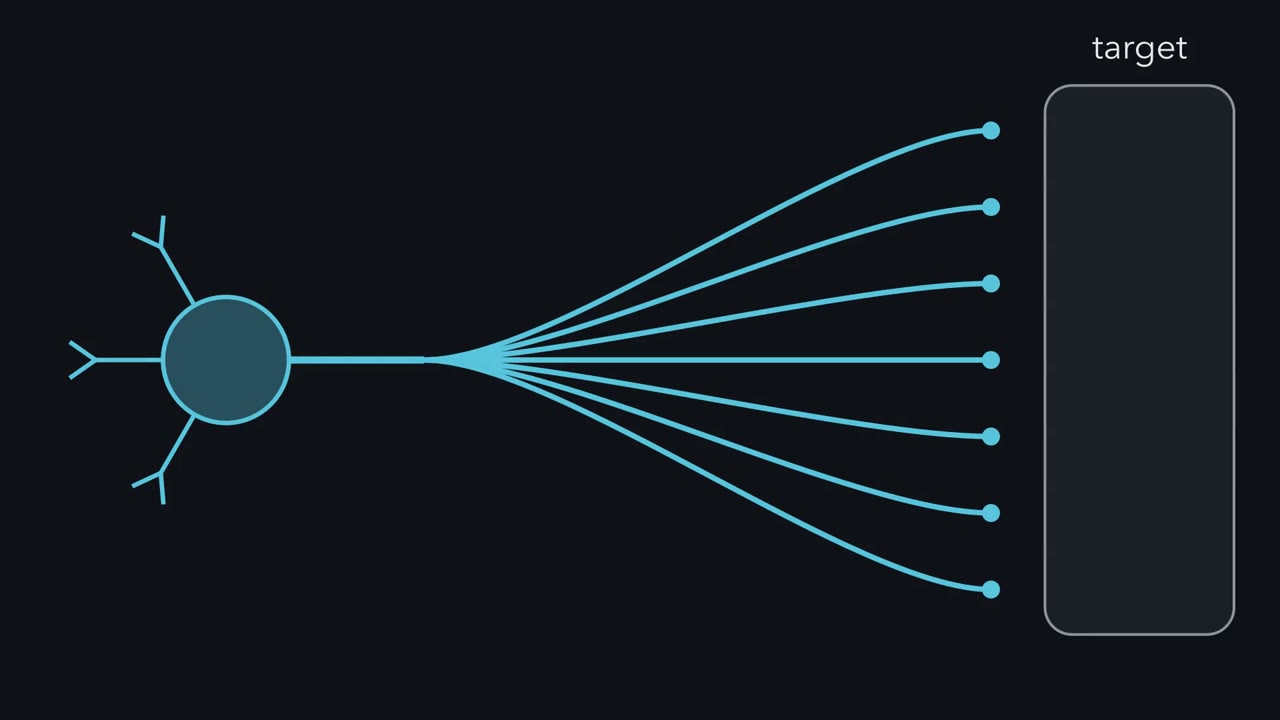 Part 1 of 3 Length 2:16 Where Support Is Lost Developmental Neuroscience · Graduate school and beyond Pruning Without Dying: Axons That Cut Themselves Back
Take-home
Where support is lost decides what is lost.
-
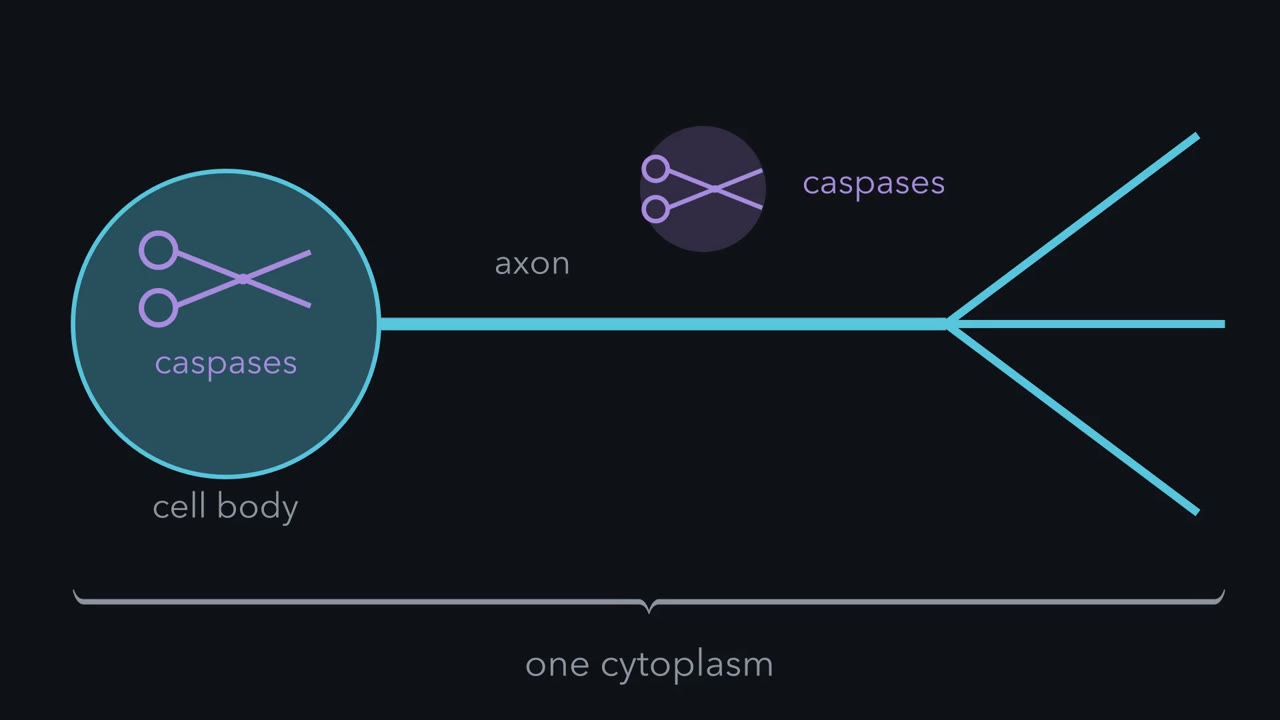 Part 2 of 3 Length 3:29 Same Knives, Two Routes Developmental Neuroscience · Graduate school and beyond Pruning Without Dying: Axons That Cut Themselves Back
Take-home
After local NGF deprivation in mouse sympathetic neurons, axons degenerate and the cell bodies live; after global deprivation the neurons die.
-
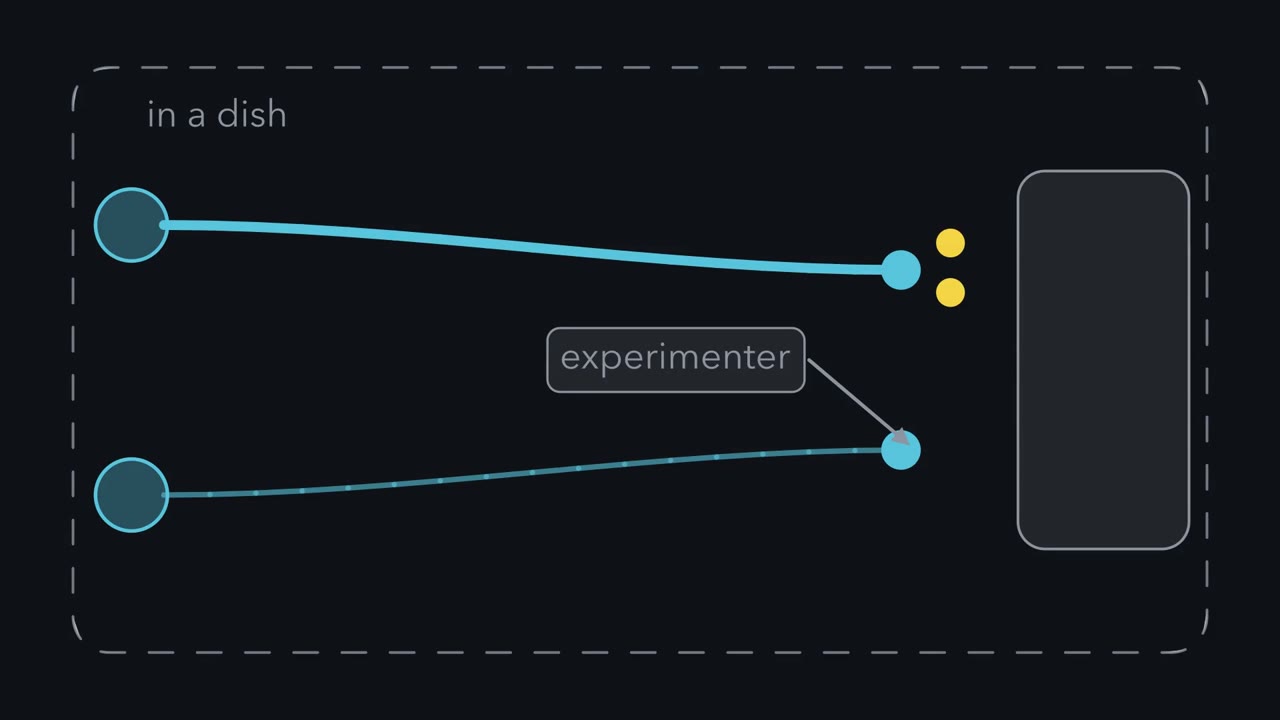 Part 3 of 3 Length 2:28 Who Loses, and When It Commits Developmental Neuroscience · Graduate school and beyond Pruning Without Dying: Axons That Cut Themselves Back
Take-home
Sympathetic axons compete for limited target-derived NGF, and a branch left with too little is weakened and removed.
-
 Part 1 of 3 Length 2:51 The Muscle Proposes, the Nerve Disposes Developmental Neuroscience · Graduate school and beyond Building the Neuromuscular Junction: Agrin, Lrp4 and MuSK
Take-home
A synapse is not built simply because an axon touches a target.
-
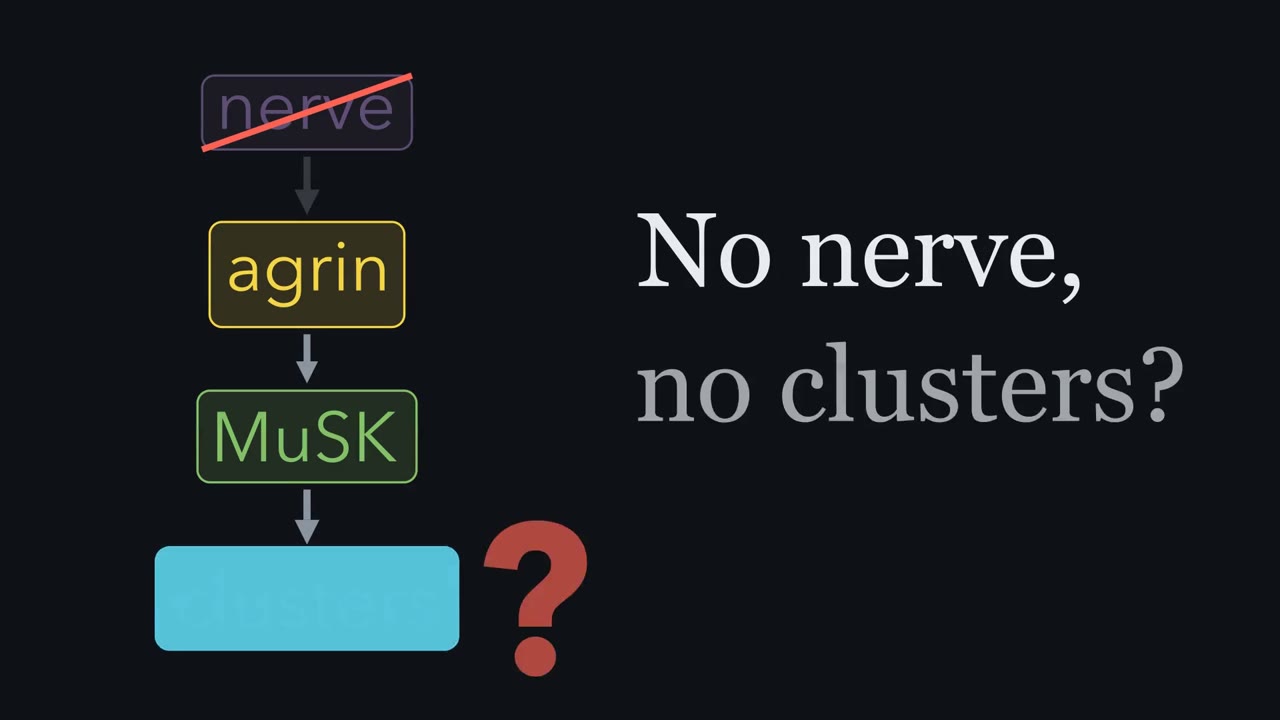 Part 2 of 3 Length 2:12 A Band Without a Nerve Developmental Neuroscience · Graduate school and beyond Building the Neuromuscular Junction: Agrin, Lrp4 and MuSK
Take-home
In mouse embryos whose diaphragm receives no motor axons, a band of receptor clusters still forms, so the muscle draws a rough map by itself.
-
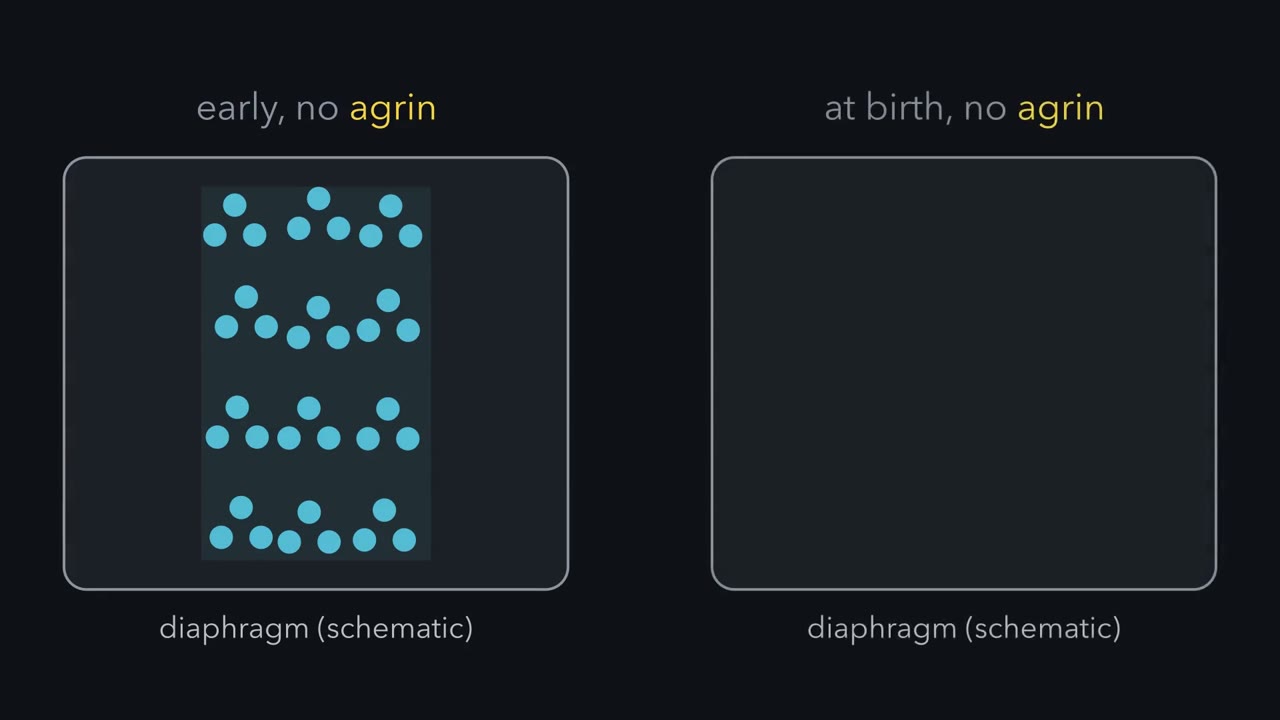 Part 3 of 3 Length 2:57 Agrin Protects, Acetylcholine Disperses Developmental Neuroscience · Graduate school and beyond Building the Neuromuscular Junction: Agrin, Lrp4 and MuSK
Take-home
Acetylcholine, released at every terminal, disperses clusters that agrin does not protect.
-
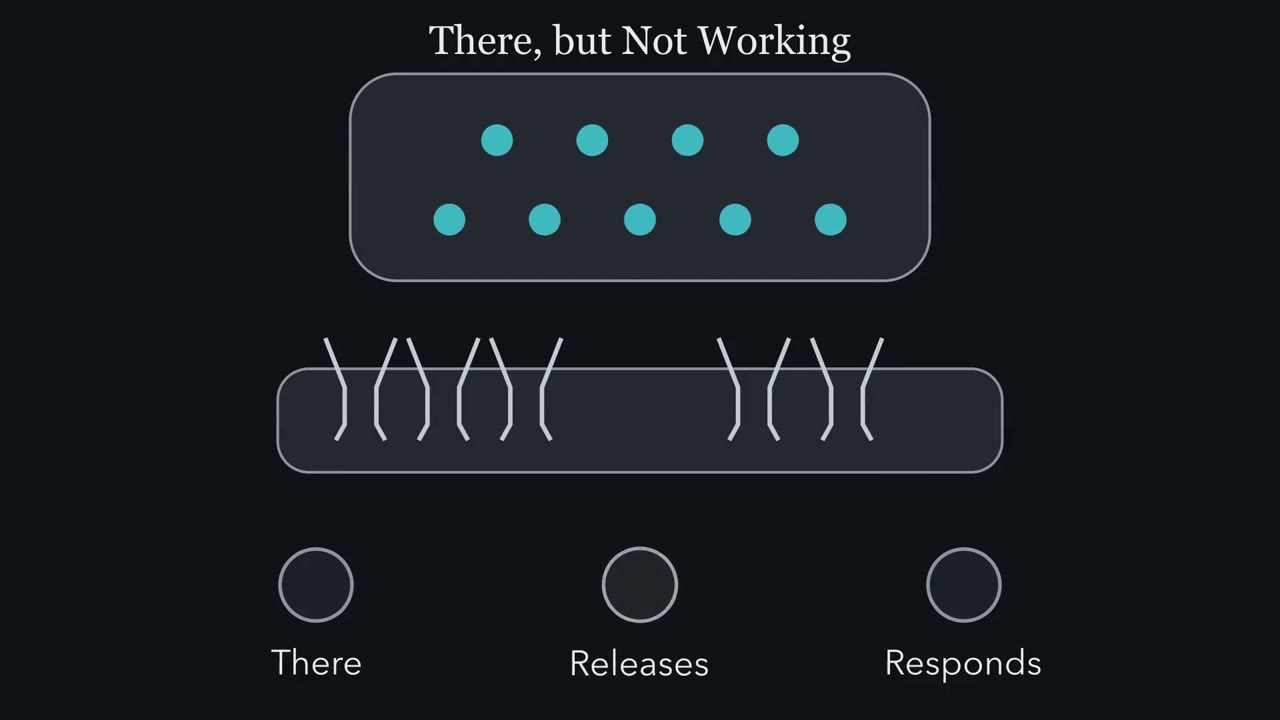 Part 1 of 3 Length 2:34 There, but Not Working Developmental Neuroscience · Graduate school and beyond Synapses in the Brain: Adhesion, Scaffolds and Astrocytes
Take-home
A synapse that is there is not yet a synapse that works.
-
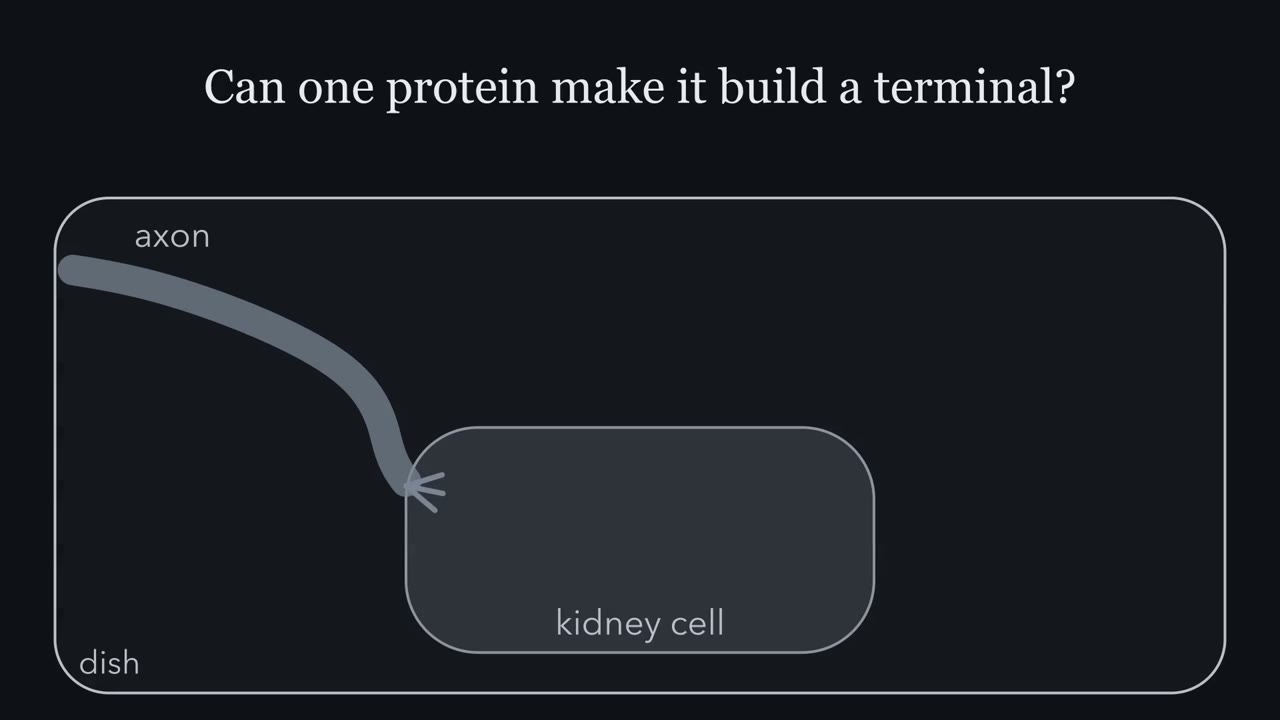 Part 2 of 3 Length 3:04 What a Dish Can Show Developmental Neuroscience · Graduate school and beyond Synapses in the Brain: Adhesion, Scaffolds and Astrocytes
Take-home
In a dish, neuroligin on a kidney cell is sufficient, under those conditions, to start a presynaptic terminal on it.
-
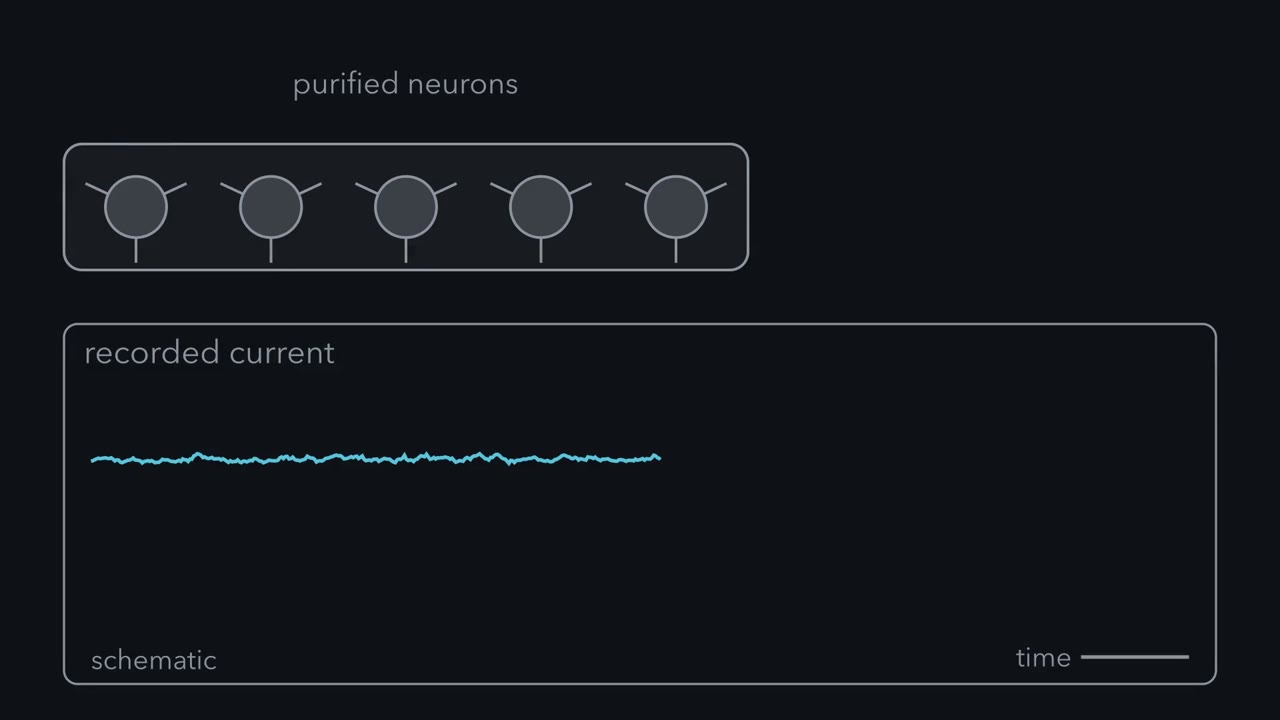 Part 3 of 3 Length 3:14 Astrocytes Build and Switch On Developmental Neuroscience · Graduate school and beyond Synapses in the Brain: Adhesion, Scaffolds and Astrocytes
Take-home
Astrocytes add to synapse formation but are not its sole cause, since neurons form some synapses without them.
-
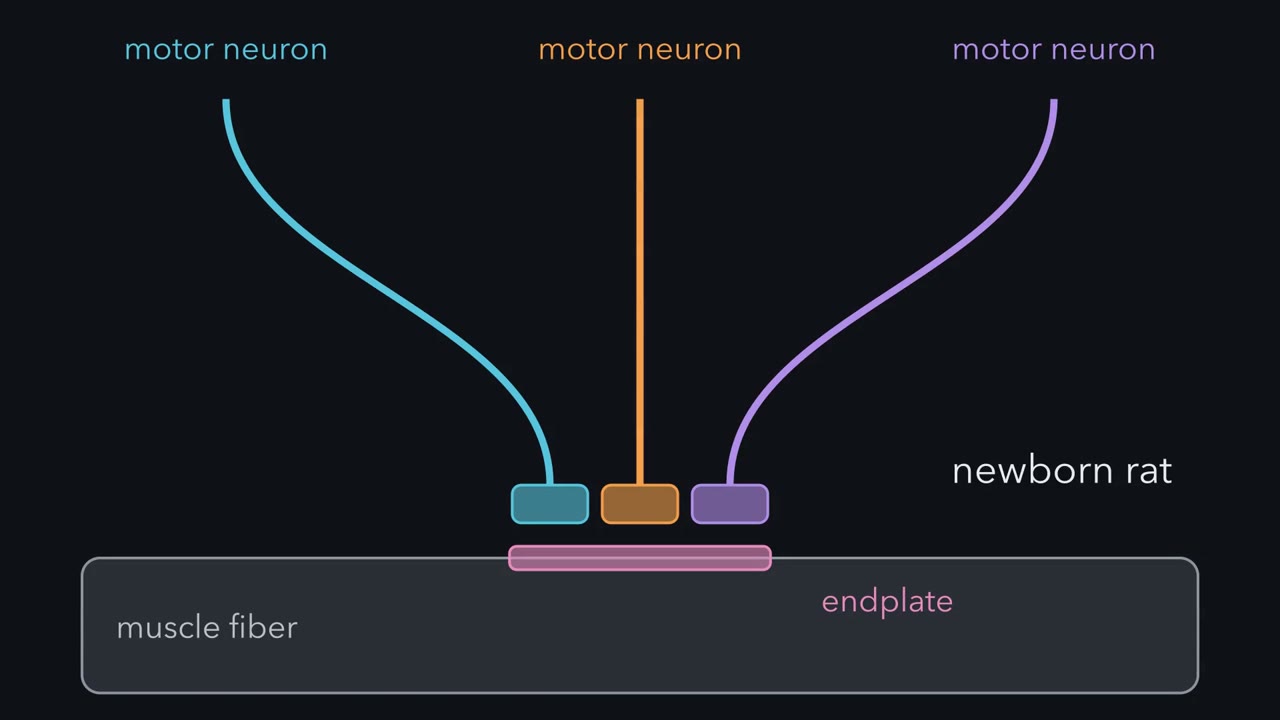 Part 1 of 3 Length 3:12 Quieter Than Its Neighbour Developmental Neuroscience · Graduate school and beyond Synapse Elimination: One Muscle Fiber, One Axon
Take-home
A newborn rat muscle fiber is contacted by two or more motor axons, and within weeks all but one are gone.
-
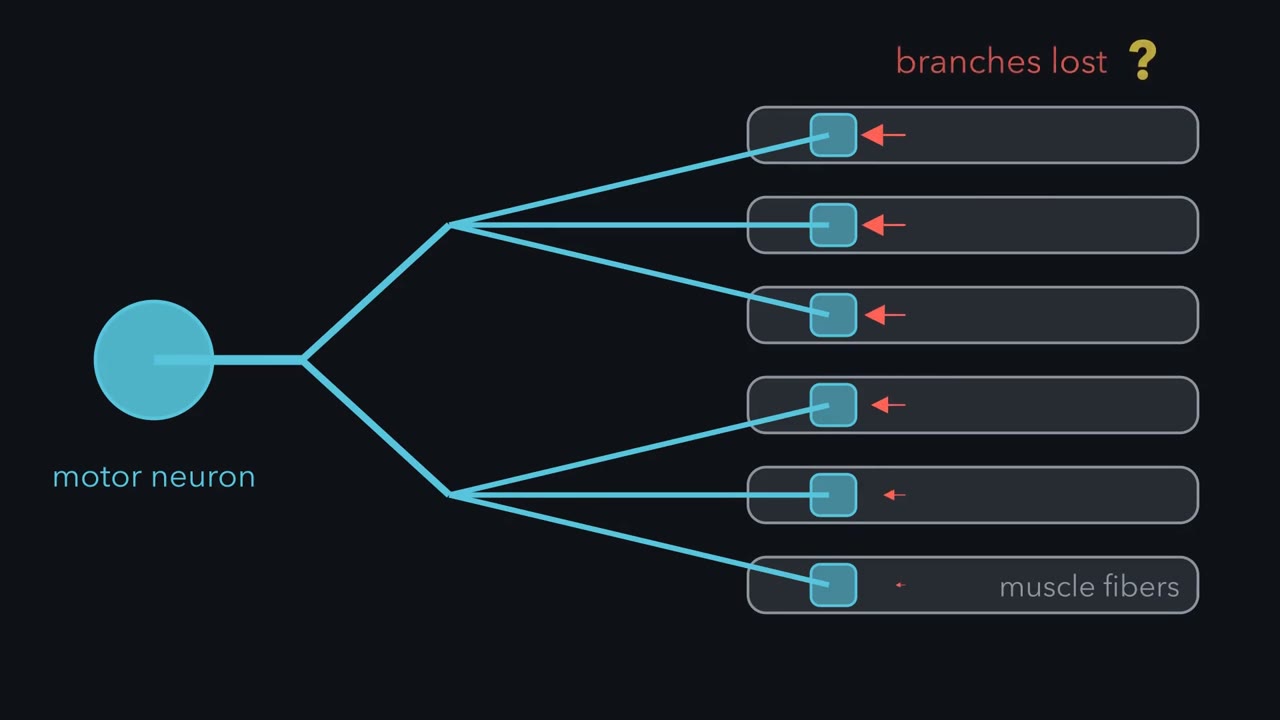 Part 2 of 3 Length 1:57 A Contest at Every Junction Developmental Neuroscience · Graduate school and beyond Synapse Elimination: One Muscle Fiber, One Axon
Take-home
One motor neuron's branches withdrew at different times and at different junctions, which points to a separate contest at every junction.
-
 Part 3 of 3 Length 4:02 The Focal Block Developmental Neuroscience · Graduate school and beyond Synapse Elimination: One Muscle Fiber, One Axon
Take-home
Overall activity sets the pace of elimination: blocking impulses slows it, and some patterns of stimulation speed it.
-
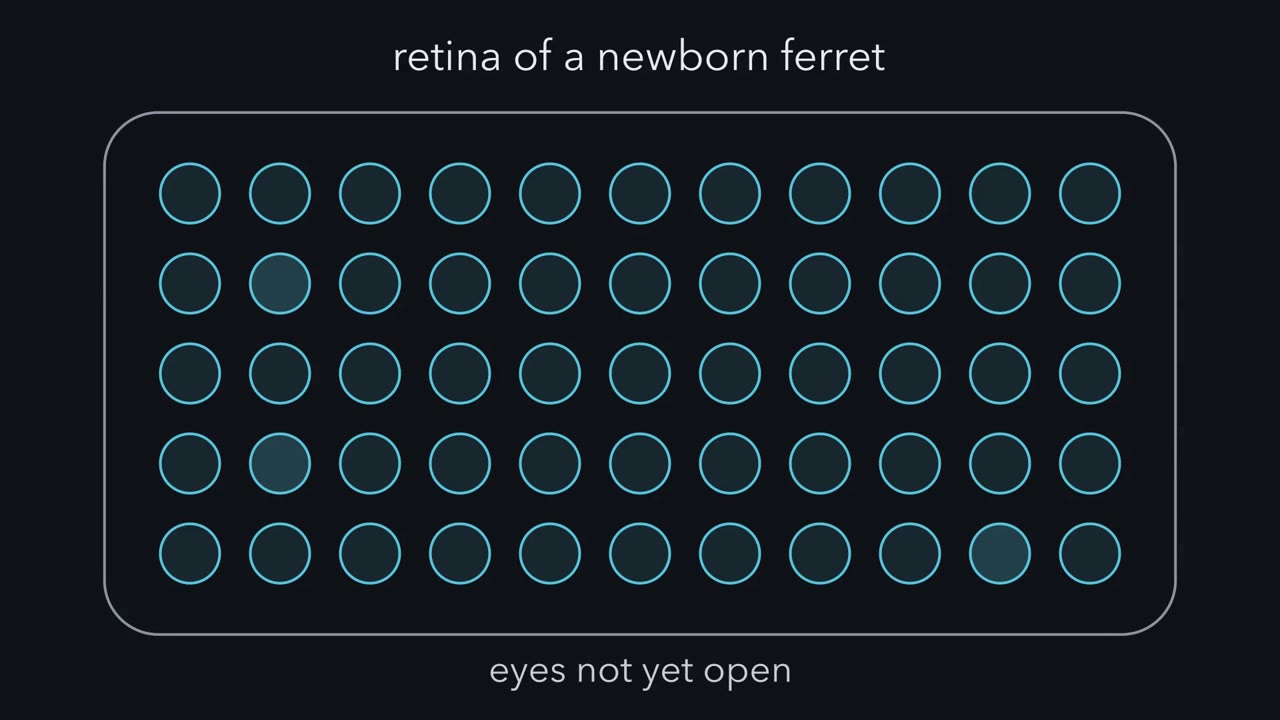 Part 1 of 3 Length 3:02 Timing Is the Address Developmental Neuroscience · Graduate school and beyond Activity Before Experience: Spontaneous Retinal Waves
Take-home
Timing is the address: a target cell keeps the inputs that fire in step with its other strong inputs, and they crowd out the rest.
-
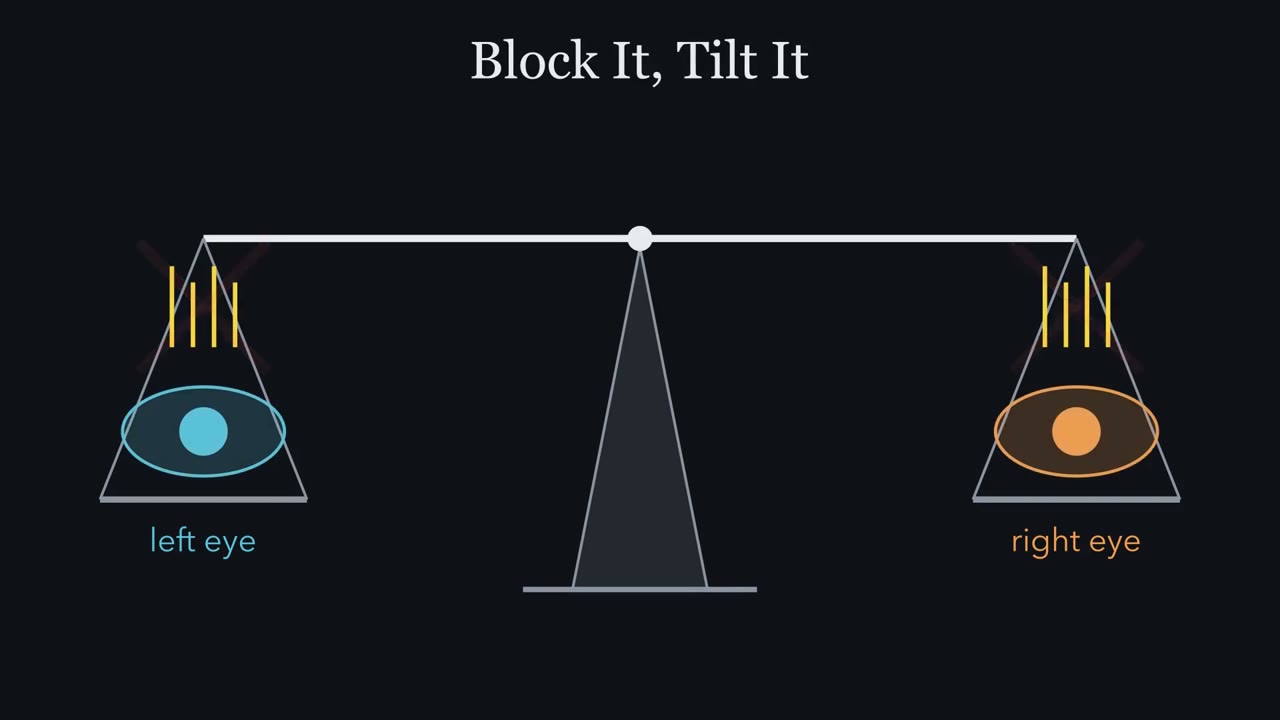 Part 2 of 3 Length 2:35 Block It, Tilt It Developmental Neuroscience · Graduate school and beyond Activity Before Experience: Spontaneous Retinal Waves
Take-home
Blocking spikes with tetrodotoxin in fetal cats kept the two eyes' projections mixed, so spikes are needed.
-
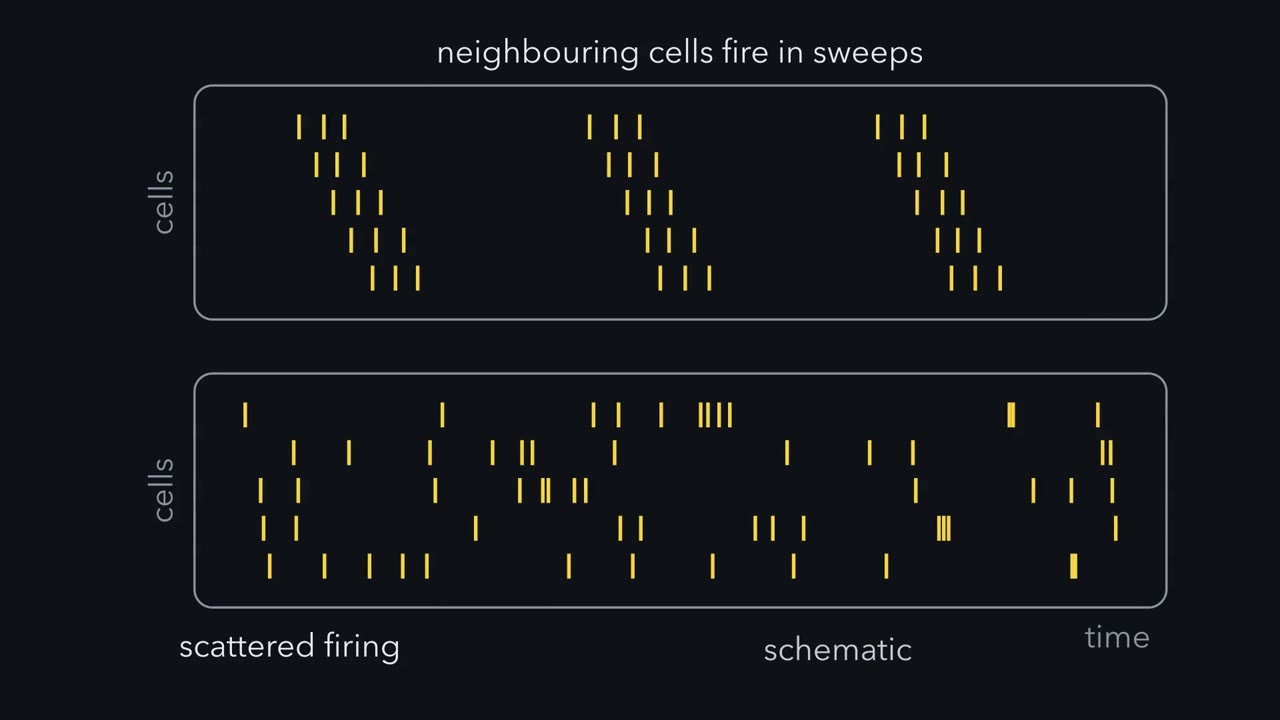 Part 3 of 3 Length 2:43 Correlation, Not Just Spikes Developmental Neuroscience · Graduate school and beyond Activity Before Experience: Spontaneous Retinal Waves
Take-home
In beta2 knockout mice, plenty of uncorrelated spiking in the first week left the termination zones broad.
-
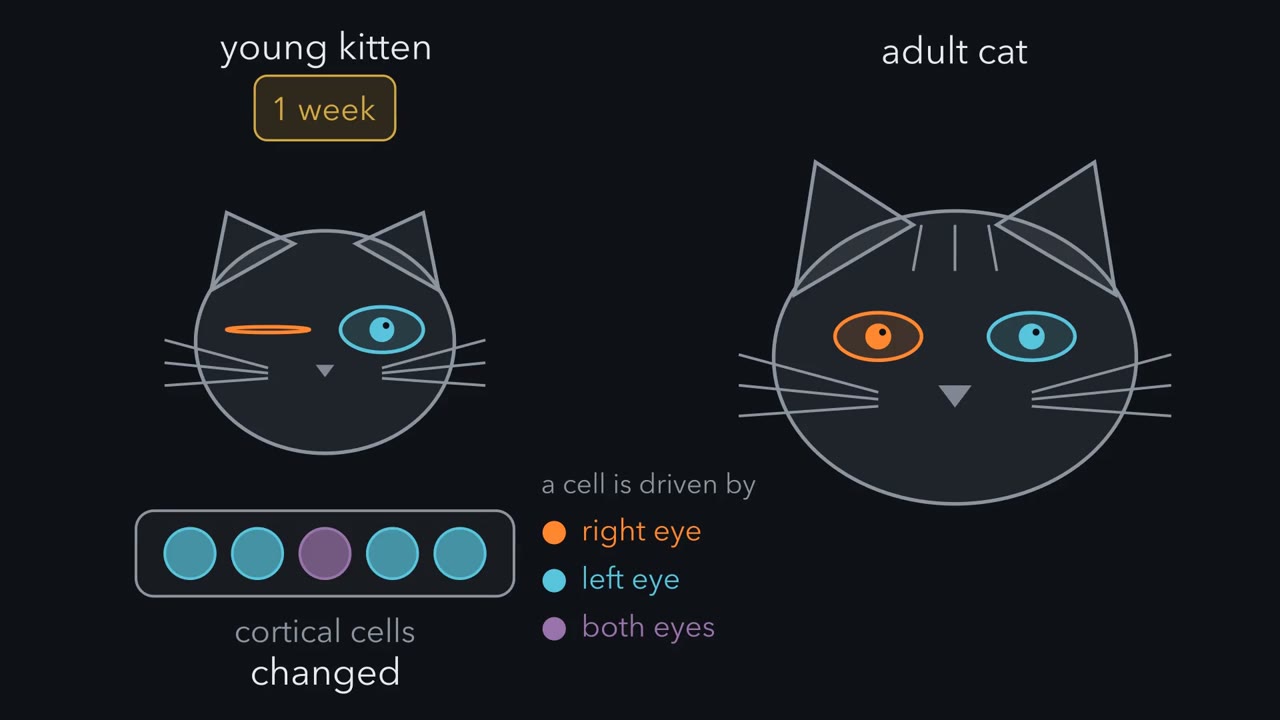 Part 1 of 6 Length 3:03 One Cell, Two Eyes Developmental Neuroscience · Graduate school and beyond Ocular Dominance and the Critical Period
Take-home
The two eyes' pathways stay apart through the LGN and the layer 4 stripes of primary visual cortex.
-
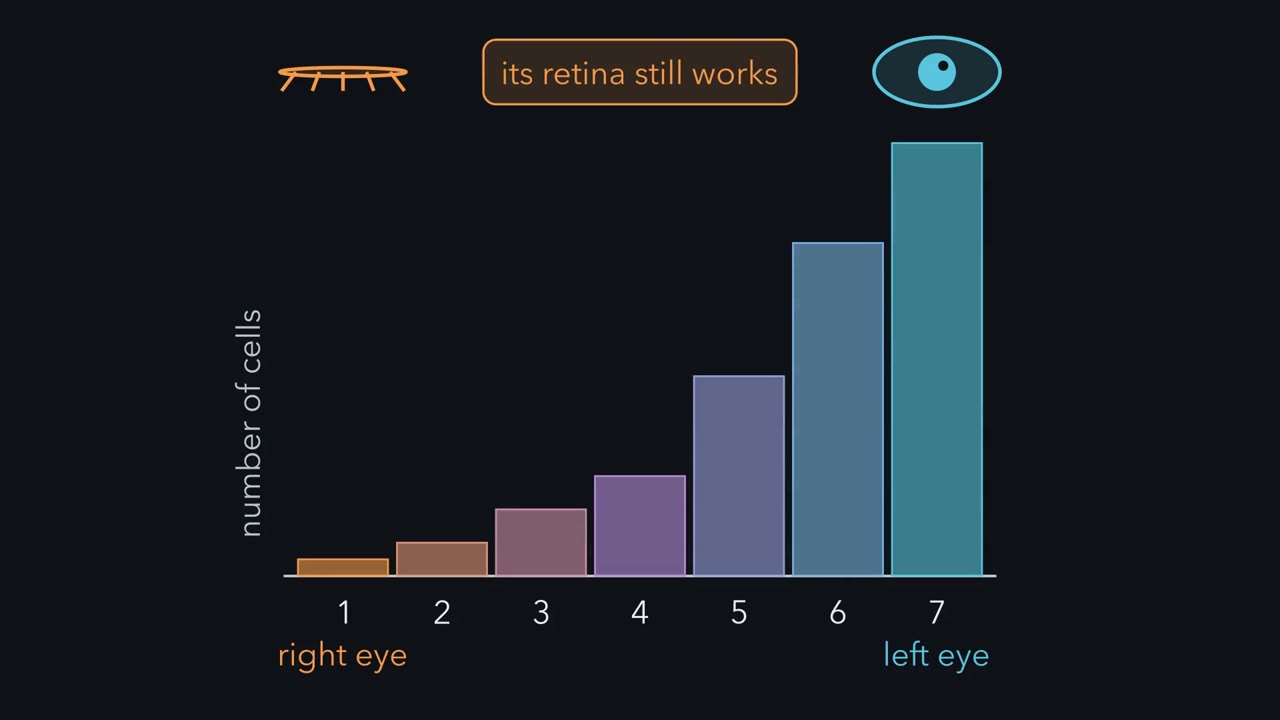
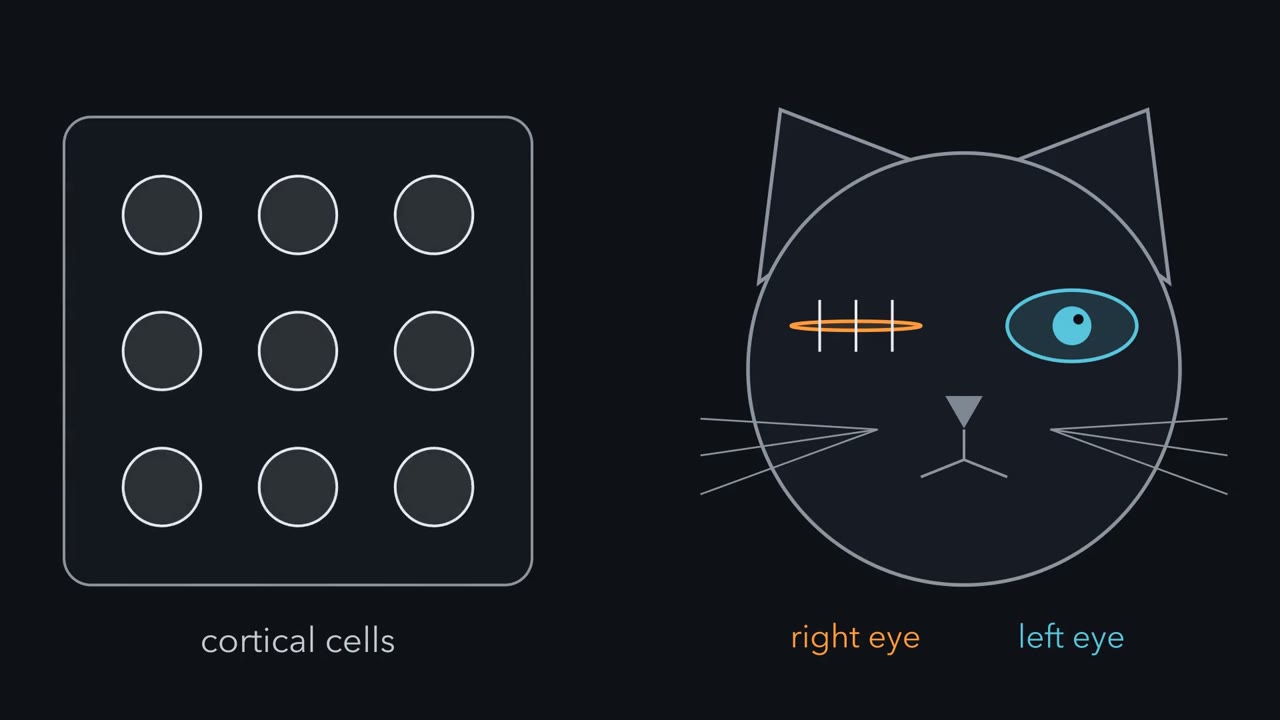 Part 2 of 6 Length 2:47 Six Days at Four Weeks Developmental Neuroscience · Graduate school and beyond Ocular Dominance and the Critical Period
Take-home
In kittens, closing one eye for a few days in the fourth or fifth week moves most of the histogram toward the open eye.
-
 Part 3 of 6 Length 3:12 Two Closed Eyes Developmental Neuroscience · Graduate school and beyond Ocular Dominance and the Critical Period
Take-home
Closing both eyes shifts the balance between the eyes far less than closing one.
-
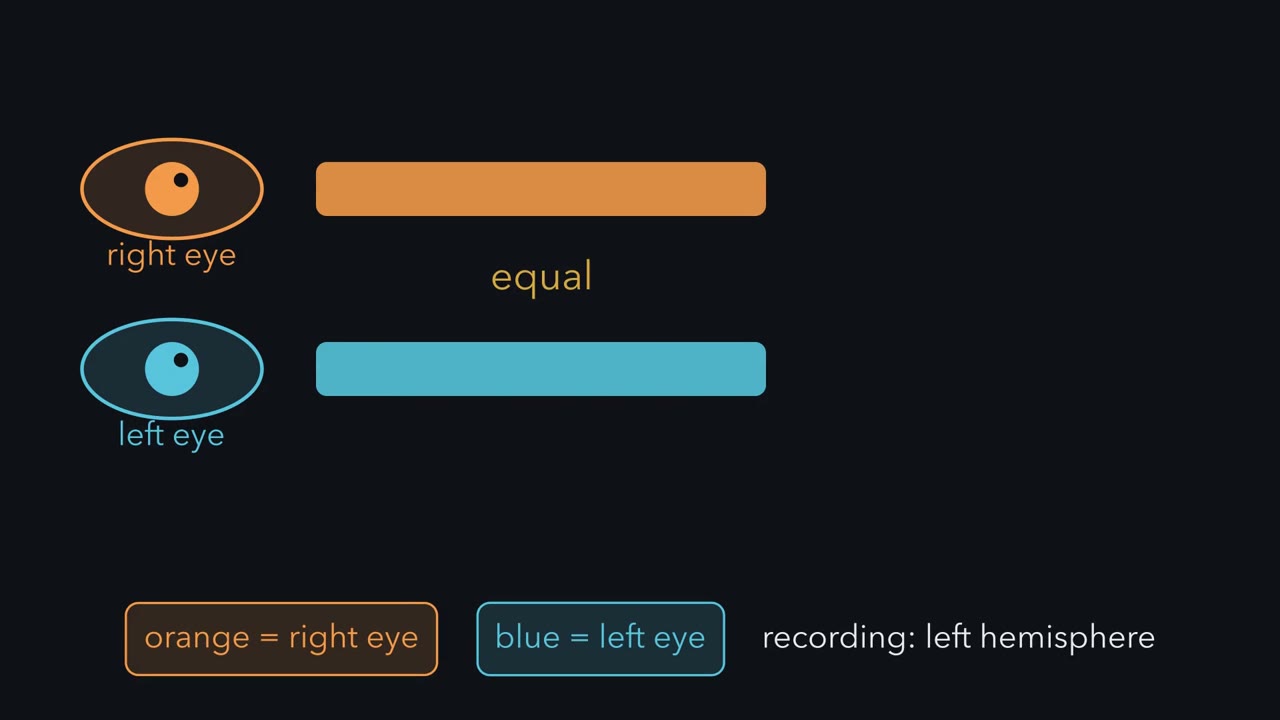 Part 4 of 6 Length 3:16 Out of Step Developmental Neuroscience · Graduate school and beyond Ocular Dominance and the Critical Period
Take-home
In strabismic kittens each eye sends a normal amount of activity, yet most cells answer to one eye or the other and few to both.
-
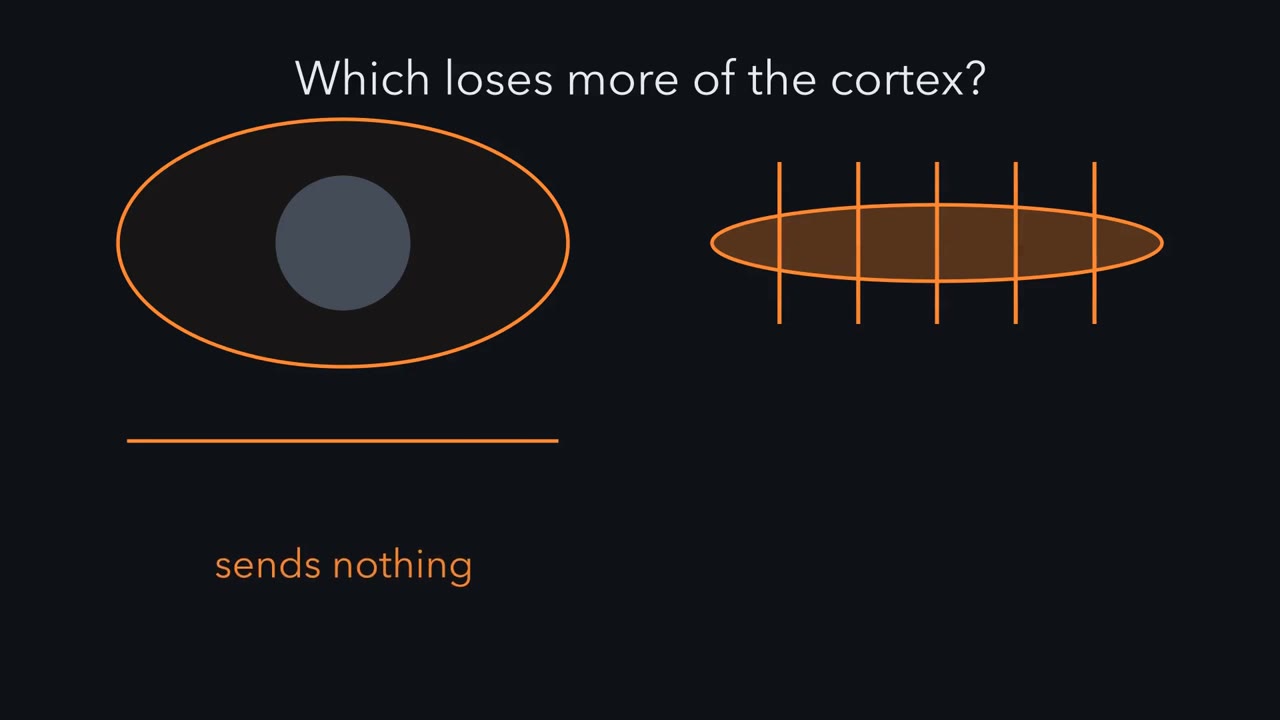 Part 5 of 6 Length 2:38 Silence Is Not Noise Developmental Neuroscience · Graduate school and beyond Ocular Dominance and the Critical Period
Take-home
Silencing one eye of kittens with tetrodotoxin shifts cortical responses toward the eye that kept firing, so an imbalance of activity is enough to cause a shift.
-
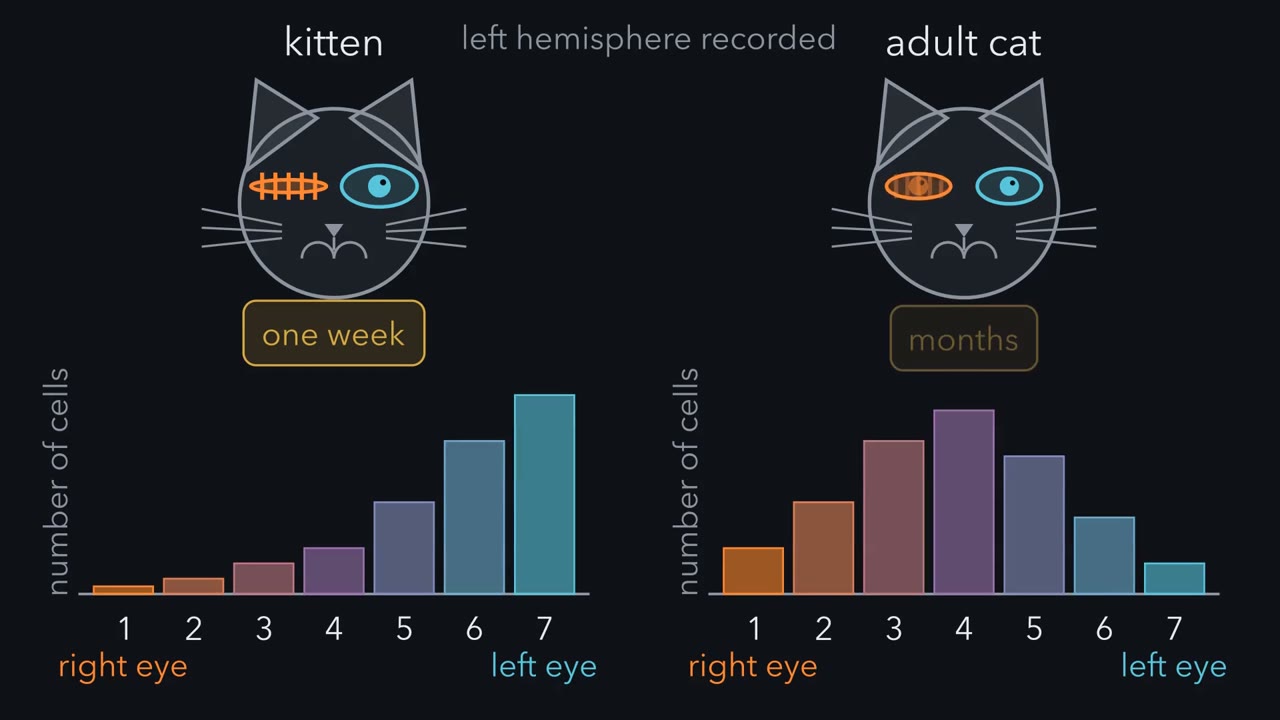 Part 6 of 6 Length 3:14 The Window and the Patch Developmental Neuroscience · Graduate school and beyond Ocular Dominance and the Critical Period
Take-home
A sensitive period is a window of unusually strong effect of experience, and a critical period is one in which the experience is essential and its effects last.
-
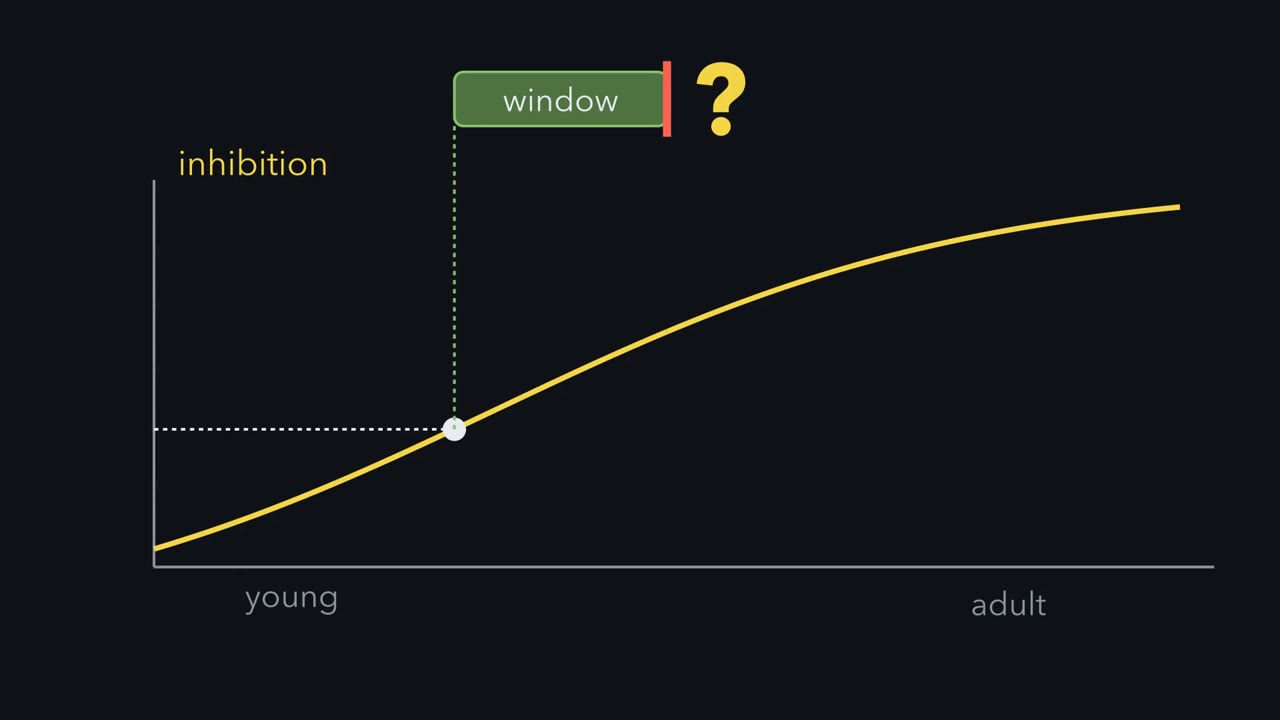
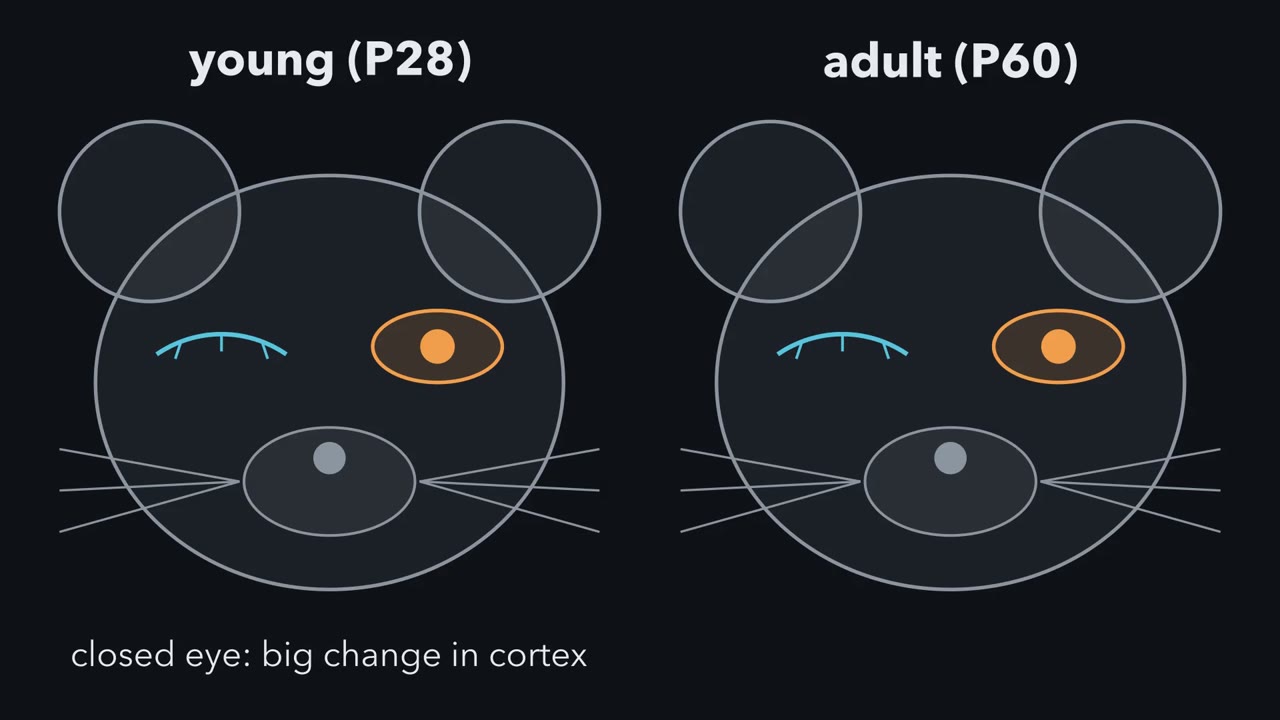 Part 1 of 3 Length 2:11 A Window That Follows the Cells Developmental Neuroscience · Graduate school and beyond Opening and Closing a Critical Period
Take-home
In mouse visual cortex, a few days with one eye closed reshape the cortex strongly in youth and much less in adults.
-
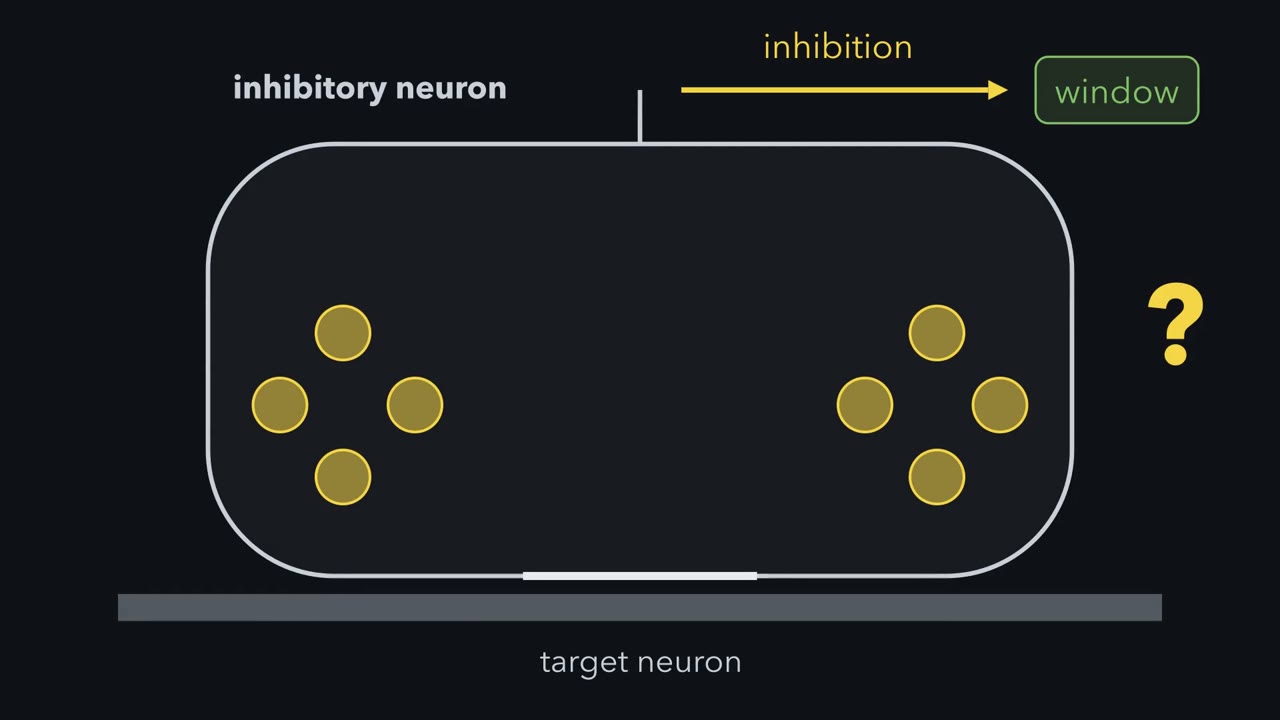 Part 2 of 3 Length 3:02 Switch It On with a Drug Developmental Neuroscience · Graduate school and beyond Opening and Closing a Critical Period
Take-home
GAD65 knockout mice, which release too little GABA, showed no ocular dominance shift at the normal age, and diazepam restored it.
-
 Part 3 of 3 Length 2:56 Brakes, and Borrowed Cells Developmental Neuroscience · Graduate school and beyond Opening and Closing a Critical Period
Take-home
In rodents, removing a brake such as the perineuronal net, the Nogo receptor or Lynx1 let plasticity persist or return, so the window is actively held shut rather than decaying.
-
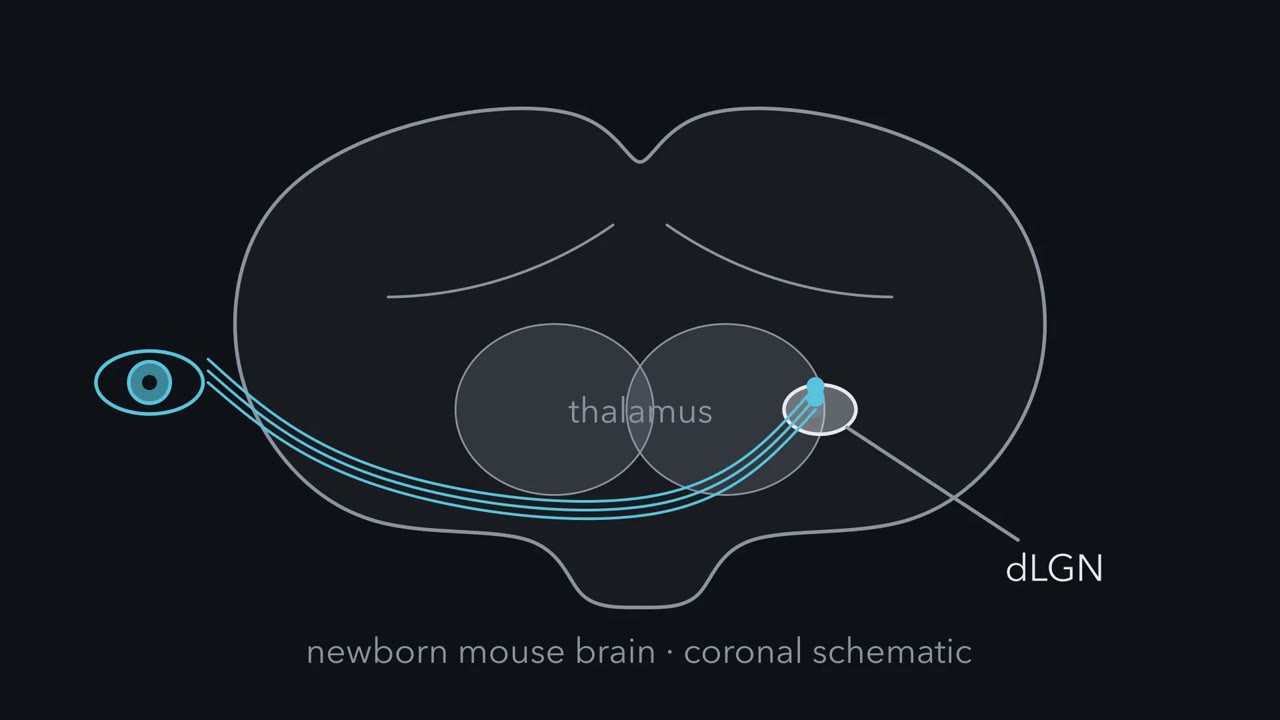 Part 1 of 3 Length 2:22 Which Inputs Lose? Developmental Neuroscience · Graduate school and beyond Microglia and Complement Prune Synapses
Take-home
In the young mouse visual thalamus, the two eyes' inputs start out overlapped and sort into separate territories over roughly the first week and a half.
-
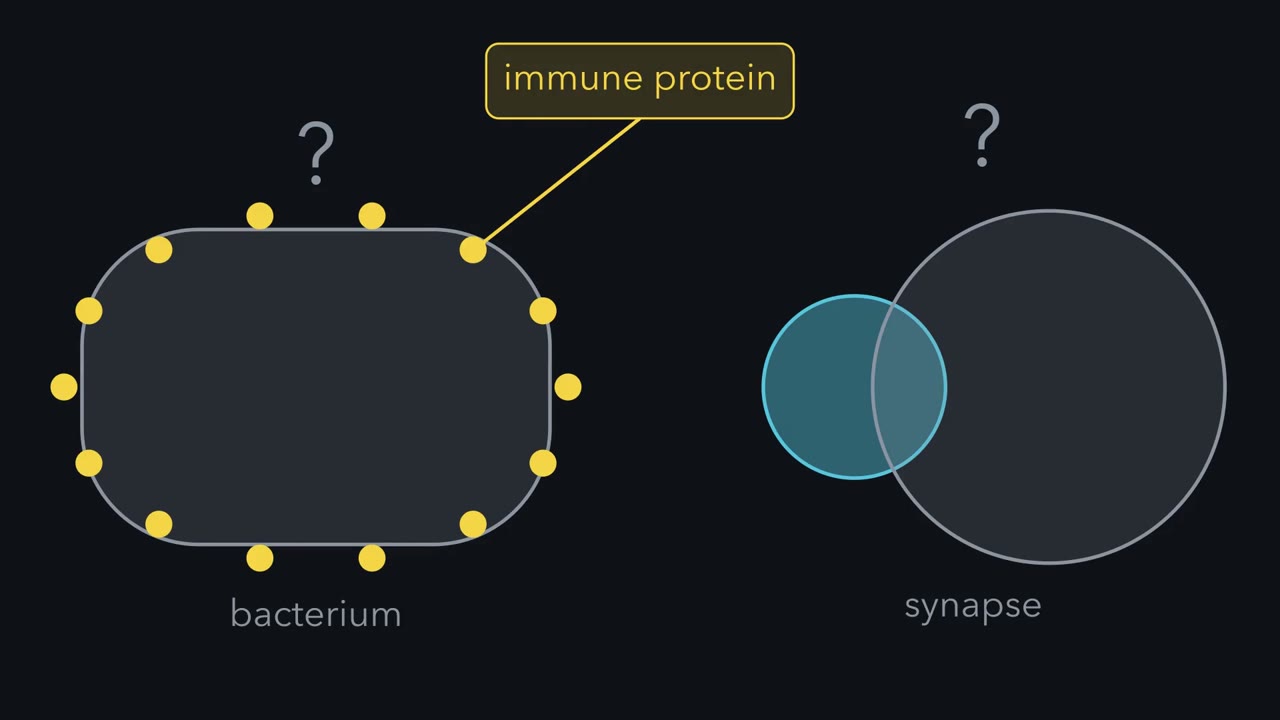 Part 2 of 3 Length 2:18 A Tag and a Reader Developmental Neuroscience · Graduate school and beyond Microglia and Complement Prune Synapses
Take-home
Complement marks a target for eating in three steps: C1q binds a surface, C3 is cut and its large piece fixes to that surface, and complement receptor 3 on an eating cell binds the tag.
-
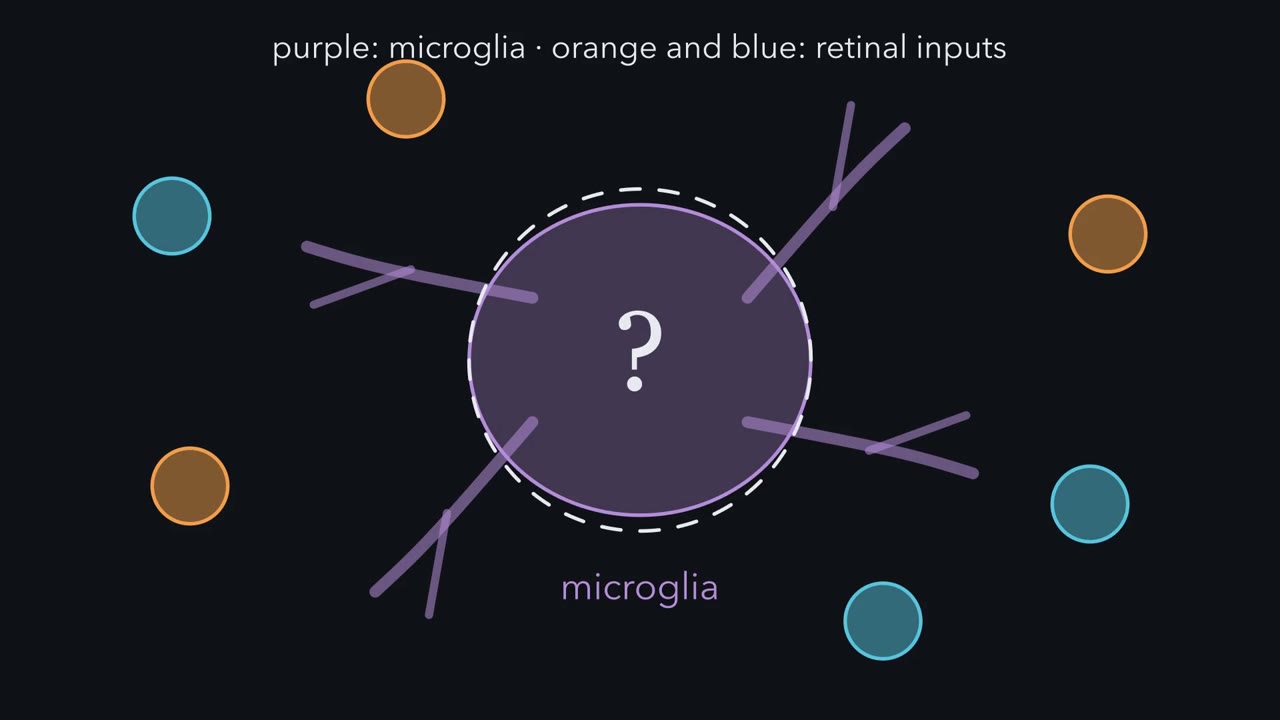 Part 3 of 3 Length 3:04 Caught in the Act Developmental Neuroscience · Graduate school and beyond Microglia and Complement Prune Synapses
Take-home
Microglia in the young mouse visual thalamus held retinal material inside their lysosomes, and this uptake was high at postnatal day five and much lower by day nine.
-
 Part 1 of 3 Length 2:44 One Input, Many Ages Developmental Neuroscience · Graduate school and beyond Sensitive Periods in Behavior: Song, Language and Sight
Take-home
The same experience can leave a strong, lasting mark at one age and little mark at another.
-
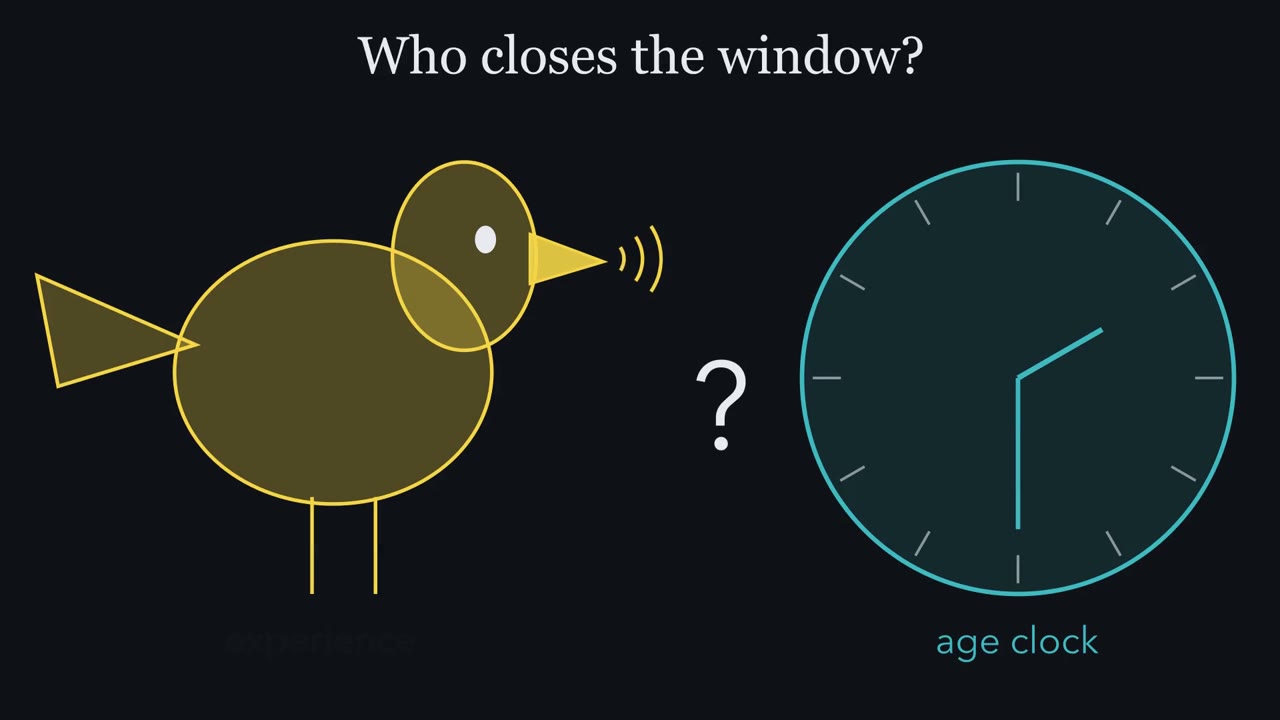 Part 2 of 3 Length 3:15 Who Closes the Window? Developmental Neuroscience · Graduate school and beyond Sensitive Periods in Behavior: Song, Language and Sight
Take-home
In zebra finches, hearing a tutor seems to help close the window, though later studies gave mixed results.
-
 Part 3 of 3 Length 2:47 What Lasts Is Not What Can Be Learned Developmental Neuroscience · Graduate school and beyond Sensitive Periods in Behavior: Song, Language and Sight
Take-home
Delayed access to a first language does affect later proficiency, and missing early language, not only age, seems to leave a lasting mark.
-
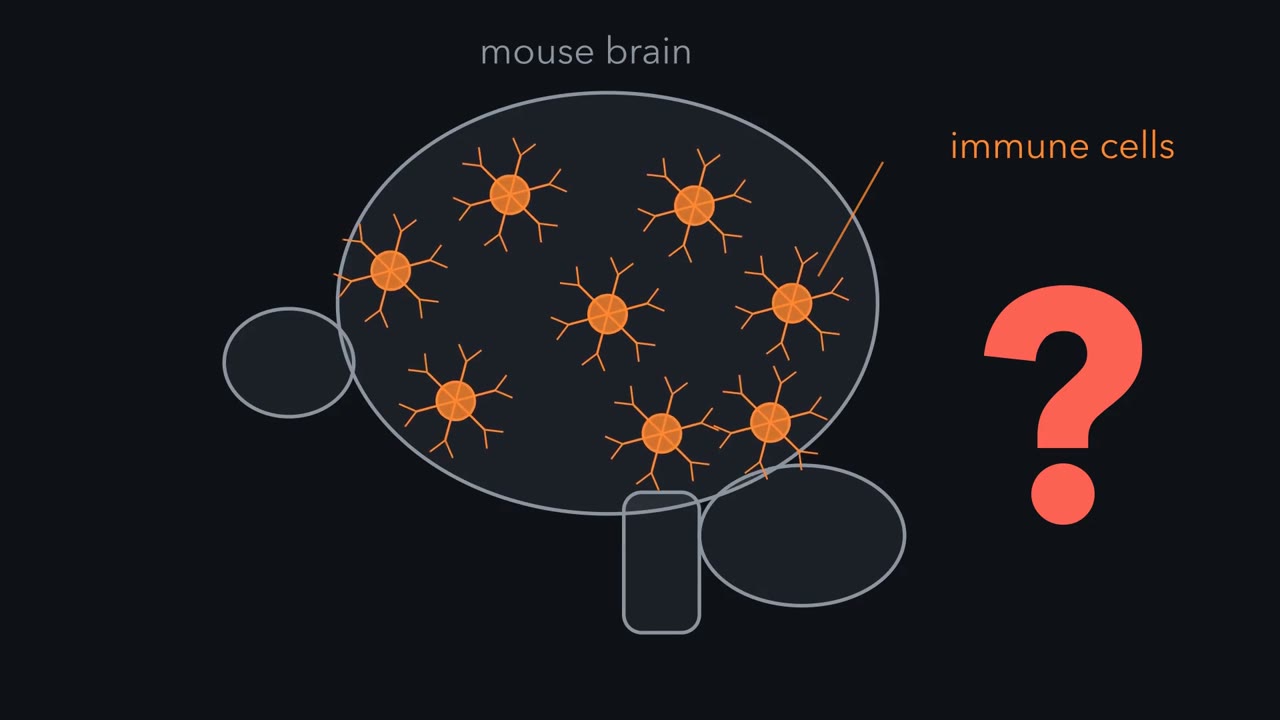 Part 1 of 3 Length 2:20 One Job, Three Birthplaces Developmental Neuroscience · Graduate school and beyond Where Glia Come From
Take-home
Glia is a job, not a lineage: glia do not share one birthplace.
-
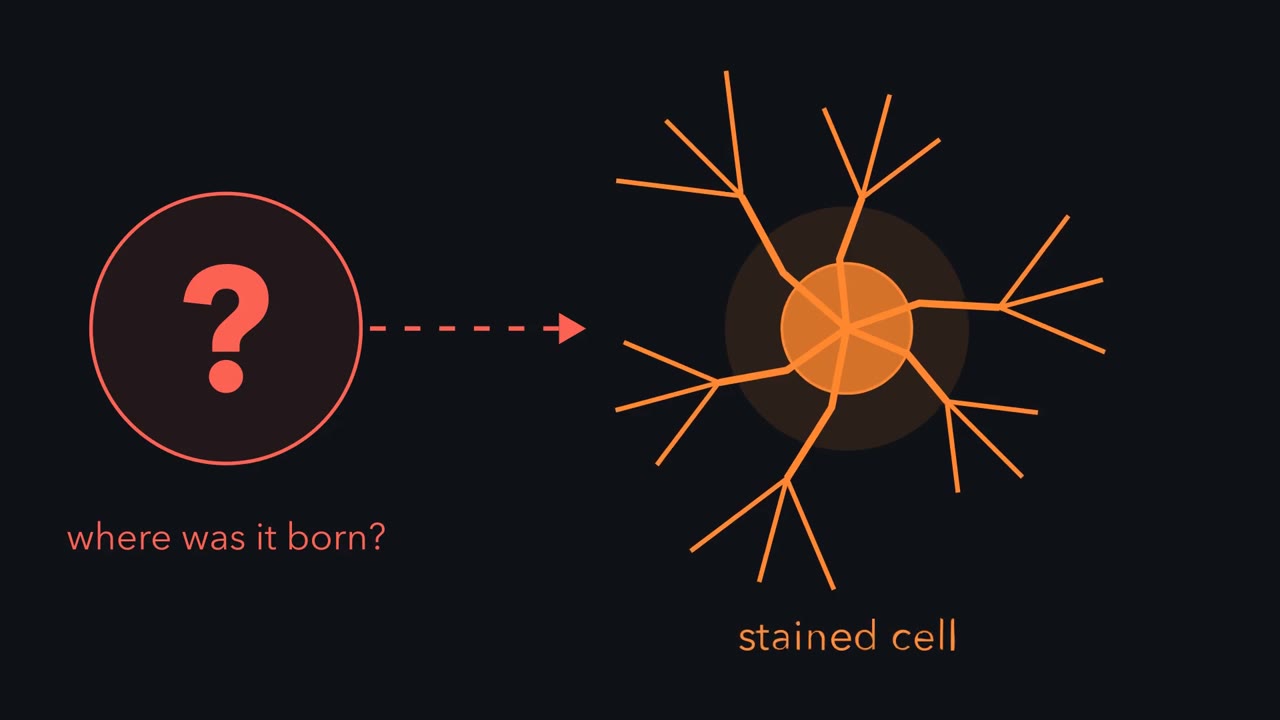 Part 2 of 3 Length 2:41 Marked in the Yolk Sac Developmental Neuroscience · Graduate school and beyond Where Glia Come From
Take-home
Fate mapping marks a progenitor and looks for the mark in everything it made, so it can show where a cell was born.
-
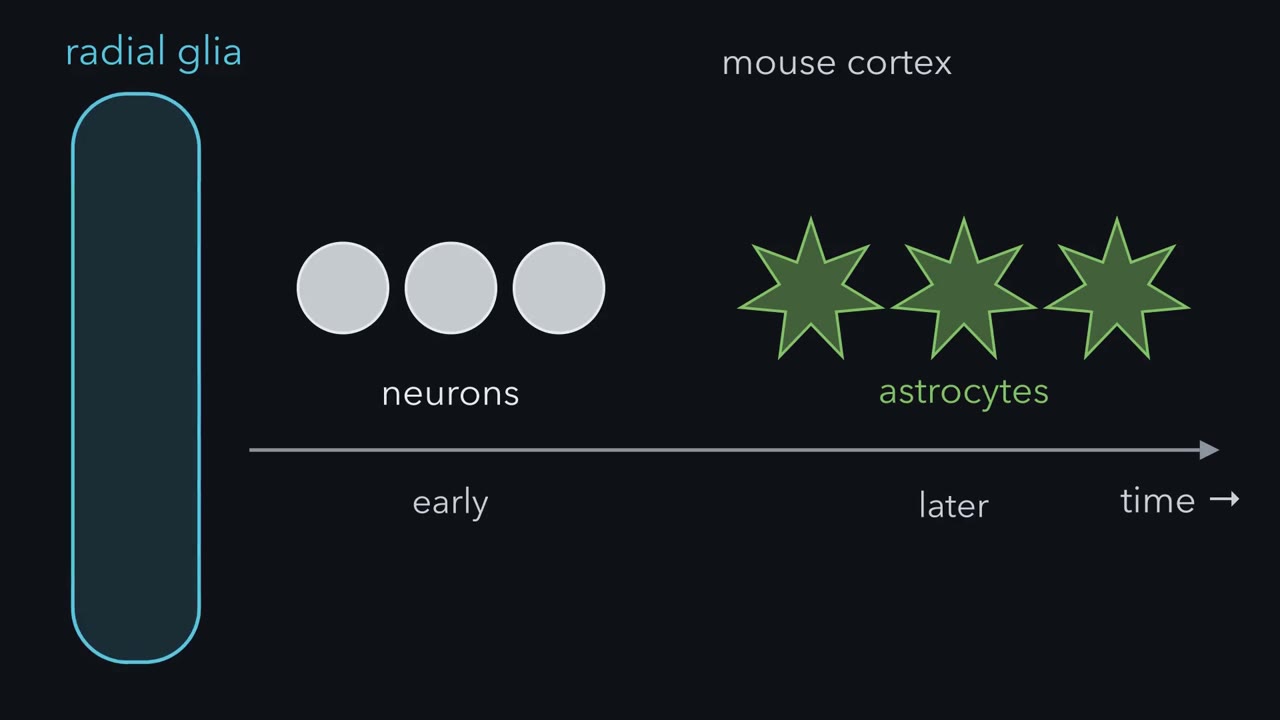 Part 3 of 3 Length 2:36 Same Progenitor, New Order Developmental Neuroscience · Graduate school and beyond Where Glia Come From
Take-home
In rodent cortex, the best-studied route to astrocytes needs a progenitor still present, a cytokine signal, and the competence to read it.
-
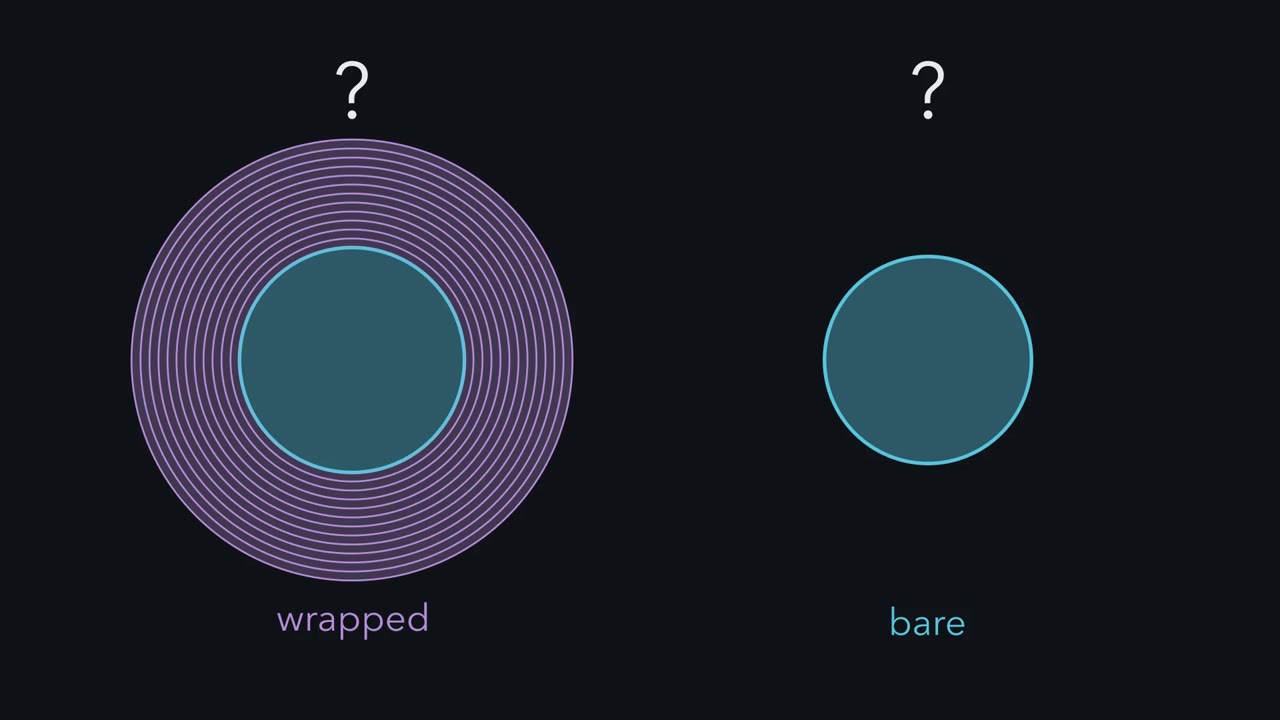 Part 1 of 3 Length 2:39 Why Wrap, and How Much Developmental Neuroscience · Graduate school and beyond Myelination: Wrapping the Axon So the Signal Jumps
Take-home
Myelin lets the signal jump between nodes of Ranvier, and the speed gain is largest on large axons.
-
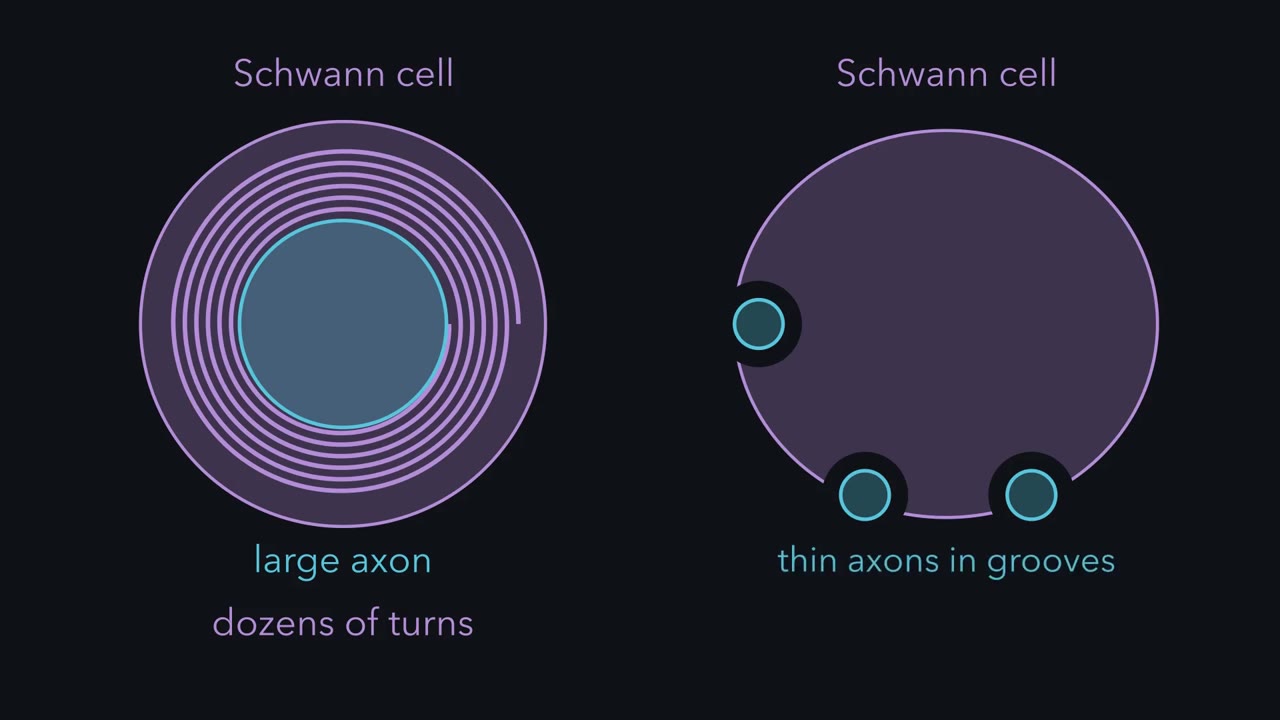 Part 2 of 3 Length 3:11 The Axon Sets the Dose Developmental Neuroscience · Graduate school and beyond Myelination: Wrapping the Axon So the Signal Jumps
Take-home
In peripheral nerve the axon decides: the amount of neuregulin-1 type III on its surface is the main signal for whether a Schwann cell wraps it and how thickly.
-
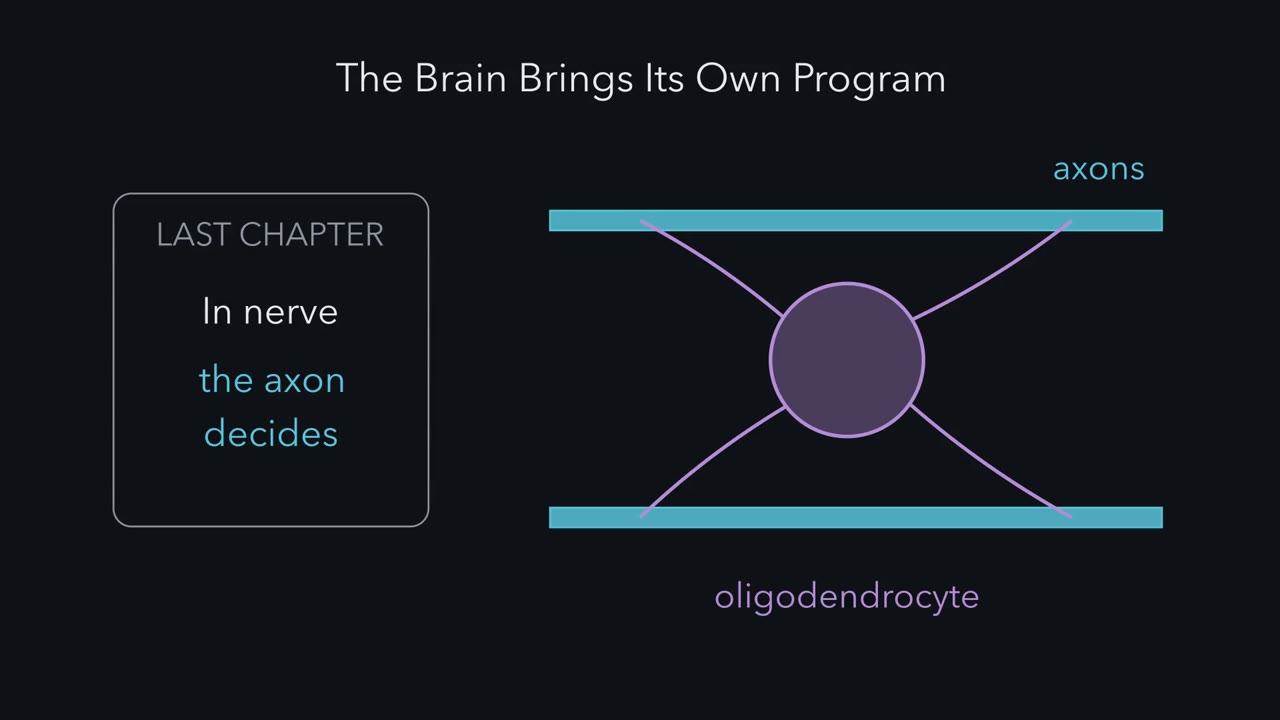 Part 3 of 3 Length 1:57 The Brain Brings Its Own Program Developmental Neuroscience · Graduate school and beyond Myelination: Wrapping the Axon So the Signal Jumps
Take-home
In the brain and spinal cord the oligodendrocyte brings much of its own program, and in culture it will wrap inert plastic fibers of a suitable diameter.
-
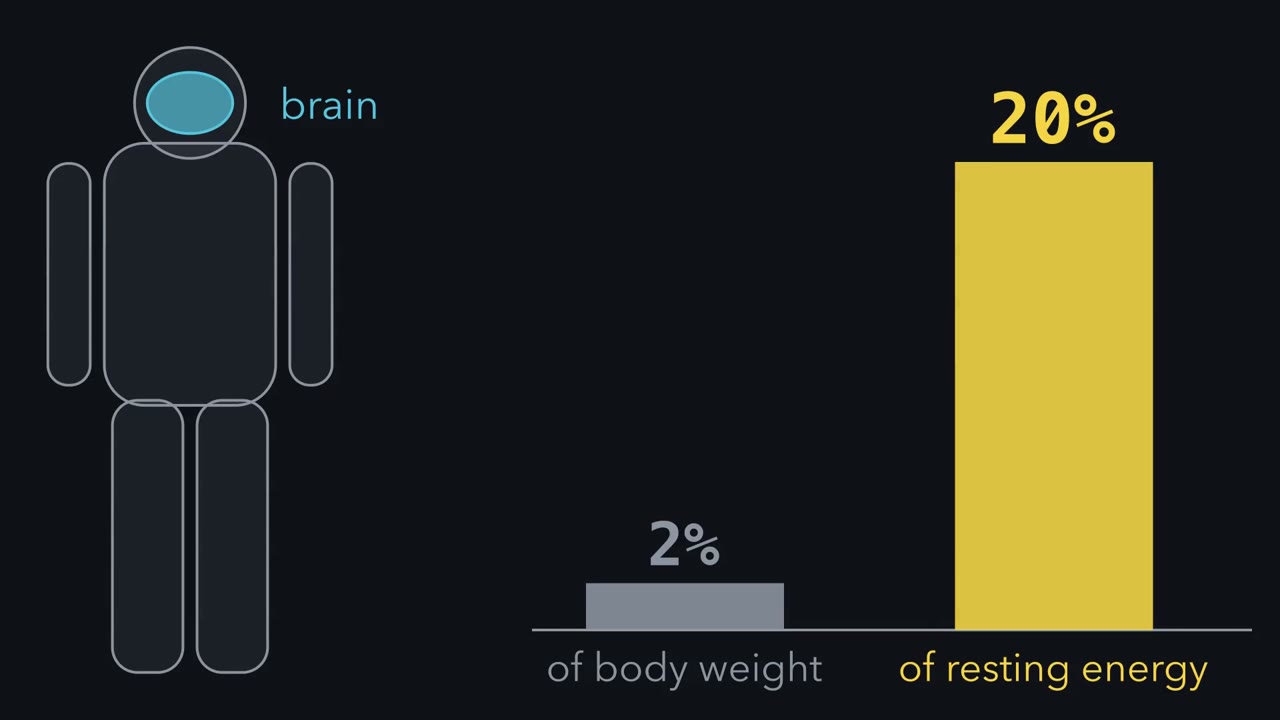 Part 1 of 3 Length 2:48 Who Feeds the Far End? Developmental Neuroscience · Graduate school and beyond Feeding the Axon: Glia as Metabolic Partners
Take-home
An axon spends energy without pause on ion pumping, can lie far from its cell body, and is mostly covered by myelin.
-
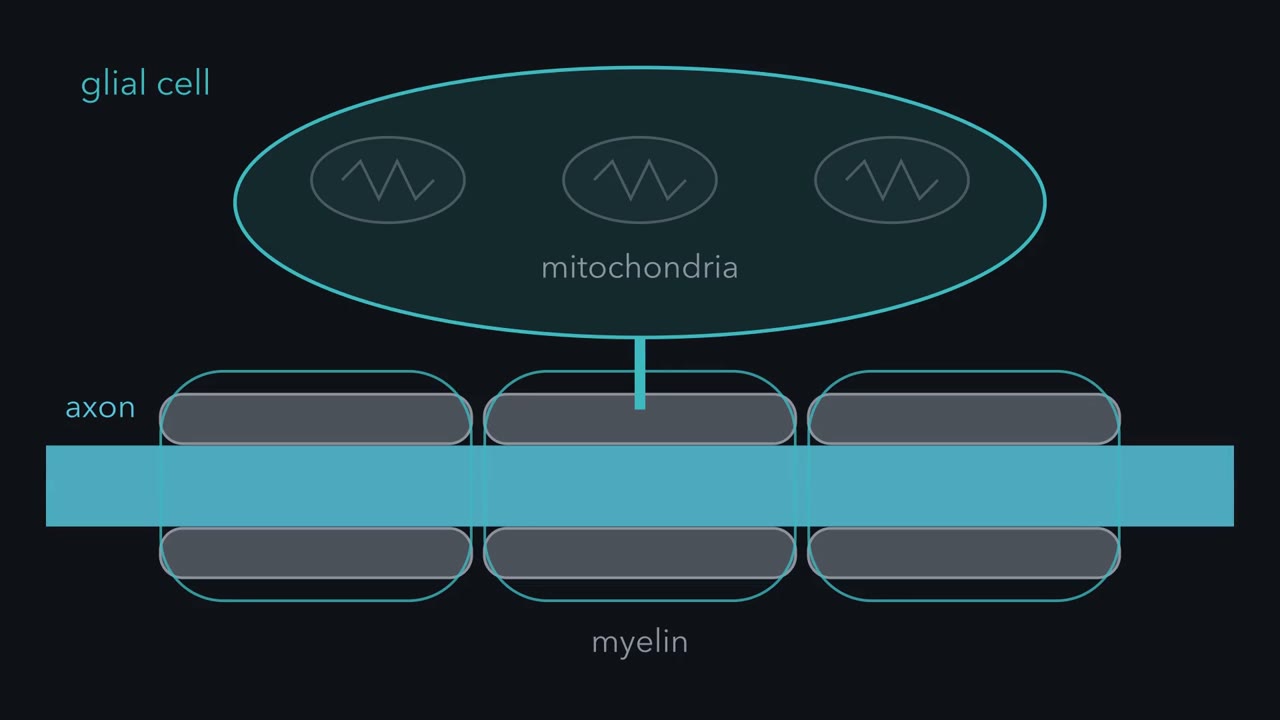 Part 2 of 3 Length 3:03 A Glial Cell That Stops Respiring Developmental Neuroscience · Graduate school and beyond Feeding the Axon: Glia as Metabolic Partners
Take-home
Mice lacking PLP or CNP made close to normal myelin yet had axons that swelled and degenerated with age, so glia seem to give axons more than insulation.
-
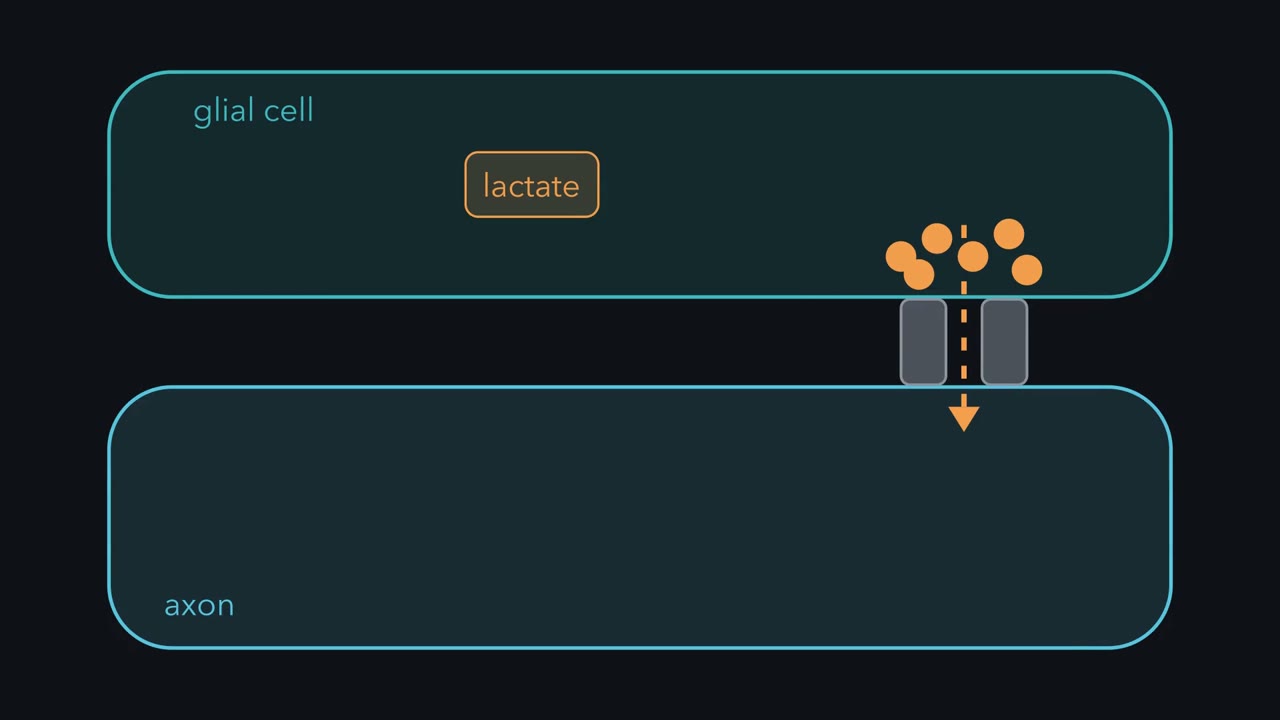 Part 3 of 3 Length 2:46 Cut the Export Line Developmental Neuroscience · Graduate school and beyond Feeding the Axon: Glia as Metabolic Partners
Take-home
Blocking MCT1 killed motor neurons in glucose-starved spinal cord slices, and adding lactate rescued them.
-
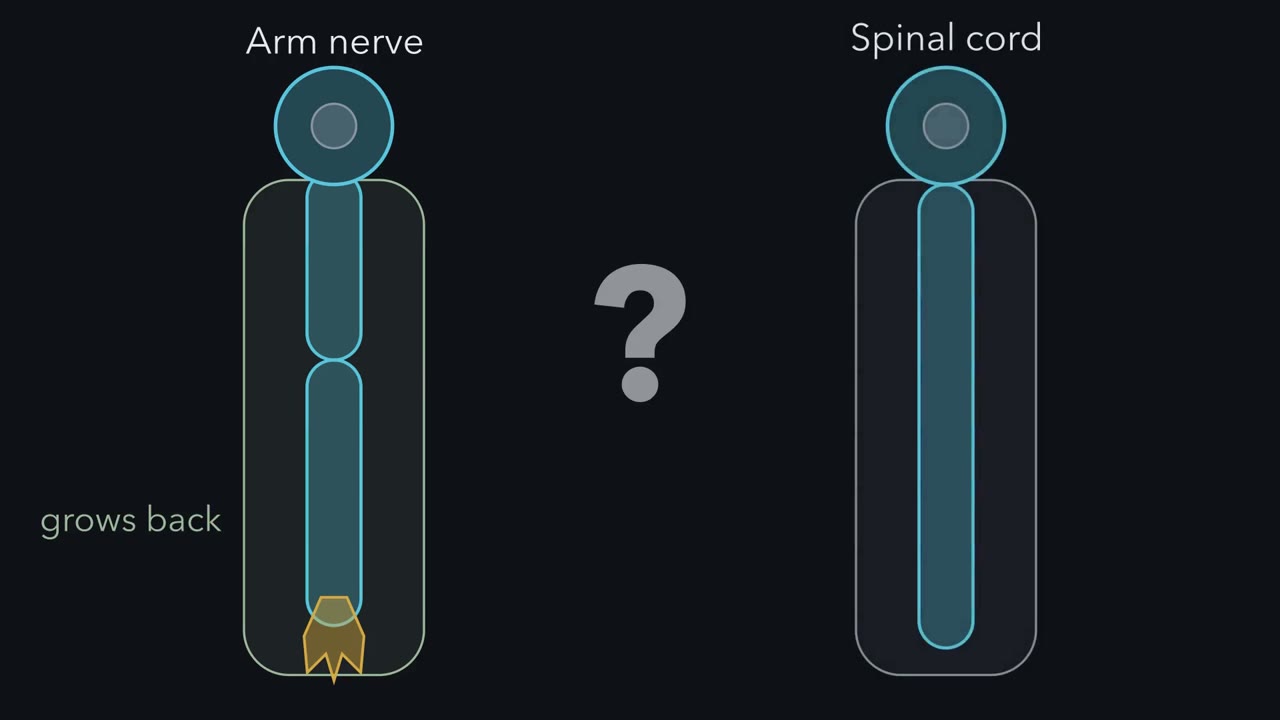 Part 1 of 3 Length 2:07 One Cut, Two Fates Developmental Neuroscience · Graduate school and beyond Injury and Regeneration: Why the Brain Does Not Regrow
Take-home
A cut splits an axon into two pieces with different fates.
-
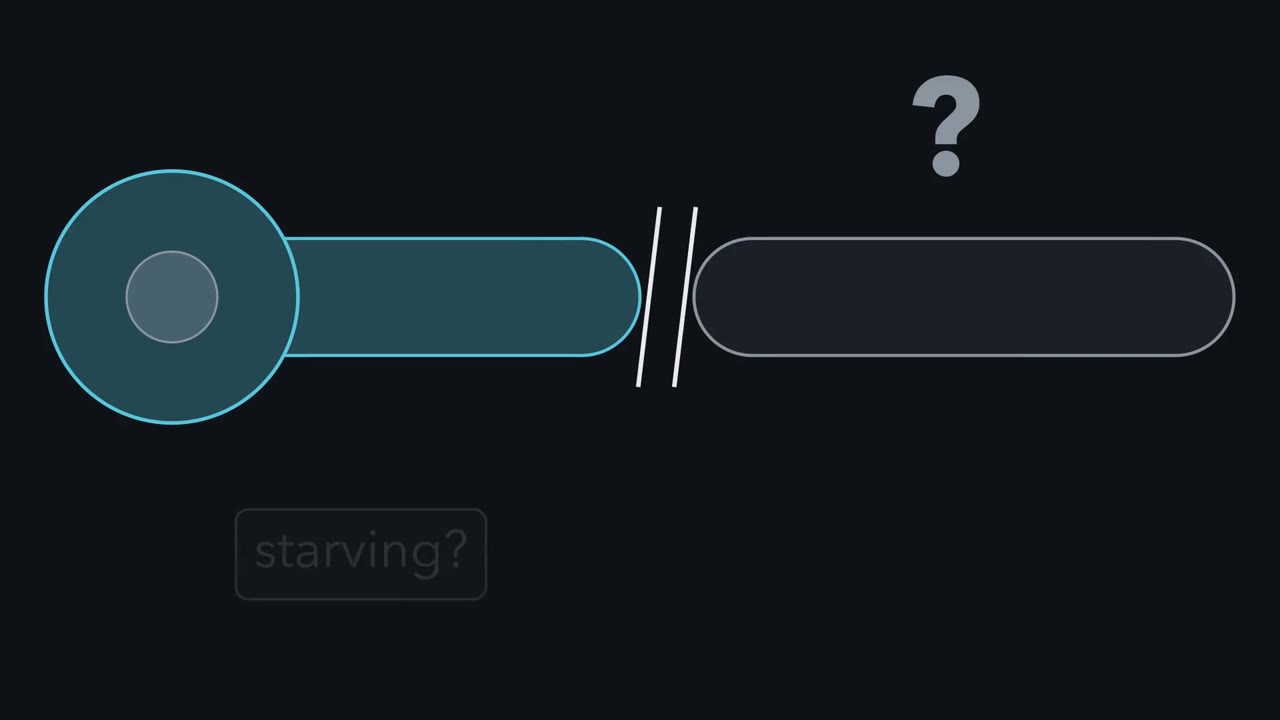 Part 2 of 3 Length 3:29 The Stump That Kills Itself Developmental Neuroscience · Graduate school and beyond Injury and Regeneration: Why the Brain Does Not Regrow
Take-home
The cut-off stump is not simply starving, because deleting one gene, Sarm1, keeps cut axons intact for a long time.
-
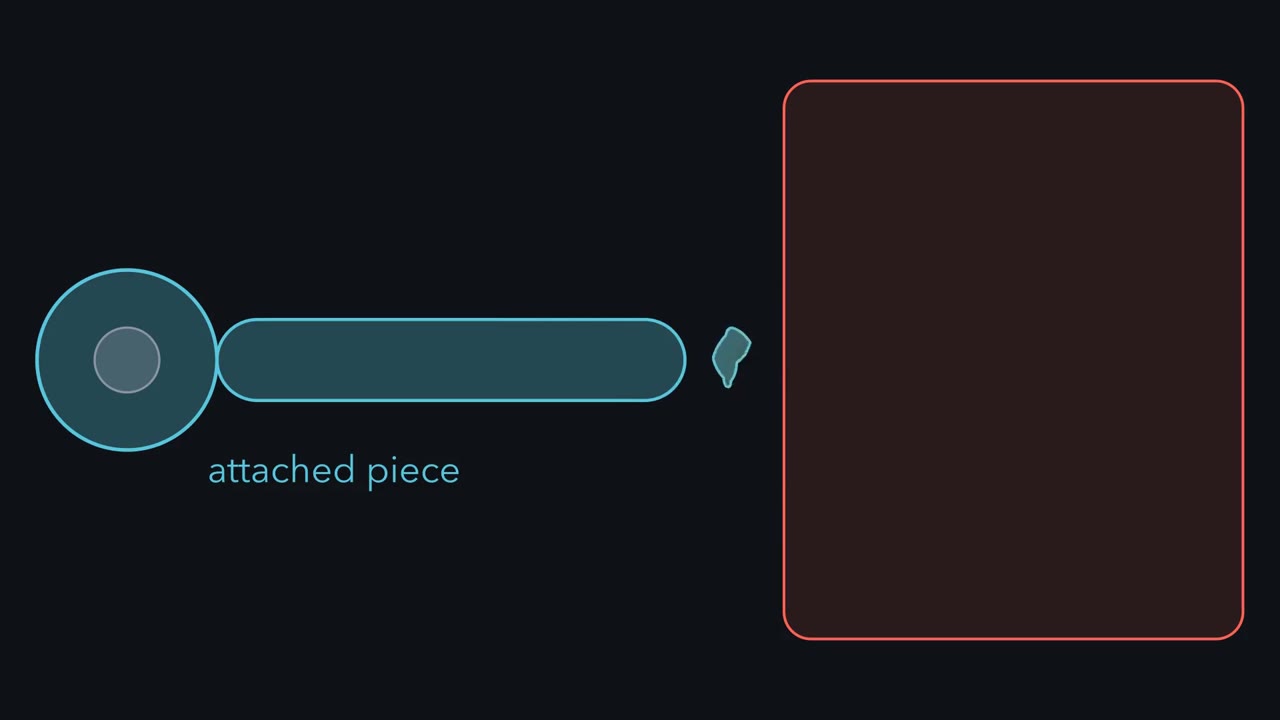 Part 3 of 3 Length 3:04 Drive Against Resistance Developmental Neuroscience · Graduate school and beyond Injury and Regeneration: Why the Brain Does Not Regrow
Take-home
Central axons grew about 30 millimetres along peripheral nerve grafts but stopped in central tissue, so the tissue resists regrowth.
-
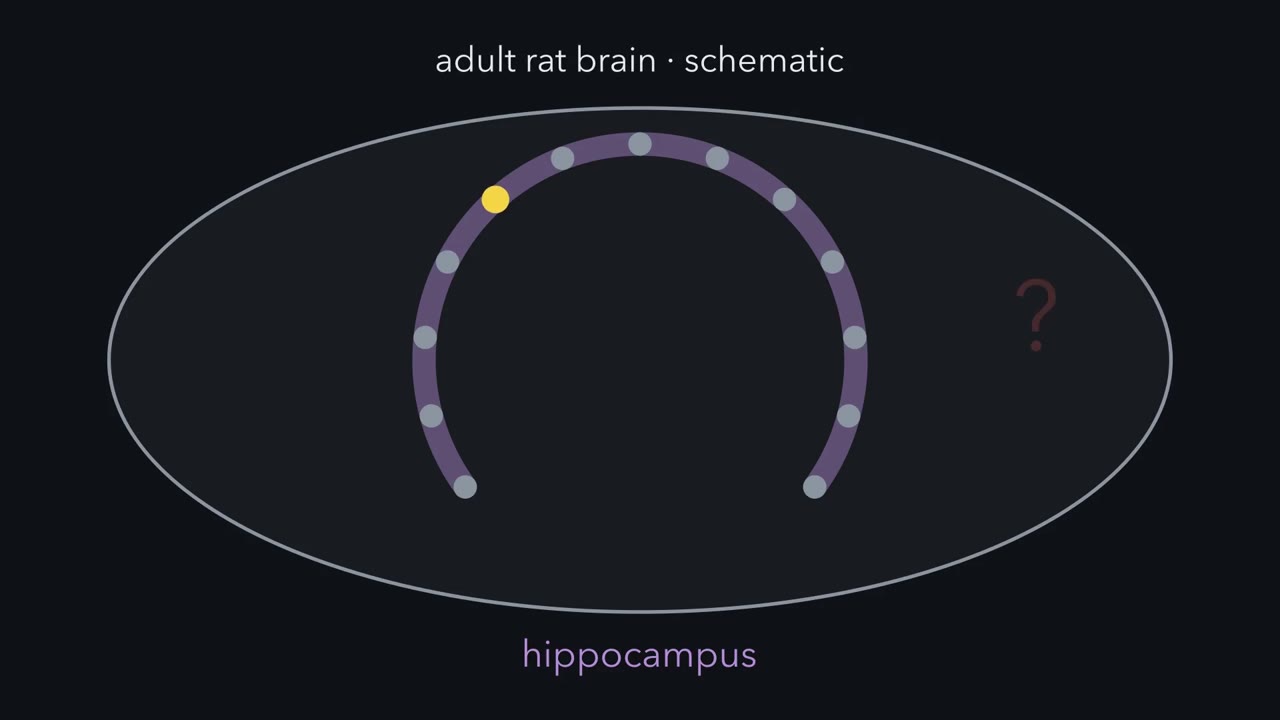 Part 1 of 3 Length 2:12 Two Facts in One Cell Developmental Neuroscience · Graduate school and beyond Two Places the Adult Brain Still Makes Neurons
Take-home
A neuron counts as new only when the same cells carry a birth record and a neuron identity.
-
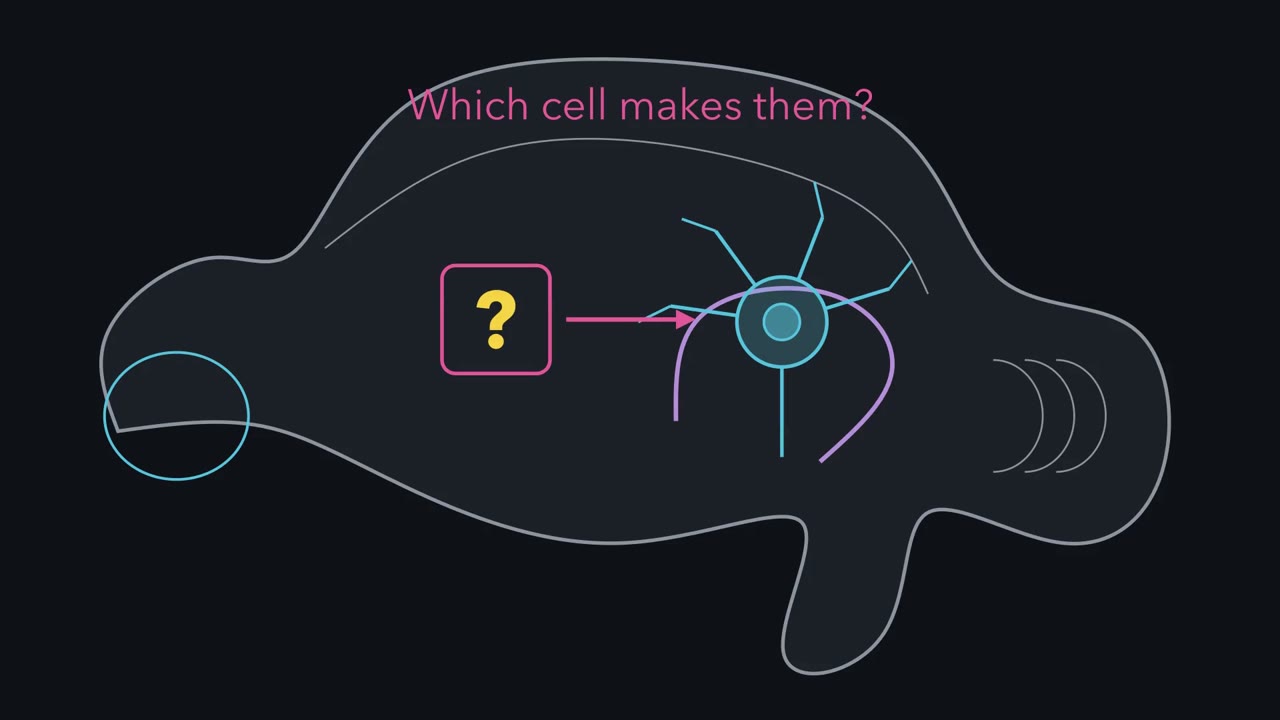 Part 2 of 3 Length 3:29 Who Makes Them, and How Many Are Kept Developmental Neuroscience · Graduate school and beyond Two Places the Adult Brain Still Makes Neurons
Take-home
Adult rodents make neurons in two places, the subventricular zone and the dentate gyrus, where the rate falls steeply with age.
-
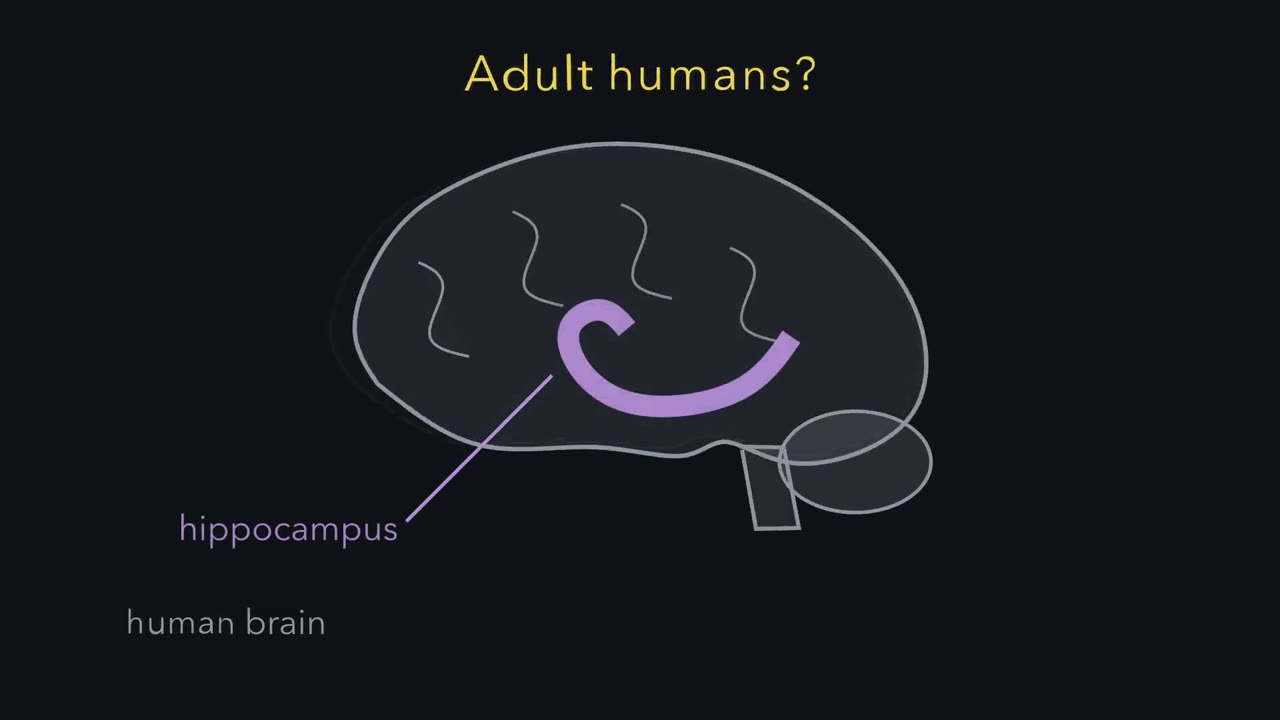 Part 3 of 3 Length 2:50 Do You Make Them Too? Developmental Neuroscience · Graduate school and beyond Two Places the Adult Brain Still Makes Neurons
Take-home
In people, the evidence that carries a birth record, such as bomb-test carbon-14 dating, points to some hippocampal neurogenesis.
-
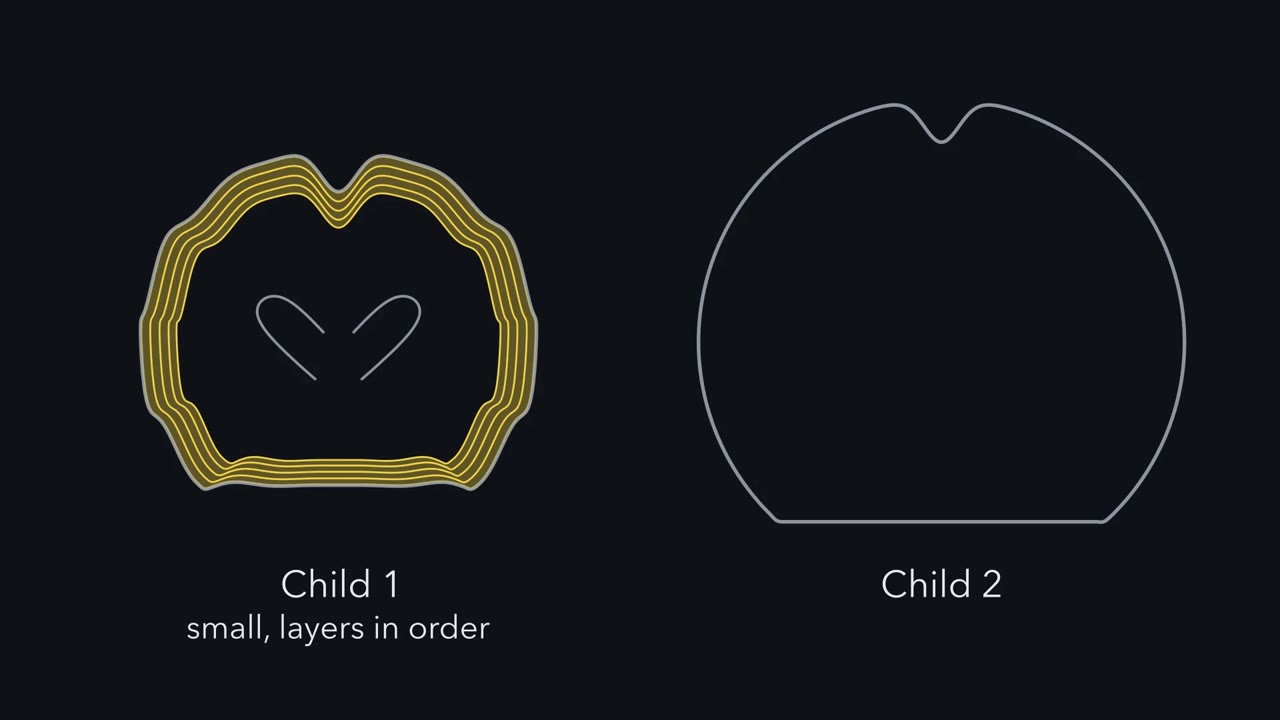 Part 1 of 3 Length 2:35 Size Counts the Doublings Developmental Neuroscience · Graduate school and beyond When Building Goes Wrong: Microcephaly, Zika and Lissencephaly
Take-home
Size counts the doublings, and layering records the journey.
-
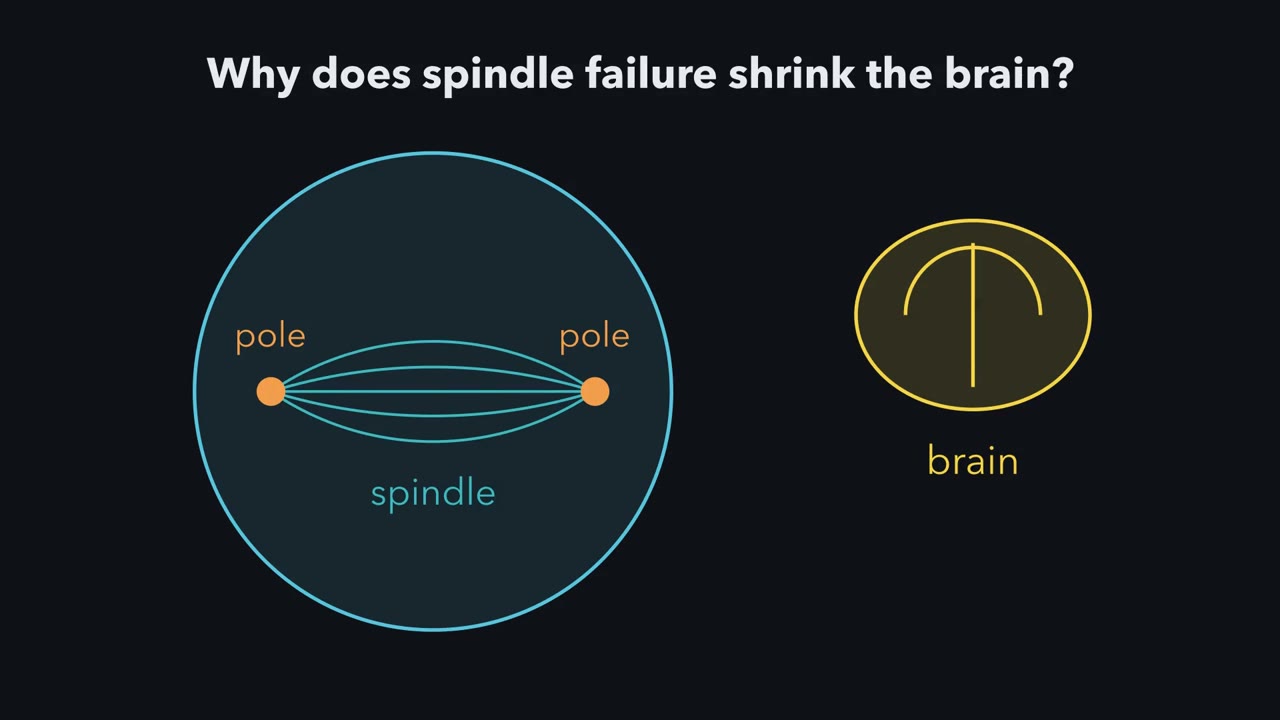 Part 2 of 3 Length 3:14 Too Few: the Spindle and a Virus Developmental Neuroscience · Graduate school and beyond When Building Goes Wrong: Microcephaly, Zika and Lissencephaly
Take-home
Primary microcephaly genes such as ASPM mostly act at the spindle pole of dividing progenitors, leaving a small cortex with layers broadly in order.
-
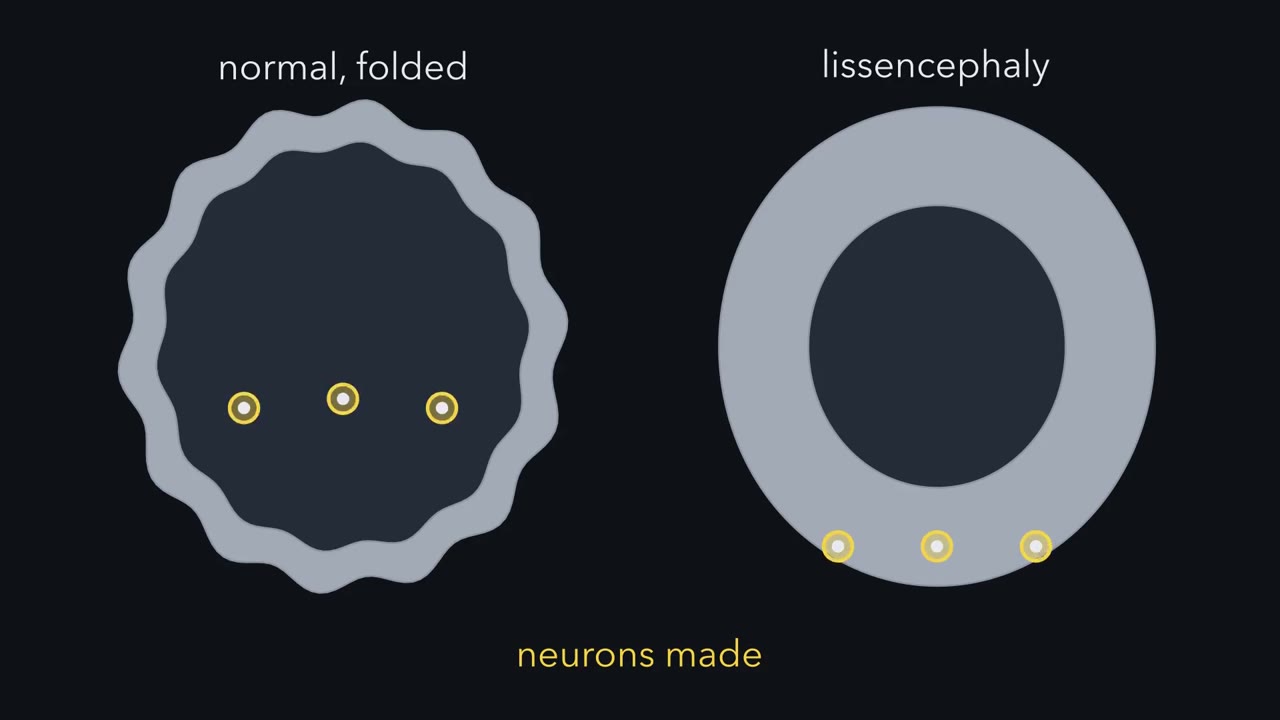 Part 3 of 3 Length 2:58 The Nucleus Left Behind Developmental Neuroscience · Graduate school and beyond When Building Goes Wrong: Microcephaly, Zika and Lissencephaly
Take-home
In classic lissencephaly the neurons are made but fail to travel, and the head is usually near normal in size at birth.
-
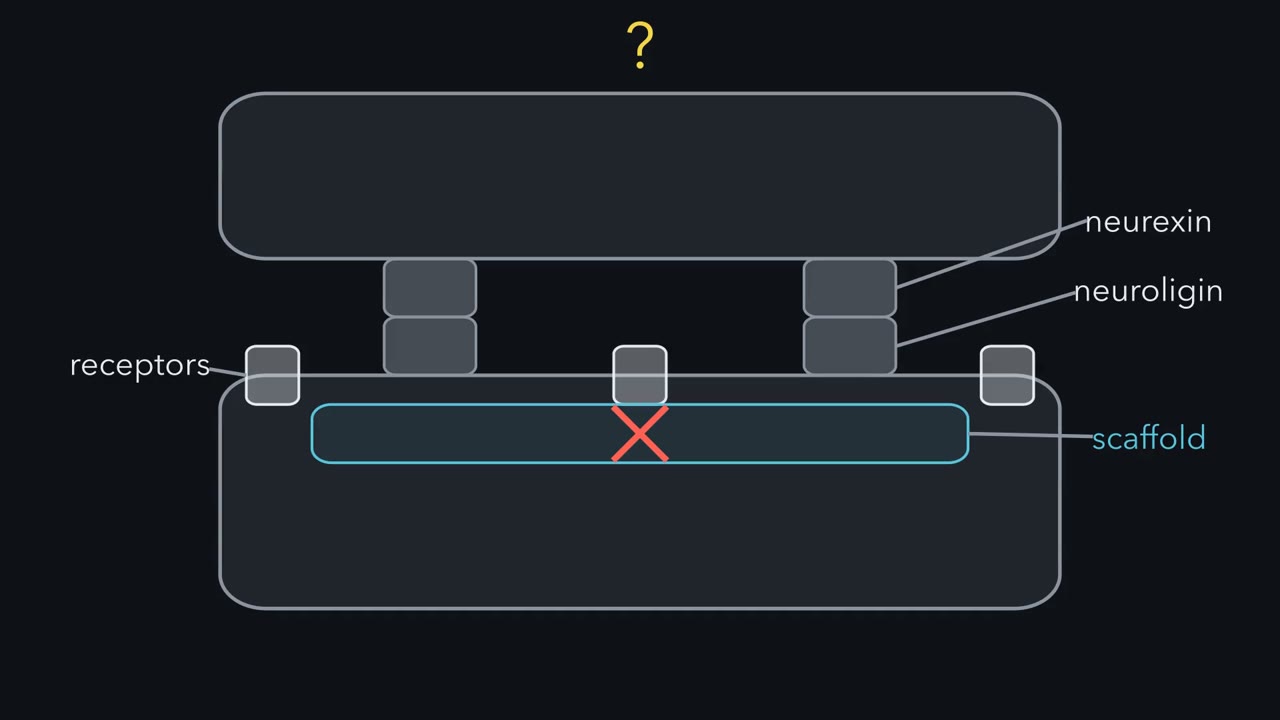 Part 1 of 3 Length 2:26 Built, Then Kept Developmental Neuroscience · Graduate school and beyond Disorders of the Synapse: Built, Then Kept
Take-home
A synapse gene can be needed to build a circuit, to keep it running, or both: built, then kept.
-
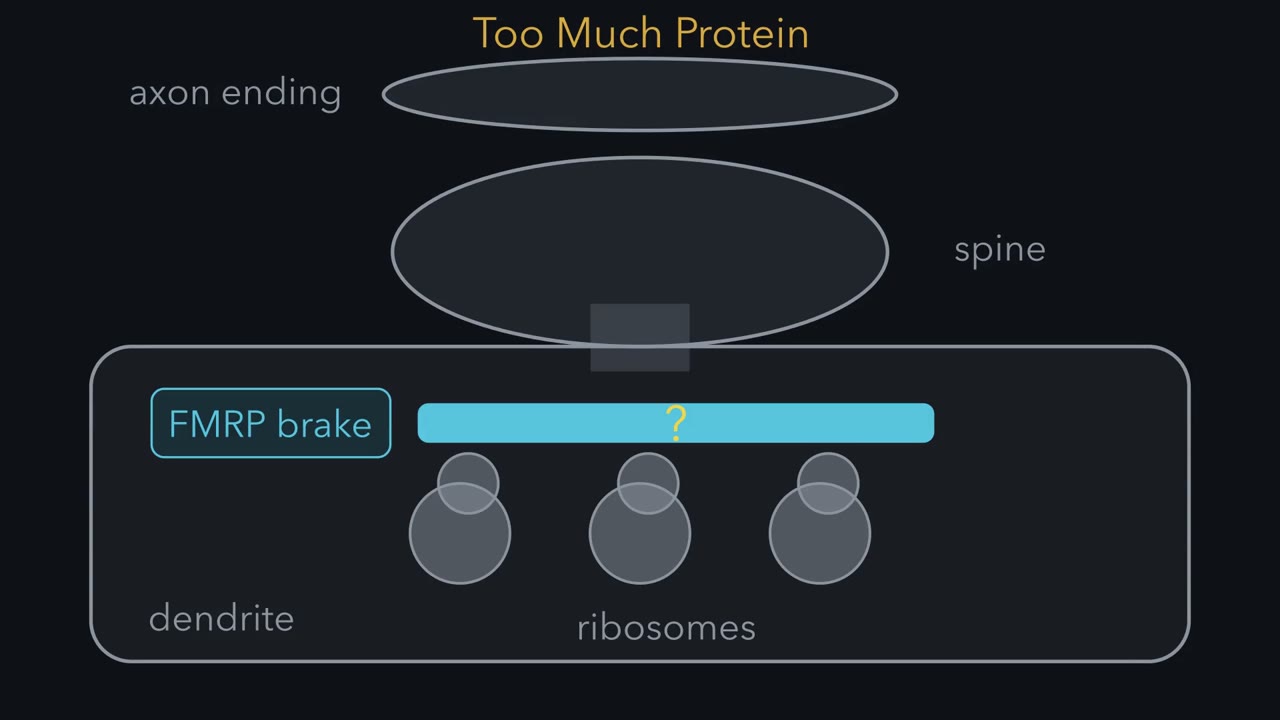 Part 2 of 3 Length 2:56 Too Much Protein Developmental Neuroscience · Graduate school and beyond Disorders of the Synapse: Built, Then Kept
Take-home
In fragile X syndrome the FMR1 gene is usually silenced, so little or no FMRP is made, and FMRP normally holds back local protein synthesis at synapses.
-
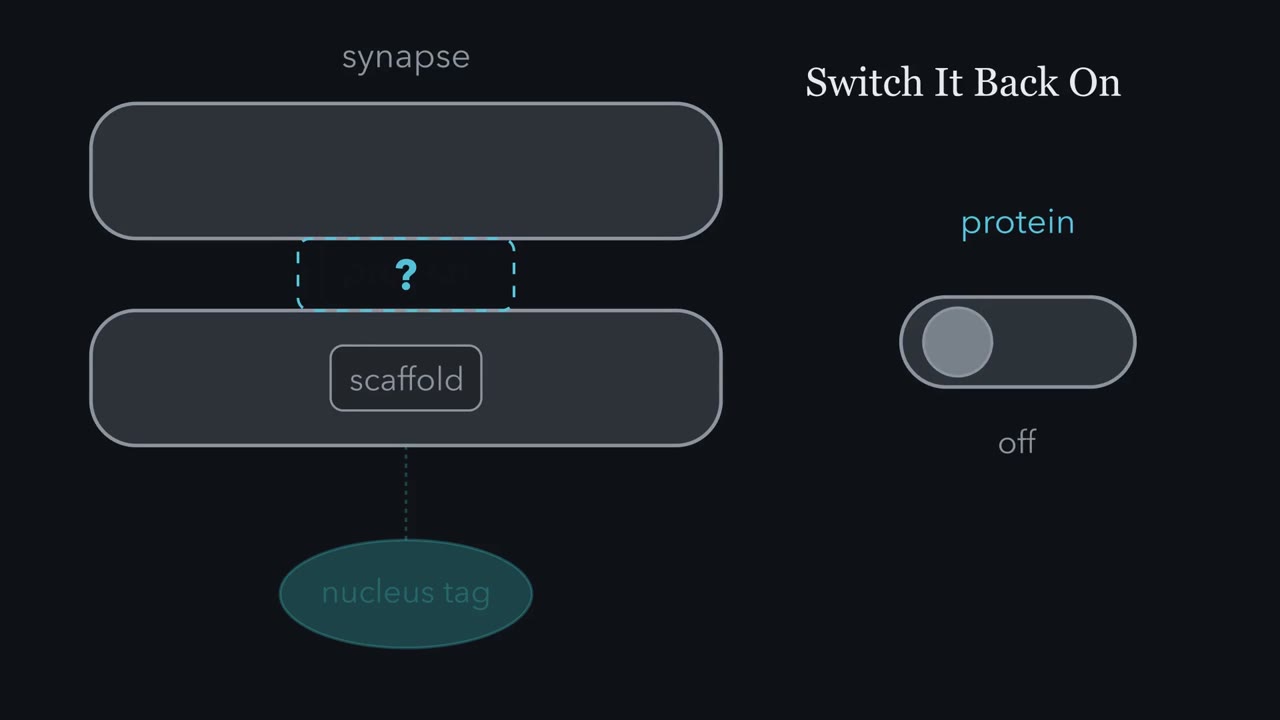 Part 3 of 3 Length 2:57 Switch It Back On Developmental Neuroscience · Graduate school and beyond Disorders of the Synapse: Built, Then Kept
Take-home
In mice, restoring MeCP2 in symptomatic adults reversed many symptoms, so circuits formed without it can work again.
-
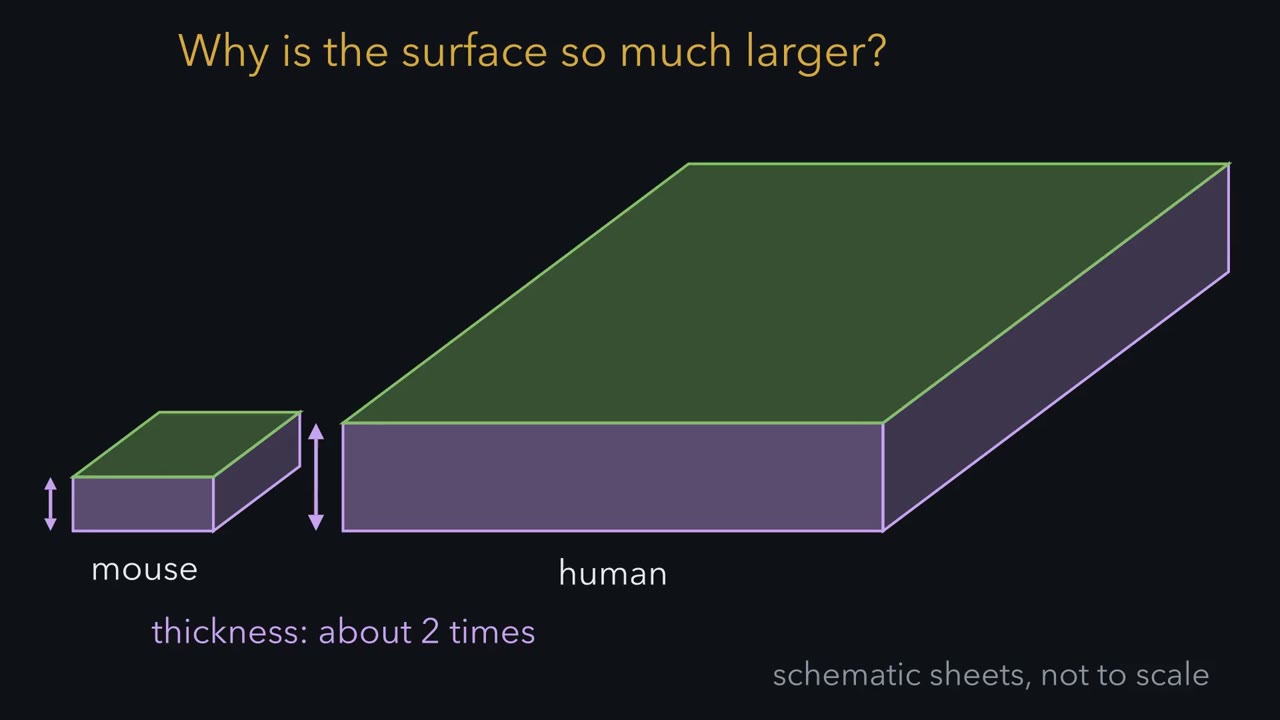 Part 1 of 3 Length 3:13 Multiply, Don't Add Developmental Neuroscience · Graduate school and beyond What Makes the Human Brain Big
Take-home
Multiply, don't add: a division that makes two progenitors adds a progenitor that keeps dividing, so repeated rounds compound.
-
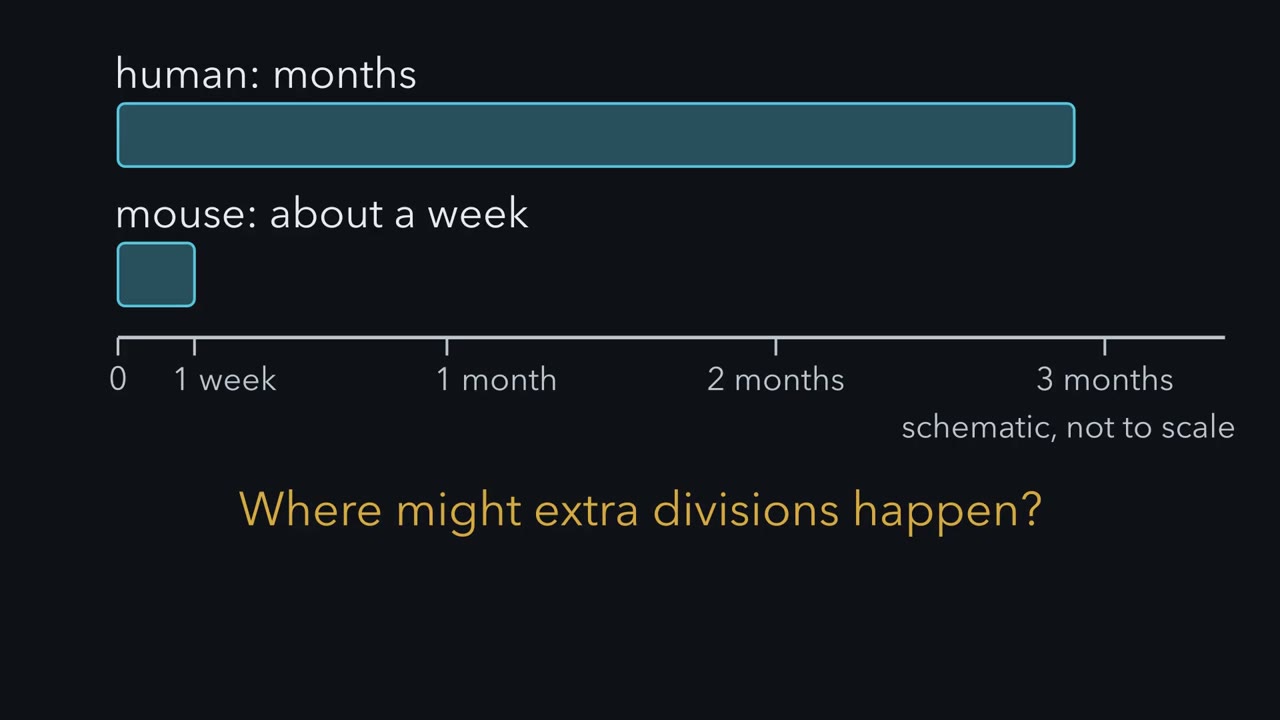 Part 2 of 3 Length 3:06 A Second Place to Double Developmental Neuroscience · Graduate school and beyond What Makes the Human Brain Big
Take-home
Outer radial glia keep a fibre but have no process reaching the ventricle, and can divide far from it.
-
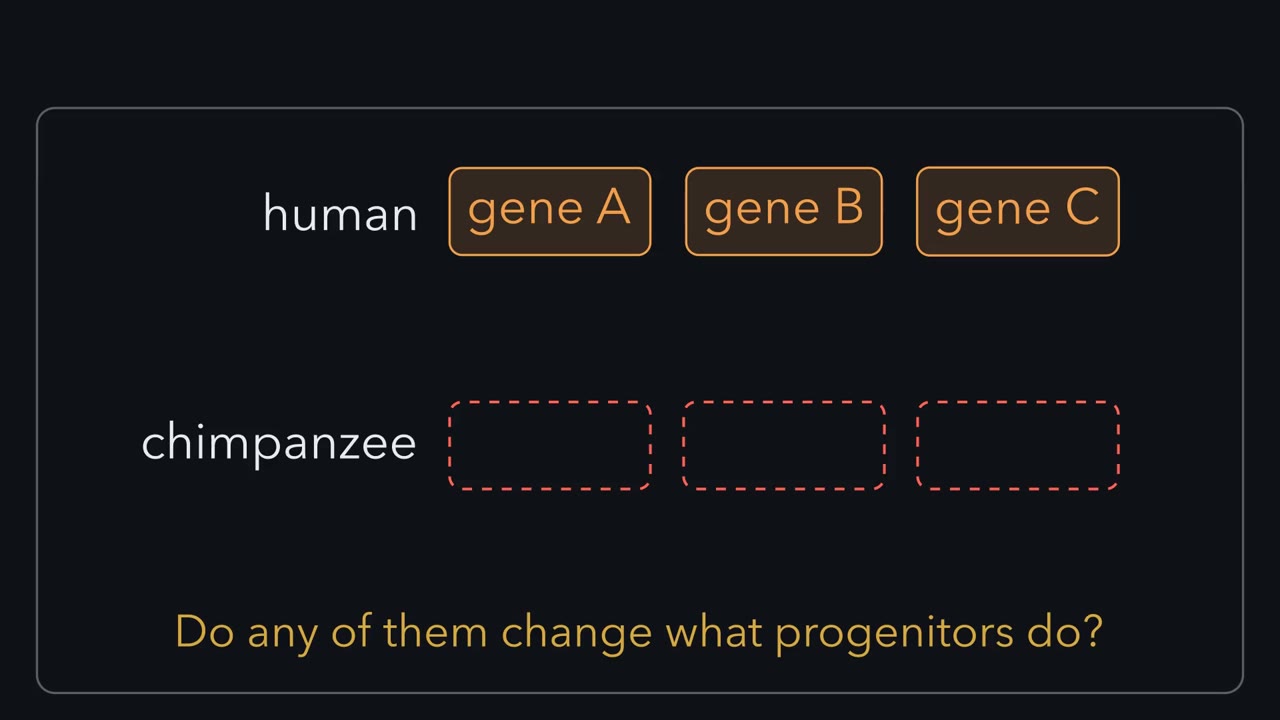 Part 3 of 3 Length 2:31 Testing the Rule in Genes and Time Developmental Neuroscience · Graduate school and beyond What Makes the Human Brain Big
Take-home
Human-specific genes such as ARHGAP11B and NOTCH2NL were tested in mouse, marmoset and organoids, not in a developing human brain.
-
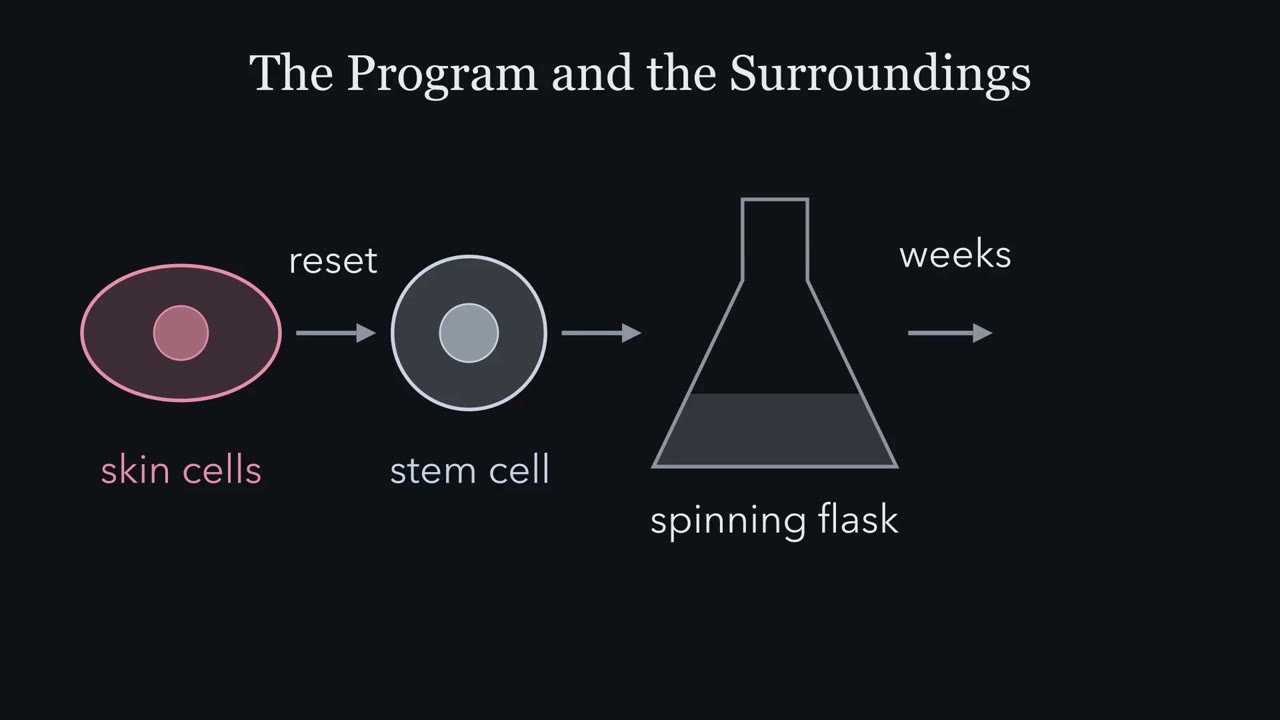 Part 1 of 3 Length 2:36 The Program and the Surroundings Developmental Neuroscience · Graduate school and beyond Brains in a Dish: Stem Cells and Organoids
Take-home
Four transcription factors can reset a skin cell to an induced pluripotent stem cell, which can become any cell type of the body.
-
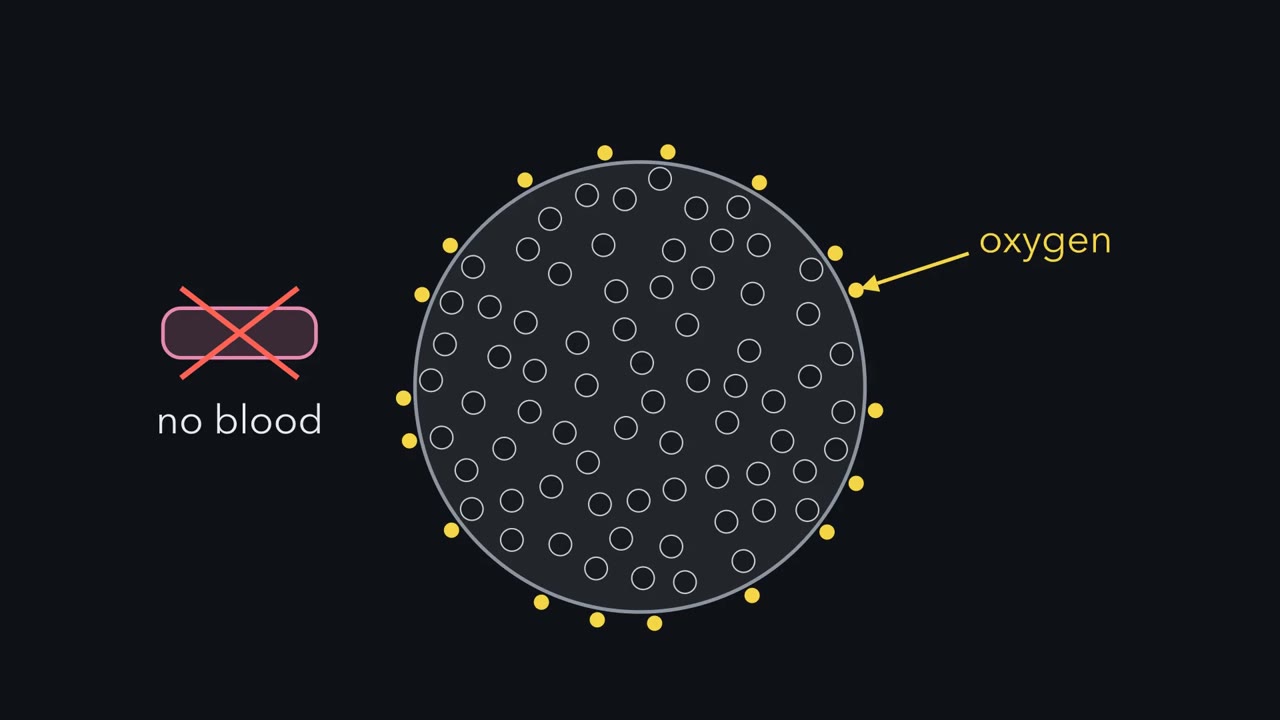 Part 2 of 3 Length 2:41 Measured Against Fetal Cortex Developmental Neuroscience · Graduate school and beyond Brains in a Dish: Stem Cells and Organoids
Take-home
With no blood, oxygen must diffuse in from the surface, so in a simple model of a large organoid the core runs out of oxygen and its cells often die.
-
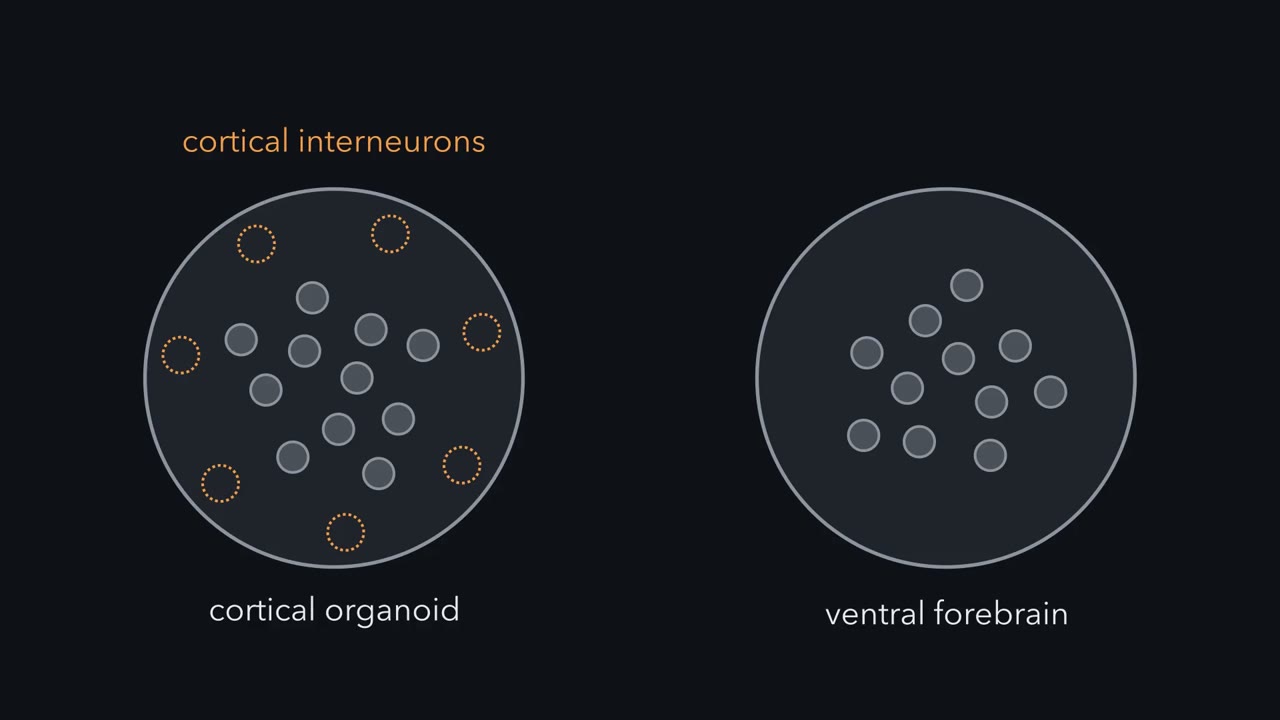 Part 3 of 3 Length 3:36 Putting Back the Surroundings, and Blaming a Mutation Developmental Neuroscience · Graduate school and beyond Brains in a Dish: Stem Cells and Organoids
Take-home
Fusing a ventral spheroid to a cortical one supplies the missing source of interneurons, which then move into the cortical tissue in jumps.
Have 10, 20, 30 minutes? Start at your next unwatched film.
-
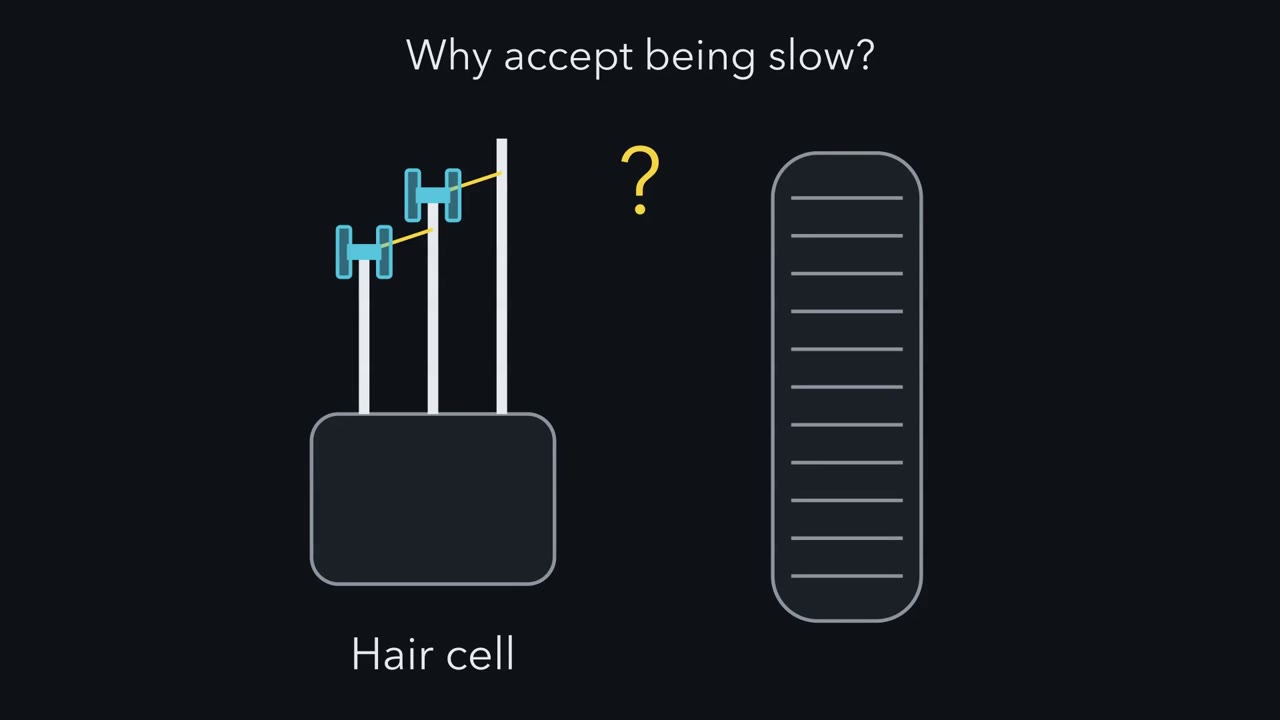 Part 1 of 3 Length 2:41 Nothing in Between, or Enzymes in Between Sensory Systems · Graduate school and beyond Five Ways to Turn a Stimulus into a Current
Take-home
Every sensory cell turns a stimulus into a current, and what sits between the stimulus and the pore sets what the cell can do.
-
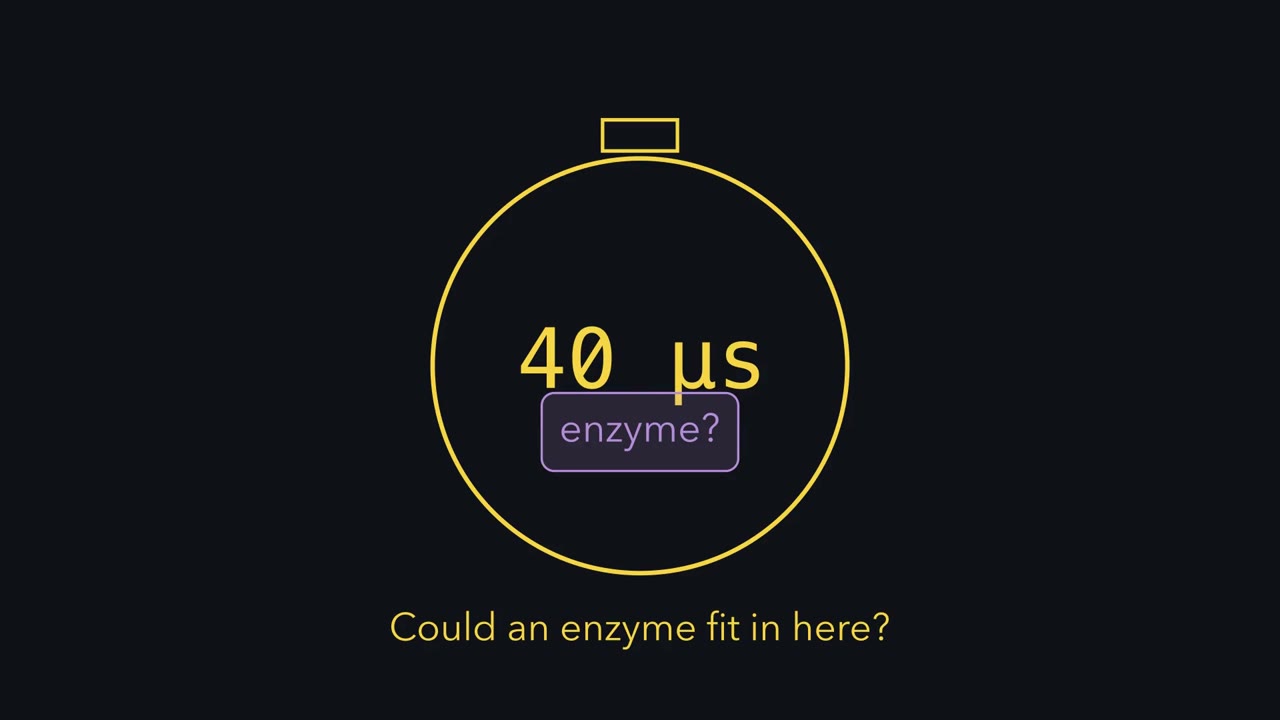 Part 2 of 3 Length 2:48 Forty Microseconds: What a Fast Number Measures Sensory Systems · Graduate school and beyond Five Ways to Turn a Stimulus into a Current
Take-home
The 40-microsecond delay is a tissue response latency, the corrected summed response of the bullfrog sacculus at 22 degrees C, not the opening time of one channel.
-
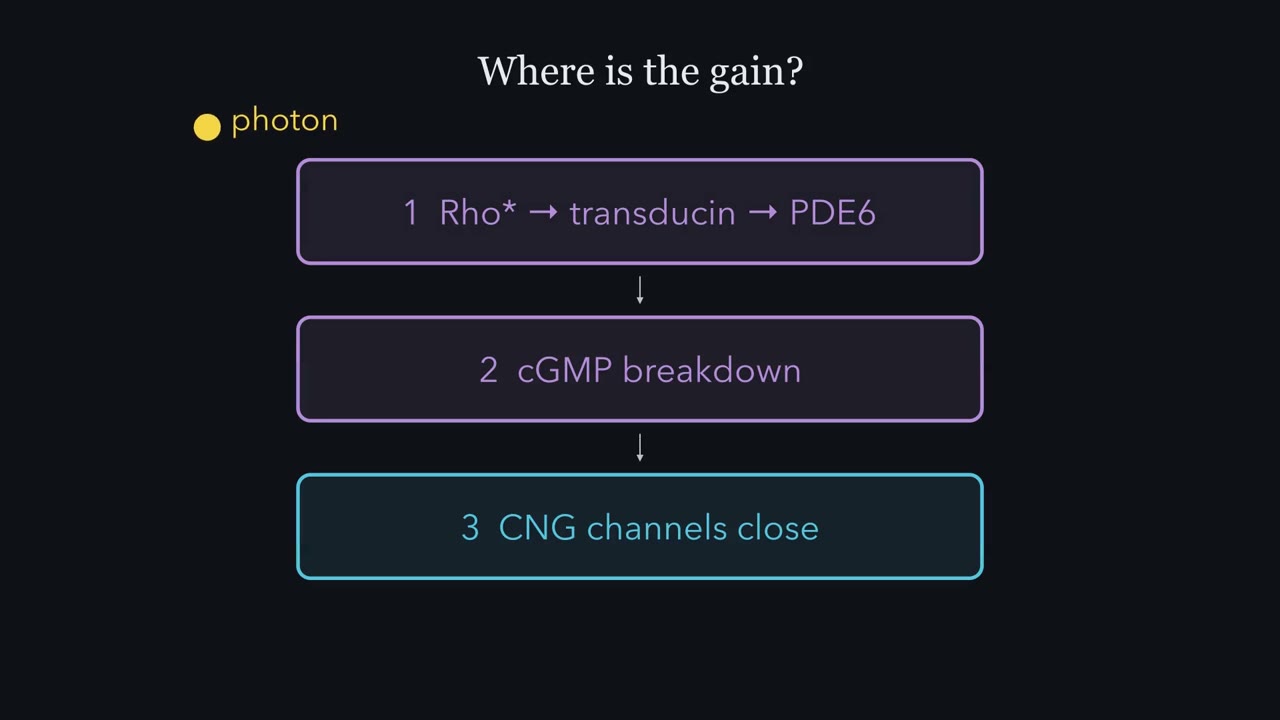 Part 3 of 3 Length 2:53 Where the Gain Sits, and What It Costs Sensory Systems · Graduate school and beyond Five Ways to Turn a Stimulus into a Current
Take-home
In mouse rods, about 2000 cGMP molecules are hydrolysed per absorbed photon, so a rod cascade can multiply one event many times.
-
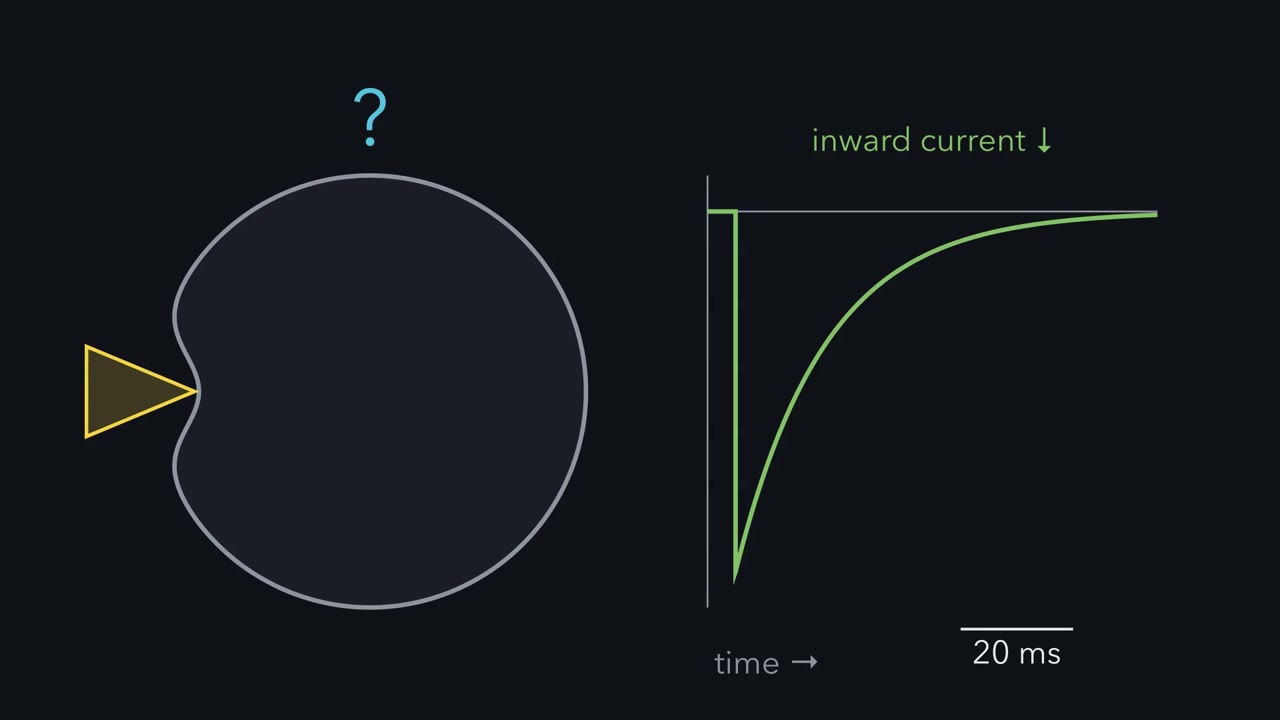 Part 1 of 6 Length 2:44 Which Protein Carries the Poke? Sensory Systems · Graduate school and beyond Piezo Channels and the Physics of Force
Take-home
Silencing a gene in a cell line showed it was required for the poke-evoked current there, not that its protein is the channel.
-
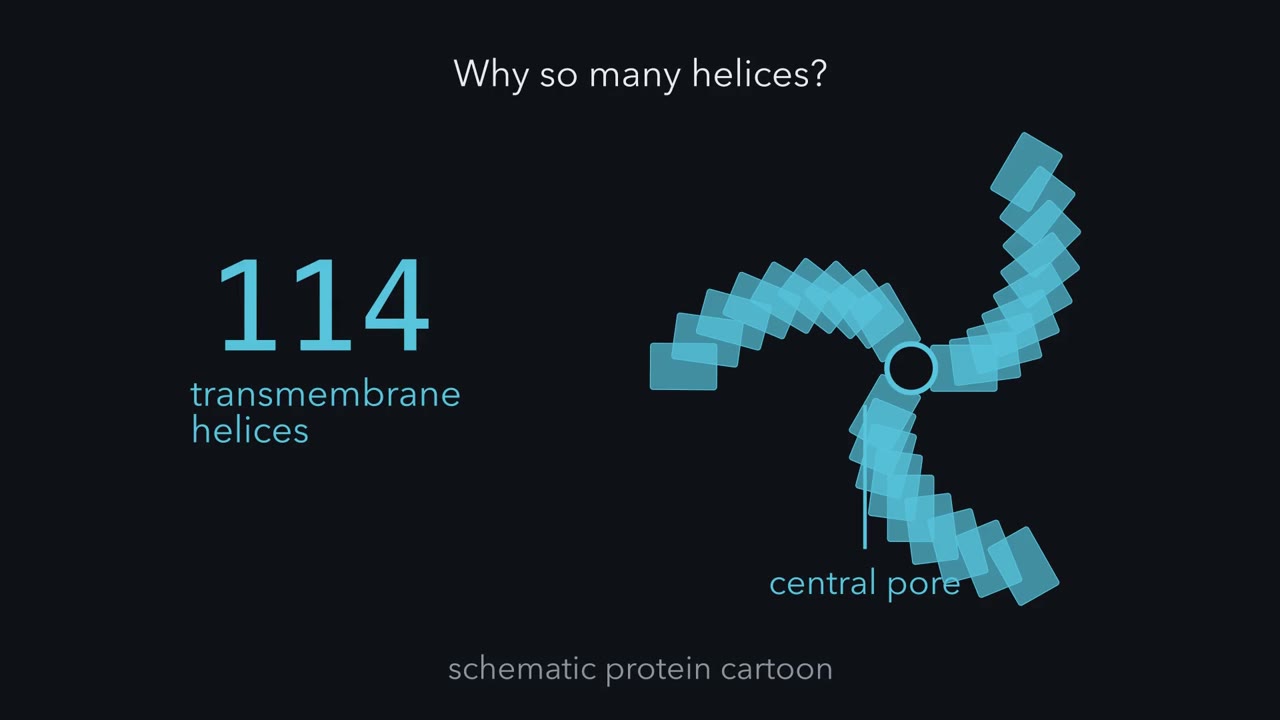 Part 2 of 6 Length 2:38 A Channel Shaped Like a Dome Sensory Systems · Graduate school and beyond Piezo Channels and the Physics of Force
Take-home
Mouse PIEZO2 has 38 transmembrane helices per subunit and 114 per channel, and the two numbers are kept apart.
-
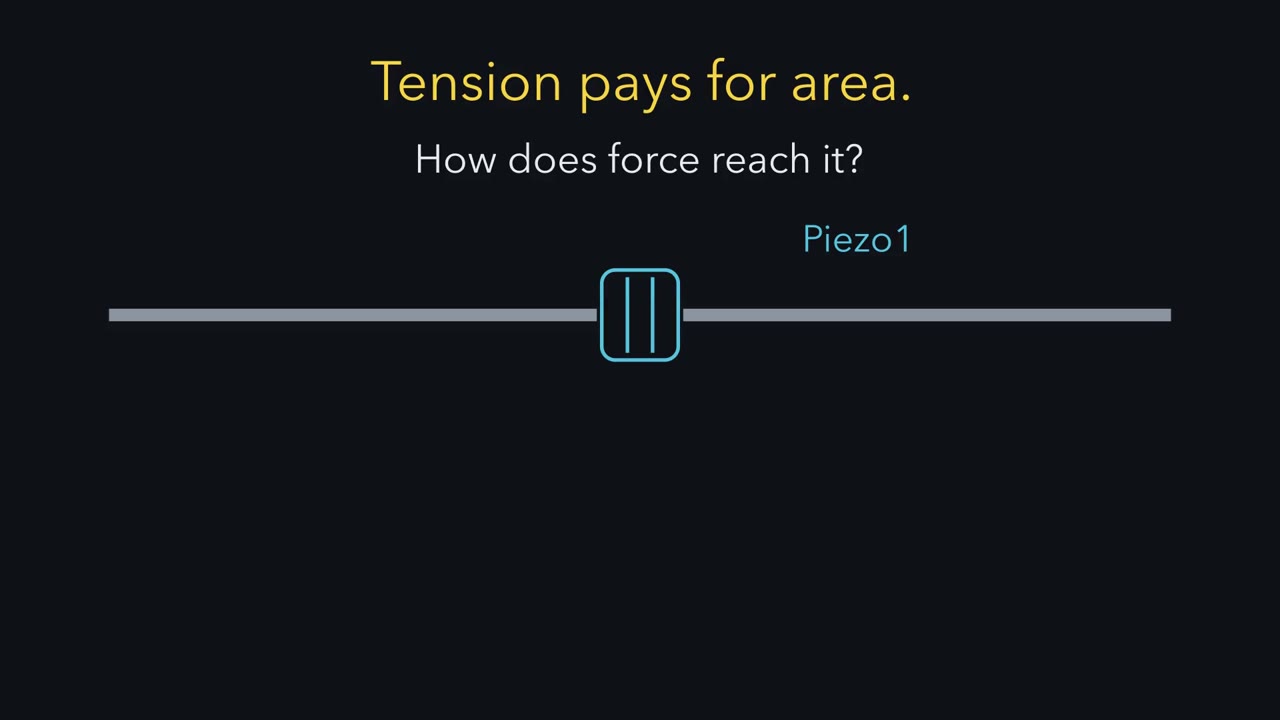
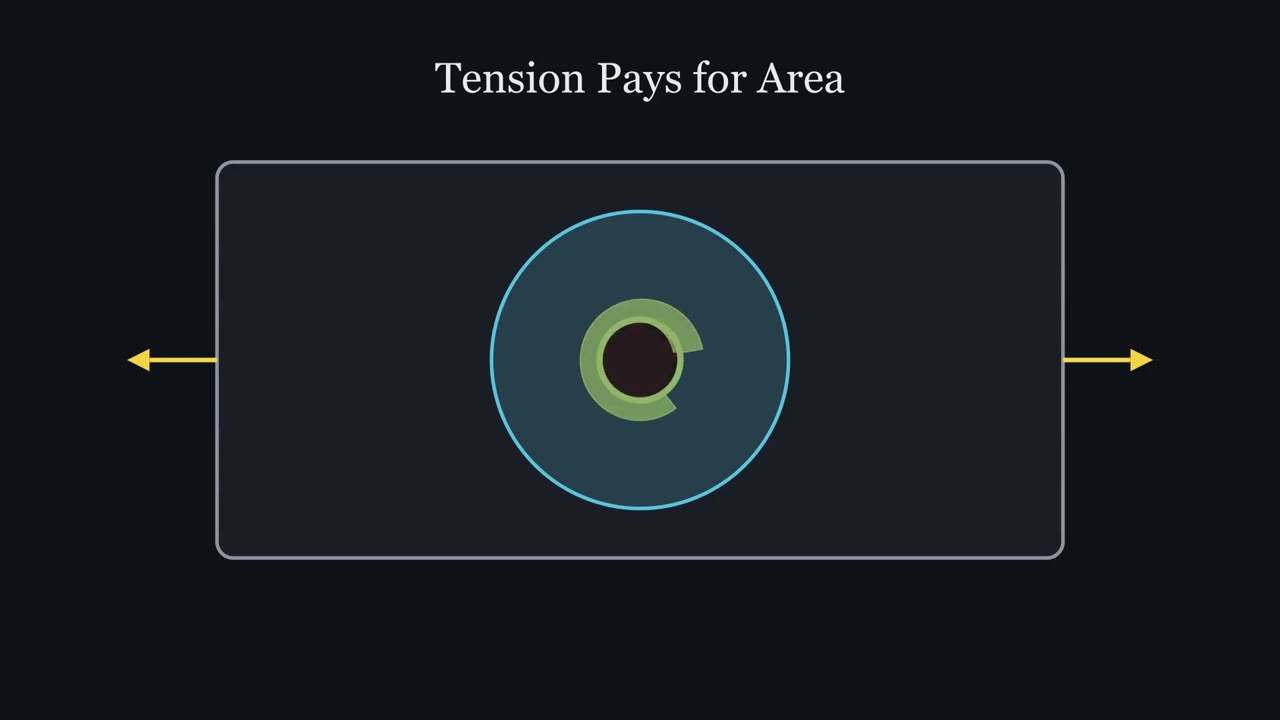 Part 3 of 6 Length 2:49 Tension Pays for Area Sensory Systems · Graduate school and beyond Piezo Channels and the Physics of Force
Take-home
Tension pays for area: if a channel takes up more membrane when open, tension lowers the energy of the open state by tension times the area gained.
-
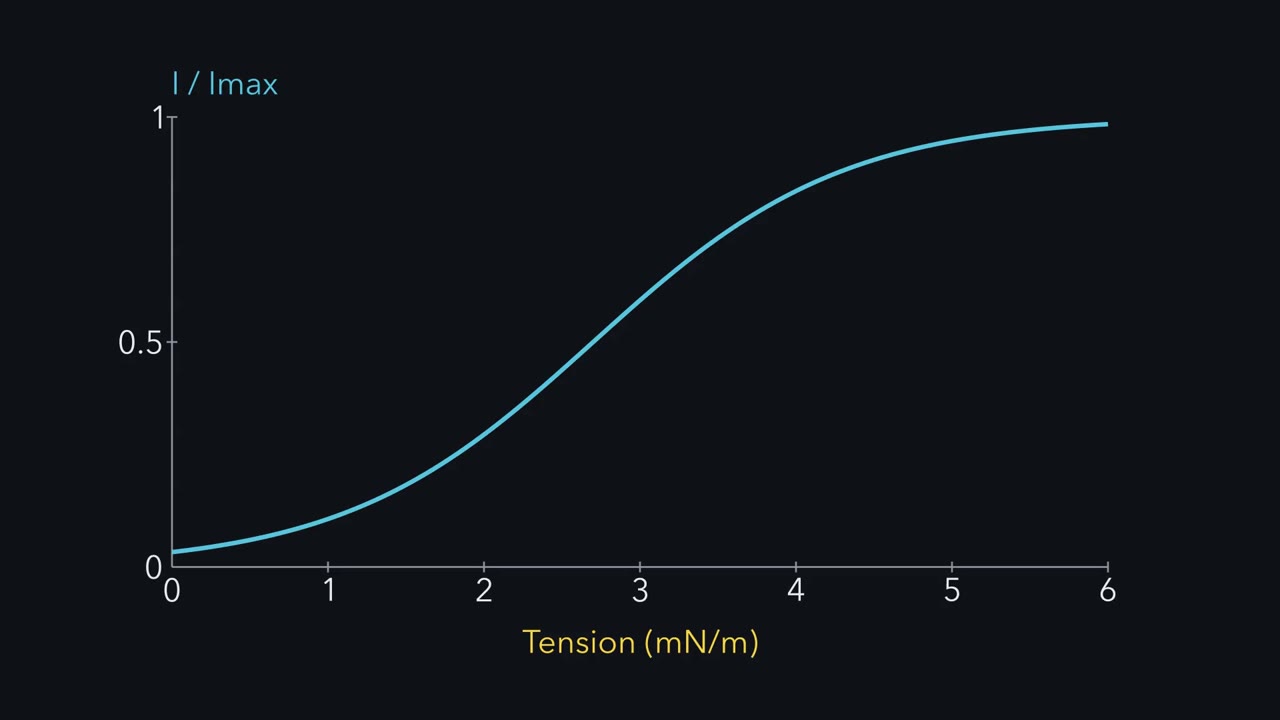 Part 4 of 6 Length 2:53 Reading a Patch Sensory Systems · Graduate school and beyond Piezo Channels and the Physics of Force
Take-home
Read as a two-state switch, the slope factor of a current-tension fit implies an effective area.
-
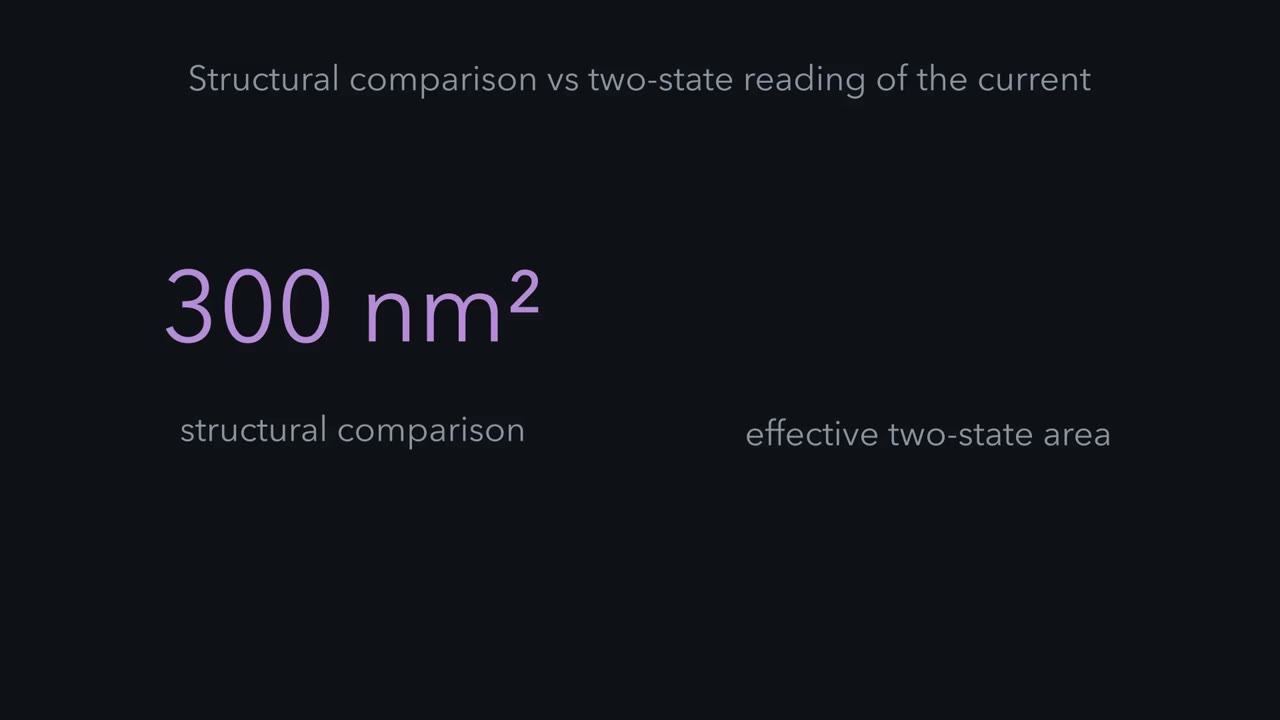 Part 5 of 6 Length 2:56 The Sixty-Fold Gap Sensory Systems · Graduate school and beyond Piezo Channels and the Physics of Force
Take-home
Cryo-EM showed about 300 square nanometres of in-plane expansion, but a two-state reading of the current gives about 5, so the slopes differ about sixty-fold.
-
 Part 6 of 6 Length 3:08 Lipid, Tether and People Sensory Systems · Graduate school and beyond Piezo Channels and the Physics of Force
Take-home
Purified mouse Piezo1 in droplet bilayers was activated by force, so protein plus lipid is sufficient there, which does not exclude a tether route in intact cells.
-
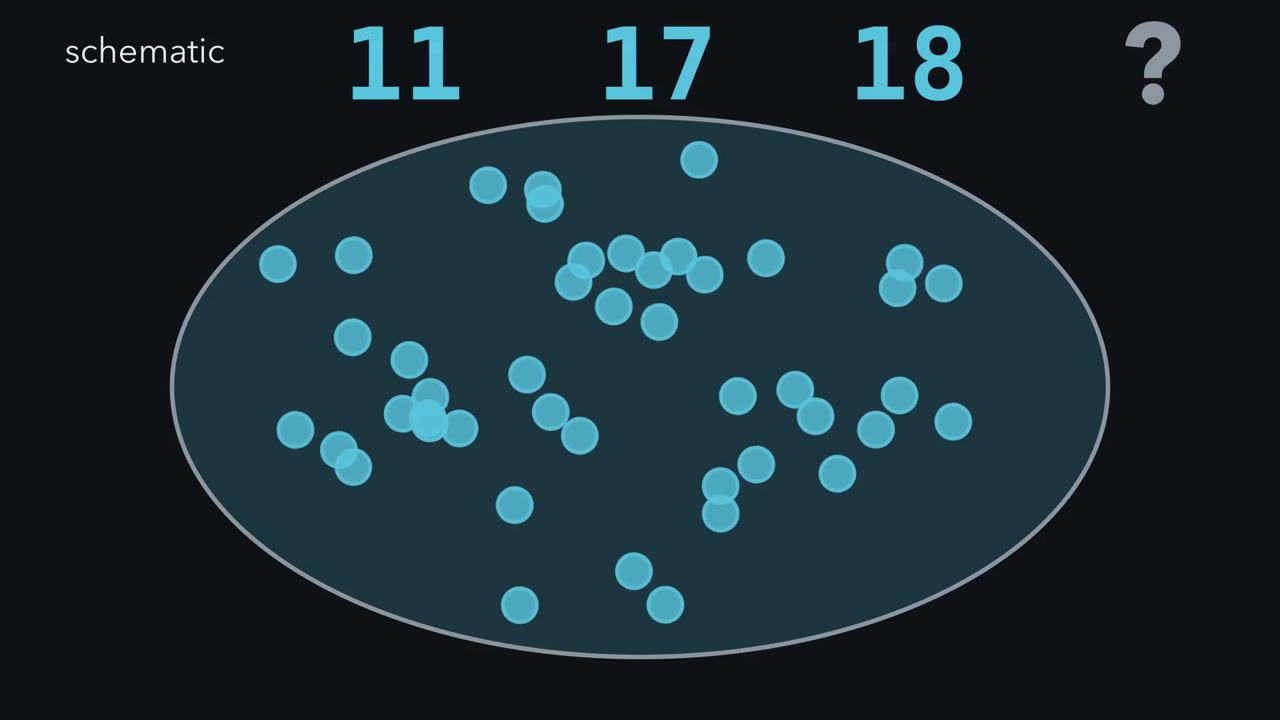 First film Length 3:29 From Cluster to Cell Type Sensory Systems · Graduate school and beyond Sensory Neurons by Their Genes: the Atlas Era
Take-home
Atlas cluster counts depend on the data set, resolution, preparation and cell state.
-
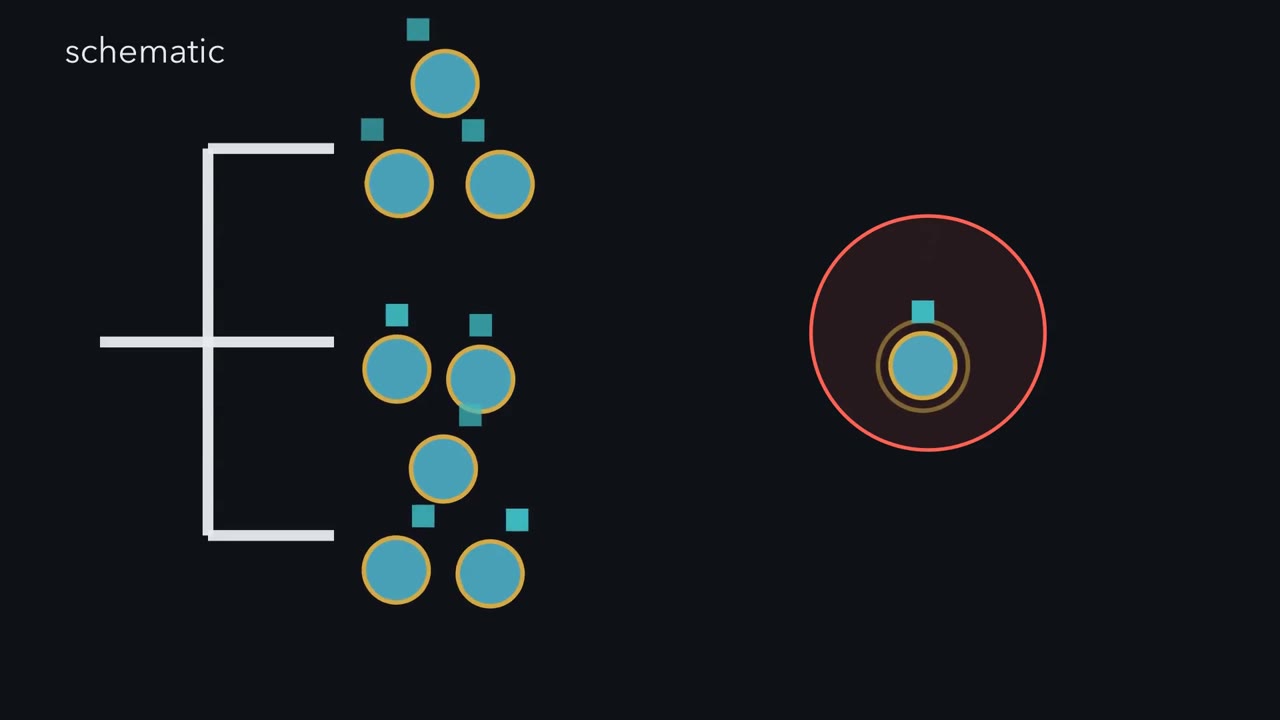 Second film Length 3:35 When Identity Changes Sensory Systems · Graduate school and beyond Sensory Neurons by Their Genes: the Atlas Era
Take-home
Subtype identity emerges as broad transcription factor expression narrows during mouse development.
-
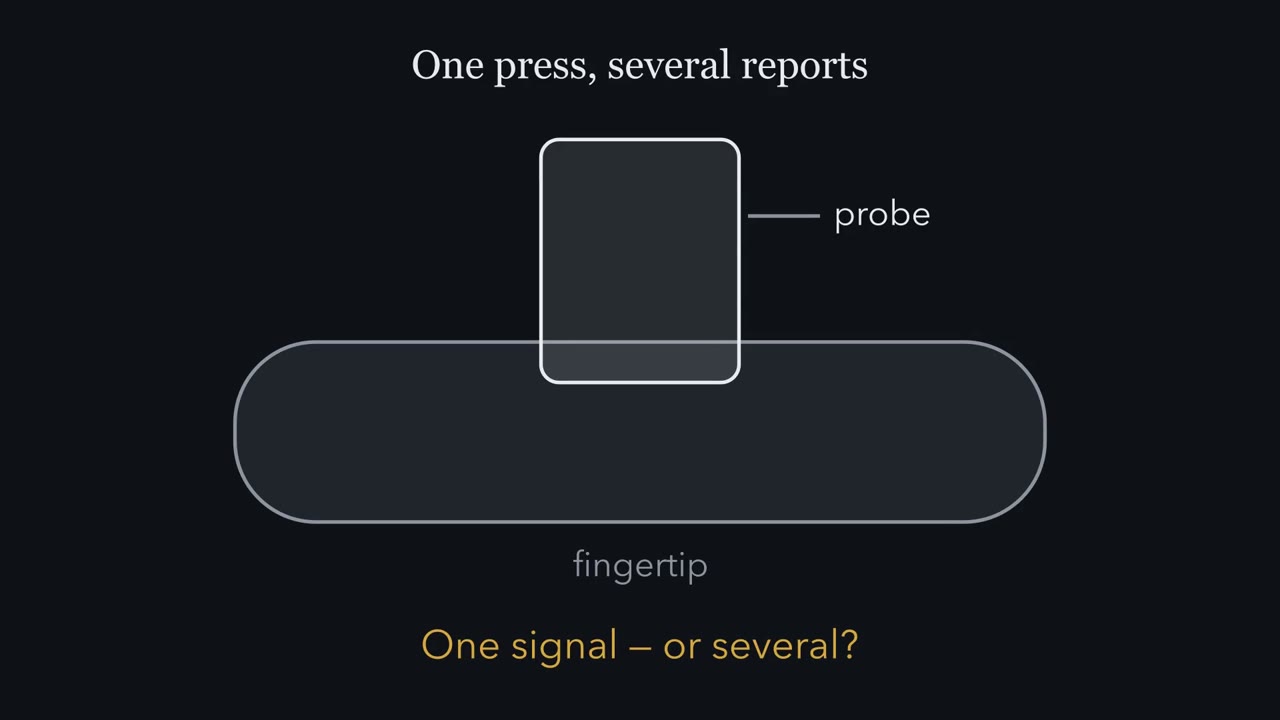 Part 1 of 3 Length 2:50 One Press, Several Reports Sensory Systems · Graduate school and beyond The Low-Threshold Mechanoreceptors: One Touch, Several Signals
Take-home
Each class of low-threshold mechanoreceptor is most sensitive to a different part of a touch.
-
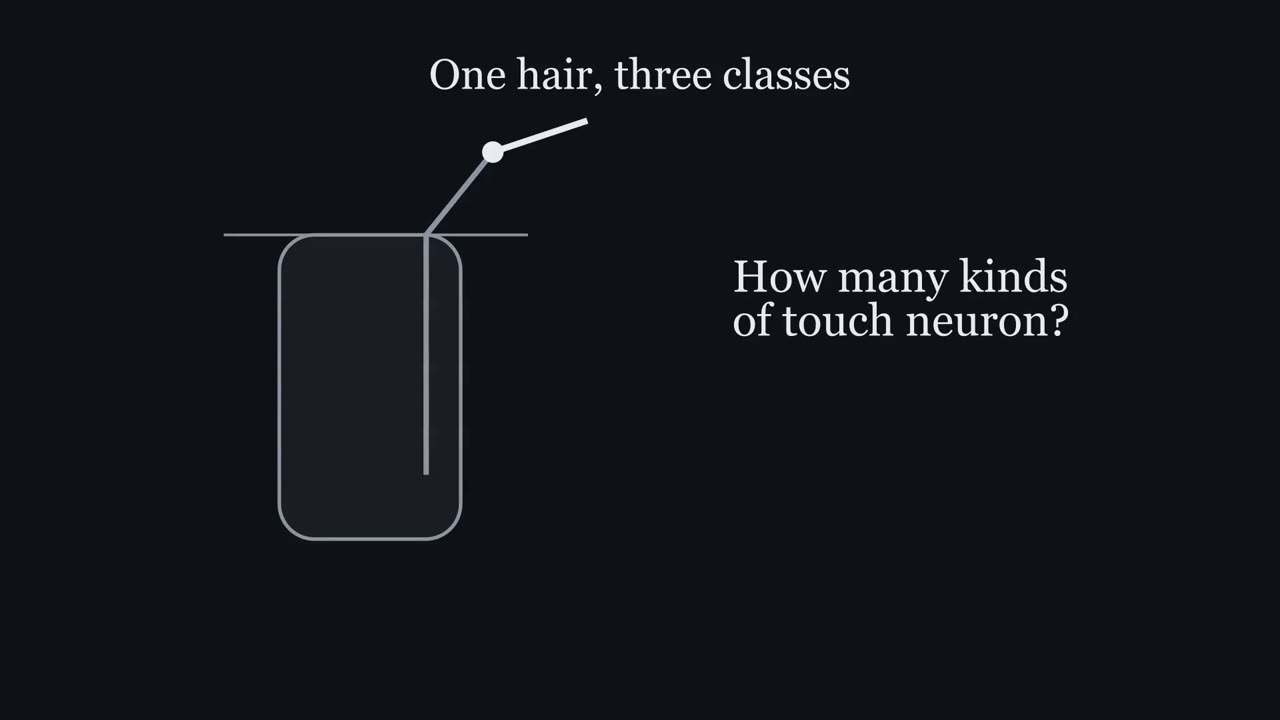 Part 2 of 3 Length 3:03 One Hair, Three Classes Sensory Systems · Graduate school and beyond The Low-Threshold Mechanoreceptors: One Touch, Several Signals
Take-home
One movement of an awl/auchene hair can be reported in parallel by three classes, at three speeds.
-
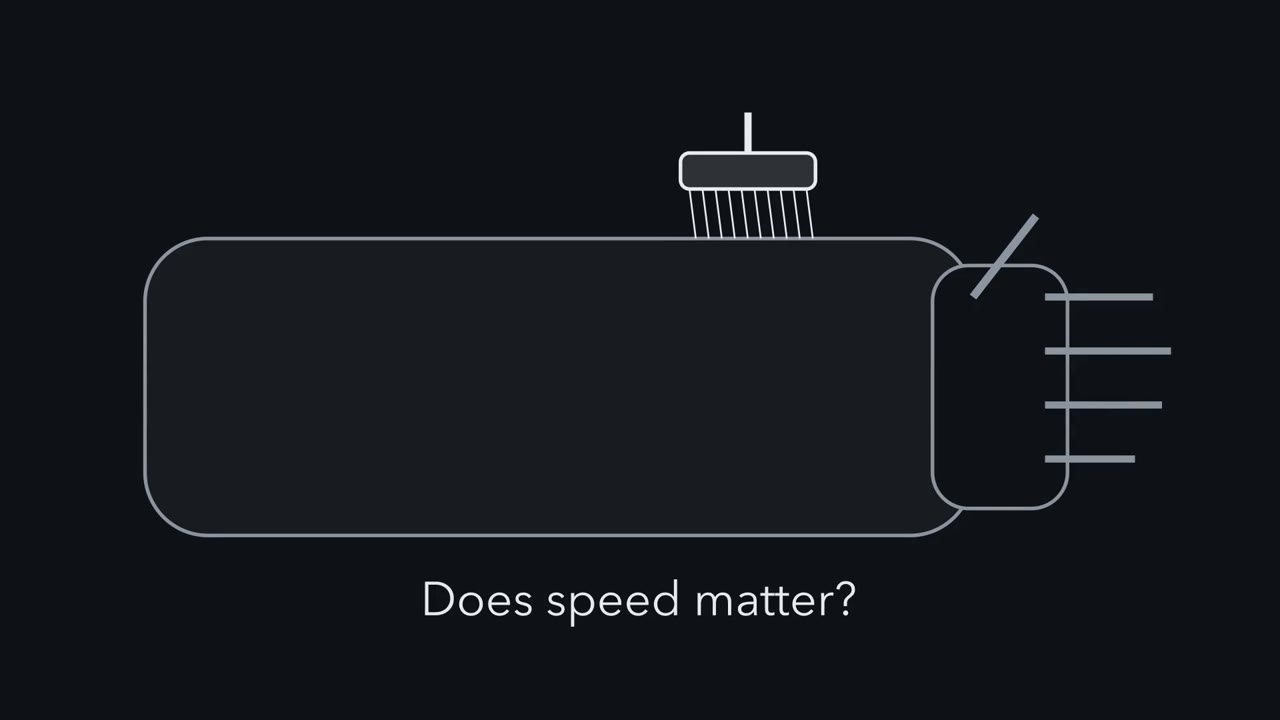 Part 3 of 3 Length 1:51 Your Own Skin: The Slow Stroke Sensory Systems · Graduate school and beyond The Low-Threshold Mechanoreceptors: One Touch, Several Signals
Take-home
In people, C-tactile afferents fire most in the slow stroke range, in an inverted U across stroking speeds.
-
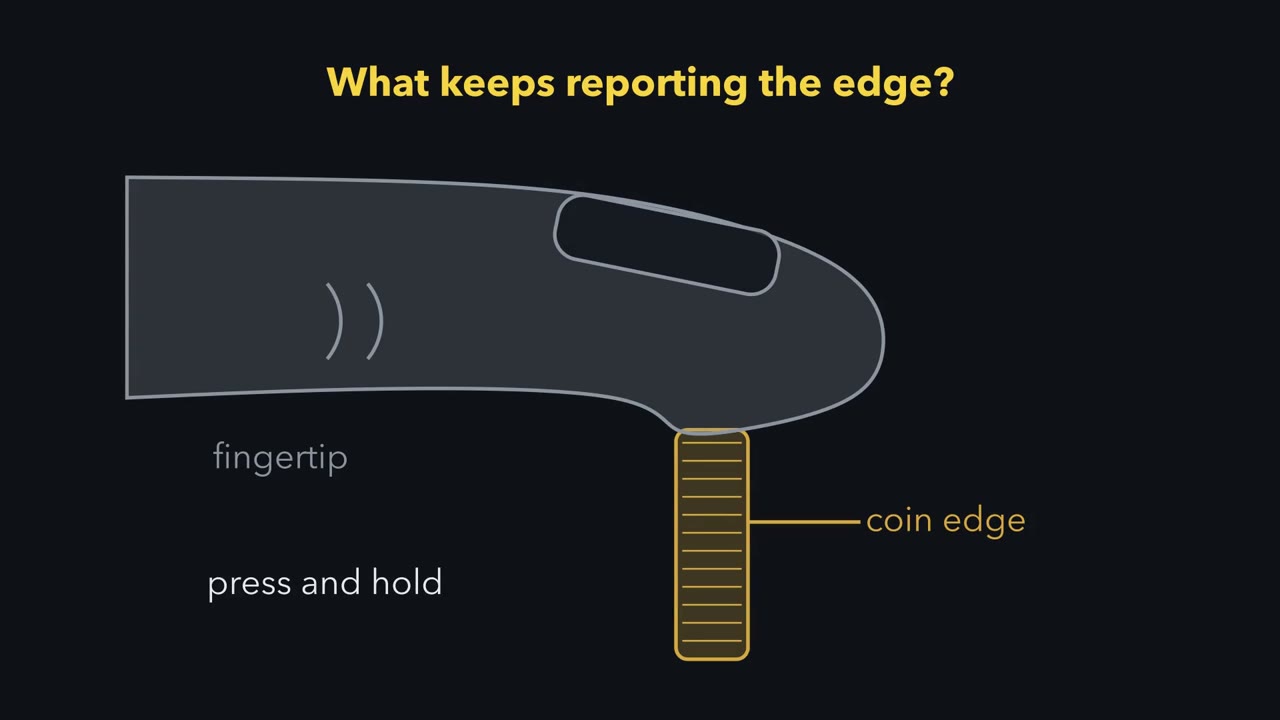 Part 1 of 3 Length 2:24 Two Receptors, One Nerve Sensory Systems · Graduate school and beyond Merkel Cells: Touch Receptors That Are Not Neurons
Take-home
In macaque fingertips, SA1 firing carried the spatial layout of millimetre-scale features, with a dynamic onset burst and a static hold phase.
-
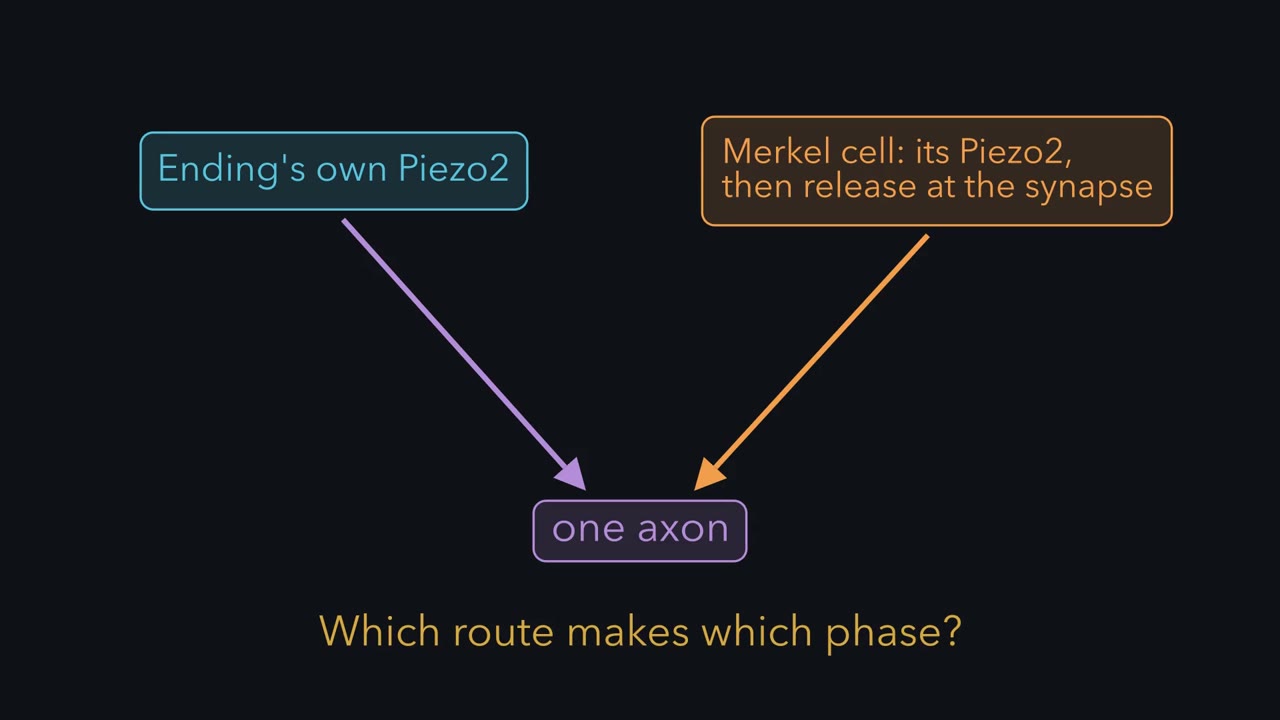 Part 2 of 3 Length 2:45 Take One Route Away Sensory Systems · Graduate school and beyond Merkel Cells: Touch Receptors That Are Not Neurons
Take-home
Taking one route away, the Merkel cell's, and watching which phase is left shows what each receptor contributes.
-
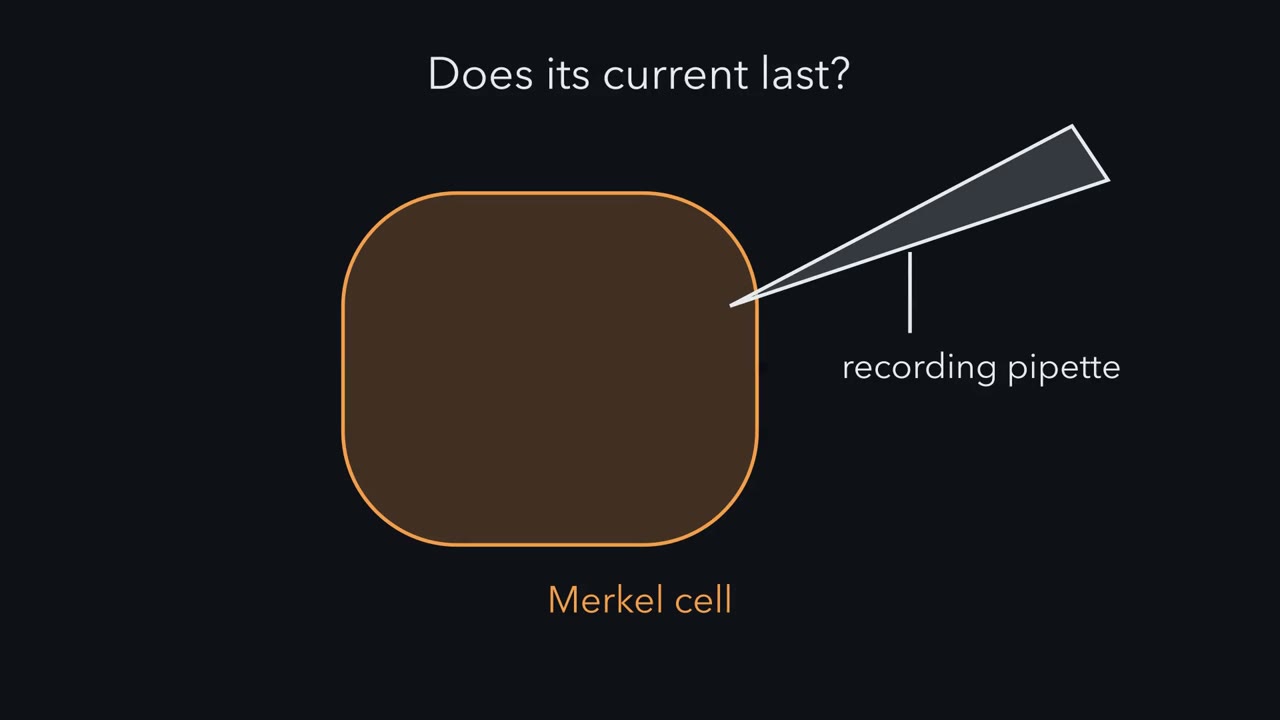 Part 3 of 3 Length 2:48 A Brief Current That Holds a Press Sensory Systems · Graduate school and beyond Merkel Cells: Touch Receptors That Are Not Neurons
Take-home
Compare charge, not peaks: in a thought experiment, a small steady current through a one-second hold carried most of the charge.
-
 Part 1 of 3 Length 2:18 Reporters of Change Sensory Systems · Graduate school and beyond Meissner and Pacinian Corpuscles: Flutter and Vibration
Take-home
Meissner and Pacinian corpuscles report change, not level: their afferents fire when the skin starts to move, stops or keeps moving, and go quiet while a press is held.
-
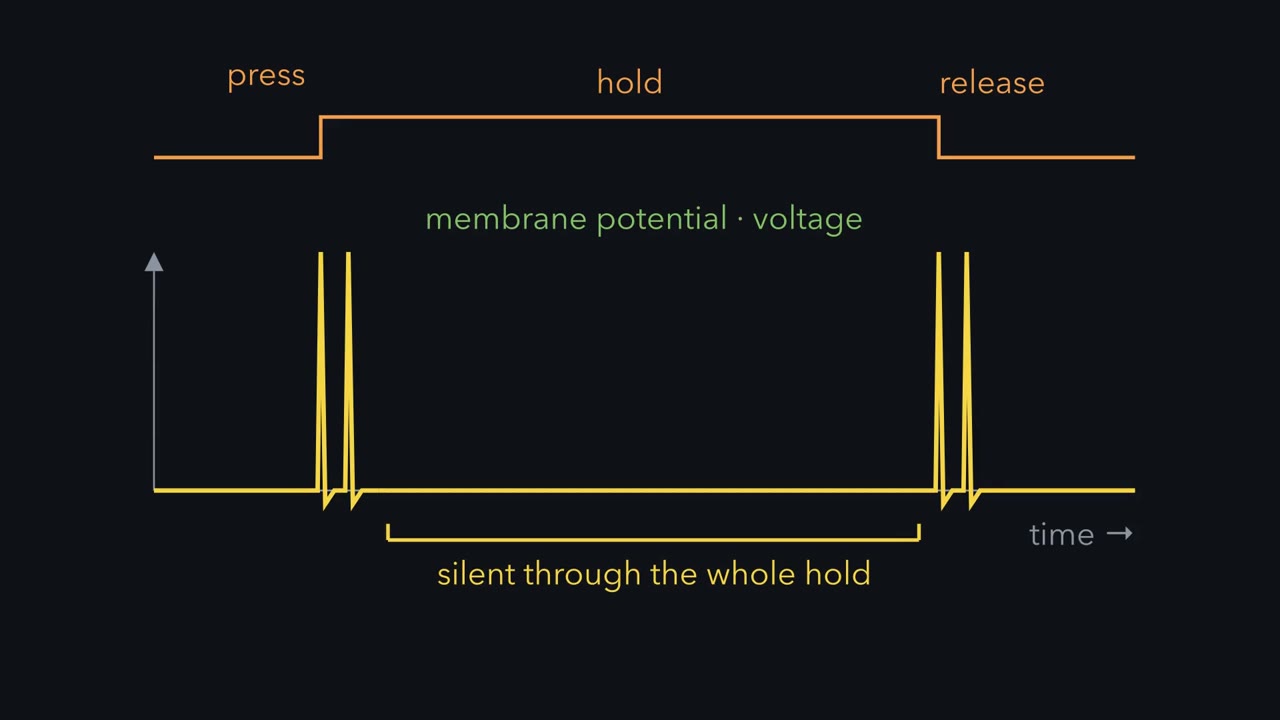 Part 2 of 3 Length 3:20 Peel the Onion Sensory Systems · Graduate school and beyond Meissner and Pacinian Corpuscles: Flutter and Vibration
Take-home
Brevity can arise in the capsule, the terminal's channels or the spike generator, and the classical account put the filtering in the capsule.
-
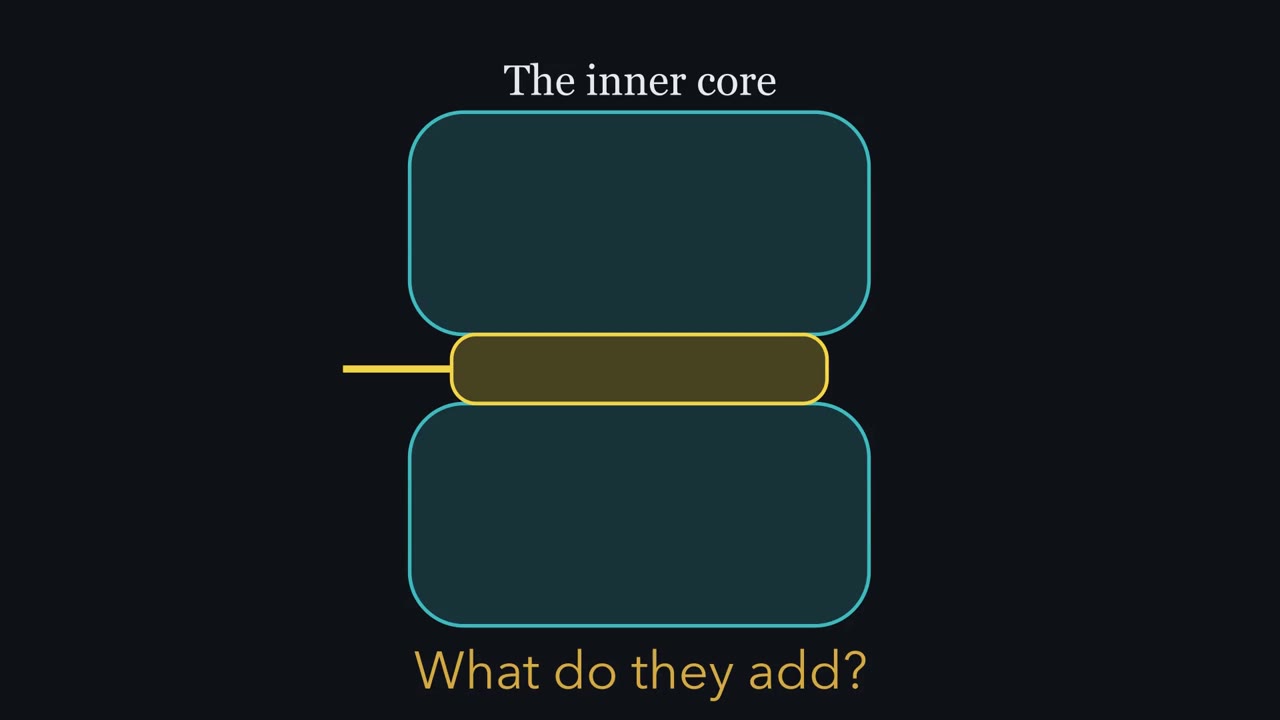 Part 3 of 3 Length 2:43 The Cells That Help It Feel Sensory Systems · Graduate school and beyond Meissner and Pacinian Corpuscles: Flutter and Vibration
Take-home
In mice, force opens Piezo2 in the sensory axon, but the wrapping cells also feel force and contribute to detection; how they normally do so is not yet known.
-
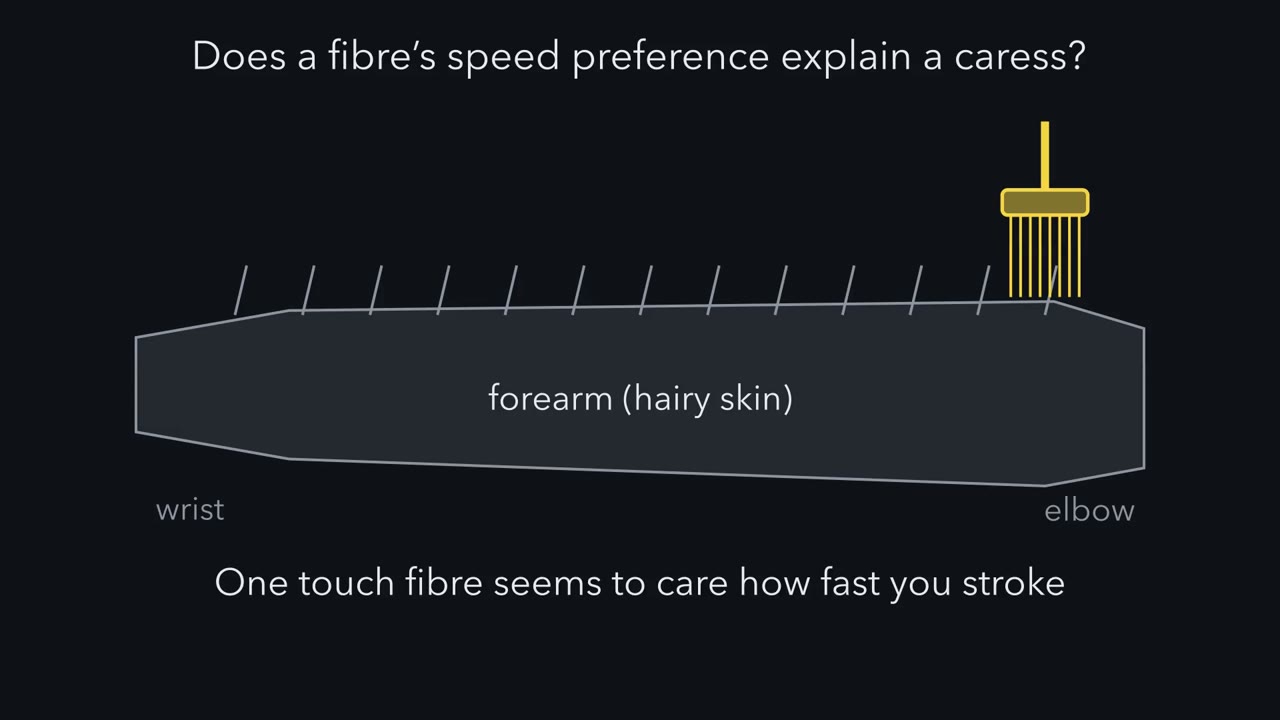 Part 1 of 3 Length 2:42 The Fibre That Prefers a Caress Sensory Systems · Graduate school and beyond Hairy Skin, Stroking and Affective Touch
Take-home
In human hairy skin, the C-tactile afferent fires most at caress speeds of about 1 to 10 cm/s, while the myelinated touch fibres recorded fire harder the faster the brush moves.
-
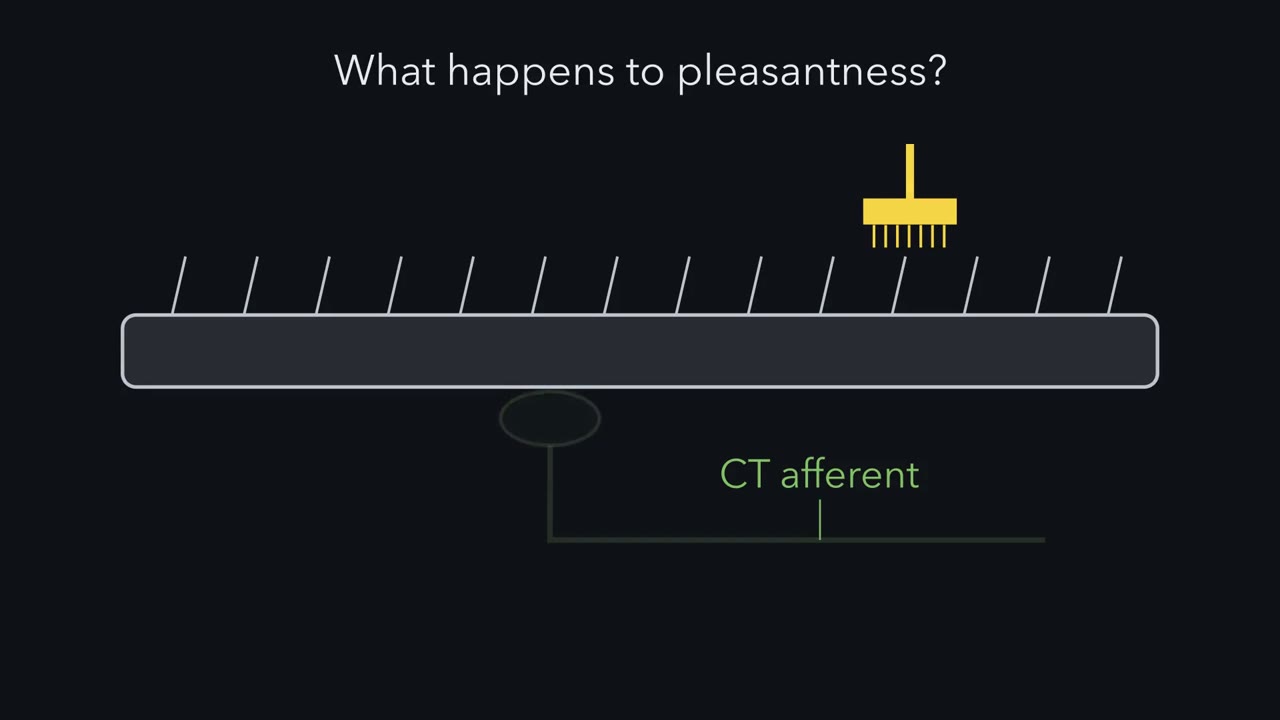 Part 2 of 3 Length 2:43 Take the Input Away Sensory Systems · Graduate school and beyond Hairy Skin, Stroking and Affective Touch
Take-home
In carriers of a nerve growth factor mutation with fewer thin fibres, caress-speed stroking was rated less pleasant, though the mutation affects more than C-tactile afferents.
-
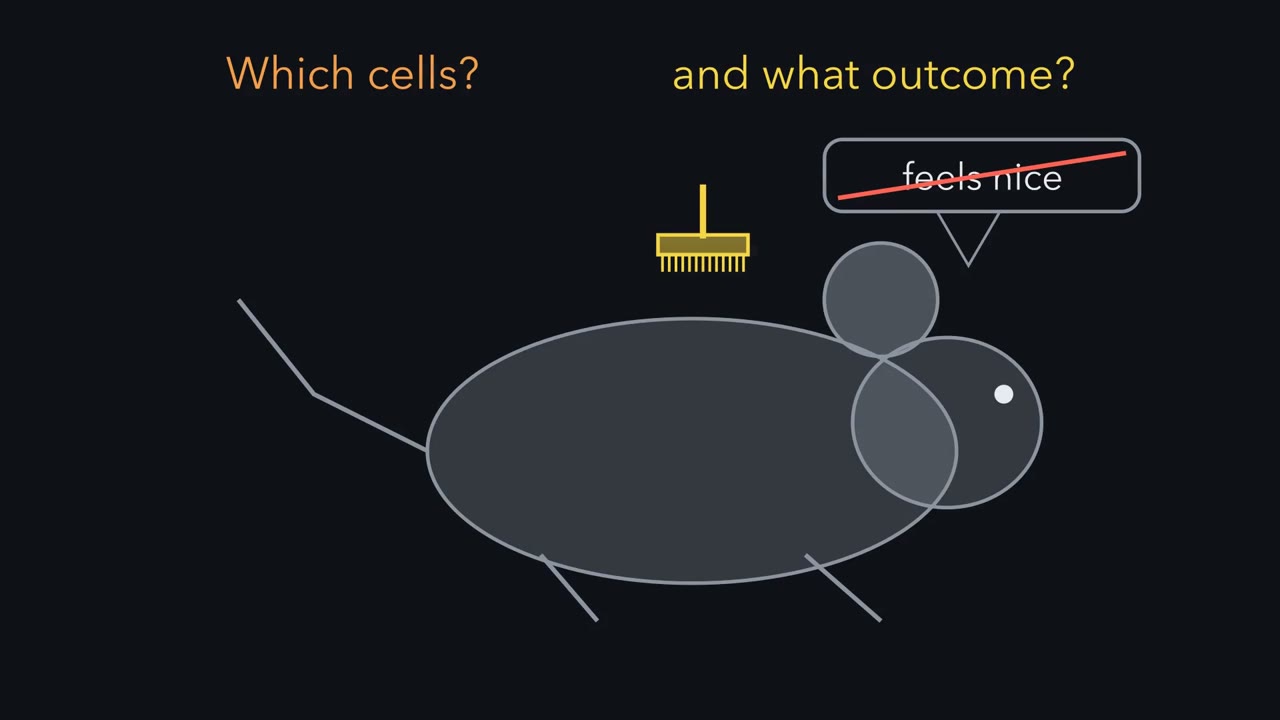 Part 3 of 3 Length 2:28 A Net, a Lineage and a Mouse That Cannot Say Sensory Systems · Graduate school and beyond Hairy Skin, Stroking and Affective Touch
Take-home
In mouse hairy skin, at least three afferent classes are candidates for detecting a stroke.
-
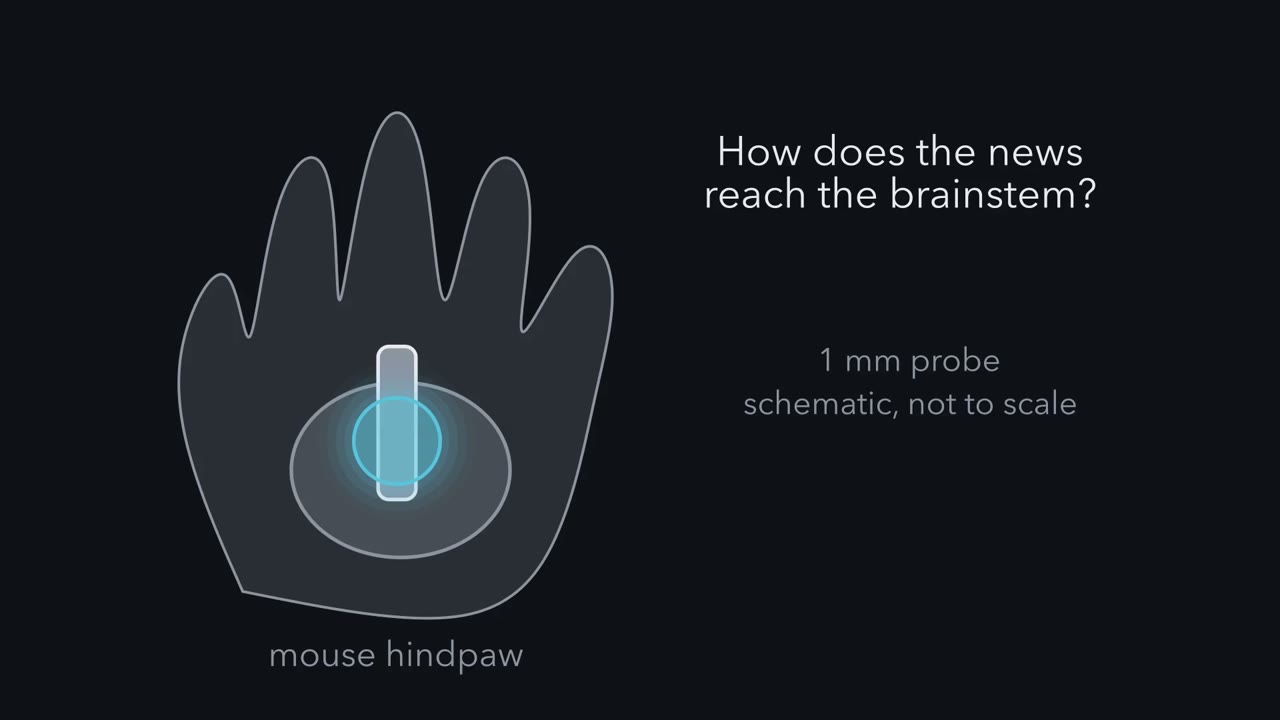 Part 1 of 3 Length 2:19 Two Routes, One Patch of Skin Sensory Systems · Graduate school and beyond Where Touch Is First Processed: Dorsal Horn and Dorsal Column Nuclei
Take-home
A touch on the mouse hindpaw reaches the gracile nucleus by two routes: the afferent's own axon, and a route through the dorsal horn.
-
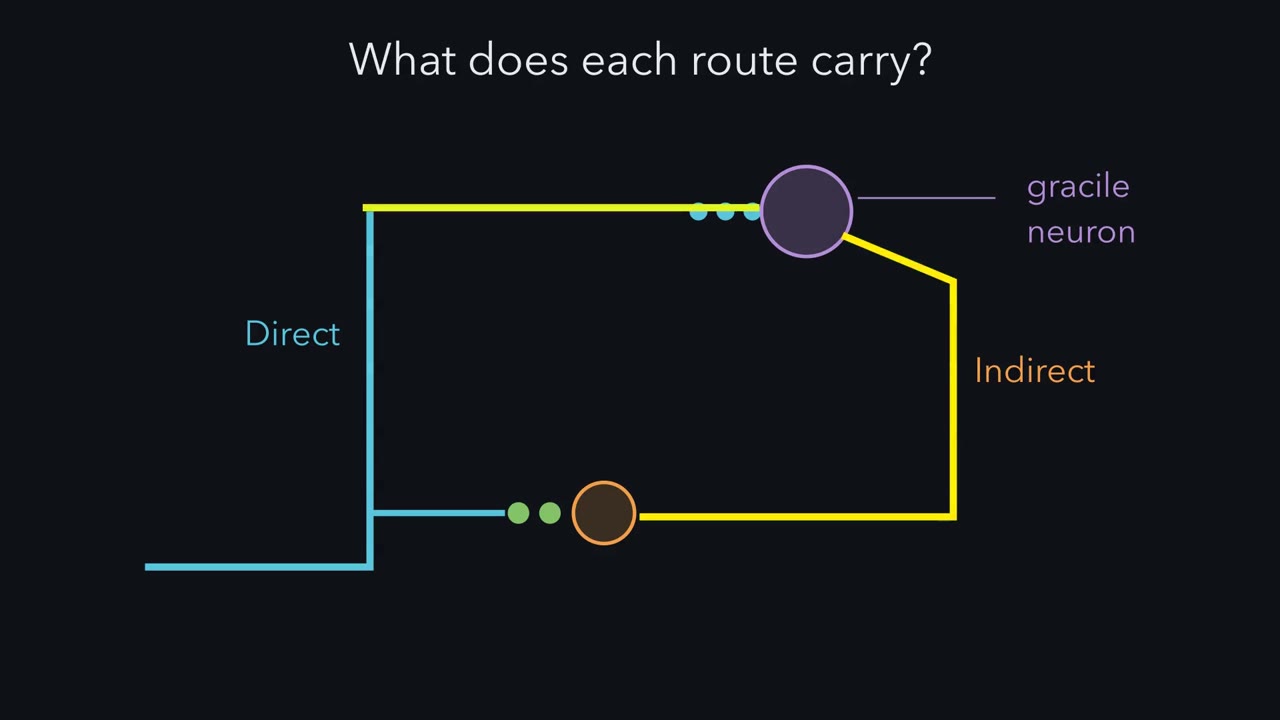 Part 2 of 3 Length 3:00 Silence One Route Sensory Systems · Graduate school and beyond Where Touch Is First Processed: Dorsal Horn and Dorsal Column Nuclei
Take-home
Silencing one route at a time showed that the direct input carries vibration with high temporal precision.
-
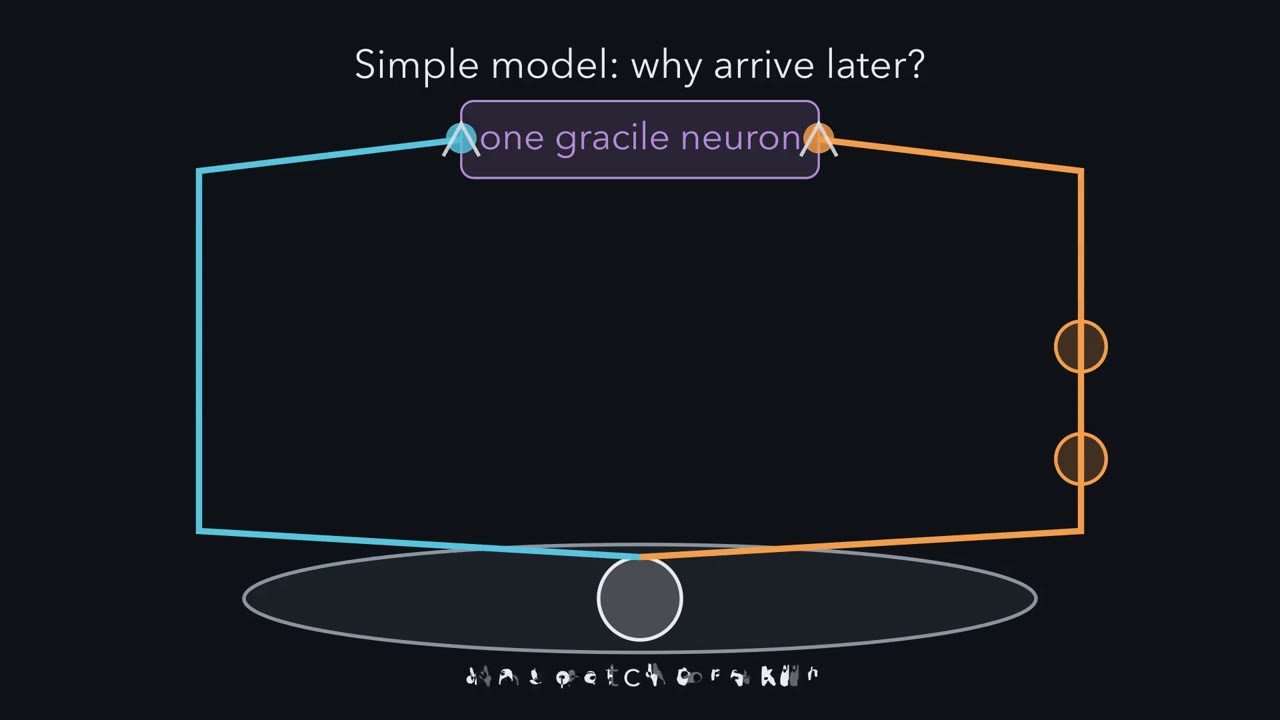 Part 3 of 3 Length 3:12 Why Later Is Fine, and What the Cord Does Sensory Systems · Graduate school and beyond Where Touch Is First Processed: Dorsal Horn and Dorsal Column Nuclei
Take-home
In a simple model the indirect route arrives a few milliseconds later, but that lag is illustrative, not a measurement.
-
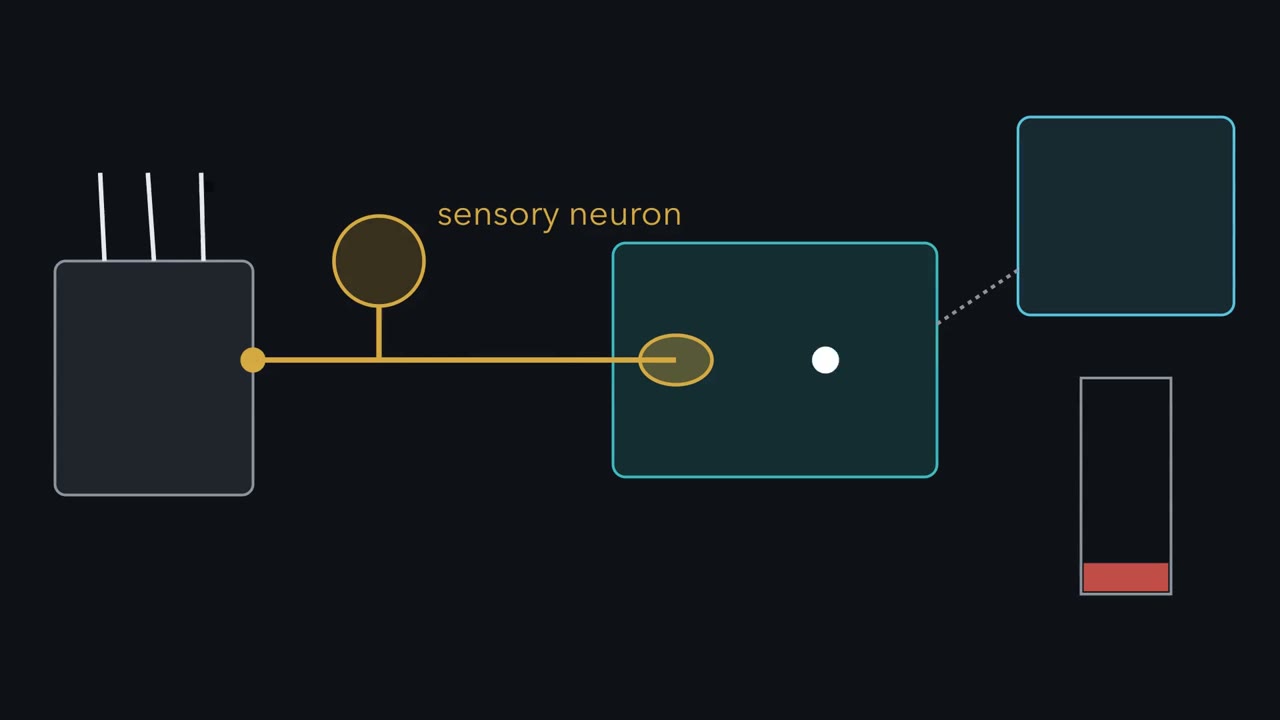 First film Length 3:15 Delete Here, Learn Where Sensory Systems · Graduate school and beyond Touch Over-reactivity in Autism Models
Take-home
In these mouse experiments, a fixed air puff measured movement, not perception.
-
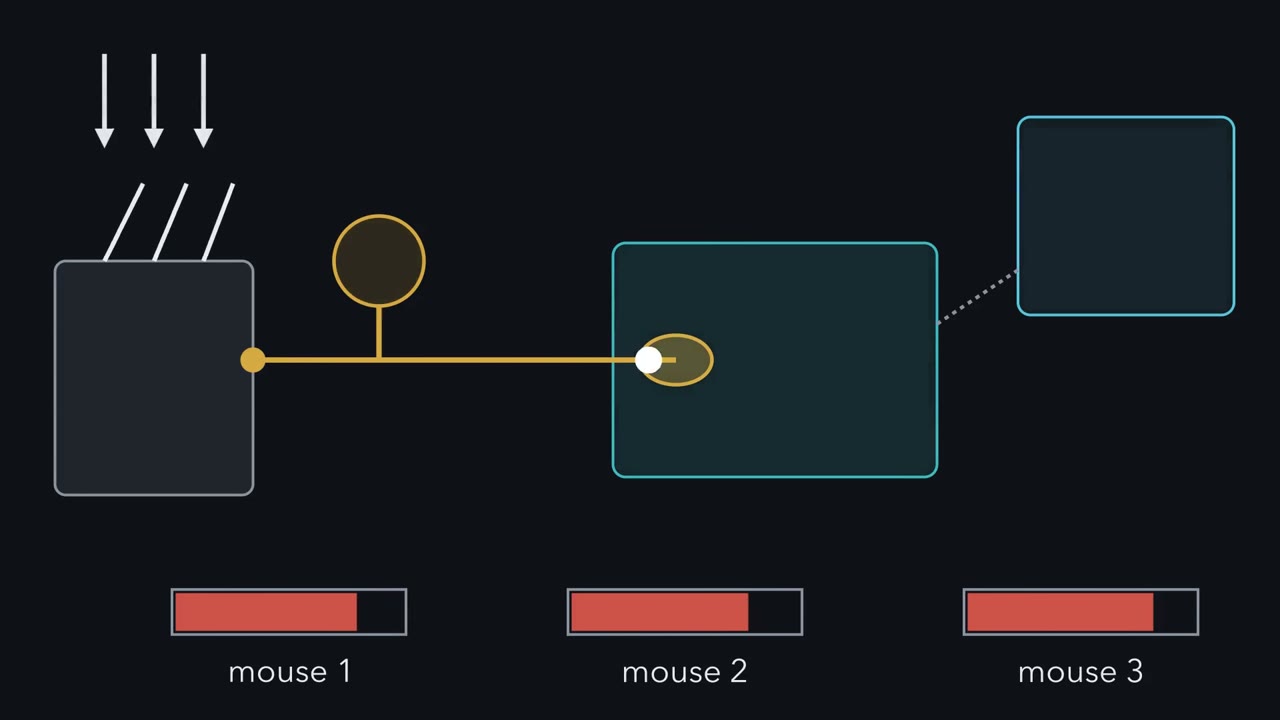 Second film Length 3:23 One Touch Behaviour, Several Routes Sensory Systems · Graduate school and beyond Touch Over-reactivity in Autism Models
Take-home
The same tactile endpoint can arise from different defects in these mouse models.
-
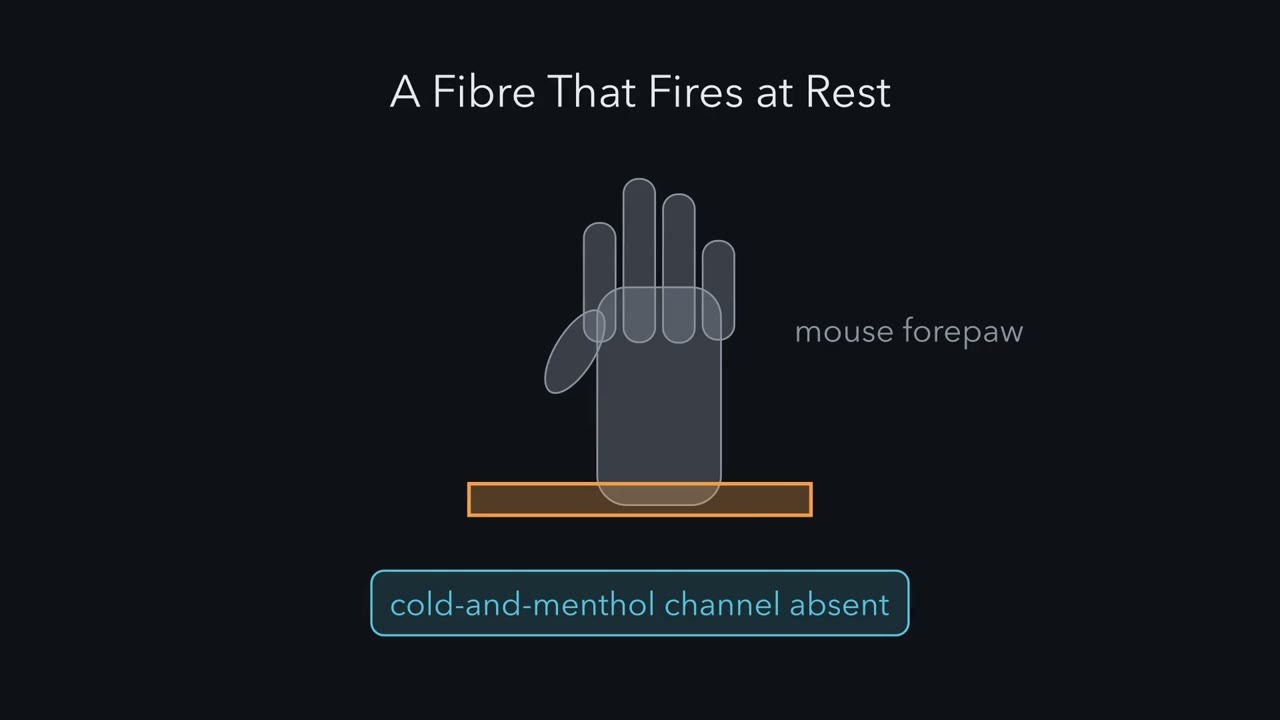 Part 1 of 3 Length 2:45 A Fibre That Fires at Rest Sensory Systems · Graduate school and beyond Hot, Warm, Cool and Cold
Take-home
Skin temperature is read from a few afferent lines at once, not one channel per feeling.
-
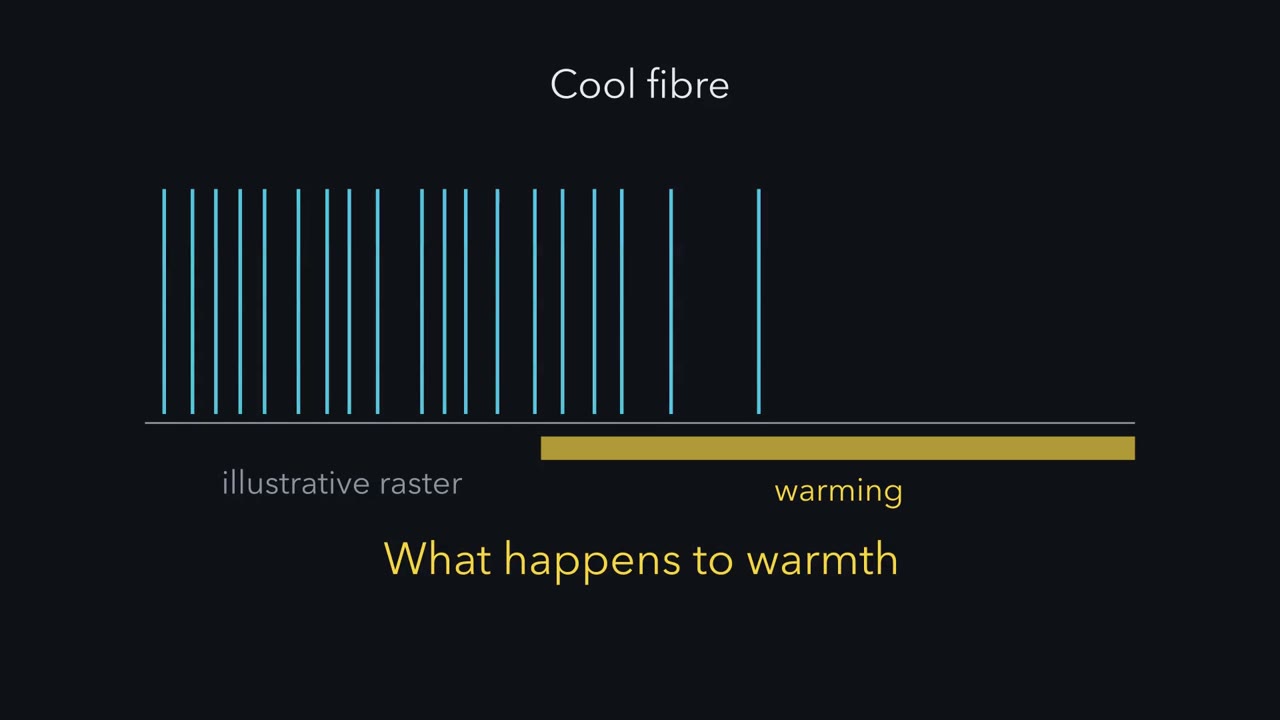 Part 2 of 3 Length 3:15 Take Away the Cool Line Sensory Systems · Graduate school and beyond Hot, Warm, Cool and Cold
Take-home
Without TRPM8, mice failed to report forepaw warming in this task, even after 10 days of training.
-
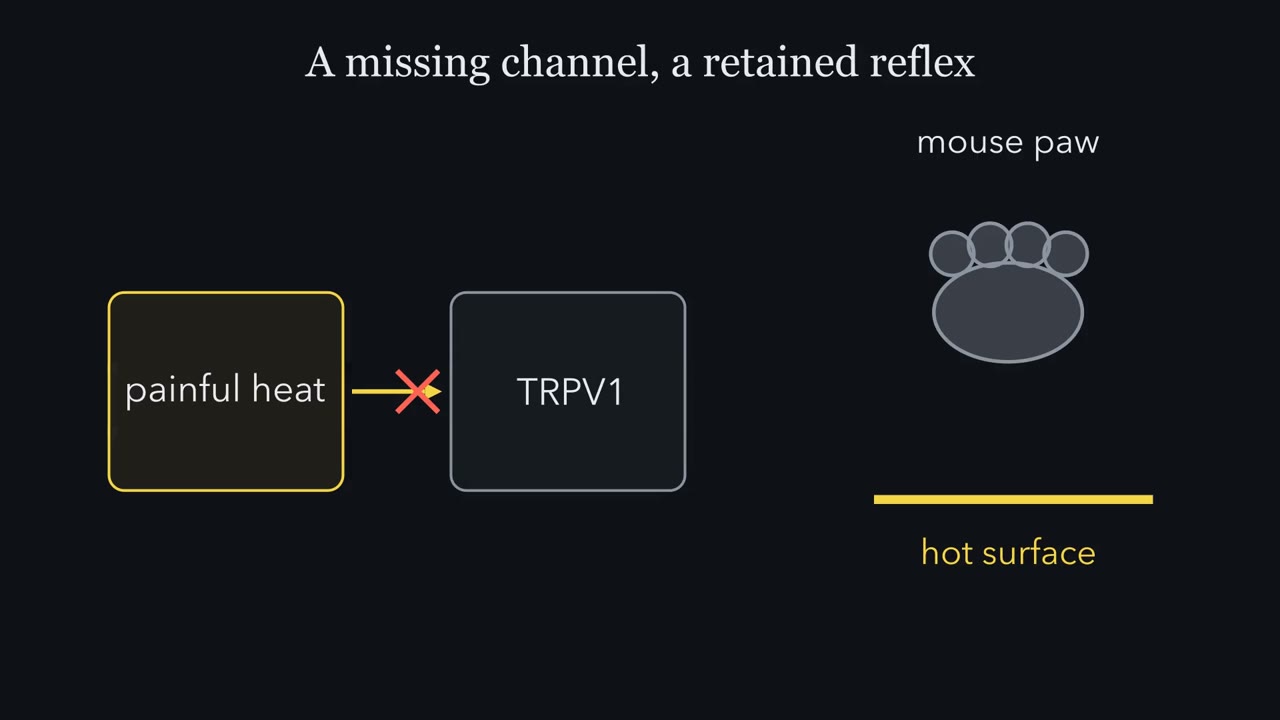 Part 3 of 3 Length 1:58 Three Channels, One Burn Sensory Systems · Graduate school and beyond Hot, Warm, Cool and Cold
Take-home
In mice, acute withdrawal from noxious heat survives the loss of any one of TRPV1, TRPM3 or TRPA1.
-
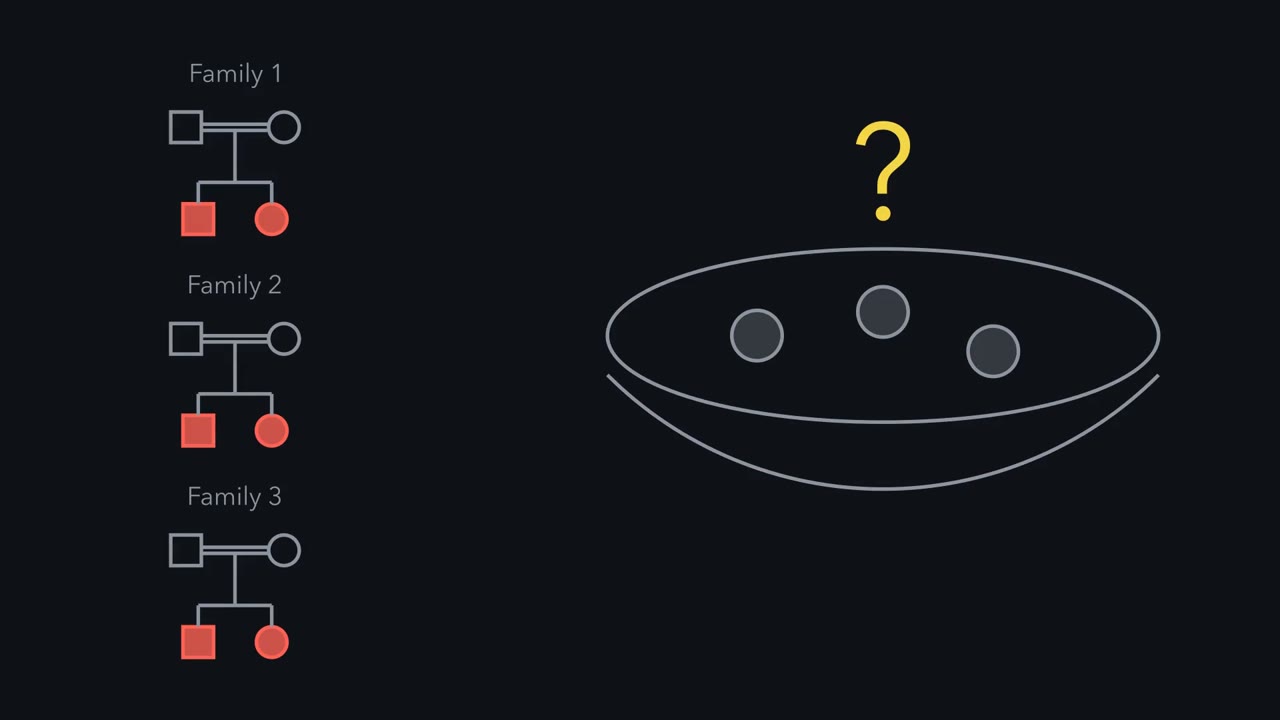 Part 1 of 6 Length 2:51 Three Families, One Gene Sensory Systems · Graduate school and beyond Nociceptors and the Sodium Channels of Pain
Take-home
Three consanguineous families in northern Pakistan had members who never experienced pain, and the mutant SCN9A channels passed no current above background in cultured cells.
-
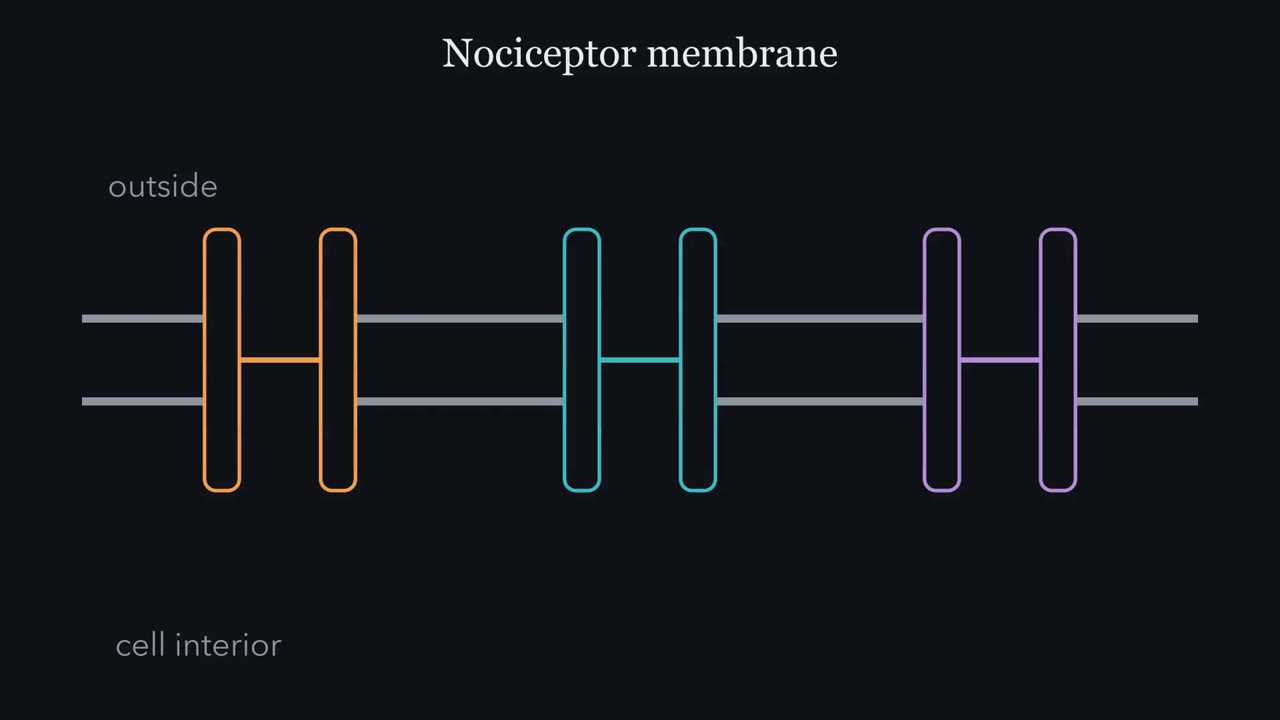 Part 2 of 6 Length 3:14 Three Channels and the Availability Budget Sensory Systems · Graduate school and beyond Nociceptors and the Sodium Channels of Pain
Take-home
Nav1.7 and Nav1.8 contribute to the spike itself, while Nav1.9 mainly sets the resting potential and subthreshold excitability.
-
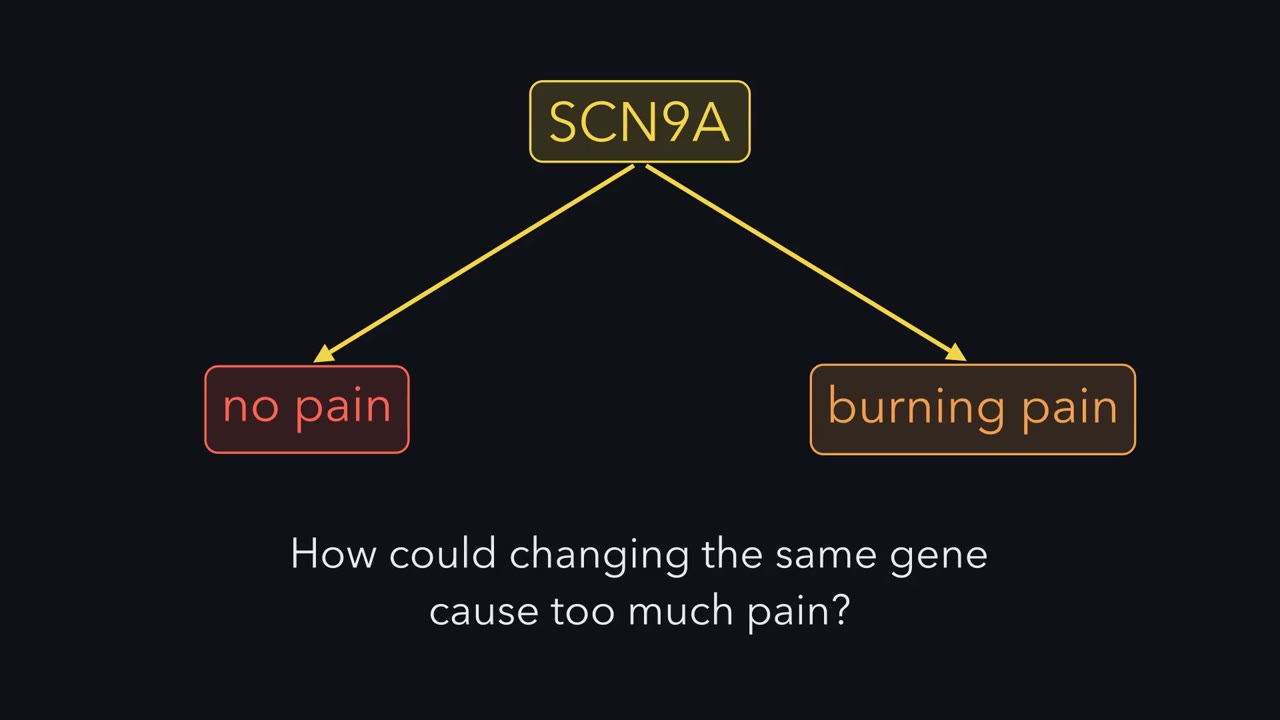 Part 3 of 6 Length 2:35 The Same Gene, Too Much Pain Sensory Systems · Graduate school and beyond Nociceptors and the Sodium Channels of Pain
Take-home
Variants in the same gene that alter gating can cause too much pain, as in primary erythermalgia.
-
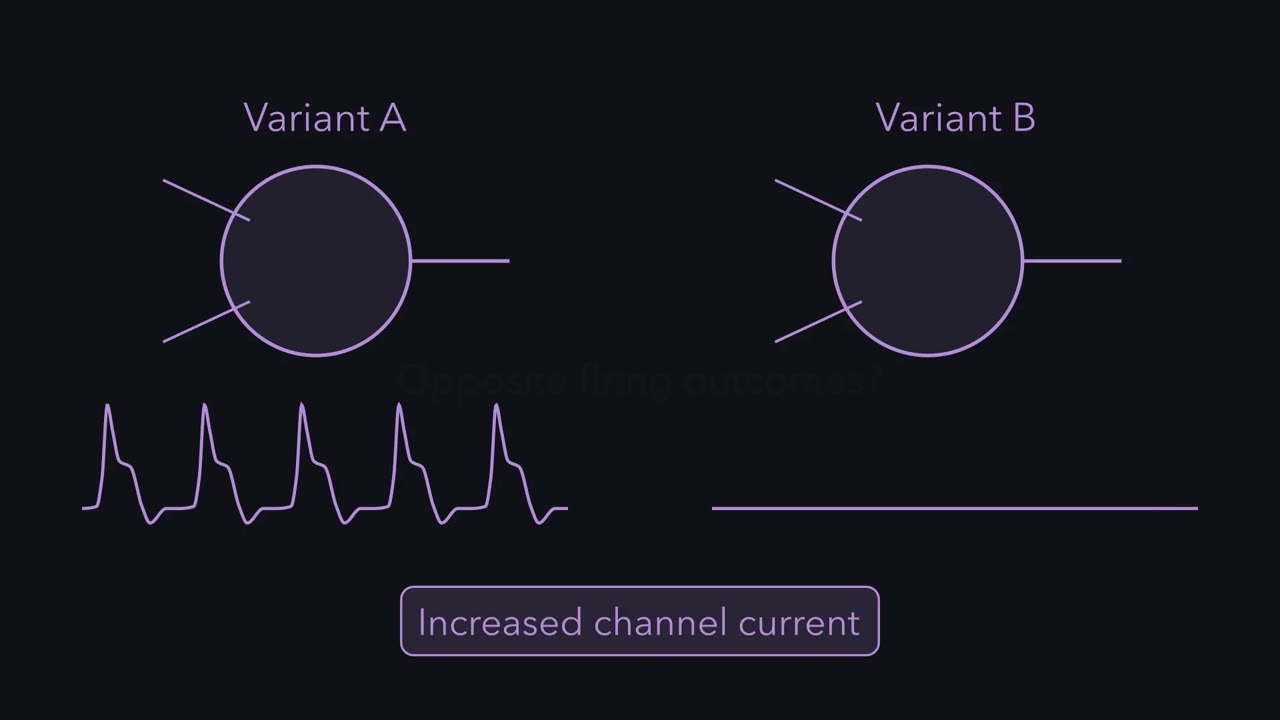 Part 4 of 6 Length 3:13 Where More Current Breaks Sensory Systems · Graduate school and beyond Nociceptors and the Sodium Channels of Pain
Take-home
More sodium current does not always mean more pain, because Nav1.9 carries a standing inward current near rest that depolarizes the neuron.
-
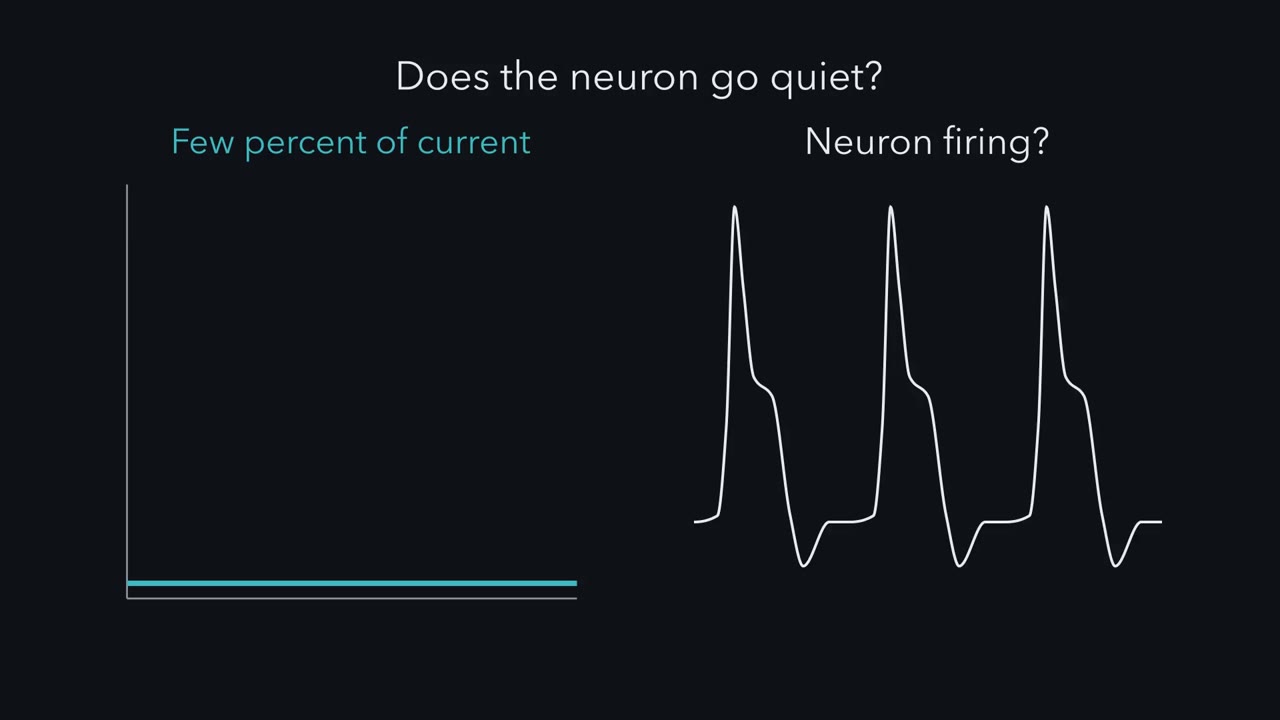 Part 5 of 6 Length 3:11 Strong Nav1.8 Block, Still Firing Sensory Systems · Graduate school and beyond Nociceptors and the Sodium Channels of Pain
Take-home
Strong Nav1.8 block generally reduced but did not eliminate repetitive firing in adult human sensory neurons recorded at 37 °C.
-
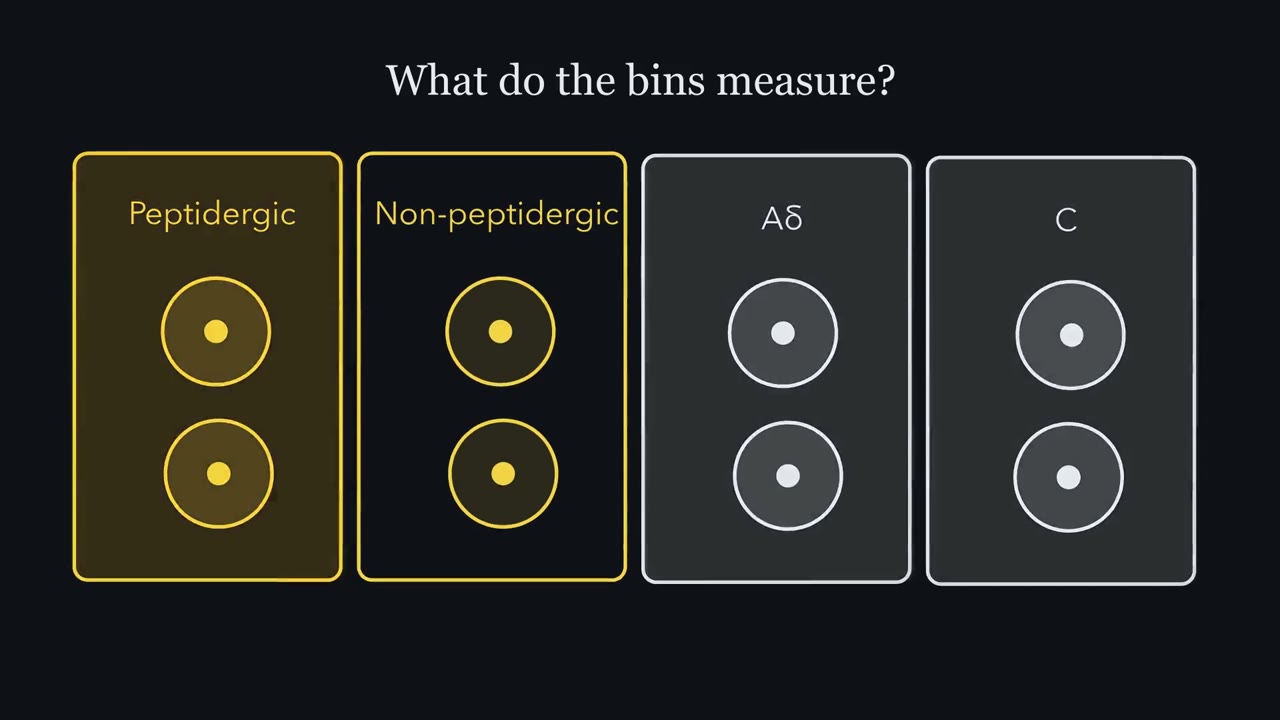 Part 6 of 6 Length 2:46 Labels, Classes and States Sensory Systems · Graduate school and beyond Nociceptors and the Sodium Channels of Pain
Take-home
A molecular label, a conduction class and a functional state are different kinds of measurement, so nociceptor categories overlap.
-
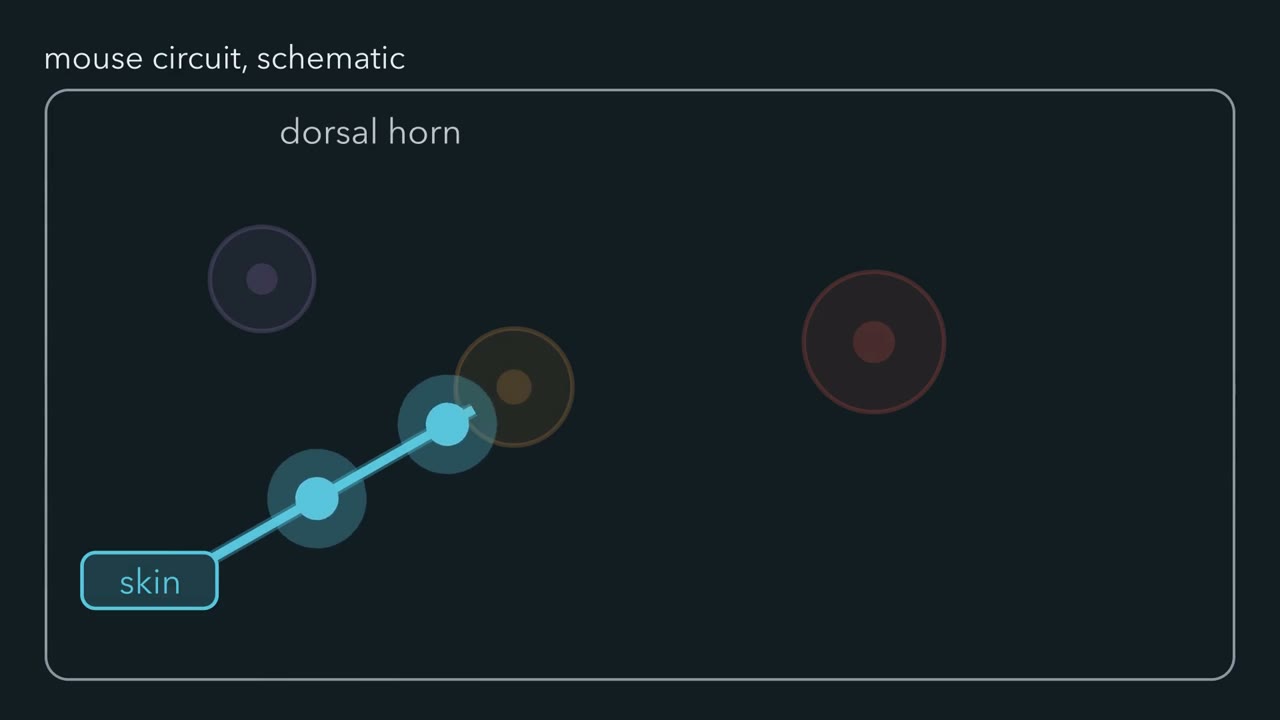 First film Length 3:34 Who Opens the Touch Gate? Sensory Systems · Graduate school and beyond Spinal Circuits That Gate Pain
Take-home
In mice, inhibitory dorsal-horn neurons can keep touch input from recruiting mechanical-pain relays.
-
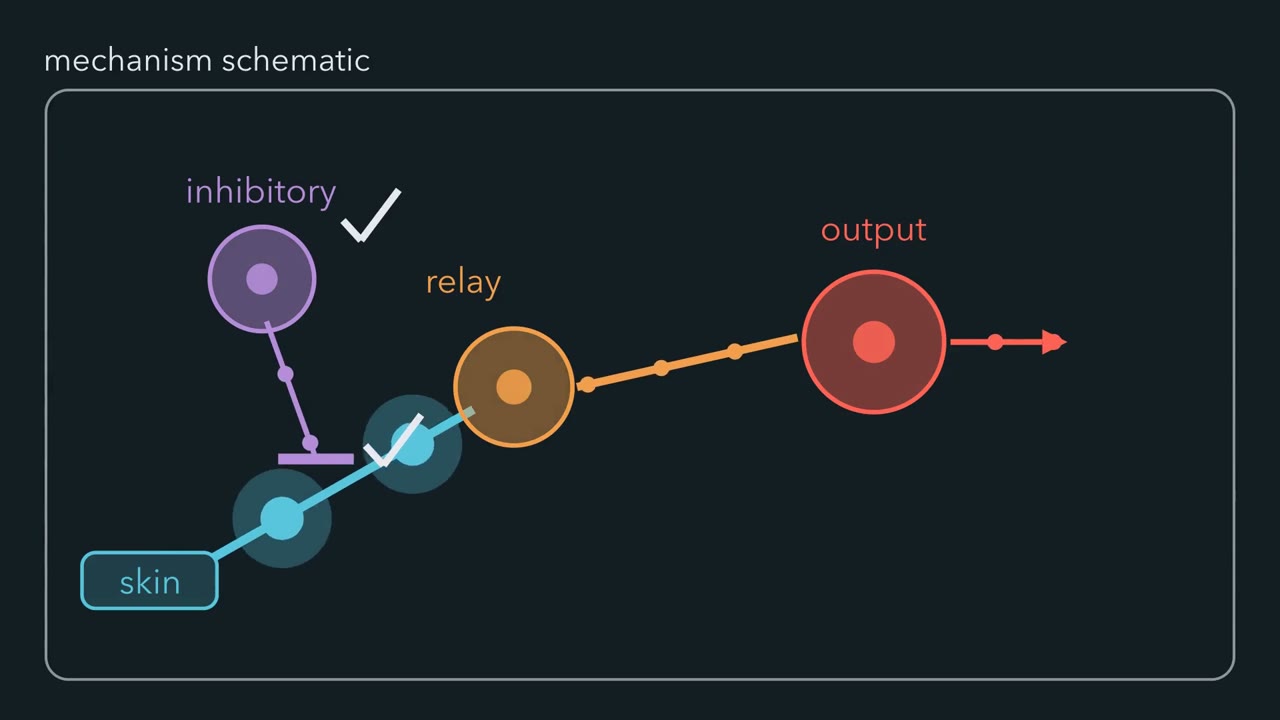 Second film Length 3:34 When Inhibition Changes Sign Sensory Systems · Graduate school and beyond Spinal Circuits That Gate Pain
Take-home
In adult male rats, nerve injury lowered KCC2 and shifted lamina I anion reversal.
-
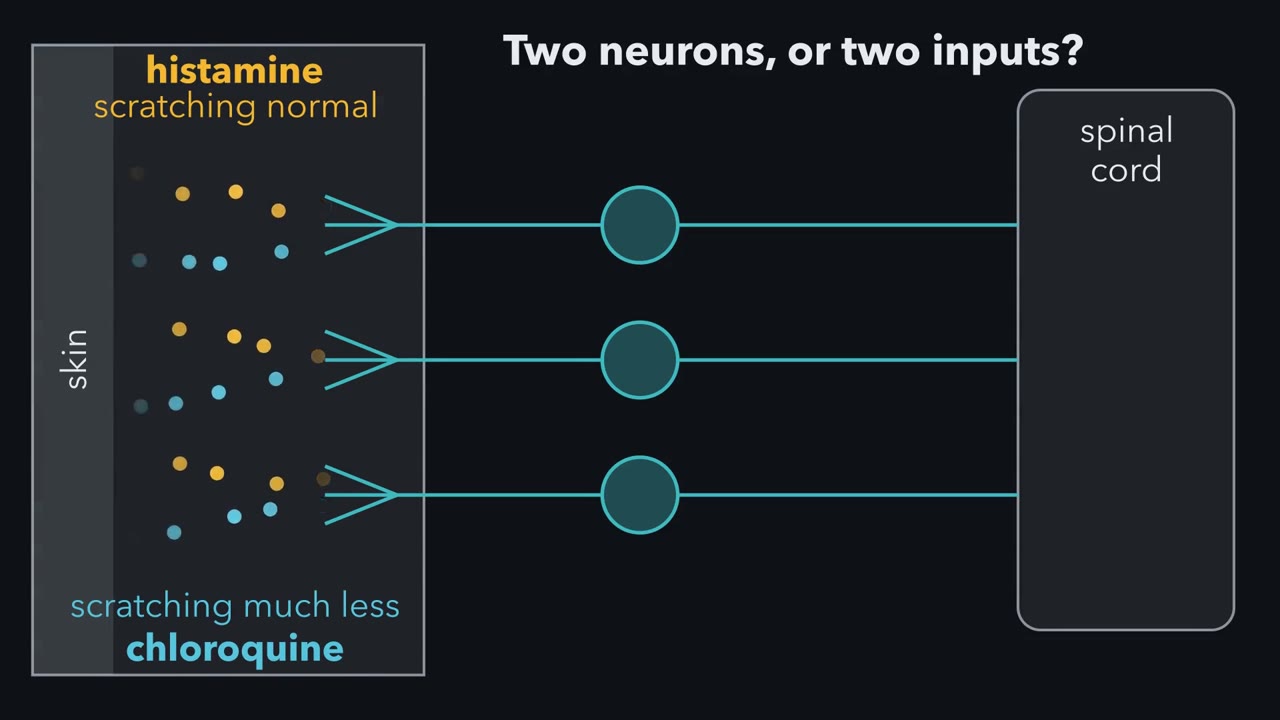 First film Length 3:21 Which Line Carries the Itch? Sensory Systems · Graduate school and beyond Itch: A Sense of Its Own
Take-home
Deleting a receptor route and ablating its whole neuron population answer different questions.
-
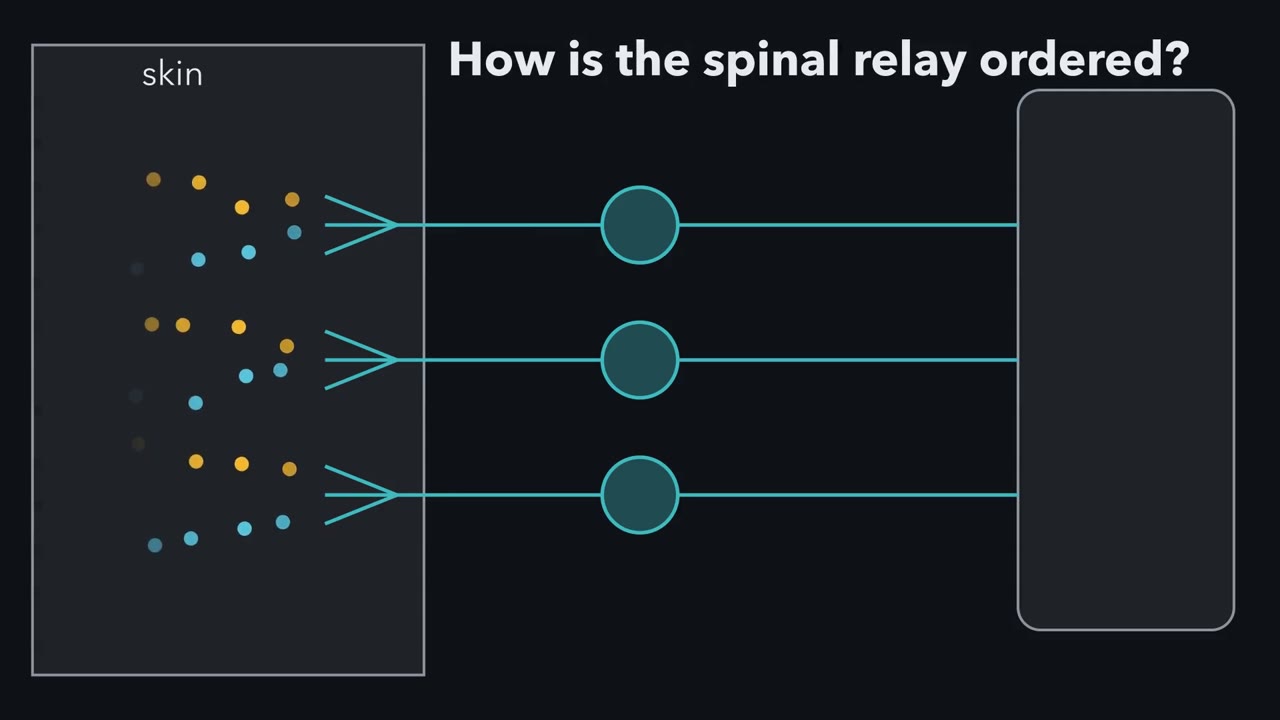 Second film Length 3:14 Order the Relay, Find the Brake Sensory Systems · Graduate school and beyond Itch: A Sense of Its Own
Take-home
Downstream rescue and bypass experiments can order functions in a mouse spinal relay.
-
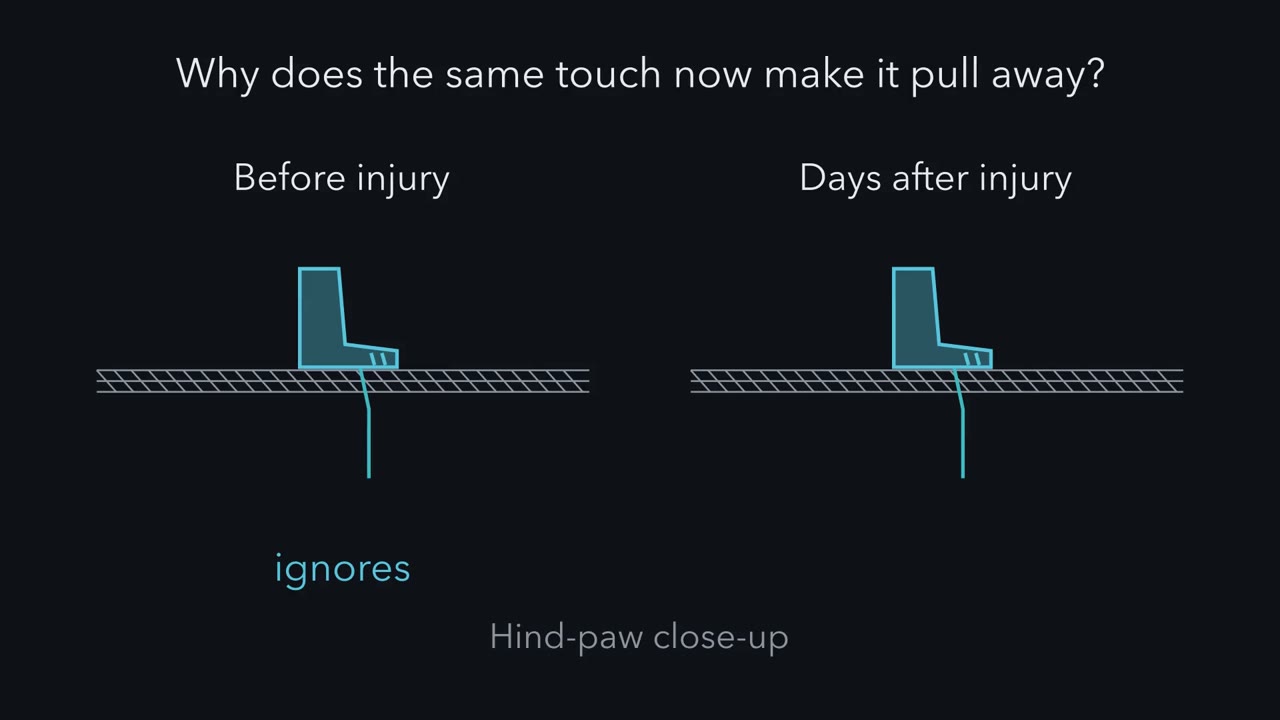 Part 1 of 3 Length 2:48 A Touch That Hurts Sensory Systems · Graduate school and beyond When Pain Persists
Take-home
After a nerve injury, pain can persist because the rules of the system change, and the alarm wiring is part of what changes.
-
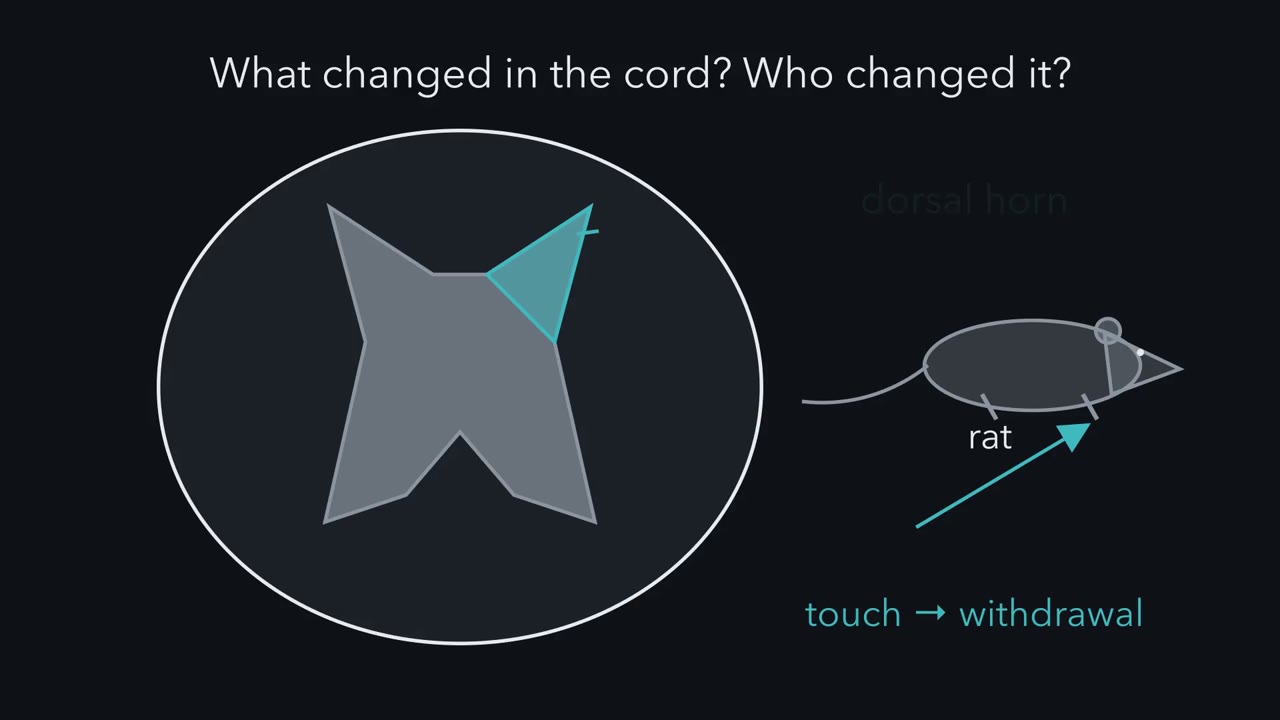 Part 2 of 3 Length 4:09 How Microglia Let a Touch Through Sensory Systems · Graduate school and beyond When Pain Persists
Take-home
In rats, nerve injury lowers KCC2 in lamina I neurons and shifts the anion reversal potential up, which weakens inhibition without turning it into excitation.
-
 Part 3 of 3 Length 2:04 A Reflex Is Not the Hurt Sensory Systems · Graduate school and beyond When Pain Persists
Take-home
A withdrawal reflex is easy to mistake for pain, because the reflex and the affective behaviour are two measurements that can come apart.
-
 Part 1 of 3 Length 2:51 Read as Stretch Sensory Systems · Graduate school and beyond Proprioception: Sensing the Body's Own Position
Take-home
Limb position is an estimate built mainly from muscle spindle signals of muscle length.
-
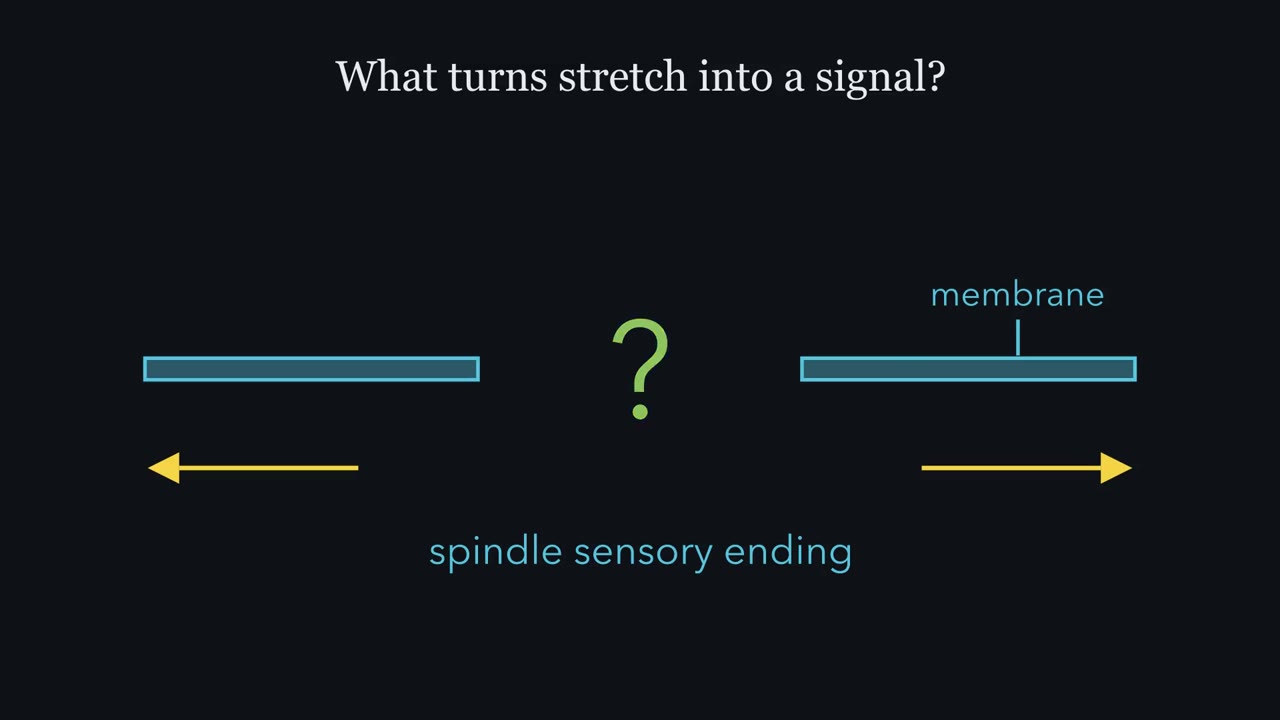 Part 2 of 3 Length 2:42 The Channel on the Line Sensory Systems · Graduate school and beyond Proprioception: Sensing the Body's Own Position
Take-home
Deleting Piezo2 with two Cre lines, neither specific to proprioceptors, sharply reduced stretch-evoked firing in mouse muscle, so Piezo2 is the principal transducer on the stretch line.
-
 Part 3 of 3 Length 2:22 When the Line Goes Quiet Sensory Systems · Graduate school and beyond Proprioception: Sensing the Body's Own Position
Take-home
When proprioceptive input is lost, vision does much of the work of knowing where the arm is, and without sight reaching becomes far less accurate.
-
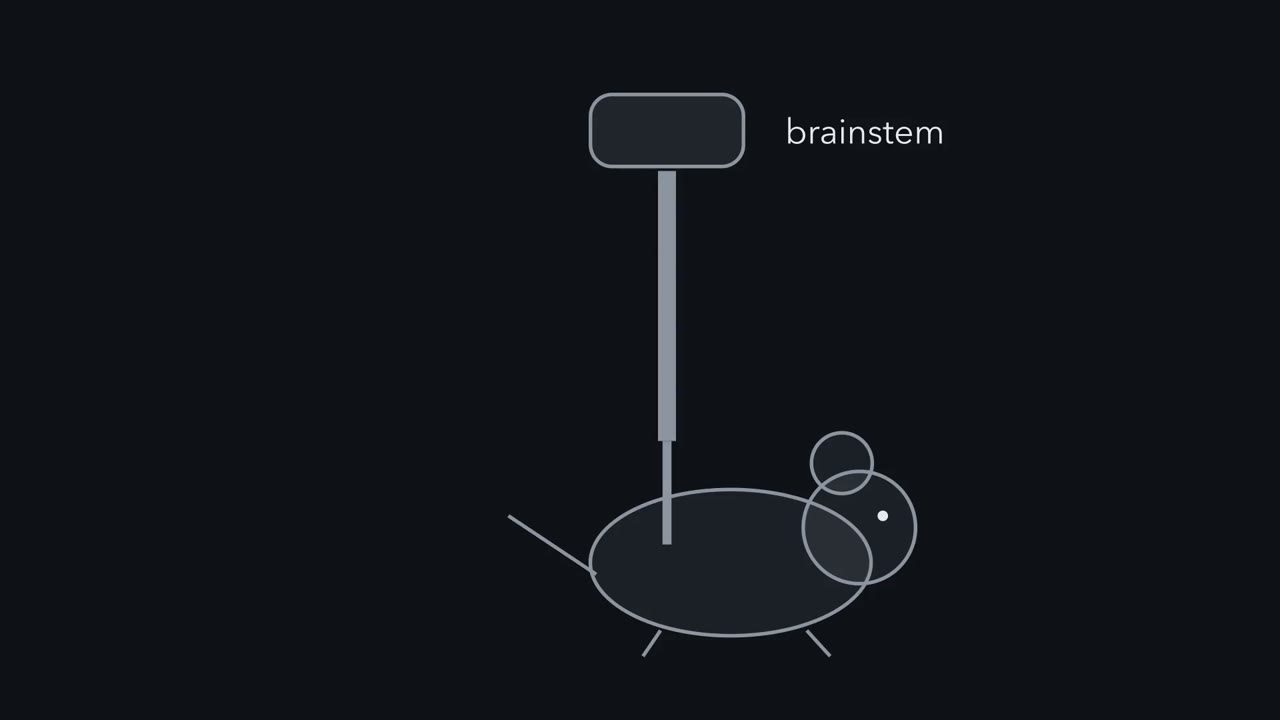 Part 1 of 3 Length 2:46 Three Questions, Not One Sensory Systems · Graduate school and beyond Vagal Sensory Neurons: The Body Reports to the Brain
Take-home
To learn what a vagal sensory population does, ask three separate questions: what stimulus it answers, what channel turns that stimulus into current, and what output changes when you drive or remove it.
-
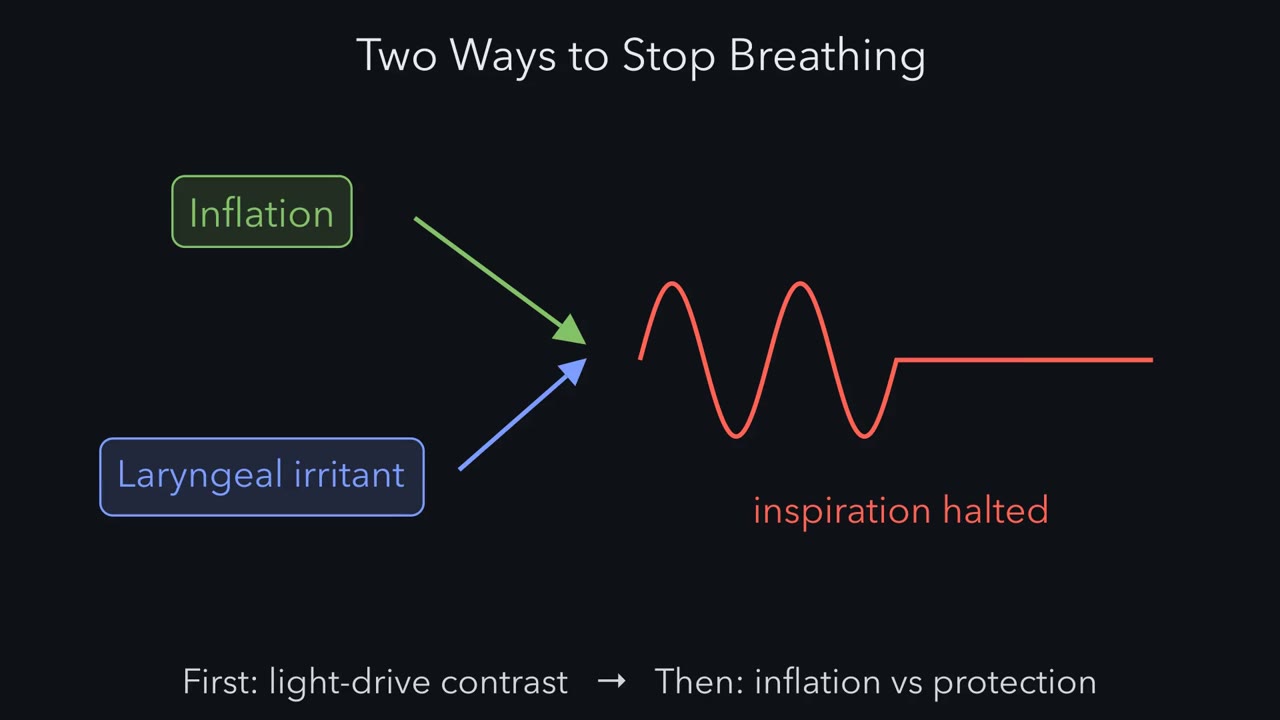 Part 2 of 3 Length 3:05 Two Ways to Stop Breathing Sensory Systems · Graduate school and beyond Vagal Sensory Neurons: The Body Reports to the Brain
Take-home
Light on P2ry1 afferents suppressed breathing and light on Npy2r afferents produced rapid shallow breathing in anaesthetized mice; this shows what each population can do when driven, not what drives it in life.
-
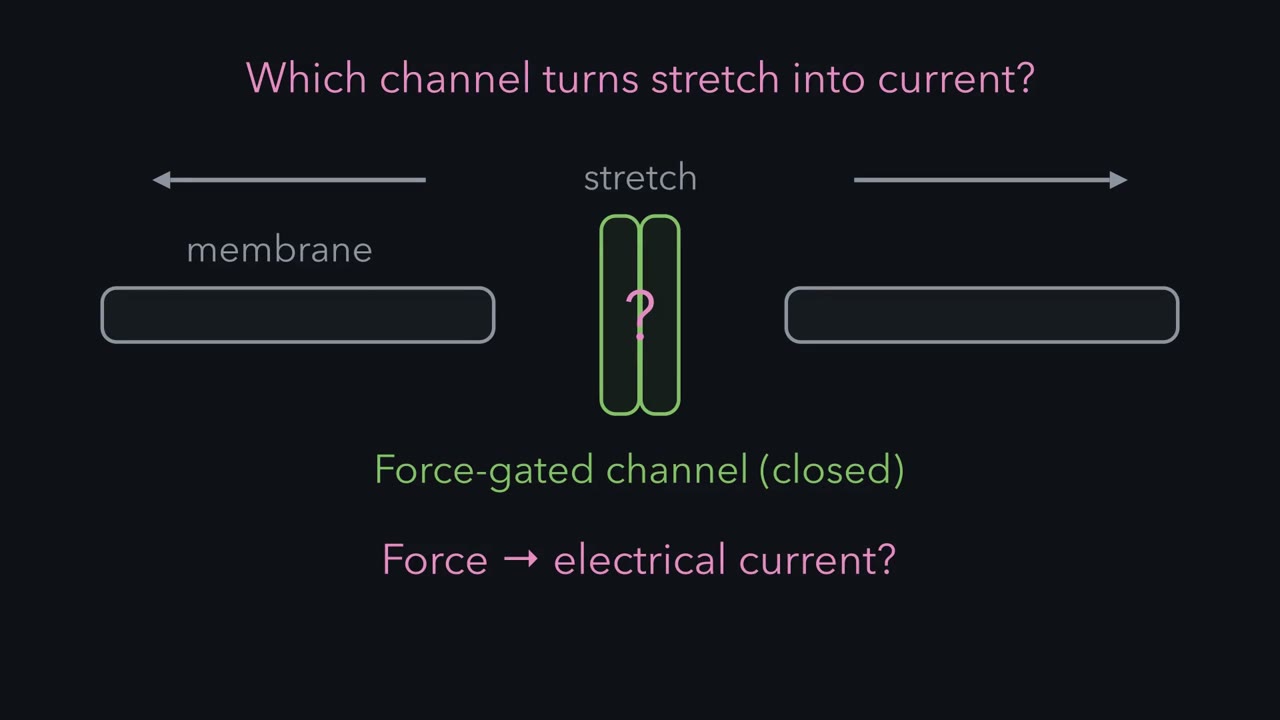 Part 3 of 3 Length 2:52 Which Channel, and What the Test Can Prove Sensory Systems · Graduate school and beyond Vagal Sensory Neurons: The Body Reports to the Brain
Take-home
Deleting Piezo2 in adult mouse sensory neurons impaired the lung inflation reflex.
-
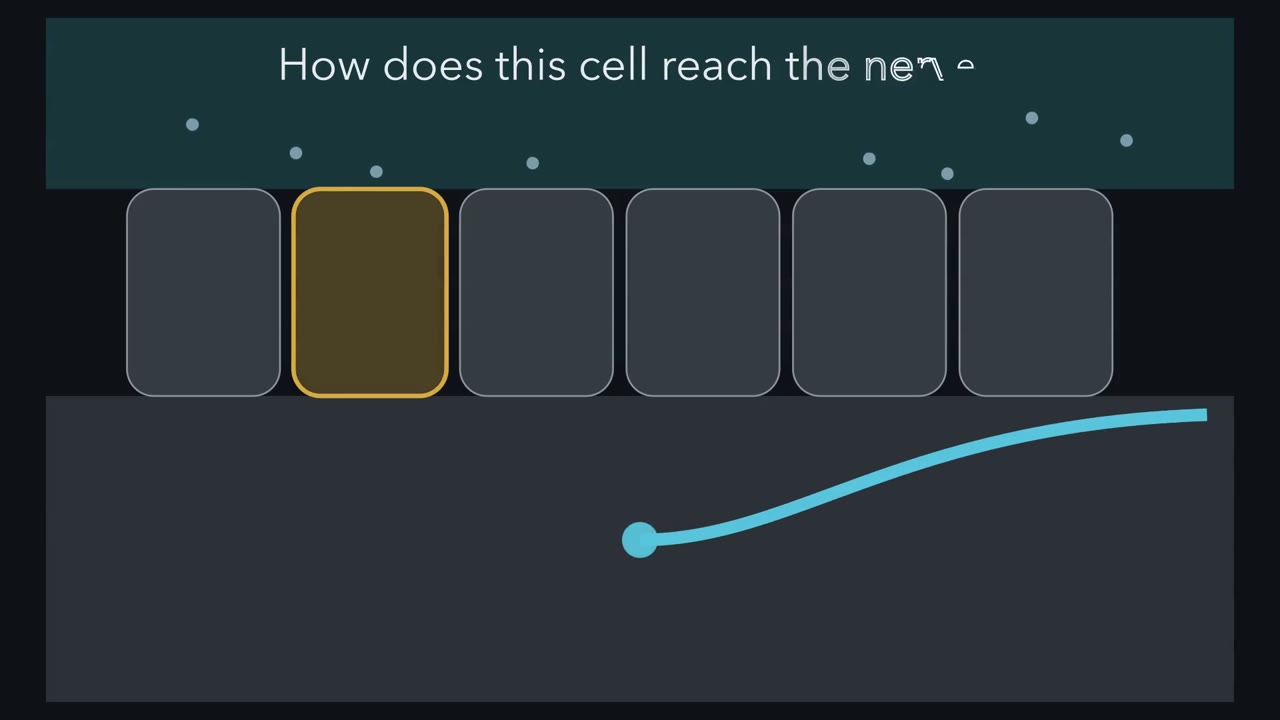 First film Length 3:29 How to Prove a Gut Synapse Sensory Systems · Graduate school and beyond Sensing the Gut: Enteroendocrine Cells and Nutrient Signals
Take-home
Anatomy can show a gut cell contacts a nerve, but it cannot identify the transmitter.
-
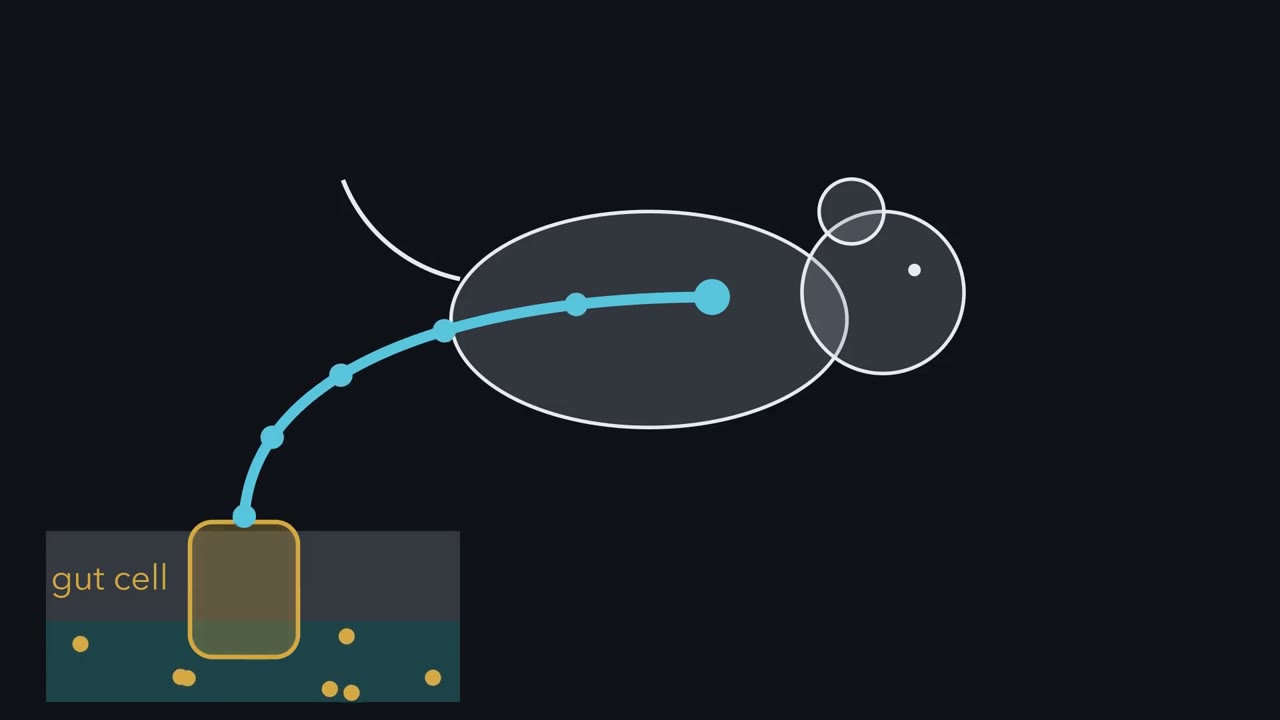 Second film Length 3:26 How the Gut Teaches Preference Sensory Systems · Graduate school and beyond Sensing the Gut: Enteroendocrine Cells and Nutrient Signals
Take-home
In mice, learned sugar preference can develop without sweet-taste signalling.
-
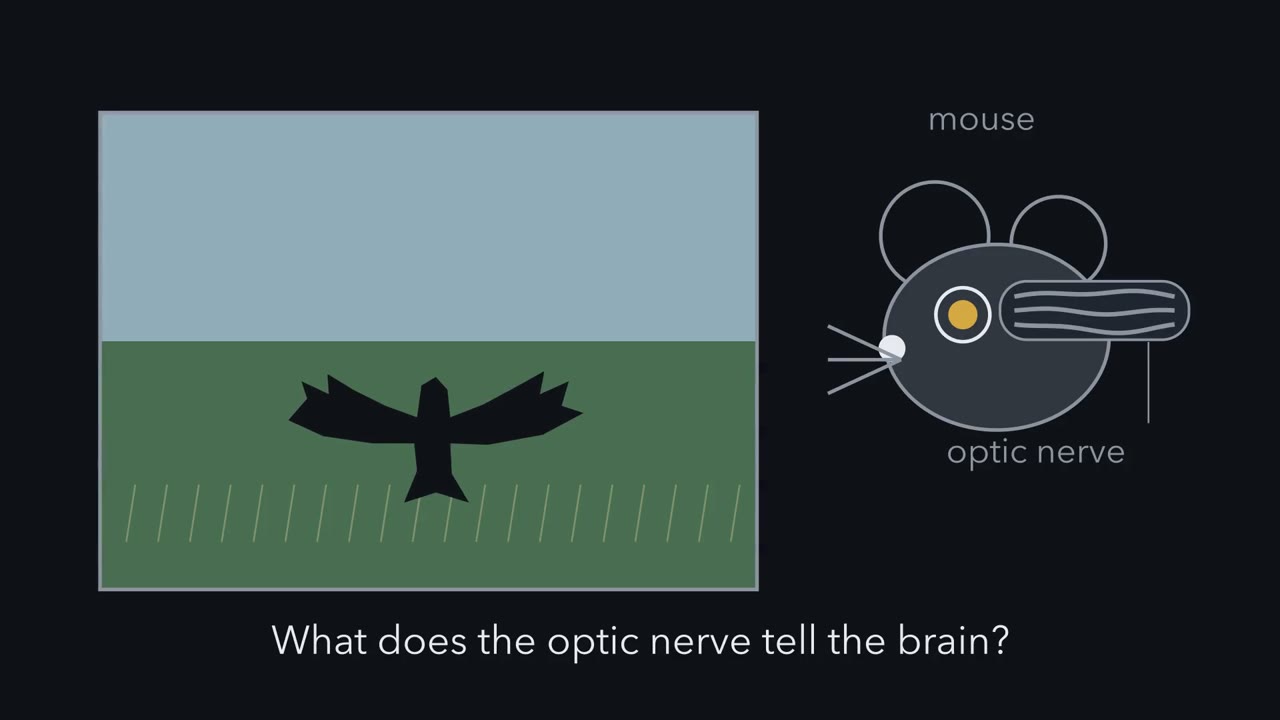 Part 1 of 3 Length 2:08 Many Maps, Not One Picture Sensory Systems · Graduate school and beyond Parallel Channels Out of the Eye
Take-home
The optic nerve carries many overlapping, differently filtered maps of the scene, not one picture.
-
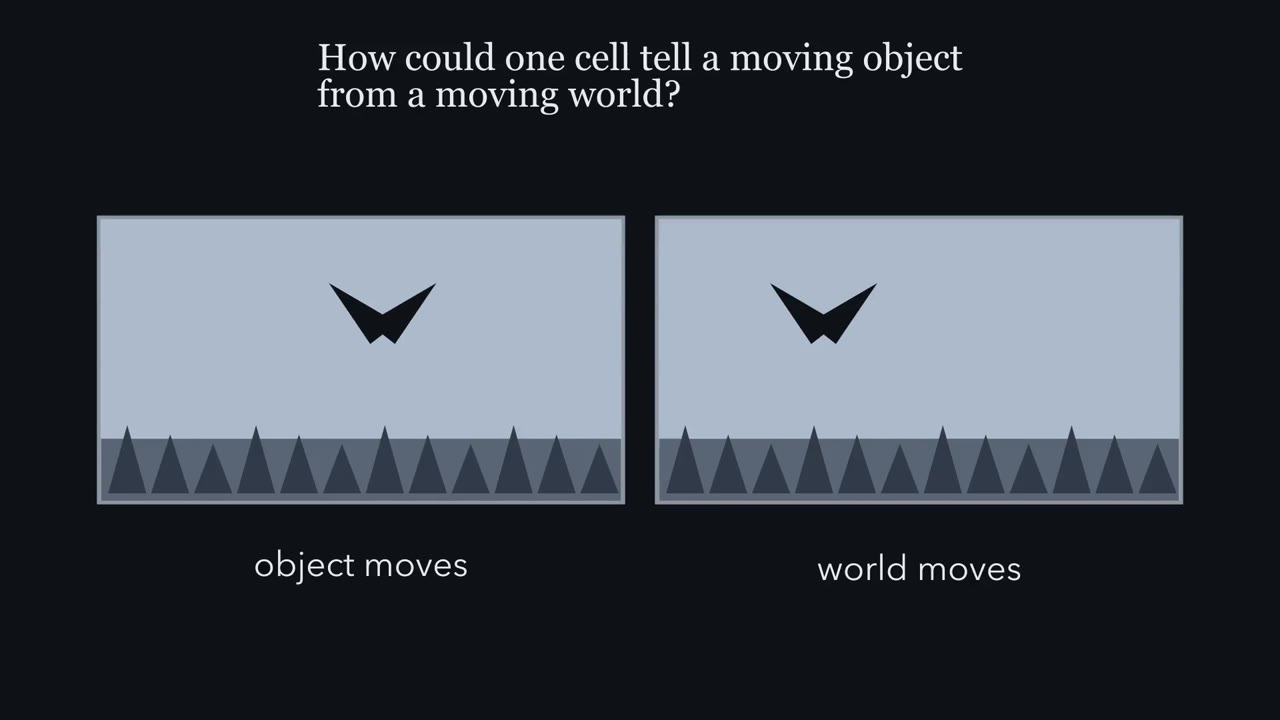 Part 2 of 3 Length 3:04 The Cell That Ignores the World Moving Sensory Systems · Graduate school and beyond Parallel Channels Out of the Eye
Take-home
A W3 cell fires for a small object moving over a still background and falls nearly silent when the whole scene moves.
-
 Part 3 of 3 Length 2:38 One Type or Two? Four Ways to Count Sensory Systems · Graduate school and beyond Parallel Channels Out of the Eye
Take-home
A real type usually spaces its cells out in its own mosaic, so merging two types usually makes spacing patchy and coverage higher.
-
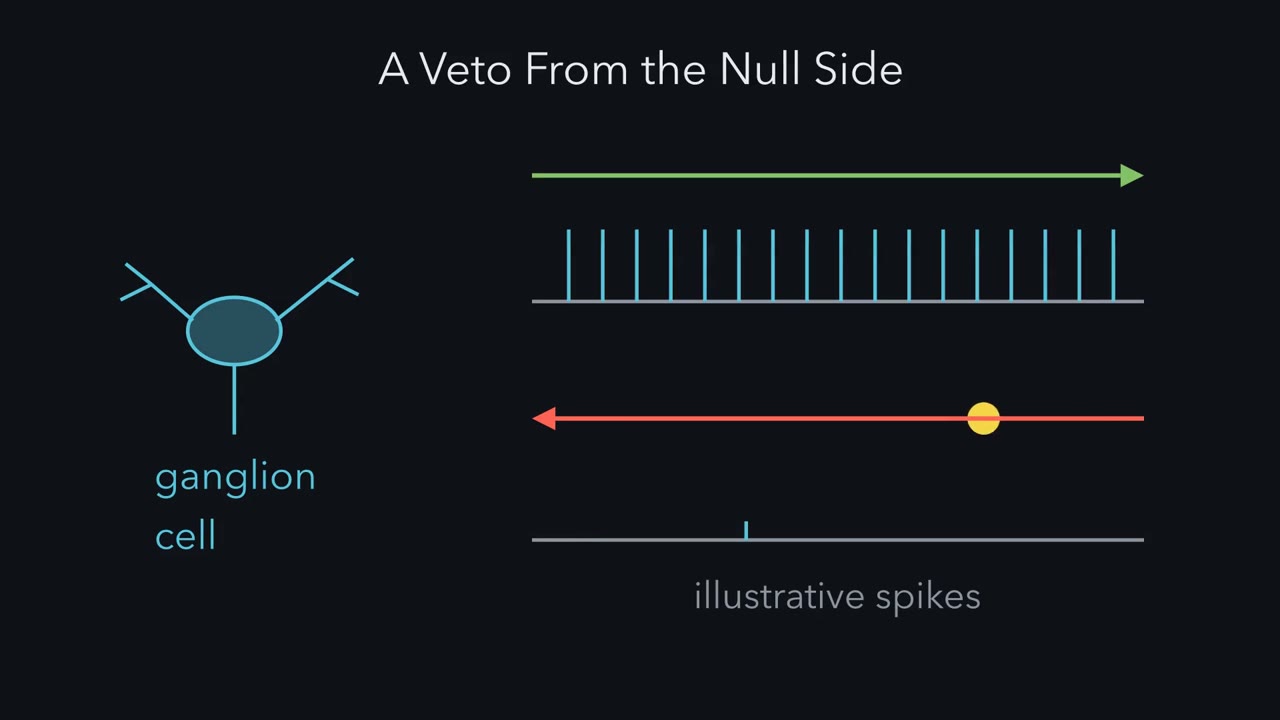 Part 1 of 3 Length 2:50 A Veto From the Null Side Sensory Systems · Graduate school and beyond Computing Motion in the Retina
Take-home
A direction-selective ganglion cell fires to its preferred direction and little to its null direction, and Barlow and Levick found a deficit for null-order flashes, so the main operation they inferred is a veto.
-
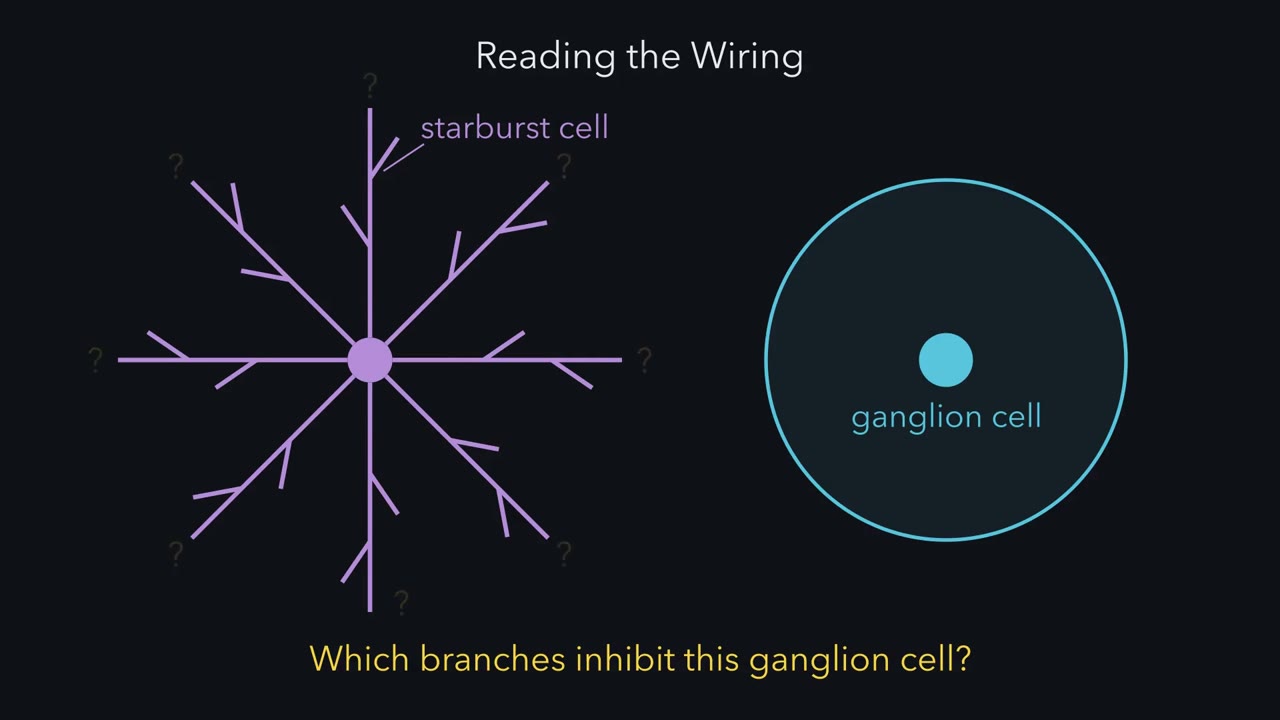 Part 2 of 3 Length 2:33 Reading the Wiring Sensory Systems · Graduate school and beyond Computing Motion in the Retina
Take-home
In rabbit starburst cells, dendritic calcium was larger for outward motion, while the somatic voltage did not show that preference, so the branch is the unit.
-
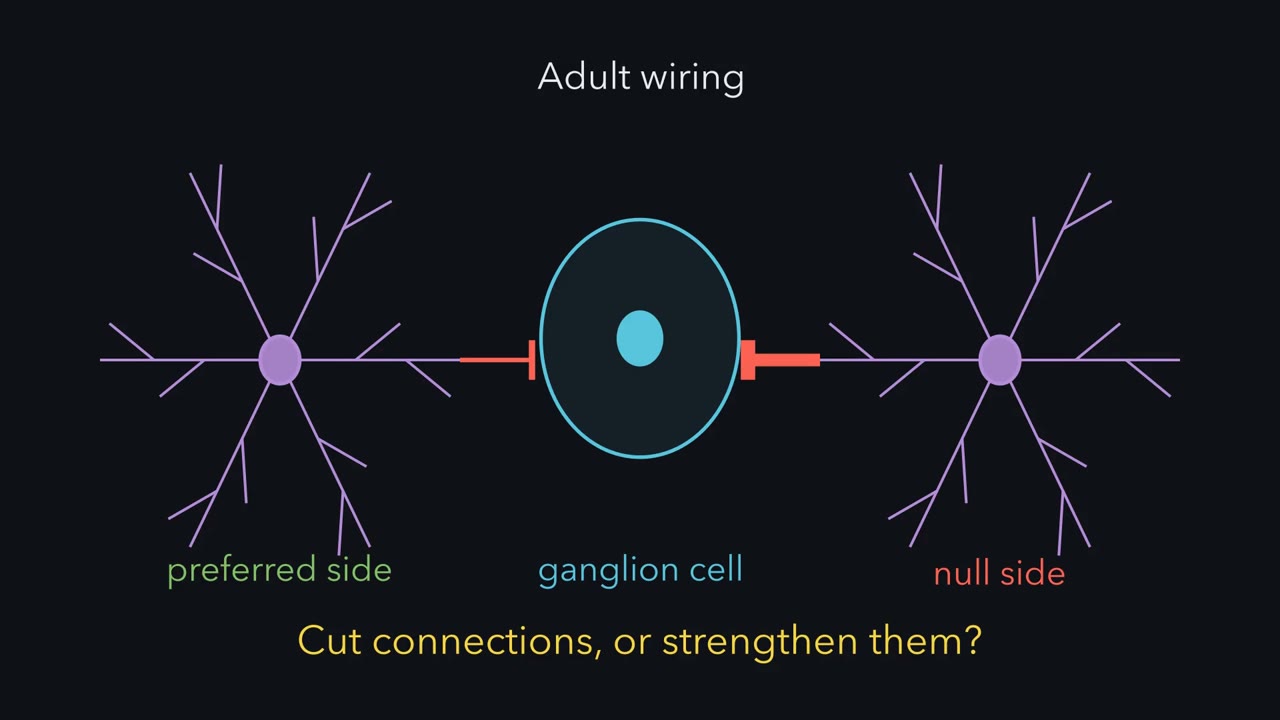 Part 3 of 3 Length 2:26 Built by Strengthening, and Where the Idea Stops Sensory Systems · Graduate school and beyond Computing Motion in the Retina
Take-home
In paired recordings in mouse retina, null-side inhibition grew while preferred-side inhibition stayed about constant, so development strengthened one side and did not delete the other.
-
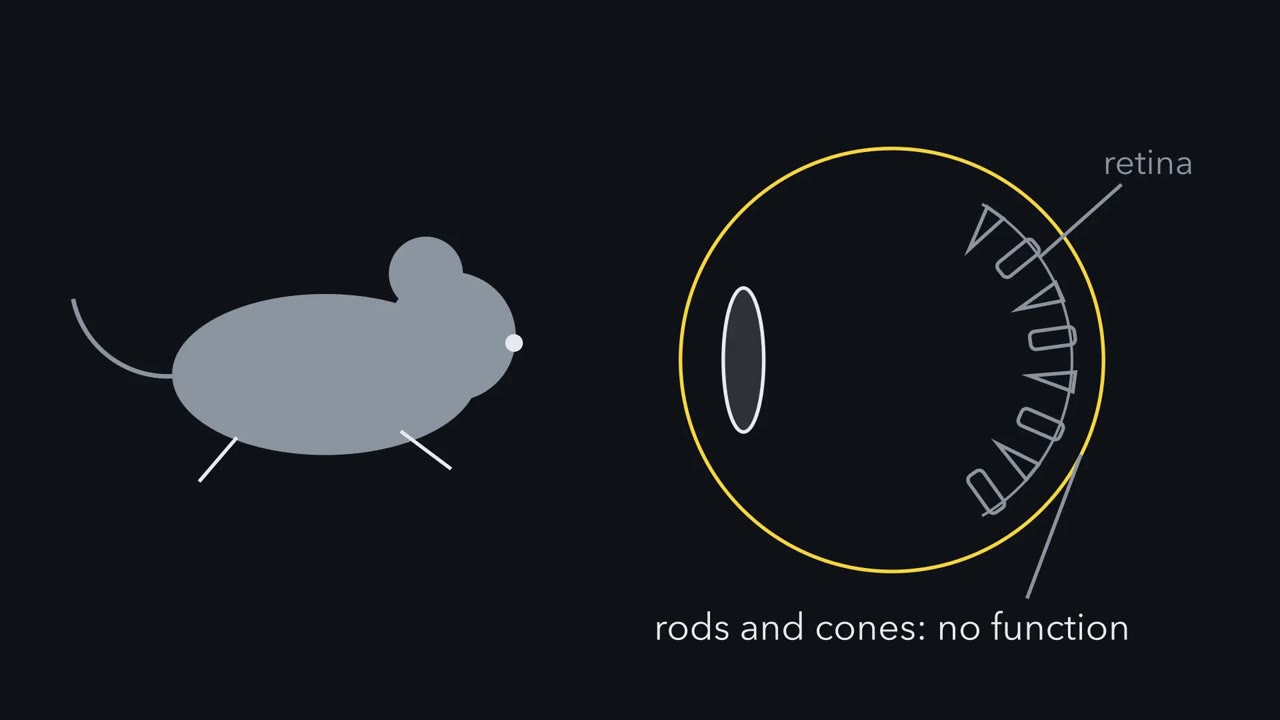 Part 1 of 6 Length 2:29 A Blind Mouse That Knows It Is Day Sensory Systems · Graduate school and beyond Melanopsin Cells: Light for the Clock and the Pupil
Take-home
A small set of retinal ganglion cells, the ipRGCs, make their own light response with melanopsin and also relay rod and cone signals.
-
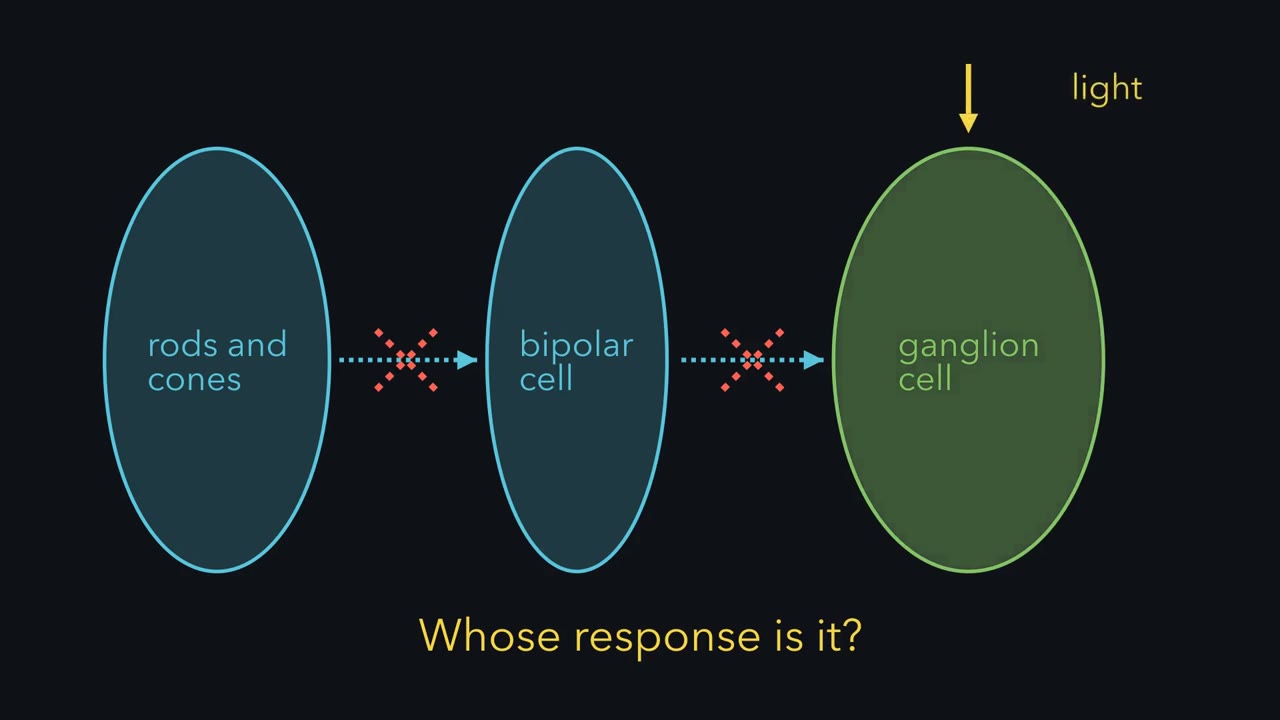 Part 2 of 6 Length 2:54 The Light Response That Survived the Block Sensory Systems · Graduate school and beyond Melanopsin Cells: Light for the Clock and the Pupil
Take-home
A ganglion cell that still responds to light once rod and cone synapses are blocked is most likely making its own response.
-
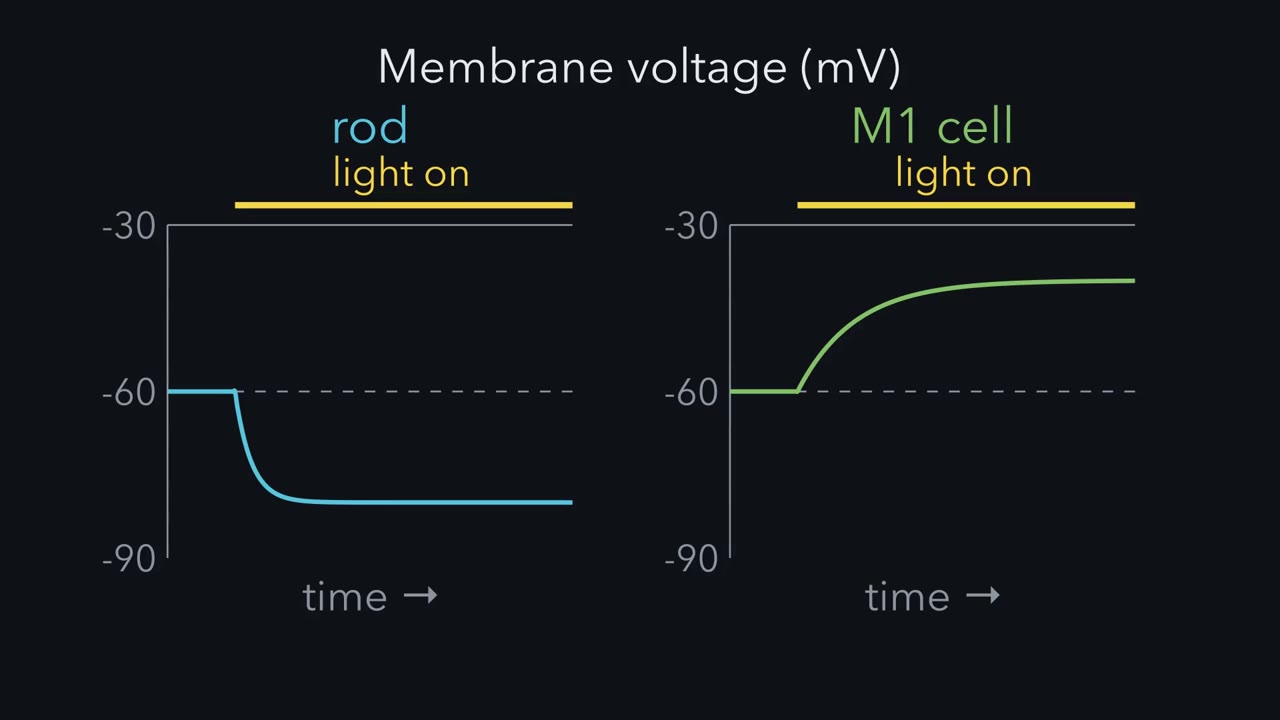 Part 3 of 6 Length 3:07 Two Inputs, One Exit Sensory Systems · Graduate school and beyond Melanopsin Cells: Light for the Clock and the Pupil
Take-home
An ipRGC pools the rod and cone relay and its own melanopsin response into one output.
-
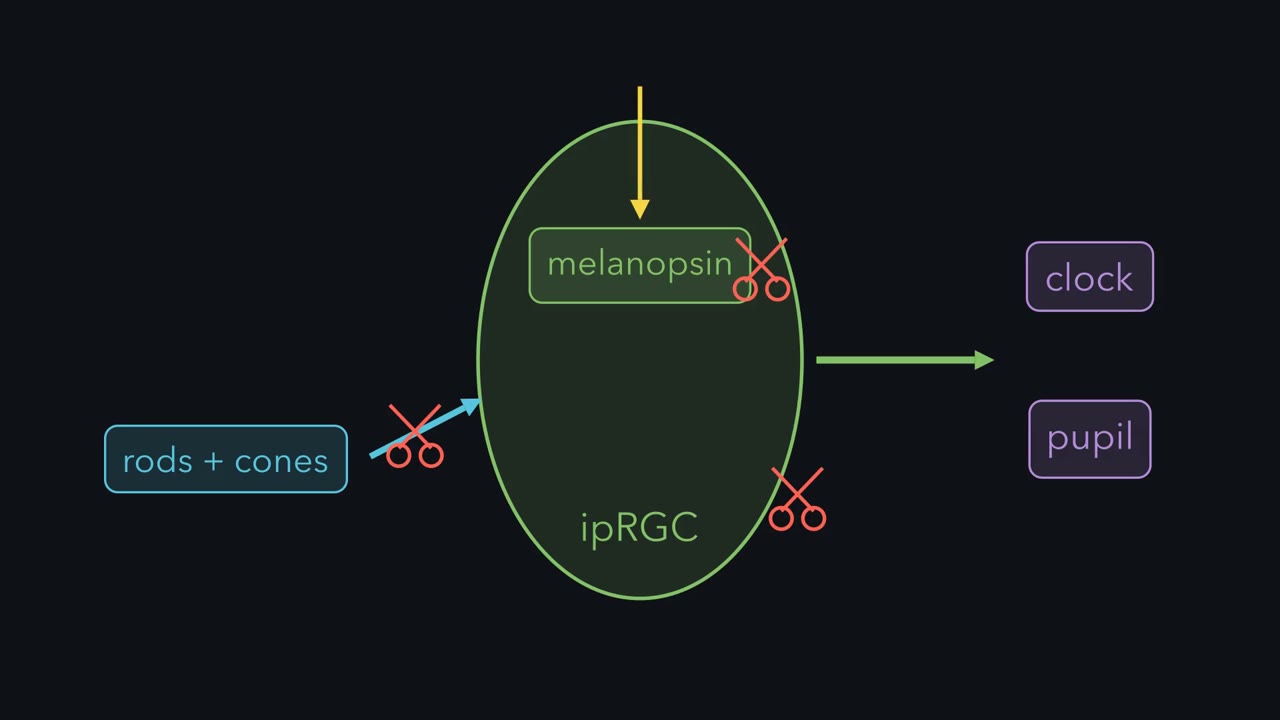 Part 4 of 6 Length 3:53 Remove the Pigment, or Remove the Cell Sensory Systems · Graduate school and beyond Melanopsin Cells: Light for the Clock and the Pupil
Take-home
In mice, either input alone is enough to entrain the clock and to constrict the pupil, and losing both leaves nothing.
-
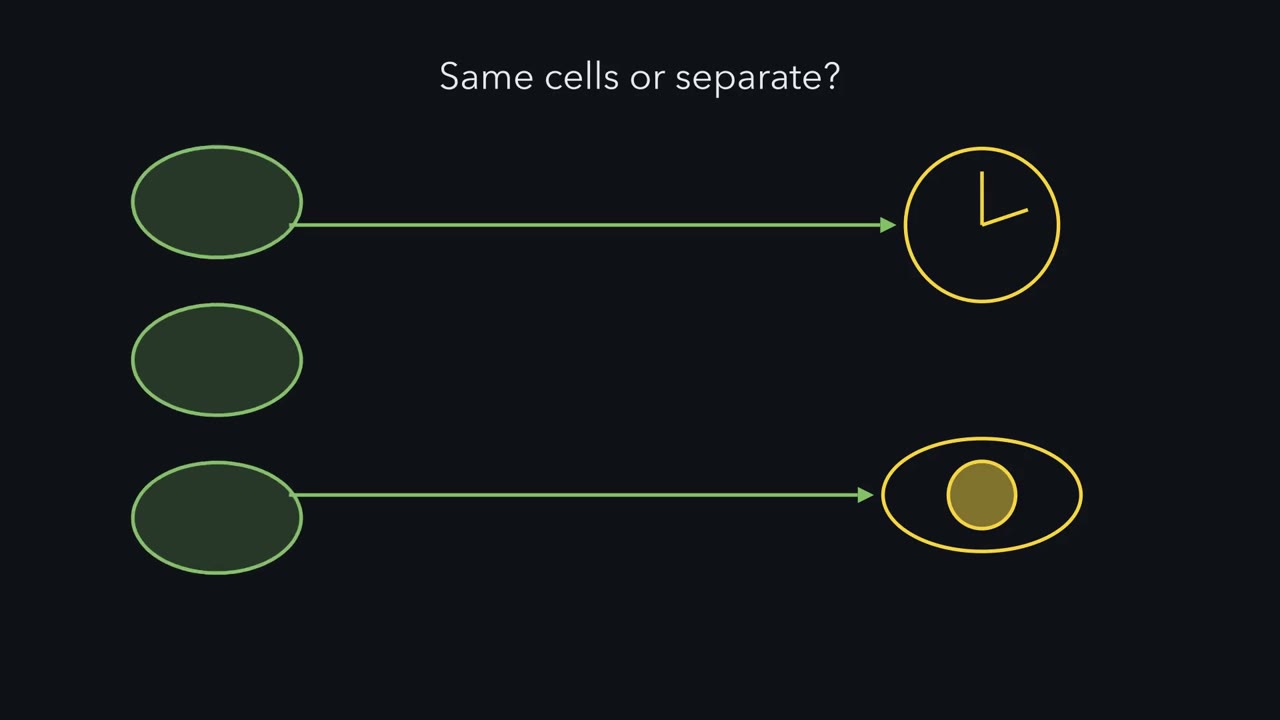 Part 5 of 6 Length 2:32 Separate Cells for the Clock and the Pupil Sensory Systems · Graduate school and beyond Melanopsin Cells: Light for the Clock and the Pupil
Take-home
The clock and the pupil depend on partly different ipRGCs.
-
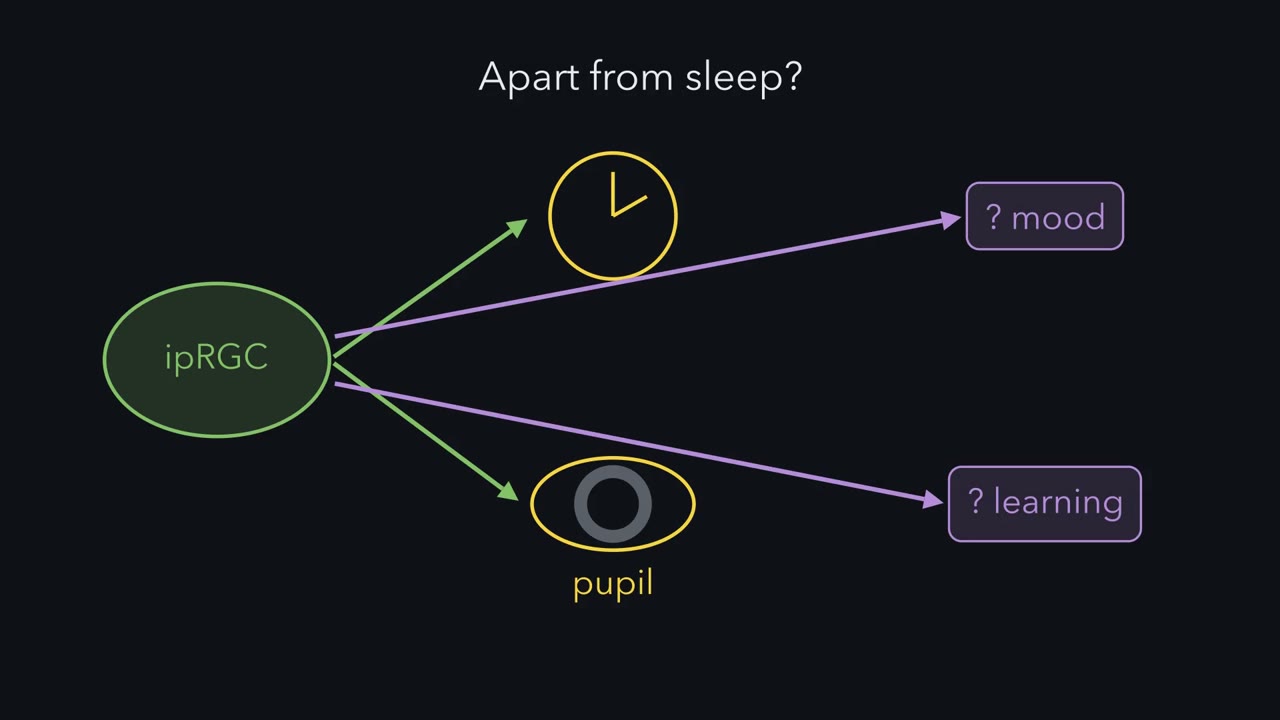 Part 6 of 6 Length 3:08 Beyond the Clock: Mood, Learning, Seeing and People Sensory Systems · Graduate school and beyond Melanopsin Cells: Light for the Clock and the Pupil
Take-home
In mice, ipRGCs contribute to mood-like and learning effects of abnormal light cycles, through separate outputs.
-
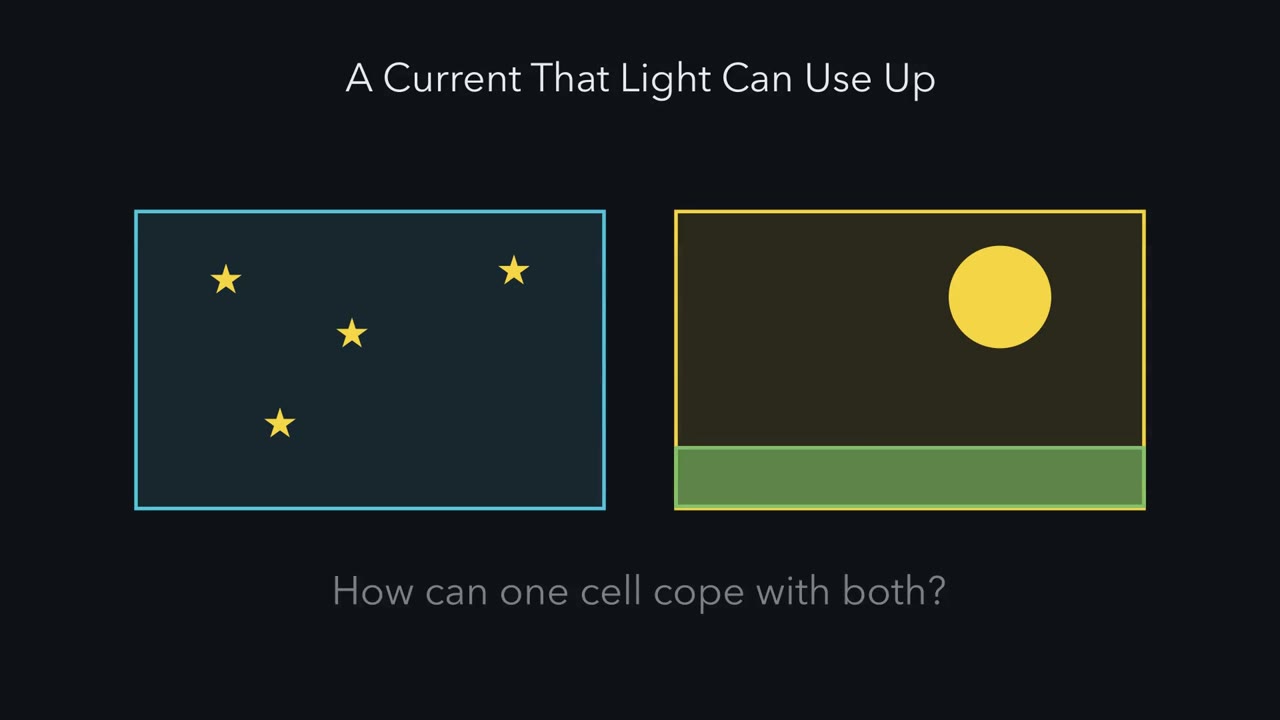 Part 1 of 3 Length 2:52 A Current That Light Can Use Up Sensory Systems · Graduate school and beyond Calcium Feedback Sets Photoreceptor Gain, and When Photoreceptors Die
Take-home
Light switches off part of a photoreceptor's dark current, so the current still flowing limits how big the next response can be.
-
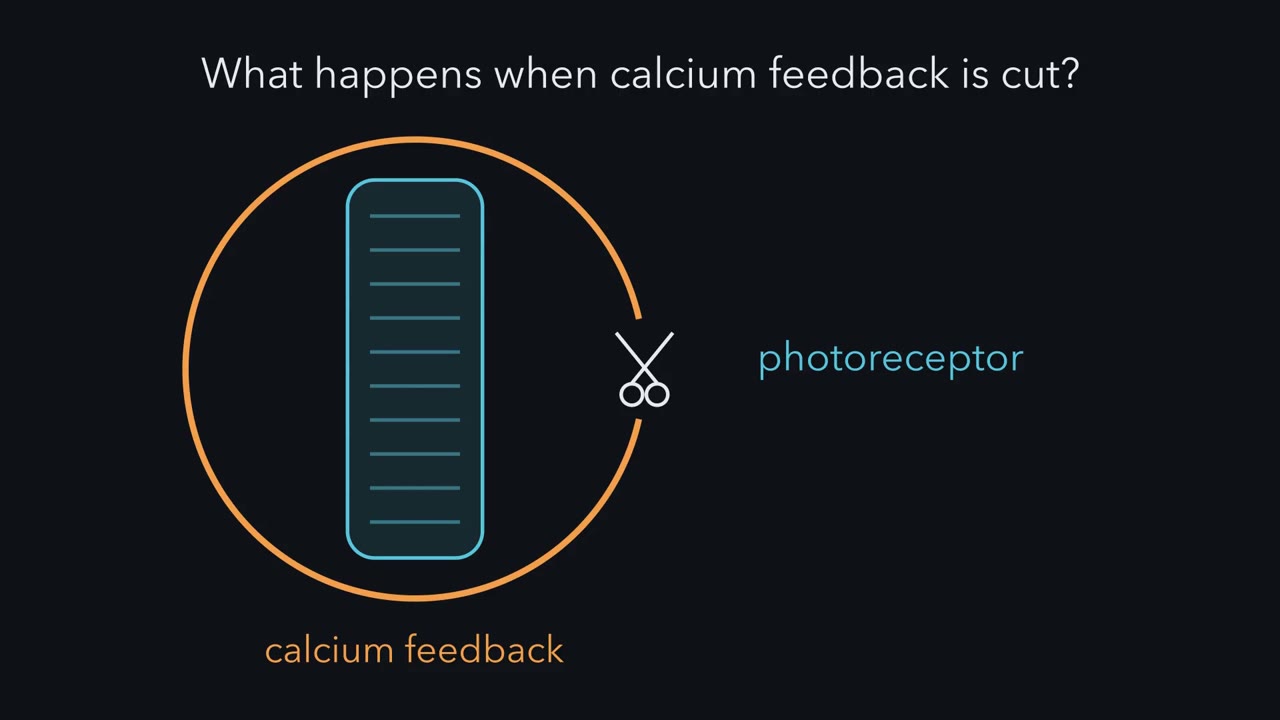 Part 2 of 3 Length 3:44 Cut the Loop Sensory Systems · Graduate school and beyond Calcium Feedback Sets Photoreceptor Gain, and When Photoreceptors Die
Take-home
Without the GCAPs, a mouse rod's single-photon response in darkness is about five times larger, and on a background its adaptation is severely compromised.
-
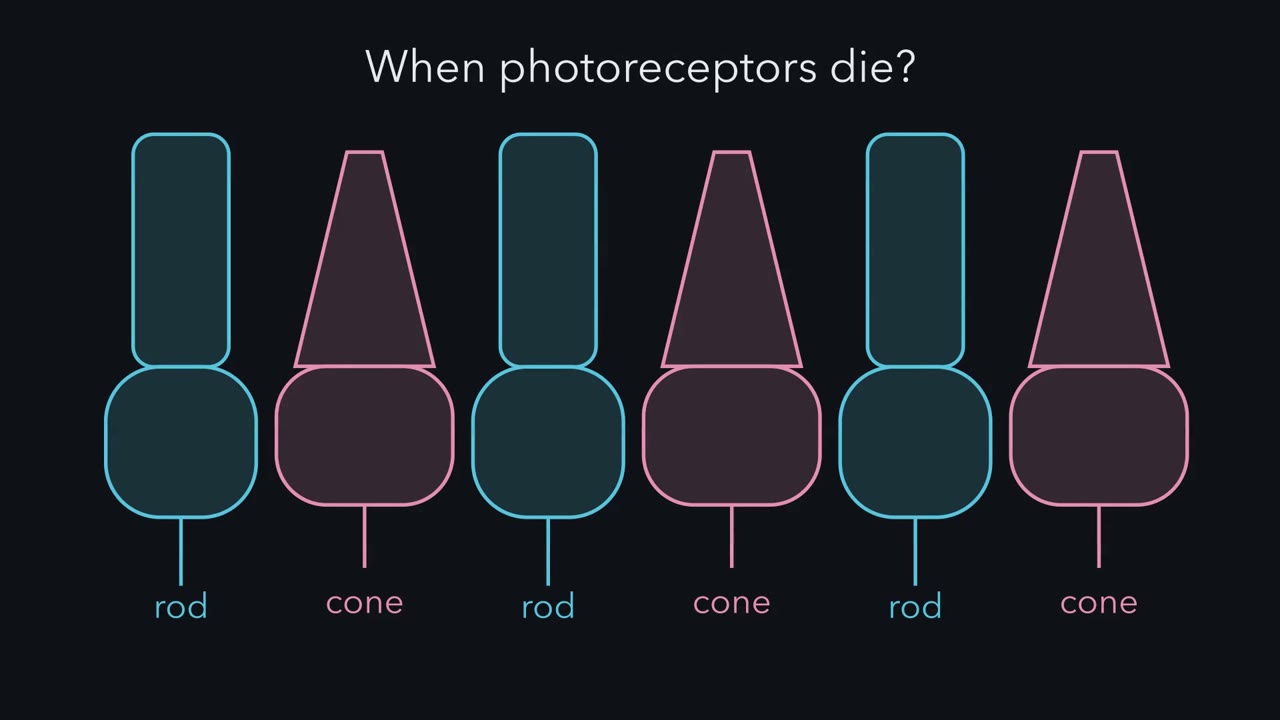 Part 3 of 3 Length 2:25 Rods First, Then Cones Sensory Systems · Graduate school and beyond Calcium Feedback Sets Photoreceptor Gain, and When Photoreceptors Die
Take-home
In typical retinitis pigmentosa, cones die too, usually after most nearby rods have gone, although the faulty gene is often not expressed in cones.
-
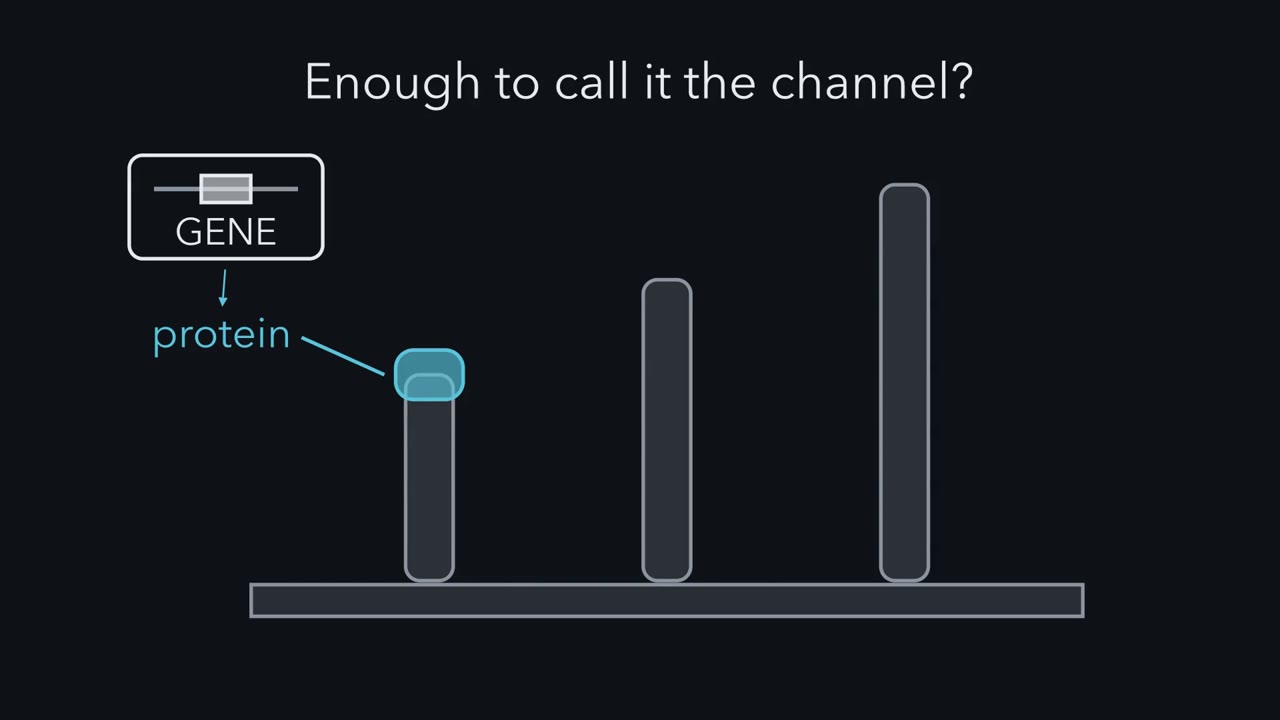 Part 1 of 3 Length 2:35 One Current, Three Factors Sensory Systems · Graduate school and beyond The Hair Cell's Transduction Channel
Take-home
The mean current from a hair bundle is the product of the number of working channels, the current through one open channel and the open probability.
-
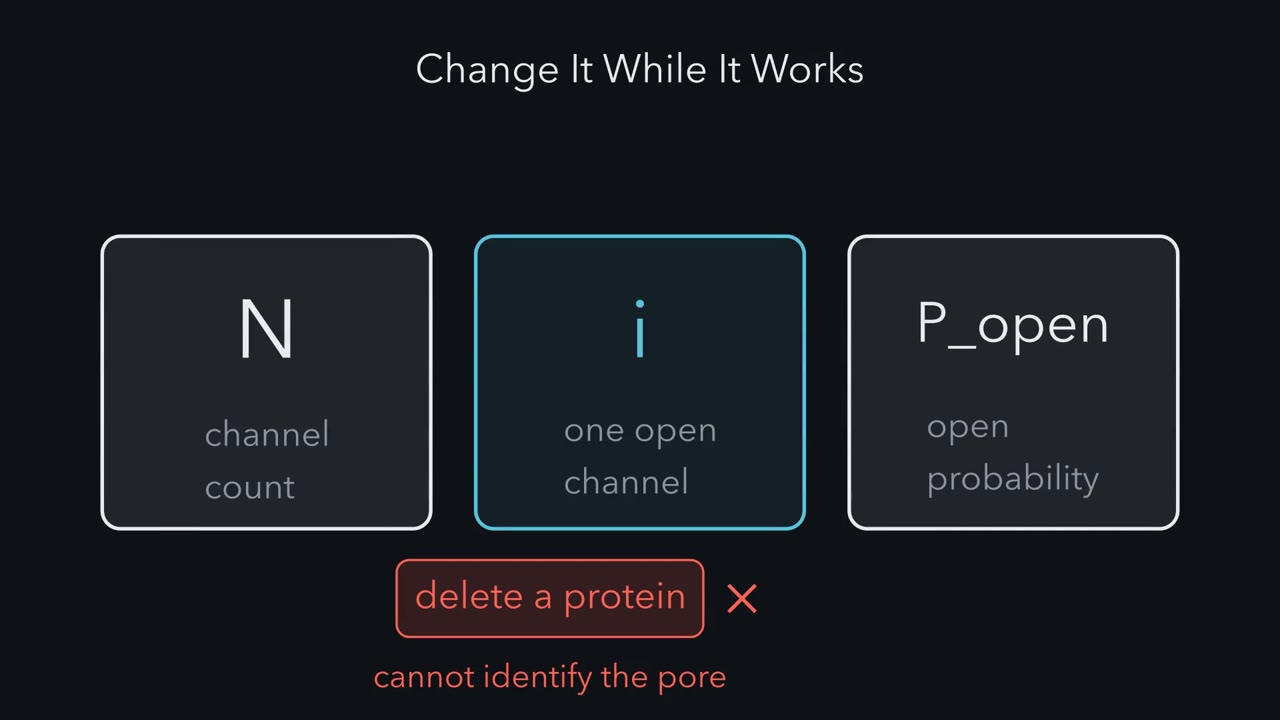 Part 2 of 3 Length 3:14 Change It While It Works Sensory Systems · Graduate school and beyond The Hair Cell's Transduction Channel
Take-home
Loss and rescue of TMC1 and TMC2 put them in the pathway but cannot separate a pore from its helpers.
-
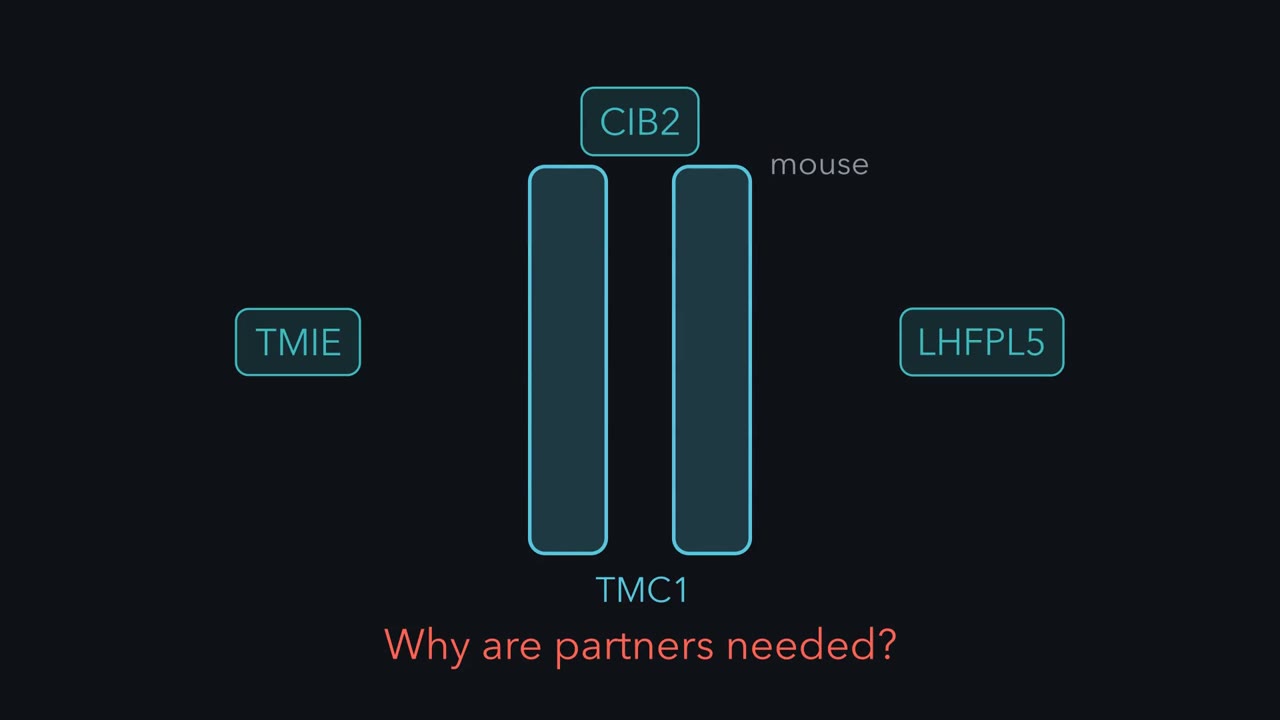 Part 3 of 3 Length 2:23 A Pore Inside a Complex Sensory Systems · Graduate school and beyond The Hair Cell's Transduction Channel
Take-home
The native worm TMC-1 complex solved by cryo-EM held two copies each of TMC-1, CALM-1 and TMIE, and the human complex in that paper was a model.
-
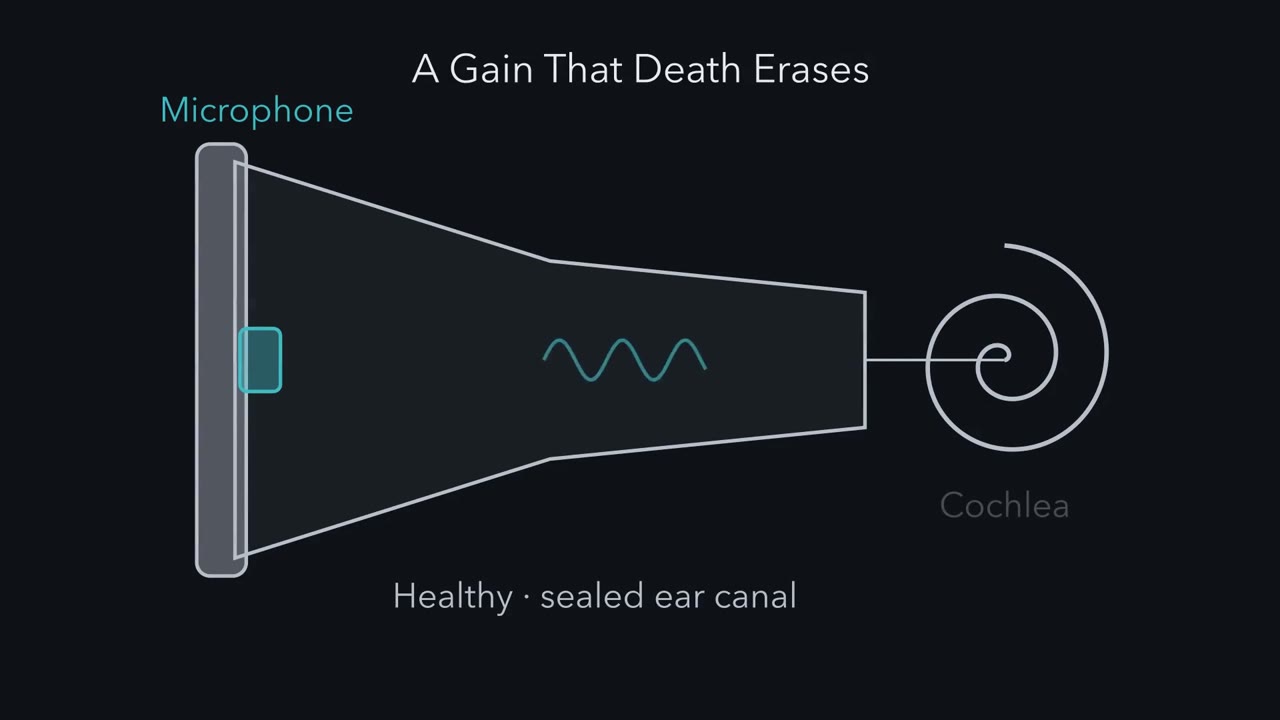 Part 1 of 3 Length 2:42 A Gain That Death Erases Sensory Systems · Graduate school and beyond The Cochlear Amplifier and Otoacoustic Emissions
Take-home
The cochlear amplifier is the gain of the living cochlea over the dead one, and in mammals it depends on outer hair cells.
-
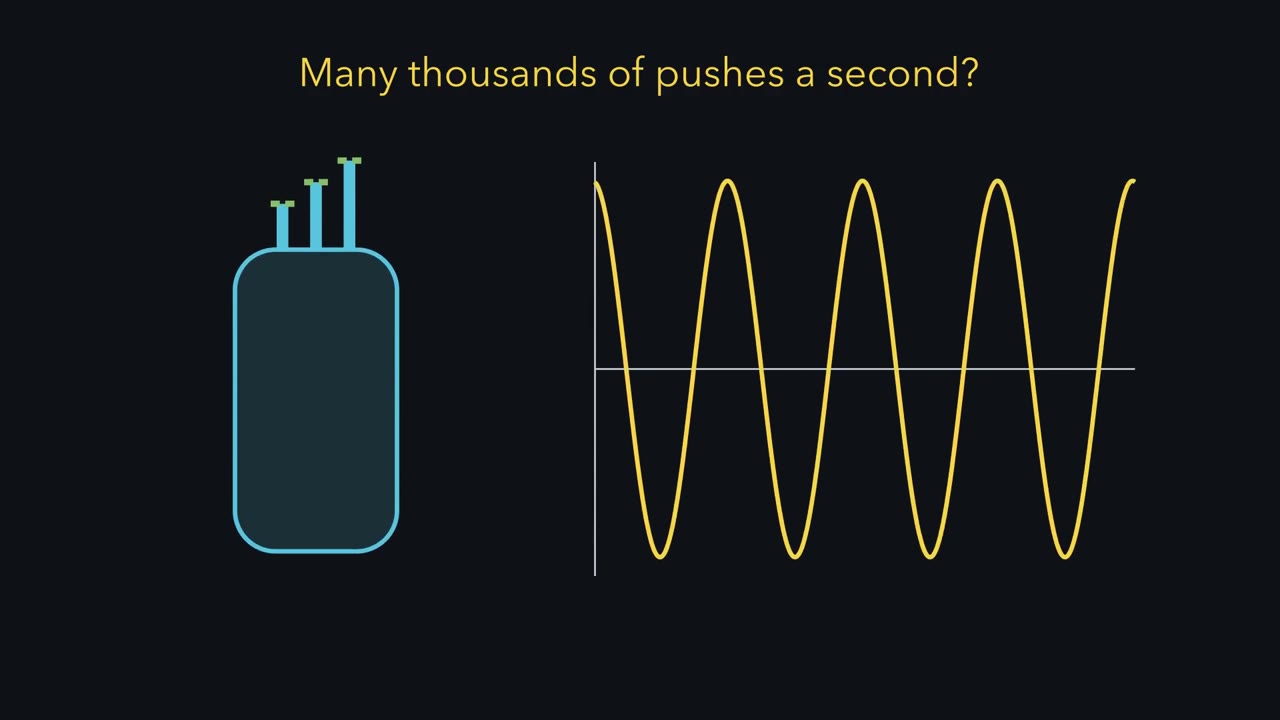 Part 2 of 3 Length 2:46 From a Bent Bundle to a Pushing Cell Sensory Systems · Graduate school and beyond The Cochlear Amplifier and Otoacoustic Emissions
Take-home
The outer hair cell turns sound into force through a chain: bundle bending, transduction current, voltage, prestin shape change, and a push on the organ of Corti.
-
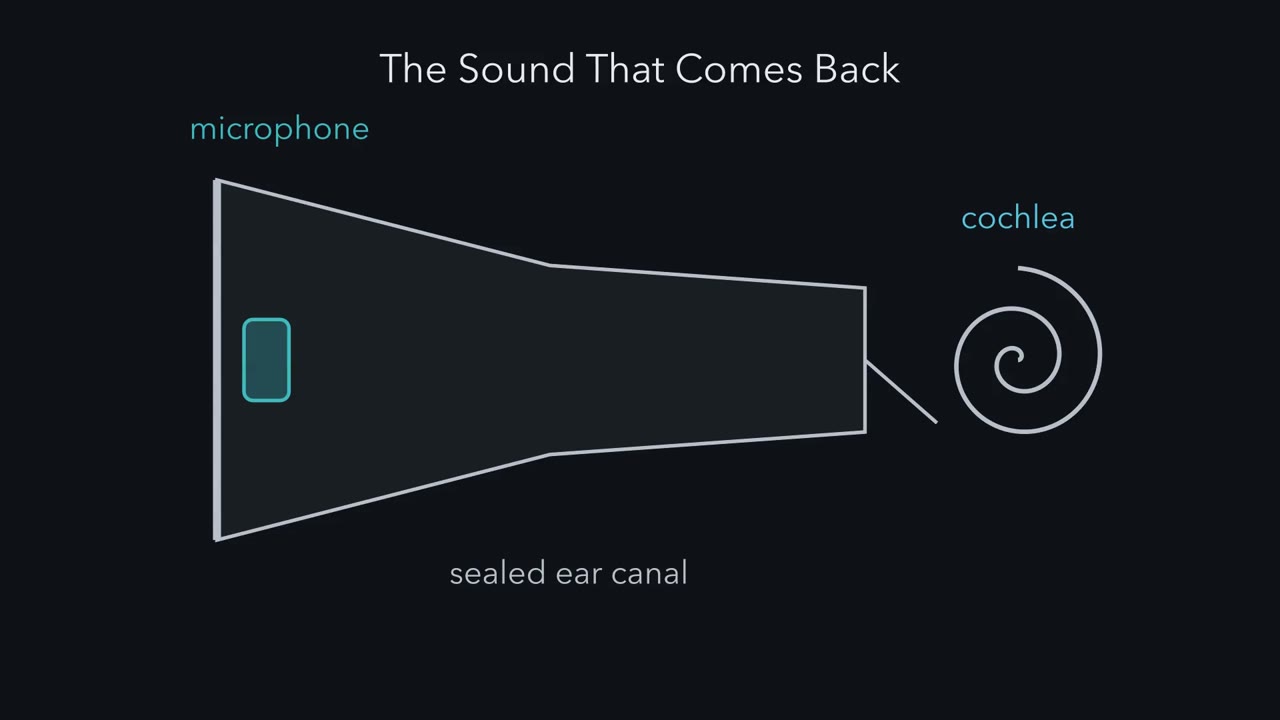 Part 3 of 3 Length 2:39 The Sound That Comes Back Sensory Systems · Graduate school and beyond The Cochlear Amplifier and Otoacoustic Emissions
Take-home
A fast nonlinearity in a living ear makes new tones, such as 2f1 minus f2, that a microphone in the ear canal can record.
-
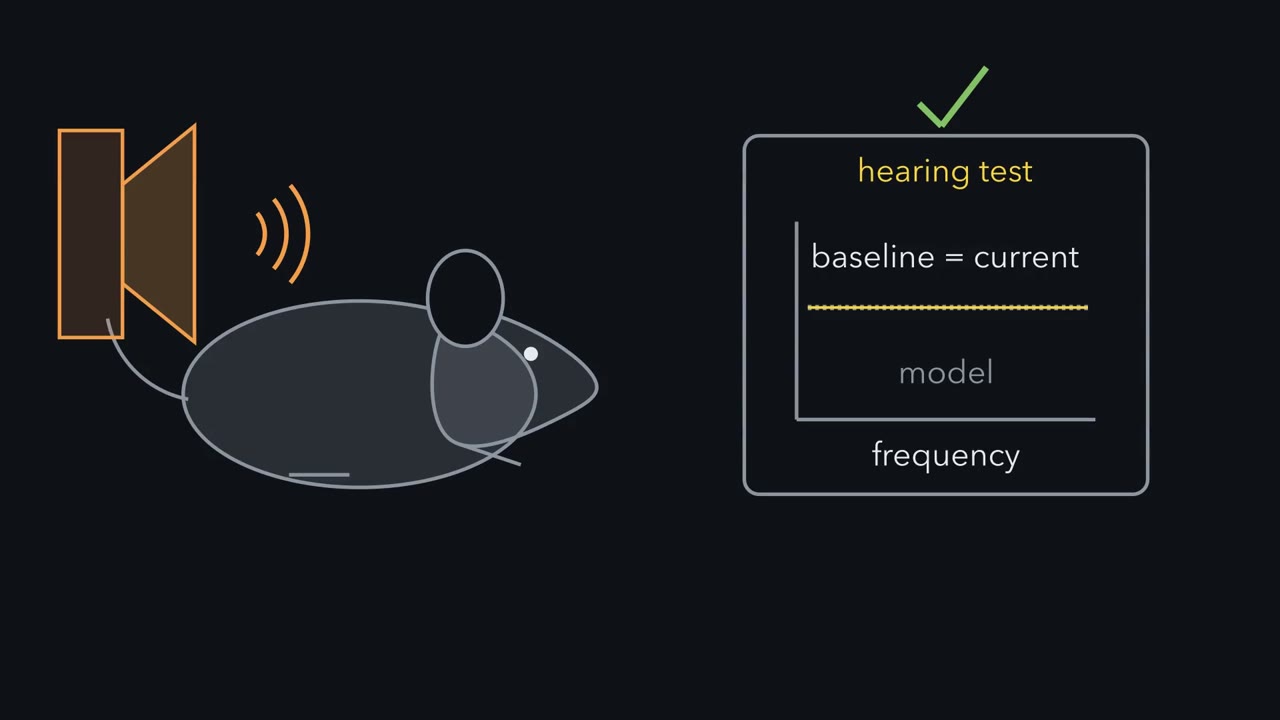 Part 1 of 3 Length 2:59 A Threshold Is Not a Count Sensory Systems · Graduate school and beyond Hidden Hearing Loss, Gene Therapy and Regeneration
Take-home
In these mice, a cochlea lost many synapses and still passed a hearing test.
-
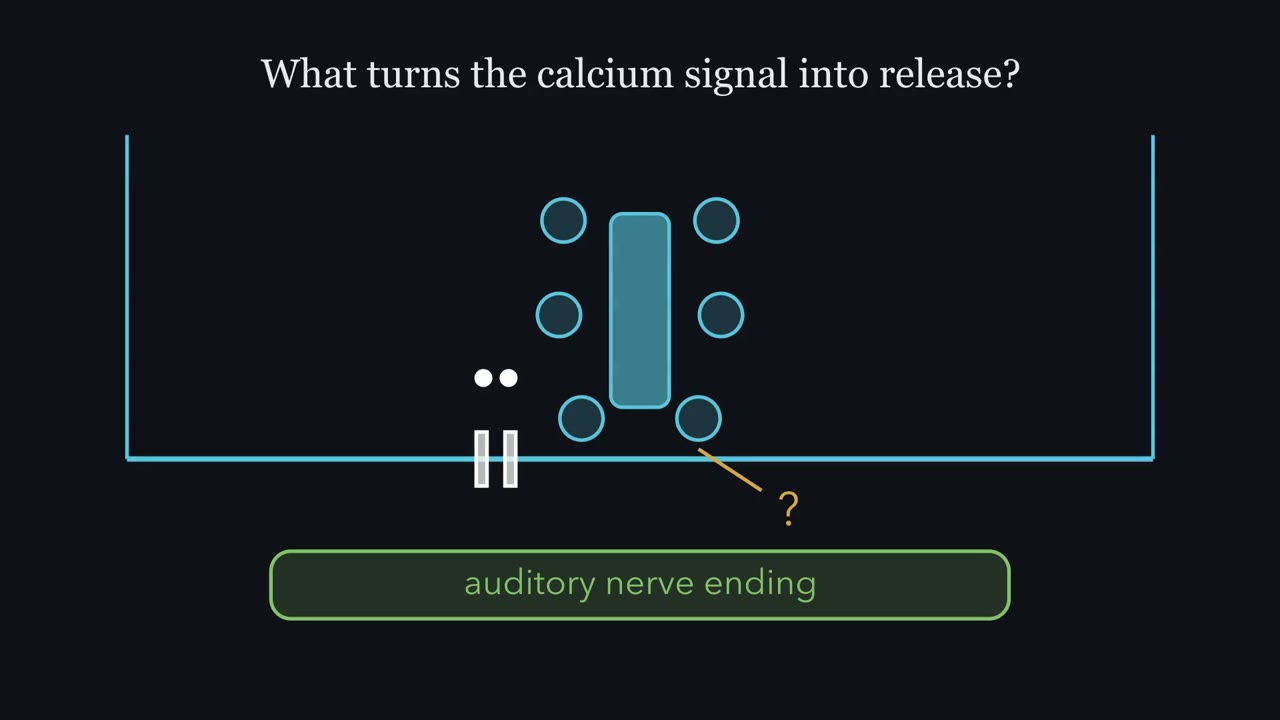 Part 2 of 3 Length 2:48 The Link That Must Fire, and How to Put It Back Sensory Systems · Graduate school and beyond Hidden Hearing Loss, Gene Therapy and Regeneration
Take-home
A knockout shows that a protein is needed, and it does not by itself show that the protein is the sensor.
-
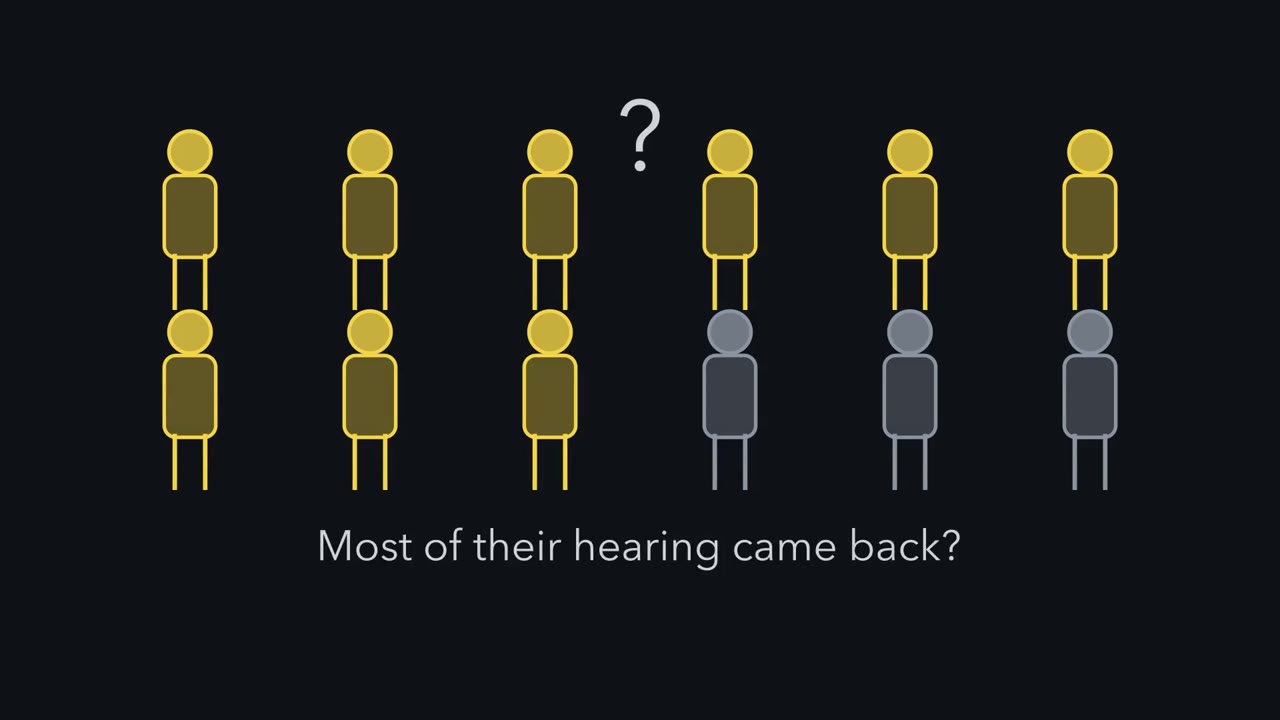 Part 3 of 3 Length 2:35 Reading the Trial, and When the Cell Is Gone Sensory Systems · Graduate school and beyond Hidden Hearing Loss, Gene Therapy and Regeneration
Take-home
Nine of twelve is a share of children meeting an endpoint, not a share of hearing.
-
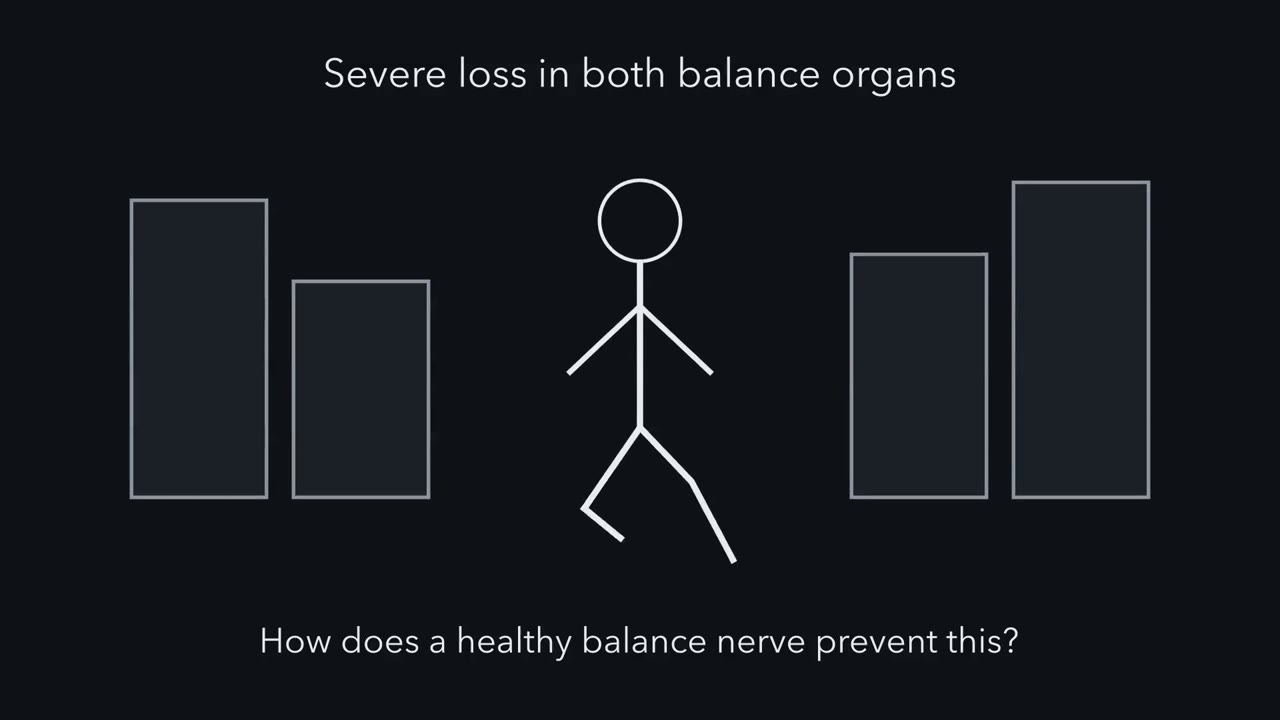 Part 1 of 3 Length 2:57 Report It Twice Sensory Systems · Graduate school and beyond Balance: Two Codes for Every Head Movement
Take-home
The vestibular nerve reports each head movement on two overlapping channels, whoever caused it.
-
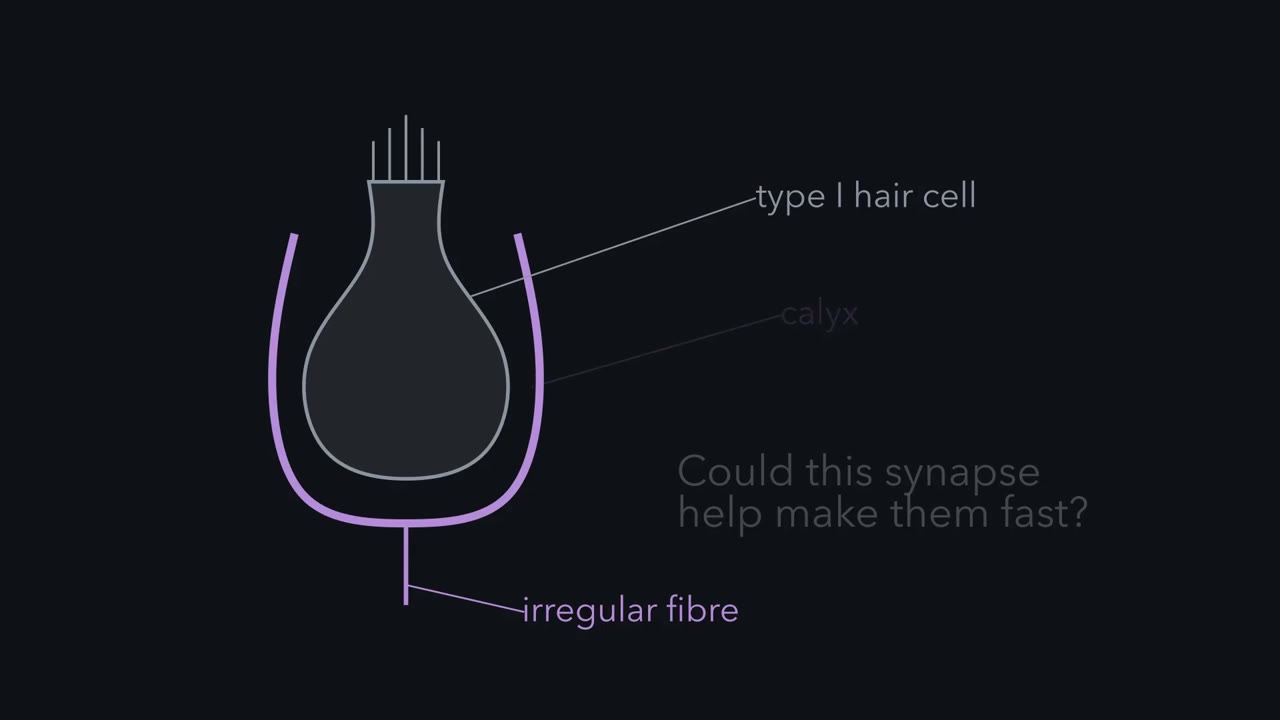 Part 2 of 3 Length 2:44 A Synapse That Does Not Wait Sensory Systems · Graduate school and beyond Balance: Two Codes for Every Head Movement
Take-home
Type I hair cells release glutamate from vesicles, as type II cells do, though sustained release in mature mouse tissue was about tenfold smaller.
-
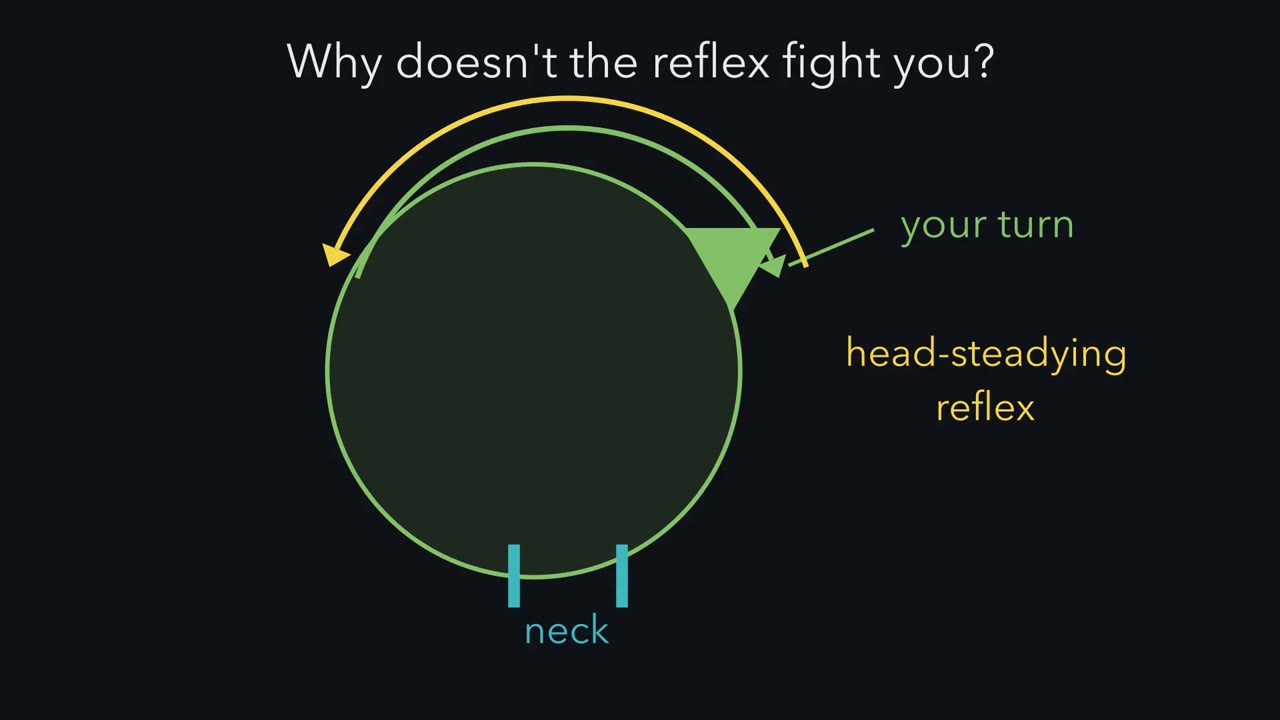 Part 3 of 3 Length 2:38 Pass On the Surprise Sensory Systems · Graduate school and beyond Balance: Two Codes for Every Head Movement
Take-home
In the neurons tested in monkeys, the response to a head turn is cancelled only when the turn is self-made and neck feedback matches the motor command's prediction.
-
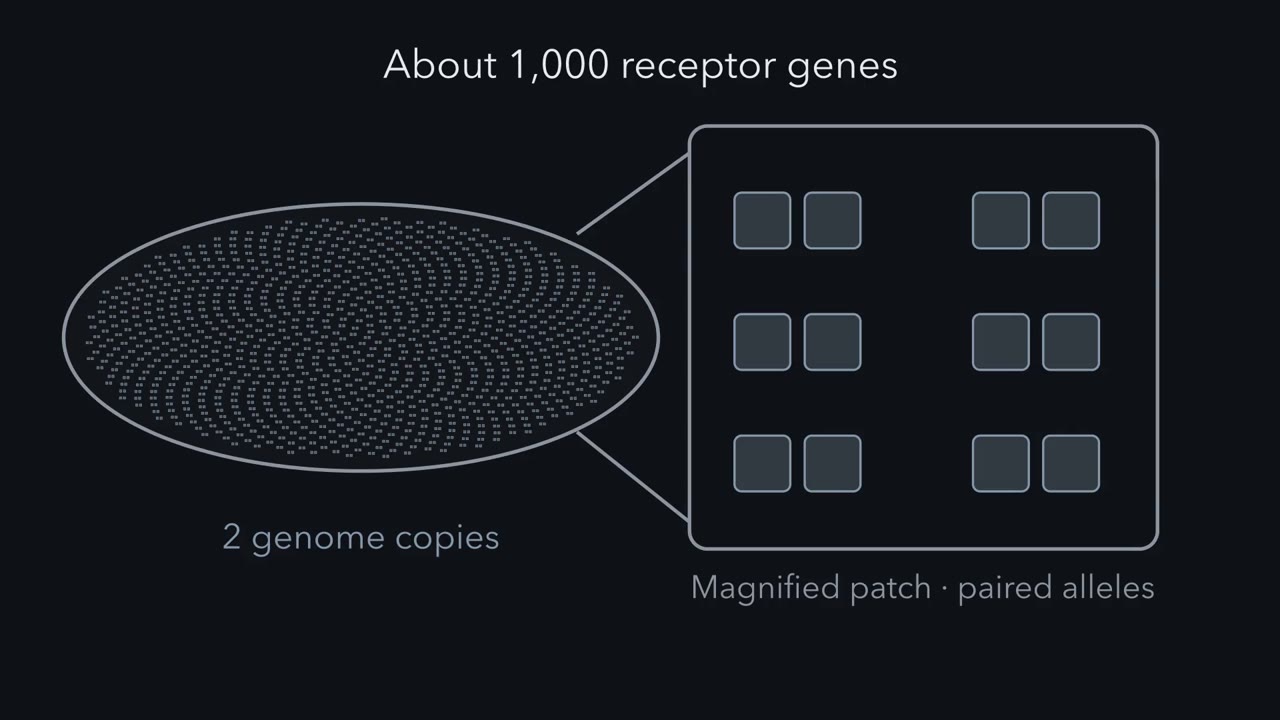 Part 1 of 6 Length 3:29 One in Two Thousand Sensory Systems · Graduate school and beyond One Receptor per Neuron: How Olfactory Neurons Choose
Take-home
A mature mouse olfactory neuron expresses one receptor gene from one allele, out of about two thousand candidates, and keeps using it.
-
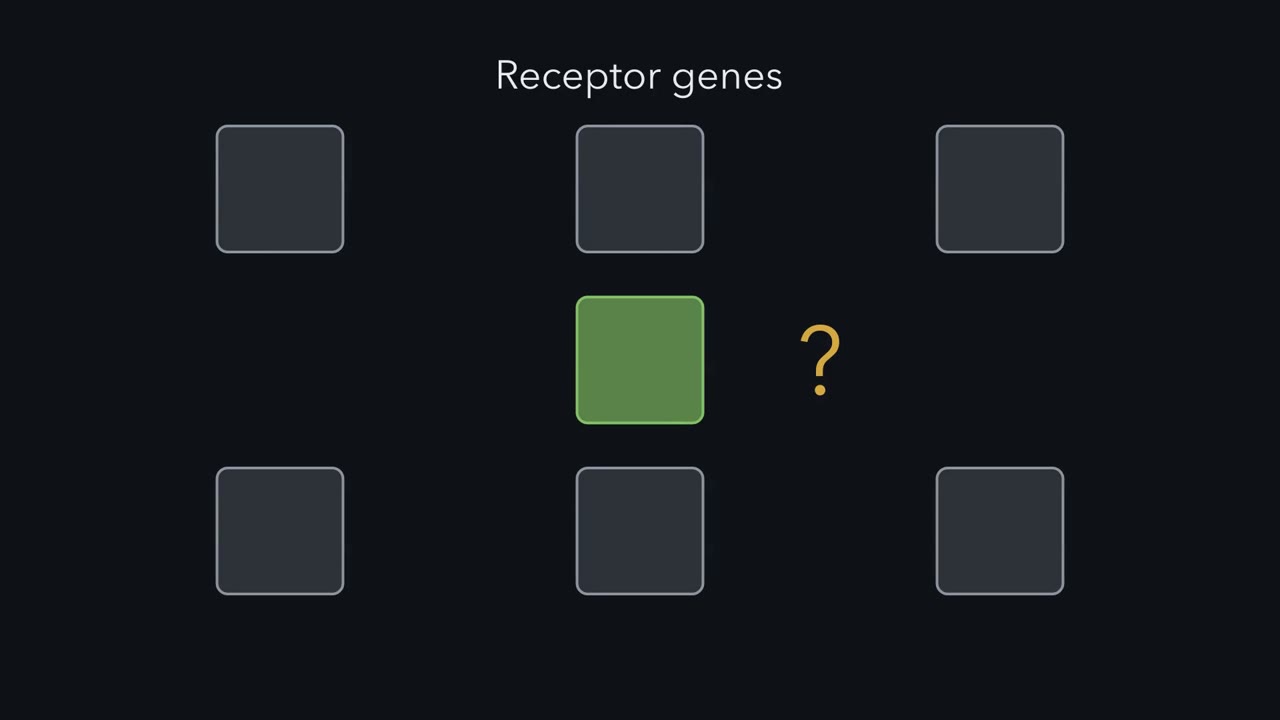 Part 2 of 6 Length 3:03 Silence First Sensory Systems · Graduate school and beyond One Receptor per Neuron: How Olfactory Neurons Choose
Take-home
Receptor genes carry repressive marks, and the silence appears to come before detectable receptor expression, so the winner did not start the broad silence by itself.
-
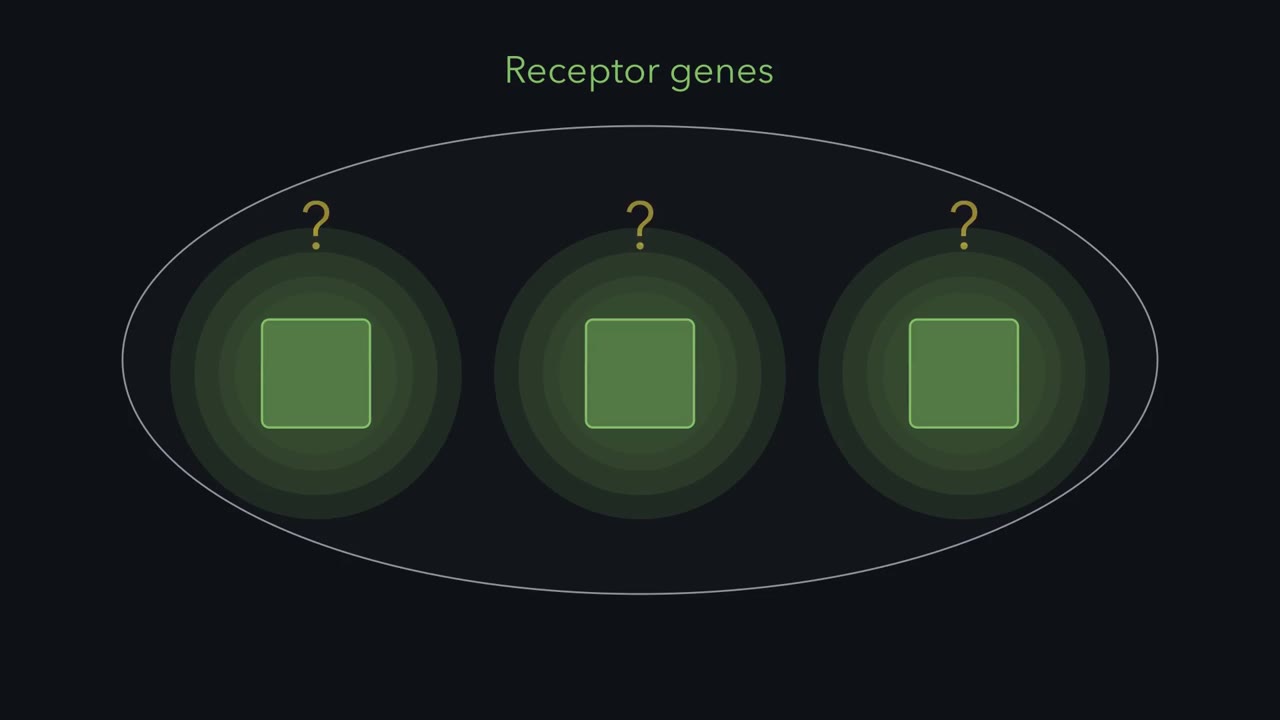 Part 3 of 6 Length 2:46 Hubs That Compete Sensory Systems · Graduate school and beyond One Receptor per Neuron: How Olfactory Neurons Choose
Take-home
Enhancers from different chromosomes form hubs, and LHX2 and EBF help build them.
-
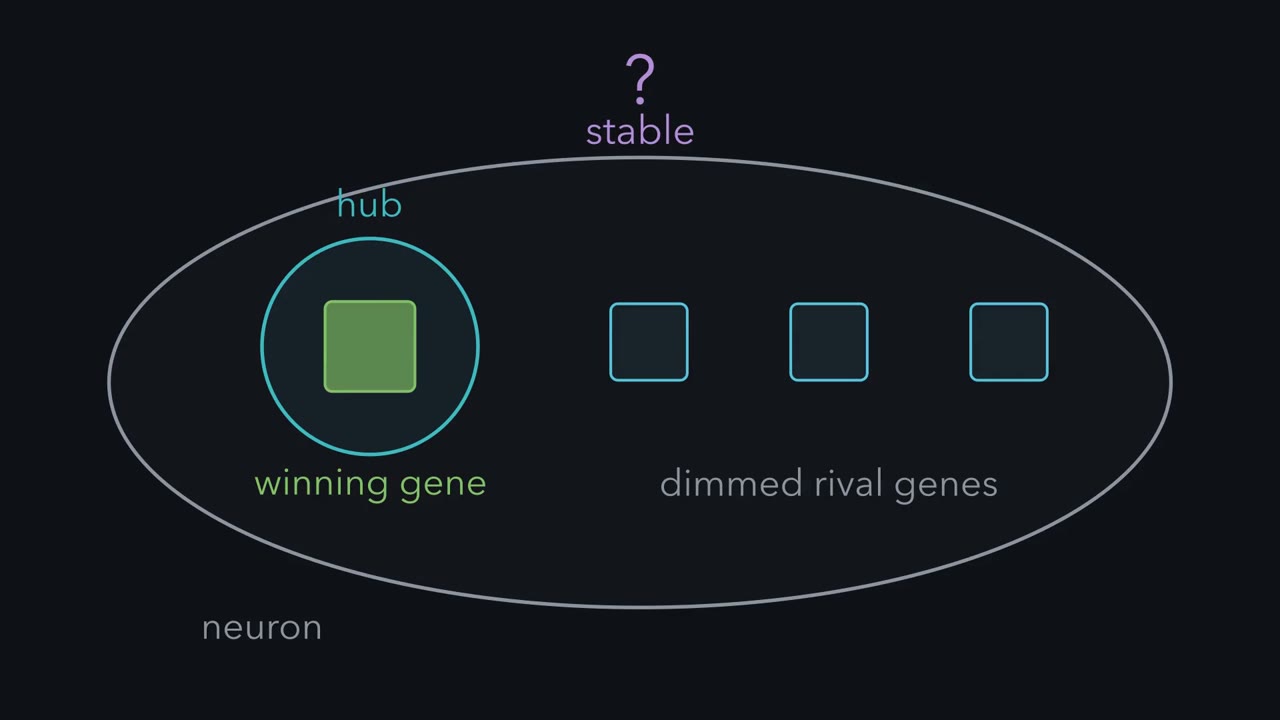 Part 4 of 6 Length 3:19 The Lock Sensory Systems · Graduate school and beyond One Receptor per Neuron: How Olfactory Neurons Choose
Take-home
In the model, the receptor made by the winning gene closes the lock, so a neuron whose chosen gene cannot make a working receptor often expresses a second one.
-
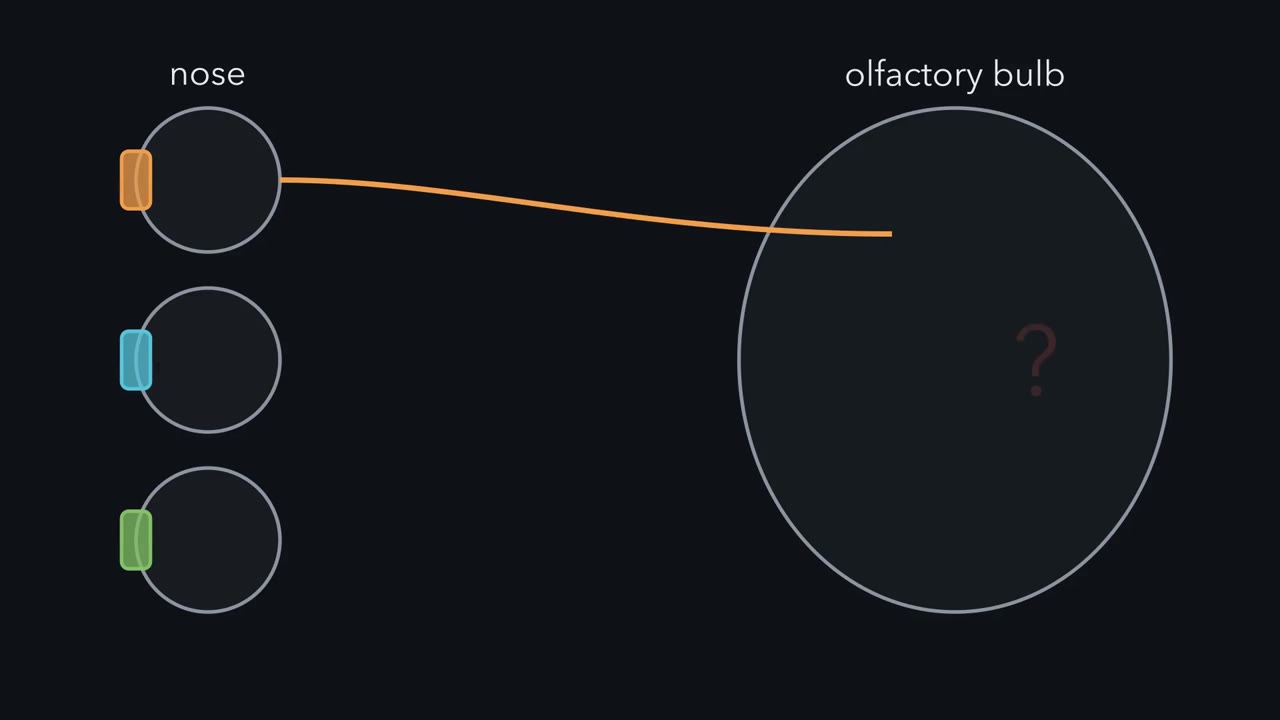 Part 5 of 6 Length 2:02 The Choice Becomes an Address Sensory Systems · Graduate school and beyond One Receptor per Neuron: How Olfactory Neurons Choose
Take-home
In mice, receptor identity is instructive in axon targeting but not the only factor.
-
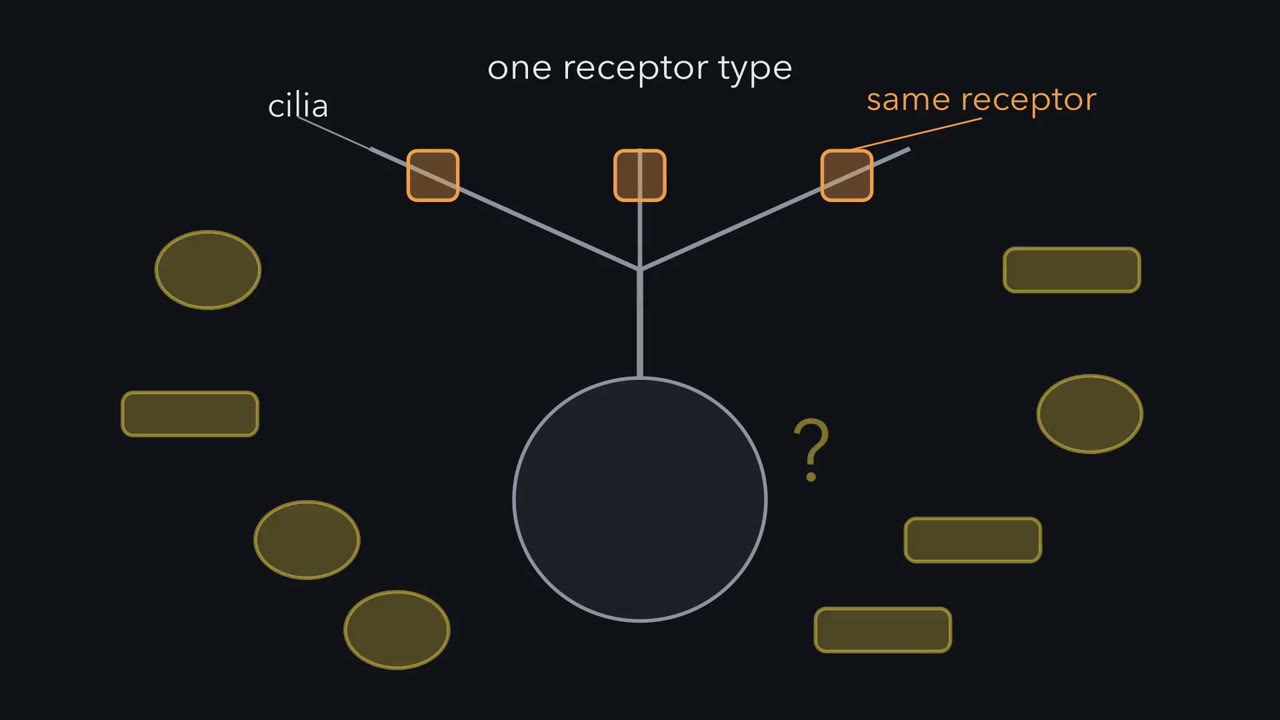 Part 6 of 6 Length 2:39 What the Choice Buys: a Pocket Sensory Systems · Graduate school and beyond One Receptor per Neuron: How Olfactory Neurons Choose
Take-home
A receptor's binding pocket sets which molecules a neuron responds to, but one pocket does not mean one odour.
-
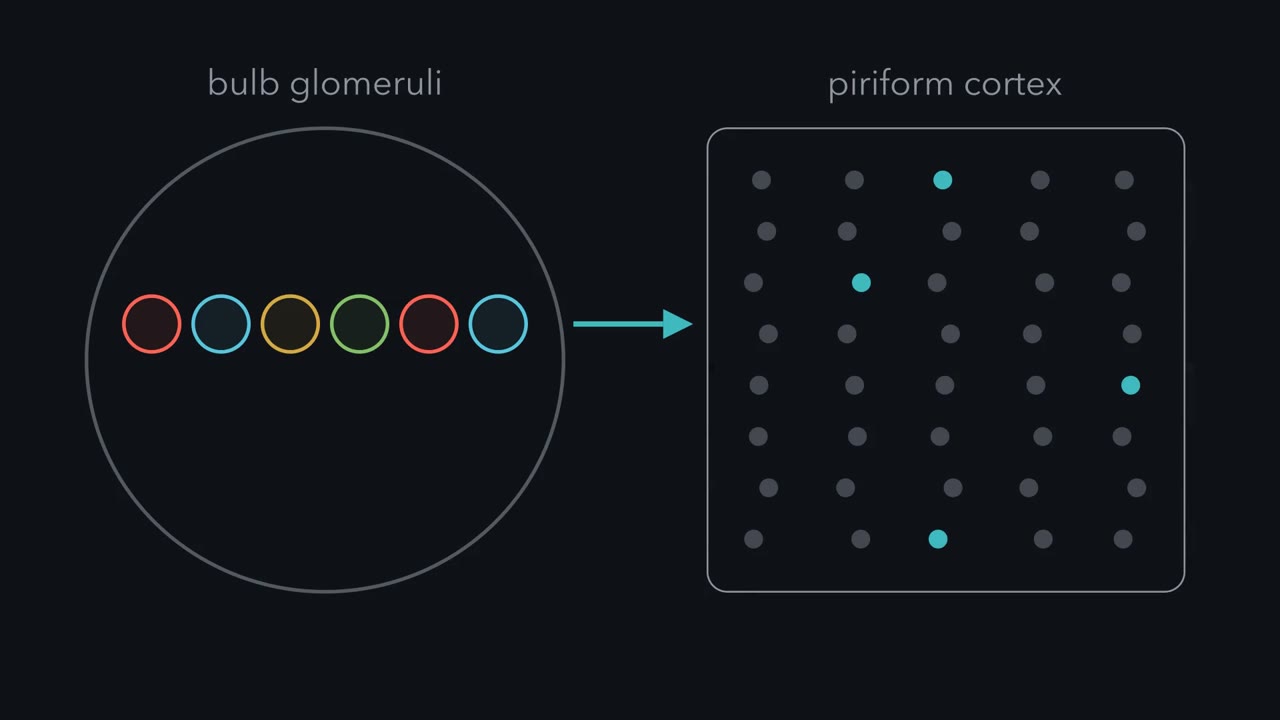 Part 1 of 6 Length 3:21 What the Bulb Sends Sensory Systems · Graduate school and beyond From Glomeruli to Piriform Cortex
Take-home
The olfactory bulb sends piriform cortex a map of which receptor types are active, and in the cortex one odour switches on scattered neurons.
-
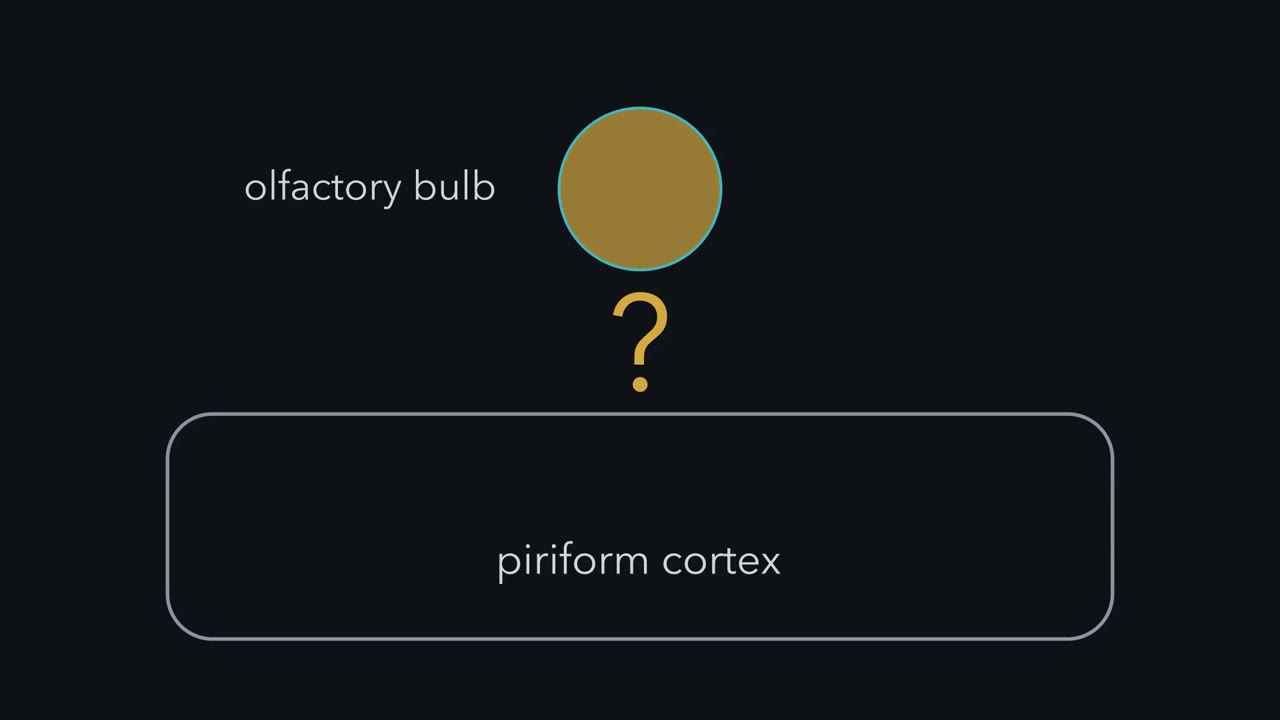 Part 2 of 6 Length 2:39 Following One Glomerulus Sensory Systems · Graduate school and beyond From Glomeruli to Piriform Cortex
Take-home
In mice, one glomerulus sent axons diffusely across piriform cortex but to stereotyped patches in the cortical amygdala.
-
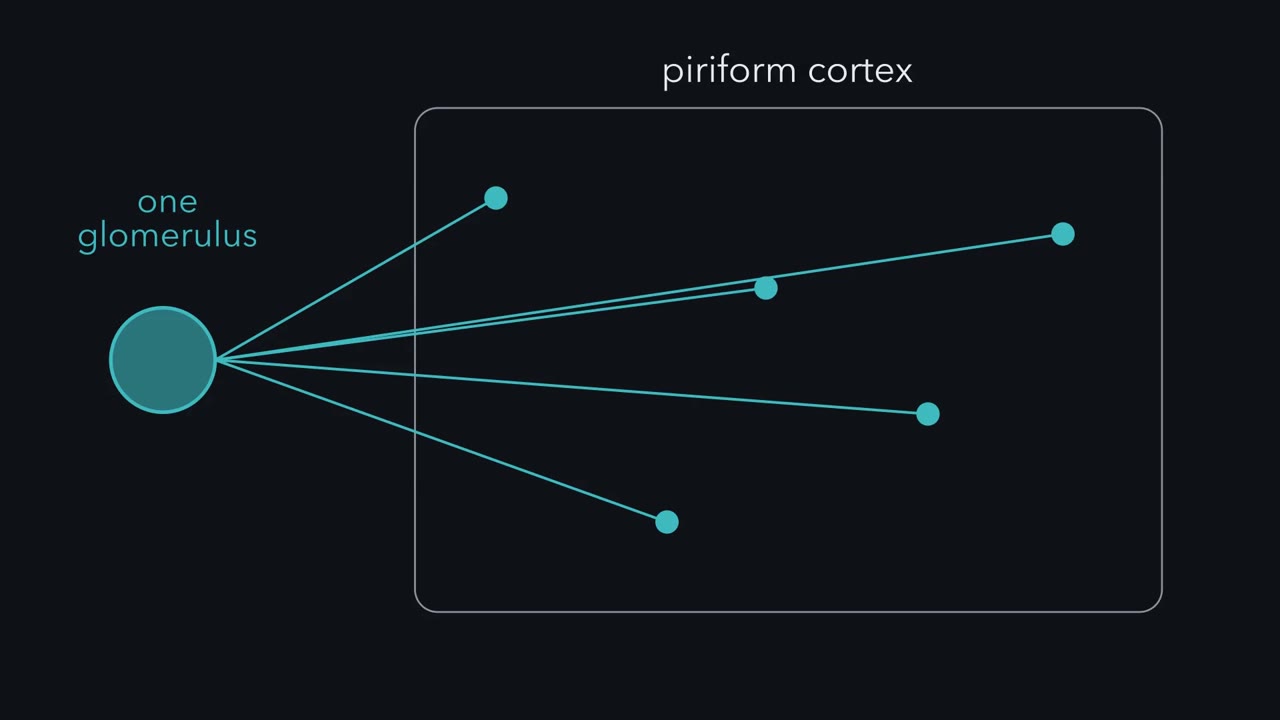 Part 3 of 6 Length 3:17 How a Scatter Keeps Similarity Sensory Systems · Graduate school and beyond From Glomeruli to Piriform Cortex
Take-home
In a simple model, a piriform neuron fires only when enough of its scattered glomerular inputs are active together, and where it sits does not matter.
-
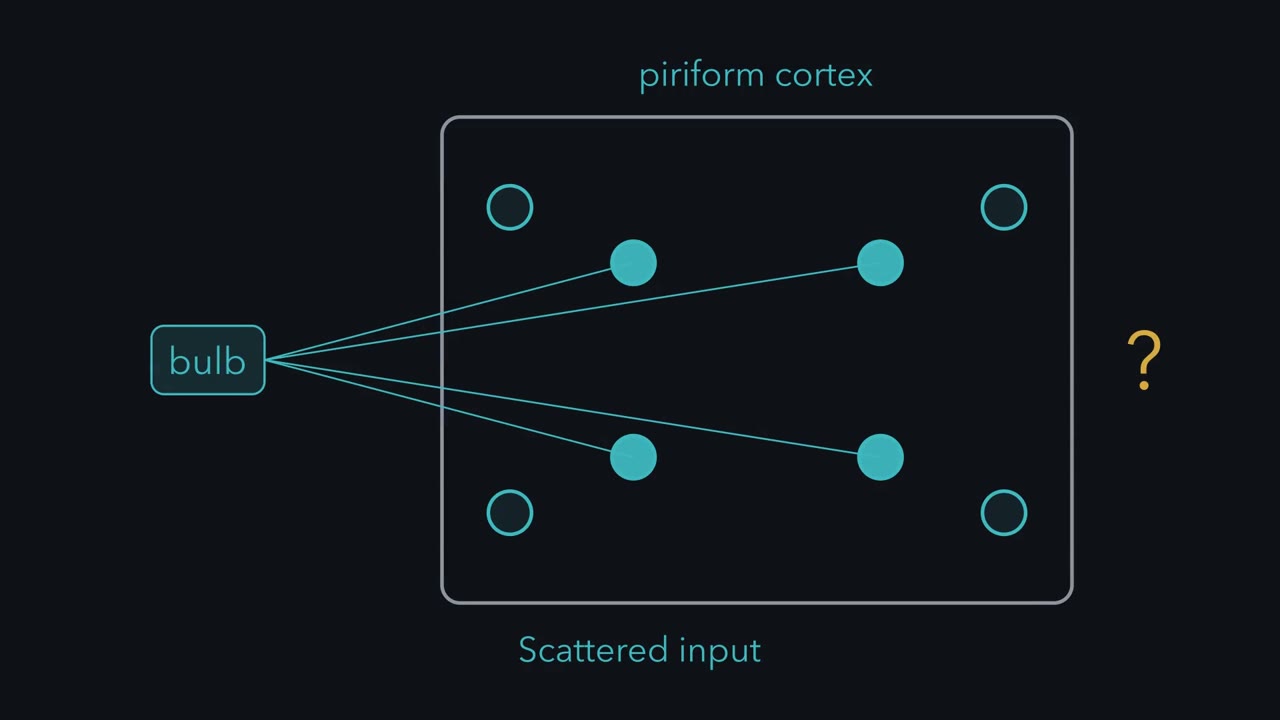 Part 4 of 6 Length 3:37 What the Cortex Adds Sensory Systems · Graduate school and beyond From Glomeruli to Piriform Cortex
Take-home
In mice, related odours gave more similar patterns than unrelated ones in both bulb boutons and piriform cortex.
-
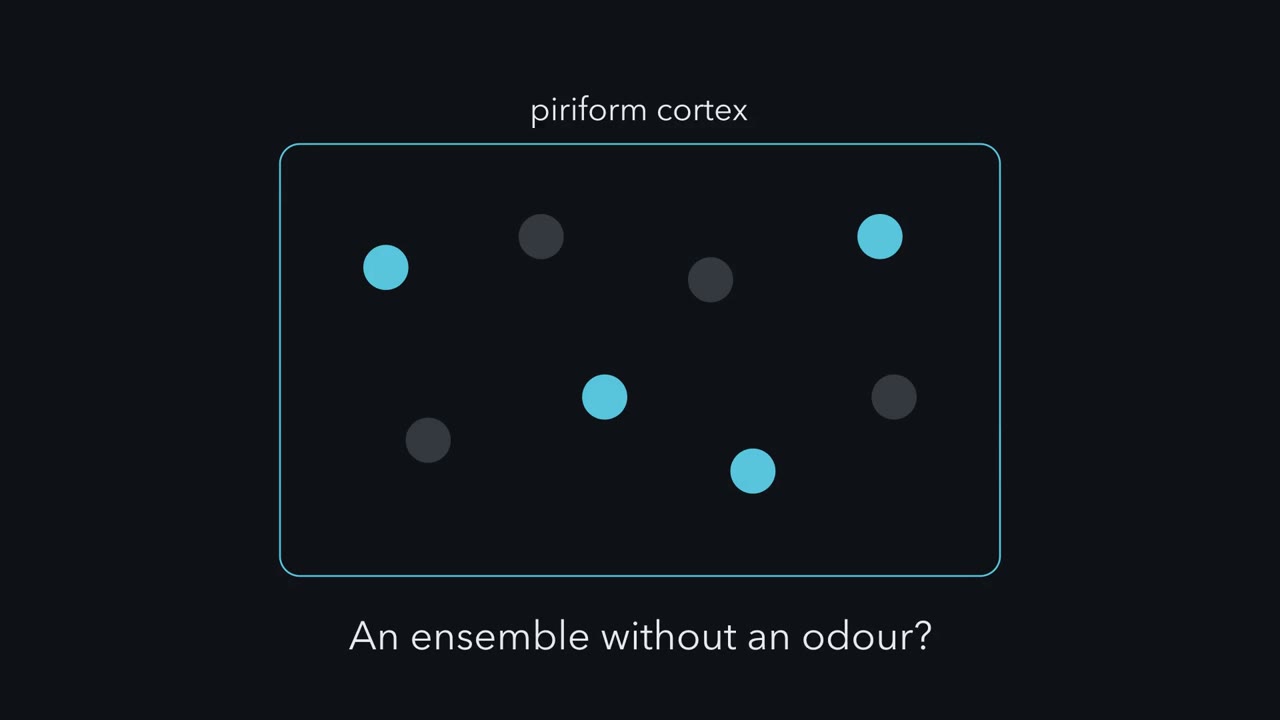 Part 5 of 6 Length 2:43 Teaching an Arbitrary Ensemble, and a Code That Drifts Sensory Systems · Graduate school and beyond From Glomeruli to Piriform Cortex
Take-home
Activating small ensembles of piriform neurons with light, paired with reward or shock, was enough for mice to learn an association, which does not show that they smelled anything.
-
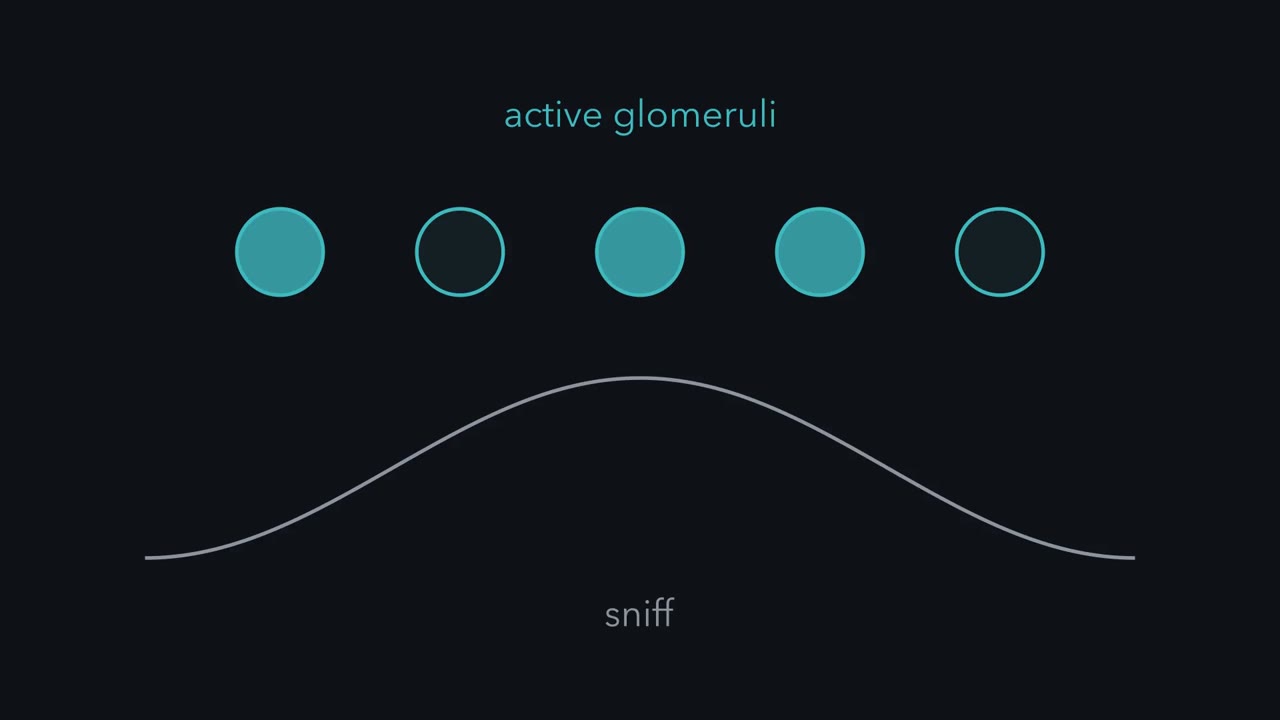 Part 6 of 6 Length 2:54 More Than a Map: Timing in the Bulb Sensory Systems · Graduate school and beyond From Glomeruli to Piriform Cortex
Take-home
The bulb reshapes its output with recurrent and lateral inhibition through reciprocal dendrodendritic synapses, and granule cells are not the only source.
-
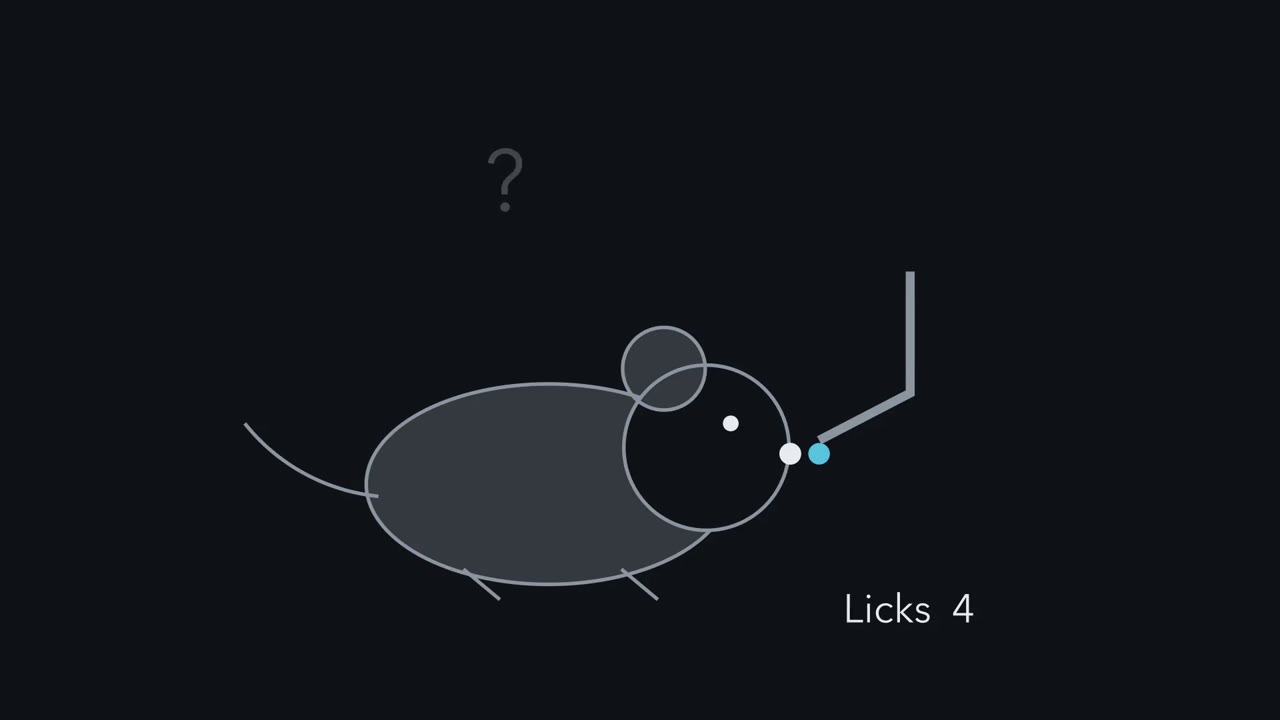 Part 1 of 3 Length 2:55 Which Taste, and How Good? Sensory Systems · Graduate school and beyond Taste from Tongue to Cortex
Take-home
In the mouse, identity (which taste) and value (how much the animal wants it) are two readouts that can be pulled apart.
-
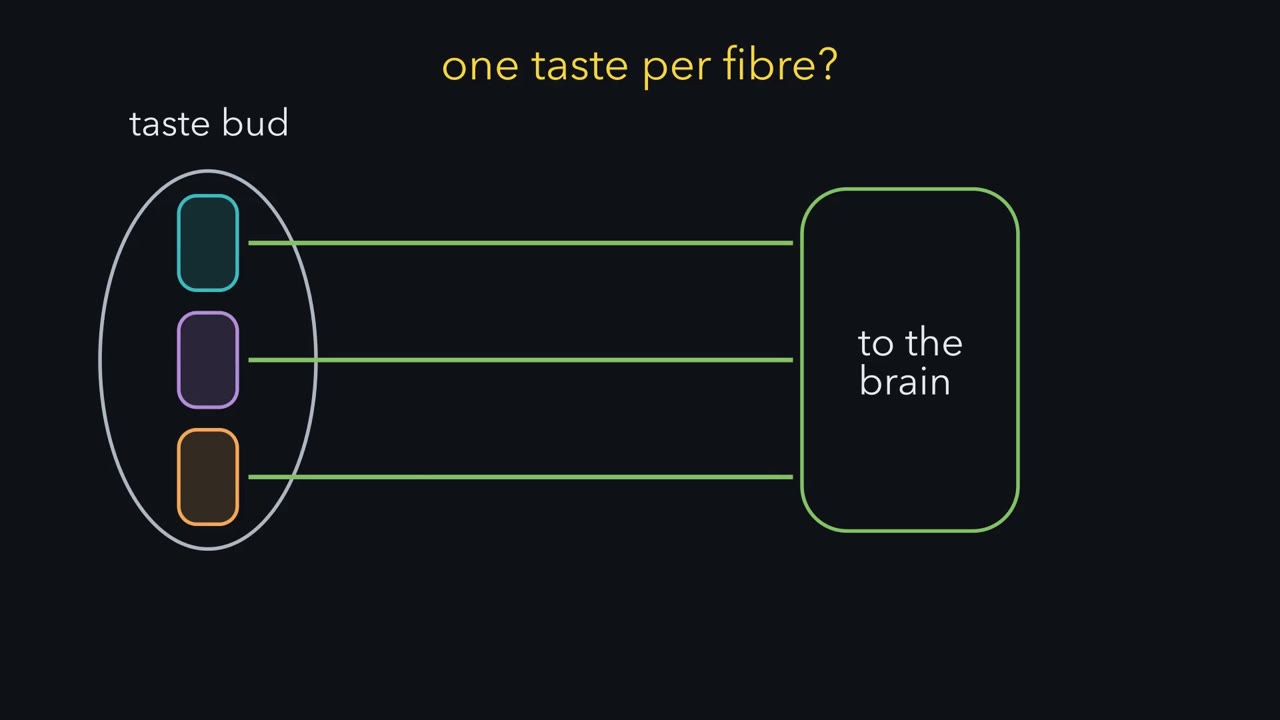 Part 2 of 3 Length 3:19 Narrow at Threshold, Broader with Strength Sensory Systems · Graduate school and beyond Taste from Tongue to Cortex
Take-home
In anaesthetized mice, most responding geniculate neurons were strongly activated by only one of the tested tastes.
-
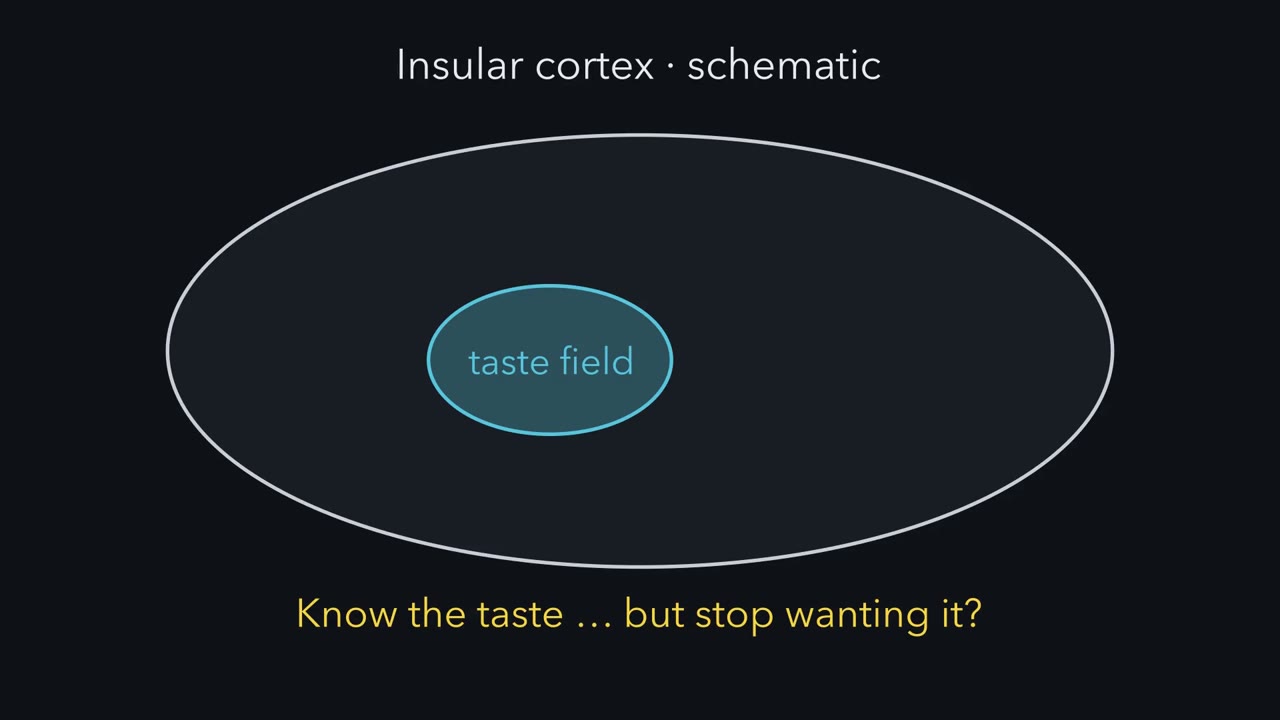 Part 3 of 3 Length 2:53 Opening the Package Sensory Systems · Graduate school and beyond Taste from Tongue to Cortex
Take-home
In mice, driving the sweet cortical field drew animals in and driving the bitter field made them turn away.
-
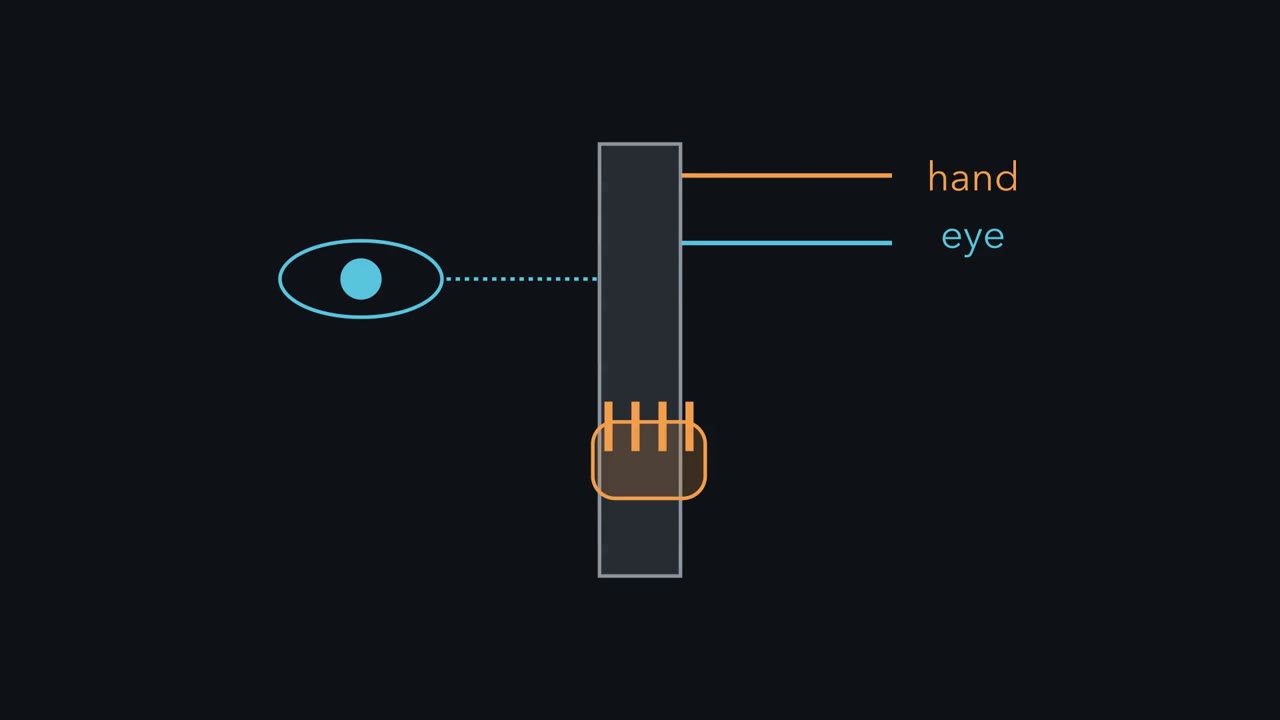 Part 1 of 3 Length 2:32 Which Sense Do You Believe? Sensory Systems · Graduate school and beyond Combining Senses and Predicting Them
Take-home
When two senses report one event, each is weighted by its reliability, one over its variance, so the more reliable sense counts for more.
-
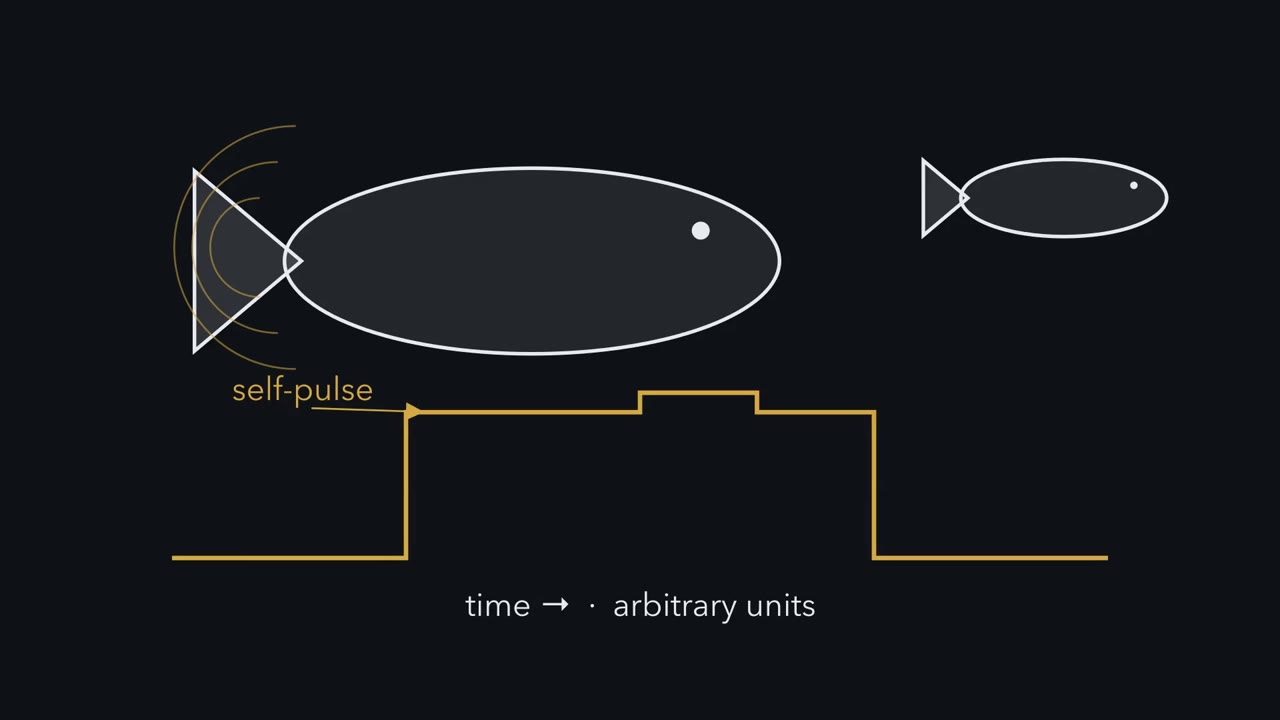 Part 2 of 3 Length 2:38 A Fish That Learns to Cancel Its Own Pulse Sensory Systems · Graduate school and beyond Combining Senses and Predicting Them
Take-home
In the electric fish, a copy of the motor command is used to learn a timed negative image of the expected input, which cancels it.
-
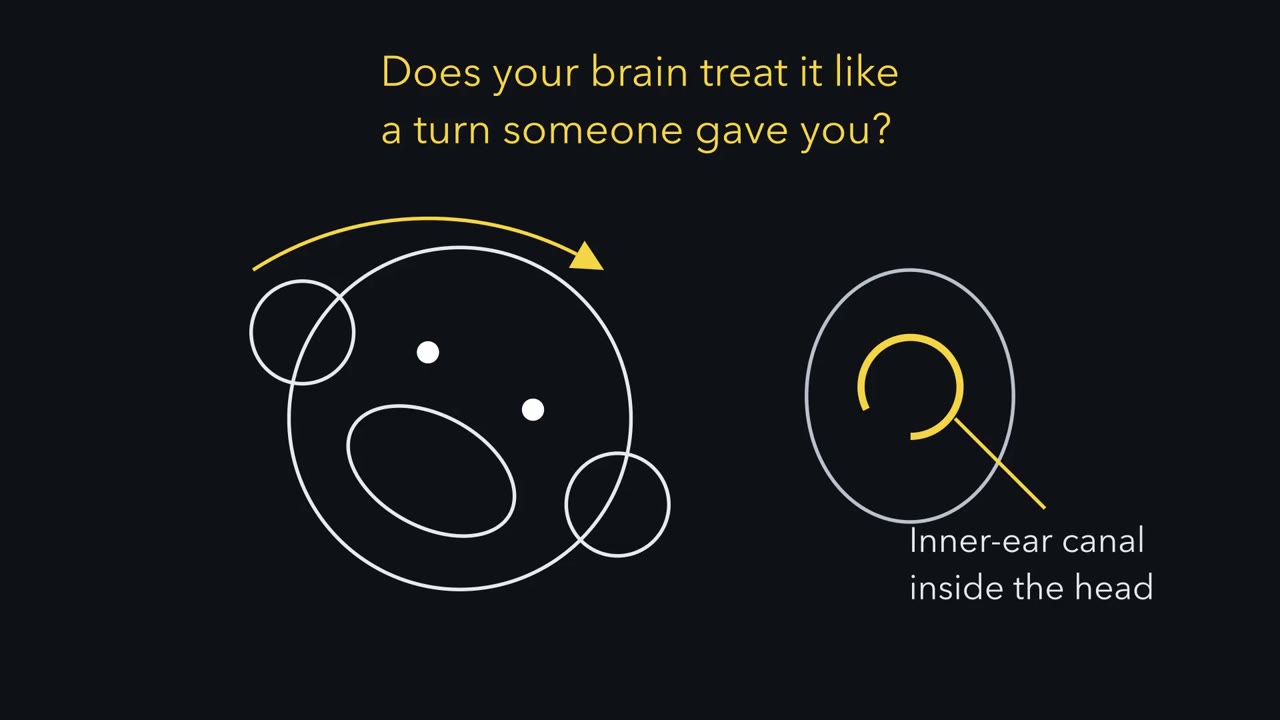 Part 3 of 3 Length 2:41 Only When the Feedback Matches Sensory Systems · Graduate school and beyond Combining Senses and Predicting Them
Take-home
In alert monkeys, canal afferents report active and passive turns alike, so the receptors pass self-caused input on.
-
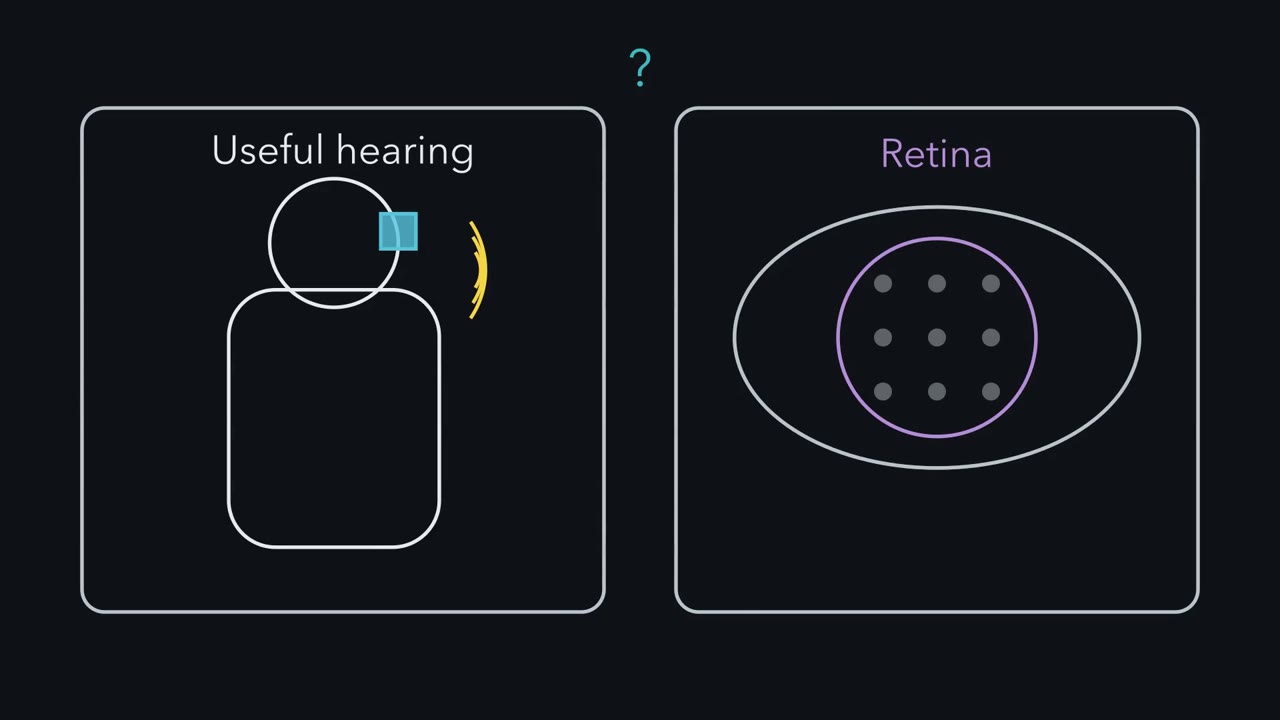 Part 1 of 3 Length 2:51 Contacts Are Not Channels Sensory Systems · Graduate school and beyond Restoring Senses: Implants, Prostheses and Optogenetic Vision
Take-home
A prosthesis delivers detail only as far as it drives distinct groups of neurons, so usable channels have to be measured by testing what the listener can tell apart.
-
 Part 2 of 3 Length 3:17 Streaks and Pixels Sensory Systems · Graduate school and beyond Restoring Senses: Implants, Prostheses and Optogenetic Vision
Take-home
An epiretinal electrode often gives a streak rather than a dot, because current excites axons of passage that serve other places in the visual field, as a model of axon pathways accounts for.
-
 Part 3 of 3 Length 2:08 Writing Touch: Addresses, Then Patterns Sensory Systems · Graduate school and beyond Restoring Senses: Implants, Prostheses and Optogenetic Vision
Take-home
In one man with a spinal cord injury, stimulating electrodes in sensory cortex evoked touch in regions of the hand, so each electrode is an approximate address, not a guaranteed separate channel.
Looking for something else? Sort and filter the whole library, or see the methods library: a film for each lab technique.