A Threshold Is Not a Count
Read the transcript of “A Threshold Is Not a Count”
Film transcript: A Threshold Is Not a Count
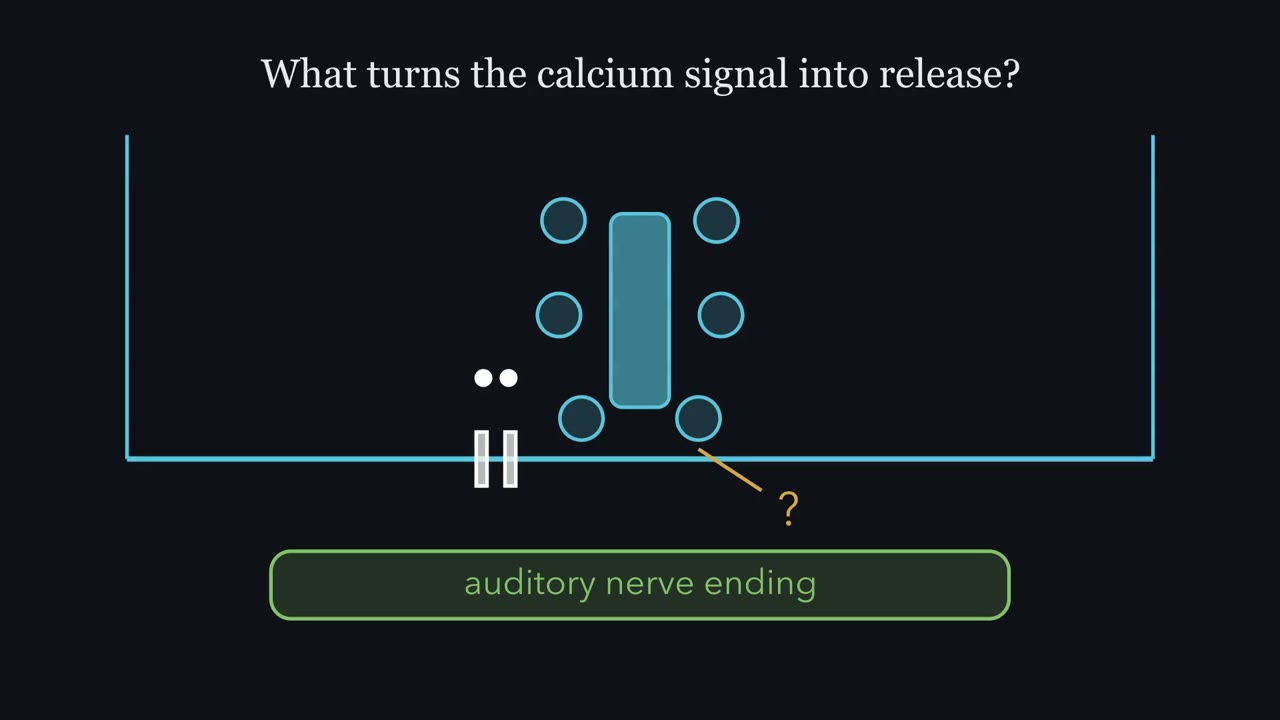
A mouse passes its hearing test after loud noise. Can its cochlea still be damaged? A threshold is the quietest sound that evokes a response. That is what a hearing test measures. Inner hair cells pass sound to nerve fibres at ribbon synapses. The ribbon holds a ready supply of vesicles. Kujawa and Liberman exposed male mice of one lab strain, sixteen weeks old. The loud noise lasted two hours. Thresholds rose after the noise, then returned to their pre-exposure values by two weeks. The hair cells remained intact. Eight weeks later, what would you predict for the number of ribbon synapses?
About half were gone at the 32 kHz place. Nerve terminals had been lost early. Losing these synapses while the hair cells survive is called cochlear synaptopathy. Why would losing half the synapses leave the threshold where it was? Nerve fibres at one place differ in sensitivity. Some respond to very quiet sounds, others need louder sound. A threshold asks when the response to a quiet sound first stands out from background firing. At the quietest levels, only the most sensitive fibres do that. Here is a small model of sixteen fibres. It is illustrative and passive, not fitted to mouse data. Remove half the fibres at random, or remove the most sensitive half.
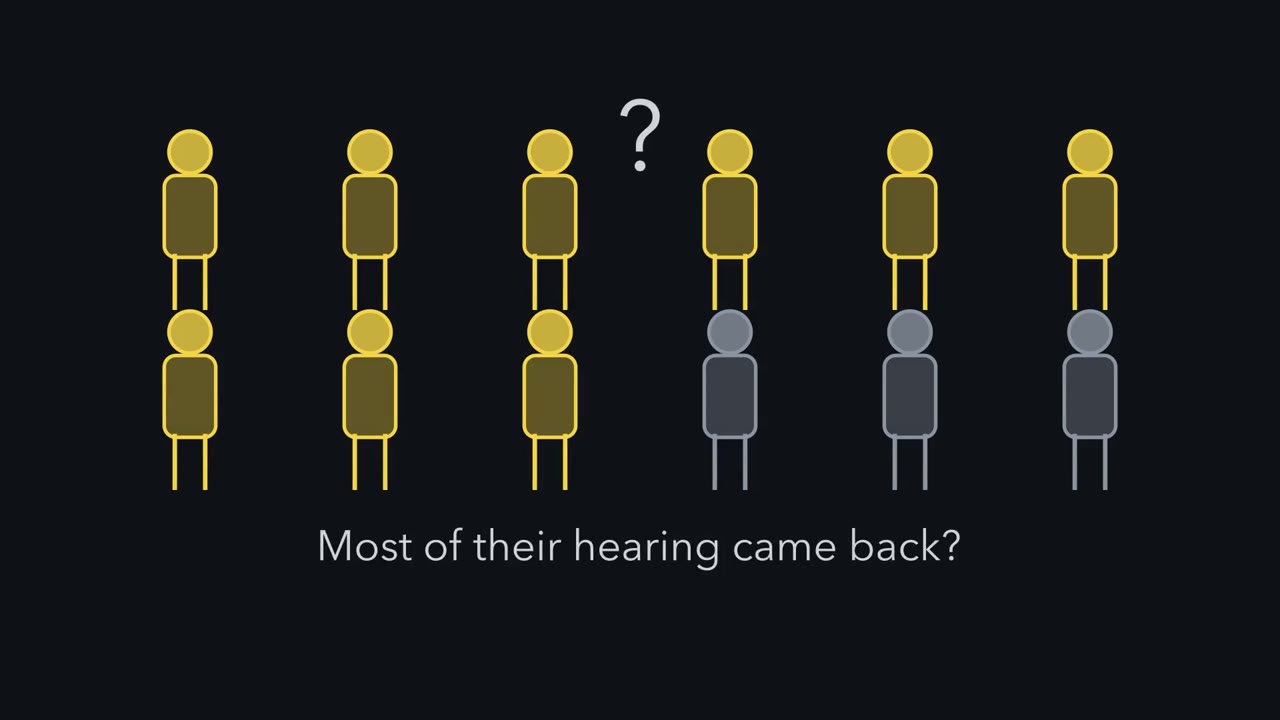
Which moves the threshold? Losing a random half moved the threshold by about 2 dB. A hearing test moves in 5 dB steps. Losing the most sensitive half moved it by about 8 dB. That is more than one 5 dB step. In this model, the sound-driven response to a loud sound halved in every case. So here is the one idea. Hearing runs through a chain: hair cell, ribbon synapse, nerve fibre. A threshold depends mostly on the most sensitive links. It does not count the links. In these mice, a cochlea lost many synapses and still passed a hearing test. And a repair has to put back what is missing: a molecule in a surviving cell, or the cell itself. In people, temporal bones show nerve fibre loss after death.
No one can count synapses in a living ear. Living ears give only indirect signals, and the evidence from them is mixed. A normal threshold is good news about sensitivity. It is not a census of synapses.
A mouse can pass its hearing test after loud noise and still have lost about half the ribbon synapses at one place in the cochlea. What does a normal threshold actually tell you?
Continue in the lesson: Hidden Hearing Loss, Gene Therapy and Regeneration →
2:59 · Free, with captions and a transcript. The lesson has the full text, the questions and the sources.
More films from this lesson
How this film was made. Narration: an AI narrator voice (Kokoro, af_heart) reading narration written from this lesson's text. Animation: AI-generated in code (Manim) by Claude, a schematic with no drawn molecular structures. Captions come from the narration script. See something wrong? Report it.