Films · Developmental Neuroscience
Where the Rule Stops
Read the transcript of “Where the Rule Stops”
Film transcript: Where the Rule Stops
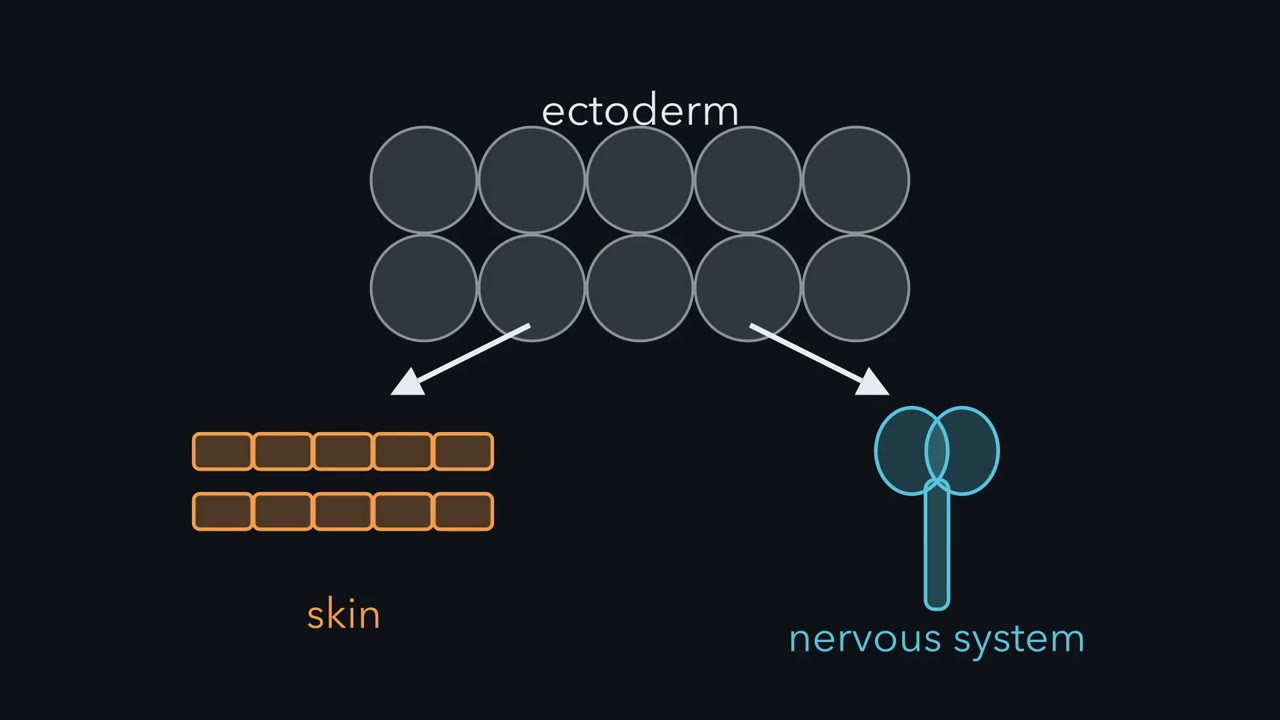
The dial is the BMP side of the choice between skin and neural. In frog caps and in the whole embryo, FGF is needed too. Where else does the rule stop? First limit: it says neural, not where. Noggin caps made forebrain and cement gland markers. They made no hindbrain or spinal cord markers. Neural tissue made by Noggin in caps is anterior. This fits an older idea from Nieuwkoop: two steps, activation and transformation. Activation makes ectoderm neural and anterior. Transformation shifts part of it toward hindbrain and spinal cord. In molecular terms, the BMP antagonists look like activators. Wnt signals, FGFs and retinoic acid are leading candidates for transformation.
The spinal cord may follow a different order. Much of it may come from progenitors made posterior before they become neural. Second limit: the chick. Read blindly, the rule says blocking BMP anywhere should make neural tissue. In 1998, Claudio Stern's laboratory made Chordin in chick epiblast outside the future neural plate. Do those cells turn neural?
No. They made no early neural markers. Blocking BMP there was not sufficient. Yet Chordin did stabilize early neural markers in cells that had already received neural-inducing signals. In 2000, Andrea Streit and colleagues looked earlier. FGF signaling before gastrulation is needed to begin neural induction in chick. In 2001, Sara Wilson and colleagues added Wnt. Its state decides how epiblast cells respond to FGF. So in chick, two more inputs join the dial. One is early FGF. The other is a Wnt state that lets cells answer it. Third limit: the mouse. Embryos lacking both chordin and noggin have severe forebrain defects. Yet they still form other neural tissue.
So the two are needed for a normal forebrain, but not for all neural tissue. A fair summary: BMP inhibition is needed for the frog neural plate and for mouse forebrain. In chick epiblast, it is not sufficient on its own. None of this shows the frog results were wrong. So, back to the one idea. In early frog caps, BMP says skin. Turn its signal down far enough, and competent cells become neural, as long as other inputs such as FGF are intact. The takeaway: the dial is the BMP branch of the choice between skin and neural. FGF and competence are part of that choice too, in caps and embryos. Where the tissue lies along the body, and how chick and mouse differ, are further questions.
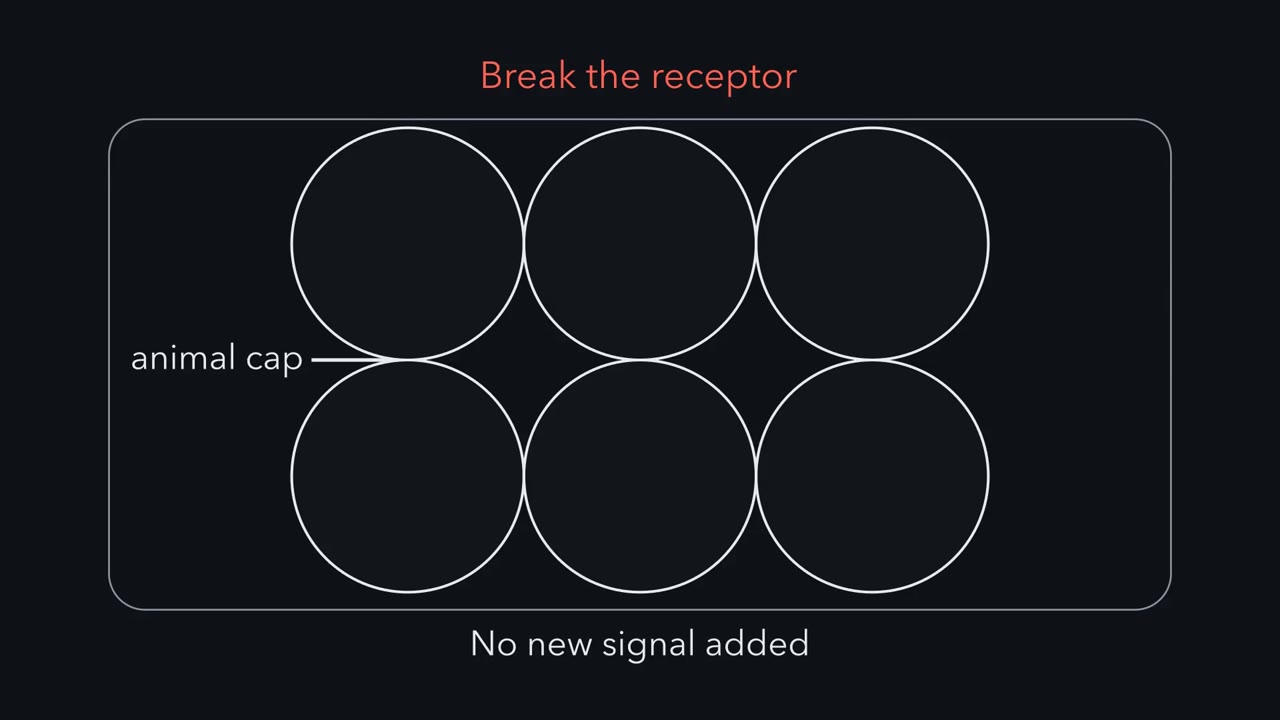
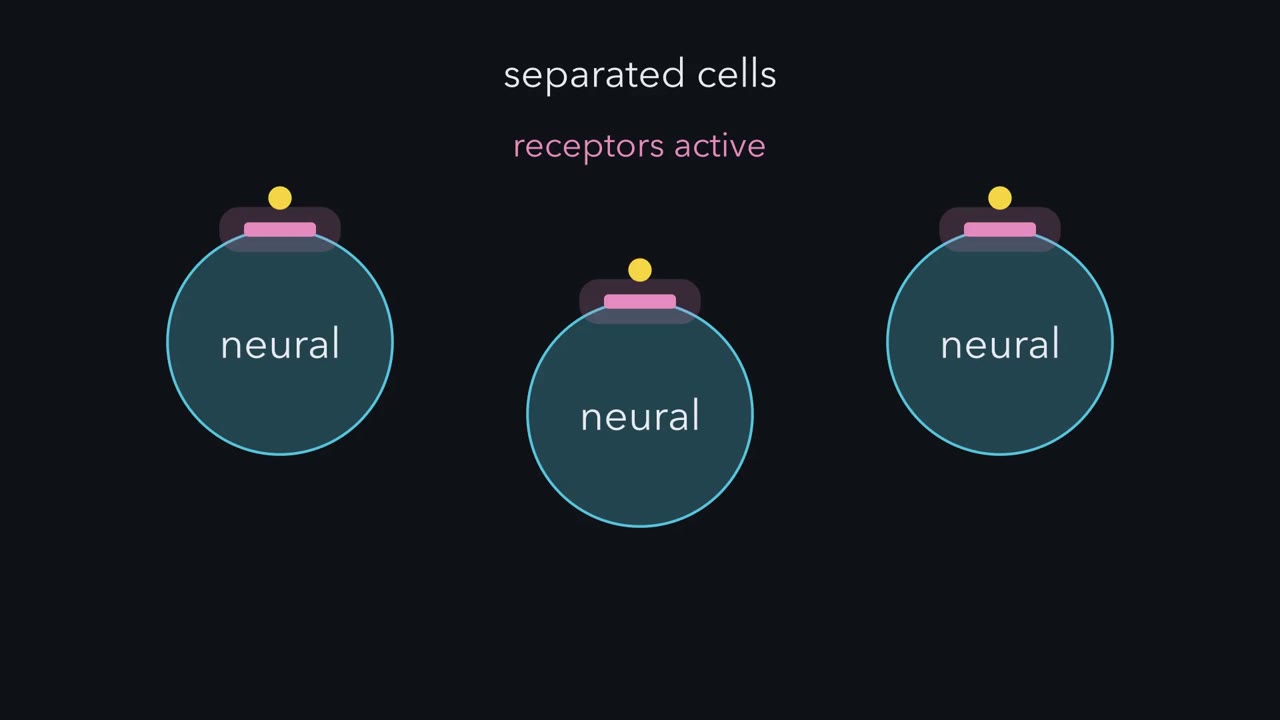
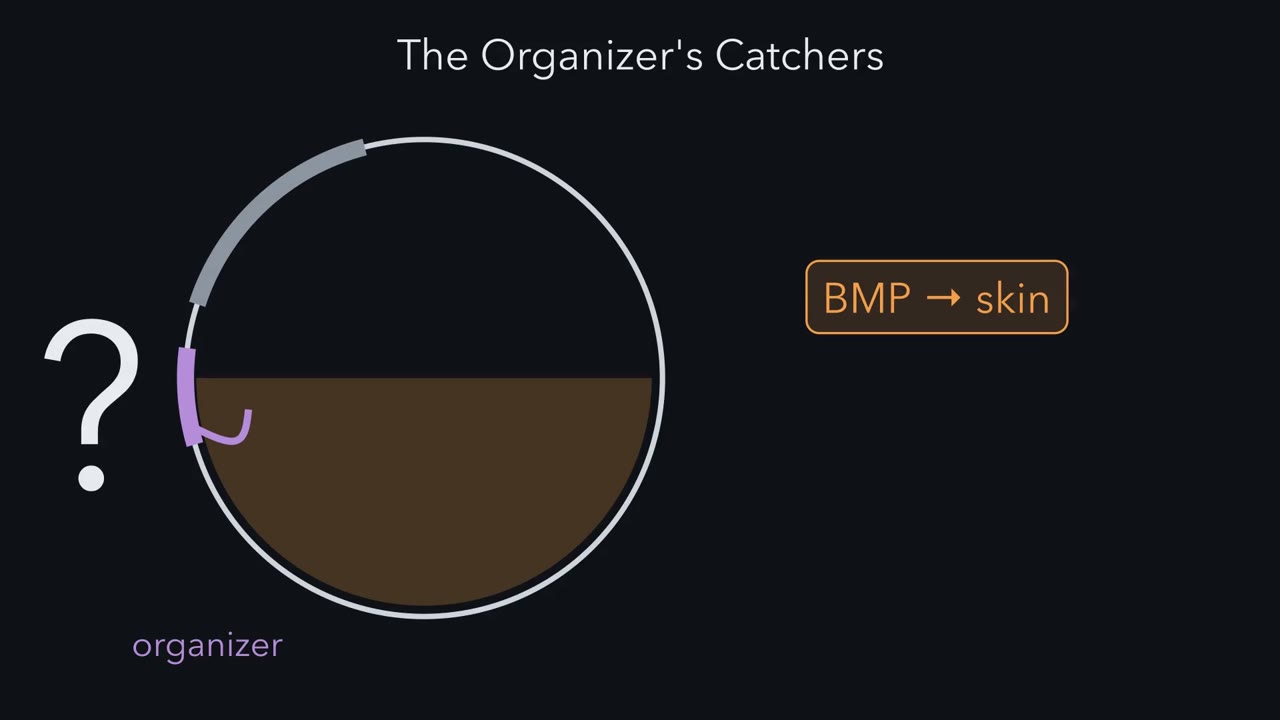
Pull a square of frog skin-to-be apart into single cells, and it becomes neural. Why? Because BMP signaling, which makes skin, falls in those cells. In the embryo, the organizer's secreted proteins make it fall.
Continue in the lesson: Neural Induction: The Default Model →
3:18 · Free, with captions and a transcript. The lesson has the full text, the questions and the sources.
More films from this lesson
How this film was made. Narration: an AI narrator voice (Kokoro, af_heart) reading narration written from this lesson's text. Animation: AI-generated in code (Manim) by Claude, a schematic with no drawn molecular structures. Captions come from the narration script. See something wrong? Report it.