Films · Developmental Neuroscience
Too Many, Then Fewer
Read the transcript of “Too Many, Then Fewer”
Film transcript: Too Many, Then Fewer
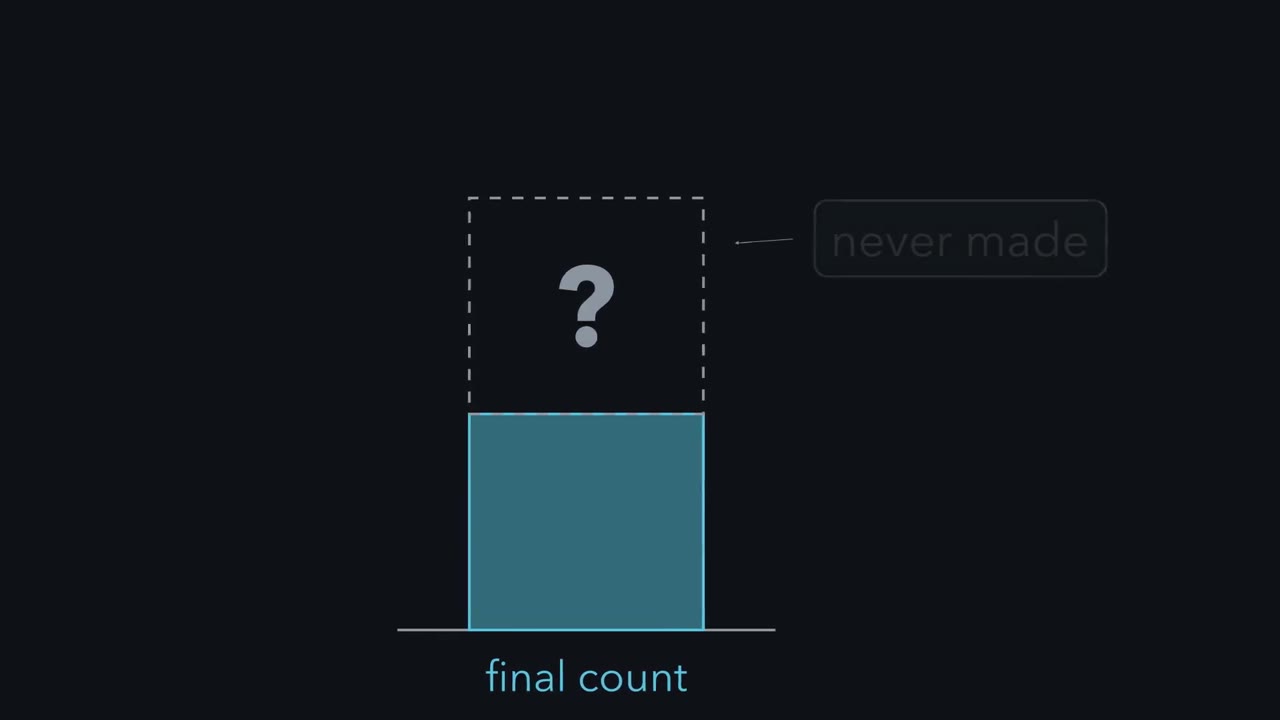
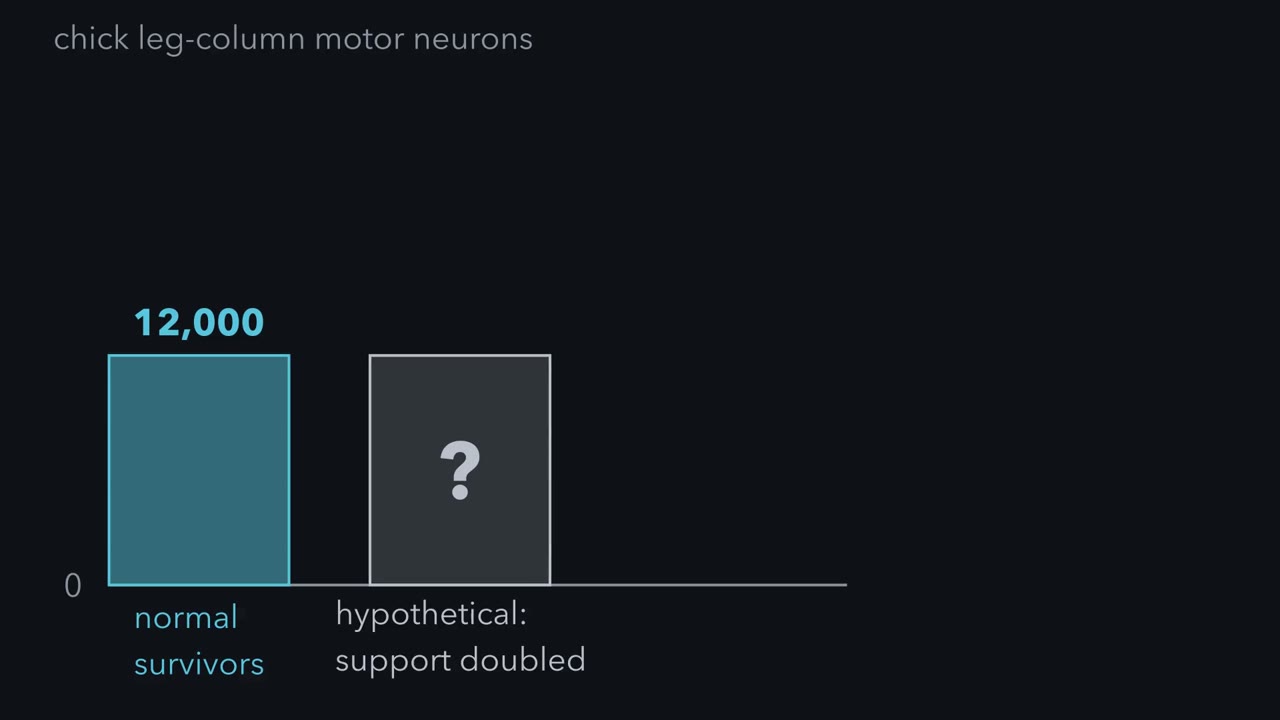
How many motor neurons does a chick embryo's leg column hold at the peak? And how many are left afterwards? At the peak, the column that serves its leg holds just over 20,000 motor neurons. These are Viktor Hamburger's raw counts, from 1975. By about day 10 of incubation, roughly 12,000 are left.
Nothing is wrong with this embryo. It has both legs. It will hatch, and it will walk. So, two questions. How could anyone tell those neurons were made and then died, rather than never made? And what decides how many stay? This lesson carries one idea. Make too many, then let the target keep what it can support.
A target is the tissue an axon grows to and connects with. Here, it is the muscles of the leg. In the chick limb experiments, changing the target changed how many of the neurons survived. It did not detectably change how many were made. More target means fewer deaths, up to a ceiling. No target can rescue a neuron that is not there. Some neurons die on a schedule that the target does not set. The lesson ends on them. Takeaway: the embryo makes too many, and in the limb, the target helps set how many survive.
In Hamburger's raw counts, a chick embryo has just over 20,000 motor neurons in the column that serves its leg at the peak, and about 40% of them die over the next three days. Nothing is wrong with the embryo. How could anyone tell those neurons died, and what decides how many stay?
Continue in the lesson: Too Many Neurons: Naturally Occurring Cell Death →
1:39 · Free, with captions and a transcript. The lesson has the full text, the questions and the sources.
More films from this lesson
How this film was made. Narration: an AI narrator voice (Kokoro, af_heart) reading narration written from this lesson's text. Animation: AI-generated in code (Manim) by Claude, a schematic with no drawn molecular structures. Captions come from the narration script. See something wrong? Report it.