Films · Developmental Neuroscience
Do You Make Them Too?
Read the transcript of “Do You Make Them Too?”
Film transcript: Do You Make Them Too?
Adult rodents make new neurons. Do adult humans make them too? BrdU cannot be given to healthy people for research. But in the 1990s, some cancer patients received it for clinical reasons. After death, their dentate gyrus held cells with both BrdU and a neuron protein. Both facts, in single human cells. Bomb tests in the 1950s and early 1960s sharply raised the carbon-14 in the air. That carbon ends up in the DNA of dividing cells. A neuron's DNA keeps the level of its last division. Neurons at the back of the cortex match the person's own birth year. They were born around then. So were olfactory bulb neurons. Pause and predict. Hippocampal neurons do not match the birth year.
What can you conclude, and what not? An offset beyond measurement error points to neurons added after birth, unless repair or stray nuclei explain it. But a sample averages many nuclei, so it cannot say how many, or when.
One model estimate is about 700 new neurons per hippocampus per day. Stains for young neurons show a state, not a birth date. In people, it is debated whether they mark only new neurons. And the stains disagree. One study found none in adults. Others found thousands. Pause and predict. Suppose 700 new neurons arrive each day, and each stays young and marked for weeks or months. How many marked cells should one hippocampus hold?
Rate times time. Even three weeks gives about 15,000 across one hippocampus. These are toy numbers. So a count of none needs an explanation. A far lower rate in those donors. A young-neuron protein lost when tissue waited, or was fixed for long. Or a young state that is short, or unmarked, in people. Or sections and stains that missed cells that were there.
The human evidence that carries a birth record points to some new neurons. How many new neurons people make, and what they do, is still open. Takeaway: ask whether the same cells carry a birth record and a neuron identity.
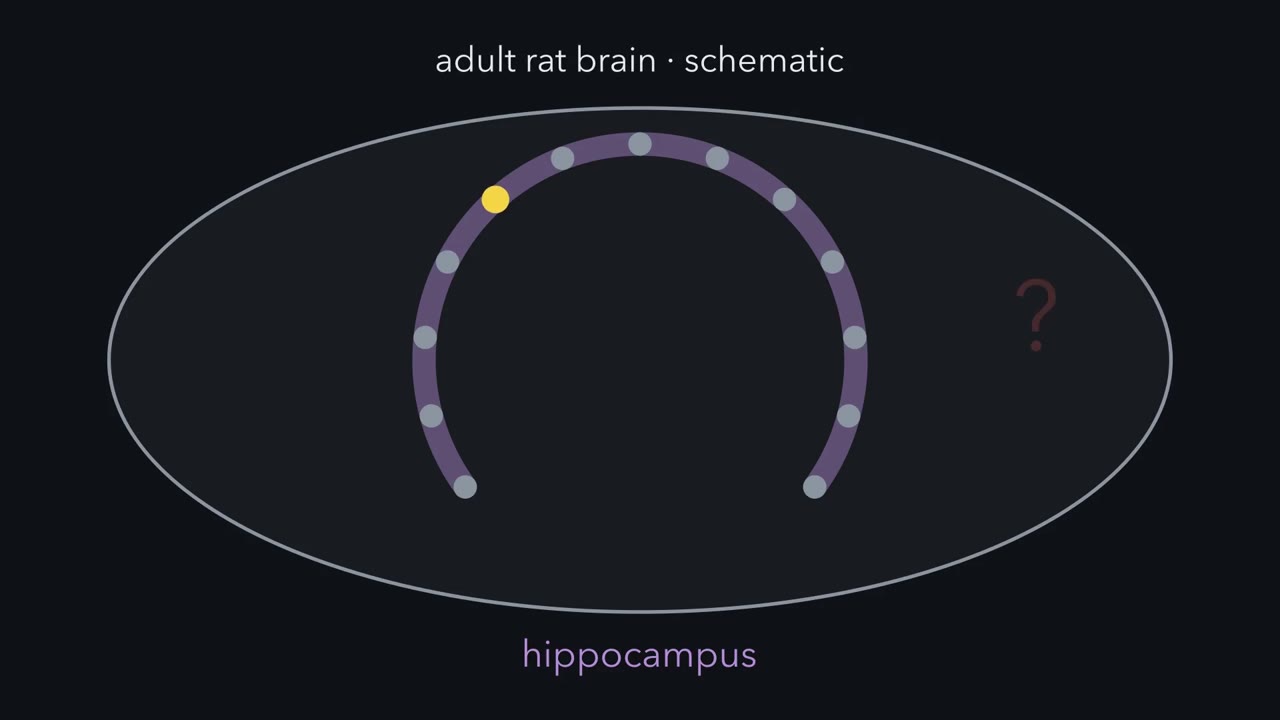
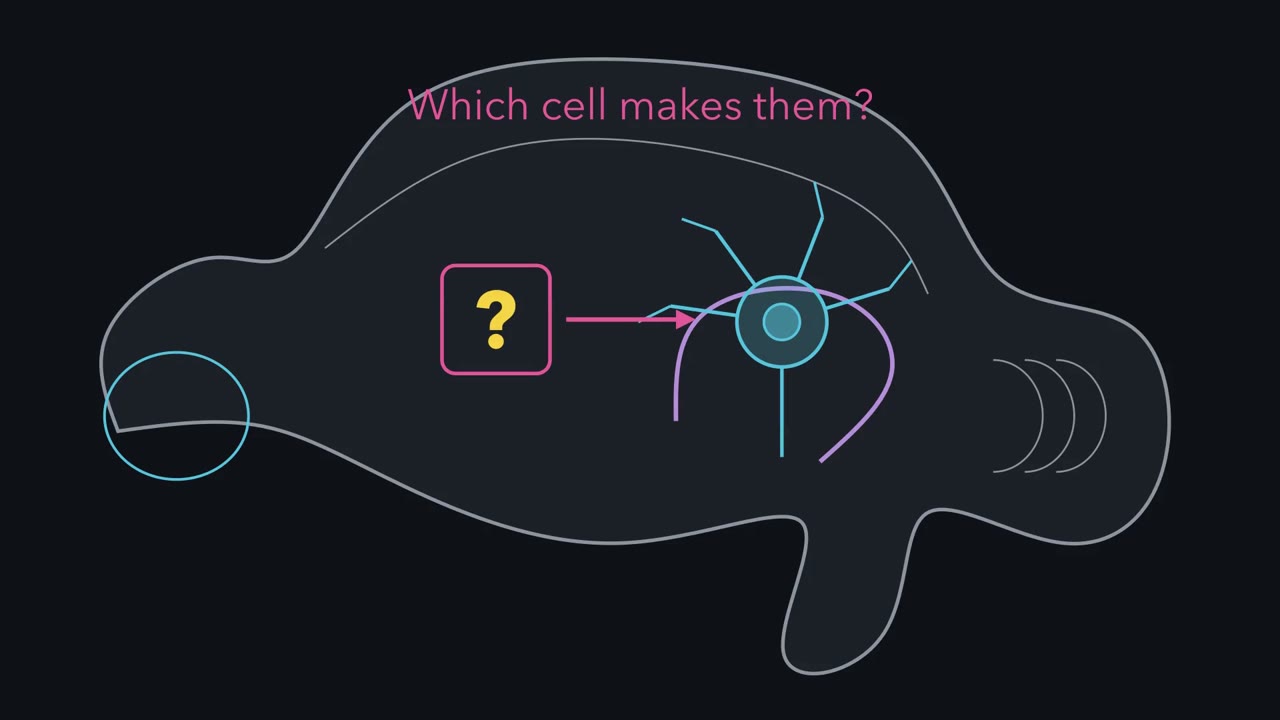
Inject an adult rat with a label that marks newly made DNA. A month later a labelled cell sits in its hippocampus. Is it a new neuron, how would you know, and do you make them too?
Continue in the lesson: Two Places the Adult Brain Still Makes Neurons →
2:50 · Free, with captions and a transcript. The lesson has the full text, the questions and the sources.
More films from this lesson
How this film was made. Narration: an AI narrator voice (Kokoro, af_heart) reading narration written from this lesson's text. Animation: AI-generated in code (Manim) by Claude, a schematic with no drawn molecular structures. Captions come from the narration script. See something wrong? Report it.