A Gain That Death Erases
Read the transcript of “A Gain That Death Erases”
Film transcript: A Gain That Death Erases
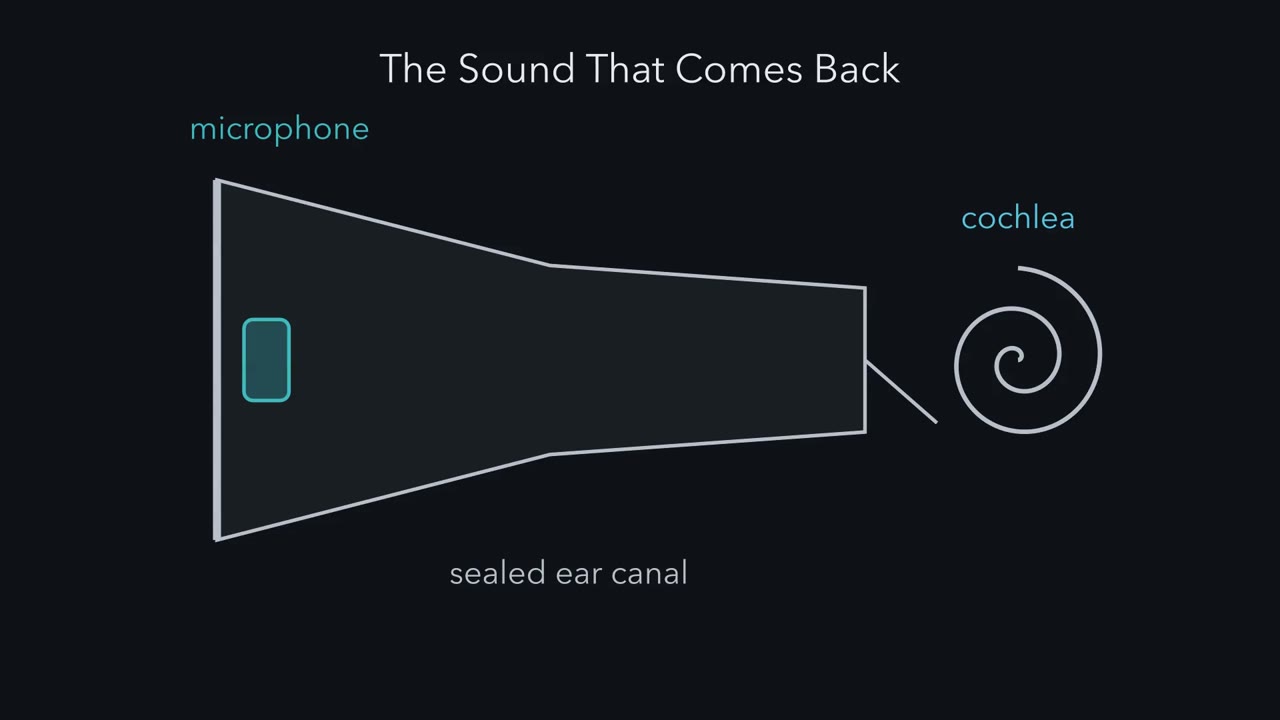
A microphone in a healthy ear canal can record sound the cochlea itself made. Where does it come from? Start with a cochlea that has no help. Sound sets up a travelling wave along the basilar membrane. In a living ear, at soft levels, each place moves most for one frequency, its characteristic frequency. The wave peaks there and dies out just beyond. After death the wave remains, but weak and broadly tuned, and its peak can shift. Now pick one place. Play a tone at its characteristic frequency, and raise the level in steps. After death, 10 dB more sound gives 10 dB more motion. That straight line is linear. Predict. Where does the living ear differ most from the dead one, at soft levels or loud ones?
At soft levels. A soft tone moves the living membrane tens of decibels more. As the tone gets louder, the living response grows slowly, often 2 to 5 dB for every 10. At the loudest levels, the two curves come close together.
The gap between the curves is the cochlear amplifier. In mammals, it depends on outer hair cells. The gain is large only near the characteristic frequency, so it sharpens the peak as well as raising it. Here is the one idea. Outer hair cells add energy to the wave near its peak. The gain they give is large for soft sounds, small for loud ones, and gone after death. Sensitivity, sharp tuning, compressive growth and the returning sound are four signatures of that one gain. At the very softest levels, the gain stops rising. It levels off at its maximum. Why want a gain that shrinks? Suppose the response grows 2.5 dB for every 10. If that slope held over 60 dB, a quiet room to a shout would fit into 15 dB of motion.
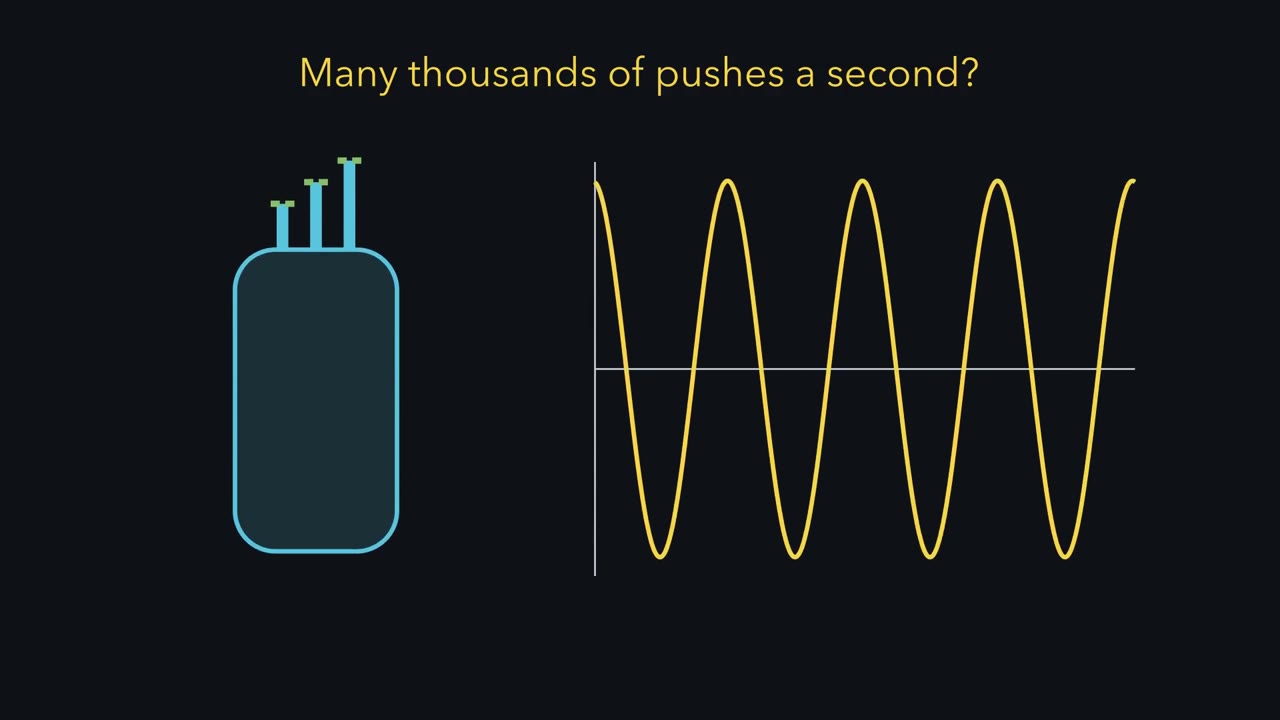
That is a thousandfold range of sound pressure, fitted into less than a sixfold range of motion. Outer hair cells push with a motor protein in their side wall, called prestin. How does a cell push that fast? Take this with you. The living cochlea adds a gain that is large for soft sounds, and death erases it.
A microphone sealed in a healthy ear canal can record sound that your own cochlea made. What does that sound tell us about the amplifier, and what can it not tell us?
Continue in the lesson: The Cochlear Amplifier and Otoacoustic Emissions →
2:42 · Free, with captions and a transcript. The lesson has the full text, the questions and the sources.
More films from this lesson
How this film was made. Narration: an AI narrator voice (Kokoro, af_heart) reading narration written from this lesson's text. Animation: AI-generated in code (Manim) by Claude, a schematic with no drawn molecular structures. Captions come from the narration script. See something wrong? Report it.