Sort by Size, Then Ask an Antibody
Read the transcript of “Sort by Size, Then Ask an Antibody”
Film transcript: Sort by Size, Then Ask an Antibody
A cell extract holds thousands of different proteins. How can you follow just one? First, sort by size. This step is called SDS-PAGE. Heat the extract in SDS, a detergent. It unfolds each protein and coats it with negative charge, roughly in proportion to its length. Pull the mixture through a gel with an electric field. Small proteins travel farther than large ones. Next, find. This step is the western blot. Move the sorted proteins from the gel onto a membrane. Then soak the membrane in an antibody against your protein. A second antibody carries an enzyme that makes light or colour. It marks where the first one stuck. You see a band at one size.
One antibody is raised against a short piece of a protein with a phosphate on one residue. It is chosen so that it binds only when the phosphate is present. A blot with it reads one site, from cells, minutes after a signal arrives. Blot the same samples with an antibody to the whole protein as well. Otherwise you cannot tell more phosphate from more protein. An antibody has limits. It answers the question you built it for, so it cannot find a site nobody suspected. It reports that a band got darker, not what fraction of the molecules carry the phosphate. The antibody can bind the wrong protein. So a careful blot includes a sample in which the protein or the phosphate is missing. And a blot averages millions of cells.
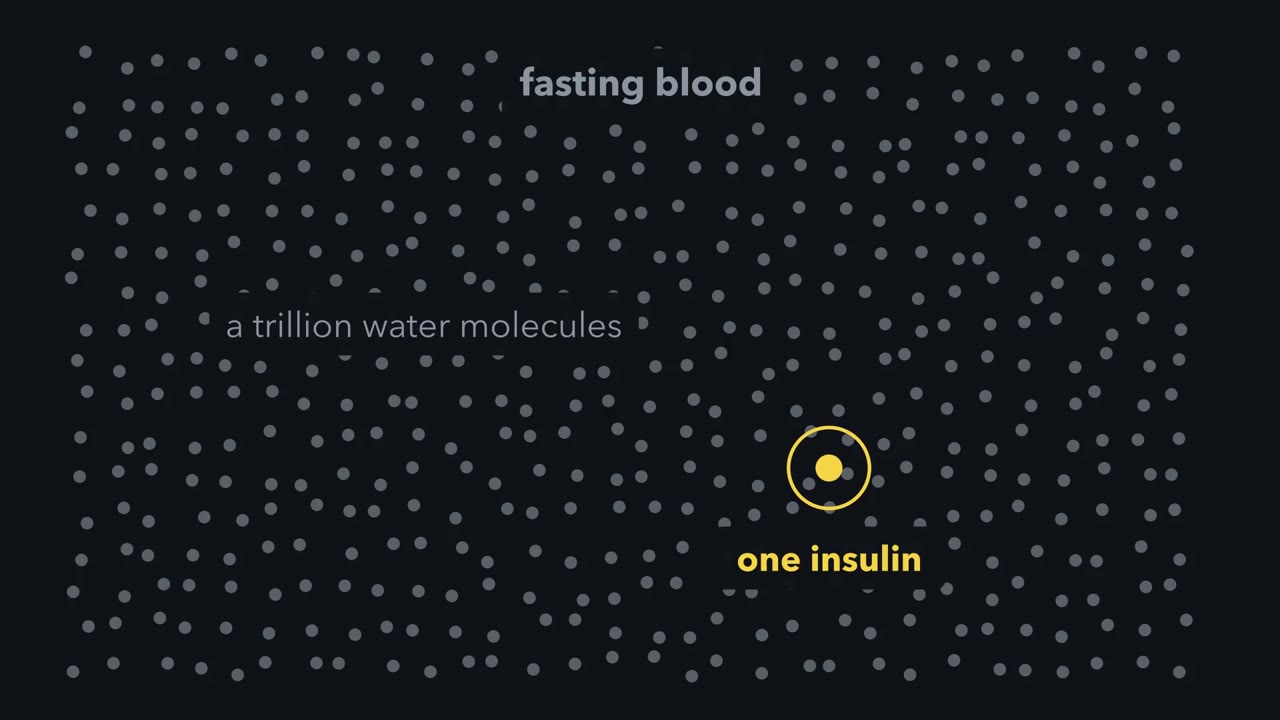
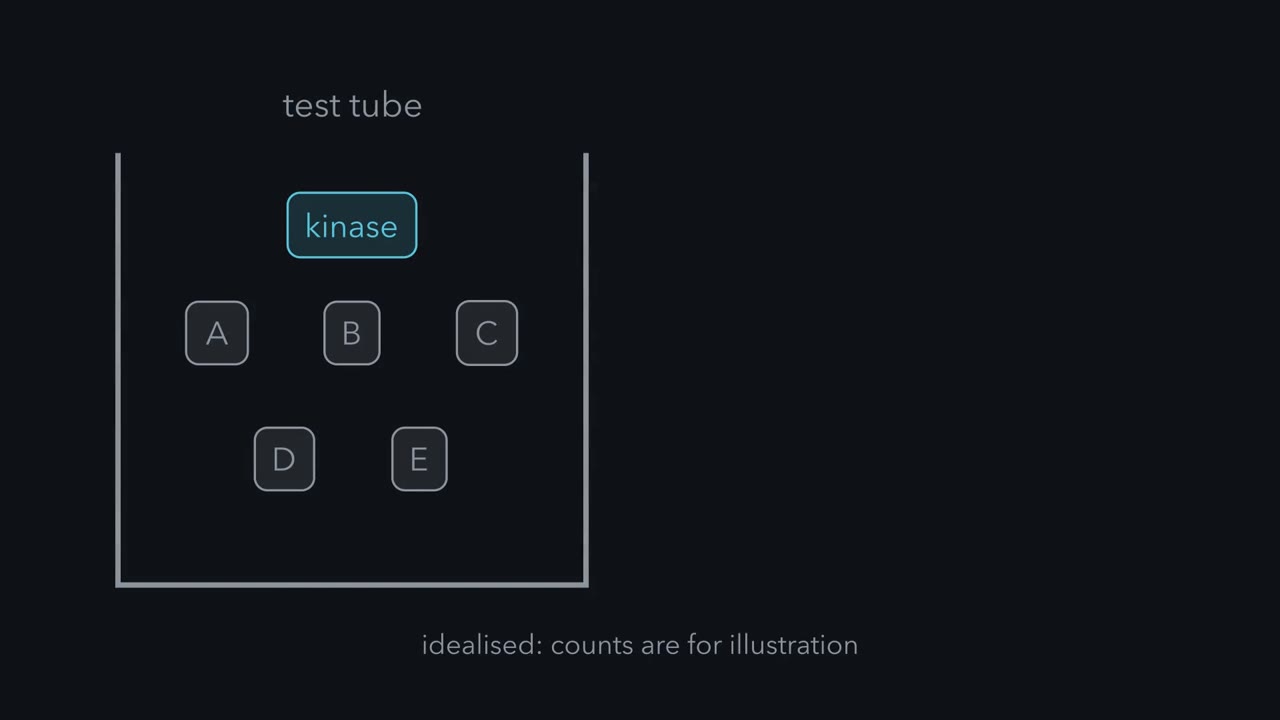
How do you measure one molecule among a trillion, and then show which kinase did the work?
Continue in the lesson: How We Know: Detecting a Signal →
1:58 · Free, with captions and a transcript. The lesson has the full text, the questions and the sources.
More films from this lesson
How this film was made. Narration: an AI narrator voice (Gemini, Charon) reading narration written from this lesson's text. Animation: AI-generated in code (Manim) by Claude, a schematic with no drawn molecular structures. Captions come from the narration script. See something wrong? Report it.