More Hormone, Less Label
Read the transcript of “More Hormone, Less Label”
Film transcript: More Hormone, Less Label
Fasting blood holds insulin at a few tens of picomolar. That is about one insulin molecule for every trillion molecules of water. Every pathway in this course rests on measuring something that scarce. How can anyone do it? Rosalyn Yalow and Solomon Berson found a way, and it began as an unexpected by-product of a different experiment. They were testing whether people with adult-onset diabetes destroy insulin too fast. So they tagged insulin with radioactive iodine, injected it, and followed the radioactivity as it left the blood. In people already treated with insulin, it left more slowly, because something in their blood was holding it. They argued that this something was an antibody.
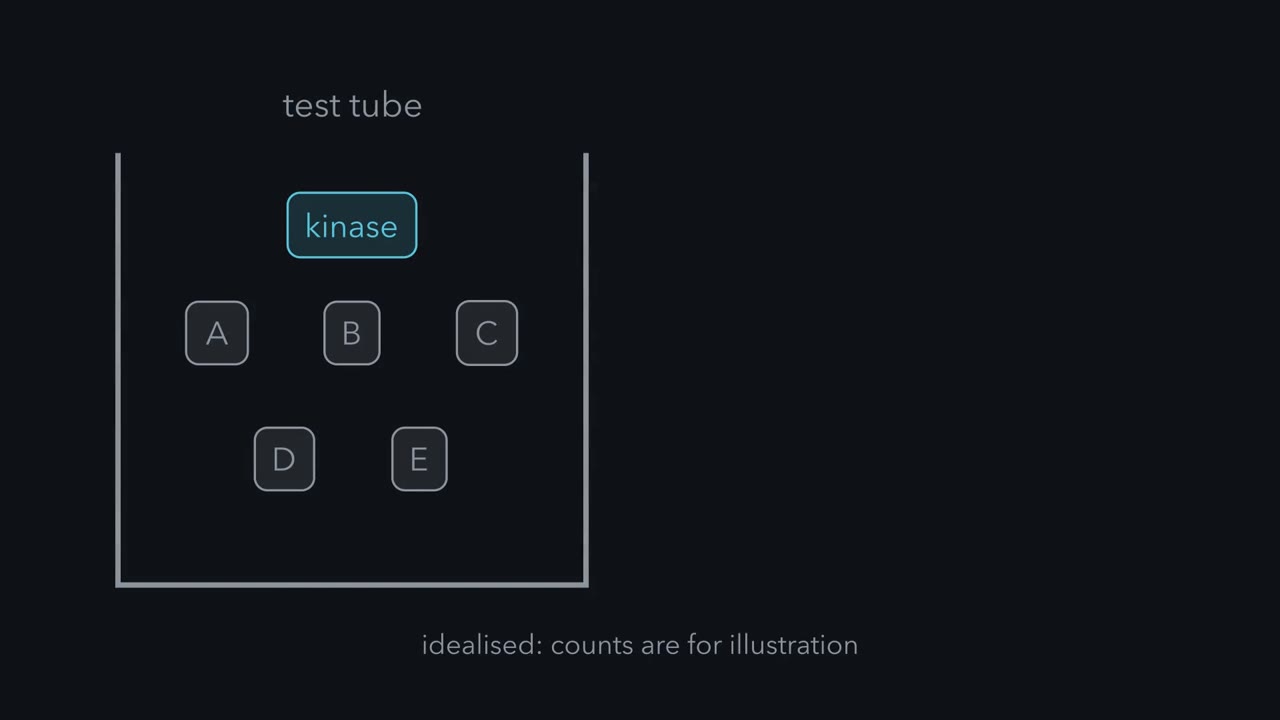
Immunologists of the day doubted that a protein as small as insulin could raise antibodies. Then they used it as a scale. Take a tube. Put in a fixed, small amount of antibody. Add a fixed, small amount of radioactive insulin. Every tube gets the same amounts. The label is radioactive, so a counter can find it. The antibody has only a few binding sites, and the labelled insulin fills them. Now add the blood sample. Its own insulin carries no label, so it competes with the labelled insulin for the same few sites. A little sample insulin displaces a few labelled molecules, and a lot displaces many. The more insulin the patient had, the less radioactivity ends up on the antibody.
Now repeat the test with known amounts of insulin. Each tube holds the same antibody and the same labelled insulin. Those results build a curve. Separate the bound label from the free label, count each, and read the patient's concentration from the curve. This is the radioimmunoassay. Its range depends on the antibody and tracer. An antibody can tell cortisol from corticosterone, two steroids that differ by one hydroxyl group. So the assay is only as selective as its antibody. Bioassays measured what a hormone does. This counts what the antibody recognises. Keep this rule: more hormone in the sample means less label on the antibody.
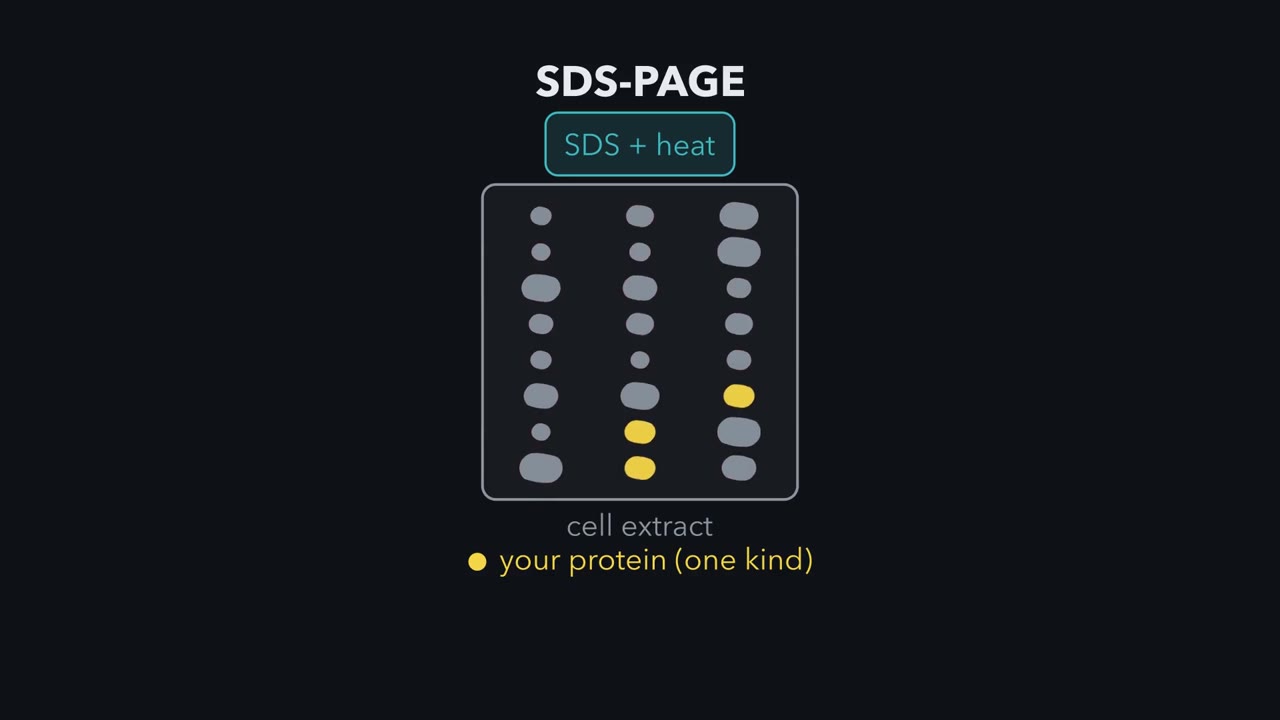
How do you measure one molecule among a trillion, and then show which kinase did the work?
Continue in the lesson: How We Know: Detecting a Signal →
2:19 · Free, with captions and a transcript. The lesson has the full text, the questions and the sources.
More films from this lesson
How this film was made. Narration: an AI narrator voice (Kokoro, af_heart) reading narration written from this lesson's text. Animation: AI-generated in code (Manim) by Claude, a schematic with no drawn molecular structures. Captions come from the narration script. See something wrong? Report it.