The Receptor Is the Gene Switch
Read the transcript of “The Receptor Is the Gene Switch”
Film transcript: The Receptor Is the Gene Switch
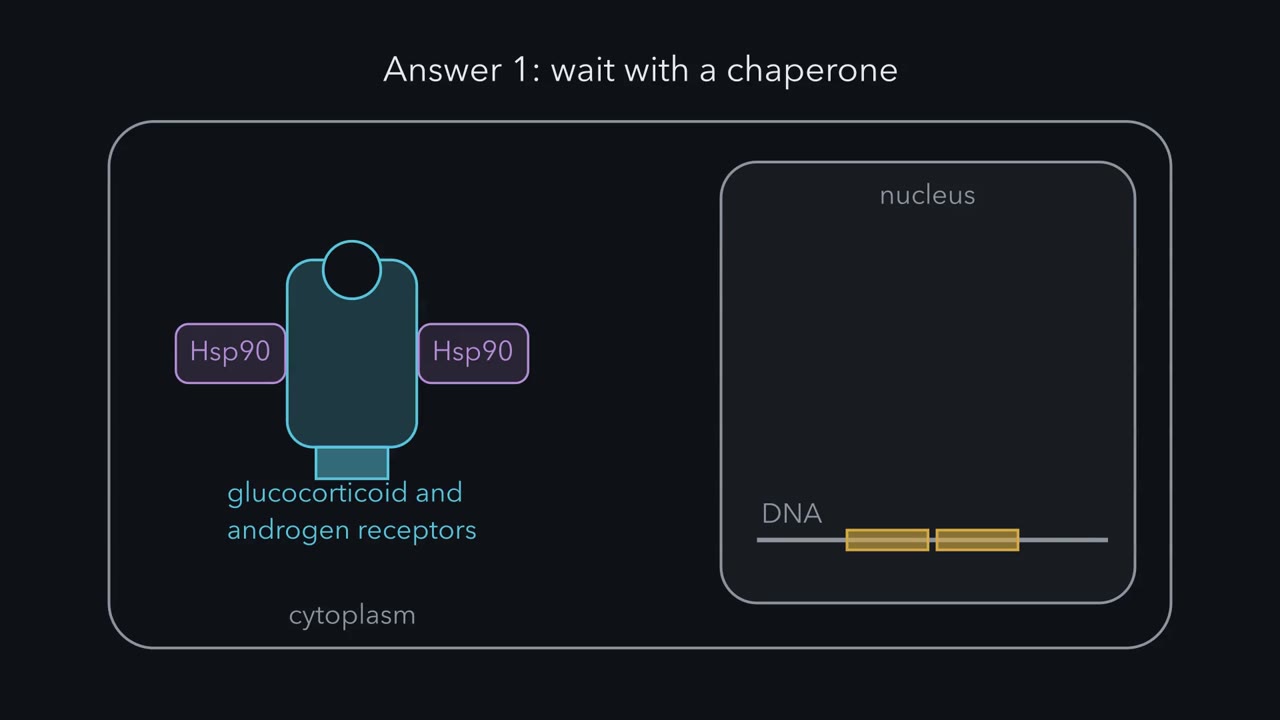
Nuclear receptors are proteins inside the cell that catch chemical signals and control whether genes are copied into RNA. The receptor itself is a transcription factor. That matters because one receptor can reset many genes at once. New RNA and protein take time to make, so the response builds over hours. But the new proteins remain after the hormone has gone. A steroid hormone crosses the membrane to reach its receptor. The receptor is one chain with two grips. One region binds the hormone. Another recognizes a specific short stretch of DNA. Most nuclear receptors work in pairs, and their DNA binding site is called a response element. The glucocorticoid receptor pairs with another copy of itself after hormone arrives.
The thyroid hormone receptor waits on DNA with a different partner, called RXR. Hormone recognition and DNA recognition are separate jobs in the same protein. Hormone binding changes the receptor's shape and which helper proteins it holds. The thyroid hormone receptor releases a co-repressor and brings in a co-activator. These helpers act on chromatin, the packaged form of DNA. Co-activators bring enzymes that add acetyl groups to histones, the proteins DNA wraps around. That loosens the packing and helps RNA polymerase start. Co-repressors bring enzymes that remove those groups. The cell's own mix of helpers also matters. The family reaches beyond familiar hormones.
Some receptors sense the cell's own lipids. PPARs bind fatty acids. LXR binds oxidized cholesterol, and FXR binds bile acids. PPAR-gamma drives the making of fat cells. So an intracellular signal can connect to gene control in metabolism, too. That same route meets medicine. Prednisone and dexamethasone act through the glucocorticoid receptor to calm inflammation. Long treatment also raises blood glucose and thins bone. Tissue context matters, too. Tamoxifen blocks estrogen in the breast but imitates it in the uterus and, after menopause, in bone. Its receptor still binds DNA, and the switching surface called AF-1 can still work. What happens next can depend on the helper proteins each tissue makes.
The signal, the receptor and the cell's helpers together shape gene control.
What does a cell do with a hormone that goes straight through its membrane?
Continue in the lesson: Nuclear Receptors: Receptors That Are Transcription Factors →
2:47 · Free, with captions and a transcript. The lesson has the full text, the questions and the sources.
More films from this lesson
How this film was made. Narration: an AI narrator voice (Kokoro, af_heart) reading narration written from this lesson's text. Animation: AI-generated in code (Manim) by Claude, a schematic with no drawn molecular structures. Captions come from the narration script. See something wrong? Report it.