Films · Developmental Neuroscience
A Window That Follows the Cells
Read the transcript of “A Window That Follows the Cells”
Film transcript: A Window That Follows the Cells
Why can a few days with one eye closed reshape a young mouse's cortex, but change an adult's much less? In the binocular zone of mouse visual cortex, most neurons answer both eyes, and some answer only one. Most cells answer the eye on the opposite side of the head more strongly. The ocular dominance index puts a number on that preference. This example cell scores 0.50. Now close the opposite eye for about four days, at postnatal day 28. Responses shift toward the open eye. This example cell's score falls below zero. In young mice, most of that shift comes from the closed eye's responses weakening.
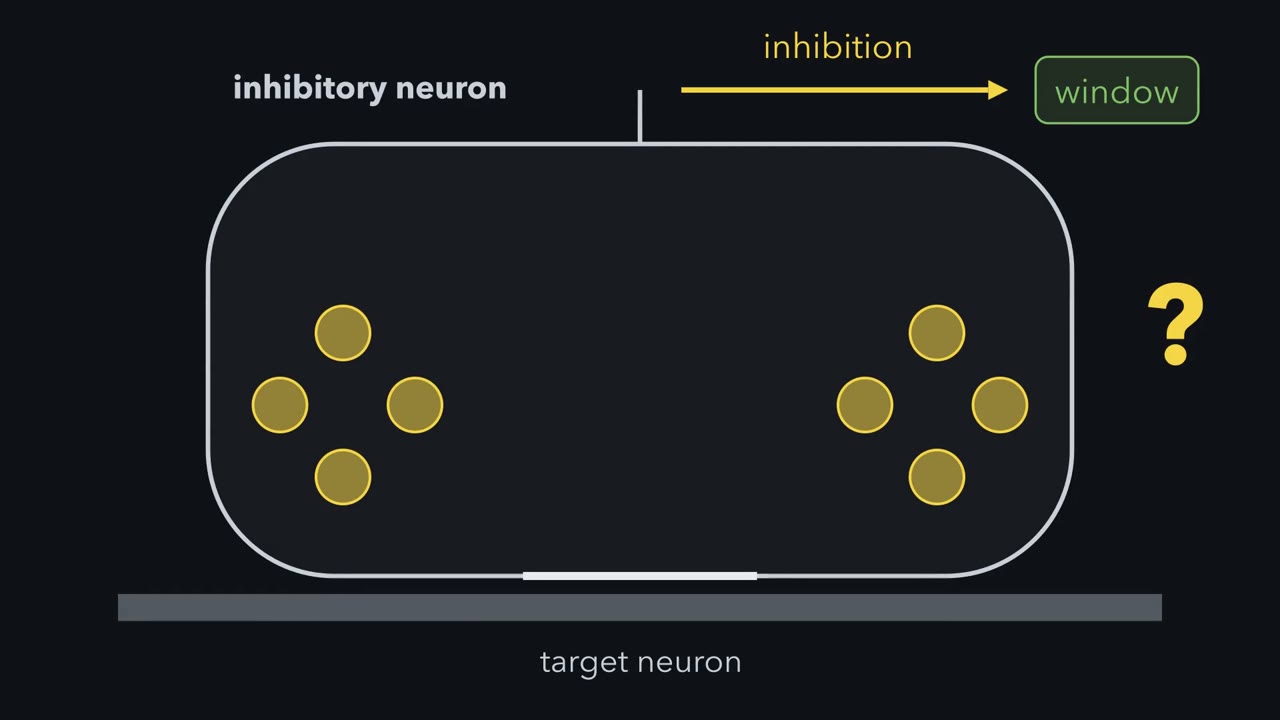
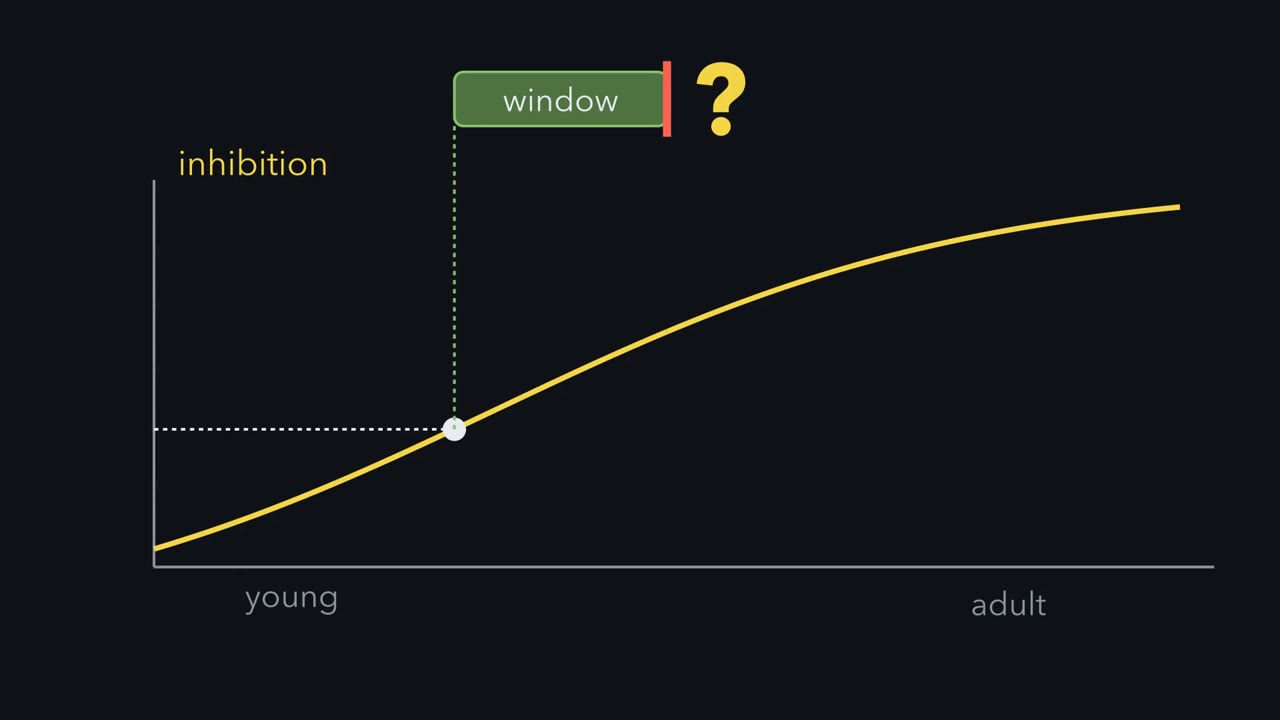
Pause and predict. Do the same thing to a two-month-old mouse. What happens to the score? Much less. In mice the shift is largest near postnatal day 28. It is much smaller before about day 19, or after about day 32. So the window lies in a few weeks of youth. Is that age itself, or something age brings? Here is the idea to carry through. The window follows the inhibitory cells, not the calendar.
A working model: maturing inhibition, especially from parvalbumin basket cells, opens the window once it passes a threshold. As inhibition keeps maturing, and brakes build up around these cells, it closes. In young cortex, a brief boost of inhibition was enough to start a window. The boost did not have to last.
The rule covers this young shift in mouse and rat visual cortex. Adults keep a weaker, different form. It does not cover people, or song and language. Takeaway: the window is set by the state of a circuit, not simply by age.
A mouse that lacks one enzyme for making GABA keeps its critical period waiting for months. One drug starts it.
Continue in the lesson: Opening and Closing a Critical Period →
2:11 · Free, with captions and a transcript. The lesson has the full text, the questions and the sources.
More films from this lesson
How this film was made. Narration: an AI narrator voice (Kokoro, af_heart) reading narration written from this lesson's text. Animation: AI-generated in code (Manim) by Claude, a schematic with no drawn molecular structures. Captions come from the narration script. See something wrong? Report it.