Films · Developmental Neuroscience
Same Knives, Two Routes
Read the transcript of “Same Knives, Two Routes”
Film transcript: Same Knives, Two Routes
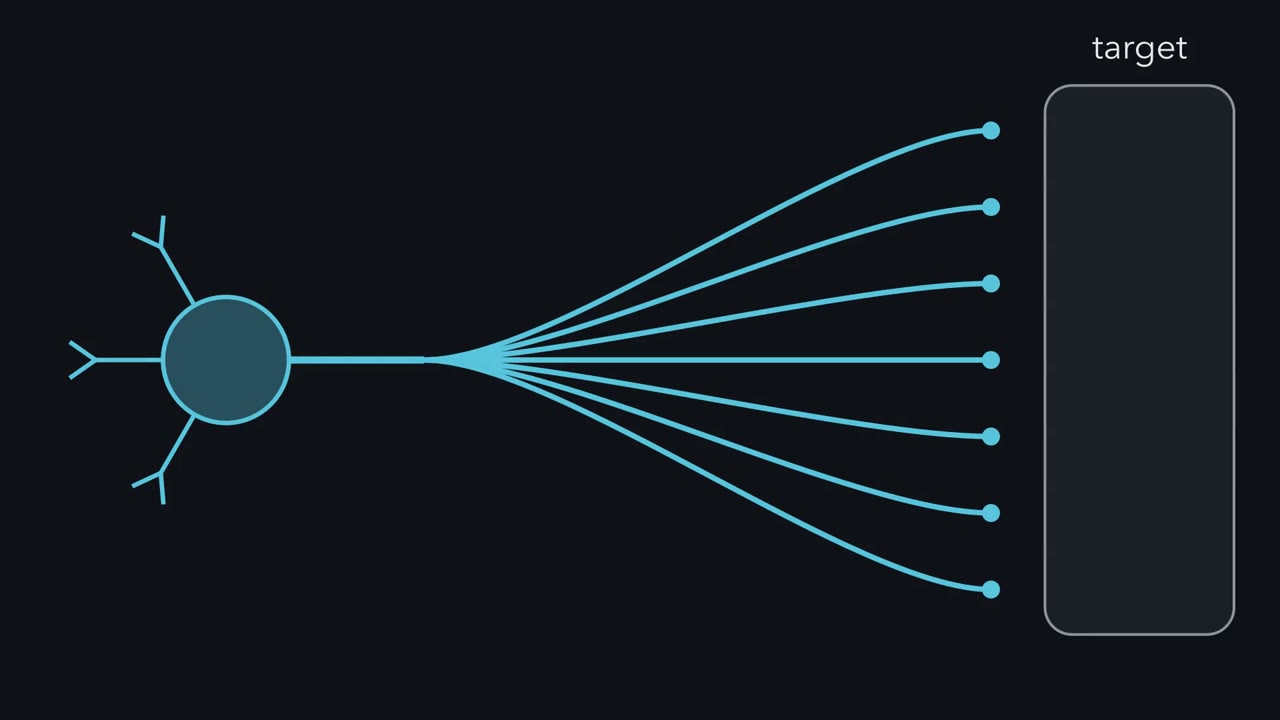
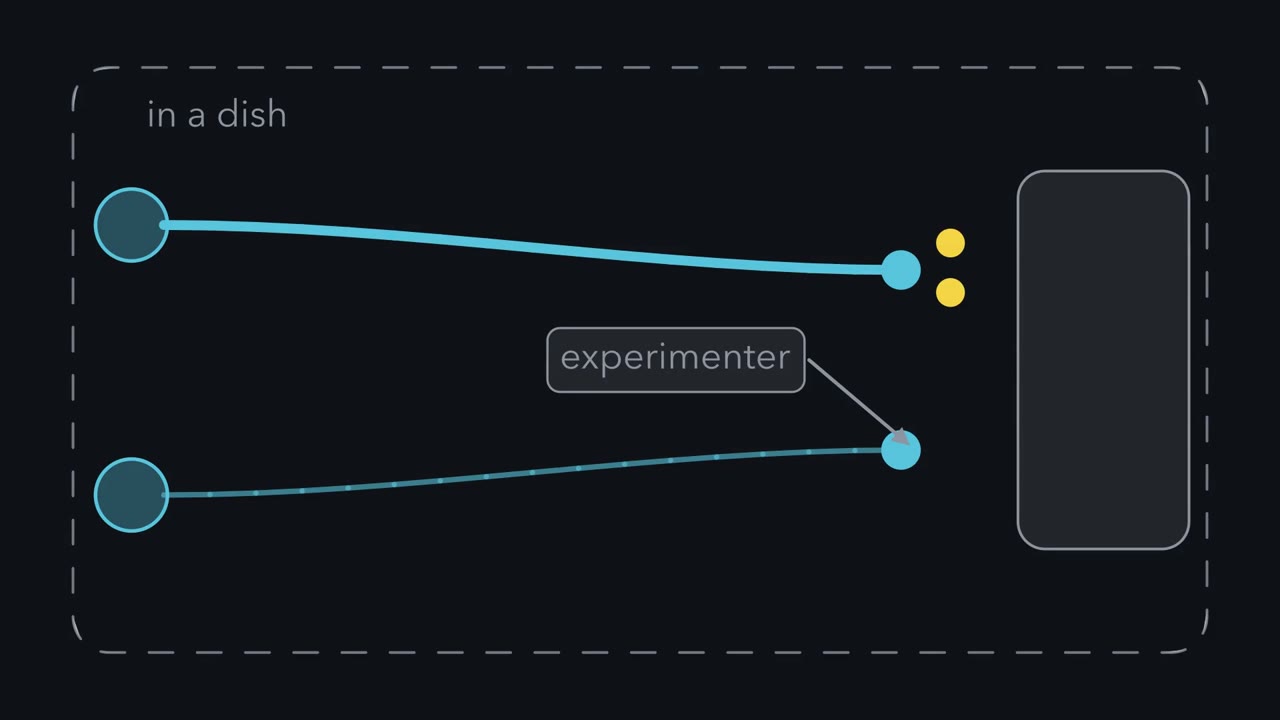
A neuron's cell body and its axon share one cytoplasm. Both contain caspases. So how can caspases run in one and not the other? Caspases are proteases that dismantle a cell during apoptosis, a built-in program of cell death. To find out, you must deprive one place and not the other. In 2013, Corey Cusack, Mohanish Deshmukh and colleagues grew mouse sympathetic neurons in a microfluidic chamber. The cell bodies sat in one compartment. Their axons grew through narrow grooves into a second. The fluids stayed apart. Local deprivation removes NGF from the axon compartment only. Global deprivation removes it from both. In normal neurons, what happens in each experiment?
Local deprivation: the axons degenerate, and the cell bodies live. That is pruning, in a dish. Global deprivation: the neurons die, and their axons go with them. That is developmental cell death, in a dish. Now fill in a table, one genotype per row. Does axon breakdown need caspase-6 in both experiments? Delete it, and predict each one.
Without caspase-6, locally deprived axons were protected. After global deprivation, the axons still degenerated as the neurons died. So the two experiments have different needs. A second mutant shows whether they are two programs.
Now the other end of the pathway. During apoptosis, the protein Apaf-1 builds the apoptosome. The apoptosome switches on Caspase nine then switches on caspase-3. Local pruning needed caspase-9, caspase-3 and caspase-6. Does it need Apaf-1 too?
No. Without Apaf-1, locally deprived axons still degenerated, and the cell bodies lived. But after global deprivation, these neurons resisted death. Death of the whole neuron needed Apaf-1. So in this study, caspase-6 mattered only for the local route. Apaf-1 mattered only for the global route. Each route needs something the other does not. They share enzymes, but they are wired differently. Caspases become active in the deprived axon. What keeps their activity low in the cell body? The same study found two things that keep caspases off in the cell body. One is XIAP, which blocks active caspase-9 and caspase-3. The other is the proteasome. Neurons lacking XIAP built up active caspase-3 in their cell bodies.
Same enzymes, two wirings, and an inhibitor guarding the part that must live.
How does a neuron cut off one branch with caspases, the enzymes of cell death, and still live?
Continue in the lesson: Pruning Without Dying: Axons That Cut Themselves Back →
3:29 · Free, with captions and a transcript. The lesson has the full text, the questions and the sources.
More films from this lesson
How this film was made. Narration: an AI narrator voice (Kokoro, af_heart) reading narration written from this lesson's text. Animation: AI-generated in code (Manim) by Claude, a schematic with no drawn molecular structures. Captions come from the narration script. See something wrong? Report it.