Films · Developmental Neuroscience
Correlation, Not Just Spikes
Read the transcript of “Correlation, Not Just Spikes”
Film transcript: Correlation, Not Just Spikes
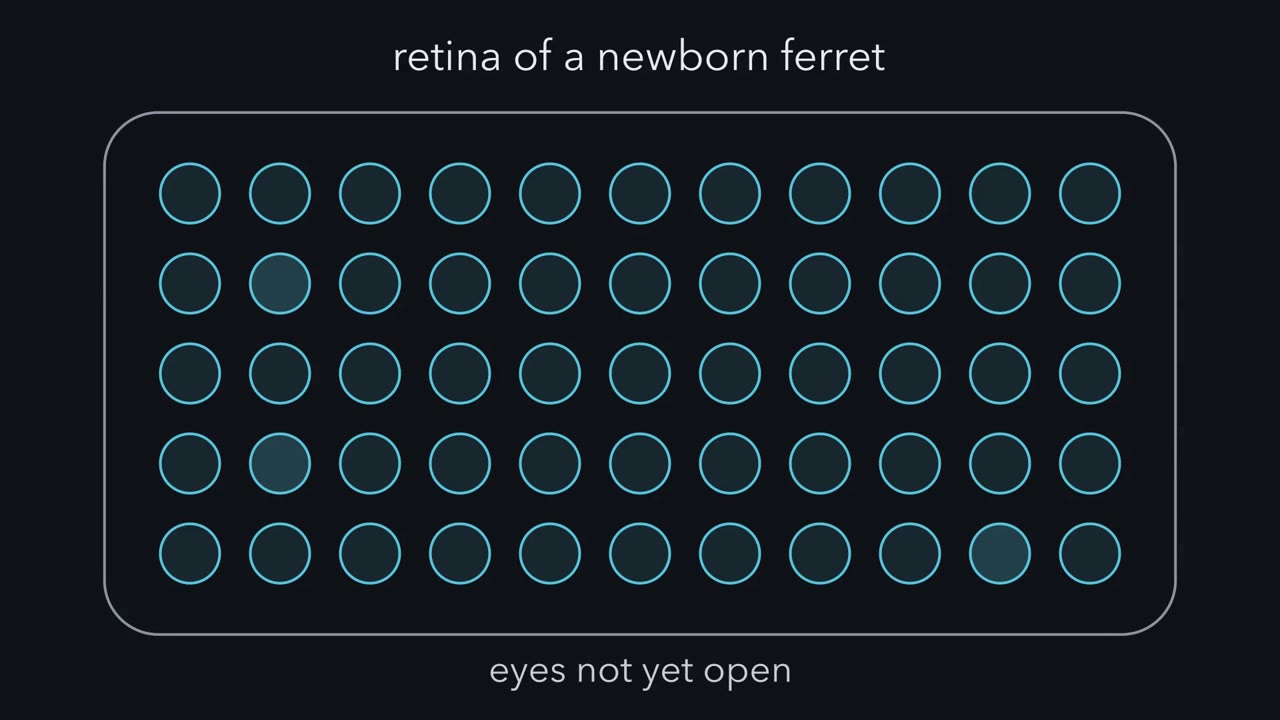
Can a retina full of spikes still fail to sharpen the brain's map? This test reads a different map. Not which eye, but where in the eye. Label a few neighbouring ganglion cells. In the superior colliculus, in the midbrain, their axons end in a zone, small if the map is sharp. Todd McLaughlin, Christine Torborg, Marla Feller and Dennis O'Leary studied mice lacking the beta2 nicotinic subunit. In their recordings, these mice had no waves in the first week. Yet their ganglion cells fired often, without correlation. Predict. By day 8, are the mutants' zones small, or broad?
Broad. Normal mice had small zones; the mutants' stayed broad. Later waves and vision did not fix them, which points to an early window. In these recordings they had plenty of spikes, but not the normal correlation between neighbours. Later labs found altered, not absent, waves in these mice. So the safe claim is narrower. Normally patterned activity, not just spiking, is needed early for the map to sharpen. Last, a detector for together. A frog's tectum normally gets axons from one eye. Martha Constantine-Paton and Margaret Law gave frog embryos an extra eye, so two eyes shared one tectum. The two projections formed alternating stripes, where none normally exist.
Hollis Cline, Elizabeth Debski and Constantine-Paton then laid APV on the tectum. It blocks NMDA receptors. These receptors pass little current unless glutamate is bound and the membrane is already depolarized. So they can report coincident input. Predict. What happens to the stripes while APV is on the tectum?
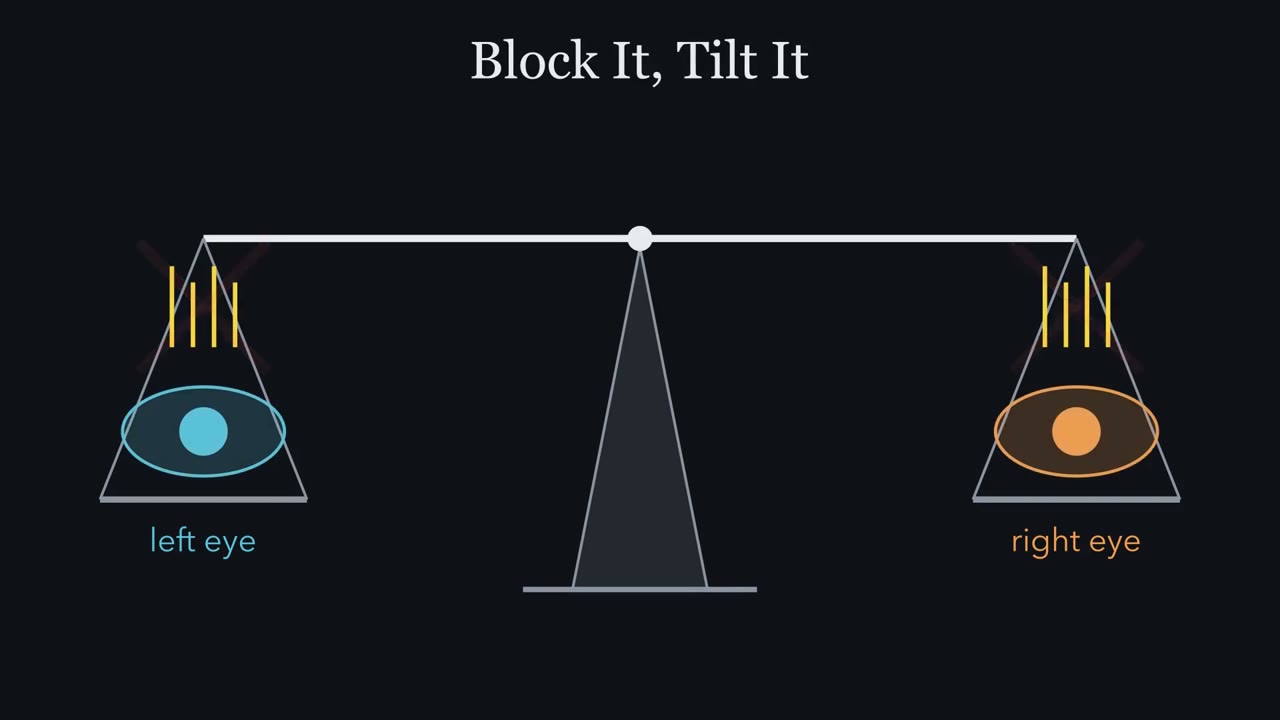
The stripes were lost, while the retinal axons still responded. After APV was removed, the stripes returned. In the frog, keeping the stripes needed these receptors. Which detector sorts the two eyes in the mammalian thalamus is less clear. Takeaway: timing is the address. In the models, inputs compete, and the evidence so far says that patterned firing, not just spike count, matters for which inputs stay.
Weeks before vision begins, the retina already fires in waves. What are they for?
Continue in the lesson: Activity Before Experience: Spontaneous Retinal Waves →
2:43 · Free, with captions and a transcript. The lesson has the full text, the questions and the sources.
More films from this lesson
How this film was made. Narration: an AI narrator voice (Kokoro, af_heart) reading narration written from this lesson's text. Animation: AI-generated in code (Manim) by Claude, a schematic with no drawn molecular structures. Captions come from the narration script. See something wrong? Report it.