A Touch That Hurts
Read the transcript of “A Touch That Hurts”
Film transcript: A Touch That Hurts
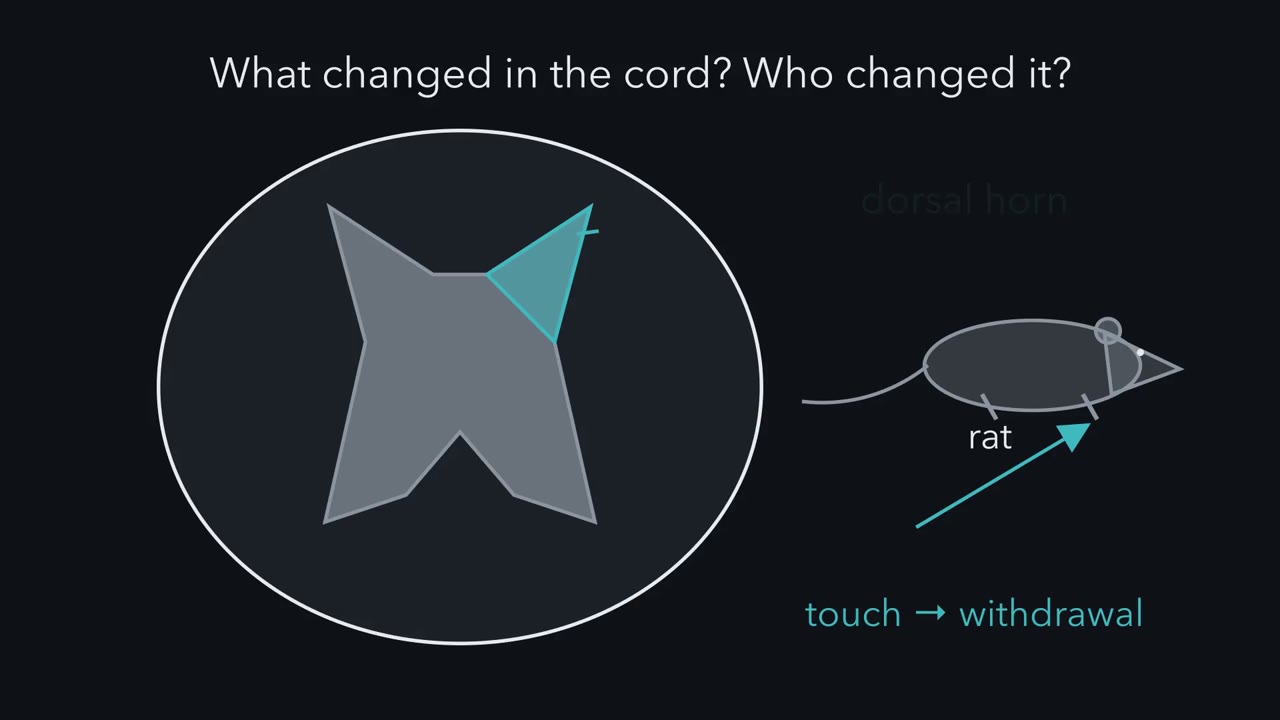
A rat ignores a light touch on its paw. Days after a nerve injury, the same touch makes it pull away. Why? The rat stands on a wire-mesh floor. A thin filament presses up against its hind paw. The paw stays down. Then comes a spared nerve injury. Two branches of the nerve to the paw are cut, and one is spared. Days later, the same filament makes the paw lift.
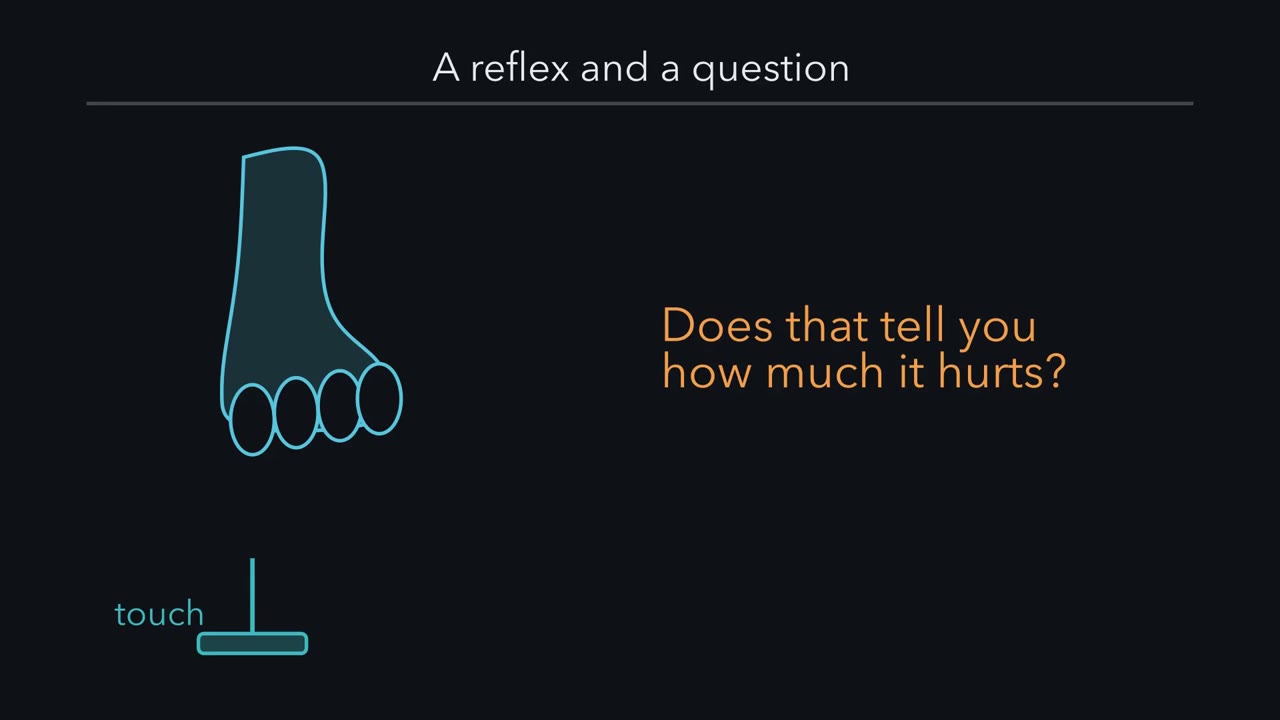
Allodynia means pain from a stimulus that normally does not hurt. A rat cannot tell us, so the paw lift stands in for it. The touches come from filaments of rising stiffness, pressed over repeated trials. Many labs take the force that lifts the paw half the time. That is the withdrawal threshold. Plot that threshold over time. In sham-operated rats it stays flat. In injured rats it falls within days, and stays low. When a treatment is said to reverse allodynia, it pushes that curve back up, often only for a while.
Two other words matter. Hyperalgesia is more pain to a stimulus that already hurts. Spontaneous pain comes with no applied stimulus. Notice what is measured. Most rodent papers on allodynia report a withdrawal threshold, which is a reflex. Hold on to that. So is persistent pain an alarm that never switched off, or a changed nervous system? Which would you pick?
The answer is both. After injury, some sensory neurons fire with no stimulus. So the alarm wiring itself has changed. Here is the one idea to carry through. After a nerve injury, pain persists because the rules of the system have changed. First, sensory neurons make signals with no stimulus. Second, in rats, the dorsal horn loses inhibition. In a simple model, a light touch that used to fall short can then fire a pain-signalling neuron. Third, in rodents, immune cells help hold that change, by routes that differ with sex and compartment. Fourth, separate brain circuits set how unpleasant the result is, apart from the reflex.
Most of this comes from rodent nerve-injury models. In people, the evidence is association. The takeaway: the alarm wiring changed, and so did the rules for what counts as a pain signal.
After a nerve injury, a touch the animal used to ignore makes it pull away, and it keeps doing so for weeks. Is persistent pain an alarm that never switched off, or a nervous system that has changed?
Continue in the lesson: When Pain Persists →
2:48 · Free, with captions and a transcript. The lesson has the full text, the questions and the sources.
More films from this lesson
How this film was made. Narration: an AI narrator voice (Kokoro, af_heart) reading narration written from this lesson's text. Animation: AI-generated in code (Manim) by Claude, a schematic with no drawn molecular structures. Captions come from the narration script. See something wrong? Report it.