Films · Developmental Neuroscience
Narrow First, Then Fold
Read the transcript of “Narrow First, Then Fold”
Film transcript: Narrow First, Then Fold
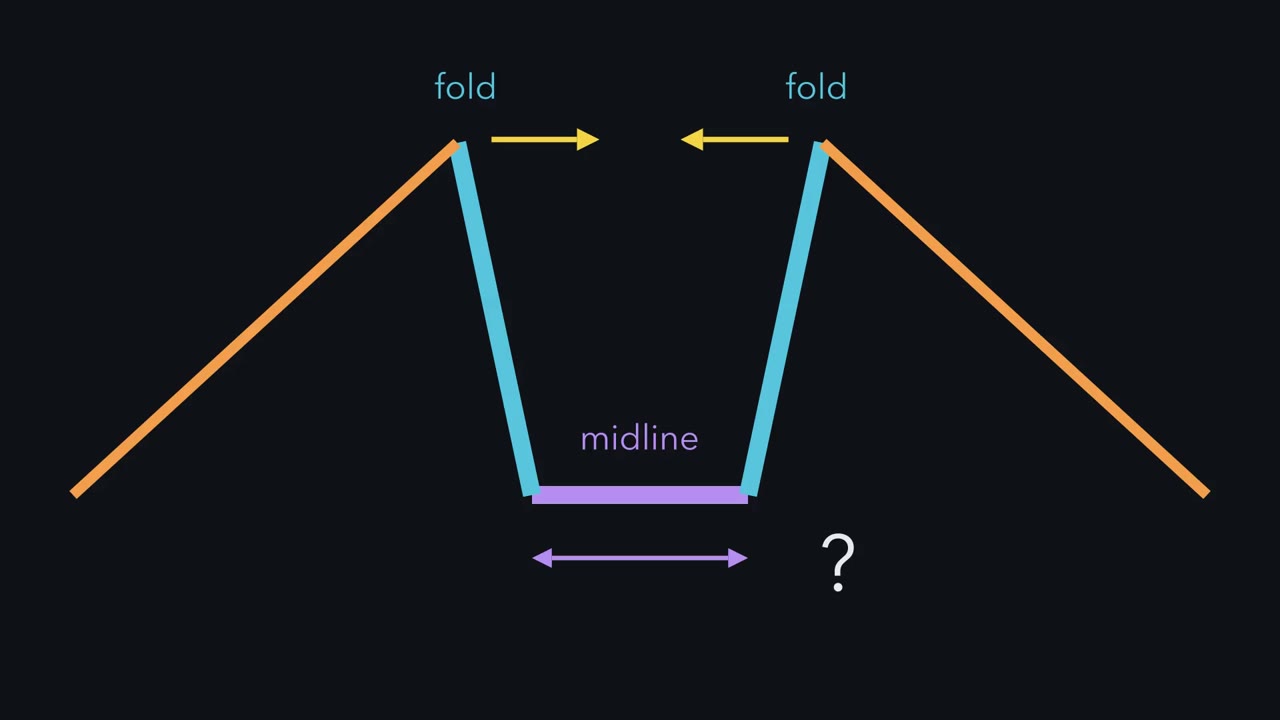
The brain and spinal cord begin as a flat sheet of cells. By about the fourth week, how do they become a sealed tube? This sheet is the neural plate, along the midline of the embryo's back. On either side, surface ectoderm will form the skin. Step one, shaping. The cells grow taller, and the plate narrows from side to side and lengthens from head to tail. Hold on to this step. If the plate's middle stays wide, the folds may have too far to go. Step two, bending. The plate creases at hinge points, and its edges rise as the neural folds. Step three. The folds move toward the midline, meet, and fuse. Step four. The tube separates from the skin, which seals over it.
Now look from above. In the mouse, closure begins at several sites and spreads from each like a zipper. The first site is called Closure 1. It sits at the boundary between the hindbrain and the spinal cord. A stretch that does not close stays open for the rest of pregnancy. Where it stays open names the defect. If the head end fails, the result is anencephaly. The exposed brain tissue degenerates. If the lower end fails, the cord itself lies in an open lesion. This is myelomeningocele, the open form of spina bifida. In the mouse, if Closure 1 never happens, the tube stays open from the midbrain down the spine. This is craniorachischisis. So why would a tube fail?
One reason: the folds can close only a gap their bending can cover. And the midline between them sets that gap. Narrowing it comes early and overlaps folding. Failures of bending, fusion or sealing are other routes. Takeaway: narrowing starts first and keeps going as the folds rise. Where closure fails names the defect.
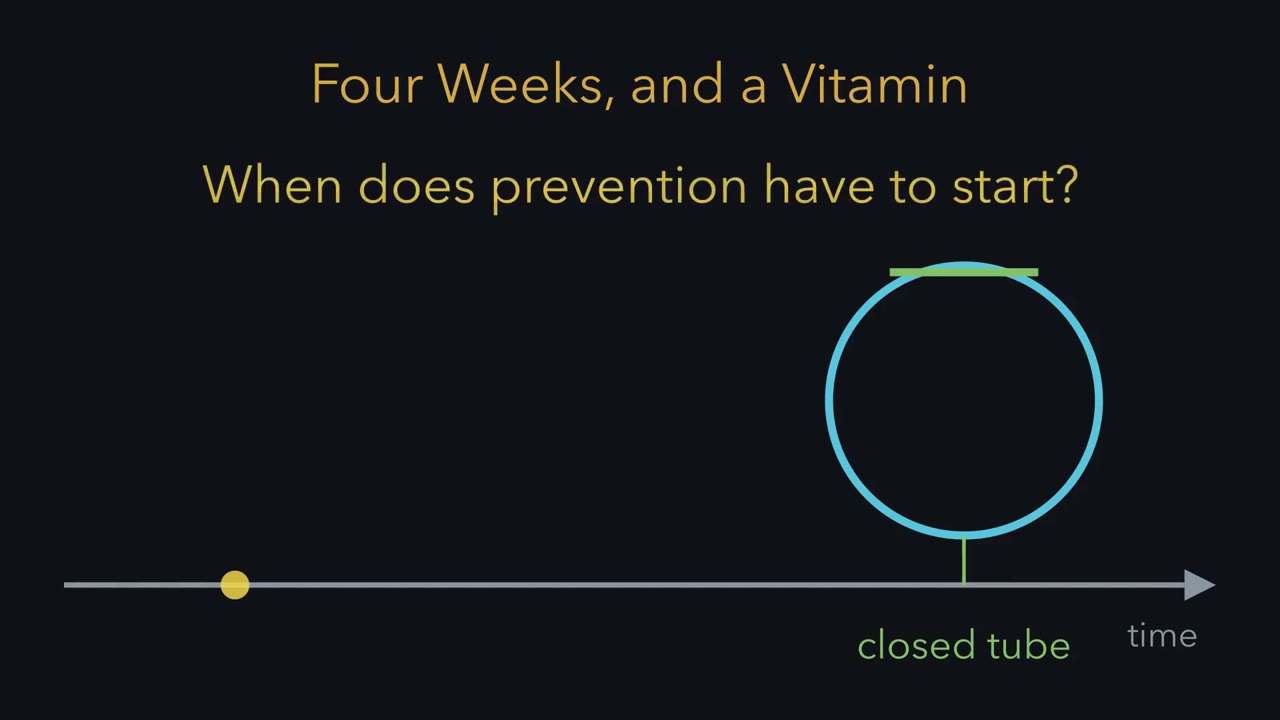
In a human embryo the neural tube has closed by the end of about the fourth week after fertilization. What happens if it doesn't? Part of the brain or spinal cord stays open, and folic acid taken before conception lowers the risk.
Continue in the lesson: Neurulation and Neural Tube Defects →
2:15 · Free, with captions and a transcript. The lesson has the full text, the questions and the sources.
More films from this lesson
How this film was made. Narration: an AI narrator voice (Kokoro, af_heart) reading narration written from this lesson's text. Animation: AI-generated in code (Manim) by Claude, a schematic with no drawn molecular structures. Captions come from the narration script. See something wrong? Report it.