Films · Developmental Neuroscience
Made, Then Lost
Read the transcript of “Made, Then Lost”
Film transcript: Made, Then Lost
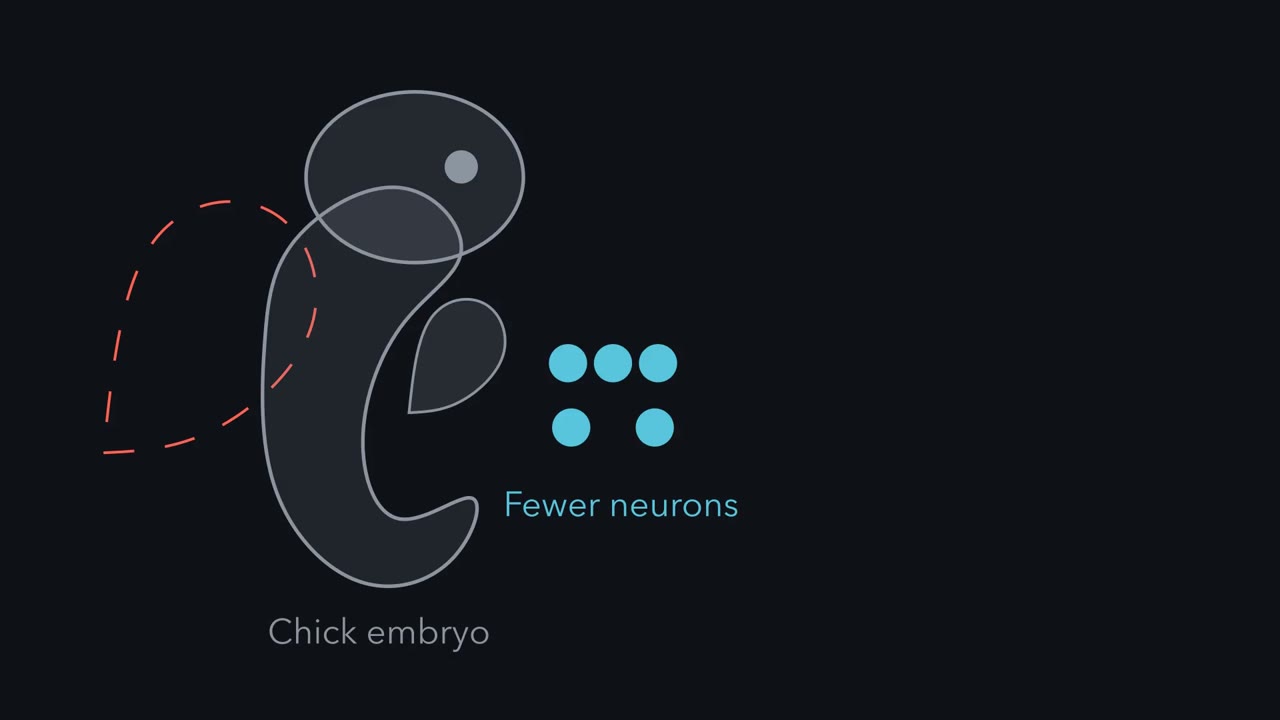
A mouse lacking the NGF receptor is born with too few sympathetic neurons. Were they never made, or made and then lost? A knockout mouse has a gene disrupted, so it makes no working protein. No antibody is involved. In 1994, Crowley and colleagues reported mice lacking NGF. Smeyne, Klein, Barbacid and colleagues reported mice lacking a working TrkA, the receptor for NGF. Both mutants lose sympathetic neurons and many sensory neurons. The antibody doubt is settled. The sensory losses fall on neurons that express TrkA, mostly small neurons that sense pain and temperature. But a count at birth still cannot say whether the neurons were ever made.
In 1996, Anne Fagan, Story Landis, Barbacid and colleagues counted one ganglion at a series of ages. It was the superior cervical ganglion, the sympathetic ganglion at the top of the neck. Here are the axes. Neuron number runs up the side. Embryonic and postnatal age runs along the bottom. Predict. If TrkA is needed for survival but not for production, what shape does the mutant curve take?
Loss of TrkA did not affect neurogenesis, neuronal markers, or initial axon growth. In this schematic, the two counts match at embryonic day 13.5, soon after the ganglion forms. By embryonic day 15.5, the mutant ganglion already has fewer neurons. The gap keeps growing.
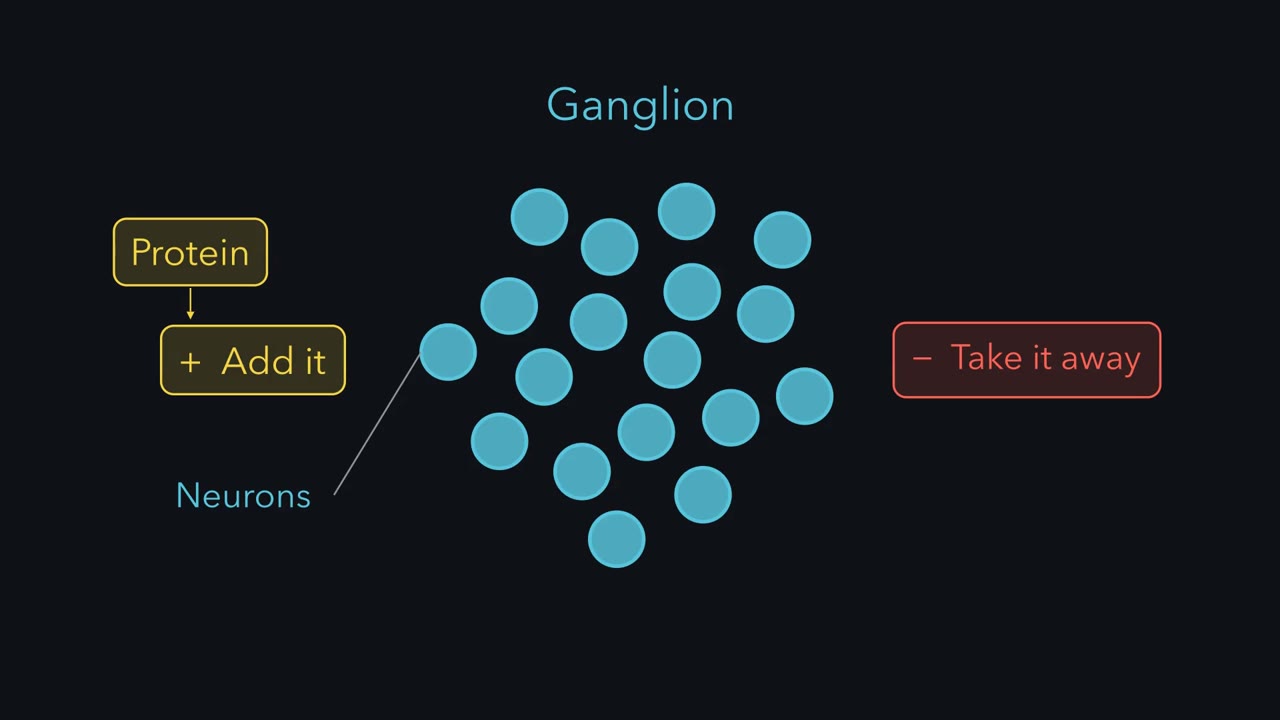
The ganglion formed, and then lost its neurons. The neurons were produced. What failed was survival. This time course is the signature evidence that the loss is a failure of survival, not production. Counts of dividing and dying cells showed why. More neurons were dying, and division was normal. How does NGF hold off that death? Neurons that get too little die by a death that needs the protein Bax. Mice lacking Bax keep sympathetic neurons that would otherwise die. In culture, they survive when NGF is withdrawn. So NGF works by holding back a Bax dependent death program. Takeaway: without TrkA, sympathetic neurons are made and then lost. NGF acts as a survival factor.
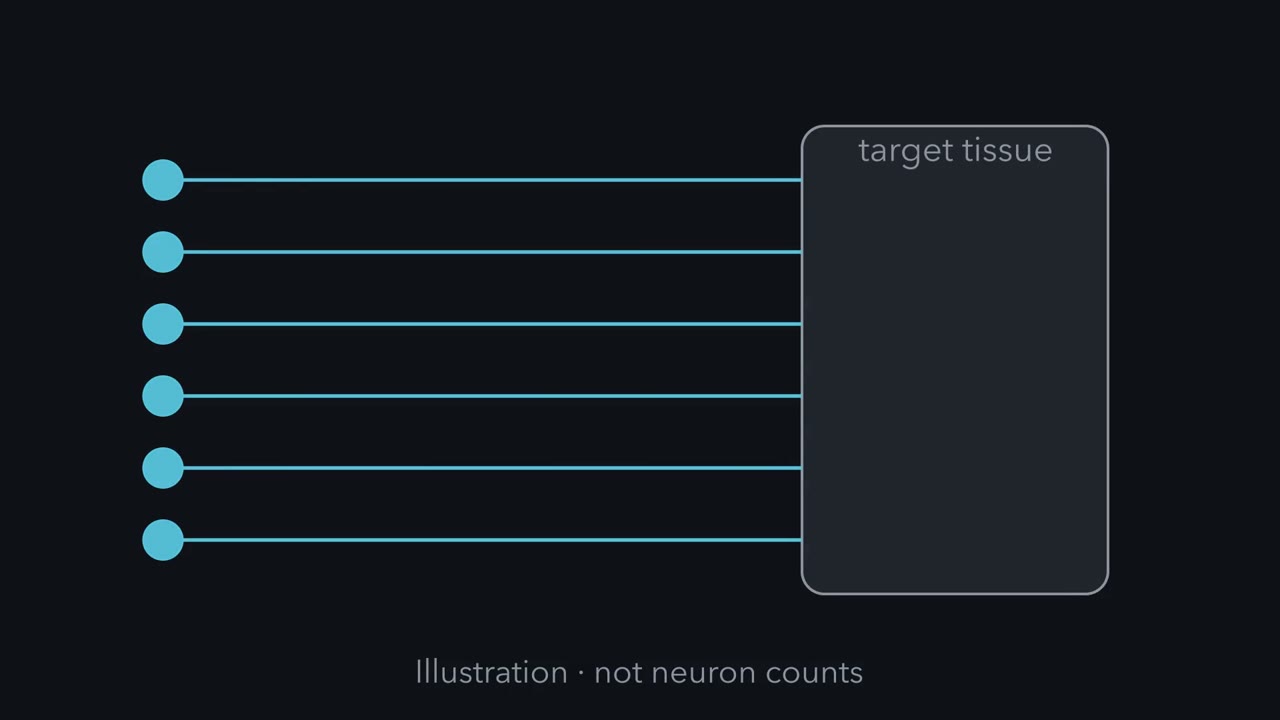
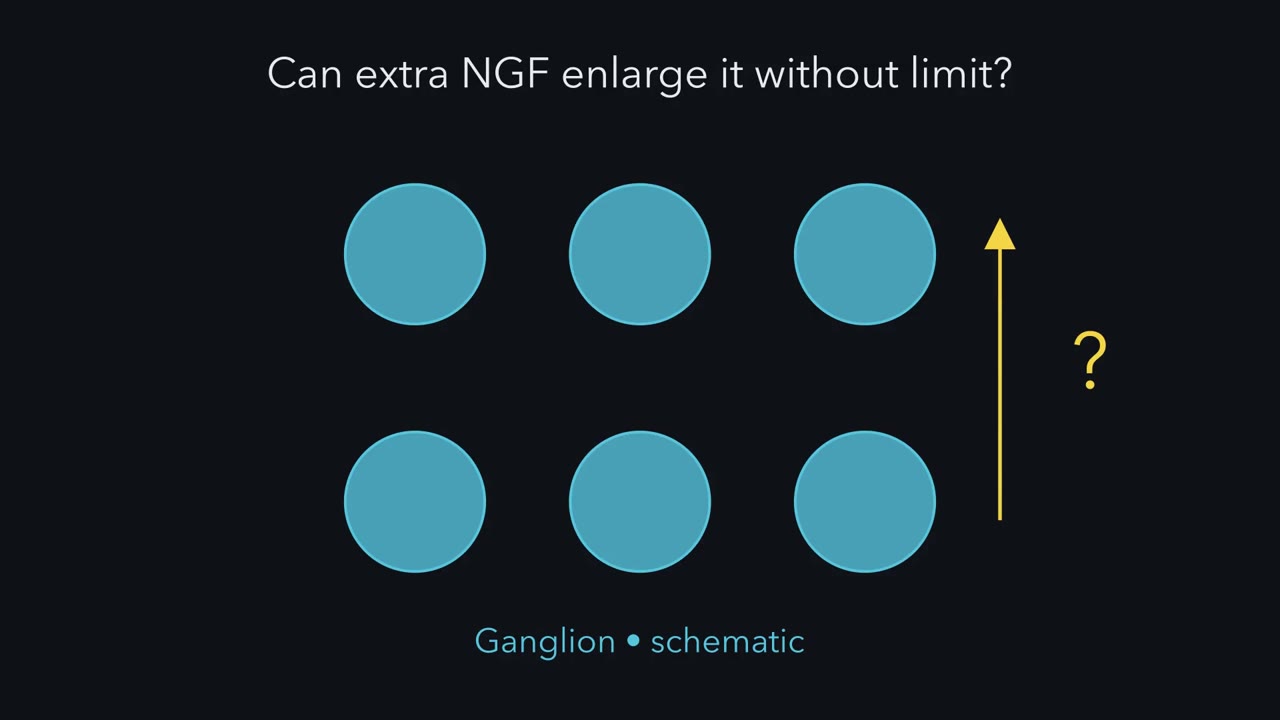
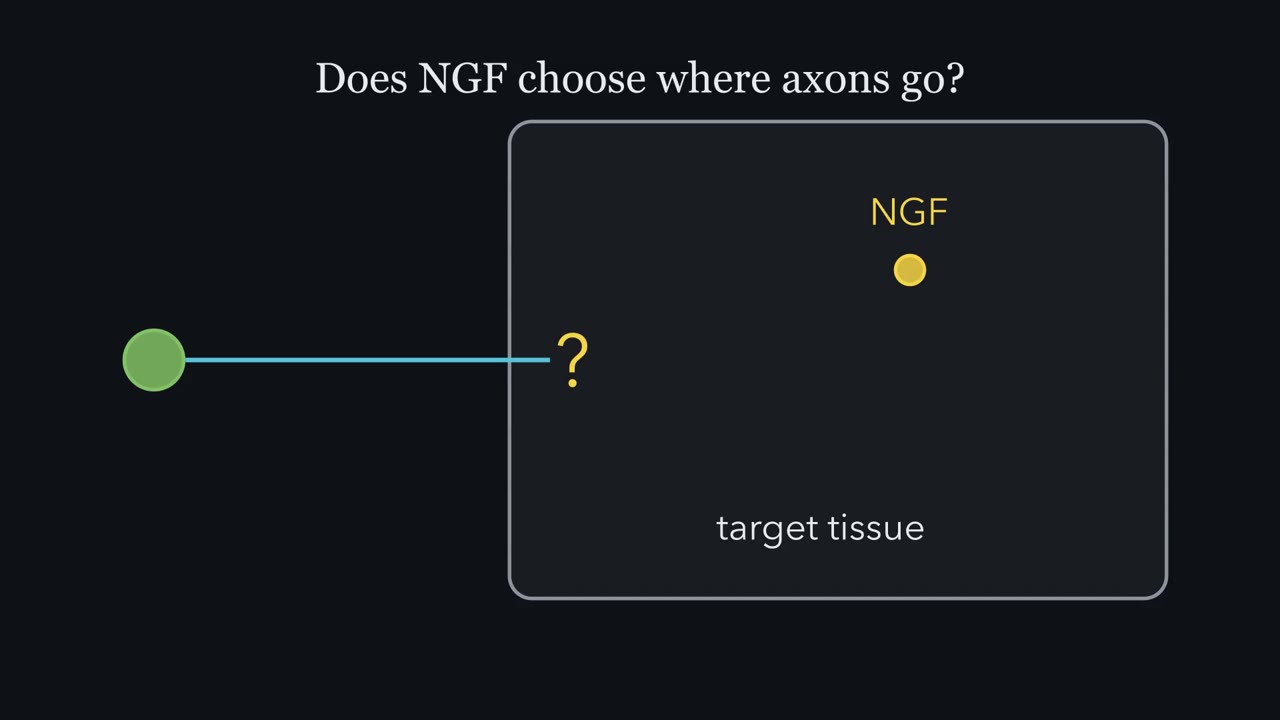
Neutralize one protein in a newborn mouse and its sympathetic ganglia waste away. Neurons compete for a limiting amount of target-derived factor, and the amount limits how many live. Does NGF decide how many neurons there are?
Continue in the lesson: The Neurotrophic Hypothesis Tested →
2:50 · Free, with captions and a transcript. The lesson has the full text, the questions and the sources.
More films from this lesson
How this film was made. Narration: an AI narrator voice (Kokoro, af_heart) reading narration written from this lesson's text. Animation: AI-generated in code (Manim) by Claude, a schematic with no drawn molecular structures. Captions come from the narration script. See something wrong? Report it.