Films · Developmental Neuroscience
The Kinase from a Tumour
Read the transcript of “The Kinase from a Tumour”
Film transcript: The Kinase from a Tumour
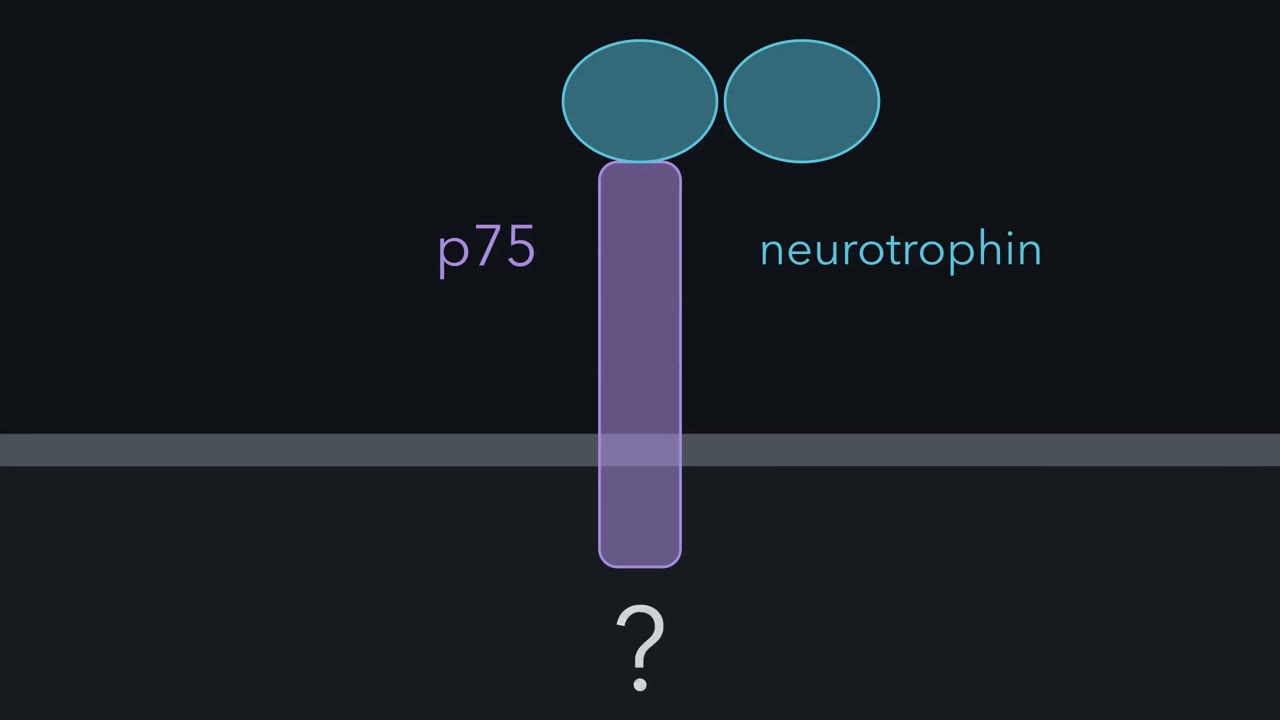
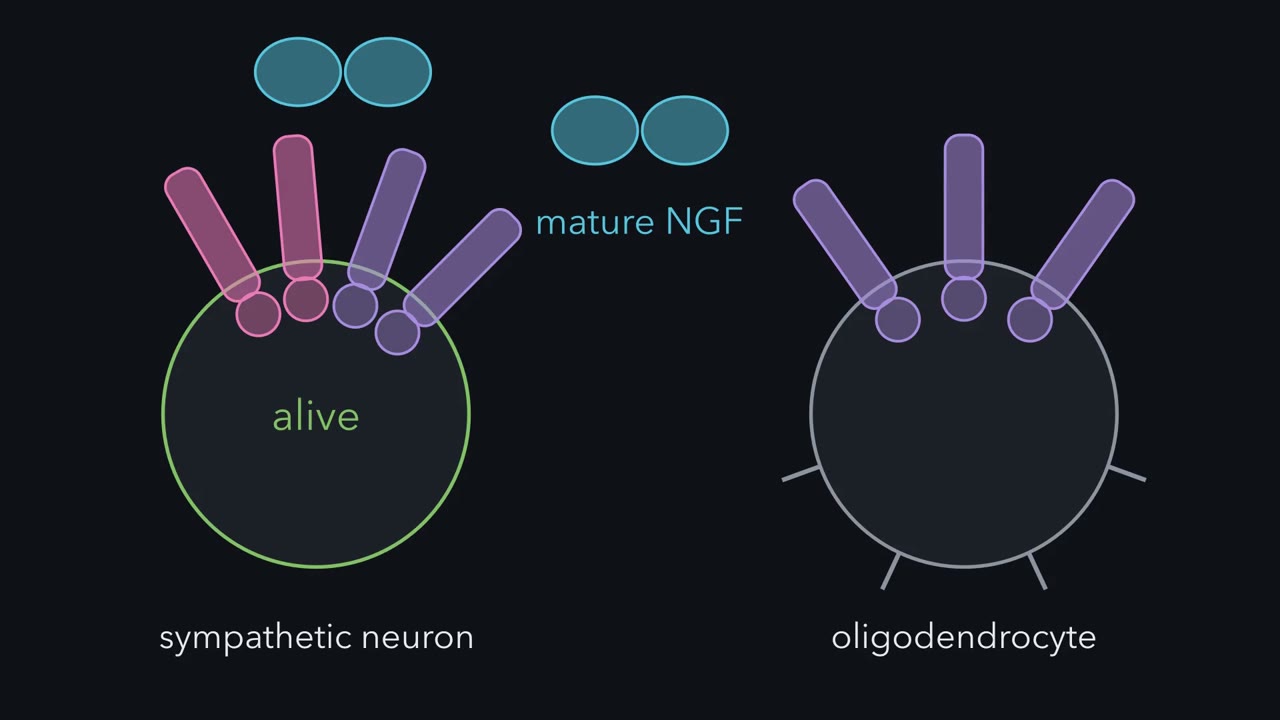
Why does a growth factor for nerve cells have a receptor named after a tumour? Start with the first neurotrophin receptor anyone cloned. It could not explain survival. In 1986, Moses Chao and colleagues transferred human DNA into mouse cells. They found cells that made the human receptor, and cloned its gene. Eric Shooter's laboratory reported the rat receptor the next year. This protein, p75, bound NGF with low affinity. It had no kinase. Neurons were known to have higher affinity sites as well. On its own, p75 could not account for them. The kinase came from somewhere else entirely: a human colon tumour. In 1986, Mariano Barbacid's laboratory described an oncogene from that tumour.
Part of a tropomyosin gene had fused to the gene for a tyrosine kinase. The fusion kept the kinase on, without any ligand. The name comes from that fusion: tropomyosin receptor kinase. The normal gene encoded a membrane receptor with no known ligand. If DCC from the netrin lesson comes to mind, it should. Here again, a gene first studied in cancer had a job in wiring the nervous system. Now a test. Take a fibroblast that makes no Trk receptor and ignores NGF. Give it the gene for the normal Trk protein. Then add NGF. What should happen?
In spring 1991, two groups showed that NGF binds the Trk protein and causes its tyrosine phosphorylation. Barbacid's group also found that fibroblasts carrying Trk divided in response to NGF, without needing p75. The orphan kinase from a tumour was a receptor for NGF. Earlier, in Barbacid's laboratory, Ruediger Klein went looking for the Trk gene in mouse brain. In his later account, he recovered a related gene instead. It was reported in 1989 as TrkB. A later search, with Fabienne Lamballe, found a third relative, TrkC, reported in 1991. A search for one receptor had turned up a family of three. That is why the original Trk protein is now called TrkA.
One question stayed open. How p75 and TrkA together give high-affinity binding is still argued. The takeaway: the survival receptor was found in cancer, and NGF turned it on.
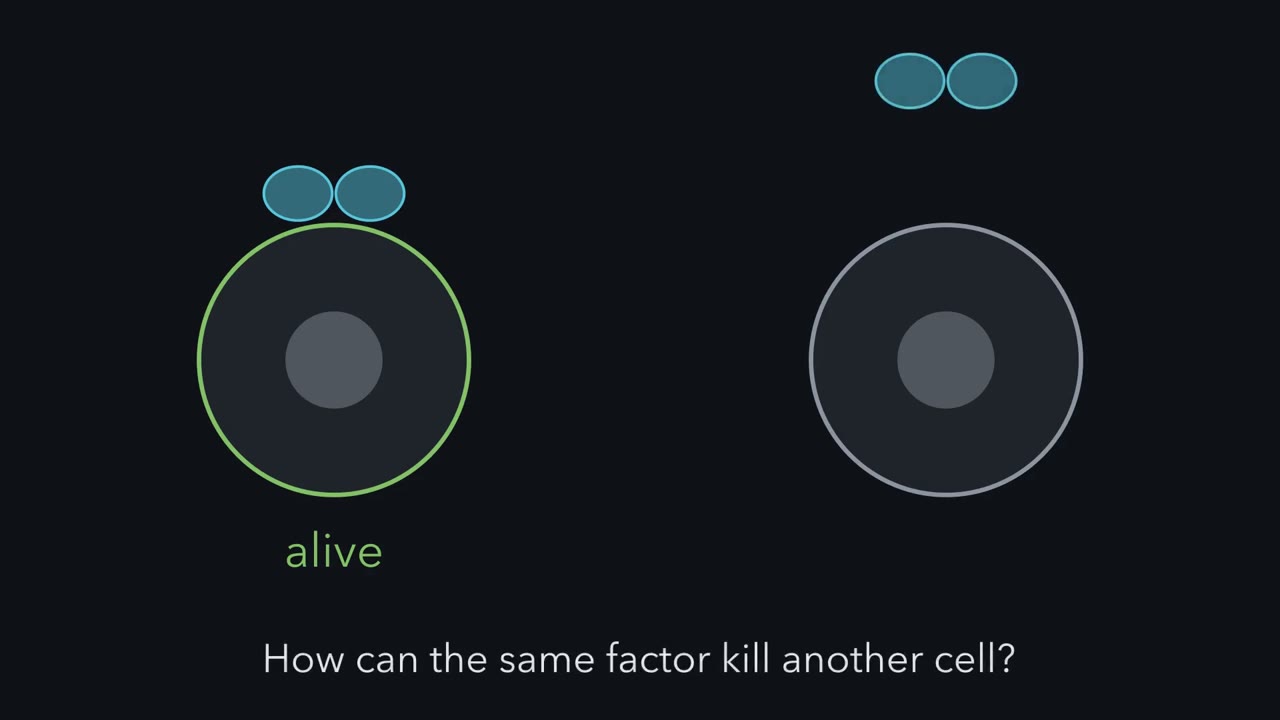
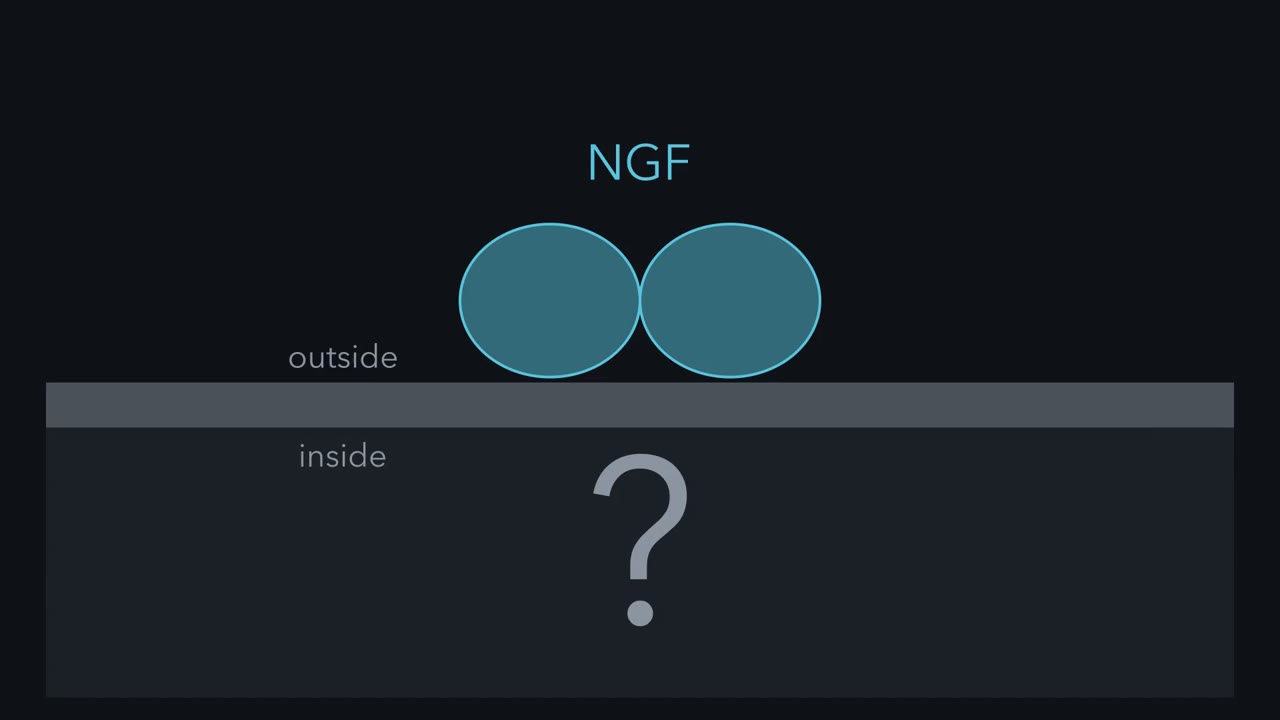
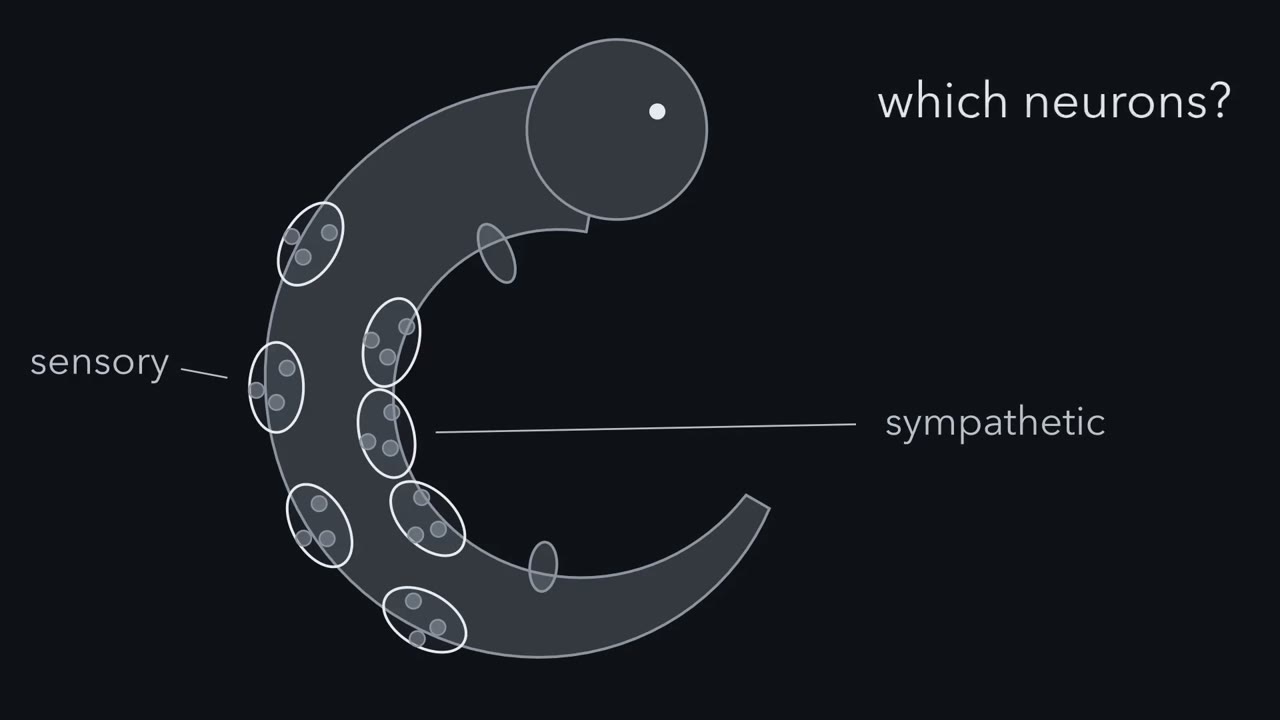
Many developing neurons live only if their target supplies enough of the right neurotrophin. How does the neuron read that factor, and how can the same factor sometimes kill?
Continue in the lesson: Neurotrophins, Trk Receptors and p75 →
2:59 · Free, with captions and a transcript. The lesson has the full text, the questions and the sources.
More films from this lesson
How this film was made. Narration: an AI narrator voice (Kokoro, af_heart) reading narration written from this lesson's text. Animation: AI-generated in code (Manim) by Claude, a schematic with no drawn molecular structures. Captions come from the narration script. See something wrong? Report it.