Films · Developmental Neuroscience
The Program and the Surroundings
Read the transcript of “The Program and the Surroundings”
Film transcript: The Program and the Surroundings
Take a patient's skin cells, reset them, and grow them for weeks in a spinning flask. Can that model their early cortex? First, the skin cell must go back to an embryonic state. Four transcription factors can do that. Transcription factors are proteins that bind DNA and switch genes on or off. The result is an induced pluripotent stem cell, an iPS cell. Pluripotent means it can become any cell type of the body. A line made from a patient carries the patient's genome, mutation included. It can also pick up new changes in culture. The recipe has four steps. First, gather the stem cells into a ball. Steer it toward neural tissue.
Embed it in a droplet of gel. Then spin it in a flask, where moving medium brings more oxygen and nutrients. Nothing tells these cells where they are in a body. Which features appear on their own? Zones of progenitors form around a fluid-filled cavity. Young neurons settle outside them. No one placed these cells. They arranged themselves. That is self-organization, the idea behind every organoid.
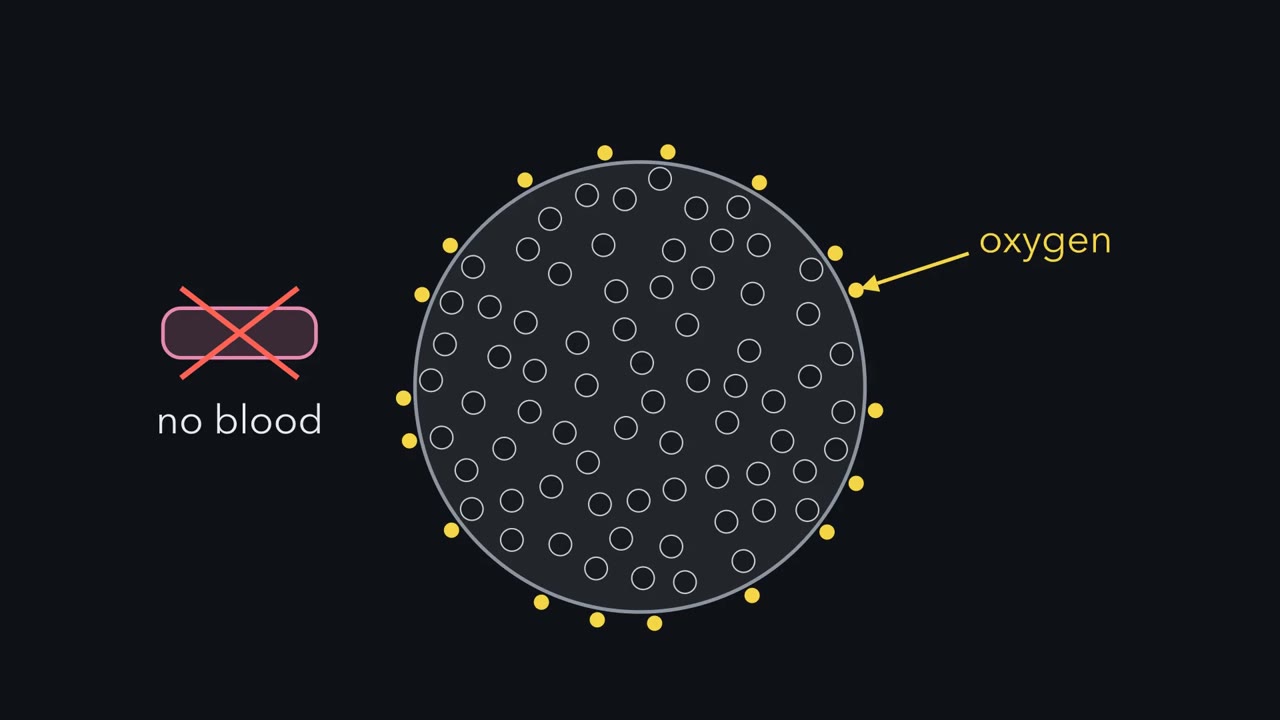
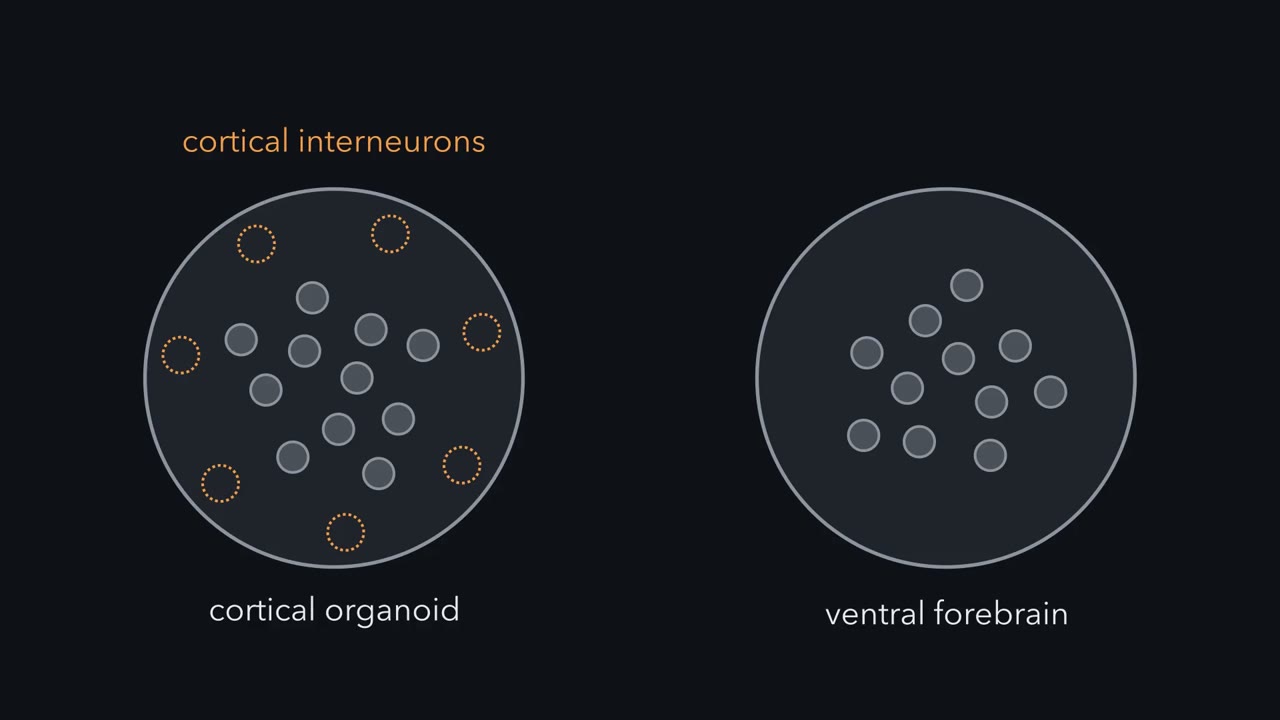
But the six layers of mature cortex form at best partly. And a standard organoid has no blood vessels. Now set a fetal cortex beside it. Some of what builds it comes from the cells, some from the body around them. Blood vessels bring oxygen. Microglia, the brain's immune cells, arrive from outside. Axons bring input from the thalamus. And interneurons stream in from another region, the ventral forebrain. In a single organoid, most of these are missing. Here is the one idea to carry through. The cells bring the program. The embryo brings the surroundings. An organoid keeps the program and loses most of the surroundings. So trust it most for what the cells do on their own.
Test it hardest wherever development needs something from outside. And measure every feature, because the dish adds stress of its own.
Can a person's skin cells, first reset to stem cells and then grown for weeks in a spinning flask, become a model of their early cortex?
Continue in the lesson: Brains in a Dish: Stem Cells and Organoids →
2:36 · Free, with captions and a transcript. The lesson has the full text, the questions and the sources.
More films from this lesson
How this film was made. Narration: an AI narrator voice (Kokoro, af_heart) reading narration written from this lesson's text. Animation: AI-generated in code (Manim) by Claude, a schematic with no drawn molecular structures. Captions come from the narration script. See something wrong? Report it.