Films · Developmental Neuroscience
One Protein, Two Cell Types
Read the transcript of “One Protein, Two Cell Types”
Film transcript: One Protein, Two Cell Types
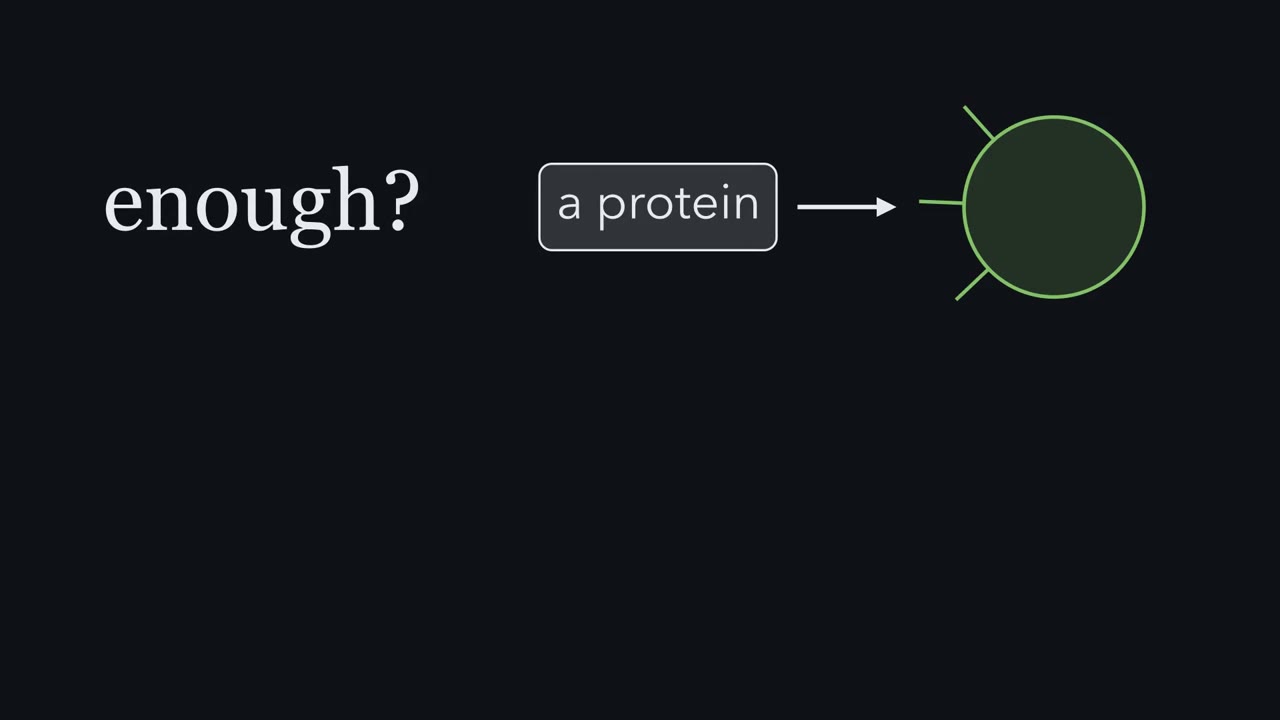
Two neighbouring cells in a chick spinal cord make the same protein. One becomes a motor neuron, the other an interneuron. The protein is Lhx3. Both newly born motor neurons and V2 interneurons make it. A second protein, Isl1, is made in the motor neurons, not the V2 interneurons. Both are LIM homeodomain proteins. The homeodomain binds DNA. Two LIM domains are handles that other proteins grip. A third player, the cofactor NLI, binds no DNA. It pairs with itself and grips LIM domains. Predict. Put Lhx3 alone into chick cells without Isl1. Then put in both. Which genes come up?
Alone, it turns on V2 interneuron genes, such as Chx10. With Isl1, it turns on motor-neuron genes, such as Mnx1. V2 genes are largely held down. Why? Without Isl1, NLI grips Lhx3 directly. Pairs of these units bind V2 genes.
With Isl1 present, Isl1 grips NLI itself. Then it holds Lhx3 on a short segment. Pairs of this three part complex promote motor neuron genes. NLI is in both. What differs is the bridge, Isl1. Does any Isl1 at all give a clean switch? Try a simple binding model. With equal amounts, about a quarter of the Lhx3 still sits in the interneuron complex. Less Isl1 leaves more. In this model, binding alone gives a mixture, not a switch. The model does not decide a cell's fate. In real cells, a downstream regulator helps lock the choice in. Here is the one idea to carry. No single factor says motor neuron. Here, identity depends on which complexes form.
That depends on which partners are present, and in what ratio. Takeaway: one protein, held by different partners, builds two different cells.
Put Lhx3 into chick spinal cord cells that make no Isl1 and they turn on interneuron genes. Add Isl1 and the same protein turns on motor-neuron genes. If no single gene says motor neuron, how does a set of transcription factors make one, and choose the muscle its axon will reach?
Continue in the lesson: Transcription Factor Codes: Building a Motor Neuron →
2:36 · Free, with captions and a transcript. The lesson has the full text, the questions and the sources.
More films from this lesson
How this film was made. Narration: an AI narrator voice (Kokoro, af_heart) reading narration written from this lesson's text. Animation: AI-generated in code (Manim) by Claude, a schematic with no drawn molecular structures. Captions come from the narration script. See something wrong? Report it.