Films · Developmental Neuroscience
The Front Goes First
Read the transcript of “The Front Goes First”
Film transcript: The Front Goes First
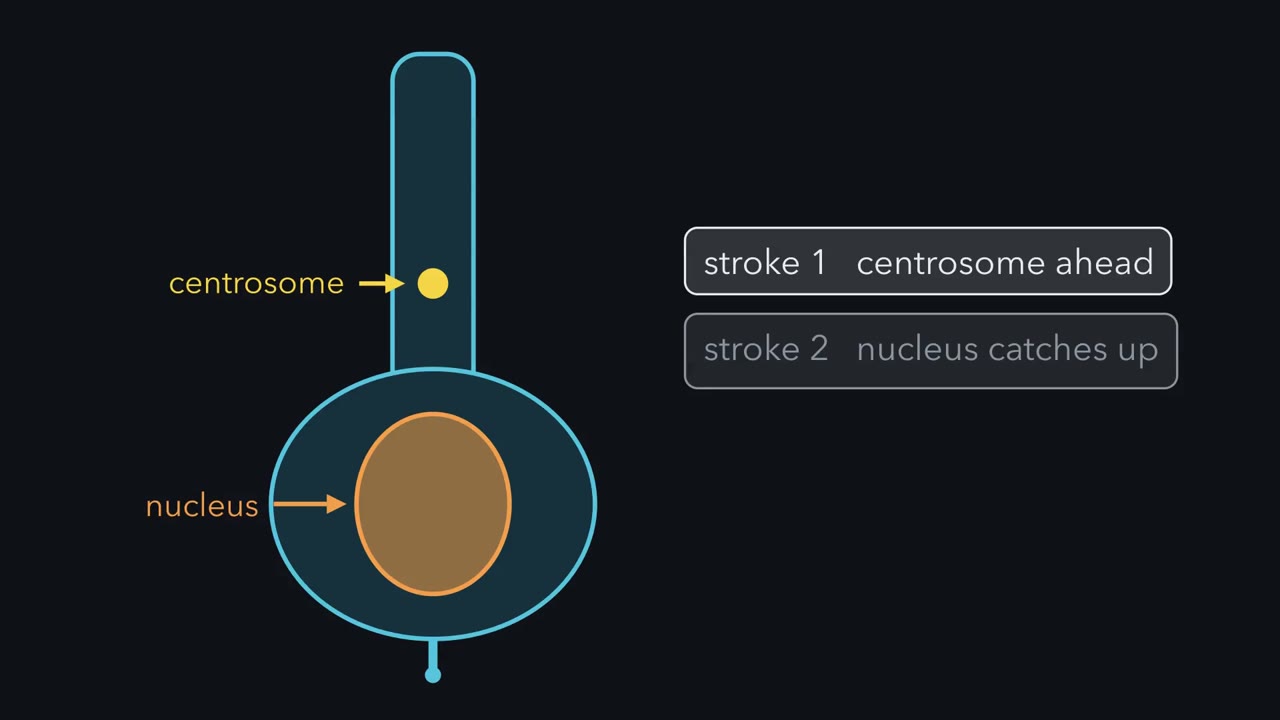
A newborn neuron must cross a wall many times its own size. It has no legs. How does it get across? The wall has layers. Neurons are born in the ventricular zone, on the inside. Next come the subventricular and intermediate zones. Then the cortical plate, where neurons settle. The marginal zone sits on top, just under the surface. A neuron's birth date predicts its layer. Early-born neurons settle deep, later-born ones nearer the surface. So every neuron must travel. A migrating neuron has a leading process, one long arm pointing the way. Behind it is the cell body, which holds the nucleus. Near the nucleus sits the centrosome, the cell's main organizing centre for microtubules.
In 1972, Pasko Rakic rebuilt young neurons from fetal monkey cortex. He found them pressed along fibres of radial glia, long cells spanning the wall. But fixed tissue shows contact. It cannot show which cell moved, or how. In 1987, James Edmondson and Mary Hatten filmed living neurons moving on glial fibres in a dish. The neurons moved in a stop-and-go rhythm. The tip reached forward and pulled back, out of step with the cell body. Bruce Schaar and Susan McConnell then watched single cycles in neuroblasts, young migrating neurons, from newborn rats. These are not cortical neurons. A swelling forms in the leading process, ahead of the nucleus.
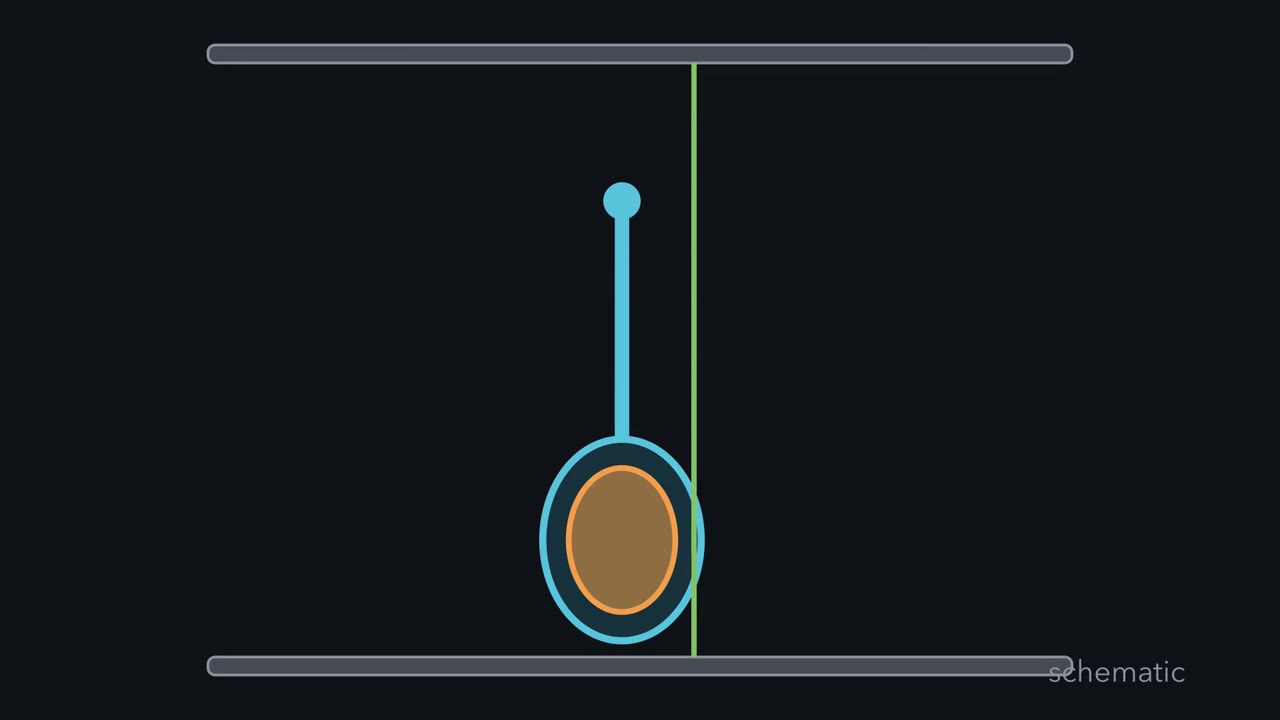
Which moves into it first, the centrosome or the nucleus? The centrosome goes first. Cells fixed at this moment show it ahead, and later movies of cortical neurons tracked it. Then the nucleus jumps forward. Here is the one idea. In the typical bipolar climb, the front goes first. The cell has moved only when its nucleus catches up. A tip can keep growing while the nucleus stays put. So track the nucleus against the tissue, not the tip. Count the steps of the nucleus. 6 micrometres a step, 4 steps an hour, gives 24 micrometres an hour.
Follow the nucleus, not the tip.
How does a newborn neuron cross a thick, crowded wall to reach its layer, and what brings its nucleus along?
Continue in the lesson: Radial Migration: Climbing the Glial Ladder →
2:40 · Free, with captions and a transcript. The lesson has the full text, the questions and the sources.
More films from this lesson
How this film was made. Narration: an AI narrator voice (Kokoro, af_heart) reading narration written from this lesson's text. Animation: AI-generated in code (Manim) by Claude, a schematic with no drawn molecular structures. Captions come from the narration script. See something wrong? Report it.