Films · Developmental Neuroscience
A Rank Against a Slope
Read the transcript of “A Rank Against a Slope”
Film transcript: A Rank Against a Slope
Turn a newt's eye upside down and let its nerve regrow. Why does it never learn to aim again? In 1943, Roger Sperry rotated the eyes of adult newts. He cut the optic nerve and let it regrow. When sight returned, a lure held above its head made it turn its head downward. If the fibres regrew at random and use then matched them, what should weeks of missed prey teach?
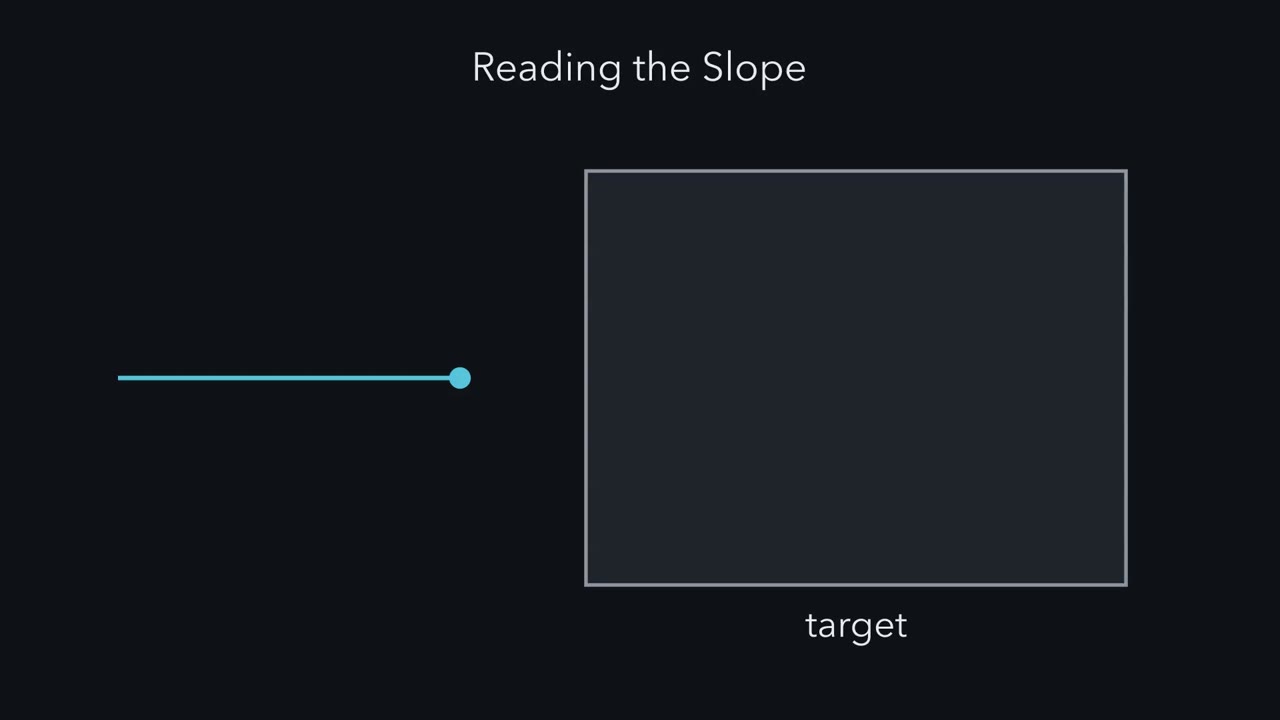
To aim correctly. It never learned. It kept making the mistake for as long as anyone watched. Sperry favoured the simplest reading: each regrown fibre went back to its old place in the brain. That place is part of a map. Neighbouring cells in the retina connect to neighbouring places in the target. Temporal retina, the side nearer the temple, maps to the front. Nasal retina maps to the back. A growth cone, the moving tip of an axon, senses only what is close. Yet the map spans the target. So how does an axon know where to stop? Three ways are possible. Labels: one matching tag for each cell and each target site. Gradients: a smooth slope in the amount of a molecule gives each position a value.
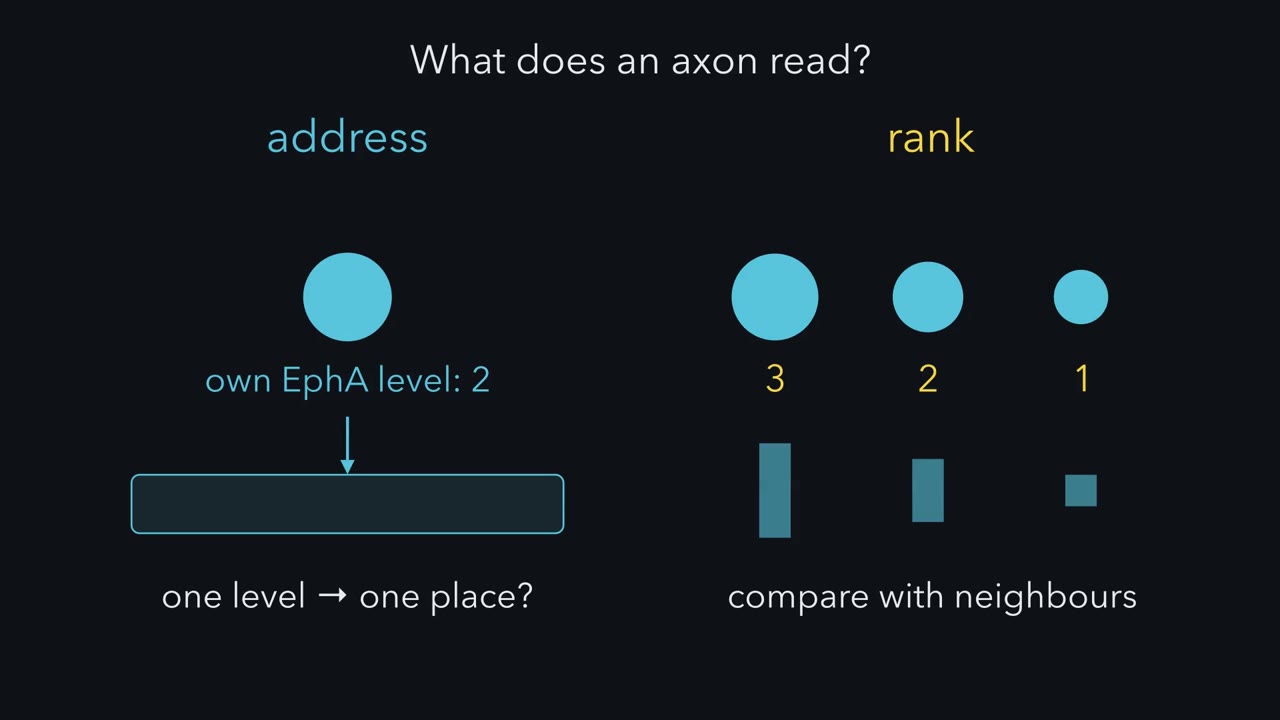
Neighbours: each axon places itself relative to the axons around it. In chick and mouse, the retina uses gradients and neighbours together. Each axon carries an amount of a receptor called EphA. The target carries a slope of a repellent, ephrin-A. The repellent is low at the front and high at the back. The axon with the most receptor ends where it is lowest. More receptor, less ligand. But where each axon lands also depends on the other axons.
The takeaway: an axon's place is not an address in its own receptor level. It is a rank, set against a slope.
Turn a newt's eye upside down, let the nerve regrow, and it turns its head down toward a lure held above it. Why does it not learn?
Continue in the lesson: Topographic Maps: Sperry's Eye and Eph Gradients →
2:16 · Free, with captions and a transcript. The lesson has the full text, the questions and the sources.
More films from this lesson
How this film was made. Narration: an AI narrator voice (Kokoro, af_heart) reading narration written from this lesson's text. Animation: AI-generated in code (Manim) by Claude, a schematic with no drawn molecular structures. Captions come from the narration script. See something wrong? Report it.