Films · Developmental Neuroscience
When Does the Tie Break?
Read the transcript of “When Does the Tie Break?”
Film transcript: When Does the Tie Break?
Two inhibitions make positive feedback. But is positive feedback always enough to split two equal cells? Predict. Give cell A 1 percent more Delta than B. Does the difference always come back larger? No. The difference must come back round the loop larger than it left. Follow it round. B's Notch activity rises, and B's Delta falls. Then A's Notch activity falls, and A's Delta rises. Each step passes the change on, multiplied by a factor. The steeper the step, the bigger the factor. Multiply the factors all the way round. That product is the round-trip factor. Take Collier and colleagues' 1996 model. With steep responses, the 1 percent comes back as nearly 6 The difference grows, and the pair splits.
With shallow responses, the same 1 percent comes back as about 0.14 percent. The difference fades. The two cells stay alike, however long you wait. These numbers come from a model. They are illustrative, not measurements. On a steep loop, an even pair is like a pencil balanced on its point. The slightest tip grows. There are two stable outcomes: A neural, or B neural. A system like this is called bistable. It has two stable outcomes, and the even state between them is unstable. On a shallow loop, the pair is a marble in a bowl. Push it, and it rolls back to the middle. Does the size of the first difference matter much? In this example, a start ten times smaller delays the split by about a third.
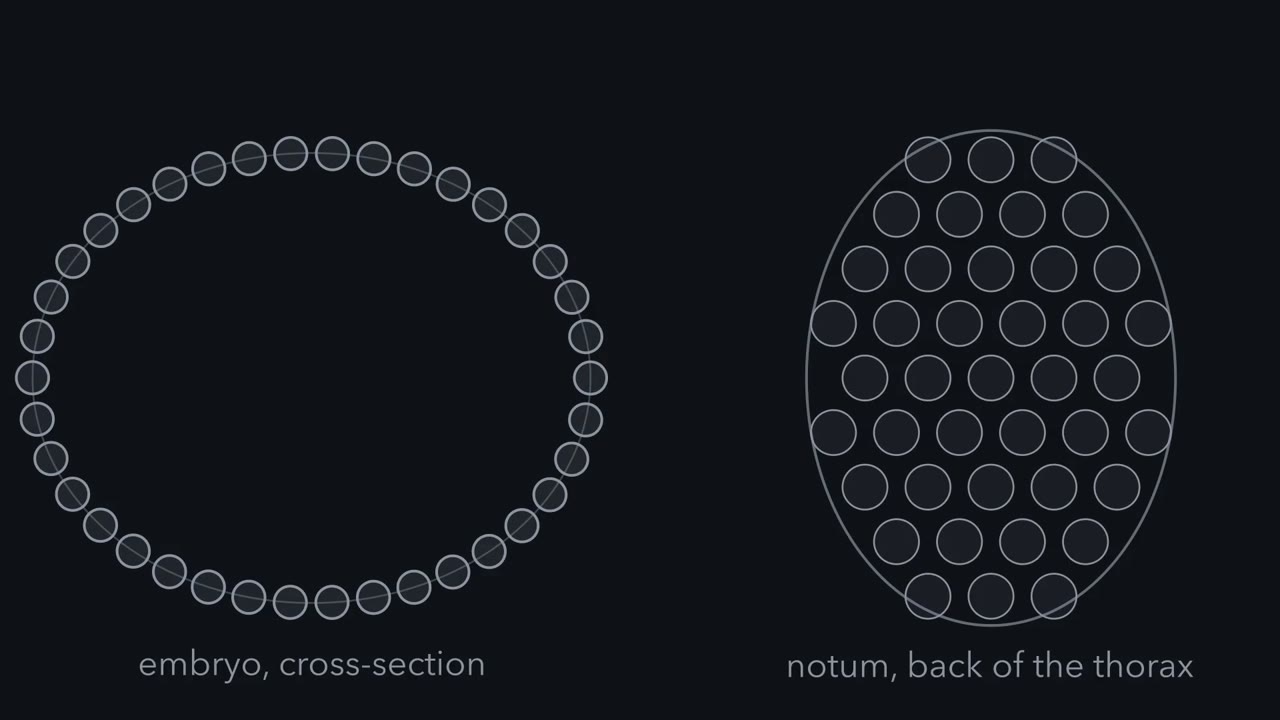
So on a steep loop, ordinary noise can start the split. Near the threshold, though, the wait grows long. Now put the cell in a sheet. It hears the average of its six neighbours, so one neighbour's change is diluted. In the model, a pair splits when the round-trip factor is above 1. An ideal hexagonal sheet needs it above 4. When such a sheet splits from a nearly even start, about one cell in three typically wins. That is a spaced pattern, not a guaranteed winner per cluster. Real tissues add help: a head start, a longer reach, or timing.
The notum has a head start. Its proneural levels are already uneven, so precursors arise at reproducible spots. Try the grid in the lesson. Its feedback scale is its own, not the model's. Turn the strength up to about 4 or more and step time forward, and a spaced pattern appears. Between two equal cells, the tie breaks only on a steep loop. A small difference must come back larger than it left.
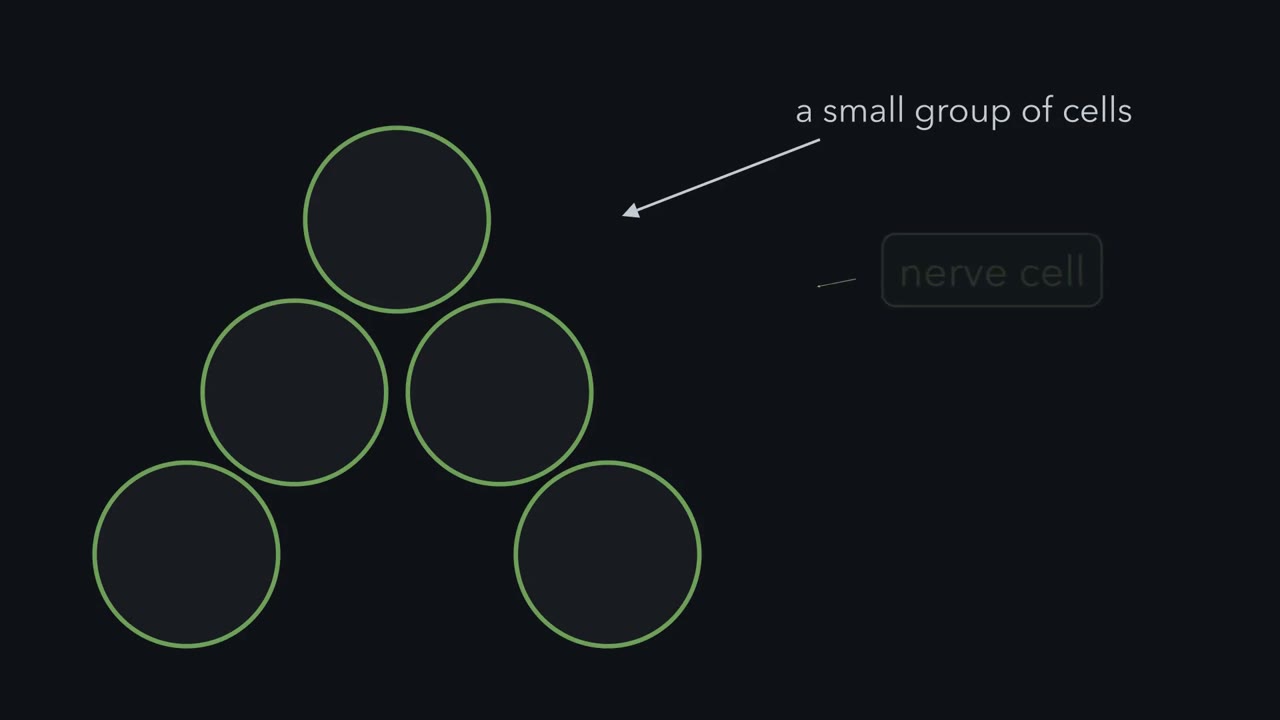
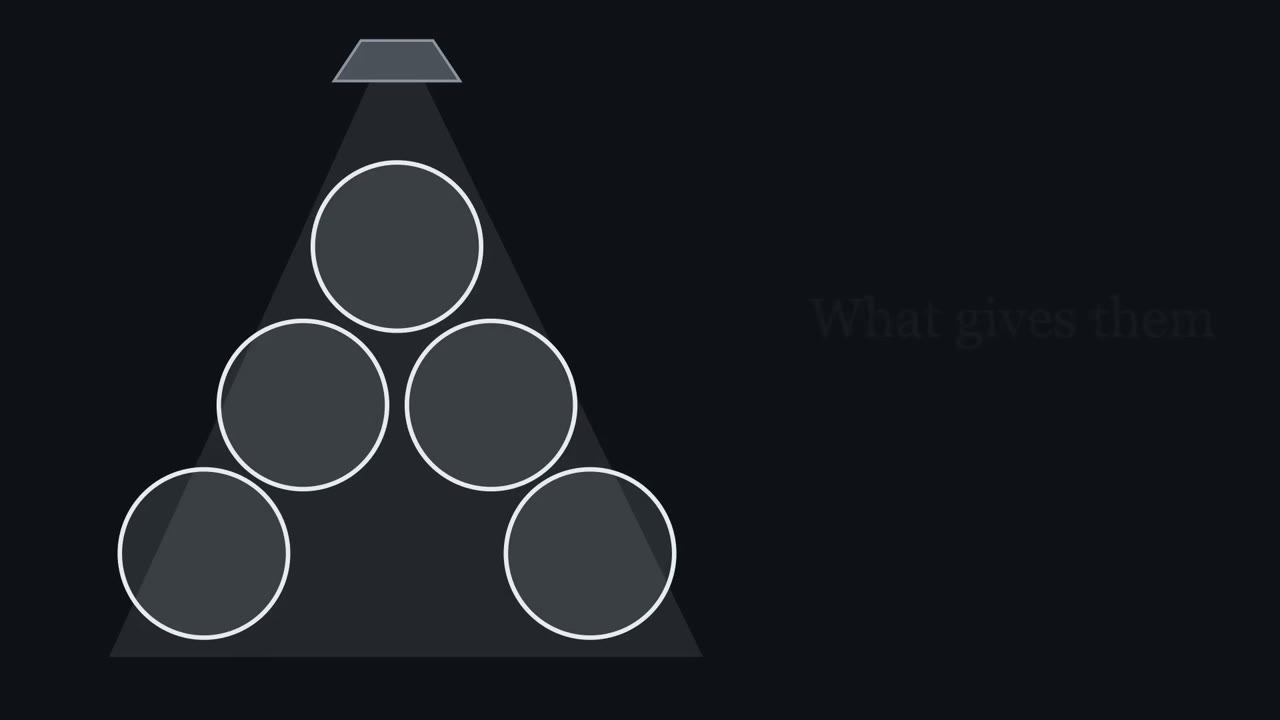
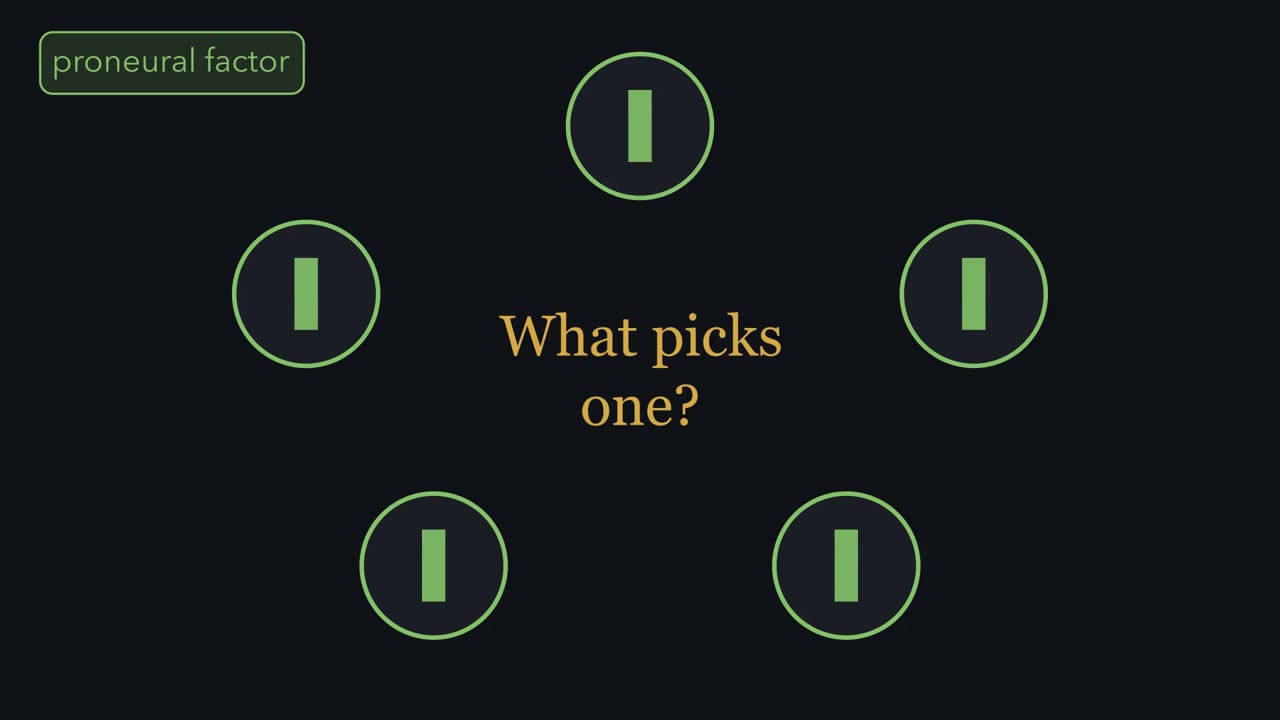
Every cell in the cluster could become the neuron. Why does only one?
Continue in the lesson: Proneural Genes and Lateral Inhibition →
3:06 · Free, with captions and a transcript. The lesson has the full text, the questions and the sources.
More films from this lesson
How this film was made. Narration: an AI narrator voice (Kokoro, af_heart) reading narration written from this lesson's text. Animation: AI-generated in code (Manim) by Claude, a schematic with no drawn molecular structures. Captions come from the narration script. See something wrong? Report it.