Films · Developmental Neuroscience
Too Small, or Lost?
Read the transcript of “Too Small, or Lost?”
Film transcript: Too Small, or Lost?
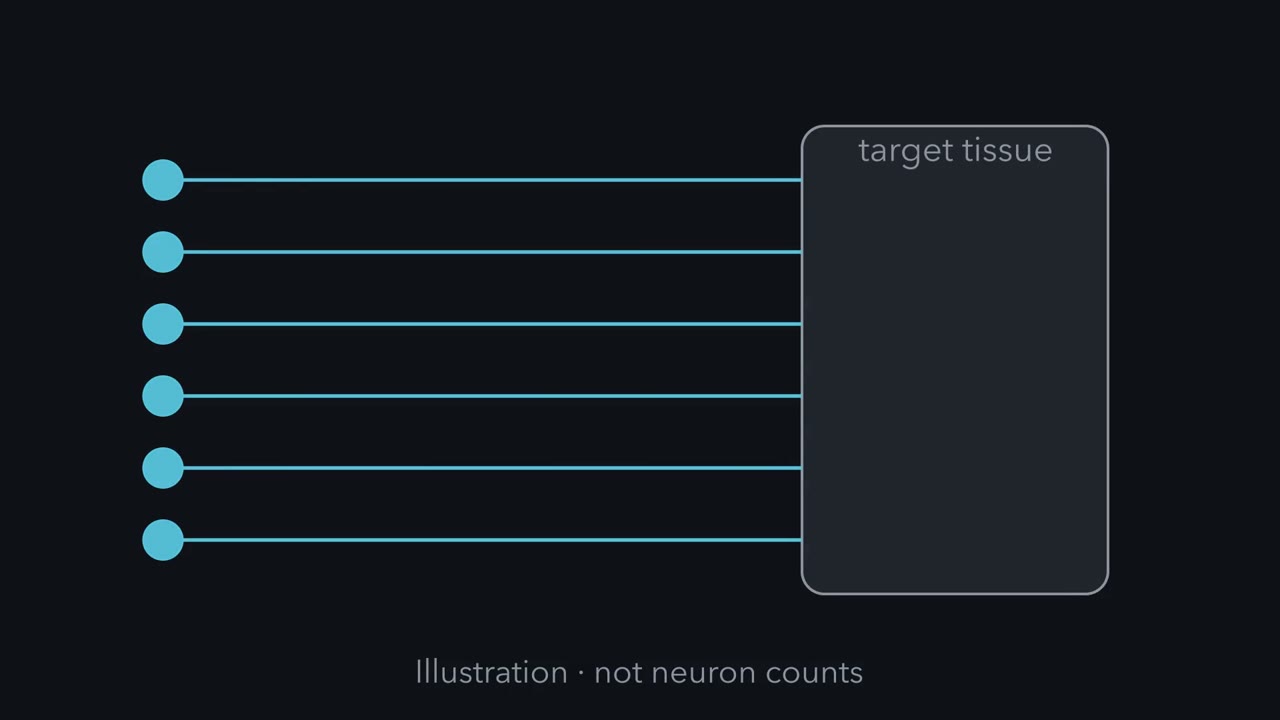
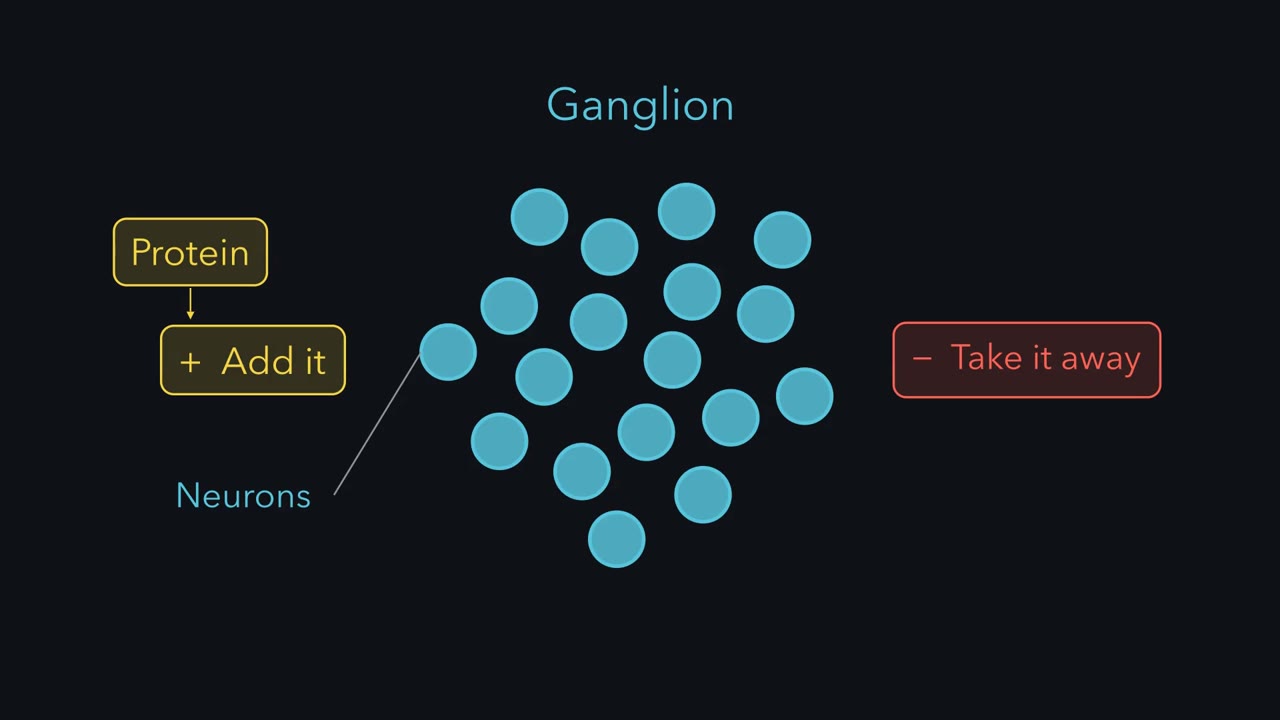
Remove one wing bud from a chick embryo. The neurons serving that limb come out fewer. Were they never made? Or were they made, and then lost? First, two words. A target is the tissue an axon grows to and connects with, such as a limb muscle or a gland. A ganglion is a cluster of neuron cell bodies outside the brain and spinal cord. Spinal ganglia sit beside the cord and hold sensory neurons. Sympathetic ganglia hold neurons of the sympathetic nervous system. In 1934, Viktor Hamburger removed one wing bud from chick embryos about three days old. On the operated side, the neurons serving that limb came out reduced.
Hamburger first read this as the limb controlling how many cells grew in the spinal cord and its ganglia. But one count at the end hides a choice. A small ganglion has two possible histories. Predict. What are the two histories? And what would you measure to tell them apart?
Fewer neurons might have been made. Or the normal number might have been made, and then lost. Both give a small ganglion at the end. To separate them, you count at a series of stages. You also mark the cells that are dividing, and the cells that are dying. In 1949, Hamburger and Rita Levi-Montalcini did exactly that, in chick spinal ganglia. They followed the ganglia stage by stage, after removing or adding limb tissue. Many neurons formed and grew fibres before the deficit appeared. Degenerating cells became conspicuous later. The neurons had been made. Then they were lost.
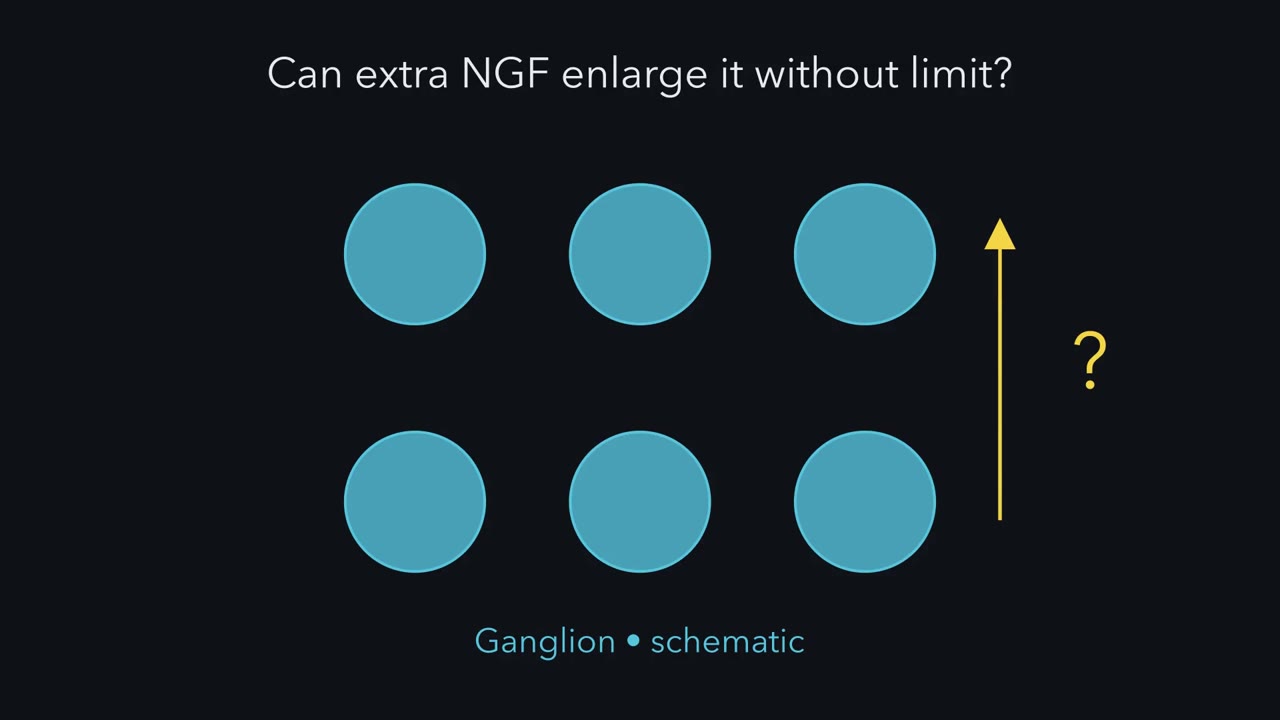
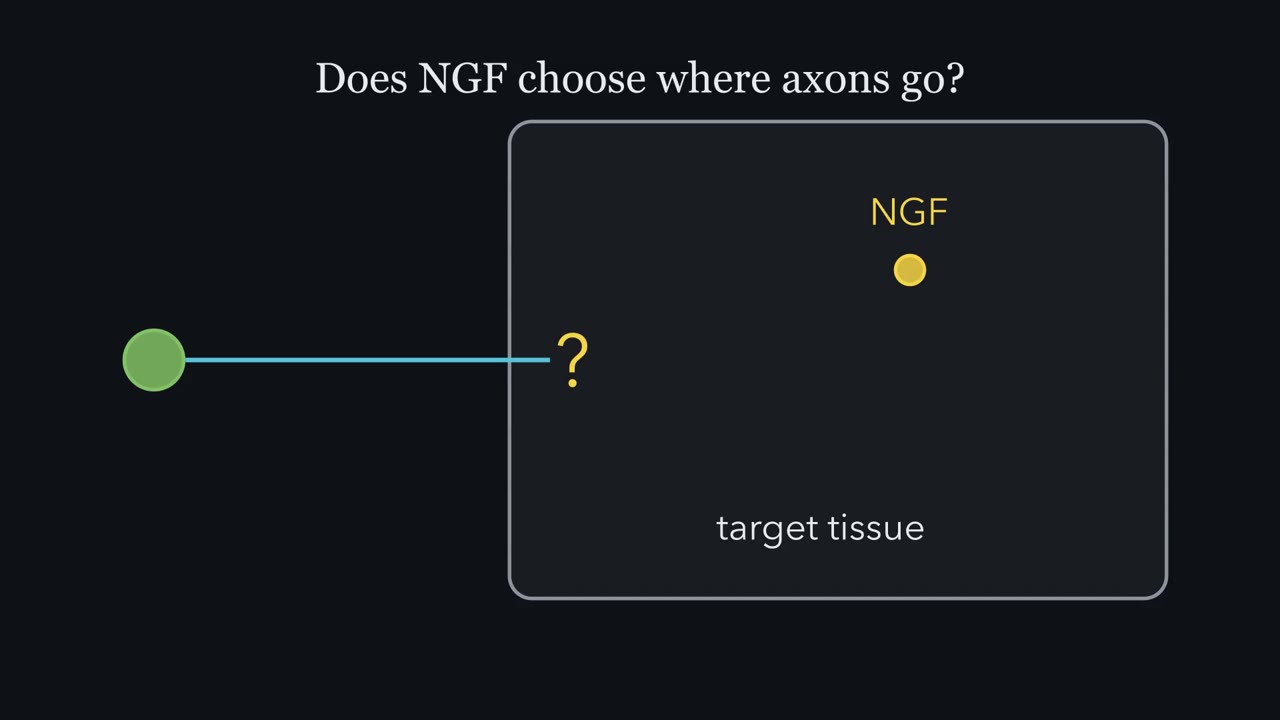
So the limb seemed to keep neurons alive. It was not only calling them into existence. Three conclusions follow. First, neurons are made in excess, and then lost. Second, whether they are kept depends on the target. Third, the target must supply something neurons need. If it supplies too little for all of them, they must in effect compete. Neither the something nor the competition had been shown. They were inferences. The neurotrophic hypothesis would have to earn them, one test at a time. Here is the one idea to carry through. Make too many, then let the target keep what it can feed. The test case is nerve growth factor, NGF. Acting as a survival factor, it decides how many neurons made stay alive.
It can never raise that number above the number made. So a small ganglion is a question about history. Count across time before you decide.
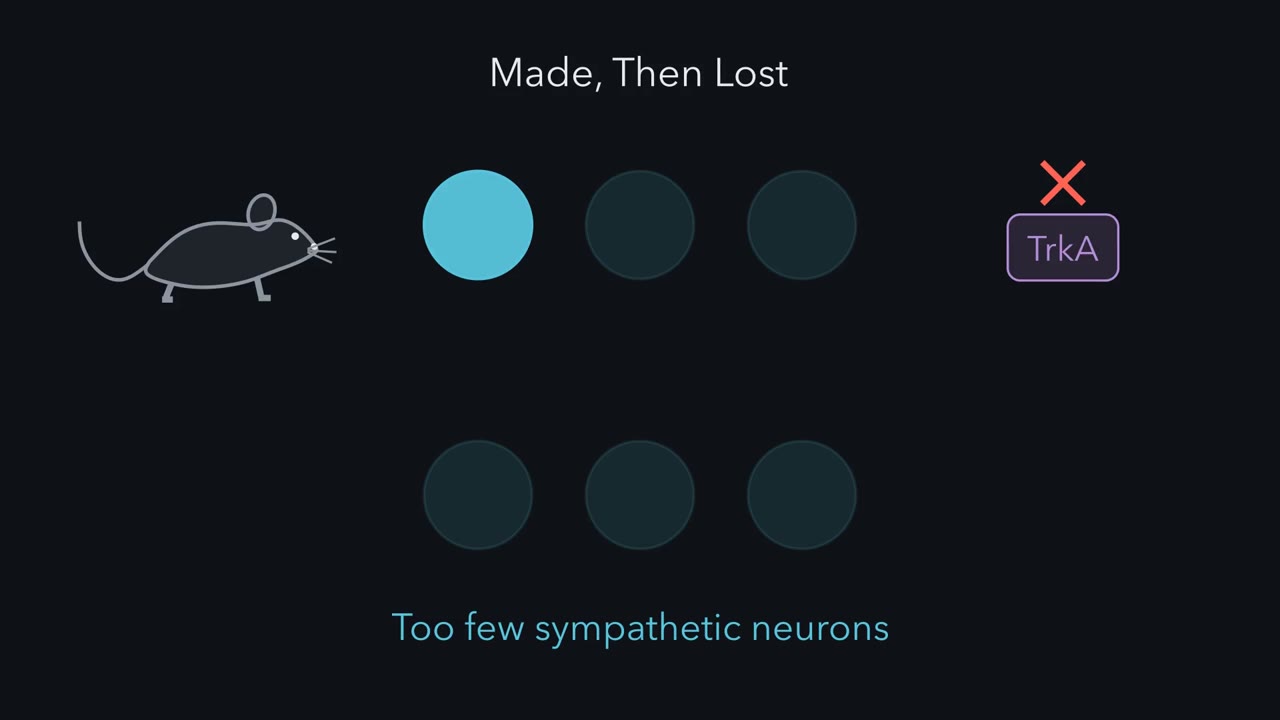
Neutralize one protein in a newborn mouse and its sympathetic ganglia waste away. Neurons compete for a limiting amount of target-derived factor, and the amount limits how many live. Does NGF decide how many neurons there are?
Continue in the lesson: The Neurotrophic Hypothesis Tested →
2:56 · Free, with captions and a transcript. The lesson has the full text, the questions and the sources.
More films from this lesson
How this film was made. Narration: an AI narrator voice (Kokoro, af_heart) reading narration written from this lesson's text. Animation: AI-generated in code (Manim) by Claude, a schematic with no drawn molecular structures. Captions come from the narration script. See something wrong? Report it.