Films · Developmental Neuroscience
A Tag and a Reader
Read the transcript of “A Tag and a Reader”
Film transcript: A Tag and a Reader
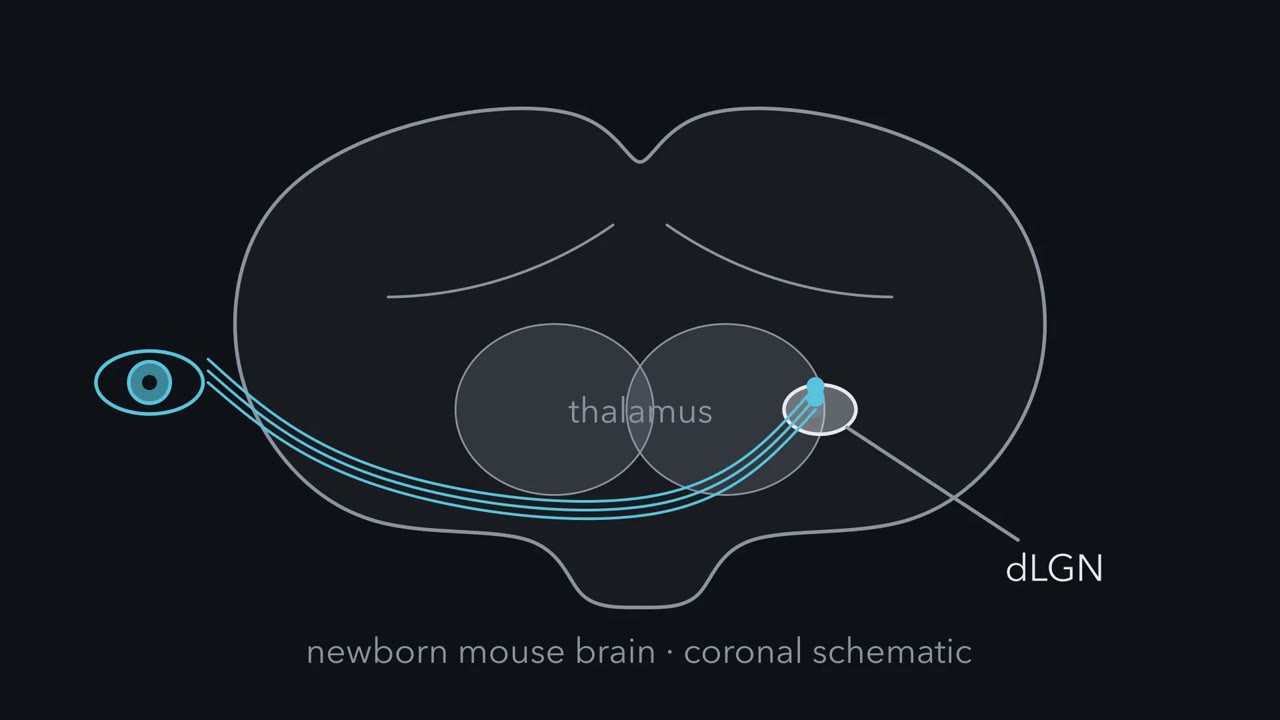
How does an immune protein mark something to be eaten? And does the young brain use the same trick? In the blood, complement marks targets for eating cells. Three steps matter here. Step one. C1q binds. It is shaped like a bunch of six tulips, and each head can grip a surface. Step two. Enzymes in the C1q complex cut two more proteins. Their pieces build an enzyme that cuts C3. C3 splits in two. The large piece, C3b, can fix itself to the nearby surface. Step three. C3b is trimmed to iC3b. Complement receptor 3, on an eating cell, binds it, which promotes engulfment. Now to neurons. Beth Stevens, in Ben Barres's laboratory, grew purified retinal ganglion cells with astrocytes in a dish.
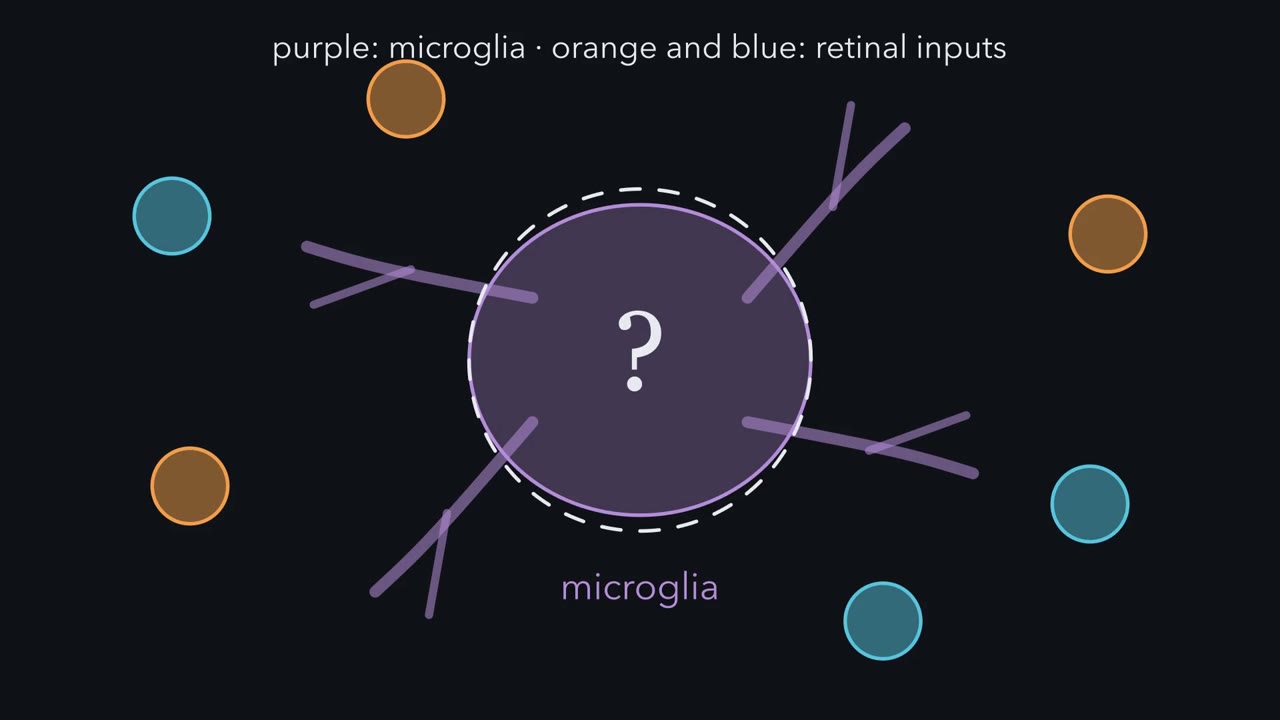
The neurons raised their C1q. In the young mouse visual thalamus, C1q and C3 lay at developing synapses. One caution. Neurons can make C1q, but most brain C1q comes from microglia. Which cell supplies it at these synapses is not settled. Predict. If complement helps remove losing inputs, what should a mouse without C1q look like?
The two eyes' territories failed to refine normally. They still overlapped more than in normal littermates. Single relay neurons agreed. Most knockout cells still received several inputs, where normal cells had few. Mice lacking C3 showed a similar overlap.
What this shows: complement is needed for normal refinement in this circuit. What it does not show: which synapse got a tag, what read it, or which cell carried the input away. So the knockouts point to a tag. The next step is to catch the eater in the act.
Why can a developing neuron make the first protein of an immune cascade that marks bacteria for destruction?
Continue in the lesson: Microglia and Complement Prune Synapses →
2:18 · Free, with captions and a transcript. The lesson has the full text, the questions and the sources.
More films from this lesson
How this film was made. Narration: an AI narrator voice (Kokoro, af_heart) reading narration written from this lesson's text. Animation: AI-generated in code (Manim) by Claude, a schematic with no drawn molecular structures. Captions come from the narration script. See something wrong? Report it.