The Lock
Read the transcript of “The Lock”
Film transcript: The Lock
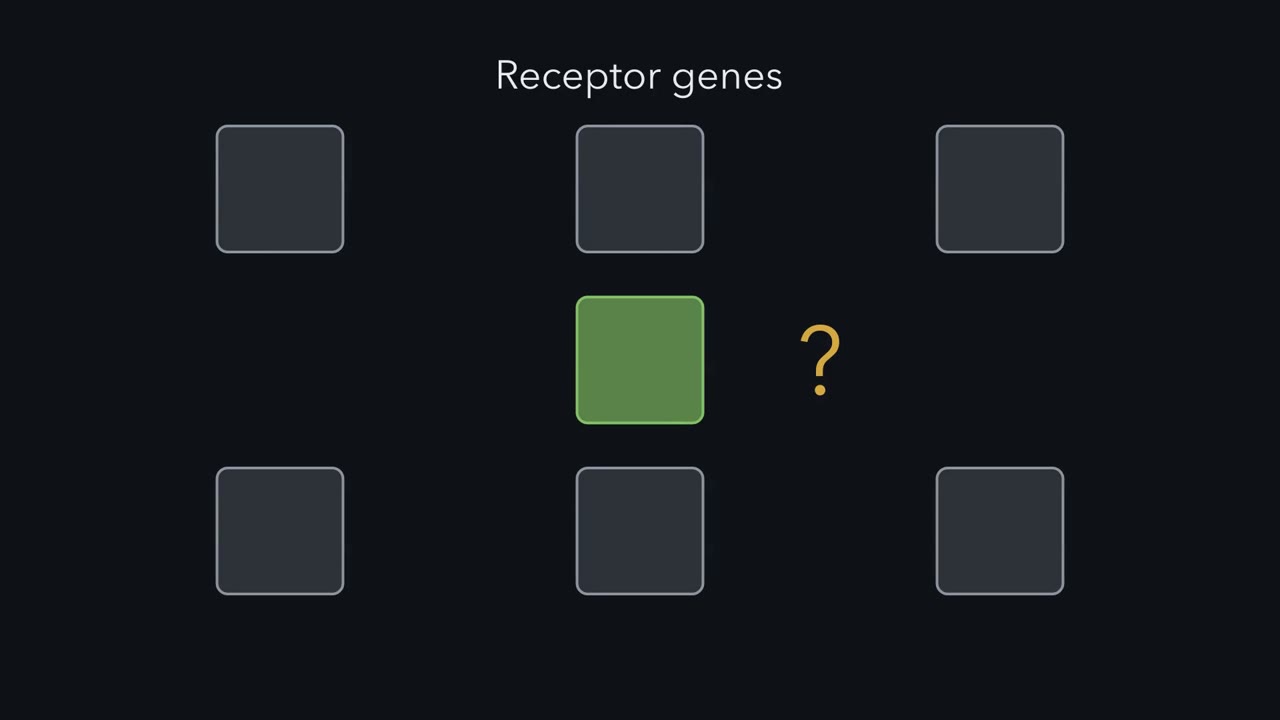
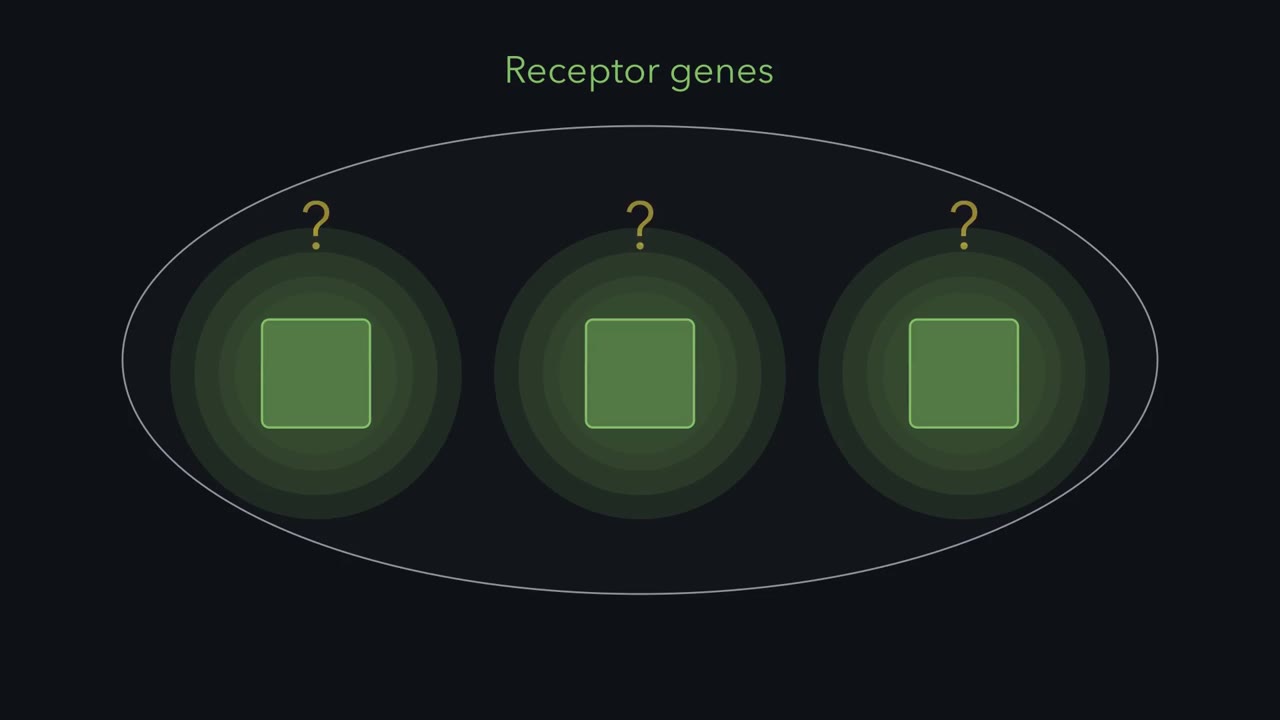
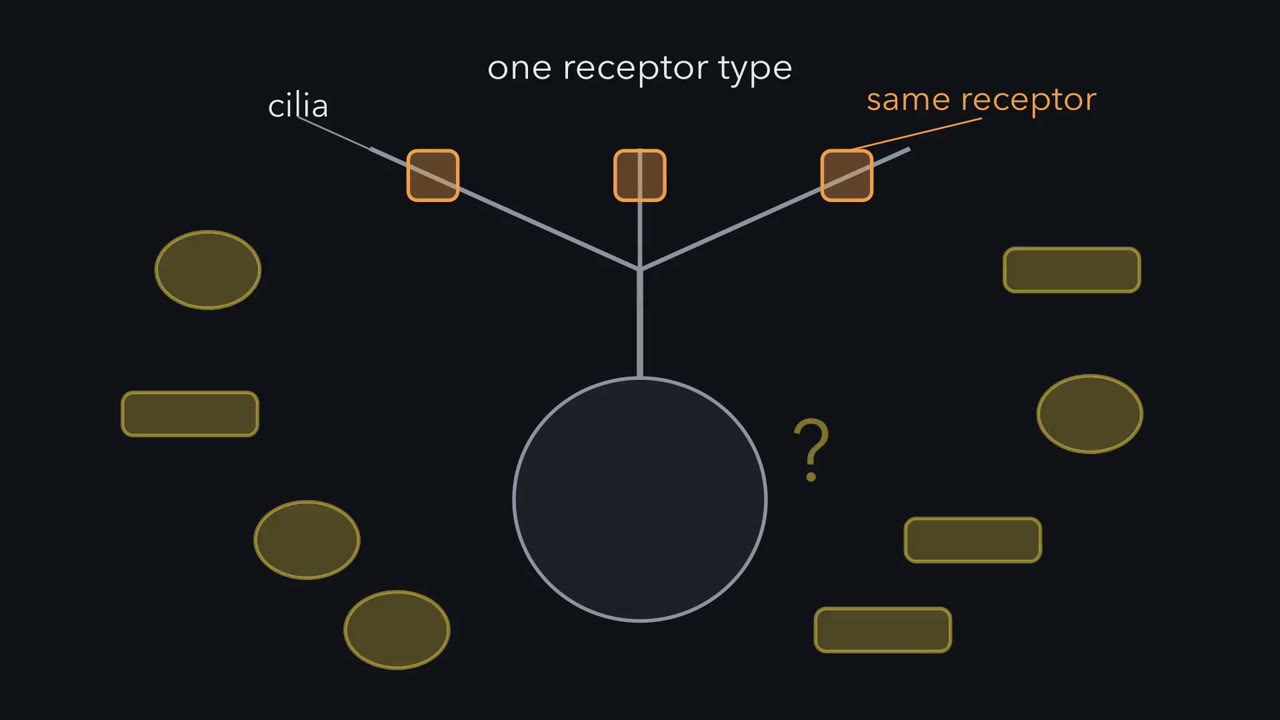
One gene has prevailed at its hub. What keeps that choice stable, so no new gene escapes later? Competition helps one gene prevail. Holding the choice is a different question. Part of the answer is the lock. In the model, the receptor the winning gene makes closes it. So what should a neuron do if its chosen gene cannot make a working receptor?
In the model, the lock does not close, so the neuron should choose again. It does. Such neurons often express a second receptor gene. The converse agrees. Neurons given a working receptor transgene early rarely express their own receptor genes. So the lock depends on receptor protein. Dalton, Lyons and Lomvardas traced the lock to the unfolded protein response. That is how a cell reacts to misfolded protein in its endoplasmic reticulum. Step one is the alarm. Receptor expression engages the response. Step two is the relay. PERK-dependent phosphorylation of eIF2α slows most translation but favours a few messages. One favoured message makes the transcription factor ATF5.
Step three is the order. ATF5 turns on the gene for adenylyl cyclase 3. Step four has two effects. The cyclase helps turn down Lsd1, the candidate key. With the key withdrawn, later escapes become unlikely. The cyclase also relieves the stress, so the alarm switches itself off.
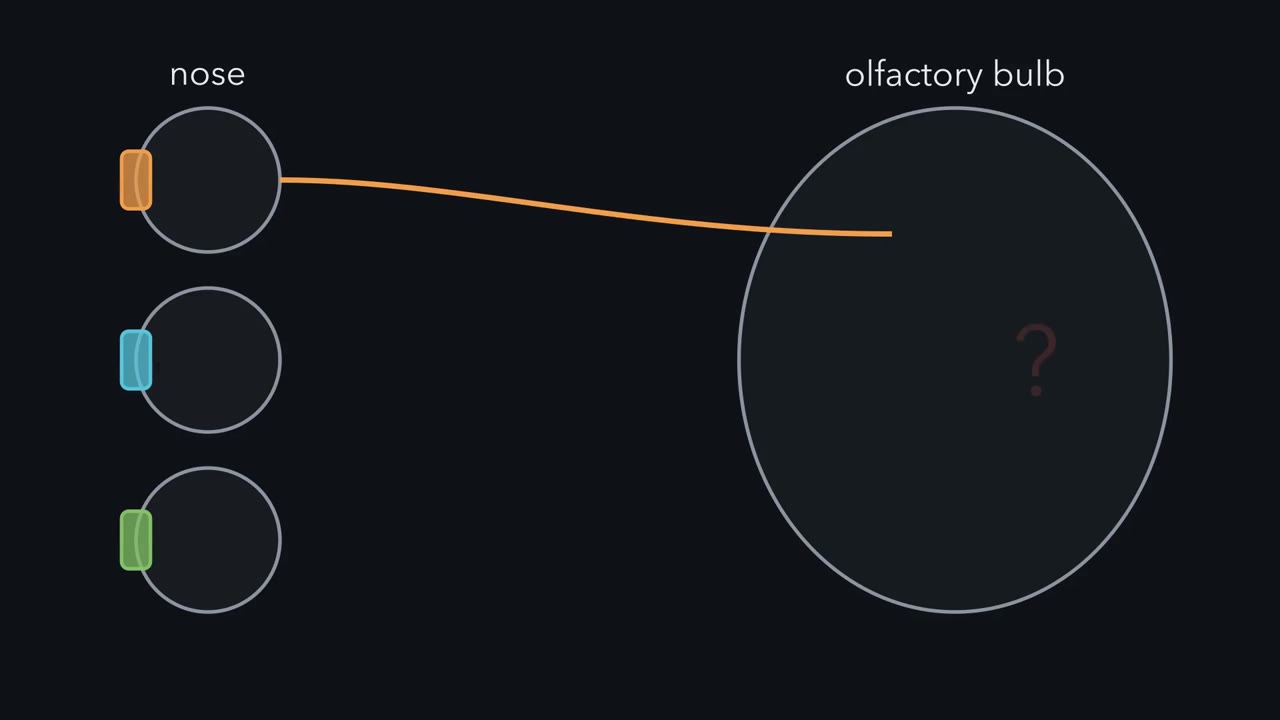
The lock works on top of the earlier silence, and alongside the RNA step that quiets rivals. Experiments in mutant mice put these steps in order. They do not show how a receptor activates PERK. This cyclase also carries odour signals in the cilia. But in this model, receptor protein sets the lock. You can look at each neuron only once. How could you tell it had switched receptors?
Leave a permanent mark. In lineage tracing, a recombinase made from one receptor's locus marks the neuron for good. A marked neuron that now expresses a different receptor has switched. In two-day-old pups lacking the cyclase, the ratio of singly to doubly labelled neurons was about twice the control. That points to a less stable choice. Was the cyclase step slowed, or lost? This ratio alone cannot tell. A lock need not be perfect. Other steps, such as the RNA competition, may still limit expression. So receptor protein sets off a stress relay that turns down the key. That helps lock in the winner.
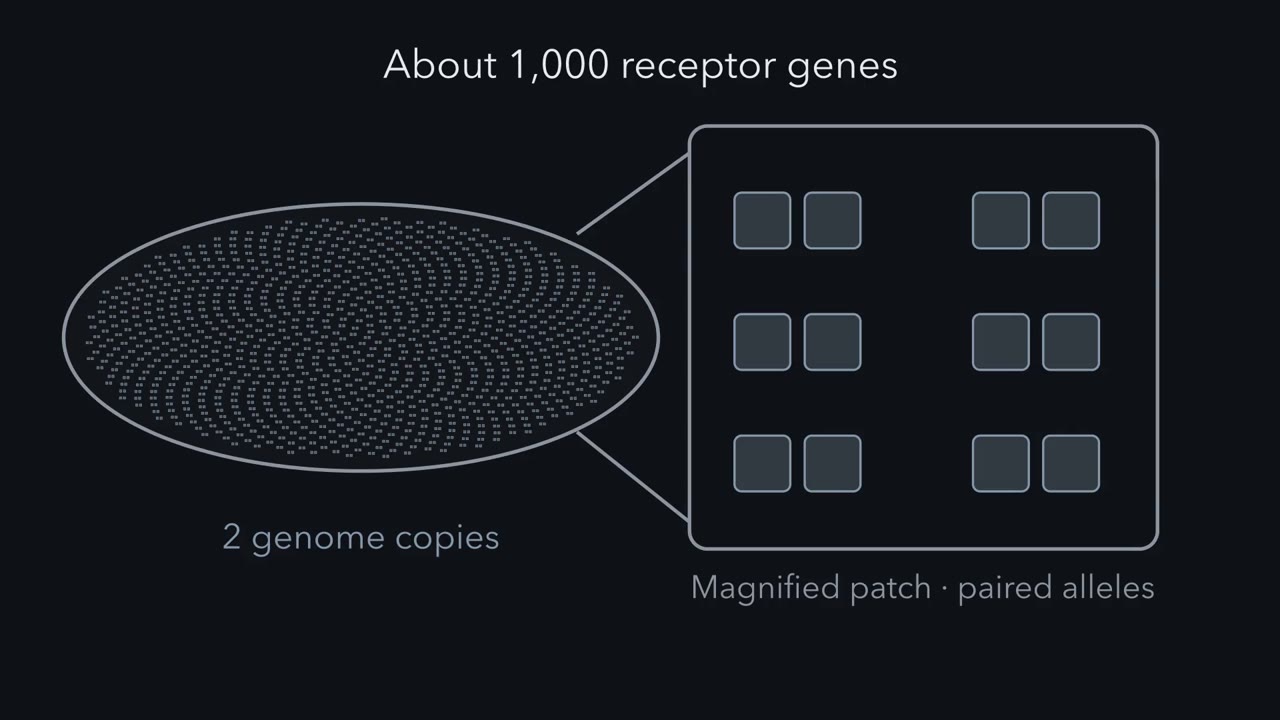
A mouse olfactory neuron holds about a thousand receptor genes and uses one copy of one. How does it choose, and what keeps it from changing its mind?
Continue in the lesson: One Receptor per Neuron: How Olfactory Neurons Choose →
3:19 · Free, with captions and a transcript. The lesson has the full text, the questions and the sources.
More films from this lesson
How this film was made. Narration: an AI narrator voice (Kokoro, af_heart) reading narration written from this lesson's text. Animation: AI-generated in code (Manim) by Claude, a schematic with no drawn molecular structures. Captions come from the narration script. See something wrong? Report it.