Films · Developmental Neuroscience
How the Neuroblast Picks a Side
Read the transcript of “How the Neuroblast Picks a Side”
Film transcript: How the Neuroblast Picks a Side
The bristle showed what an inherited protein does. But how does a cell put it on one side? The fly neuroblast is where that machinery was worked out. A clue came in 1995. Prospero is a transcription factor, a protein that works in the nucleus. Yet Jürgen Knoblich and the Jans found it at the membrane in dividing cells, in the same crescent as Numb. Its position followed one centrosome, but it did not need microtubules. So it was not carried into place along the spindle. That pointed to a separate system in the cortex that marks one side of the cell. It works in four steps. Step one. Mark the top. Bazooka, the fly's Par3, gathers at the top cortex.
Par6 joins it. So does a kinase called aPKC. Together they define the top side. Step two. Aim the spindle. Inscuteable joins the top complex. Inscuteable recruits a protein called Pins. Pins works with a G protein subunit, Gαi, and a protein called Mud. Together they anchor the motor dynein at the top. Dynein pulls on microtubules from one spindle pole. So the spindle lines up from top to bottom. The furrow will cut between top and bottom. Inscuteable is needed both to aim the spindle and to place Numb and Prospero correctly.
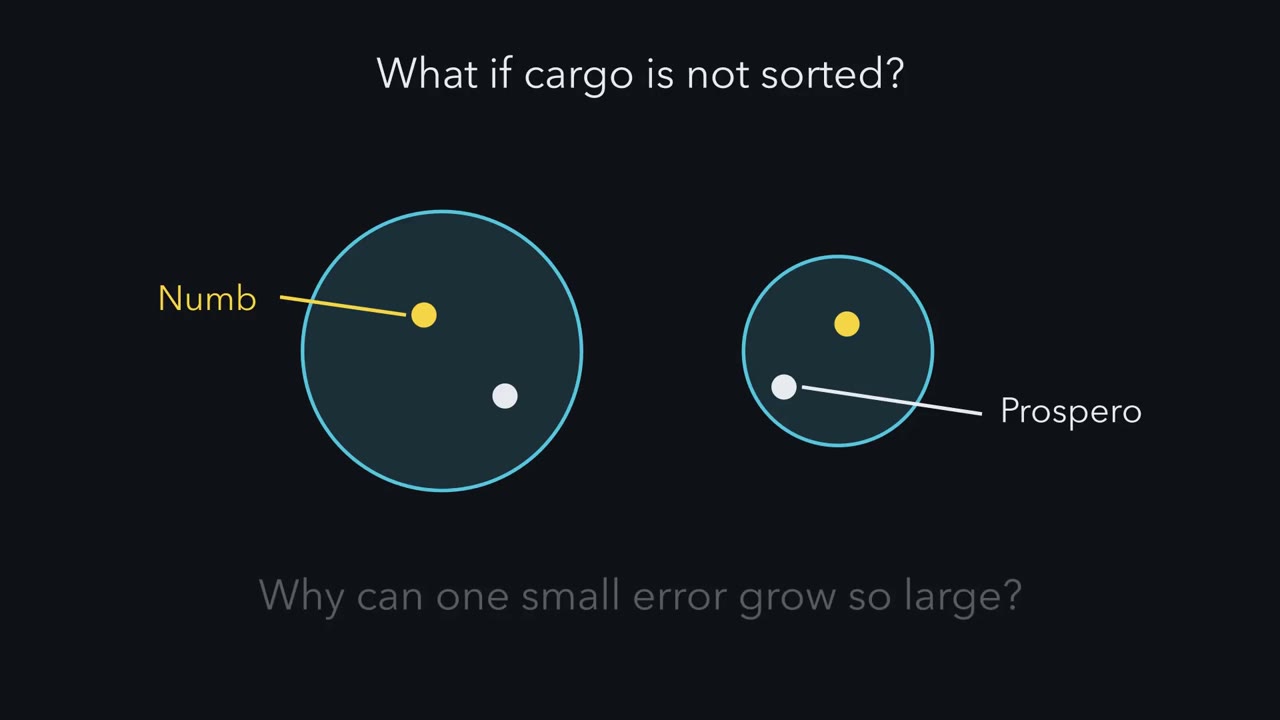
Step three. Keep the cargo off the top. At the top, aPKC phosphorylates Lgl, Numb and Miranda. Phosphorylated proteins let go of the cortex. And a P K C works only at the top. So Numb and Miranda stay bound only at the bottom cortex. L G L is a helper here, not cargo. Step four. Carry the cargo. The adaptor Miranda carries Prospero, and the translational repressor Brat. Numb uses its own adaptor, Partner of Numb. The cell divides. The small daughter, the ganglion mother cell, inherits the cargo. Prospero enters its nucleus and shuts down genes for self-renewal and division. Now remove Miranda. Where do Prospero and Brat go? What happens over many divisions?
They lose their crescent at the bottom cortex. Where they end up depends on the stage and the lineage. Larval miranda mutant tissue overgrows when transplanted. Faulty sorting can let small daughters keep dividing like neuroblasts.
The sensory organ precursor divides within its epithelium. The neuroblast divides across it. But both mark one side and aim the spindle at it. Mark the top, aim the spindle, keep the cargo off the top, and load the small daughter.
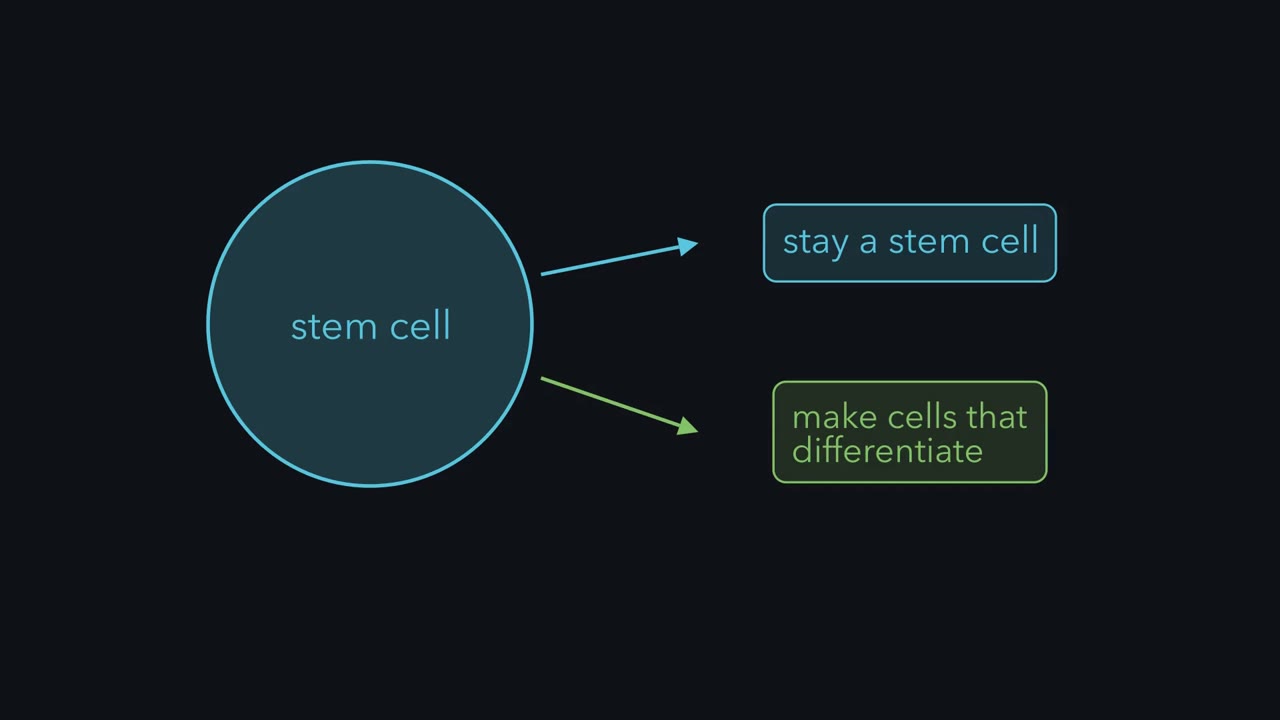
A stem cell has to keep making new cells and also keep itself. How does one cell divide into two sisters that are different from the moment they are born?
Continue in the lesson: Asymmetric Division: Numb and the Neuroblast →
3:21 · Free, with captions and a transcript. The lesson has the full text, the questions and the sources.
More films from this lesson
How this film was made. Narration: an AI narrator voice (Kokoro, af_heart) reading narration written from this lesson's text. Animation: AI-generated in code (Manim) by Claude, a schematic with no drawn molecular structures. Captions come from the narration script. See something wrong? Report it.