Films · Developmental Neuroscience
Too Little to Go Around
Read the transcript of “Too Little to Go Around”
Film transcript: Too Little to Go Around
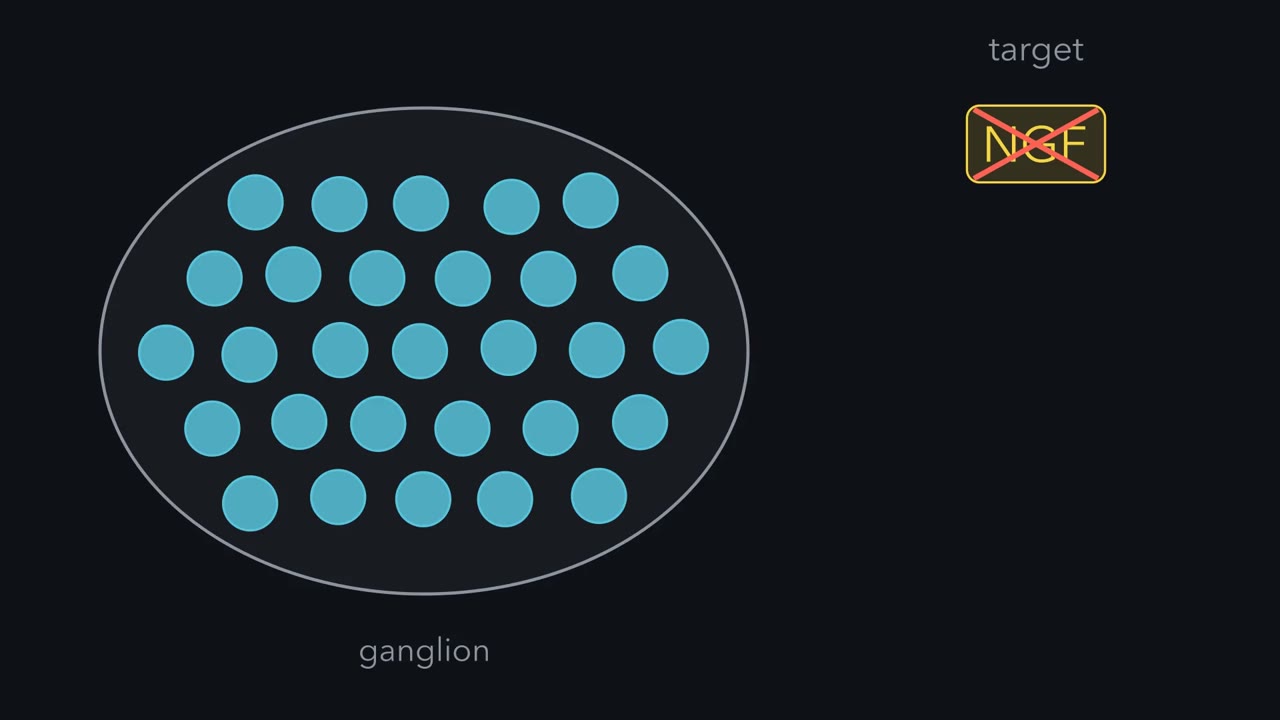
A target makes too little NGF for every neuron that reaches it. So which neurons get to live? Start with what you already know. Sympathetic neurons live in small clusters of nerve cells called ganglia. They send axons to targets such as the eye, the salivary gland and the heart. Those targets release nerve growth factor, NGF. The target makes it, not the neurons. Neurons that get enough NGF live. Those that do not die through a pro-death gene called Bax. This is normal development, not damage. In many developing populations, roughly half the neurons die. The neurotrophic hypothesis puts it in one line. Neurons compete for a limiting amount of neurotrophic factor for survival.
Change the target, and the count follows. Give a chick embryo an extra limb, and fewer motor neurons on that side die. So the size of the target sets roughly how many neurons can win. But the hypothesis only says there is a contest. It does not say how the contest is decided. It also leaves a second question open. How does the outcome set the fit between a target and its neurons? The answer here comes from one cell type. Sympathetic neurons of the mouse superior cervical ganglion. That ganglion sits in the neck and supplies the head. Some experiments used cultured rat neurons. Make a guess before going on. If a target can feed only some neurons, what decides which ones?
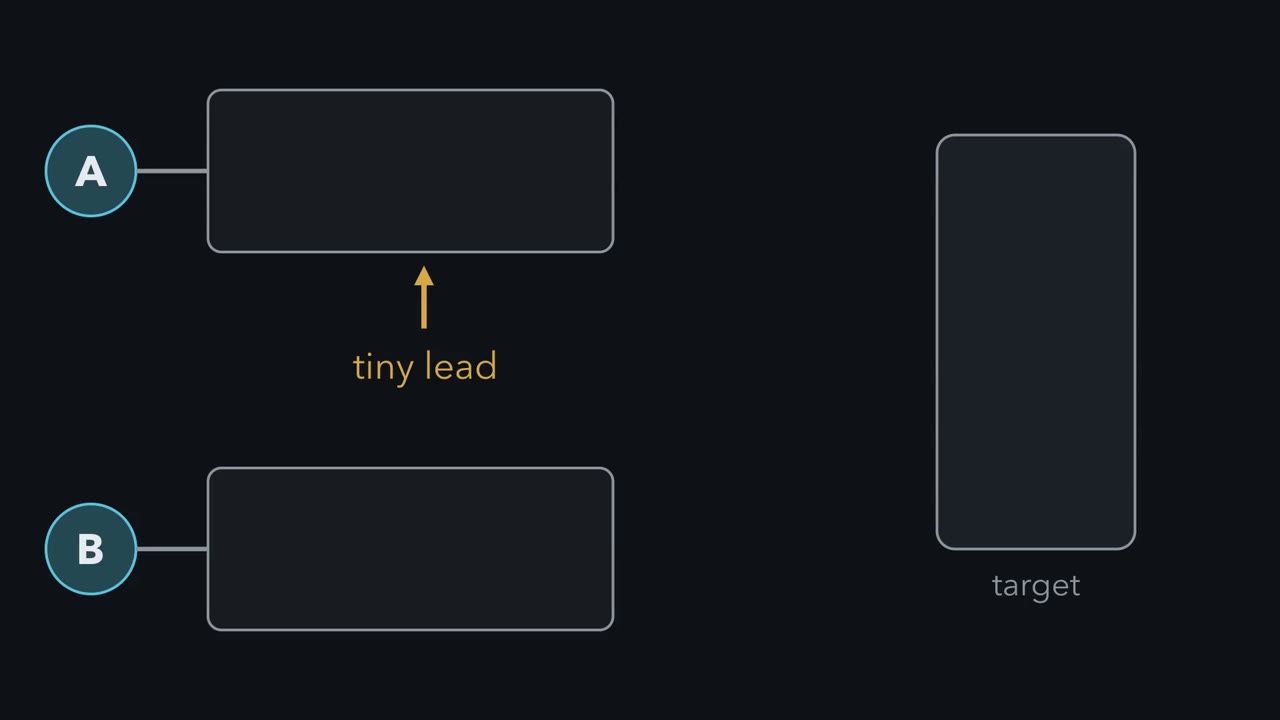
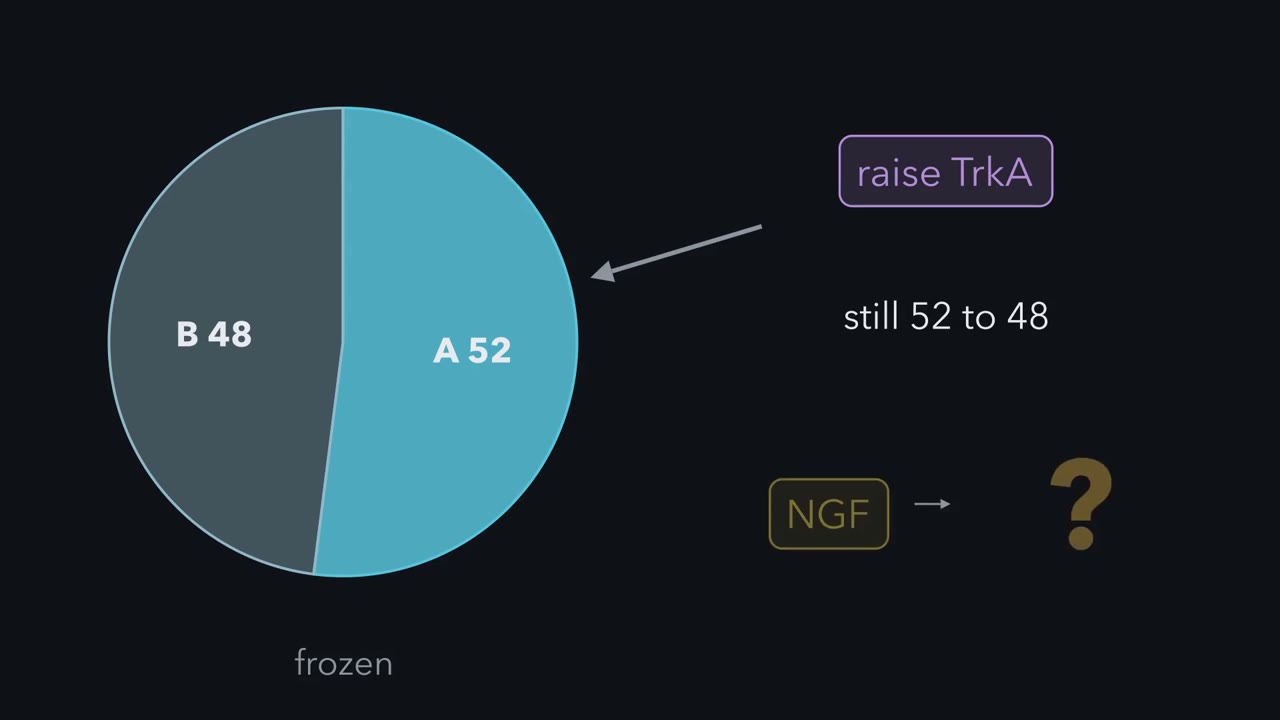
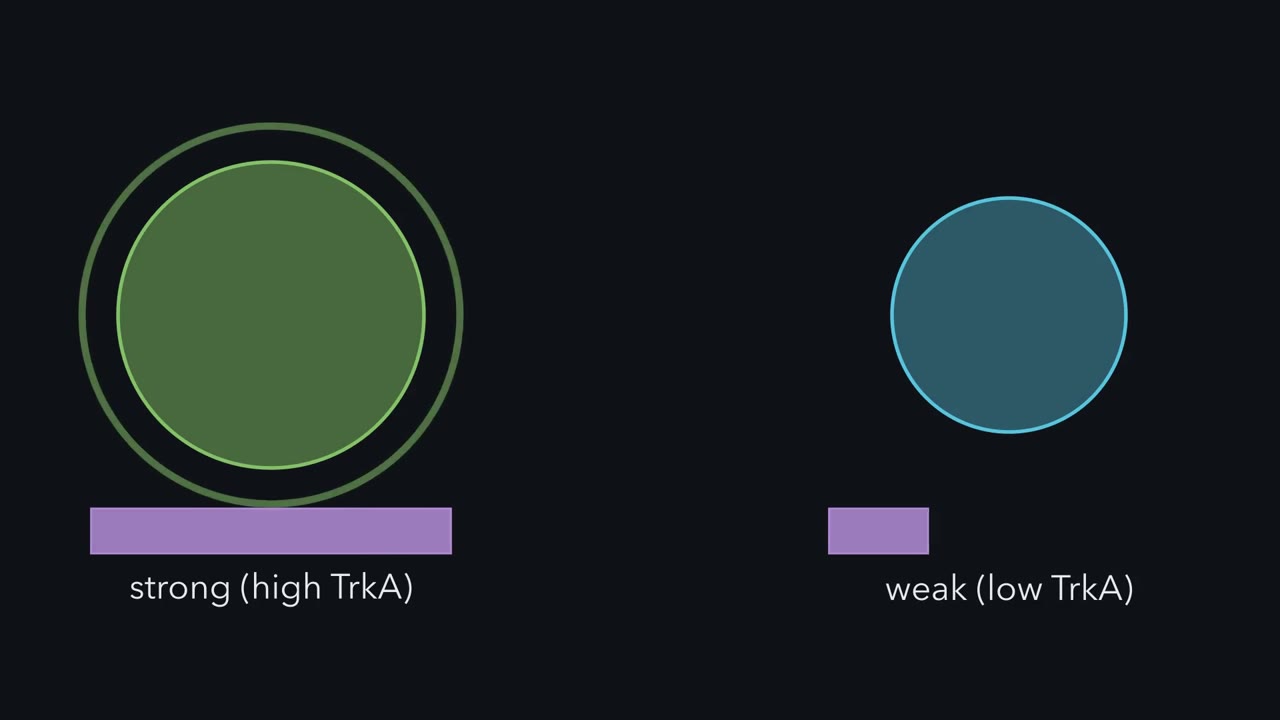
Here is the idea this lesson builds. The target sets how many. The neurons decide which. Take neurons that are otherwise alike. A small lead can grow only if its signal rises faster than in proportion. In the published simulations, NGF raised its receptor, TrkA, and lengthened each TrkA signal, and both were needed for the neurons to separate. In the proposed model, winners then speed the death of losers, through a receptor called p75. The rule has limits. It does not say where a neuron's first small lead comes from. Arriving early, branching more or sitting closer are all candidates. The rule amplifies a head start. Faster than in proportion is needed, not enough: steady basal synthesis pulls neurons back together.
And the rule does not cover chick motor neurons. They draw on several factors at once. Takeaway. A limited supply sets roughly how many survive. The neurons' own feedback decides which ones.
If the target makes too little NGF for every neuron, which neurons get to live?
Continue in the lesson: Competition: How Neurons Win a Target →
3:00 · Free, with captions and a transcript. The lesson has the full text, the questions and the sources.
More films from this lesson

How this film was made. Narration: an AI narrator voice (Kokoro, af_heart) reading narration written from this lesson's text. Animation: AI-generated in code (Manim) by Claude, a schematic with no drawn molecular structures. Captions come from the narration script. See something wrong? Report it.