Films · Developmental Neuroscience
What Makes a Winner
Read the transcript of “What Makes a Winner”
Film transcript: What Makes a Winner
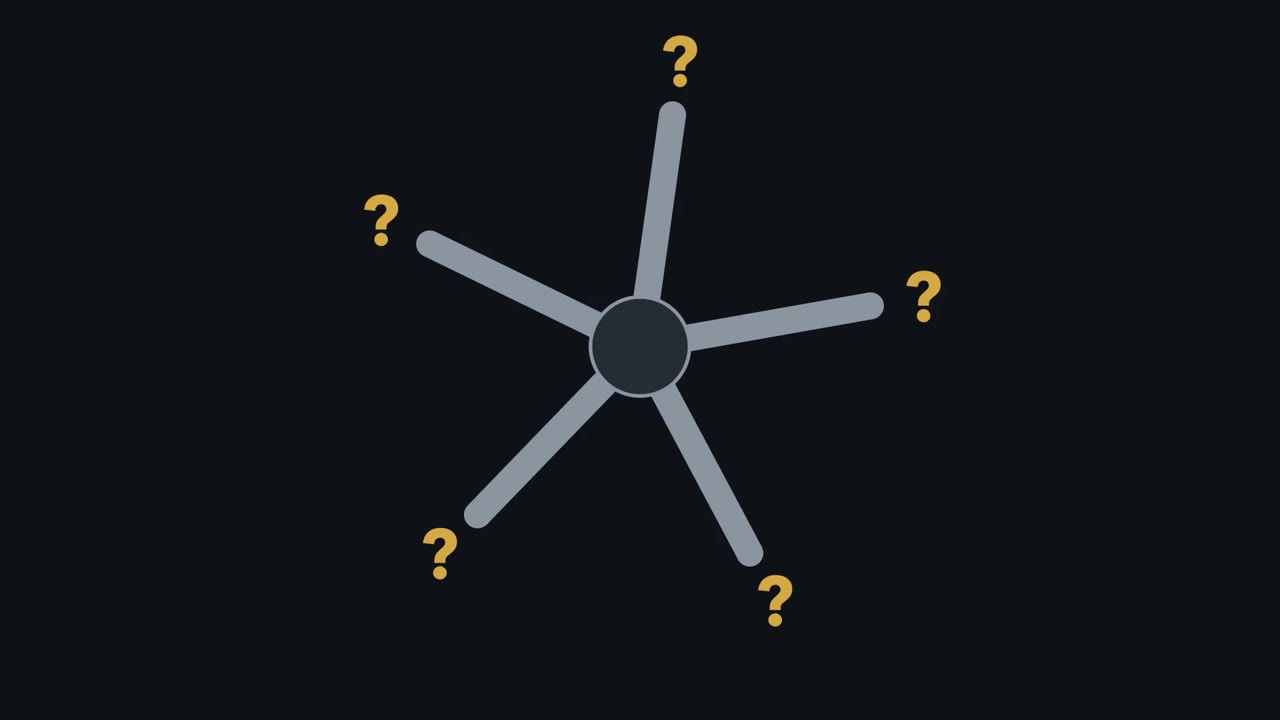
A longer neurite grows faster. Is that enough to make one winner? Here is a model, not a measurement. Start with five neurites. Four are 15 micrometres long, and one is 20, 5 micrometres ahead. Each neurite grows in proportion to its own length. A longer one grows faster. Run the rule for two days. Does one neurite win?
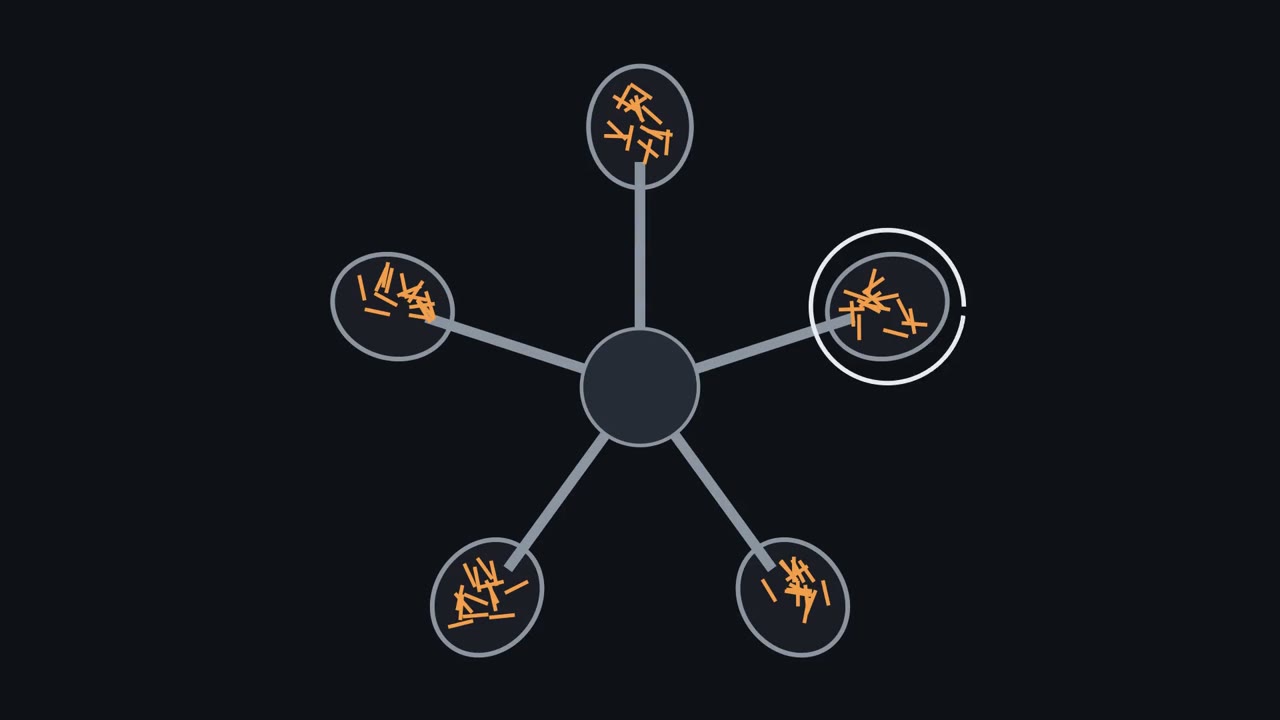
No. All five grow. The leader stays the same fraction ahead, a third longer than each sibling. The gap in micrometres widens, but nothing holds the others back. You end with five long neurites, and no single winner. Growing faster the more it grows is true. But growth in simple proportion to length picks no winner. The leader's gain must come at the others' cost. Two ingredients do this. First, positive feedback within a neurite. Growth recruits more of whatever drives growth. Second, competition between neurites. One proposal: they draw on a limited supply from the cell body. So one neurite's gain is the others' loss. But even a shared supply is not quite enough.
If each neurite takes a share in proportion to its length, the fractions again stay fixed. A long neurite's growth, relative to its own length, has to be larger than a short neurite's. There are two ways. The feedback could be steeper than proportional. Or every neurite could pay the same fixed running cost, such as retraction. That cost takes a bigger bite out of a short neurite's growth. With either one, a small lead grows into a large one. The others grow about fourfold, then slow to crawl. With both, the others shrink back to stubs. Now there is one winner. Now place the molecules in the loop. PI3-kinase makes the lipid PIP3. It builds up at the tip of the future axon.
PIP3 is a mark at one spot on the membrane. It draws proteins with PH domains to that spot. The Par3/Par6/aPKC complex, which also marks the top of an epithelial cell, gathers there. At the tip, the switches Cdc42 and Rac reorganize actin. Loosened actin is proposed to let microtubules push forward into the growth cone. Part of the loop is thought to be physical. A faster neurite draws more material and more transport. Then it grows faster still. The loop closes. There is also a brake. RhoA tends to oppose neurite growth. What holds the losers back is less settled. A limited supply and an inhibitory signal are both proposed. So a winner needs competition, plus something that compounds a lead.
Next, can we rig the race?
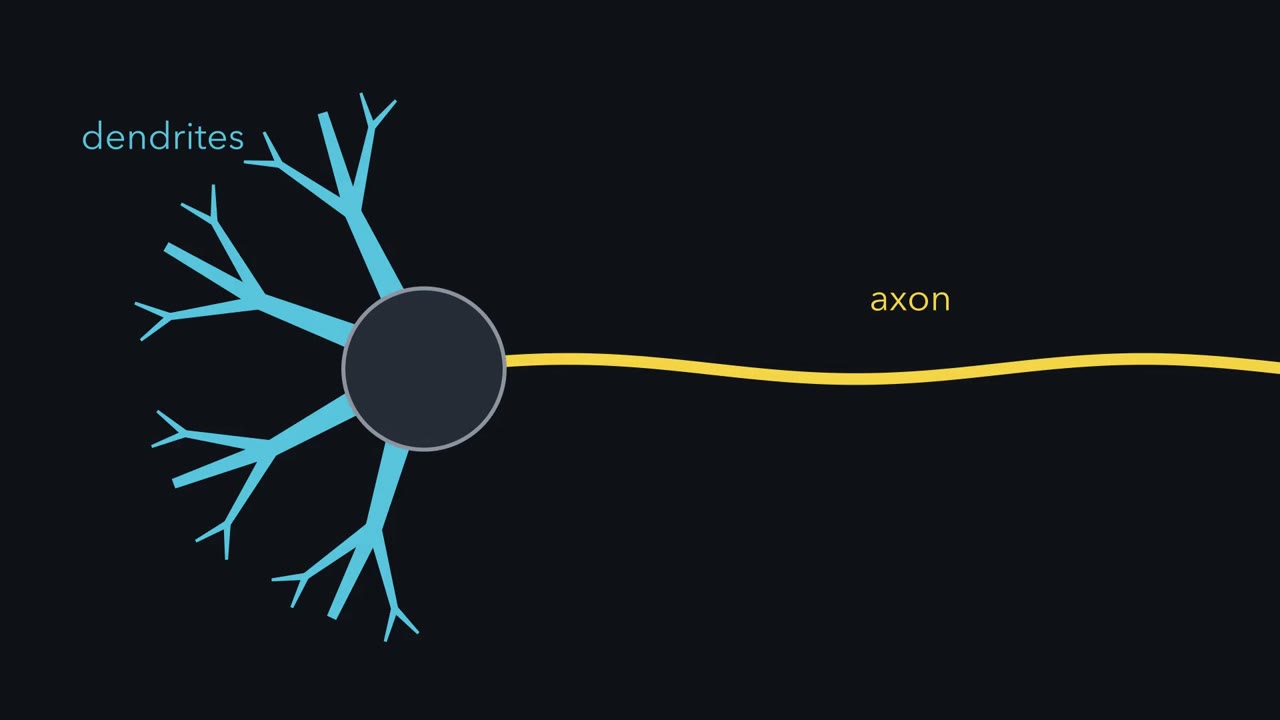
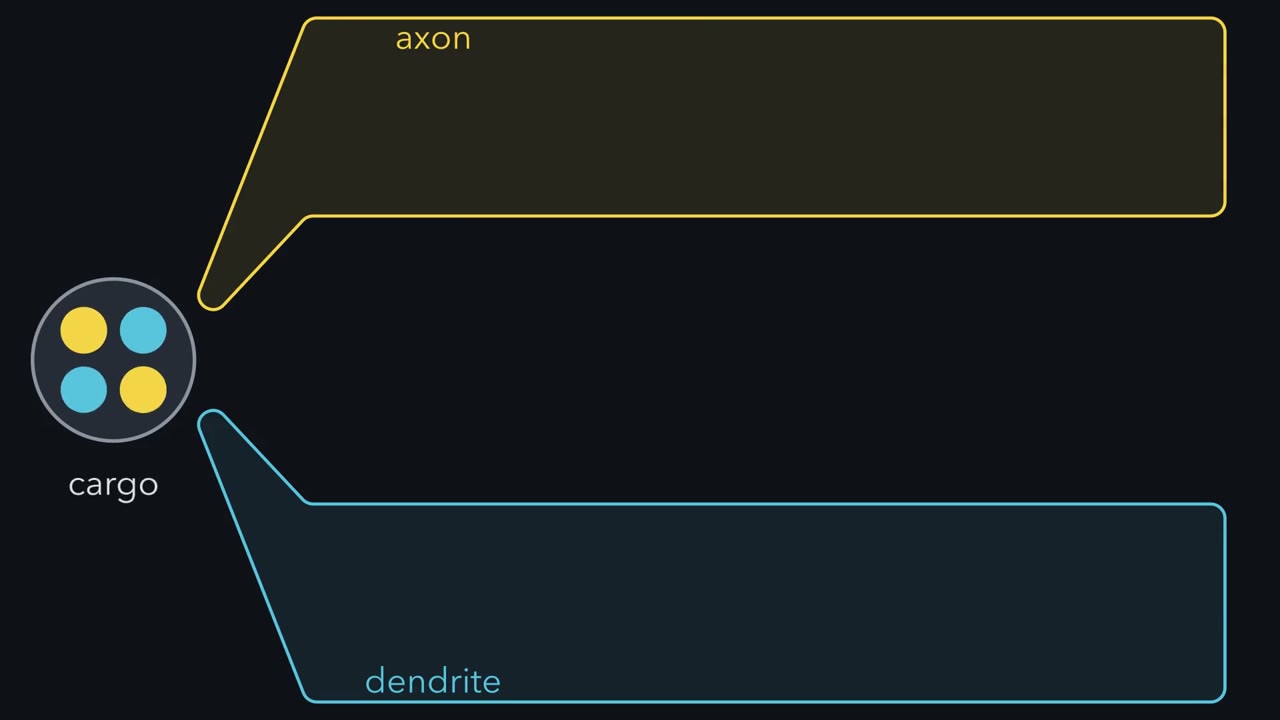
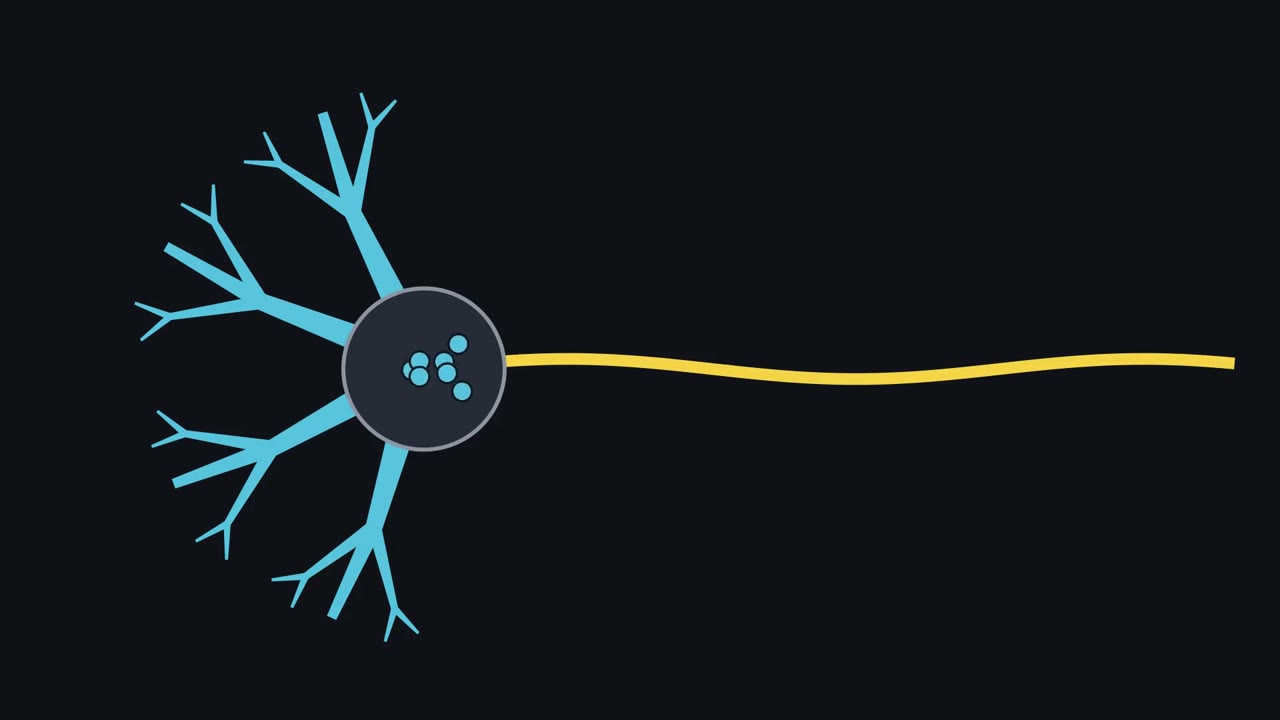
A neuron takes in signals on dendrites and sends them out along one axon. Cut that axon close to the cell body in a dish and one of its dendrites can become a new axon. How does a neuron choose its axon, and keep it?
Continue in the lesson: One Axon, Many Dendrites: Neuronal Polarity →
3:02 · Free, with captions and a transcript. The lesson has the full text, the questions and the sources.
More films from this lesson
How this film was made. Narration: an AI narrator voice (Kokoro, af_heart) reading narration written from this lesson's text. Animation: AI-generated in code (Manim) by Claude, a schematic with no drawn molecular structures. Captions come from the narration script. See something wrong? Report it.