Films · Developmental Neuroscience
Two Facts in One Cell
Read the transcript of “Two Facts in One Cell”
Film transcript: Two Facts in One Cell
If an adult brain made a new neuron, how would you ever know it was new? The old rule: the neurons you are born with are the ones you keep. A cell copies its DNA before it divides. A finished neuron normally does not copy its DNA again. So give an animal tagged thymidine, a DNA building block. Cells copying their DNA build it in. A labelled cell can divide again, and each daughter carries about half the label. So the label dates the DNA. A strongly labelled neuron was most likely born that day, or later. DNA repair, or a dying cell copying its DNA, can add label too. Studies need controls. In the 1960s, Joseph Altman found labelled cells in the dentate gyrus of rats.
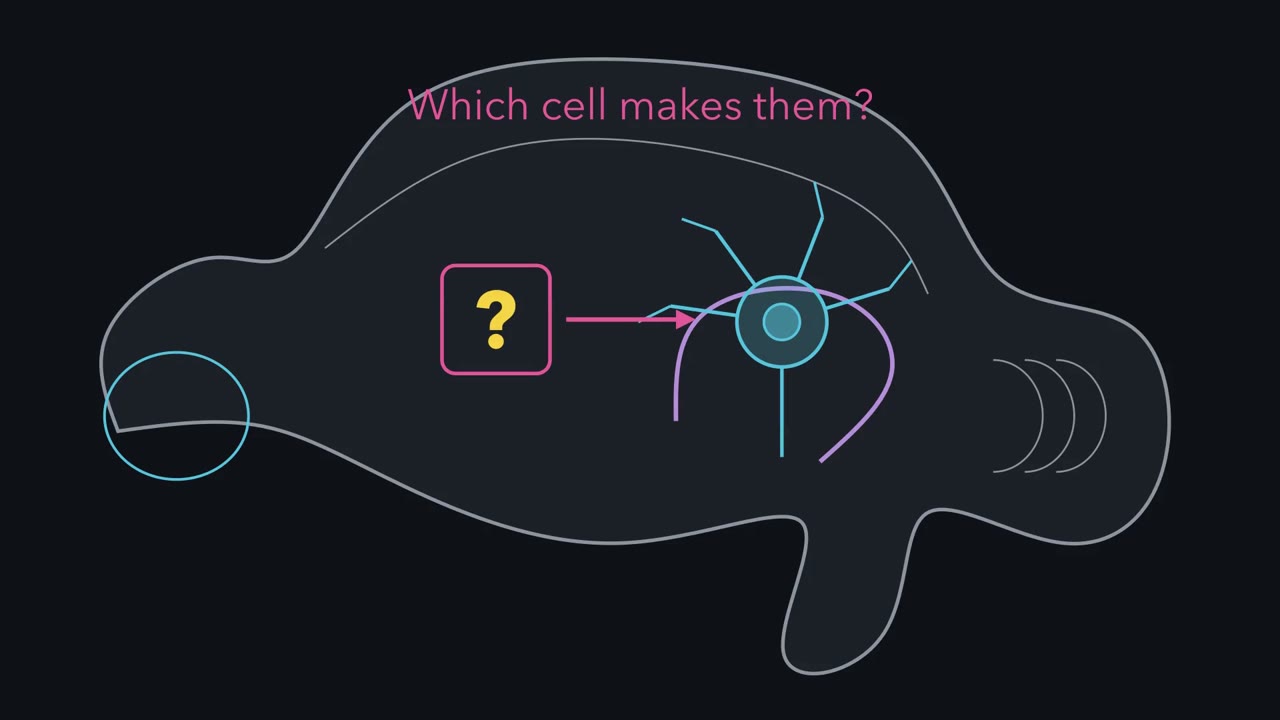
Pause and predict. Is the labelled cell a neuron? The light microscope could not tell. The grains might belong to a glial cell pressed against a neuron. A birth record, but no identity. The claims were largely set aside for years.
In 1977, electron microscopy showed that labelled cells in adult rats were neurons. Then came BrdU, a thymidine look-alike that an antibody can detect. One cell can now be stained twice, for BrdU and for the neuron protein NeuN.
That is the rule for this lesson. A neuron counts as new only when the same cells carry two facts. A birth record, showing their DNA was copied at a known time, so they were most likely born then or later. And a neuron identity. A young-neuron marker, such as doublecortin, tells you a cell's state, not when it was born. Takeaway: two facts in the same cells.
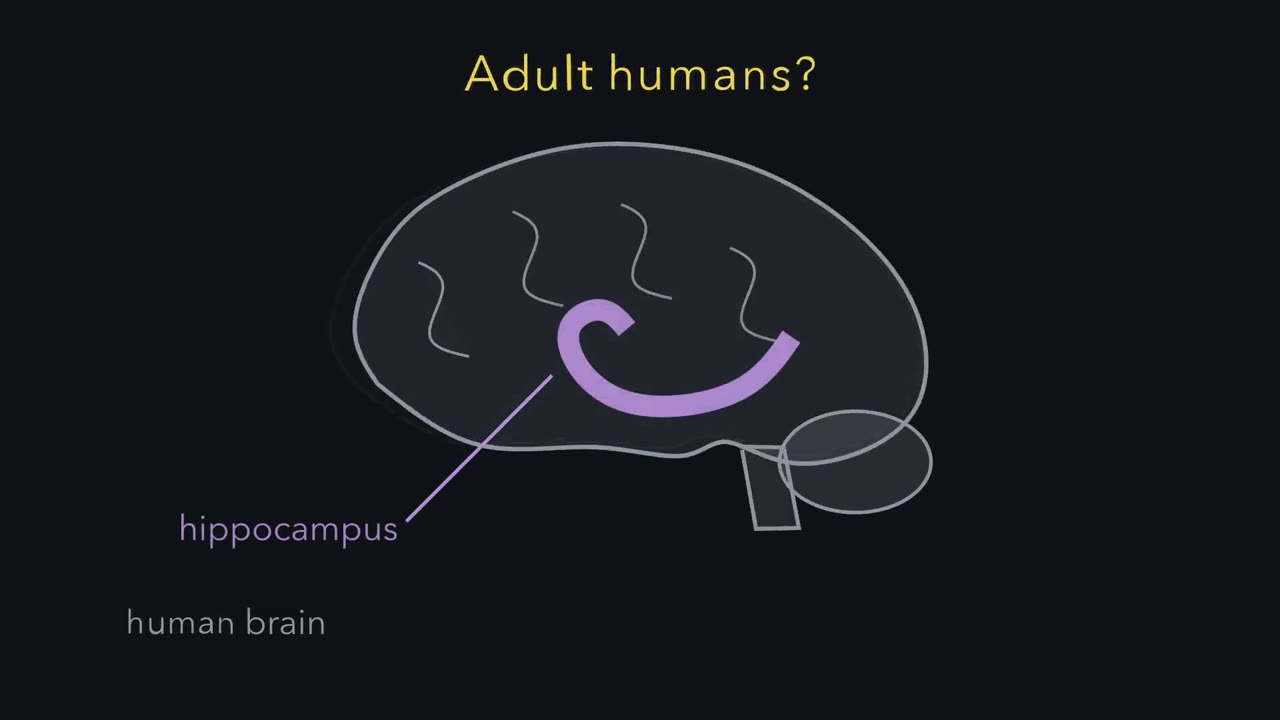
Inject an adult rat with a label that marks newly made DNA. A month later a labelled cell sits in its hippocampus. Is it a new neuron, how would you know, and do you make them too?
Continue in the lesson: Two Places the Adult Brain Still Makes Neurons →
2:12 · Free, with captions and a transcript. The lesson has the full text, the questions and the sources.
More films from this lesson
How this film was made. Narration: an AI narrator voice (Kokoro, af_heart) reading narration written from this lesson's text. Animation: AI-generated in code (Manim) by Claude, a schematic with no drawn molecular structures. Captions come from the narration script. See something wrong? Report it.