Tools Behind a Stop, Chosen by Cre
Read the transcript of “Tools Behind a Stop, Chosen by Cre”
Film transcript: Tools Behind a Stop, Chosen by Cre
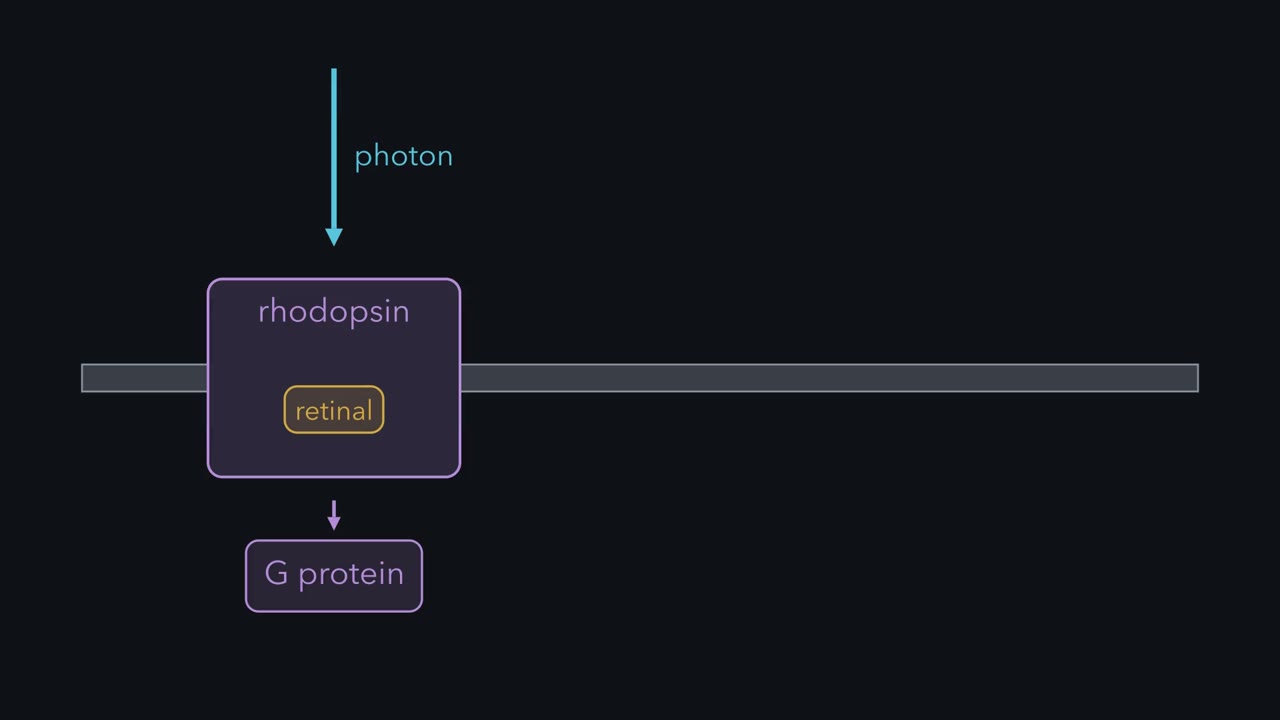
Suppose you want a mouse in which one type of neuron glows when its calcium rises. You also want to switch that same type on with light. Put the gene for green fluorescent protein behind a promoter that every cell reads, and you get a green mouse. But you need the tools in one cell type, and nowhere else. How? Two kinds of tool do the work. A reporter is an engineered protein that changes its light when a signal happens. G -Camp is a calcium reporter, built from green fluorescent protein. An actuator is an engineered protein that changes cell activity on command. Channel rhodopsin 2 is an actuator. Blue light opens its pore, cations flow in, the neuron fires.
G -Camp's blue light opens it too. Now give each gene a stop. Put a stop signal in front of the reporter gene, between two sites called LOX -P. The two sites point the same way. The actuator gene gets its own stop in the same way. With the stop in place, neither gene is read. Kree is an enzyme from a bacterial virus. It cuts and rejoins DNA at LOX -P sites. When two sites point the same way, Kree removes what lies between them. The stop is cut out. The cut is permanent, so that cell and its descendants can read the gene. So who makes Cre? Make it from a promoter active mainly in one cell type. That cell type cuts out the stops, and makes both proteins.
In most other cells the stops stay in place. Check each line with a reporter. To build the mouse, breed three parts together. The first is Kree, placed in a gene that only your neuron type reads. The second is a reporter behind a stop. The third is an actuator behind a stop. Cells that make Kree remove the stops, so mainly they and their descendants make both proteins. Keep this rule. Tools wait behind stops, and Kree removes them. Check the line with a reporter.
How do you watch a signal inside a living cell, and how do you start one in a cell of your choosing?
Continue in the lesson: Hacking the Cell: Reporters, Actuators and Genetic Tools →
2:29 · Free, with captions and a transcript. The lesson has the full text, the questions and the sources.
More films from this lesson
How this film was made. Narration: an AI narrator voice (ElevenLabs, Sarah) reading narration written from this lesson's text. Animation: AI-generated in code (Manim) by Claude, a schematic with no drawn molecular structures. Captions come from the narration script. See something wrong? Report it.