Films · Developmental Neuroscience
Who Loses, and When It Commits
Read the transcript of “Who Loses, and When It Commits”
Film transcript: Who Loses, and When It Commits
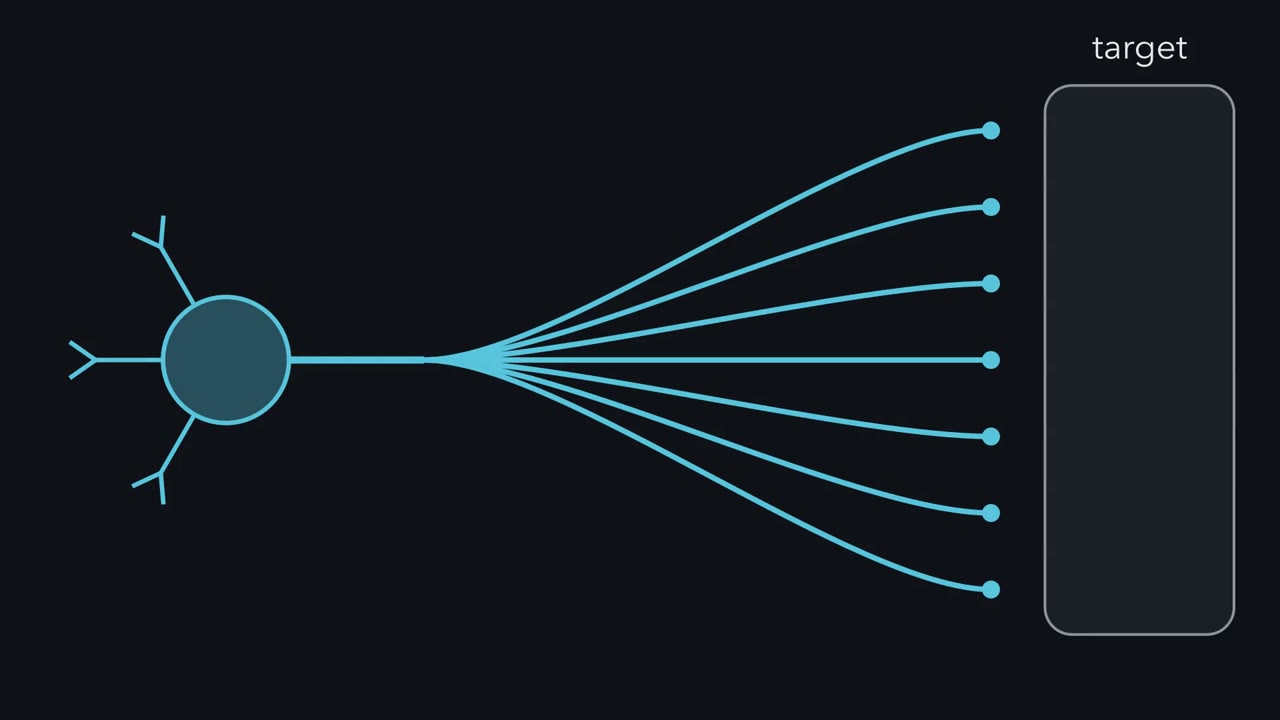
In a dish, the experimenter decides where support is lost. In the animal, who decides? Many sympathetic neurons send branches toward targets that make NGF. The branches compete. When NGF is limited, a branch that wins enough is stabilized. One left with too little is weakened and removed. Two receptors matter. TrkA is the NGF receptor. p75 binds all neurotrophins, including BDNF. One axon has strong TrkA signalling, the other weak. BDNF is present. Which axon goes?
The weak one. On axons with weak TrkA signalling, BDNF acting through p75 caused degeneration. Axons with strong TrkA signalling were protected. And the winning neurons made the BDNF. So a winner does more than take the NGF. It also sends a signal that removes the loser.
The neurotrophic hypothesis lesson showed the same winner-removes-loser idea for whole neurons. Here it works on axons. So how does an axon come apart after NGF is withdrawn? Not all at once. First, the axon waits through a long latent phase. It looks nearly normal. Late in latency, swellings called spheroids appear. Calcium gathers in them. Then the spheroids rupture.
Then the axon fragments. That is the catastrophic phase. Two receptors split the work. p75 is needed for spheroids to form. DR6 is needed for the catastrophic degeneration that medium from deprived axons speeds up. The Deppmann laboratory's model is that spheroids gate the step from waiting to catastrophe. It is not yet a settled mechanism. Where support is lost decides what is lost. In a contest, the winner helps decide too.
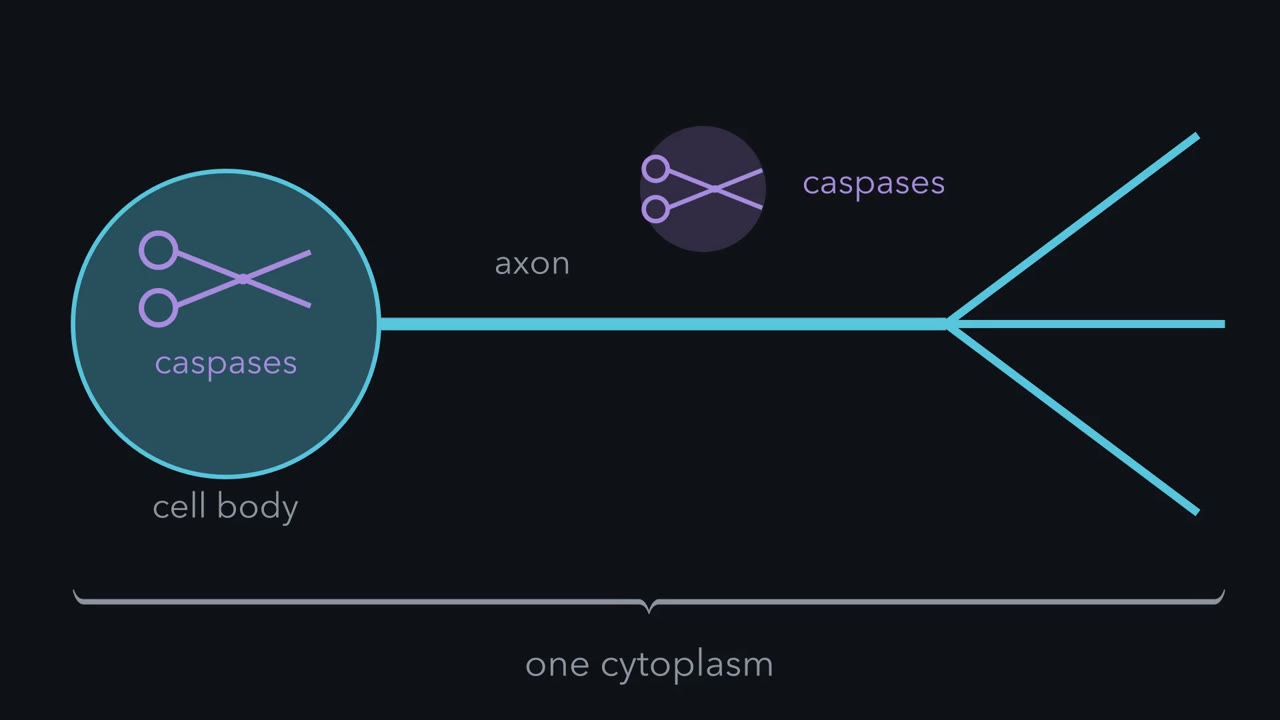
How does a neuron cut off one branch with caspases, the enzymes of cell death, and still live?
Continue in the lesson: Pruning Without Dying: Axons That Cut Themselves Back →
2:28 · Free, with captions and a transcript. The lesson has the full text, the questions and the sources.
More films from this lesson
How this film was made. Narration: an AI narrator voice (Kokoro, af_heart) reading narration written from this lesson's text. Animation: AI-generated in code (Manim) by Claude, a schematic with no drawn molecular structures. Captions come from the narration script. See something wrong? Report it.