When the Line Goes Quiet
Read the transcript of “When the Line Goes Quiet”
Film transcript: When the Line Goes Quiet
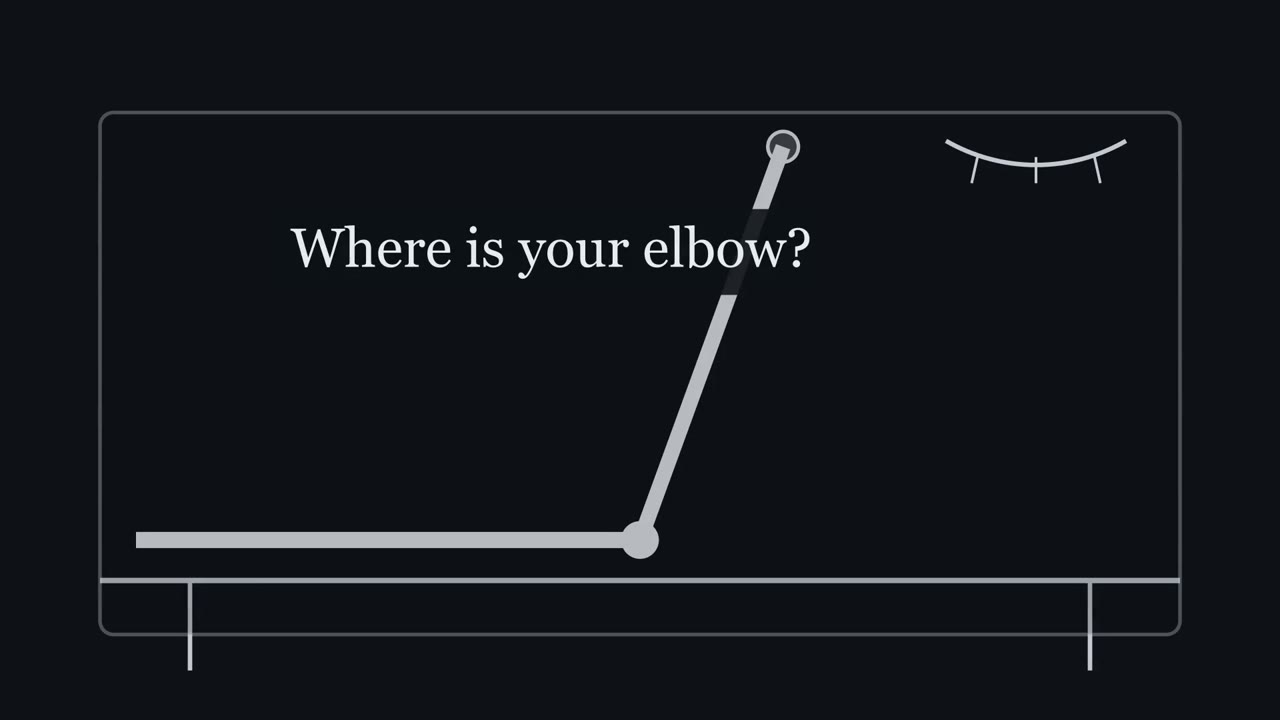
What happens to a person when proprioceptive input is lost? Picture reaching for a cup in a lit room, with your stretch lines silent. Predict. What would you have to rely on to know where your arm is? Mainly your eyes. Vision does much of the work. Take it away too, and reaching becomes far less accurate.
Chesler and colleagues reported two unrelated young people with inactivating variants in both copies of PIEZO2. Reaching was tested with and without sight. Without vision, their uncoordinated movements and misjudged reaches became markedly worse. Yet they could still walk, talk and write, though one walked only with support. An older case shows the daily cost. A man known as I.W. had lost large-fibre sensation below the neck. He lacked light touch and position sense. But he kept pain, temperature and the sense of muscle fatigue. In testing, he could make no new movement without watching it. Every new movement had to be watched. Both cases show the rule's second half.
With proprioceptive input lost, accurate movement depends heavily on vision. Neither case silences spindles alone; touch was affected too. In mice, the line turned out to matter for the skeleton too. Deleting Piezo2 with a parvalbumin driver curved the spine in some mice by postnatal day 60. Deleting it in bone and cartilage lineages did not curve the spine, at the ages tested. The authors read this as non-autonomous. The curve shows in the skeleton, but the gene was lost in parvalbumin-labelled neurons. How the signal reaches the skeleton is not known. One limit to remember. Near a joint's limits, and for the feeling of effort, the stretch rule is not the whole story.
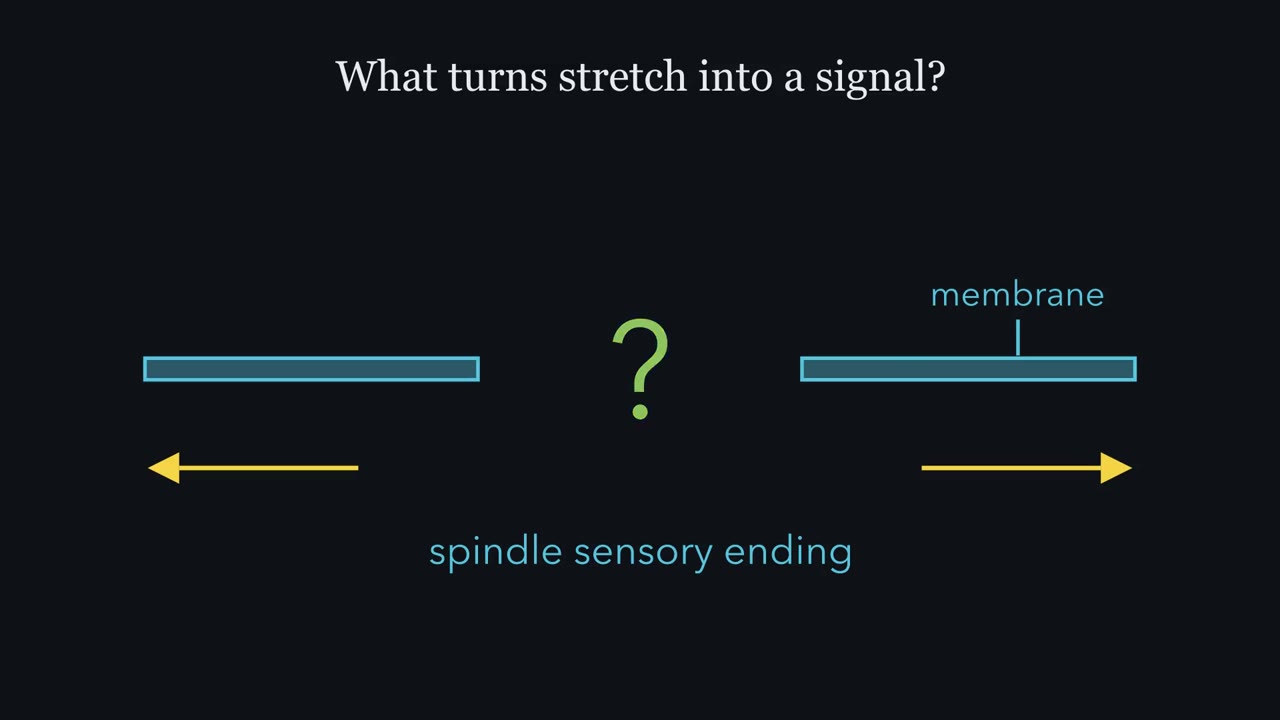
So limb position is an estimate built mainly from the stretch line. Lose that input, and vision does much of its work.
Vibrate a tendon at 100 Hz and a person with their eyes closed misjudges the position of the elbow, by as much as 40 degrees when the muscle is contracting.
Continue in the lesson: Proprioception: Sensing the Body's Own Position →
2:22 · Free, with captions and a transcript. The lesson has the full text, the questions and the sources.
More films from this lesson
How this film was made. Narration: an AI narrator voice (Kokoro, af_heart) reading narration written from this lesson's text. Animation: AI-generated in code (Manim) by Claude, a schematic with no drawn molecular structures. Captions come from the narration script. See something wrong? Report it.