Films · Developmental Neuroscience
Leave, Steer, Arrive: The Puzzle Solved
Read the transcript of “Leave, Steer, Arrive: The Puzzle Solved”
Film transcript: Leave, Steer, Arrive: The Puzzle Solved
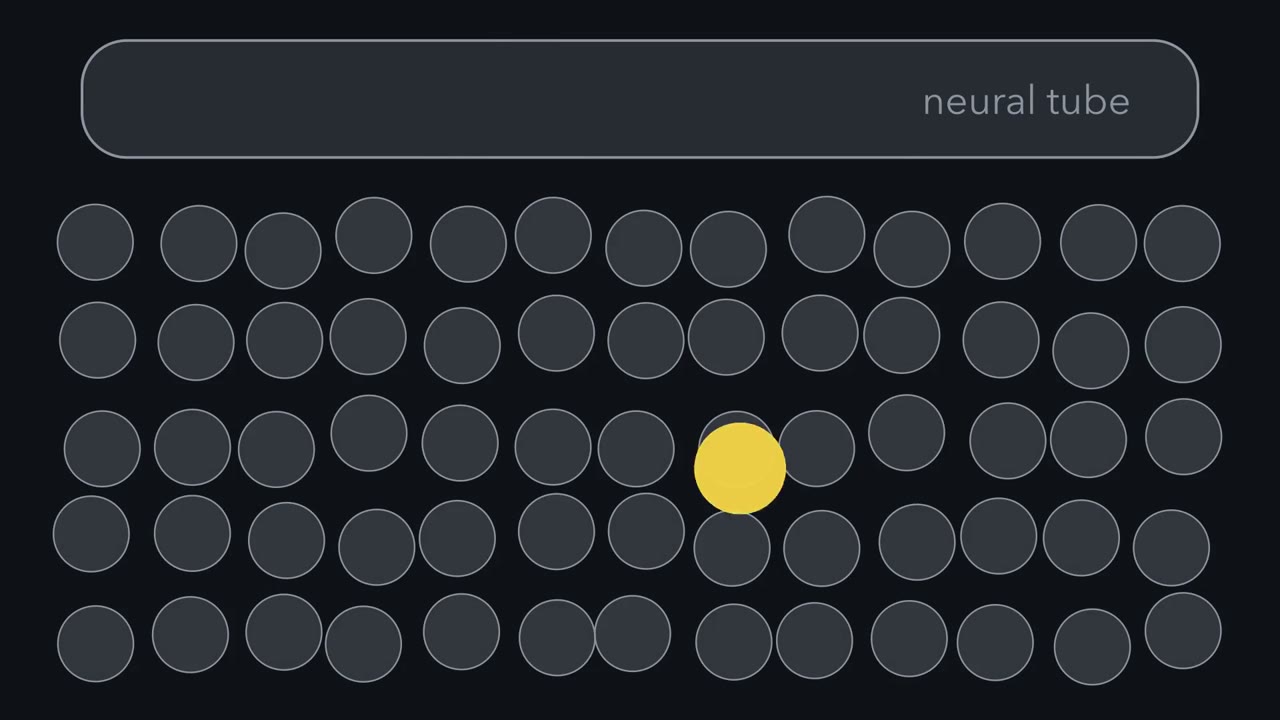
How does a crest cell let go and find its way? And what happens when a step fails? To leave, a crest cell must loosen its grip. In chick, a cadherin called Cadherin-6B helps hold it to its neighbours. A transcription factor, Snail2, is needed. Block it, and fewer cells leave. Suppose Snail2 works by switching off Cadherin-6B. Lower Snail2. What happens to Cadherin-6B?
Cadherin-6B RNA rises within about half an hour, just as predicted. The authors concluded Snail2 represses it directly. Lower Cadherin-6B instead, and cells leave early. It is a brake. Snail2 probably lifts it, at least partly. Now steering. In the chick trunk, crest cells pass only through the front half of each sclerotome. The back half repels them on contact. In chick, ephrin-B is one such signal. In mouse, semaphorin 3F also repels them. Neither is known to be the only cue. Crest cells also steer each other. When two touch, they collapse protrusions at the contact and move apart. Edge cells tend to move outward. Mutual attraction holds the group together, and a chemokine gives it direction.
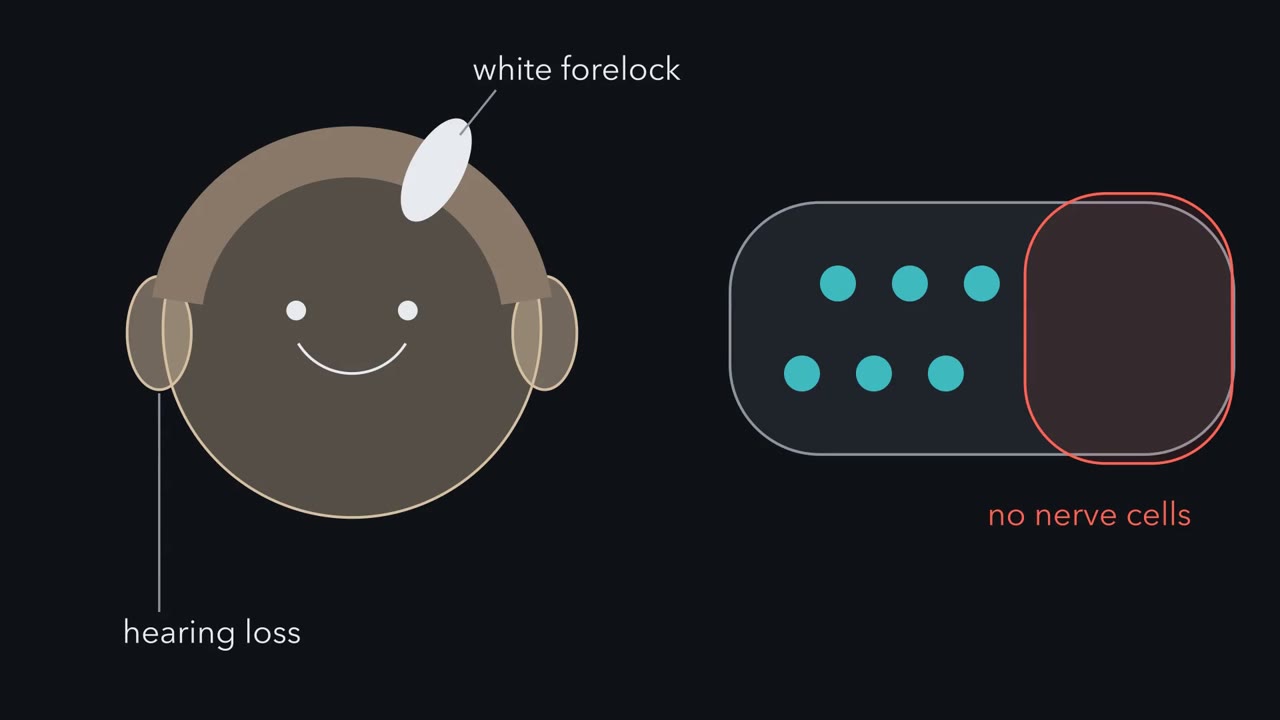
In frogs, a cluster follows that chemokine better than a lone cell. For trunk crest, this is less clear. Now the puzzle. The patient has Waardenburg syndrome type 4. The genes are SOX10, the endothelin receptor B and EDN3. Enteric precursors need them, and so do melanocytes, including those the inner ear needs for hearing. Try a toy model. One front moves down the gut from the mouth end, within a fixed time. Slow it. Which part stays empty?
The end the front reaches last, the anal end. In the model, that segment is left without neurons. That is a toy model. In the clinic, too, the empty segment usually starts at the anal end. Rare cases skip a segment. An earlier failed step need not mean wider damage. Treacher Collins syndrome cuts crest numbers early. Yet it mainly affects the face, ears and eyelids. Tissues that fail together often share a requirement. Which tissues fail depends on where the gene is needed, the variant, and each tissue's sensitivity. One border, many destinations. The start biases the options, and the journey helps choose.
Why can one mutation leave a child with part of the colon without gut neurons, a white forelock and deafness?
Continue in the lesson: The Neural Crest: Cells That Leave Home →
3:02 · Free, with captions and a transcript. The lesson has the full text, the questions and the sources.
More films from this lesson
How this film was made. Narration: an AI narrator voice (Kokoro, af_heart) reading narration written from this lesson's text. Animation: AI-generated in code (Manim) by Claude, a schematic with no drawn molecular structures. Captions come from the narration script. See something wrong? Report it.