Films · Developmental Neuroscience
What Can a Label Prove?
Read the transcript of “What Can a Label Prove?”
Film transcript: What Can a Label Prove?
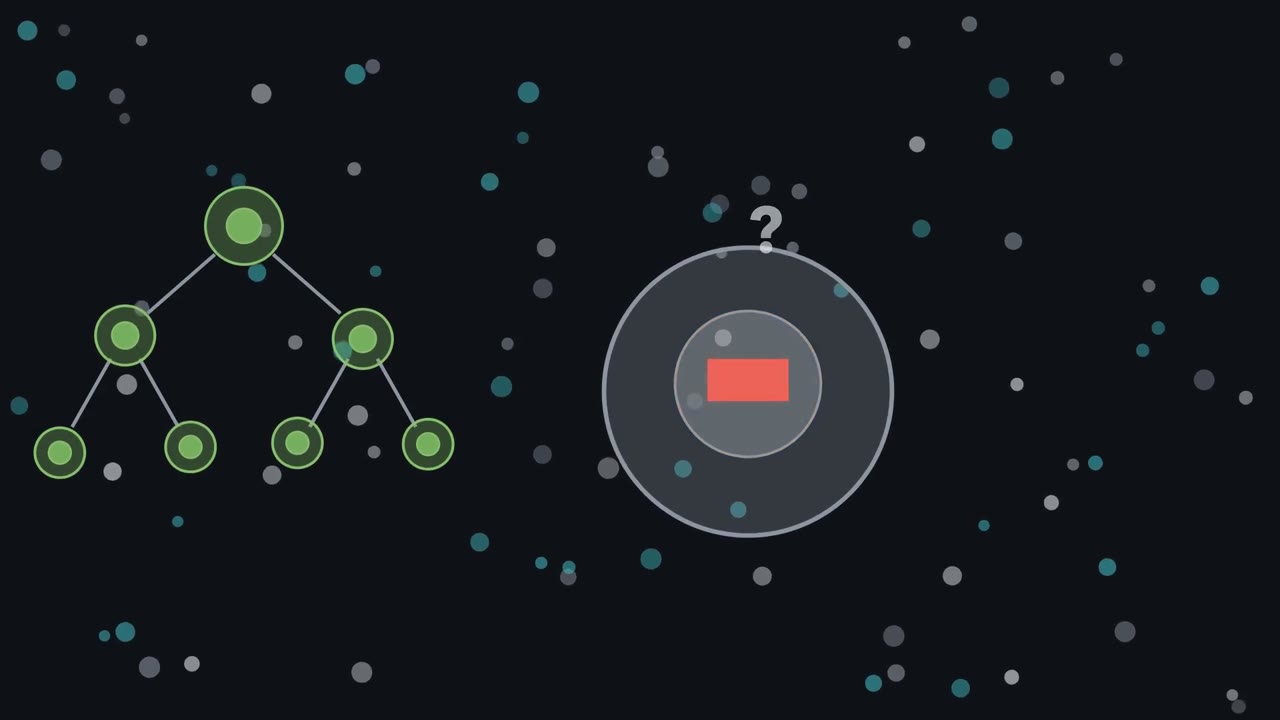
A finished neuron hides its past. Which label could reveal the part you need in that tissue? Its shape alone cannot show its birth time, ancestry, or distant projection. Each question needs an event that can carry that information forward.
Start with identity. A Nissl stain reveals many cell bodies. A Golgi stain fills a few cells and their branches. An antibody binds one chosen protein. These marks report what they detect, not when the cells formed. For a projection, use the neuron's own transport. Put a tracer near cell bodies, and anterograde transport carries it toward terminals. Put a retrograde tracer at a target, and terminals carry it back. The result maps a sampled population, not every synapse. Birth-dating follows a different event. During a short pulse, tritiated thymidine or BrdU enters DNA being synthesized. In a dividing cell, that means S phase. The pulse marks a cohort copying DNA during that window.
After the pulse comes the chase. Each further division usually dilutes label among the descendants. Heavy label later supports few additional divisions and an approximate last S phase. Weak label fits continued cycling, although uptake and detection also vary. Ancestry needs a mark that survives division. A grafted quail nucleus stays recognizable in chick tissue. A retroviral insert enters a dividing cell's DNA.
Cre can permanently switch on a reporter. In each case, descendants inherit a durable difference. Predict the next frame. One founder carries a permanent DNA change, then divides twice. Which cells should carry that change?
Every descendant inherits the changed DNA. Yet one colour across many founders gives a population fate map, not separate clones. Sparse induction, multiple colours, or distinct barcodes can separate neighbouring families. Here is the rule. A tool supports only what its mark records.
Protein binding can report target detection. Transport can report a projection. DNA synthesis can date a cohort approximately. An inherited DNA change can report ancestry. The rule also tells you when to stop. A tracer does not prove every synapse. A weak birth label is not a precise birthday. A shared lineage colour may hide many founders. State the strongest claim, then name the limit.
A neuron has no label saying when it was born or where it came from. So how do you find out?
Continue in the lesson: Tools for Following Cells and Genes →
3:21 · Free, with captions and a transcript. The lesson has the full text, the questions and the sources.
More films from this lesson
How this film was made. Narration: written from this lesson's text and read by an AI narrator voice (Kokoro, af_heart). Animation: AI-generated in code (Manim) by Claude, a schematic with no drawn molecular structures. Captions come from the narration script. See something wrong? Report it.