Films · Developmental Neuroscience
Astrocytes Build and Switch On
Read the transcript of “Astrocytes Build and Switch On”
Film transcript: Astrocytes Build and Switch On
Purified neurons fire, yet barely talk to each other. What are they missing? Ben Barres's laboratory purified rat retinal ganglion cells, leaving cultures with almost no glia. In 1997, Frank Pfrieger and Barres reported that these neurons fired action potentials. But they showed little synaptic activity. Astrocytes are not the only source. Neurons form some synapses without them. The readout is the mini: the small current from one vesicle released on its own.
Tetrodotoxin blocks action potentials. What remains depends on the synapses, not on how busy the neurons are. With firing blocked, mini frequency is roughly the number of synapses giving detectable minis, times their average release rate. Mini size reflects the receptors facing the vesicle, and the transmitter inside it. Now add a layer of glia that does not touch the neurons. Mini frequency rose about twelvefold. Survival did not change. Predict. More synapses, or more release from each one?
Mini frequency alone cannot say. More minis can mean more synapses, more release, or synapses that start responding. So Pfrieger and Barres also counted synapses by electron microscopy. Glia raised the count only about 2.3 times. If the same share of synapses gave detectable minis, each would release about five times as often. So the paper read most of the rise as more effective synapses. In 2001, Erik Ullian and colleagues reported a sevenfold rise in synapses, in their own cultures. That is far more than the 1997 count, so how much is number and how much is efficacy depends on the culture.
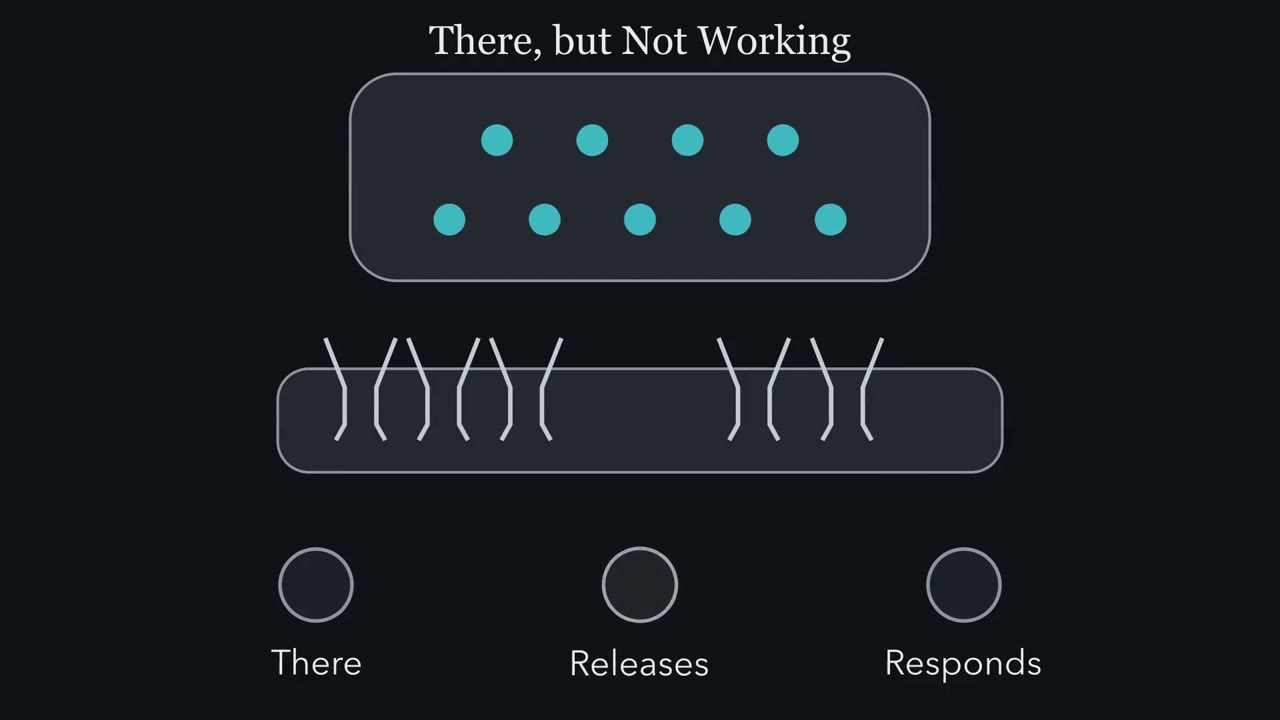
In 2005, Karen Christopherson and colleagues identified thrombospondins as astrocyte proteins that induce synapses. Those synapses looked normal by electron microscopy. They released transmitter. Yet they gave no AMPA receptor responses. They were silent near rest. They lack working AMPA receptors, and any NMDA receptors there would be mostly blocked by magnesium. They add to the count, but add no AMPA minis. Later work found glypicans 4 and 6, also from astrocytes. They recruit AMPA receptors, and the synapses respond.
So astrocyte signals share the work. Thrombospondin mainly builds. The glypicans mainly switch synapses on. Takeaway: a synapse that is there is not yet a synapse that works. Count it, and record from it.
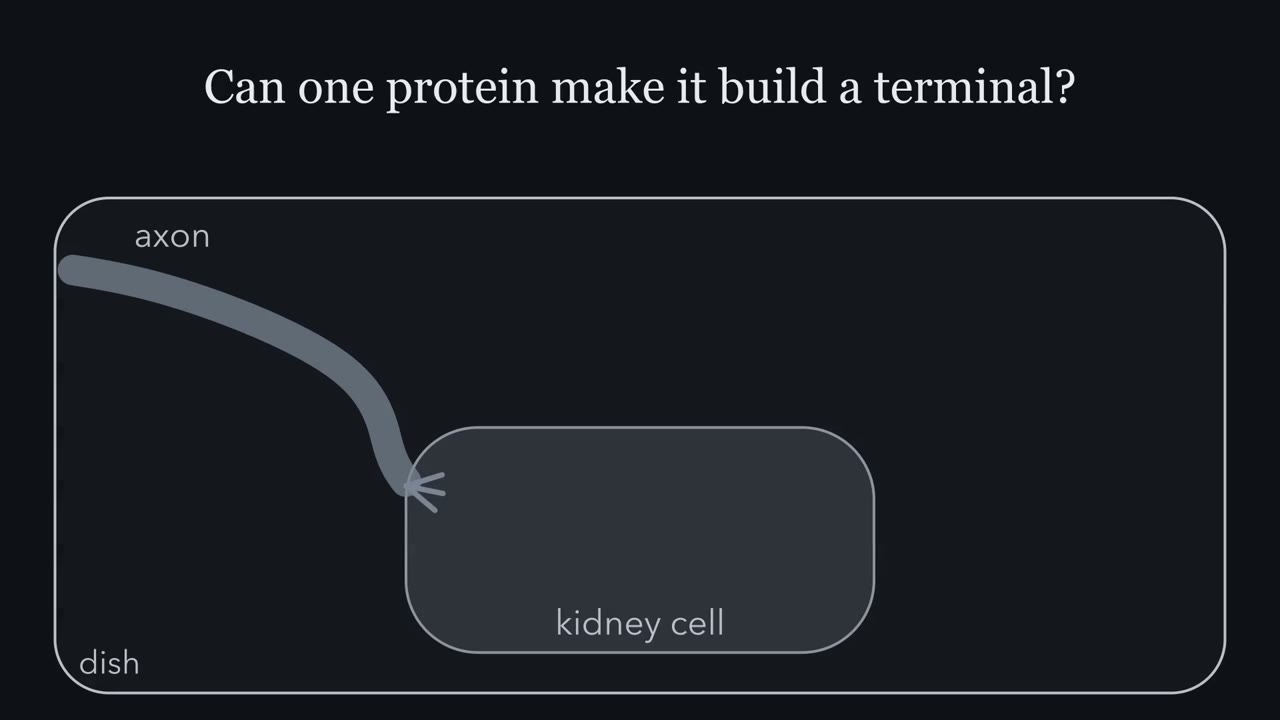
A kidney cell that makes one neuronal protein, neuroligin, can persuade an axon to build a nerve terminal on it. So what happens to the synapses of a mouse that lacks neuroligins 1, 2 and 3?
Continue in the lesson: Synapses in the Brain: Adhesion, Scaffolds and Astrocytes →
3:14 · Free, with captions and a transcript. The lesson has the full text, the questions and the sources.
More films from this lesson
How this film was made. Narration: an AI narrator voice (Kokoro, af_heart) reading narration written from this lesson's text. Animation: AI-generated in code (Manim) by Claude, a schematic with no drawn molecular structures. Captions come from the narration script. See something wrong? Report it.