Change It While It Works
Read the transcript of “Change It While It Works”
Film transcript: Change It While It Works
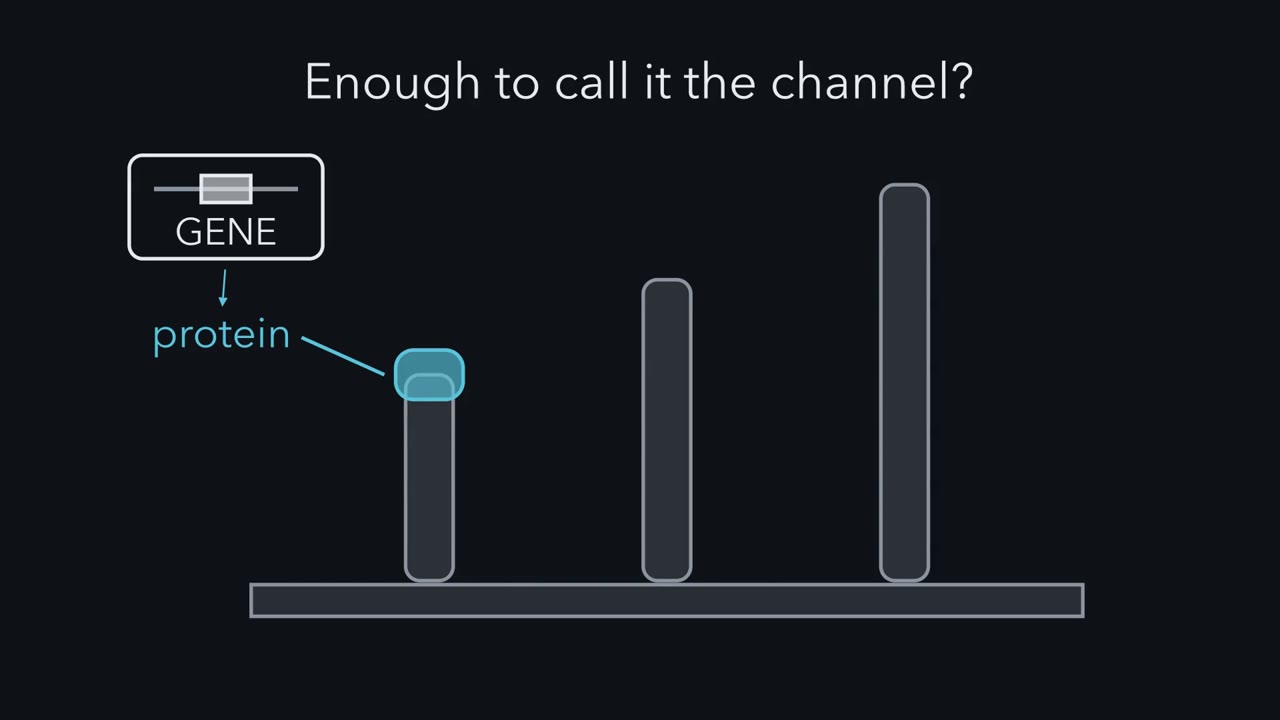
If deleting a protein cannot reveal the pore, what experiment can? In 2011, Kawashima and colleagues removed both TMC1 and TMC2. Hair cells lacking both had no conventional current. Putting back either gene restored it. That puts the TMC proteins in the pathway. But loss and rescue act on the whole product, so they cannot separate a pore from its helpers. The sharper test keeps the channel working, and changes one amino acid. The Beethoven mouse carries such a change. Methionine 412 of mouse TMC1 becomes lysine. In 2013, Pan and colleagues recorded from inner hair cells lacking Tmc2. So every channel had to use TMC1. Predict. If TMC1 only delivered or anchored the channel, what would a point mutation change?
If only the delivery of normal channels changed, there would be fewer channels. A coupling defect would mean fewer open. Each open channel would be unchanged. But the Beethoven channels let through less calcium. That calcium result has been replicated. Whether the single-channel current also shrinks is disputed.
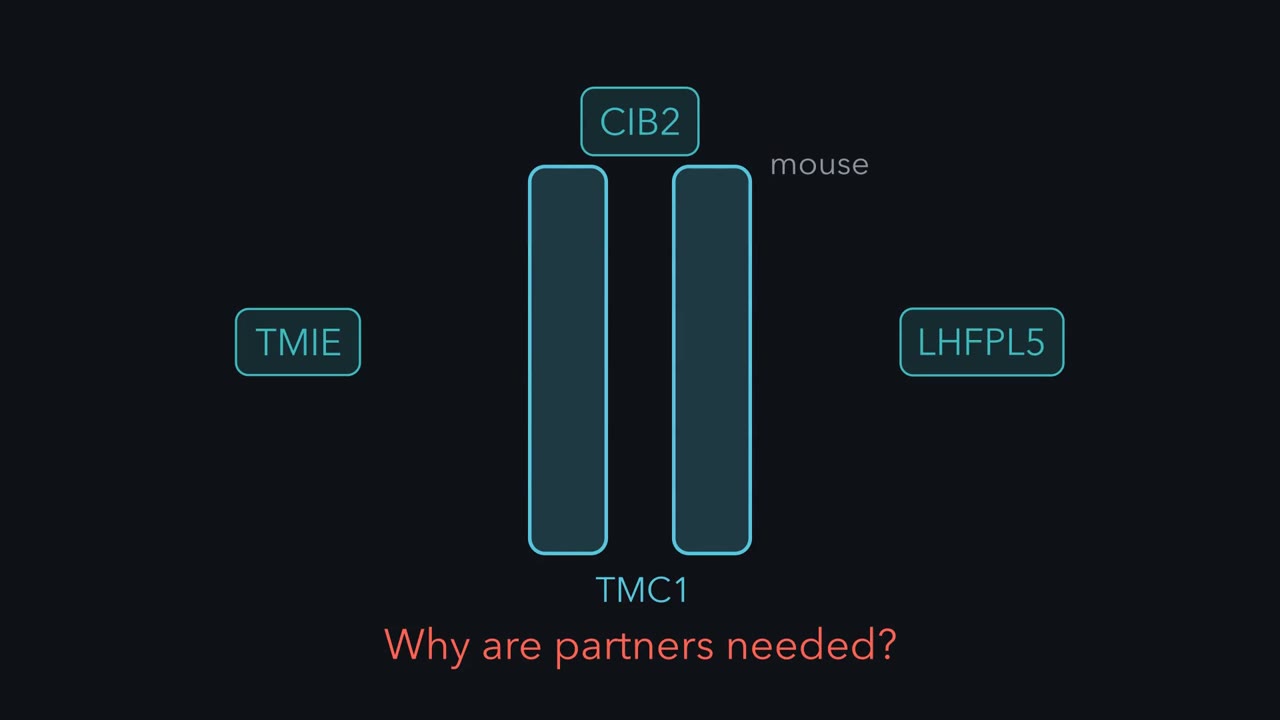
One residue in TMC1 changed which ions pass. A deletion can never show that. But a partner beside the pore can also change what passes. So this rung narrows the candidates. Next, change the channel while it works. In 2018, Pan and colleagues made TMC1 with single cysteine substitutions. Delivered into hair cells lacking both genes, they restored a current.
Then they added a reagent that cannot cross the membrane. It reacts with cysteine in water. Predict. The current is already flowing when the reagent arrives. If permeation changes, what does that rule out? It rules out altered synthesis or delivery. The current existed before the reagent was added. A residue reached from outside, whose change alters which ions pass, points to a water-filled route. That is what a pore would provide. The cells still had their native partners, and a reachable residue may sit beside the pore. No purified mammalian TMC1 was tested alone. Purified, truncated turtle TMC1 and budgerigar TMC2, in liposomes, responded to pressure.
That supports force-gated activity in a reduced system. The proteins were not mammalian, and this was not a native complex. Each rung ruled out a different alternative. None alone proves the pore.
A gene is required for hearing, and its protein sits at the right place. What else must be shown before it counts as the channel?
Continue in the lesson: The Hair Cell's Transduction Channel →
3:14 · Free, with captions and a transcript. The lesson has the full text, the questions and the sources.
More films from this lesson
How this film was made. Narration: an AI narrator voice (Kokoro, af_heart) reading narration written from this lesson's text. Animation: AI-generated in code (Manim) by Claude, a schematic with no drawn molecular structures. Captions come from the narration script. See something wrong? Report it.