Films · Developmental Neuroscience
What Brings the Nucleus Up
Read the transcript of “What Brings the Nucleus Up”
Film transcript: What Brings the Nucleus Up
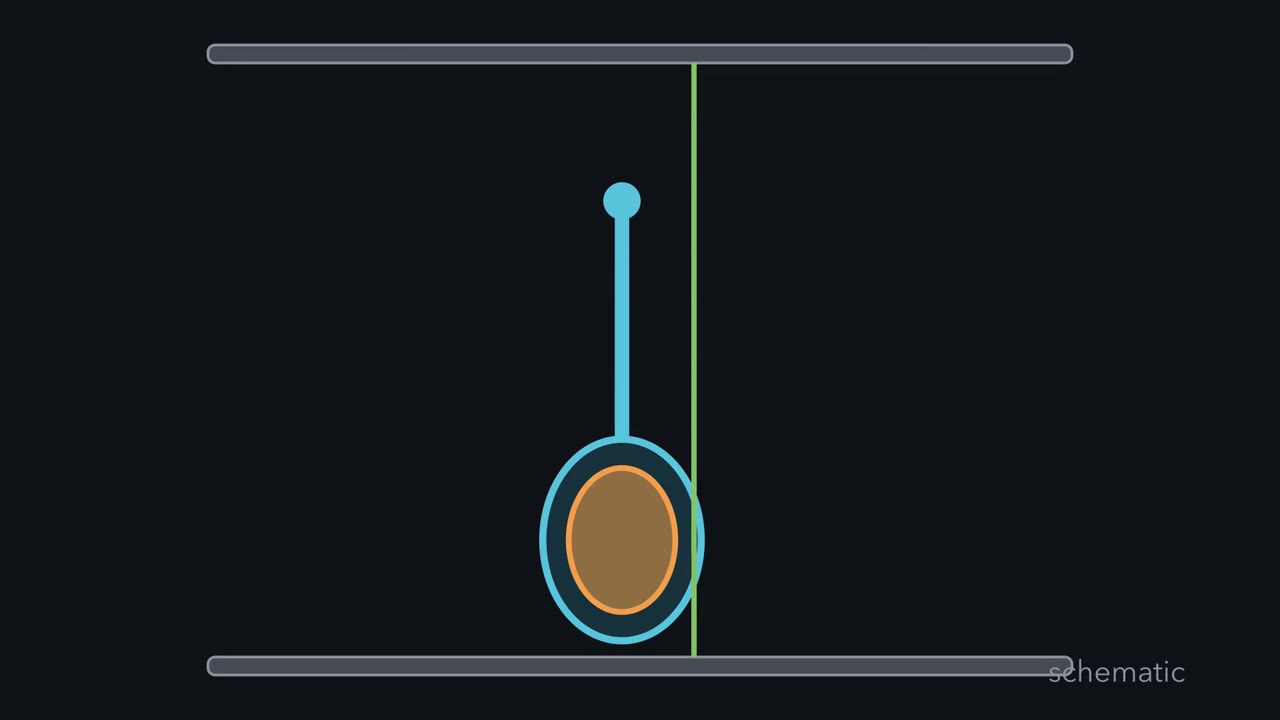
Each step has two strokes. The centrosome moves ahead, then the nucleus catches up. But what makes it catch up? Inside the cell, bundles of microtubules wrap the nucleus like a cage. They run forward to the centrosome. Microtubules have a direction. In the usual picture, their minus ends gather at the centrosome. Their plus ends point away from it. The motor is dynein. It walks toward minus ends, that is, toward the centrosome. What dynein moves depends on what holds it. If dynein is held in place, it cannot walk. So it drags the microtubule instead, and the centrosome comes toward it. If dynein rides on something that can move, it carries that thing toward the centrosome.
In the usual model, a neuron uses both. In stroke one, dynein in the swelling pulls the microtubules forward. The centrosome comes with them. In stroke two, dynein on the nucleus walks along the cage. It carries the nucleus toward the centrosome, which now sits ahead. LIS1 binds dynein and regulates it in both places. It is not the motor itself. A second force comes from actin and myosin II. A drug called blebbistatin blocks myosin II. Now the experiment, in slices of embryonic rat cortex. Label the centrosome and the nucleus, and film the neurons. Knock down LIS1, or block myosin II. What do the tip, the centrosome and the nucleus each do?
Knock down LIS1 or dynein, and the centrosome stalls. The nucleus stalls too. But the tip keeps growing. Block myosin II, and the centrosome keeps moving. The nucleus stops, so the gap between them grows. Dynein's pull on the centrosome is still there. But the nucleus has lost a force it needs.
Exactly where myosin II acts, behind the nucleus or at the front, is still argued. So a cell can keep reaching without arriving. Measure migration at the nucleus.
How does a newborn neuron cross a thick, crowded wall to reach its layer, and what brings its nucleus along?
Continue in the lesson: Radial Migration: Climbing the Glial Ladder →
2:37 · Free, with captions and a transcript. The lesson has the full text, the questions and the sources.
More films from this lesson
How this film was made. Narration: an AI narrator voice (Kokoro, af_heart) reading narration written from this lesson's text. Animation: AI-generated in code (Manim) by Claude, a schematic with no drawn molecular structures. Captions come from the narration script. See something wrong? Report it.