Films · Developmental Neuroscience
Counting What Stays
Read the transcript of “Counting What Stays”
Film transcript: Counting What Stays
If every division keeps some daughters and spends others, how many neurons does the cortex get? Start with a simple model. A pool of dividing cells, each dividing once per round, with none dying. Every cell makes two daughters. Call P the fraction of daughters that stay progenitors. Call Q the fraction that quit as neurons. Together they make one. The next pool comes from the daughters that stay. The neurons come from the daughters that quit. This pool is every dividing cell, not just stem cells. Suppose Q is 0.5. Half the daughters quit. Does the pool shrink, hold or grow? And does it make neurons?
It holds, and it makes neurons. It is as if every division keeps one daughter and spends one. A steady pool is not an idle one. Below 0.5, the pool grows. Above it, the pool shrinks. In mouse dorsal cortex, Takahashi and colleagues estimated about eleven cycles of neurogenesis. Q starts near zero. It passes 0.5 in the eighth cycle, and reaches about 0.8 by the tenth. Takahashi measured Q for the ventricular zone proper, apart from cells dividing farther out. Those old compartments are not today's cell classes. Follow one founder through that schedule. The numbers are illustrative. Early on, almost nothing is made, and the pool multiplies. Late, the pool is spent.
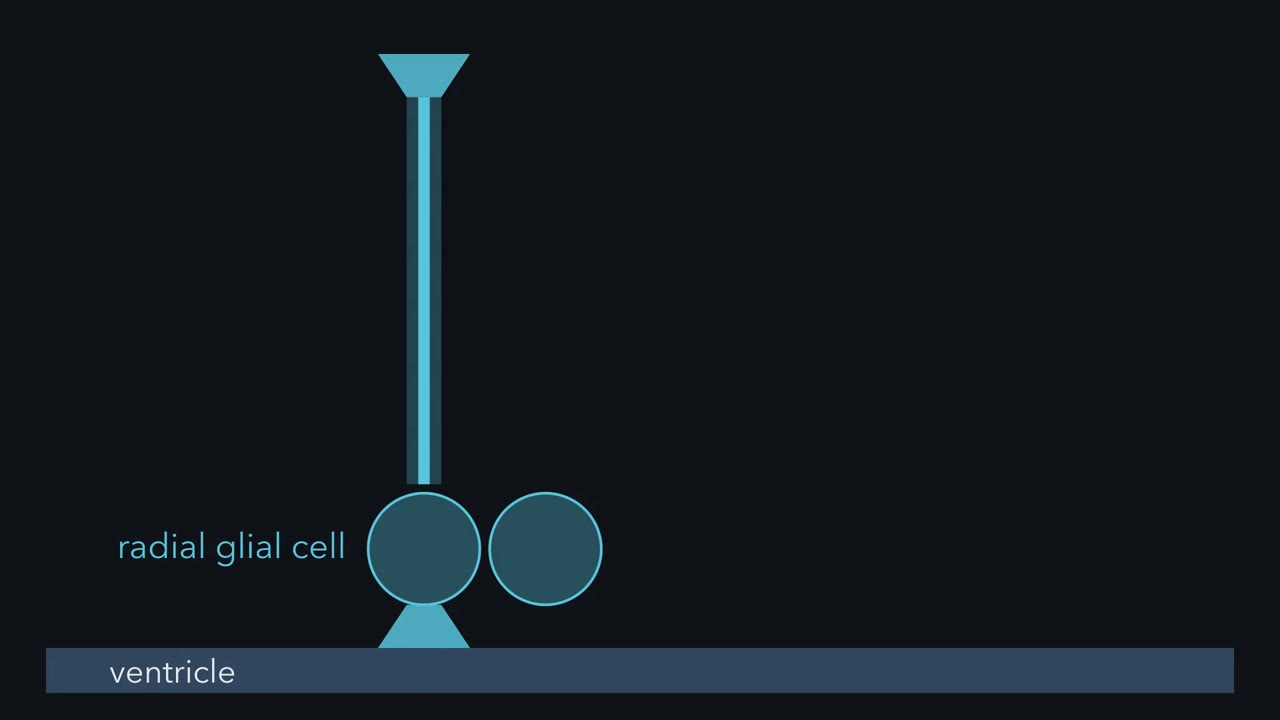
Output peaks at cycle 9, just after Q passes 0.5, while the pool is still near its largest. The schedule is a lever. In this model, moving the crossing one cycle later nearly doubles the total, over the same eleven cycles. That is why a few extra proliferative cycles are a candidate for how bigger cortices are built. Now a trap. Suppose every radial glial division makes a radial glial cell and an intermediate progenitor. In that round, no daughter quits. Counted as one pool, it seems to double. Follow one radial glial cell for four cycles. Each intermediate progenitor divides into two neurons. How many radial glia, and how many neurons?
Still one radial glial cell, and six neurons. One more intermediate progenitor is about to make two more. That first doubling was not a gain in stem cells. So count two pools. In this model, radial glia are the source that keeps neurogenesis going. Intermediate progenitors multiply, and delay, what each spent daughter yields. The cycle itself slows. In mouse dorsal cortex, it lengthens from about 8 hours to about 18. Nearly all the added time is in G1. One hypothesis: a longer G1 gives fate determinants more time to act. In cultured mouse embryos, a drug that lengthened G1 led to early neurogenesis. Whether a longer G1 causes the switch is still open.
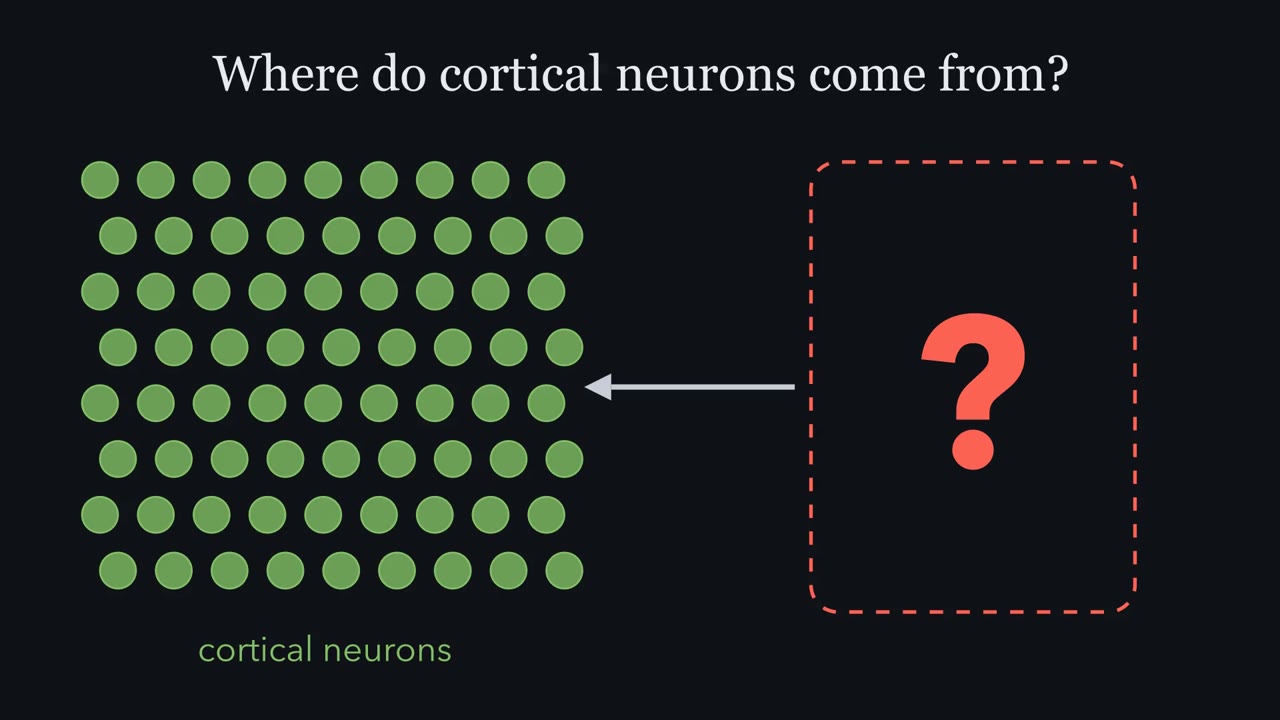
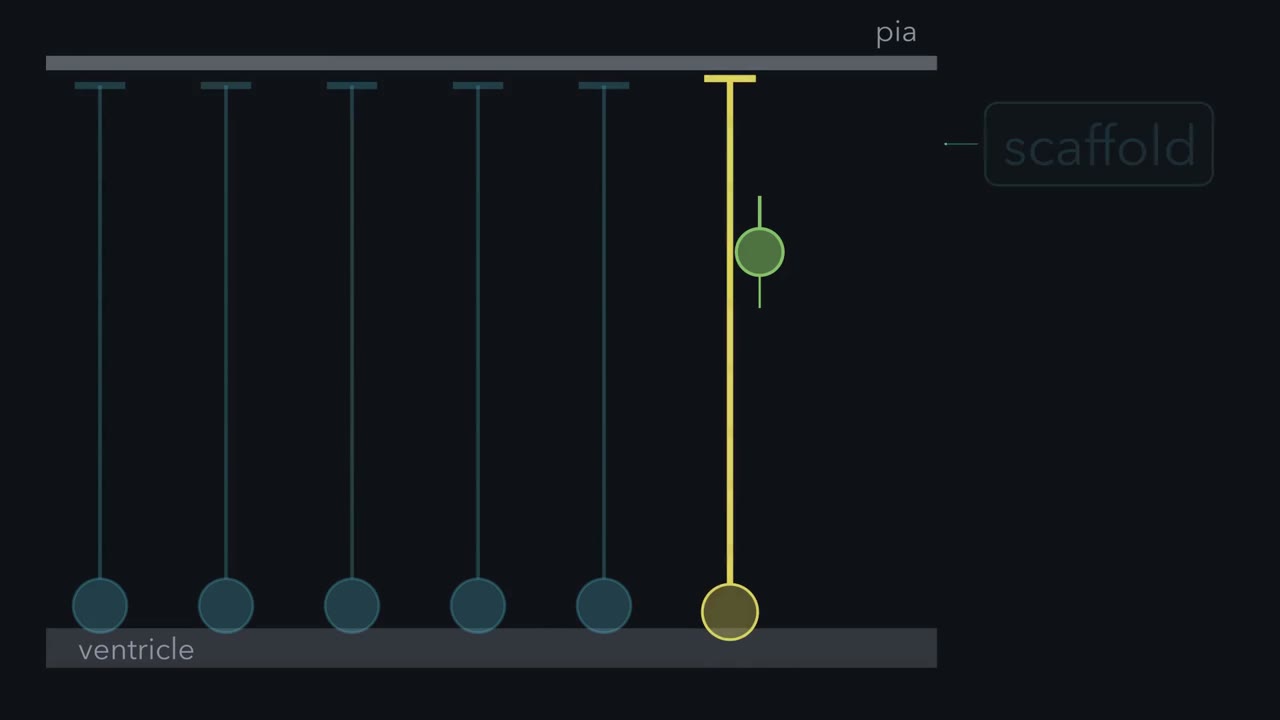
The first puzzle has an answer: the scaffold is the source. The second has a partial answer: the trip to the ventricle fits the centrosome and may let more cells share the surface. What the cortex gets is a count: how many radial glia each division keeps, and what each spent daughter yields.
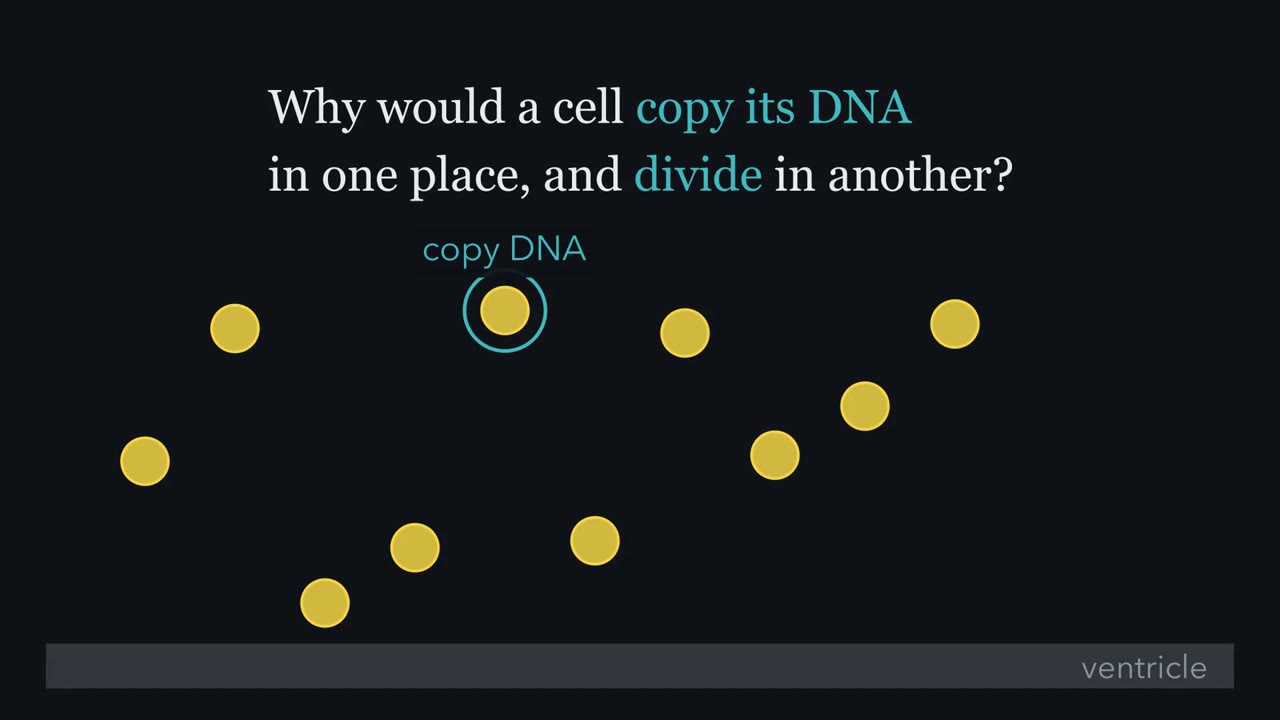
In rodents, radial glia, long seen as mere scaffolding, make most cortical neurons. Why does such a progenitor copy its DNA in one place and divide in another?
Continue in the lesson: The Ventricular Zone: Radial Glia as Stem Cells →
3:51 · Free, with captions and a transcript. The lesson has the full text, the questions and the sources.
More films from this lesson
How this film was made. Narration: an AI narrator voice (Kokoro, af_heart) reading narration written from this lesson's text. Animation: AI-generated in code (Manim) by Claude, a schematic with no drawn molecular structures. Captions come from the narration script. See something wrong? Report it.