Films · Developmental Neuroscience
Mark It, Move It
Read the transcript of “Mark It, Move It”
Film transcript: Mark It, Move It
How do you follow a cell that leaves home? You have to mark it before it goes. And the mark has to last. Julia Platt opened the question in 1893, working on the mudpuppy, a salamander. In fixed sections, she followed cells from the crest into the arches, where head cartilage forms. Cartilage was supposed to be mesoderm, and her evidence was indirect. The claim was long doubted. The lasting mark came from Nicole Le Douarin. Quail nuclei carry a dense block of chromatin. Chick nuclei lack it. The mark is built into the cell. It neither fades nor dilutes as cells divide. Graft quail neural tube into a chick at the same level. Then map where the quail cells go.
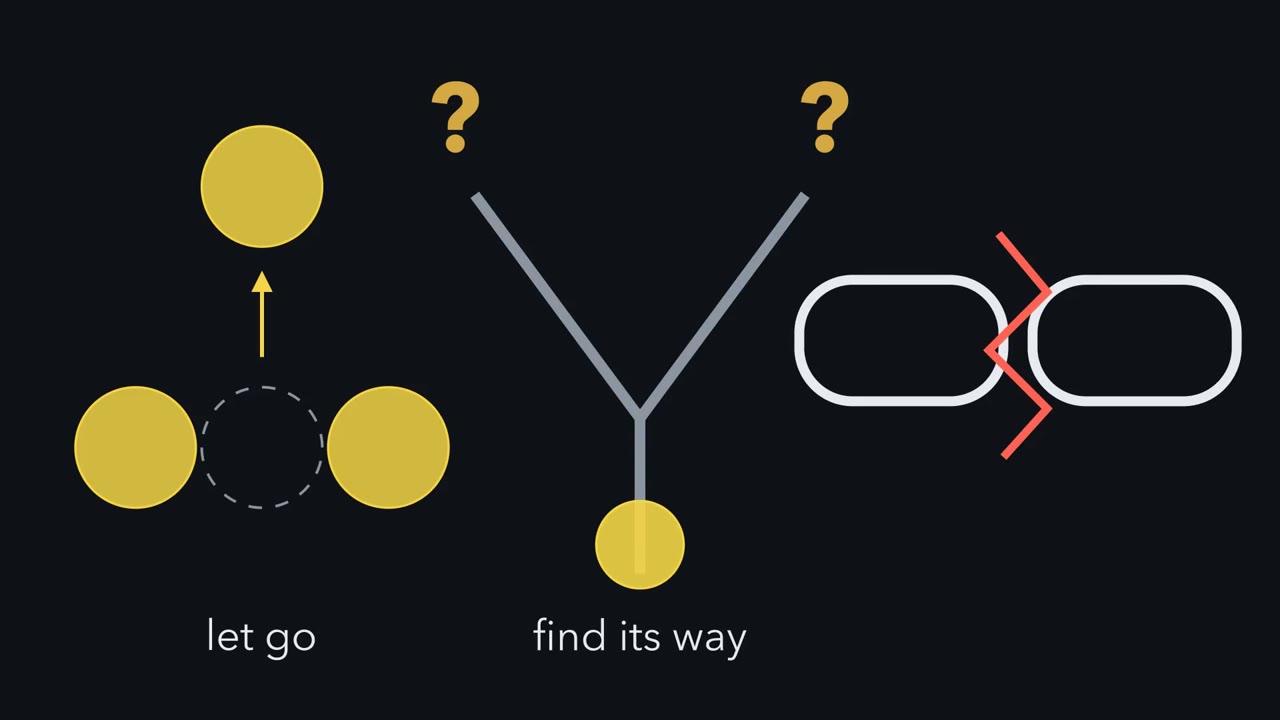
But a same-level graft cannot say why. Origin and route are tangled together. To separate them, move the cells. Predict. Take trunk crest from the adrenal level. At home it makes cells that release noradrenaline and adrenaline. Move it into the neck. Where will it go, and what transmitter will it use?
They go where neck crest goes, into the gut wall. There they form enteric ganglia. Some donor neurons are cholinergic: they use acetylcholine. The new site changed what the population made. Swap the other way, and neck crest placed at the adrenal level makes adrenal medulla and sympathetic derivatives. The skeleton behaves differently. In most early grafts, trunk crest in the head made little or no cartilage. Under some conditions, trunk crest can make cartilage. So the start biases the options, and the surroundings help choose. Now predict. One cell in a dish makes neurons and pigment cells. Would it make both in the embryo?
Not necessarily. A dish shows what a cell can make. Tracing in the embryo shows what it did make. In 1988, both methods found some single cells that made several types. Whether the typical cell does is still debated. The takeaway. Move the cells, and the pattern appears. The start biases the options, and the journey helps choose.
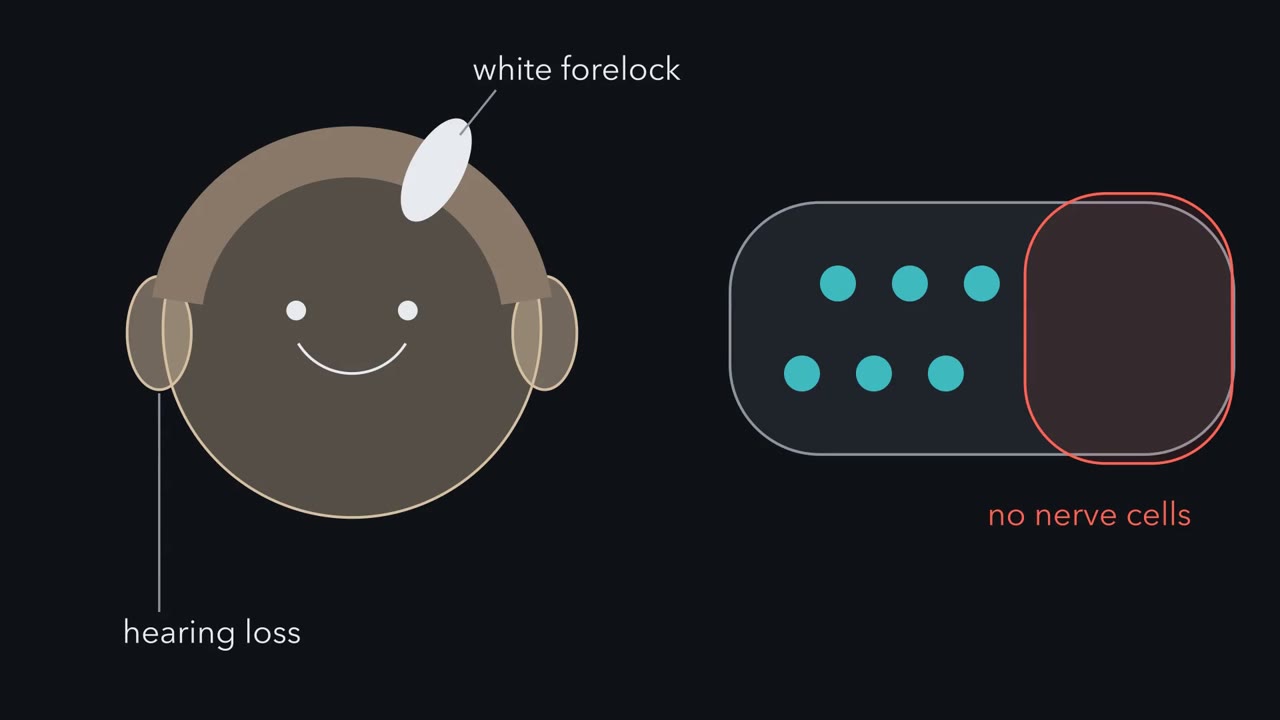
Why can one mutation leave a child with part of the colon without gut neurons, a white forelock and deafness?
Continue in the lesson: The Neural Crest: Cells That Leave Home →
2:41 · Free, with captions and a transcript. The lesson has the full text, the questions and the sources.
More films from this lesson
How this film was made. Narration: an AI narrator voice (Kokoro, af_heart) reading narration written from this lesson's text. Animation: AI-generated in code (Manim) by Claude, a schematic with no drawn molecular structures. Captions come from the narration script. See something wrong? Report it.