Films · Developmental Neuroscience
Switch It On with a Drug
Read the transcript of “Switch It On with a Drug”
Film transcript: Switch It On with a Drug
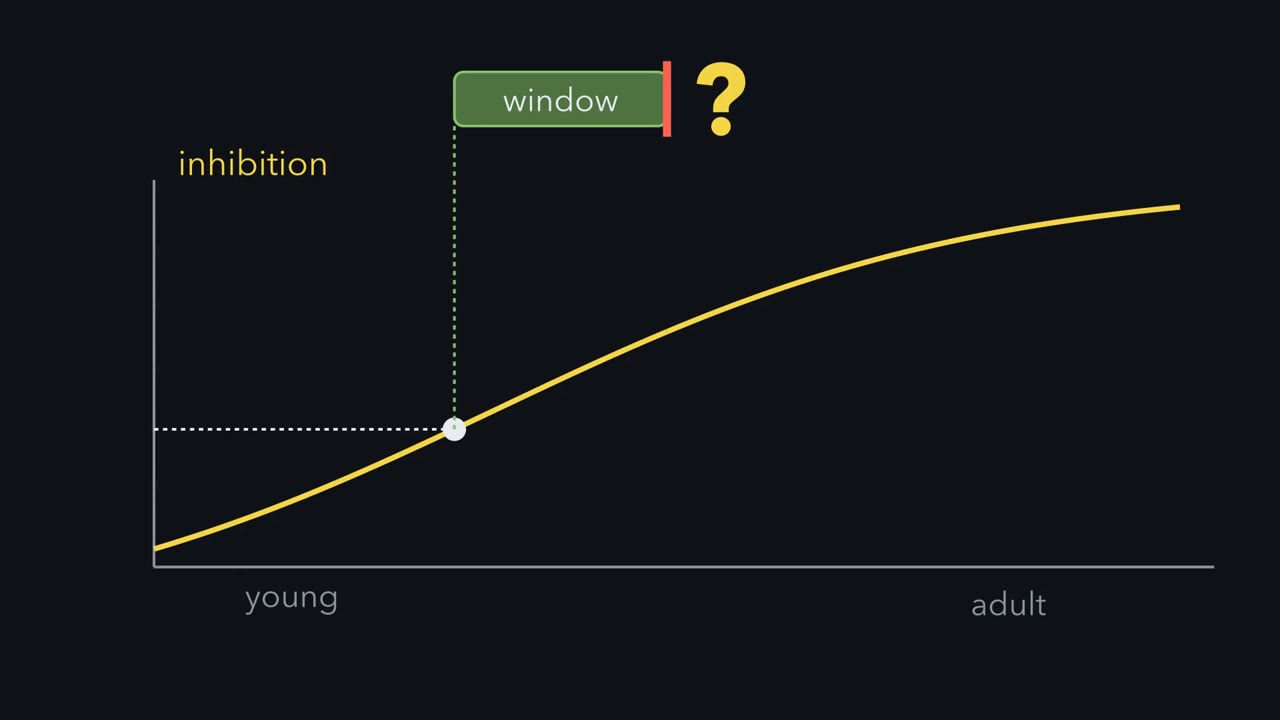
If the window waits for inhibition, what happens in a mouse that cannot release enough GABA? Inhibitory neurons make GABA with two enzymes. One, called GAD65, sits at the synaptic terminal. It tops up the supply when the neuron fires hard. A knockout lacks a working copy of that gene. Pause and predict. Inhibition quiets neurons. Should a knockout's cortex shift more than normal when one eye closes?
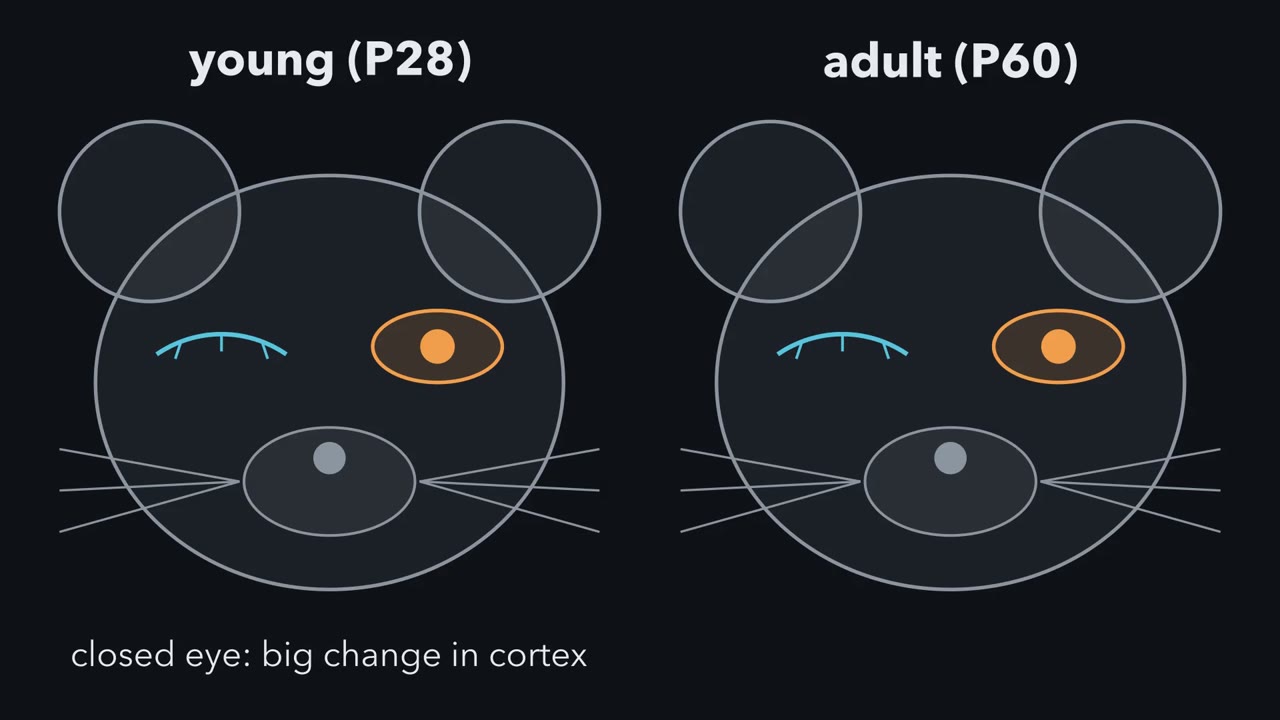
It does not shift at all. Its neurons still respond to vision. What failed was the change. Now add diazepam. It binds the GABA receptor at a site between an alpha and a gamma subunit. It makes the receptor respond more strongly to GABA. But it cannot open the channel alone. So it amplifies the GABA the knockout still releases. Given during deprivation, it restored the shift. The drug did not shift the cortex by itself. The shift went toward the eye that stayed open. Inhibition is permissive. The difference between the eyes is instructive. Pause and predict. Raise a knockout to day 60, long past the normal window. Give diazepam and close one eye.
It shifts. The capacity waited into adulthood. Age had not closed a window that had never opened. Give diazepam to a normal mouse at about day 15, before its window. It shifts early. Give a second group two days of diazepam after eye opening, then close one eye at day 28. Much less shift is left. The window opened early and was gone by day 28. In knockouts, two days of diazepam near the start of deprivation switched plasticity fully on. So in young cortex, a brief boost of inhibition can start a window without having to stay present. This should feel backward. Why would less inhibition make a cortex harder to change? The inhibition implicated here is thought to come largely from basket cells.
Their synapses cluster on the cell bodies of pyramidal neurons. One leading idea: maturing basket-cell inhibition sharpens when pyramidal cells fire. That could let the circuit tell which eye reliably drives each cell. This is a hypothesis, not a settled mechanism. The experiments establish the order: inhibition first, then plasticity. Takeaway: inhibition opens the window like a trigger. The open eye still decides which way the cortex shifts.
A mouse that lacks one enzyme for making GABA keeps its critical period waiting for months. One drug starts it.
Continue in the lesson: Opening and Closing a Critical Period →
3:02 · Free, with captions and a transcript. The lesson has the full text, the questions and the sources.
More films from this lesson
How this film was made. Narration: an AI narrator voice (Kokoro, af_heart) reading narration written from this lesson's text. Animation: AI-generated in code (Manim) by Claude, a schematic with no drawn molecular structures. Captions come from the narration script. See something wrong? Report it.