Films · Developmental Neuroscience
The Vertebrate Readers: DCC and UNC5
Read the transcript of “The Vertebrate Readers: DCC and UNC5”
Film transcript: The Vertebrate Readers: DCC and UNC5
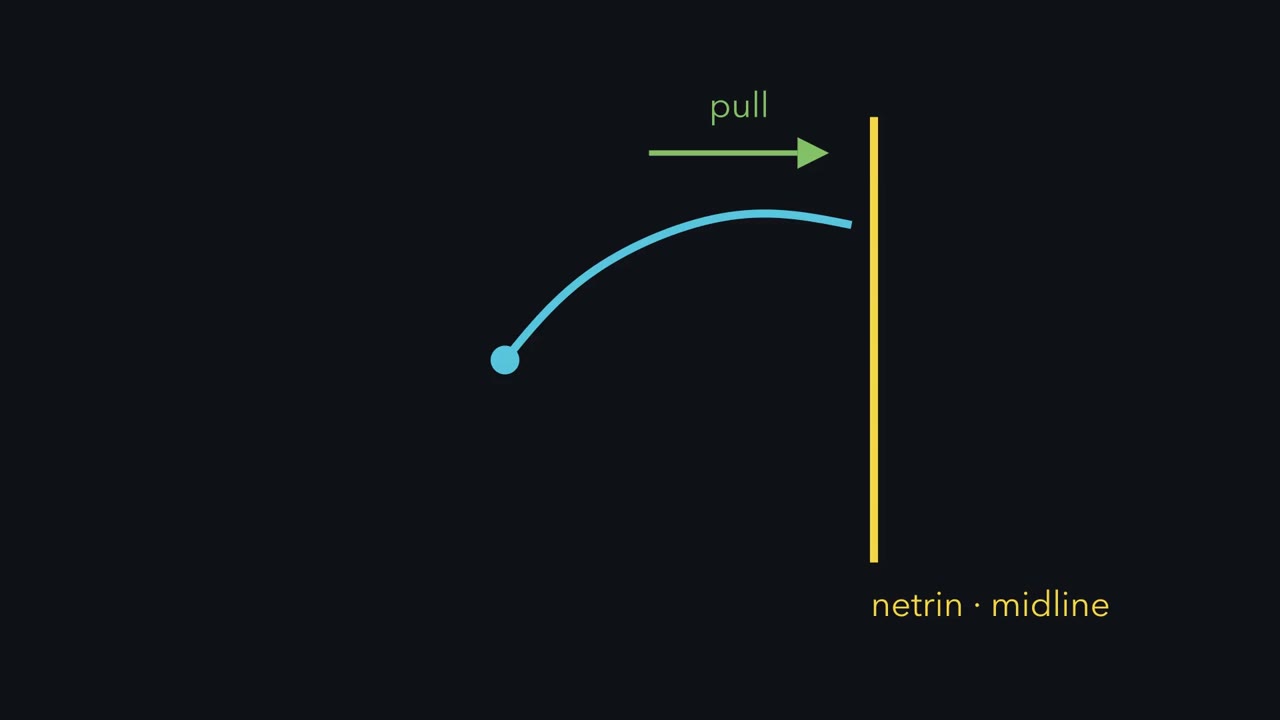
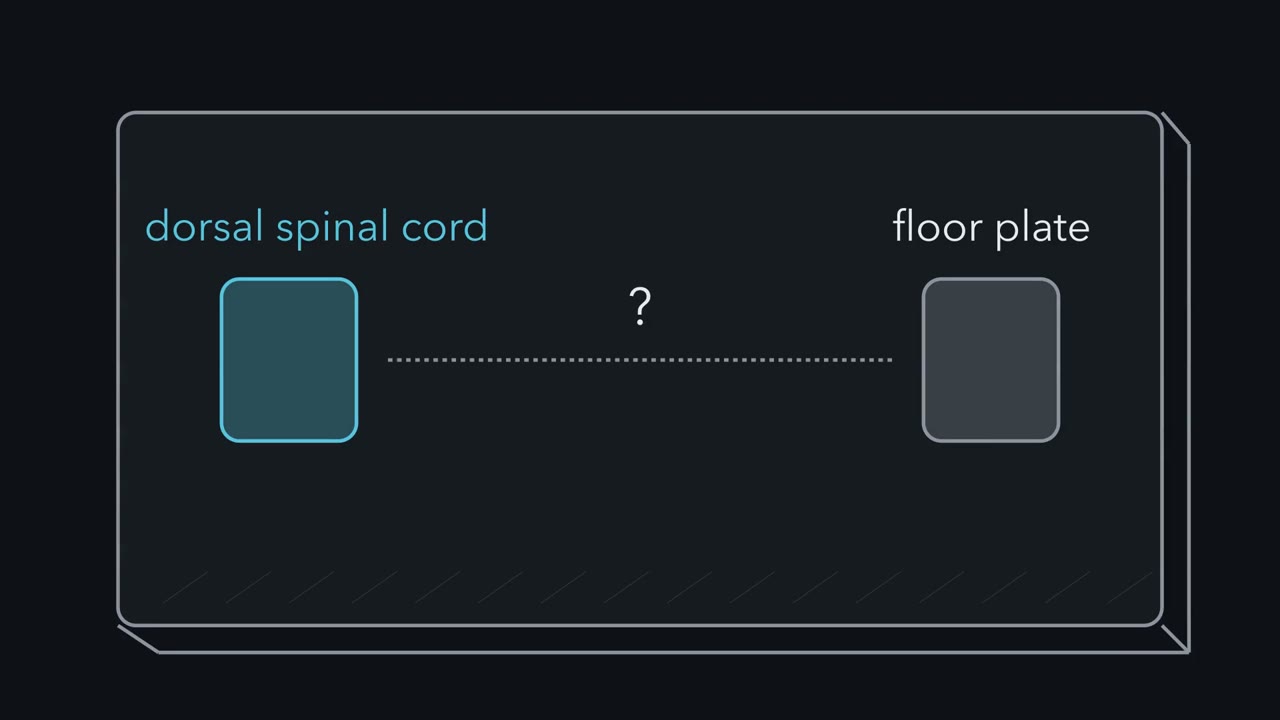
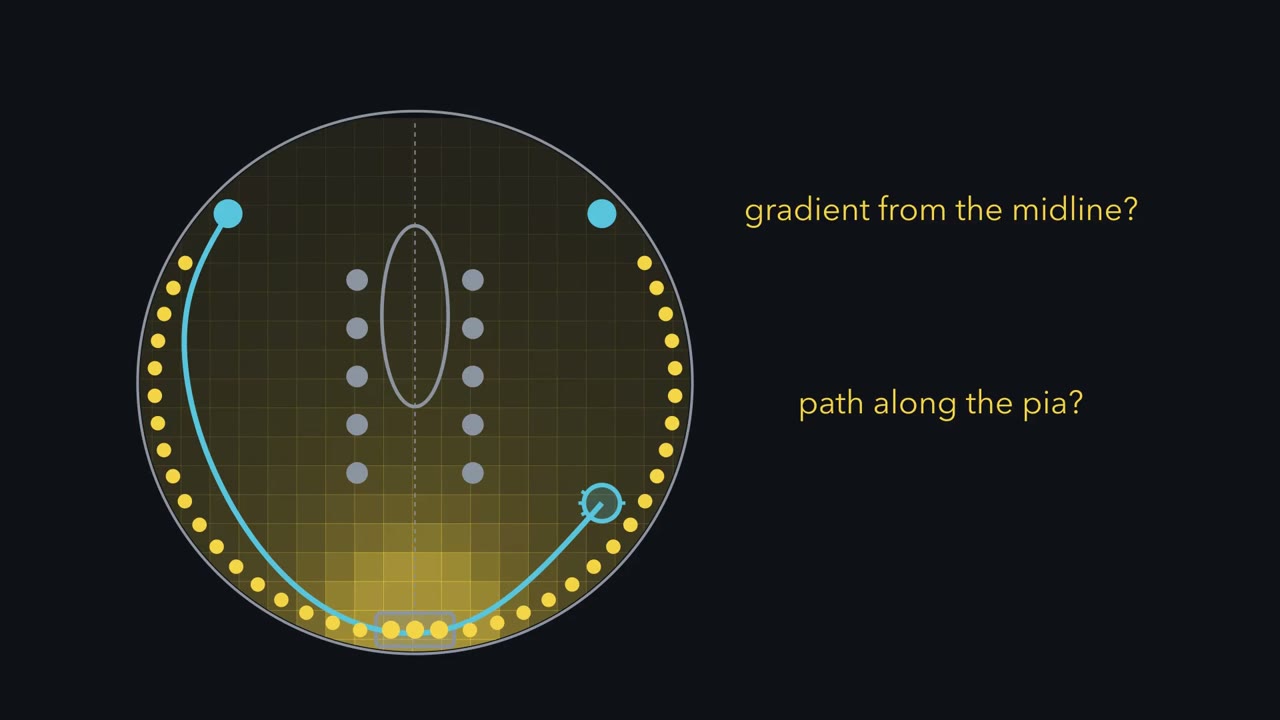
The worm found two readers for one cue. Do vertebrate growth cones use the same ones? Back on the spinal cord map, follow the commissural axons to the floor plate. The worm's toward reader, UNC-40, turned out to resemble a human protein. Its name is DCC, Deleted in Colorectal Cancer. It was first studied as a cancer gene. In 1996, Tessier-Lavigne's laboratory tested DCC in rat embryos, spinal explants and cultured cells. They showed three things. First, DCC is on commissural axons. Second, netrin-1 binds cultured cells that display DCC. Third, they added an antibody that blocks DCC to spinal explants with netrin. What should happen to the outgrowth?
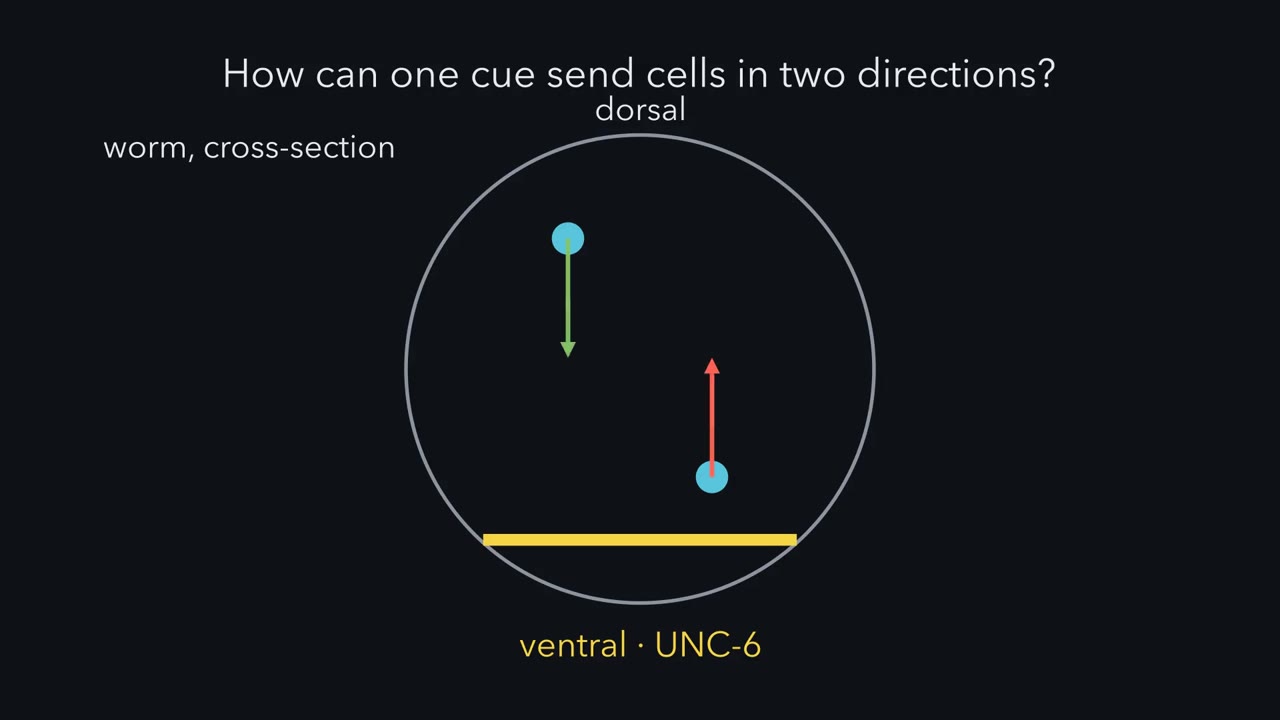
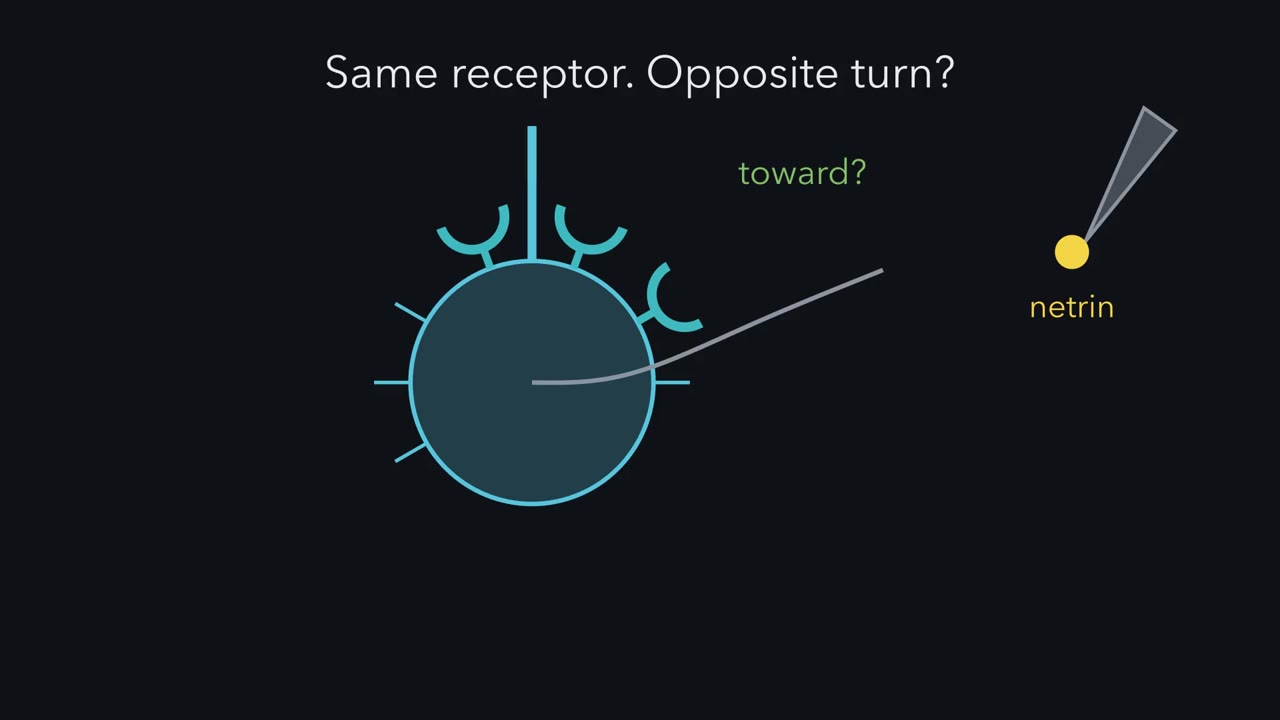
The antibody selectively blocked netrin-evoked outgrowth from the spinal explants. In the same journal issue, worm work showed that UNC-40 is needed in the moving cells themselves. The mouse confirmed both partners. Mice with little or no netrin-1 had misrouted spinal commissural axons. They also lacked several forebrain commissures. Mice lacking DCC had similar defects. Remove the cue or remove the reader, and commissural axons fail in much the same way. Now repulsion. In 1995, netrin-1 repelled trochlear motor axons in explant cultures. So the second puzzle is real in vertebrates. Different growth cones, same cue, opposite turns. The worm already suggested why: different readers.
In the netrin-1 mutant, though, trochlear axons were largely normal. Other repellents also guide them. The fly shows how the repulsive reader works. Its Unc5 receptor is a repulsive netrin receptor. Unc5 alone is enough for short-range repulsion. Long-range repulsion also needs Frazzled, the fly's DCC-family receptor. So the receptor layer reads like this. DCC draws a growth cone in. UNC5 receptors add repulsion. Treat that as a starting point. DCC-family receptors also take part in some repulsion. And netrin has other receptors and partners. The takeaway: the cue is shared, and the receptors a growth cone carries set the first answer.
The same protein pulls one axon toward the midline of the embryonic spinal cord and pushes another away. What decides?
Continue in the lesson: Netrin and DCC: One Cue, Two Answers →
2:54 · Free, with captions and a transcript. The lesson has the full text, the questions and the sources.
More films from this lesson
How this film was made. Narration: an AI narrator voice (Kokoro, af_heart) reading narration written from this lesson's text. Animation: AI-generated in code (Manim) by Claude, a schematic with no drawn molecular structures. Captions come from the narration script. See something wrong? Report it.