Films · Developmental Neuroscience
Level and Time
Read the transcript of “Level and Time”
Film transcript: Level and Time
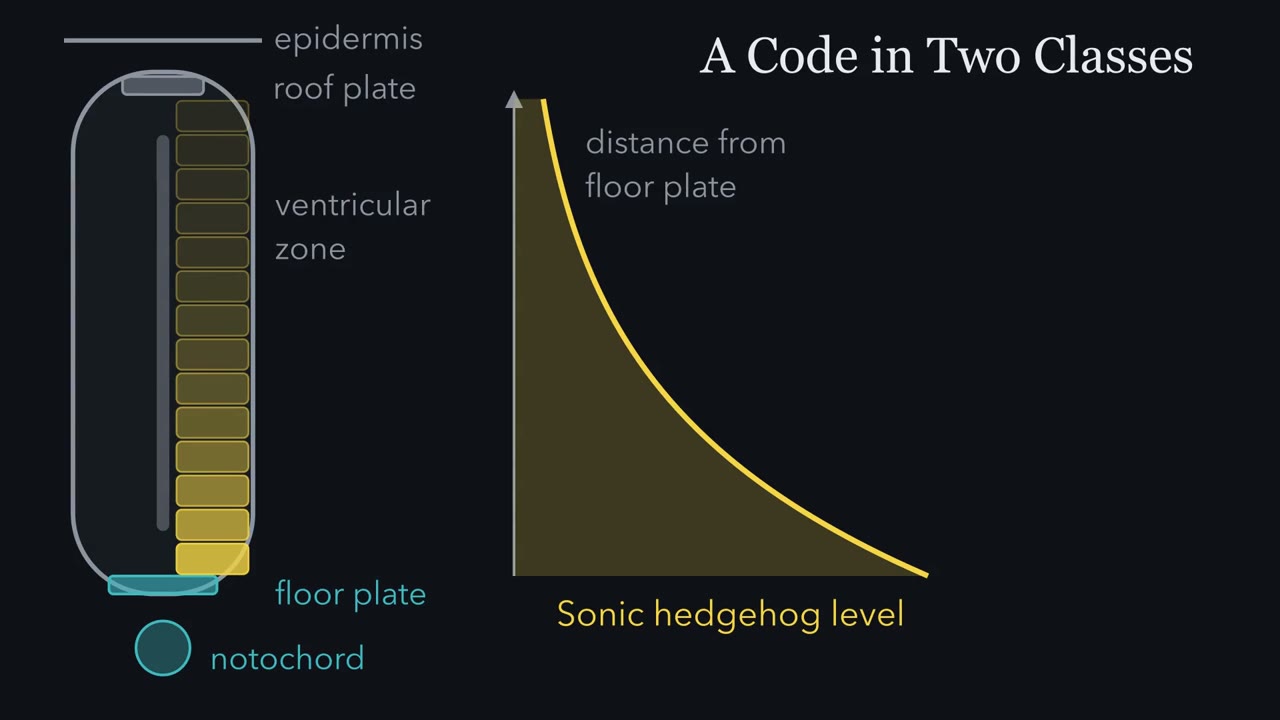
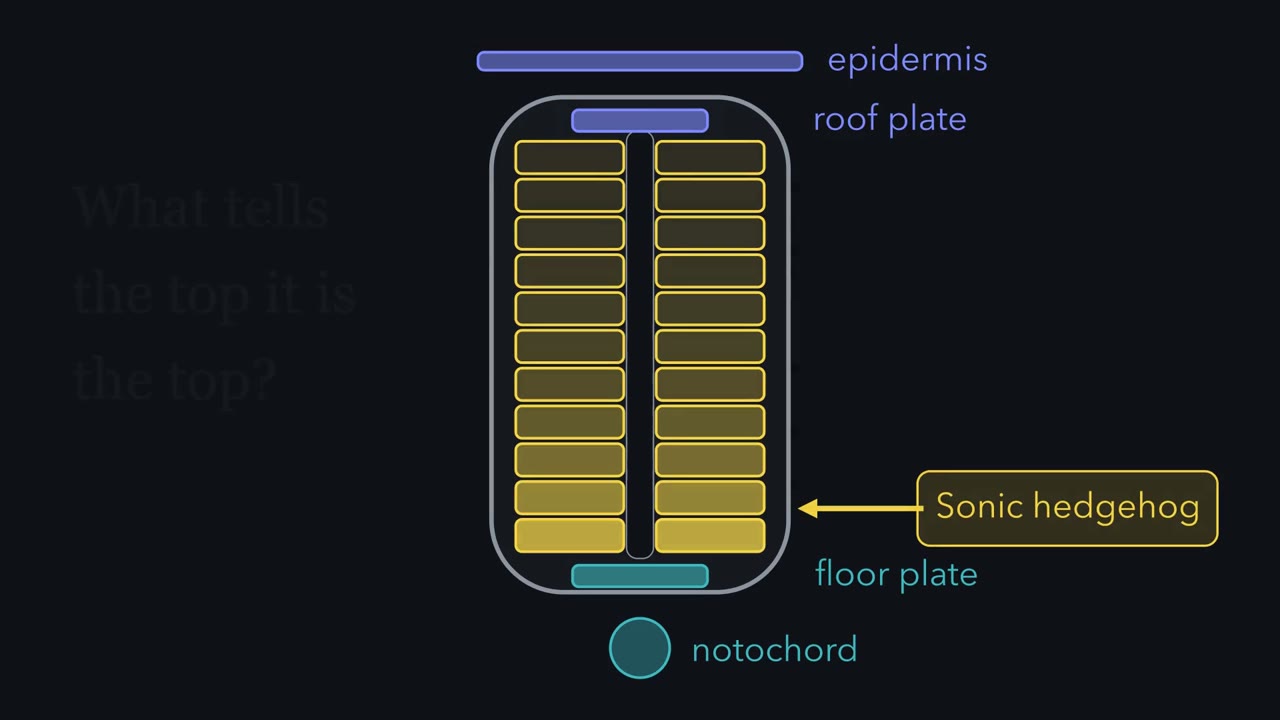
Does a cell simply measure how much Sonic hedgehog it sees? Or does time matter too? Concentration turned out to be only half of the reading. Part of the other half lies in the brake. Recall the brake. Patched holds the pathway off, and Sonic hedgehog lifts it. Here is the twist. Patched1 is also one of the genes Sonic hedgehog turns on. That sounds backwards. More receptor should mean more sensitivity. But Patched is a brake. In chick neural cells, signaling builds part of its own brake. Then it takes more signal to keep going. Picture two cells starting at once. One gets a low dose of Sonic hedgehog. The other gets a high dose. Both make more Patched as they go.
Predict. In which cell does signaling fade first? The low-dose cell. Its signaling soon fades. The high-dose cell keeps signaling for longer. In 2007, Eric Dessaud, James Briscoe and colleagues reported this in chick neural cells. The cells adapt. Signaling inside them fades, partly through rising Patched1. Higher concentrations kept signaling going longer. A level becomes a length of time. Now test it. Hold the dose fixed, and change only how long the cells are exposed. What should longer exposure do?
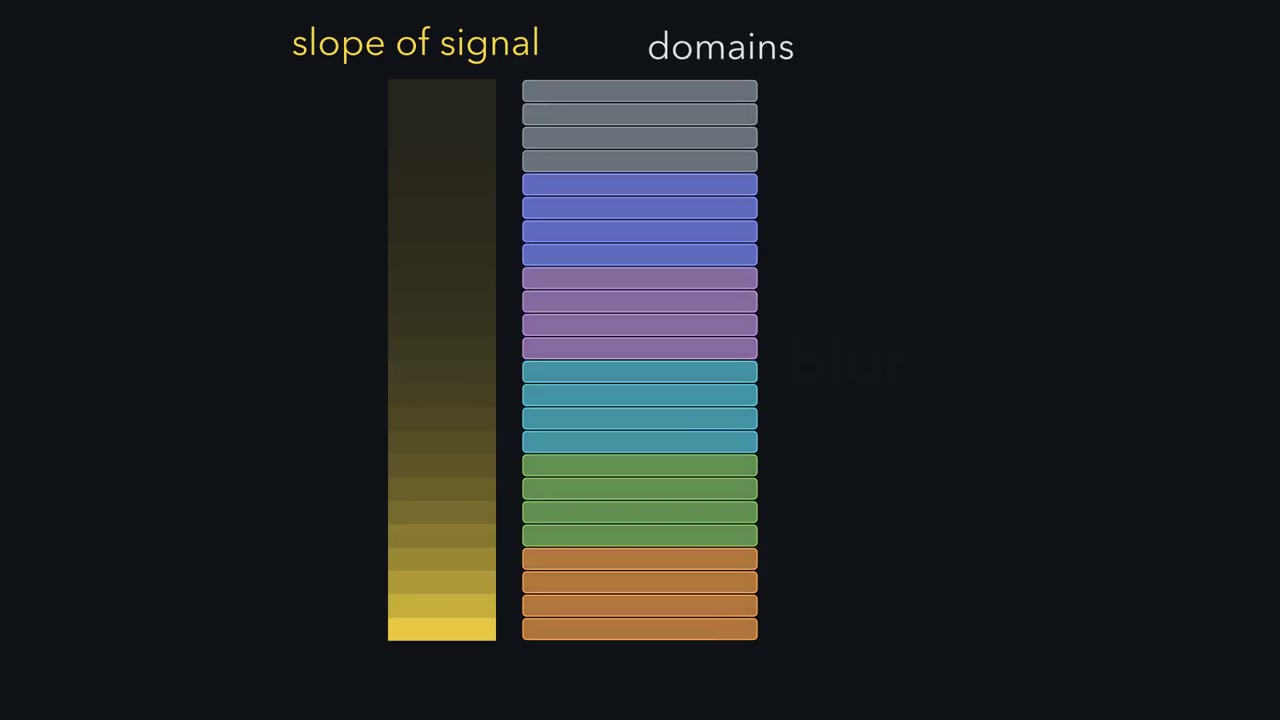
In 2010, the same laboratory did this in chick explants. At a fixed dose, longer exposure gave progressively more ventral identities. The time a cell spends signaling is part of its address. Roughly, a cell's identity tracks how much signaling it has had so far. It also needs the signal to continue for a while to keep that identity. In chick explants, cutting the signal off with cyclopamine made cells fall back to more dorsal fates. Duration carries information in many signaling pathways. Here, it helps set which positional identity a progenitor adopts. The simulation in this lesson lets you set both the level and the time, and watch the domain change.
The takeaway: a progenitor reads both how much signal it gets, and for how long.
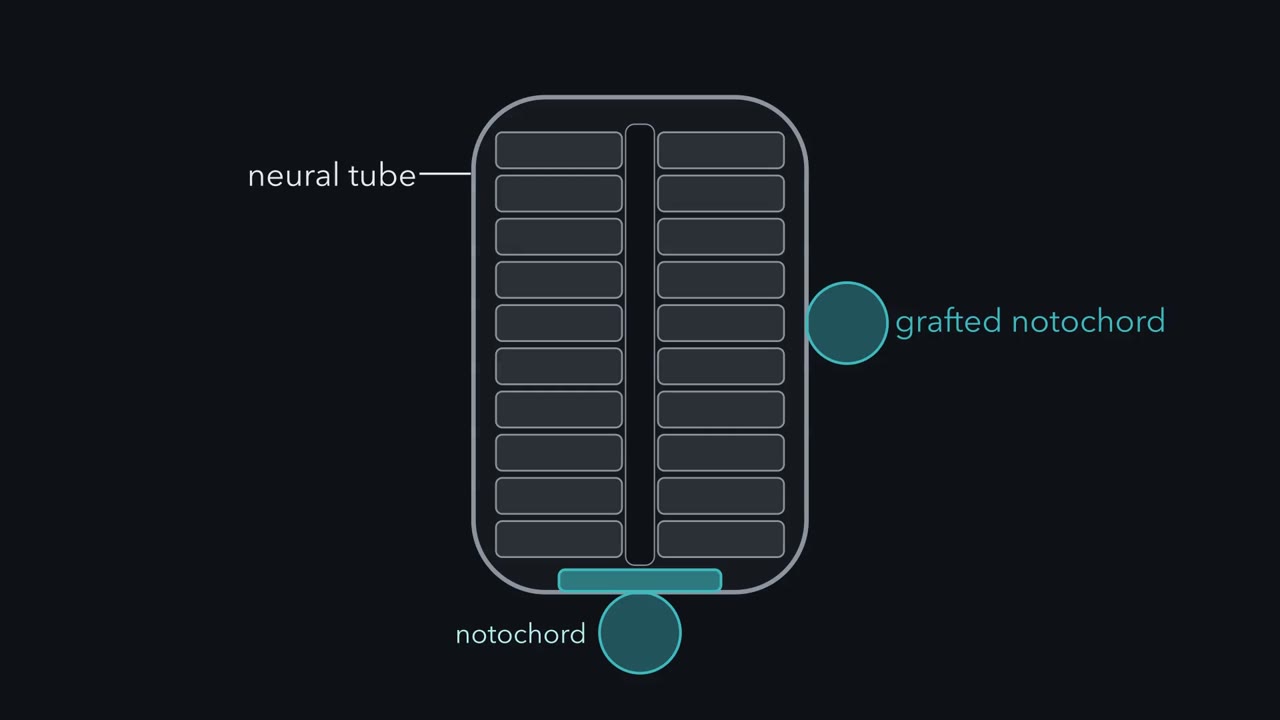
Graft a second notochord beside a chick neural tube, and the tube grows a second floor.
Continue in the lesson: Ventral to Dorsal: Sonic Hedgehog and BMP in the Neural Tube →
2:43 · Free, with captions and a transcript. The lesson has the full text, the questions and the sources.
More films from this lesson
How this film was made. Narration: an AI narrator voice (Kokoro, af_heart) reading narration written from this lesson's text. Animation: AI-generated in code (Manim) by Claude, a schematic with no drawn molecular structures. Captions come from the narration script. See something wrong? Report it.