Rapamycin Needs a Partner
Read the transcript of “Rapamycin Needs a Partner”
Film transcript: Rapamycin Needs a Partner
In December 1964, an expedition worked on Rapa Nui. One member, Georges Nogrady, collected soil. In Montreal, a bacterium was found to kill fungi. In 1972, Suren Sehgal isolated the compound and named it rapamycin. But why does it also stop cells from growing? In Michael Hall's laboratory, Joseph Heitman spread yeast on plates containing rapamycin, and kept the rare mutants that grew anyway. Most had mutations in the gene for FPR1, the yeast version of FKBP12. So rapamycin does nothing alone. It must first bind FKBP12. The pair is the poison. The remaining mutants had changes in one of two new genes, TOR1 and TOR2, for target of rapamycin. The screen was published in 1991.
In 1994 and 1995, several laboratories found the mammalian protein the pair binds. Its name is mTOR. mTOR is a large kinase. Beside its kinase domain is a small domain called FRB. Rapamycin sits between FKBP12 and FRB like glue between two blocks. The bound FKBP12 narrows the substrates' path to the active site. The drug does not compete with ATP. It is allosteric: it acts from a site other than the active site.
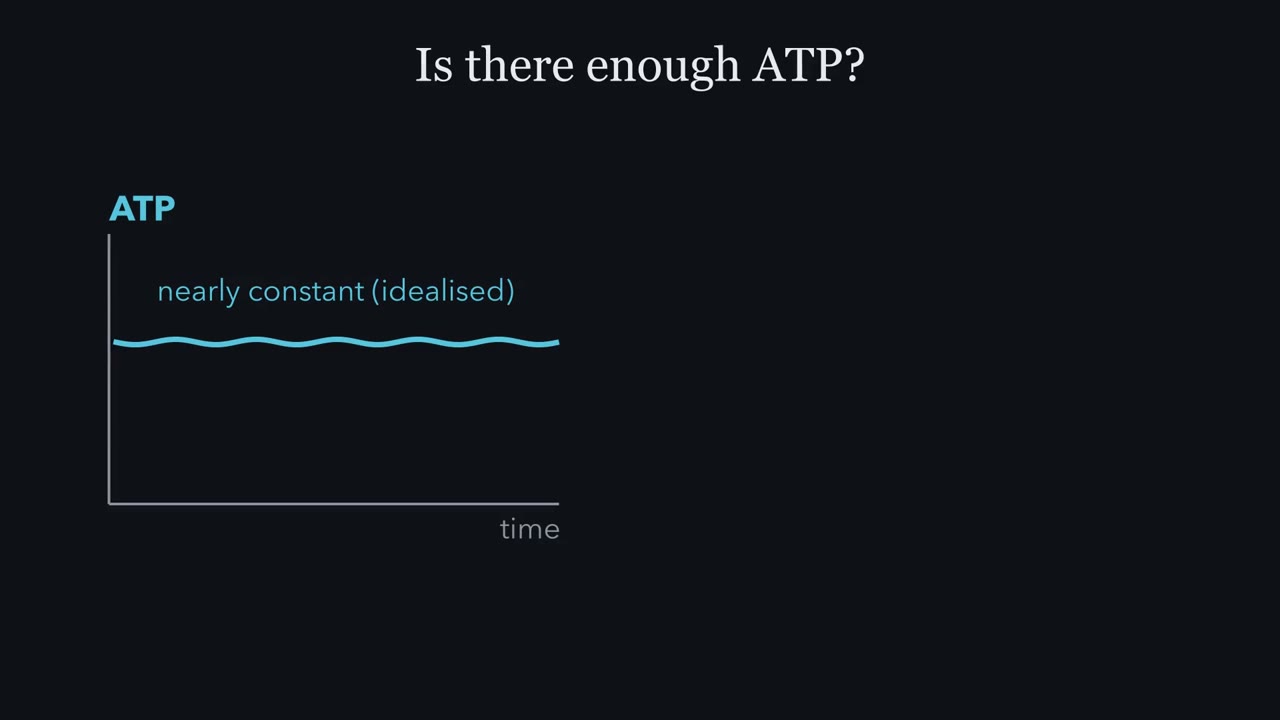
How does a cell decide it can afford to grow?
Continue in the lesson: mTOR and AMPK: Reading Nutrients and Energy →
1:49 · Free, with captions and a transcript. The lesson has the full text, the questions and the sources.
More films from this lesson
How this film was made. Narration: an AI narrator voice (ElevenLabs, Sarah) reading narration written from this lesson's text. Animation: AI-generated in code (Manim) by Claude, a schematic with no drawn molecular structures. Captions come from the narration script. See something wrong? Report it.