Films · Developmental Neuroscience
A Quarter of the Push, Many Times the Errors
Read the transcript of “A Quarter of the Push, Many Times the Errors”
Film transcript: A Quarter of the Push, Many Times the Errors
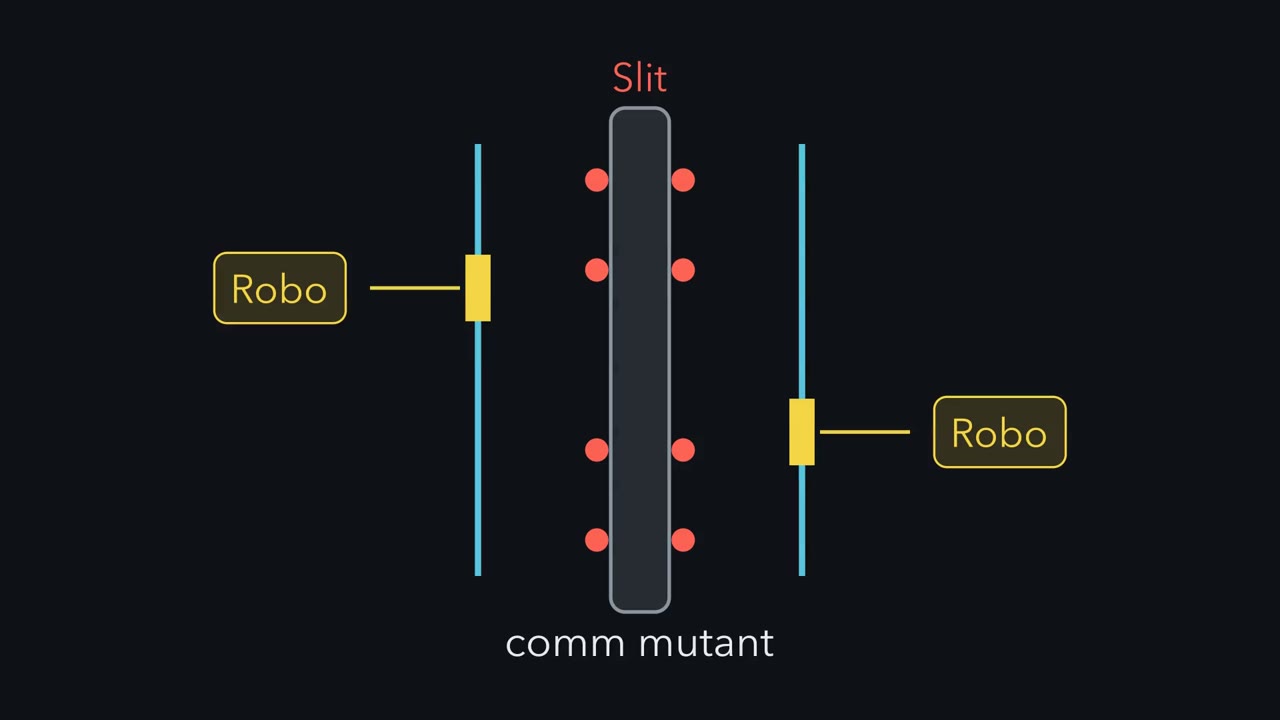
Robo is a receptor that keeps axons off the midline. So where is the repellent it receives? In 1999, a run of papers in one issue of the journal Cell named it. It is Slit, a large protein secreted by the midline glia. A companion paper showed that Slit proteins bind Robo receptors. Recombinant Slit2 repels embryonic spinal motor axons in culture. The fly genetics tested the link with flies missing one copy of each gene. Flies missing one copy are called heterozygotes. Here are made-up numbers in the spirit of that experiment. Score 50 segments per genotype for wrong crossings. Missing one copy of slit, 2 percent of segments go wrong. Missing one copy of robo, 4 Now remove one copy of each gene.
Under a simple independent-error model, you would expect about 6 What would a much bigger number mean? The made-up result is 32 That is far more than the singles together. Use a toy version of the rule. Count only Robo1, and let each factor scale with gene dose. Then one missing copy leaves half the push. One missing copy of each leaves a quarter. Suppose errors simply tracked the push that was lost. Then the double would barely differ from the singles. Now add a threshold. Segments vary, so the push varies a little from one segment to the next. With half the push, almost every segment still sits above the threshold. Few fail. With a quarter, the average push sits near the threshold.
Many segments drop below it. A jump this large points to a genetic interaction. A shared pathway with a threshold explains it simply. These numbers alone cannot prove that model. The binding data and the null mutants say that the process is a ligand acting on a receptor. One puzzle remains. If Slit is Robo's ligand, why do the null mutants look different?
Flies have three Robo receptors. Losing Robo1 removes much of the repulsion, so axons cross freely. Robo2 remains and still hears Slit. So axons are pushed out of the midline, though not kept from crossing back. Remove Robo1 and Robo2 together, and the ladder looks much like slit. Losing Slit removes the push through every Robo. Axons at the midline are not pushed out.
The takeaway: the ligand is shared, and the receptors share the work. Near threshold, small losses can make large effects.
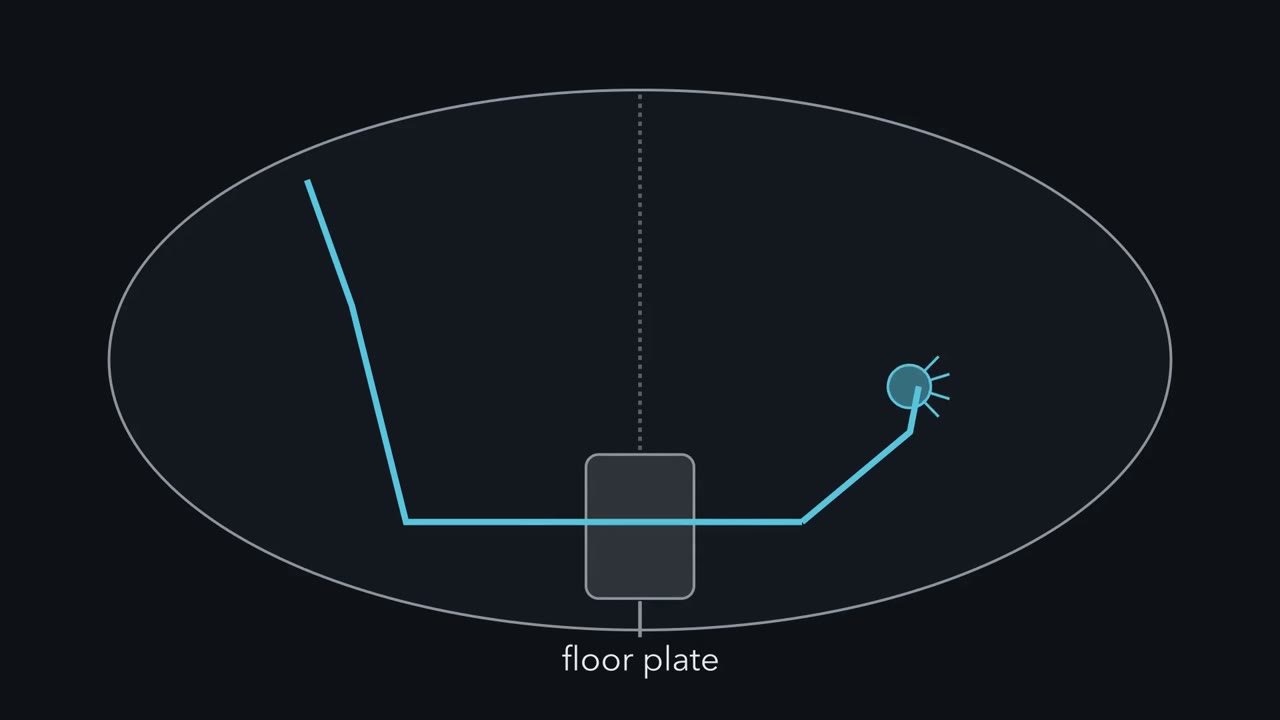
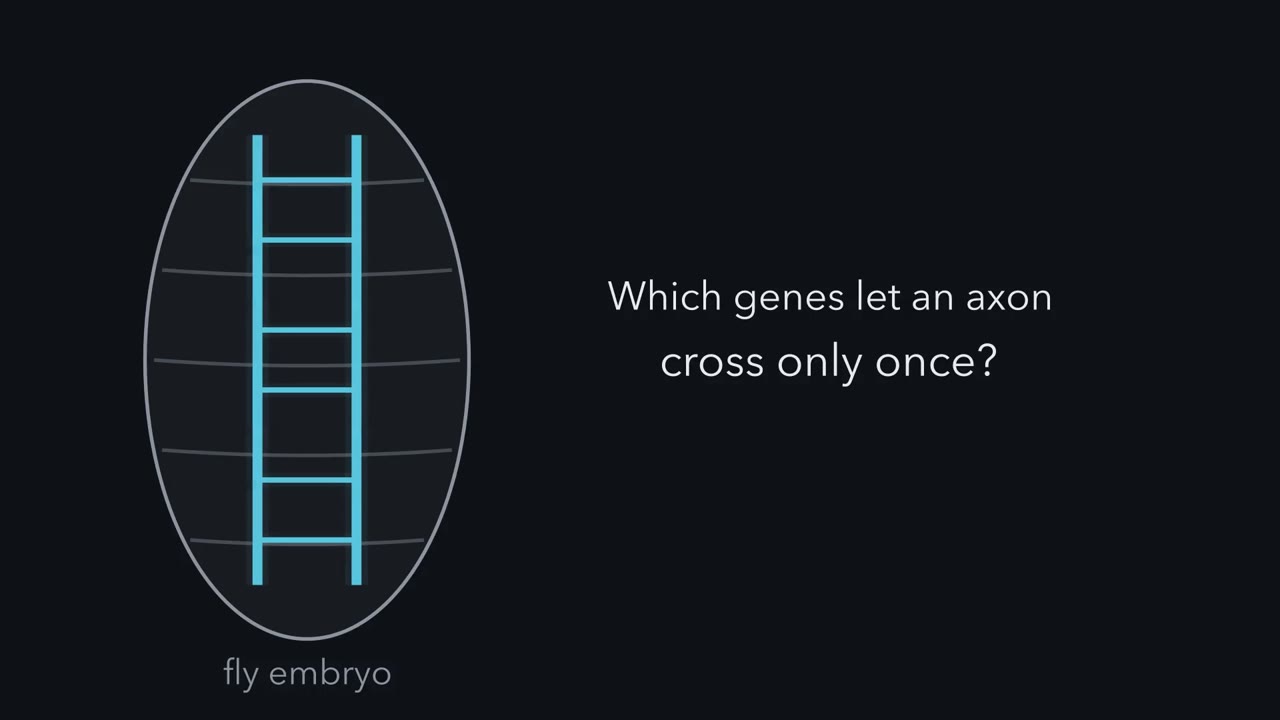
An axon is pulled toward the midline, crosses it, and then treats it as forbidden ground. What changed?
Continue in the lesson: Crossing the Midline Once: Slit, Robo and Comm →
3:07 · Free, with captions and a transcript. The lesson has the full text, the questions and the sources.
More films from this lesson
How this film was made. Narration: an AI narrator voice (Kokoro, af_heart) reading narration written from this lesson's text. Animation: AI-generated in code (Manim) by Claude, a schematic with no drawn molecular structures. Captions come from the narration script. See something wrong? Report it.