Films · Developmental Neuroscience
Grow the Pool, Then Spend It
Read the transcript of “Grow the Pool, Then Spend It”
Film transcript: Grow the Pool, Then Spend It
One pool of progenitors makes a few early neurons, then many later ones. How? In this simple model, every division gives two daughters. Each daughter either divides again, or leaves the cycle to become a neuron. The fraction that keeps dividing is called P. The fraction that leaves is Q, the leaving fraction. Together they make one. The rules are on screen. The pool after a cycle depends on P. The neurons made depend on Q. Walk 100 progenitors through three cycles, with Q rising each time. Assume no cells die. When Q is 0.3, 100 progenitors make 60 neurons and 140 progenitors. The pool grows. When Q is 0.5, 140 progenitors make 140 of each. The pool holds still.
When Q is 0.7, they make 196 neurons. Only 84 progenitors remain, so the pool shrinks. In 1996, Takao Takahashi, Richard Nowakowski and Verne Caviness measured Q in the mouse cortex. Q was low early. It crossed 0.5 on E14, in the eighth cycle. It rose to about 0.8 by E16. Their model spanned eleven cell cycles. The model covers the ventricular zone only. Intermediate progenitors in the subventricular zone add divisions of their own. Predict. The pool stops growing in the cycle where Q reaches one half. Is that when the most neurons are made?
No. Look back at the table. The next cycle makes more neurons from the same pool. In this rising example, the pool shrinks slowly just past 0.5 while Q climbs, so output rises one more cycle. In general, output rises only if 2 × (1 − this Q) × next Q beats this Q. Later the shrinking pool wins. In the simulation's rising sketch, output peaks in the ninth cycle, the one after Q reached 0.5. About 70 percent of its output comes once Q has reached 0.5. The exact peak depends on how Q rises.
So the cortex first builds its pool, then spends much of it. Neurons spent later go to more superficial layers. The sketch stops at cycle 11 with progenitors left; it does not model how neurogenesis ends. But the model counts how many daughters leave, not which identity they take. Do not read it as layer sizes. Try the simulation below this film. Find the cycle with the most neurons. The takeaway: below 0.5 the pool grows, and above it the pool shrinks. Output can keep rising a cycle after the pool stops growing.
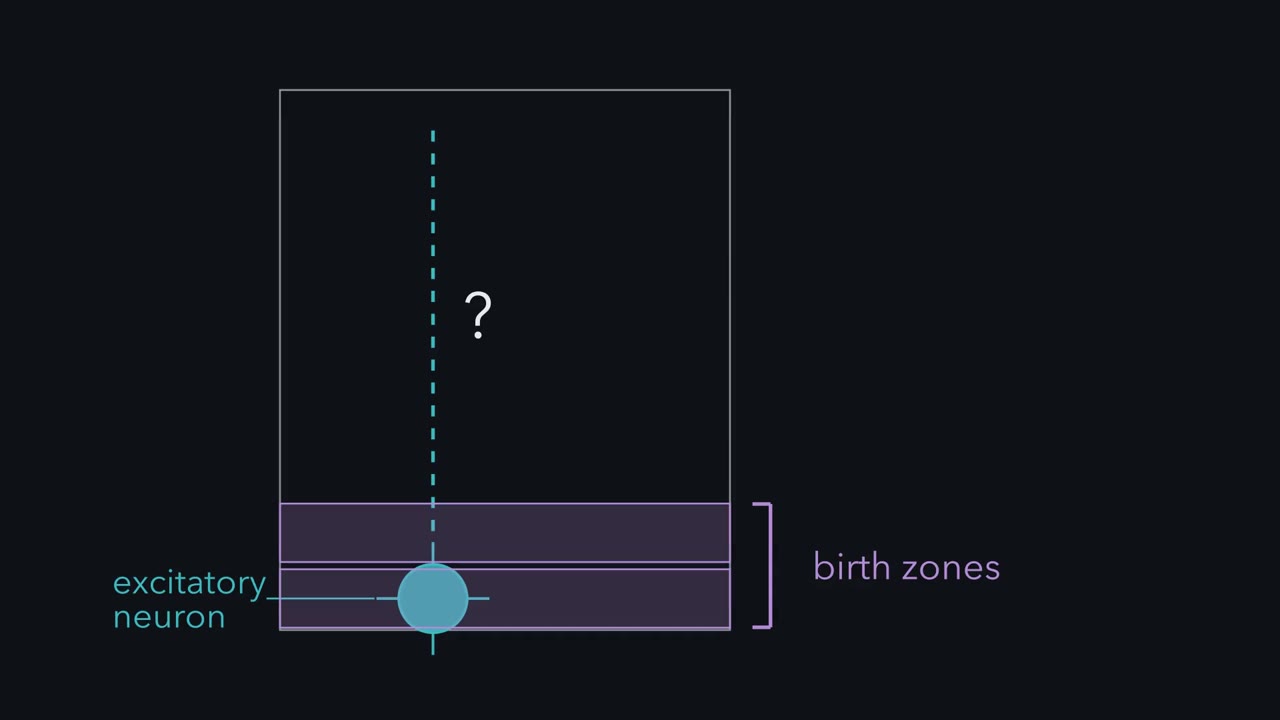
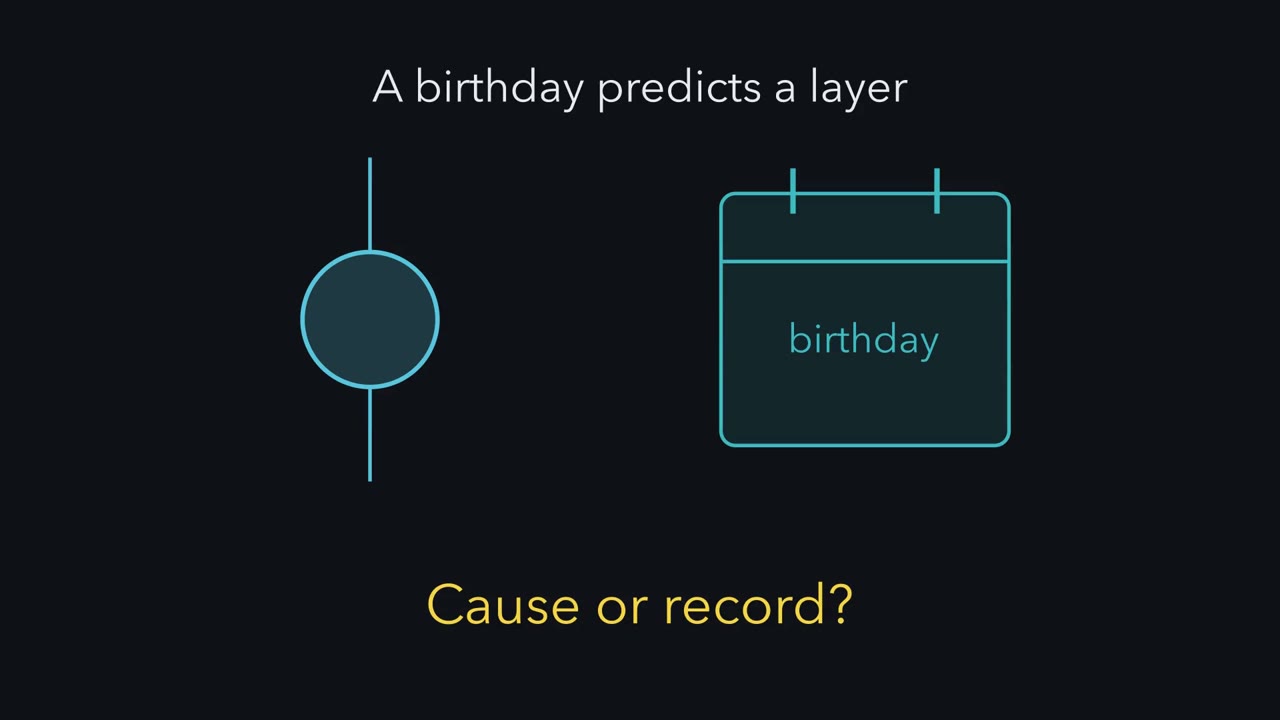
In the mouse cortex, the first cortical-plate neurons born end up deepest. Why do the latecomers climb past them?
Continue in the lesson: Birth Order and Fate: Temporal Identity and the Inside-Out Cortex →
3:15 · Free, with captions and a transcript. The lesson has the full text, the questions and the sources.
More films from this lesson
How this film was made. Narration: an AI narrator voice (Kokoro, af_heart) reading narration written from this lesson's text. Animation: AI-generated in code (Manim) by Claude, a schematic with no drawn molecular structures. Captions come from the narration script. See something wrong? Report it.