Films · Developmental Neuroscience
The Cue Marks the Place
Read the transcript of “The Cue Marks the Place”
Film transcript: The Cue Marks the Place
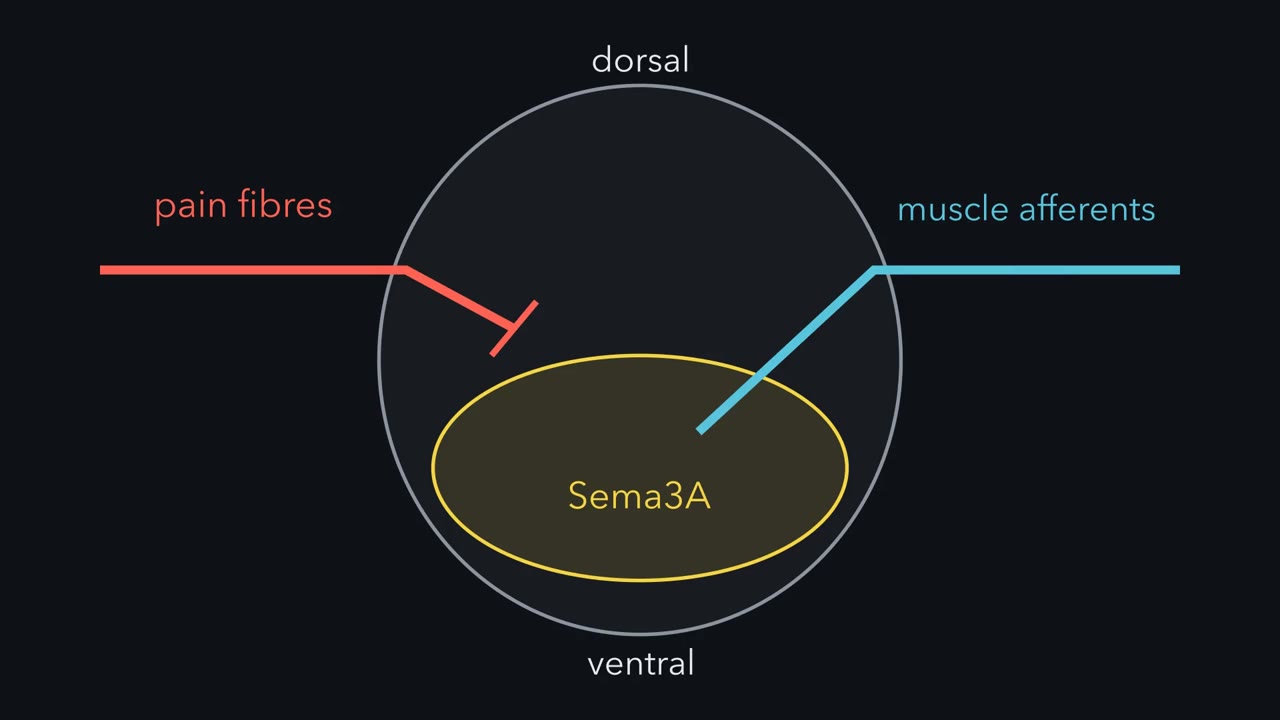
Two kinds of sensory axon enter the spinal cord side by side. One kind stops in the dorsal horn. The other runs on to the motor neurons. What sorts them? The ones that stop are small pain and temperature fibres. They depend on nerve growth factor The ones that go on are large muscle stretch fibres. They depend on neurotrophin-3 (NT-3).
The ventral cord was known to release something that inhibits sensory axon growth. A map needs walls as well as roads. To find a wall, you need an assay. Raper and Kapfhammer grew chick sensory neurons in a dish. Then they added membranes from embryonic brain.
Within minutes, many of the spread growth cones folded into thin tips. That is collapse. The fraction that collapsed was the readout. Remove the membranes, and the effect reverses. Would any membrane do this? And what kind of molecule is doing it?
Membranes from liver or fibroblasts did not cause collapse. So not just any membrane would do. Heat and trypsin destroyed the activity. So it was a protein. Raper's group purified it from chick brain and named it collapsin. Today it is called Sema3A, a semaphorin.
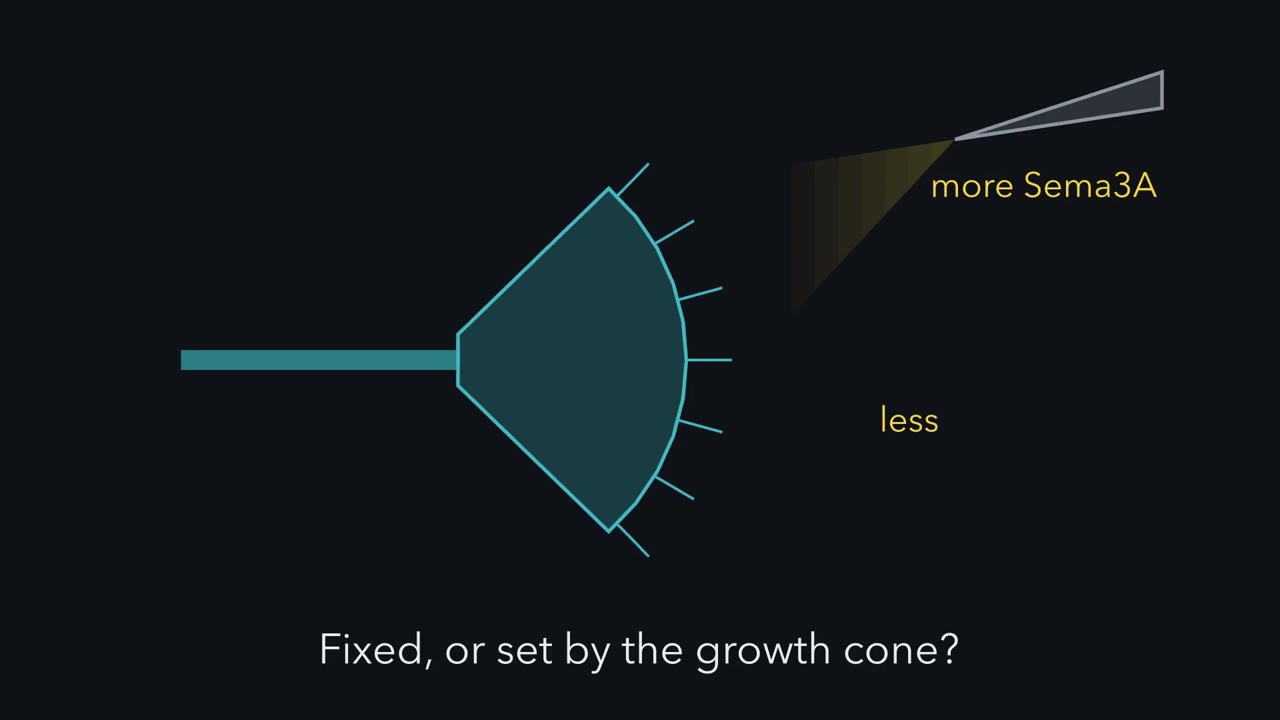
Then came a first clue. Growth cones from the retina did not respond to it. Here is the idea to carry through. The cue marks the place. The growth cone decides what it means. Does a growth cone answer the cue at all? First, it needs the receptor.
Which way does it answer? That depends on its internal state. If it is repelled, does it turn, or collapse? In typical assays, a gradient from one side turns it away. A high dose all round can fold it up, where the preparation supports collapse. Layout, dose, exposure and the cell all matter.
The rule has limits. Which cue is made, where, and how much still matter. And in the living cord, other cues share the job. Back to the two axons. One wall, two answers. The takeaway: the same cue stops one axon, and barely affects the other.
Pain fibres and muscle afferents enter the spinal cord side by side. One kind stops in the dorsal horn; the other runs on to the motor neurons. What sorts them?
Continue in the lesson: Semaphorins and Repulsion →
2:47 · Free, with captions and a transcript. The lesson has the full text, the questions and the sources.
More films from this lesson
How this film was made. Narration: an AI narrator voice (Kokoro, af_heart) reading narration written from this lesson's text. Animation: AI-generated in code (Manim) by Claude, a schematic with no drawn molecular structures. Captions come from the narration script. See something wrong? Report it.