A Vesicle Can Carry A Signal
Read the transcript of “A Vesicle Can Carry A Signal”
Film transcript: A Vesicle Can Carry A Signal
Cells release tiny sacs of membrane called extracellular vesicles. These vesicles can carry a signal from one cell to another. The clearest case comes from the immune system. B cells release vesicles that carry MHC class II molecules, each holding a peptide. Those vesicles switch on T cells, but only the T cells whose receptor recognises that peptide. Nothing has to get inside. A scrap of membrane can show a T cell what a whole B cell would show it. Where do these vesicles come from? The answer starts inside the cell. The membrane of a compartment called an endosome buds inward, away from the cytosol, the cell's own fluid. It pinches off small vesicles into its own interior, and these carry receptors.
A compartment packed with them is a multivesicular body. In B cells, compartments like this are where MHC class II is loaded with peptide. Picture this compartment as a sorting room with two doors, – one to the incinerator and one to the street. If it fuses with a lysosome, its vesicles and their cargo are digested. If it moves to the cell surface and fuses with the plasma membrane, its vesicles are released intact. Those released vesicles are exosomes. The route was first seen in young red blood cells, throwing out transferrin receptors they no longer needed. The direction of budding fixes the geometry. The bud forms away from the cytosol, so the inside of an exosome is a sample of cytosol, and its outer face is the face that was the outside of the cell.
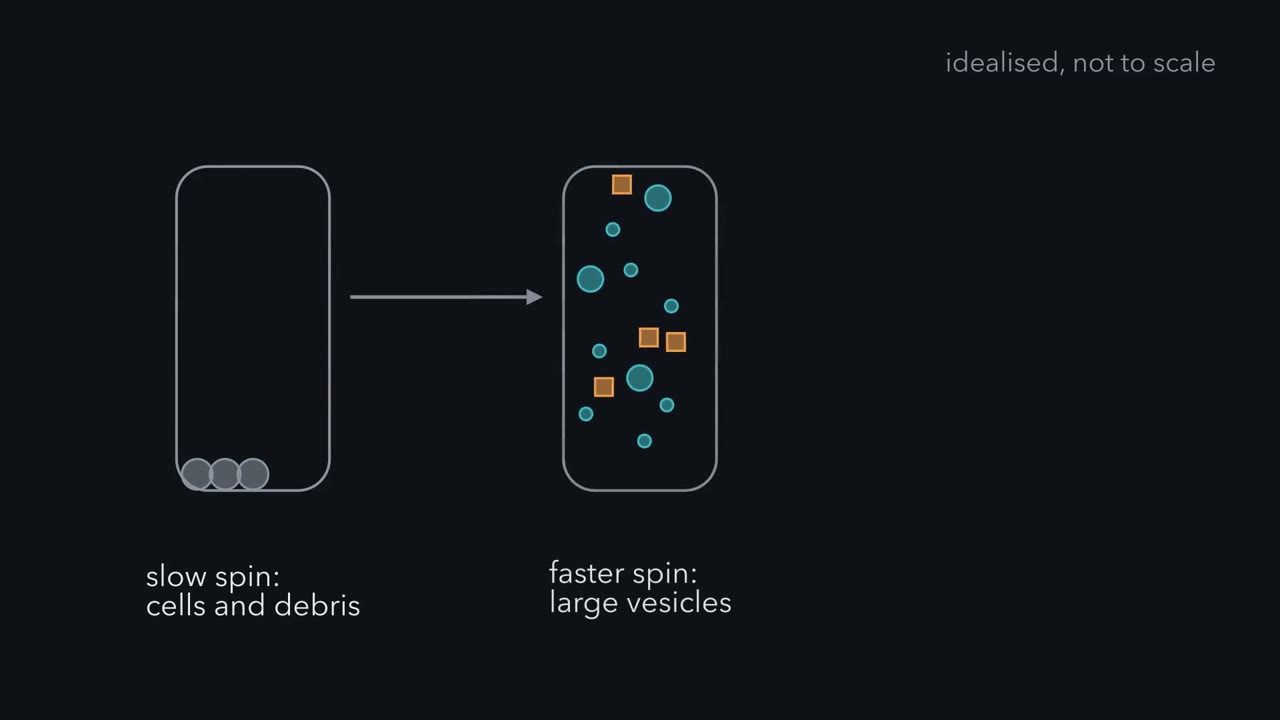
So a receptor, or an MHC molecule, still points outward, as it did on the plasma membrane. That is why a vesicle can show a ligand to another cell. A vesicle could act on another cell in three ways. A ligand on its surface can bind a receptor on the target, and nothing has to get in. The vesicle can fuse with a membrane of the target and release its contents into the cytosol. Or the target can swallow it. Swallowing alone shows little, because what a cell swallows usually ends in the lysosome. Proving a case takes controls, because the centrifuge that collects vesicles also brings down protein clumps and other particles of the same size. Ask whether the activity floats with the vesicles on a density gradient, and whether it is specific, as the T cell response was.
And mind the name. Vesicles that bud straight from the cell surface look the same, so unless you can show where a vesicle formed, call it an extracellular vesicle.
B cells release vesicles that carry their peptide-loaded MHC molecules, and those vesicles switch on only the T cells that recognise that peptide. A scrap of membrane can carry a signal.
Continue in the lesson: Exosomes and Extracellular Vesicles: Signals Between Cells →
2:51 · Free, with captions and a transcript. The lesson has the full text, the questions and the sources.
More films from this lesson
How this film was made. Narration: an AI narrator voice (Kokoro, af_heart) reading narration written from this lesson's text. Animation: AI-generated in code (Manim) by Claude, a schematic with no drawn molecular structures. Captions come from the narration script. See something wrong? Report it.