From Cluster to Cell Type
Read the transcript of “From Cluster to Cell Type”
Film transcript: From Cluster to Cell Type
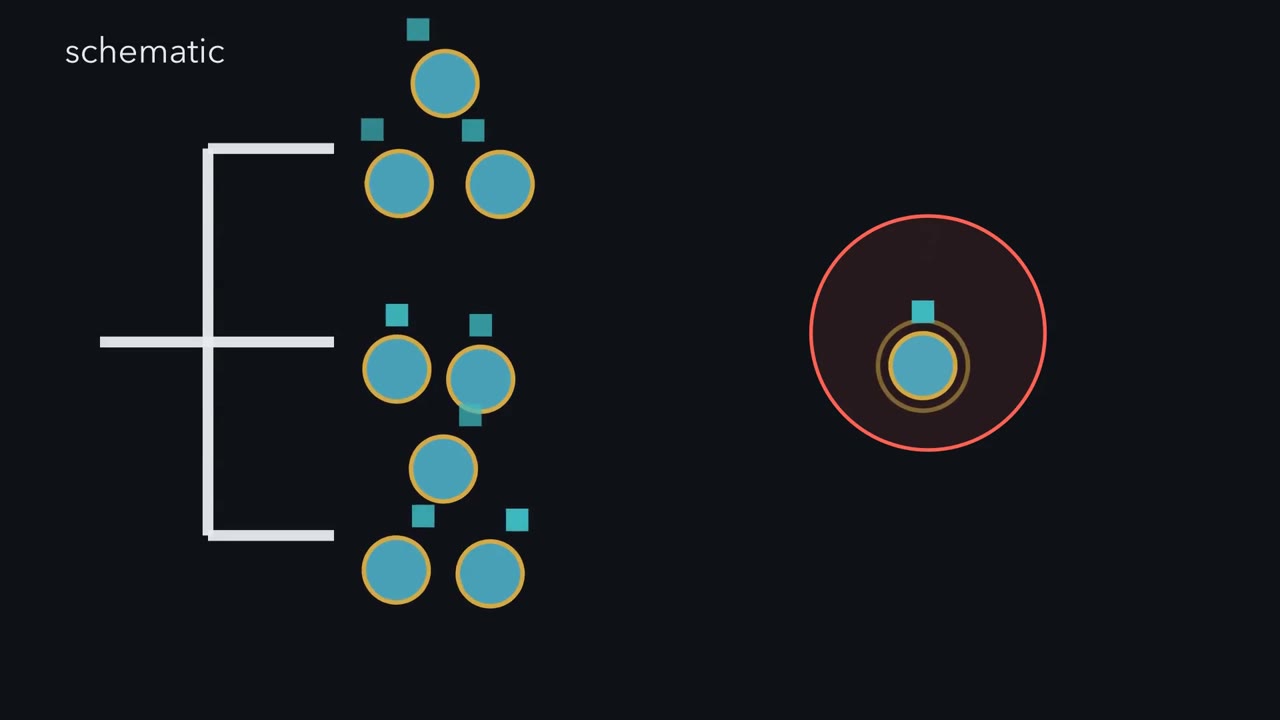
Three sensory-neuron atlases report eleven, seventeen and eighteen groups. Which count should you trust? Watch the same question change as the evidence changes. Each dot is one mouse dorsal root ganglion neuron. Its measured RNA becomes a teal barcode. A clustering method groups similar barcodes. Similar barcodes suggest similar molecular programs, but they do not reveal a job by themselves. The result is a map of this sample, not a finished catalogue of nature. Now keep every neuron and every RNA count unchanged. Turn the clustering resolution higher. Will the tree gain neurons, lose neurons, or split existing branches?
It splits branches. No new neuron appeared. That simple dial shows how resolution can change a count. In real atlases, one mouse data set resolved eleven classes, and a larger census resolved seventeen. A cross-species integration later reported eighteen dorsal root ganglion subtypes. Those counts also differ in sample and method. Resolution is only one control.
Whole cells and nuclei capture different RNA, so preparation can hide a branch. A sample can also miss rare cells before clustering even begins. Injury can pull several established types into one red transcriptional state. Neither change is simply extra zoom. A transcriptomic cluster is therefore a candidate type. It earns a functional type claim when it recurs and an independent measurement anchors it. Its count and boundary still depend on resolution, preparation and state. Genetic access supplies that test in mice. A marker from the teal RNA profile drives a gold label in the candidate cells. If one marker is too broad, requiring two expression histories narrows the label to their intersection.
Researchers can follow those labelled endings into skin, then stimulate the skin while imaging the ganglion. In one toolkit, labelled subtypes covered different tested ranges of force and temperature. A distinct ending or response range is independent of the clustering settings. It strengthens the type claim without making every cell identical. The test still has limits. A driver records marker expression, sometimes during a chosen time window. Calcium signals do not count every spike. The result supports a functional type only within the preparation, stimuli and cells actually tested. So do not ask which atlas won. Ask what produced each boundary, then ask whether another measurement reaches the same group. That turns a cluster from a pattern into a testable biological claim.
Single-cell sequencing split the touch, pain and itch neurons of the dorsal root ganglion into many molecular kinds, far finer than C, Aδ and Aβ fibres. When does one of those clusters earn the name cell type?
Continue in the lesson: Sensory Neurons by Their Genes: the Atlas Era →
3:29 · Free, with captions and a transcript. The lesson has the full text, the questions and the sources.
More films from this lesson
How this film was made. Narration: written from this lesson's text and read by an AI narrator voice (Kokoro, af_heart). Animation: AI-generated in code (Manim) by Claude, a schematic with no drawn molecular structures. Captions come from the narration script. See something wrong? Report it.