Films · Developmental Neuroscience
Drive Against Resistance
Read the transcript of “Drive Against Resistance”
Film transcript: Drive Against Resistance
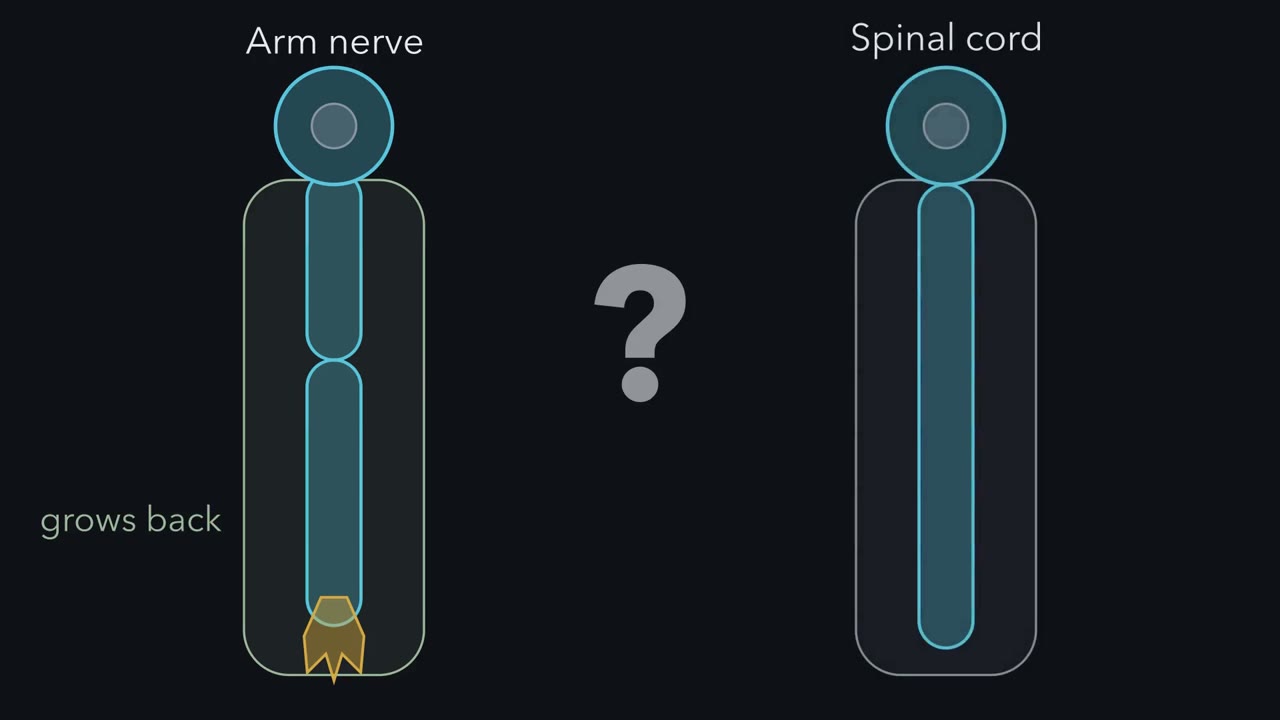
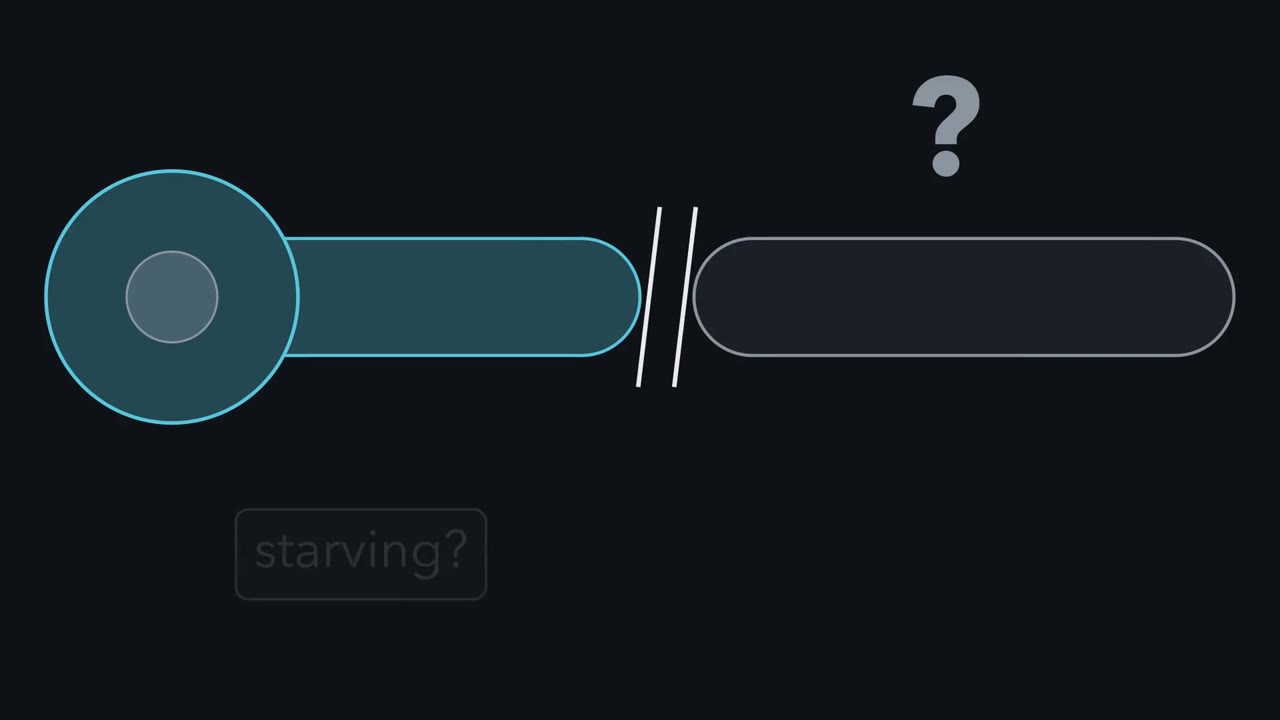
The attached piece can regrow. So why does it stall in the brain and spinal cord? In 1981, Samuel David and Albert Aguayo changed mainly the tissue. In adult rats, they bridged the medulla to the spinal cord with peripheral nerve. If adult central neurons cannot grow long axons at all, nothing grows. If the tissue stops them, what should you see?
Central axons grew about 30 millimetres along the grafts. Back in central tissue, they soon stopped. Now keep the central tissue, and change mainly the neuron. In 2008, Zhigang He's laboratory deleted PTEN from retinal ganglion cells in mice. PTEN is a brake on cell growth. Then they crushed the optic nerve, which is central tissue. Will the axons cross?
Some do. They come from a minority of the neurons, but far more than normal. So it is not a gate. Each experiment got growth while changing mainly one side. It is a balance. Picture neurons spread out by drive, and a line set by the tissue. Only neurons past the line regrow. Lower the line, or push the neurons up, and some get through. Here the line sits in the thin tail. So doing both passes more than the two gains added. With another spread, the gains might only add. This is a model, not data. Myelin proteins such as Nogo collapse growth cones. Yet mice lacking three of them barely regrow more. Why?
One way to see it: most neurons may sit far below the line. Lowering it a little moves few across. Other barriers remain, too. The scar resists, but also helps. In mice, removing its astrocyte border reduced stimulated regrowth. Change the scar, do not remove it. And regrowth is not recovery. At a steady millimetre a day, a metre takes about a thousand days, nearly three years. Over that long a time, Schwann cells lose their repair state, and distant targets are hard to reach.
Blocking SARM1 may help failing axons that are still attached. A fully severed stump cannot rejoin its cell body on its own. For regrowth, no single fix is enough. None yet restores function reliably in people. One cut, two fates. A program for the cut-off piece, and a balance of drive against resistance for the attached one.
A cut nerve in your arm can grow back. A cut tract in your spinal cord mostly cannot. Is the fault in the neurons or in what surrounds them?
Continue in the lesson: Injury and Regeneration: Why the Brain Does Not Regrow →
3:04 · Free, with captions and a transcript. The lesson has the full text, the questions and the sources.
More films from this lesson
How this film was made. Narration: an AI narrator voice (Kokoro, af_heart) reading narration written from this lesson's text. Animation: AI-generated in code (Manim) by Claude, a schematic with no drawn molecular structures. Captions come from the narration script. See something wrong? Report it.