Films · Developmental Neuroscience
A Glial Cell That Stops Respiring
Read the transcript of “A Glial Cell That Stops Respiring”
Film transcript: A Glial Cell That Stops Respiring
If a glial cell stopped burning fuel in its mitochondria, would the axon it wraps starve? Start with a puzzle. Mice lacking the myelin protein PLP, or the enzyme CNP, made close to normal myelin. Yet as they aged, their axons swelled and degenerated. The glial cell seems to give the axon more than insulation. Fuel is one candidate. Glycolysis turns glucose into pyruvate. Pyruvate can enter the mitochondrion, for far more ATP.
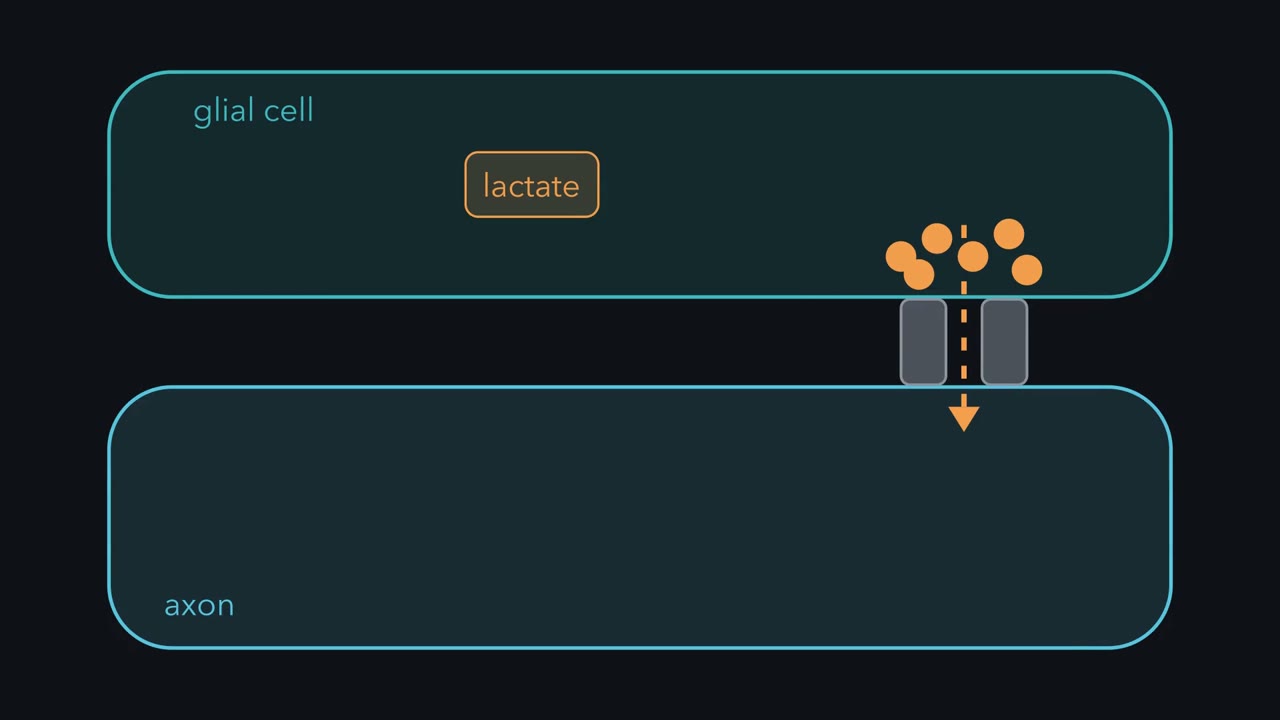
Or it can become lactate. That turns NADH back into NAD+, +, so glycolysis keeps running without mitochondria. Another cell can turn lactate back and burn it. A cell that stops at lactate keeps only 2 ATP. Its lactates carry more than nine-tenths of what the glucose could yield. Now the test. One laboratory deleted the gene Cox10 in myelinating cells. Without it, they can make ATP only by glycolysis. If oligodendrocytes must respire to keep axons healthy, what should happen in the adult brain over the following months?
If they had to respire, myelin and axons should fail. Instead, the oligodendrocytes survived. Myelin and axons were largely preserved for months. Oligodendrocytes that have made their myelin can live on glycolysis alone. Pyruvate and lactate they cannot burn must leave or be left over. Leaving would fit glia feeding axons, but this does not show it. Peripheral nerves differed. Schwann cells without Cox10 survived but failed to myelinate properly. The mice developed a severe neuropathy. Those cells were still building myelin, a costly stage. They survived, but needed respiration to myelinate. The stage may explain part of the difference. One more clue. A scan that measures brain chemicals found extra lactate in the mutants, but only under anaesthesia.
Within an hour after the anaesthetic ended, it fell below detection. Why would it show up only under anaesthesia? One reading: glycolytic glia make more lactate than they burn. Awake, something uses it as fast as it is made. Under anaesthesia, that use slows. The axons are an obvious candidate user. But the experiment never traced where the lactate went. So switch off the glial cell's respiration, and the axon in the brain is spared, over the months studied.
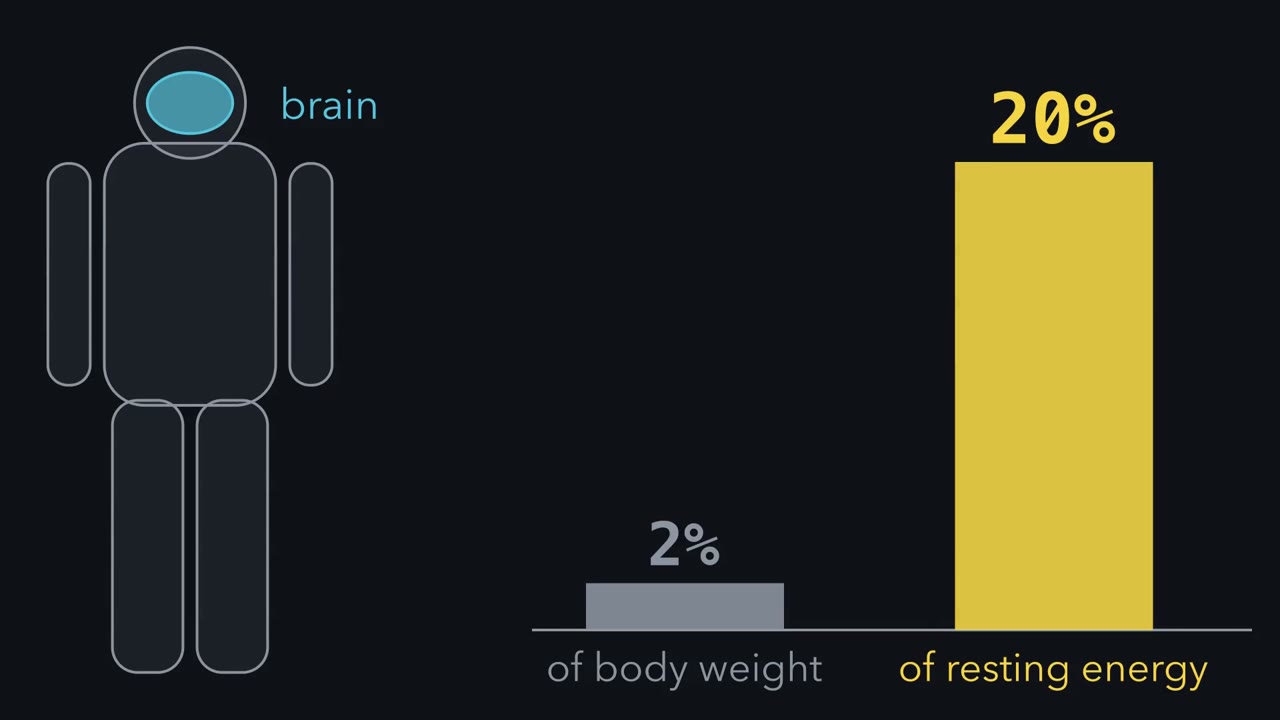
The brain is about 2 percent of your weight and uses about 20 percent of your resting energy. Who delivers the fuel to the far end of an axon?
Continue in the lesson: Feeding the Axon: Glia as Metabolic Partners →
3:03 · Free, with captions and a transcript. The lesson has the full text, the questions and the sources.
More films from this lesson
How this film was made. Narration: an AI narrator voice (Kokoro, af_heart) reading narration written from this lesson's text. Animation: AI-generated in code (Manim) by Claude, a schematic with no drawn molecular structures. Captions come from the narration script. See something wrong? Report it.