Films · Developmental Neuroscience
Kill a Guidepost
Read the transcript of “Kill a Guidepost”
Film transcript: Kill a Guidepost
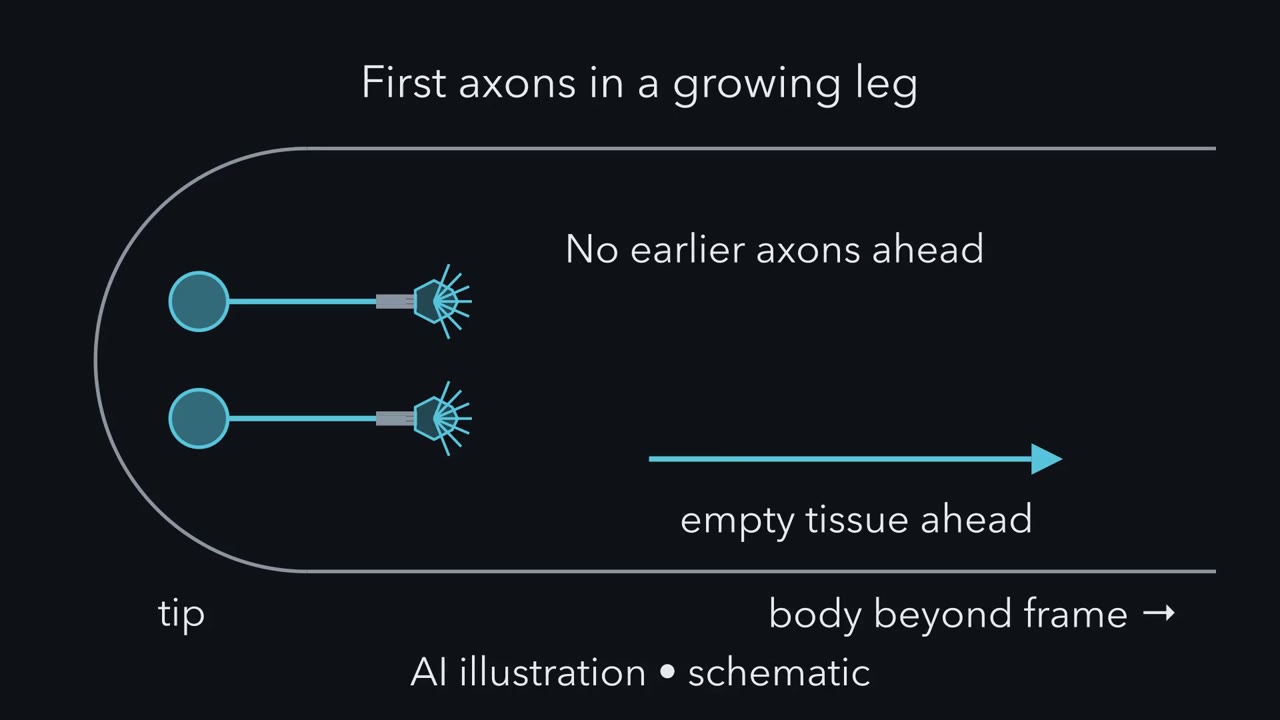
A growth cone touches a cell just before it turns. Does it need that cell to make the turn? The worked case is the leg of a grasshopper embryo. Near the tip of the leg sits a pair of sensory neurons called Ti1. They send the first axons toward the central nervous system. In the far part of the leg, no earlier axons lie ahead. So they are pioneers there. Nearer the body, they join stretches pioneered by other neurons. Their route has several turns. At some sit young neurons that the growth cones touch just before turning. At one of these turns sits a pair of cells called Cx1. But touching is not needing. The growth cones might touch Cx1 and turn there for some other reason.
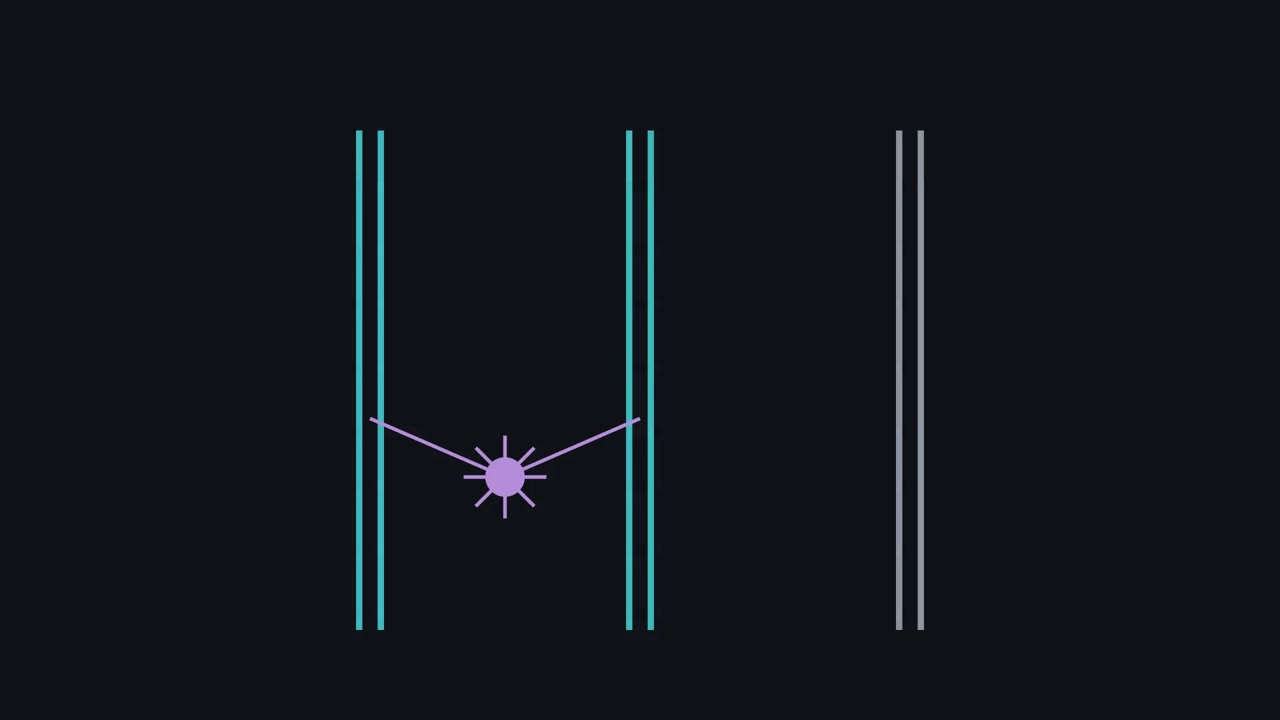
David Bentley and Michael Caudy asked the direct question, in 1983. They selectively destroyed the Cx1 cells before the pioneer growth cones arrived. If Cx1 is only on the way, the route should look normal. If it is needed, the route should go wrong at that turn. Which happened?
The pioneers failed to take the normal route. They sent branches in abnormal directions. At this turn, the growth cones need Cx1. The conclusion is narrow, and that is its strength. At this turn, in this preparation, these cells are needed. It does not say whether Cx1 provides adhesion or a signal. Later work by Caudy and Bentley showed that the full route is built from several legs. Some legs are read from guideposts. Others are read from boundaries in the surrounding tissue. So a guidepost is one important cue among several. A choice point is a place where the growth cone picks its next path. A guidepost cell is one way to guide that choice.
Remove one guidepost, and the pioneers lose their normal route at that turn.
Kill a guidepost cell on a grasshopper embryo's leg, and the first axons to grow past it lose their way.
Continue in the lesson: Pioneers, Guideposts and the Logic of Guidance Cues →
2:19 · Free, with captions and a transcript. The lesson has the full text, the questions and the sources.
More films from this lesson
How this film was made. Narration: an AI narrator voice (Kokoro, af_heart) reading narration written from this lesson's text. Animation: AI-generated in code (Manim) by Claude, a schematic with no drawn molecular structures. Captions come from the narration script. See something wrong? Report it.